Japanese immigration
in camp during WW2
Kumar Diyali
Tracey Riordan
History 1865-
present
Thesis
For Japanese Americans, the aftermath of the Second World War was a time of difficult
challenges as well as great triumphs.
Japanese immigrants
 The morning of December 7th was the day that everything changed for
Japanese Americans. Once the Japanese bombed Pearl Harbour, every
American viewed every Japanese citizen as a threat.
 This made their lives difficult and two months after the bombing president
Roosevelt signed an order to relocate all the Japanese American to the camp.
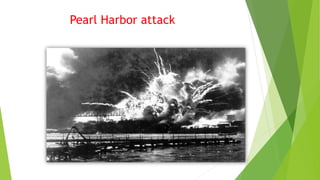
Pearl Harbor attack
Japanese during WW2
 On December 7, 1941, an angry white neighbor came to the home of a Japanese
American family. “You …started the war!” the neighbor yelled. “You bombed Pearl
Harbor!”
 Of course, Japanese Americans had nothing to do with starting the war. But, after the
Japanese attack on Pearl Harbor, a cloud of suspicion settled on these loyal citizens.
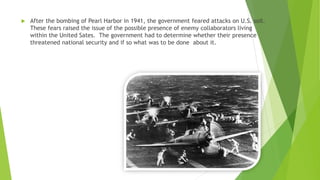
 After the bombing of Pearl Harbor in 1941, the government feared attacks on U.S. soil.
These fears raised the issue of the possible presence of enemy collaborators living
within the United Sates. The government had to determine whether their presence
threatened national security and if so what was to be done about it.
WW2
 In the first few years of the war, the FBI arrested and jailed thousands of Italians, Germans and
Japanese suspected of being a threat of having connections to pro-fascist organizations.
People’s belongings were confiscated, curfews were established and thousands were taken into
custody.
During WW2
 The success of the Japanese immigrants created envy within the white
American communites, especially in the west.
 Many anti-Japanese groups were formed.
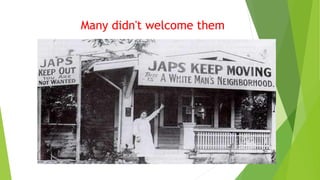
Many didn't welcome them
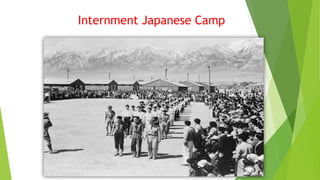
Internment Japanese Camp
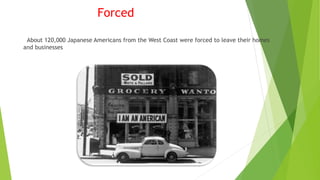
Forced
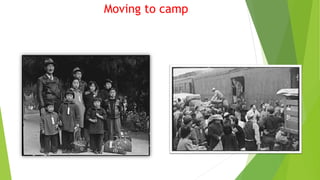
About 120,000 Japanese Americans from the West Coast were forced to leave their homes
and businesses
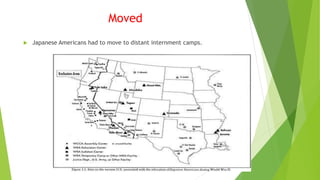
 Japanese Americans had to move to distant internment camps.
Moved
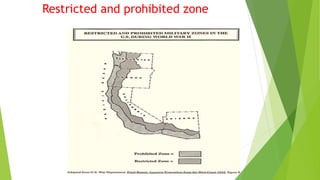
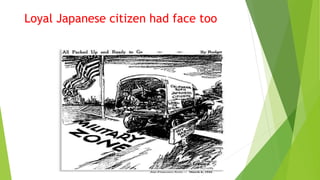
Restricted and prohibited zone
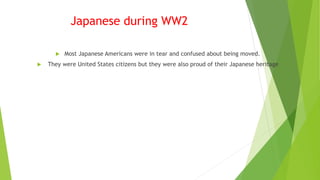
Japanese during WW2
 Most Japanese Americans were in tear and confused about being moved.
 They were United States citizens but they were also proud of their Japanese heritage
Moving to camp
Loyal Japanese citizen had face too
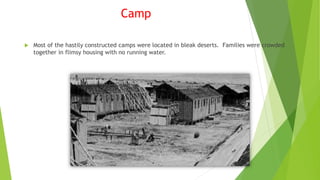
Camp
 Most of the hastily constructed camps were located in bleak deserts. Families were crowded
together in flimsy housing with no running water.
Camp
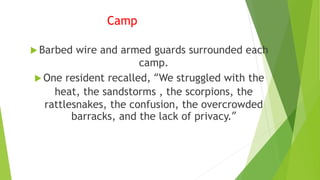
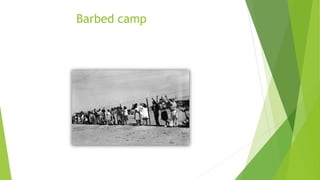
 Barbed wire and armed guards surrounded each
camp.
 One resident recalled, “We struggled with the
heat, the sandstorms , the scorpions, the
rattlesnakes, the confusion, the overcrowded
barracks, and the lack of privacy.”
Barbed camp
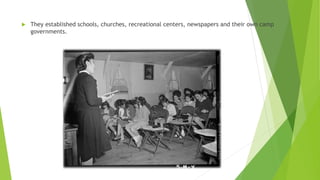
 They established schools, churches, recreational centers, newspapers and their own camp
governments.
Left camp
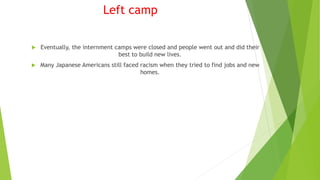
 Eventually, the internment camps were closed and people went out and did their
best to build new lives.
 Many Japanese Americans still faced racism when they tried to find jobs and new
homes.
Japanese struggle
 The Japanese returned to their homes they found that most of what they had
had been destroyed.
 They discovered that many Americans viewed them as evil and didn’t find it
easy to reenter to the American society.
 They struggled to abtain work and had a very hard time taking out loans
making it nearly impossible for them to start a life again. Many people left
the camps emothionally and physically scarred never to recover from what
they experienced.
What government did that time?
 Upon returning from the camps the Japanese found that all of their land had been lost
while they were away. The government agreed to buy some of the property back, but it
wasn’t much. It also payed the Japanese less than 10 cents for every dollar that they had
lost.
Apologize
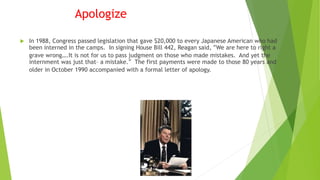
 In 1988, Congress passed legislation that gave $20,000 to every Japanese American who had
been interned in the camps. In signing House Bill 442, Reagan said, “We are here to right a
grave wrong….It is not for us to pass judgment on those who made mistakes. And yet the
internment was just that– a mistake.” The first payments were made to those 80 years and
older in October 1990 accompanied with a formal letter of apology.
Sources
 All the pictures were found on google image.
 Wakatsuki, Jeanne. Farewell to Manazanar. Vol. 6.0. Boston: Houghton
Mifflin, 1973. Ser. 1098. Ember, 1973.

Japanese in camp by Kumar

  • 1.
    Japanese immigration in campduring WW2 Kumar Diyali Tracey Riordan History 1865- present
  • 2.
    Thesis For Japanese Americans,the aftermath of the Second World War was a time of difficult challenges as well as great triumphs.
  • 3.
    Japanese immigrants  Themorning of December 7th was the day that everything changed for Japanese Americans. Once the Japanese bombed Pearl Harbour, every American viewed every Japanese citizen as a threat.  This made their lives difficult and two months after the bombing president Roosevelt signed an order to relocate all the Japanese American to the camp.
  • 4.
  • 5.
    Japanese during WW2 On December 7, 1941, an angry white neighbor came to the home of a Japanese American family. “You …started the war!” the neighbor yelled. “You bombed Pearl Harbor!”  Of course, Japanese Americans had nothing to do with starting the war. But, after the Japanese attack on Pearl Harbor, a cloud of suspicion settled on these loyal citizens.
  • 6.
     After thebombing of Pearl Harbor in 1941, the government feared attacks on U.S. soil. These fears raised the issue of the possible presence of enemy collaborators living within the United Sates. The government had to determine whether their presence threatened national security and if so what was to be done about it.
  • 7.
    WW2  In thefirst few years of the war, the FBI arrested and jailed thousands of Italians, Germans and Japanese suspected of being a threat of having connections to pro-fascist organizations. People’s belongings were confiscated, curfews were established and thousands were taken into custody.
  • 8.
    During WW2  Thesuccess of the Japanese immigrants created envy within the white American communites, especially in the west.  Many anti-Japanese groups were formed.
  • 9.
  • 10.
  • 11.
    Forced About 120,000 JapaneseAmericans from the West Coast were forced to leave their homes and businesses
  • 12.
     Japanese Americanshad to move to distant internment camps. Moved
  • 13.
  • 14.
    Japanese during WW2 Most Japanese Americans were in tear and confused about being moved.  They were United States citizens but they were also proud of their Japanese heritage
  • 15.
  • 16.
  • 17.
    Camp  Most ofthe hastily constructed camps were located in bleak deserts. Families were crowded together in flimsy housing with no running water.
  • 18.
    Camp  Barbed wireand armed guards surrounded each camp.  One resident recalled, “We struggled with the heat, the sandstorms , the scorpions, the rattlesnakes, the confusion, the overcrowded barracks, and the lack of privacy.”
  • 19.
  • 20.
     They establishedschools, churches, recreational centers, newspapers and their own camp governments.
  • 21.
    Left camp  Eventually,the internment camps were closed and people went out and did their best to build new lives.  Many Japanese Americans still faced racism when they tried to find jobs and new homes.
  • 22.
    Japanese struggle  TheJapanese returned to their homes they found that most of what they had had been destroyed.  They discovered that many Americans viewed them as evil and didn’t find it easy to reenter to the American society.  They struggled to abtain work and had a very hard time taking out loans making it nearly impossible for them to start a life again. Many people left the camps emothionally and physically scarred never to recover from what they experienced.
  • 23.
    What government didthat time?  Upon returning from the camps the Japanese found that all of their land had been lost while they were away. The government agreed to buy some of the property back, but it wasn’t much. It also payed the Japanese less than 10 cents for every dollar that they had lost.
  • 24.
    Apologize  In 1988,Congress passed legislation that gave $20,000 to every Japanese American who had been interned in the camps. In signing House Bill 442, Reagan said, “We are here to right a grave wrong….It is not for us to pass judgment on those who made mistakes. And yet the internment was just that– a mistake.” The first payments were made to those 80 years and older in October 1990 accompanied with a formal letter of apology.
  • 25.
    Sources  All thepictures were found on google image.  Wakatsuki, Jeanne. Farewell to Manazanar. Vol. 6.0. Boston: Houghton Mifflin, 1973. Ser. 1098. Ember, 1973.