Putting the "People" Back in
People, Process and
Technology
Slide 2
Agenda
The challenge
Who are our people?
What can our people do for the organization?
What is the best fit for our people?
When do we closely supervise (mentor) people or allow them
more flexibility (trust)?
How can we motivate and get the best out of our people?
Why do we need our people?
Slide 3
The Challenge
Processes and technology are becoming ever more
prevalent, complex and ubiquitous
People have remained fairly static for at least the last 10,000
years
There is a widening gap between the “people” and the
“processes and technology”
We need to close the gap before it becomes a canyon
Who are our people?
Slide 5
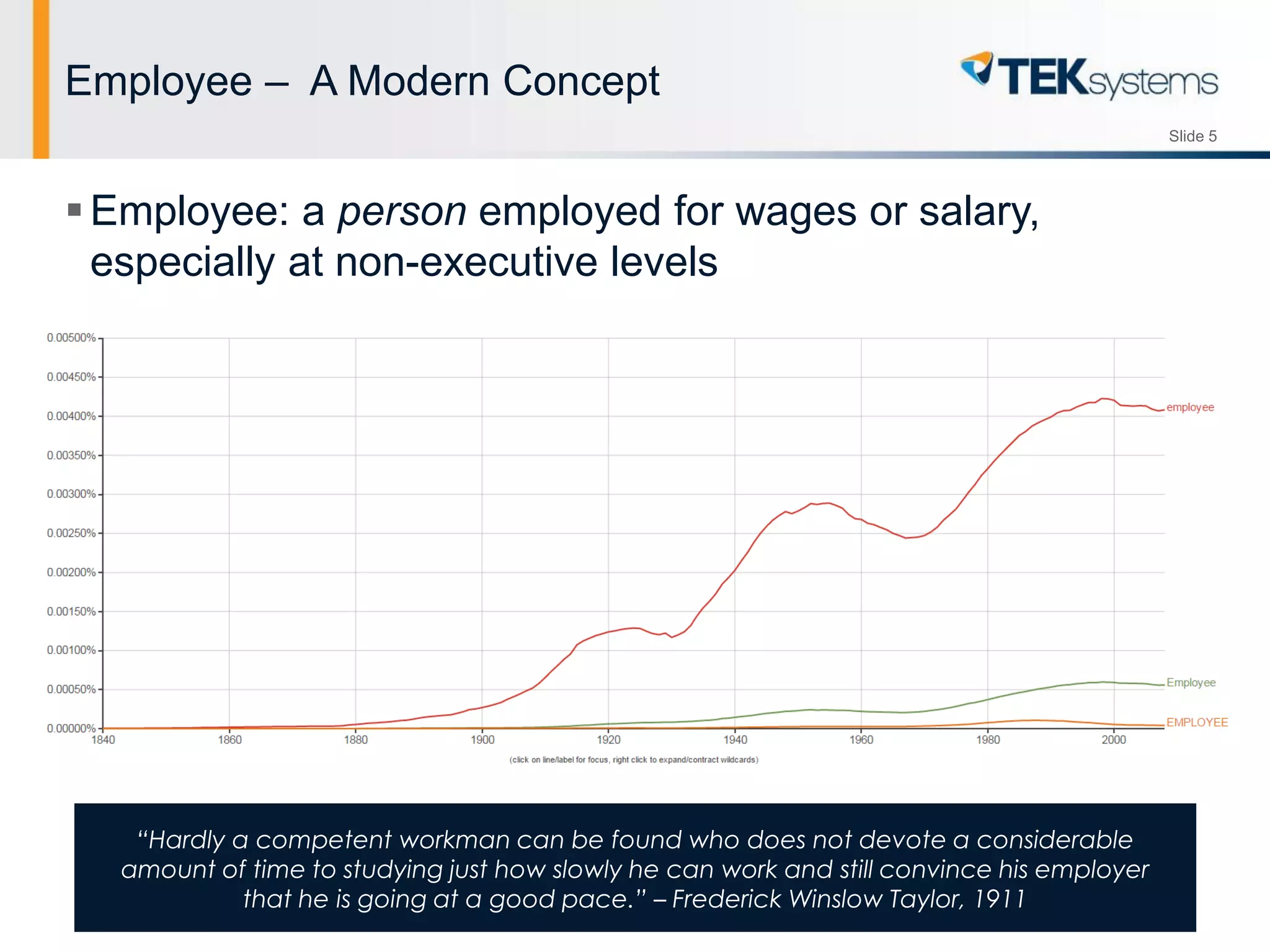
Employee – A Modern Concept
Employee: a person employed for wages or salary,
especially at non-executive levels
“Hardly a competent workman can be found who does not devote a considerable
amount of time to studying just how slowly he can work and still convince his employer
that he is going at a good pace.” – Frederick Winslow Taylor, 1911
Slide 6
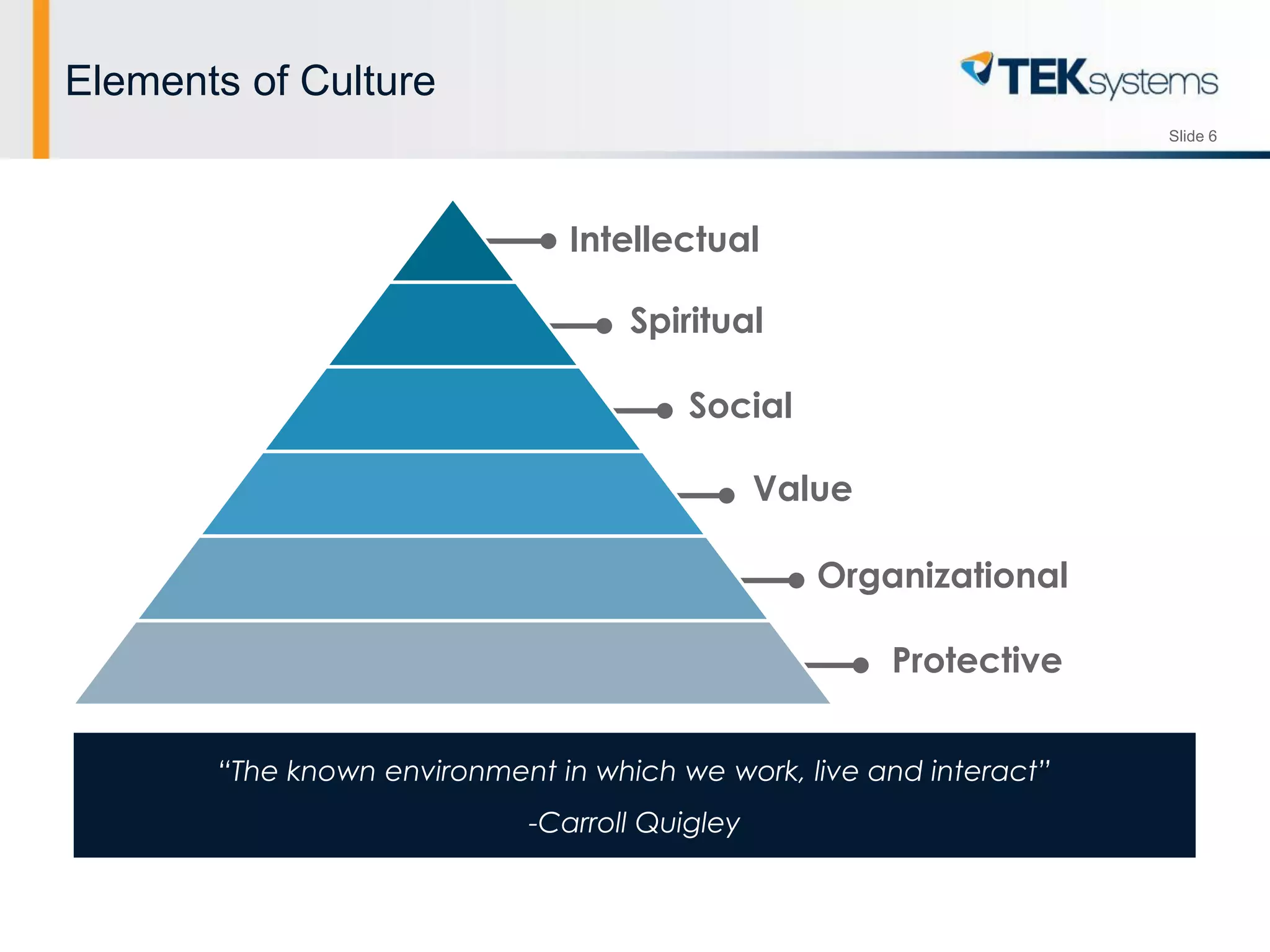
Elements of Culture
“The known environment in which we work, live and interact”
-Carroll Quigley
Intellectual
Spiritual
Social
Value
Organizational
Protective
Slide 7
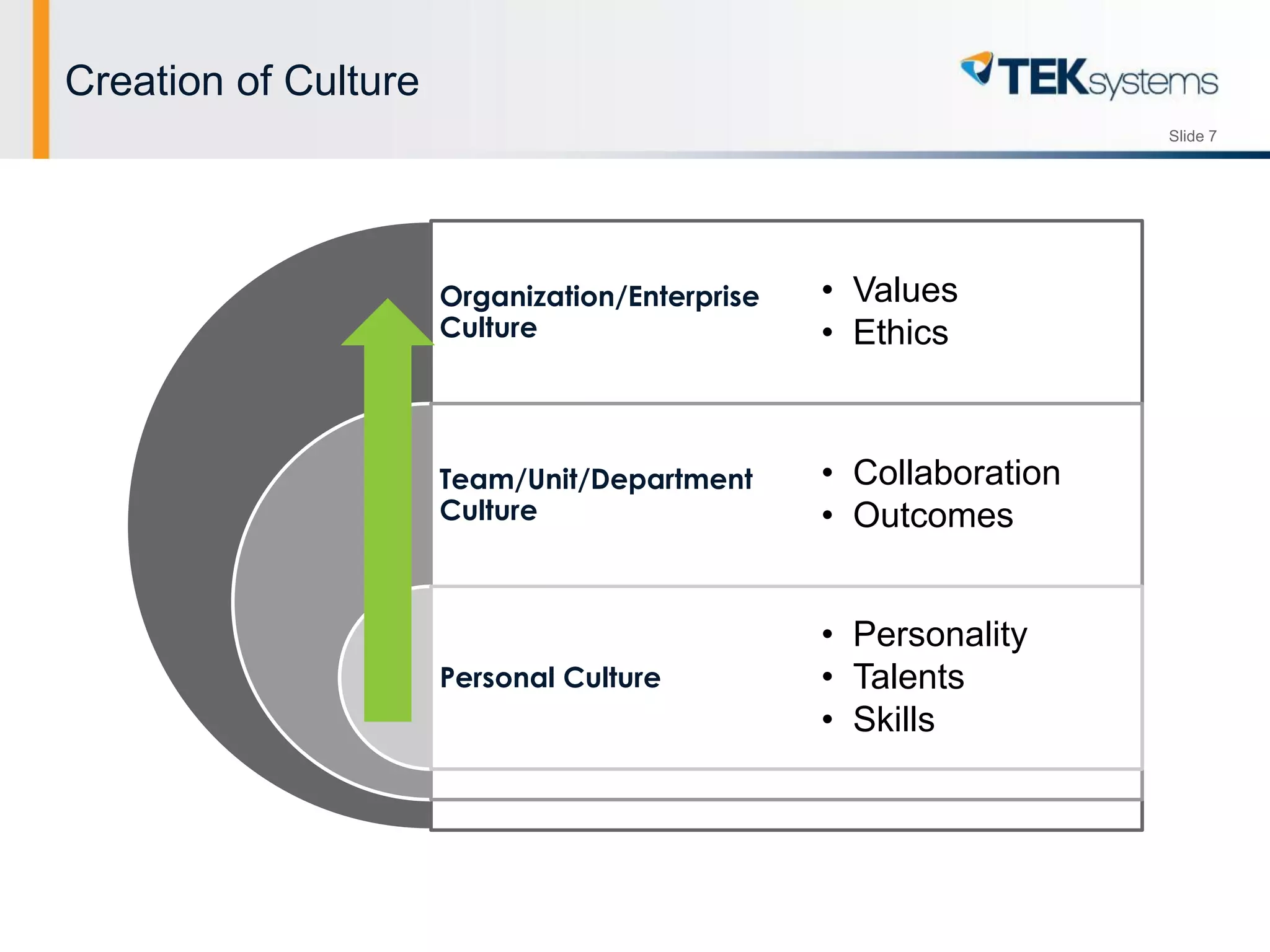
Creation of Culture
Organization/Enterprise
Culture
Team/Unit/Department
Culture
Personal Culture
• Values
• Ethics
• Collaboration
• Outcomes
• Personality
• Talents
• Skills
What can our people do for the
organization?
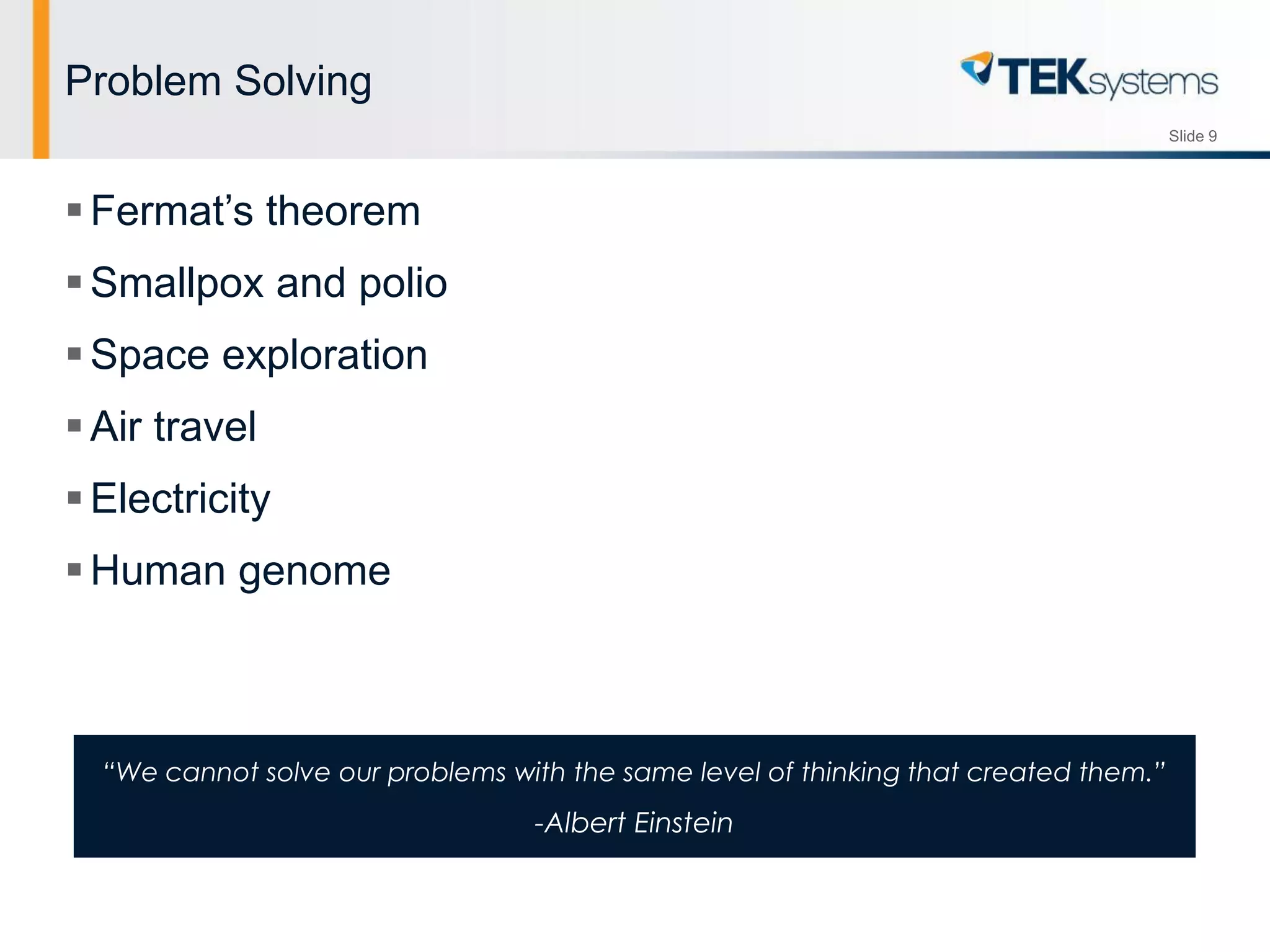
Slide 9
Problem Solving
Fermat’s theorem
Smallpox and polio
Space exploration
Air travel
Electricity
Human genome
“We cannot solve our problems with the same level of thinking that created them.”
-Albert Einstein
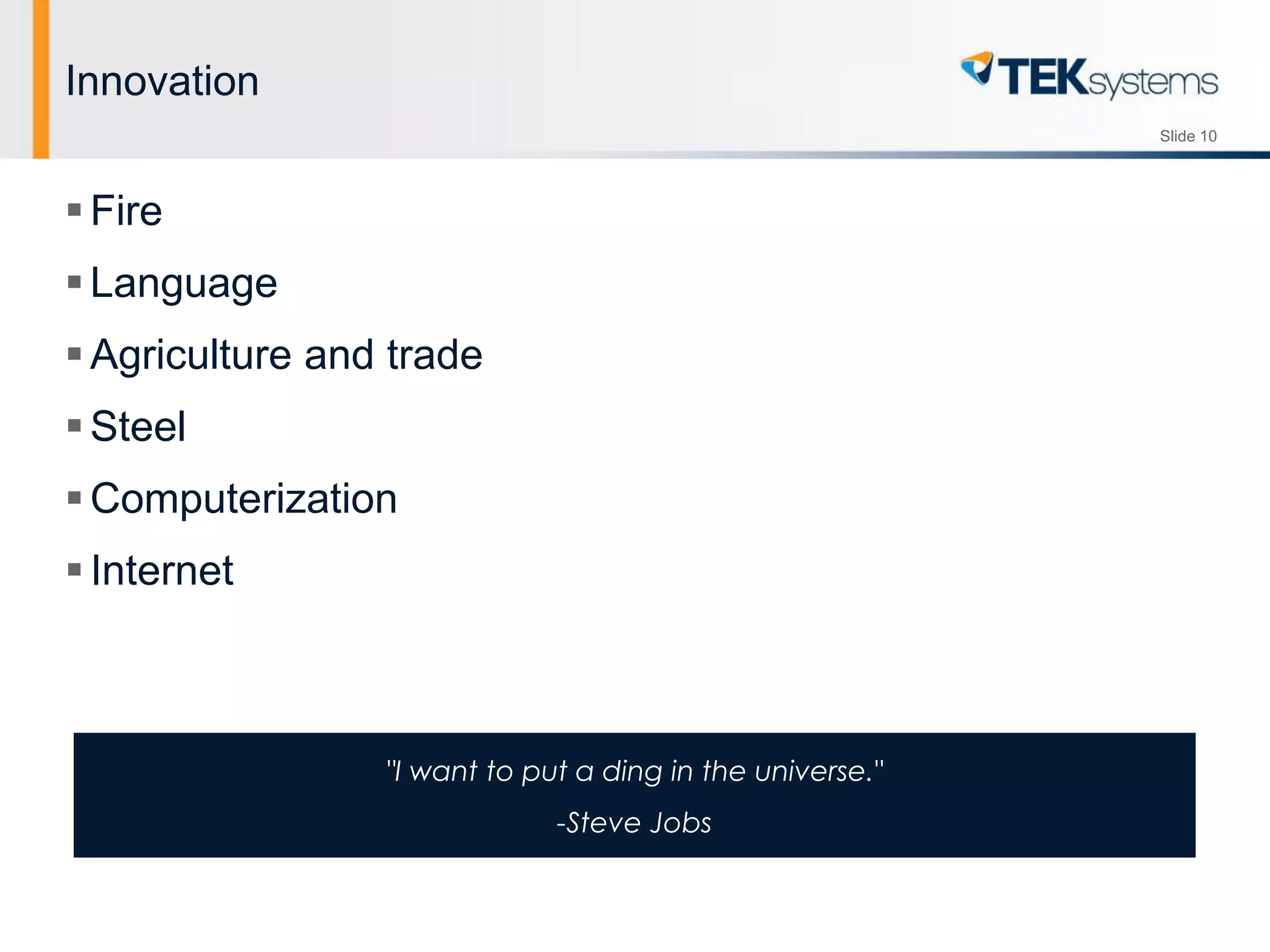
Slide 10
Innovation
Fire
Language
Agriculture and trade
Steel
Computerization
Internet
"I want to put a ding in the universe."
-Steve Jobs
Where is the best fit for our
people?
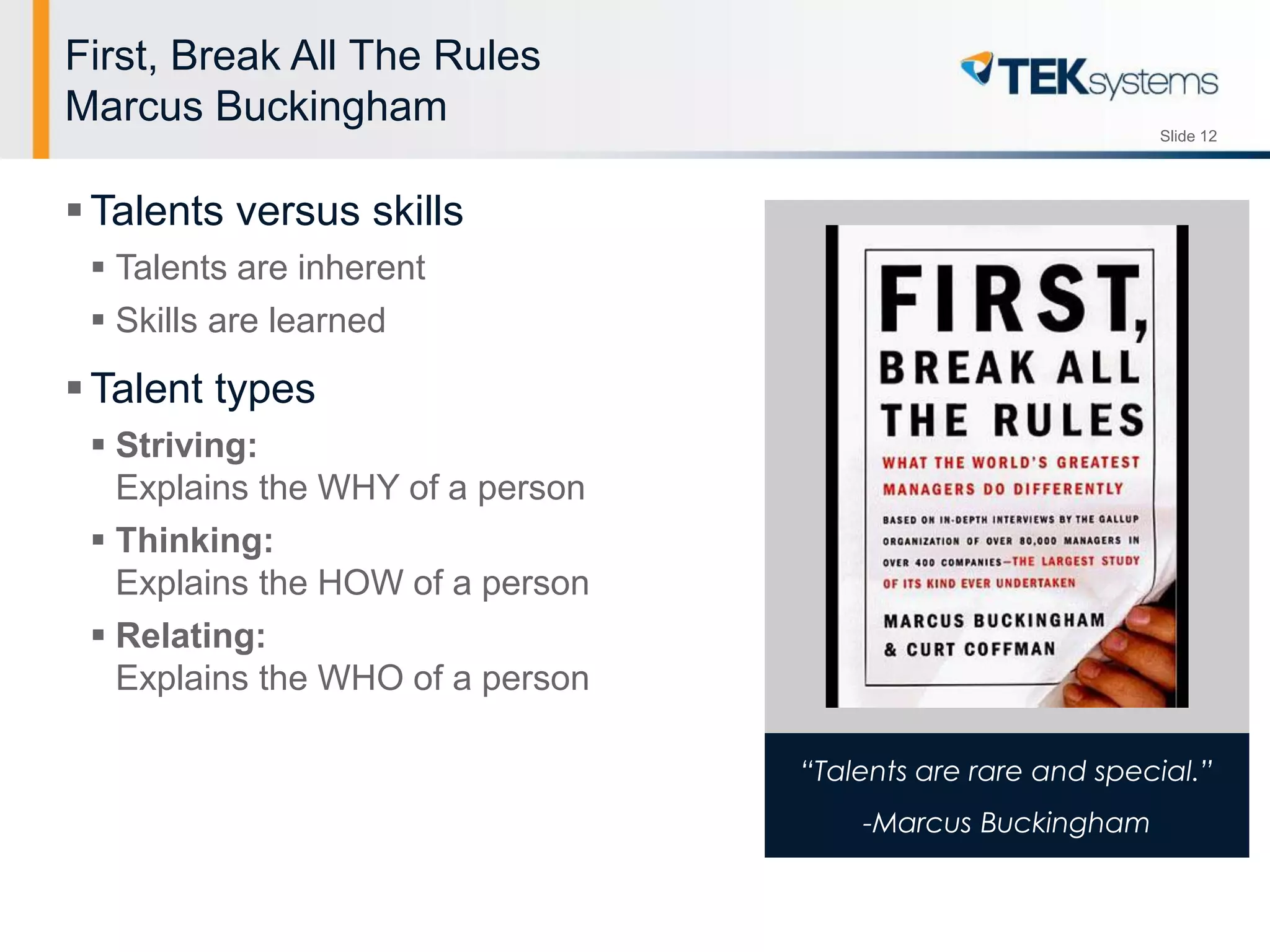
Slide 12
“Talents are rare and special.”
-Marcus Buckingham
First, Break All The Rules
Marcus Buckingham
Talents versus skills
 Talents are inherent
 Skills are learned
Talent types
 Striving:
Explains the WHY of a person
 Thinking:
Explains the HOW of a person
 Relating:
Explains the WHO of a person
Slide 13
Revolutionary Insight
“People do not change that much.”
“Do not waste time trying to put in what was left out.”
“Try to draw out what was left in… that is hard enough.”
“People are not broken, do not try to fix them.”
-Marcus Buckingham
Slide 14
Multiple Intelligences
Howard Gardner
Visual-spatial
Bodily-kinesthetic
Musical
Interpersonal
Intrapersonal
Linguistic
Logical-mathematical
Slide 15
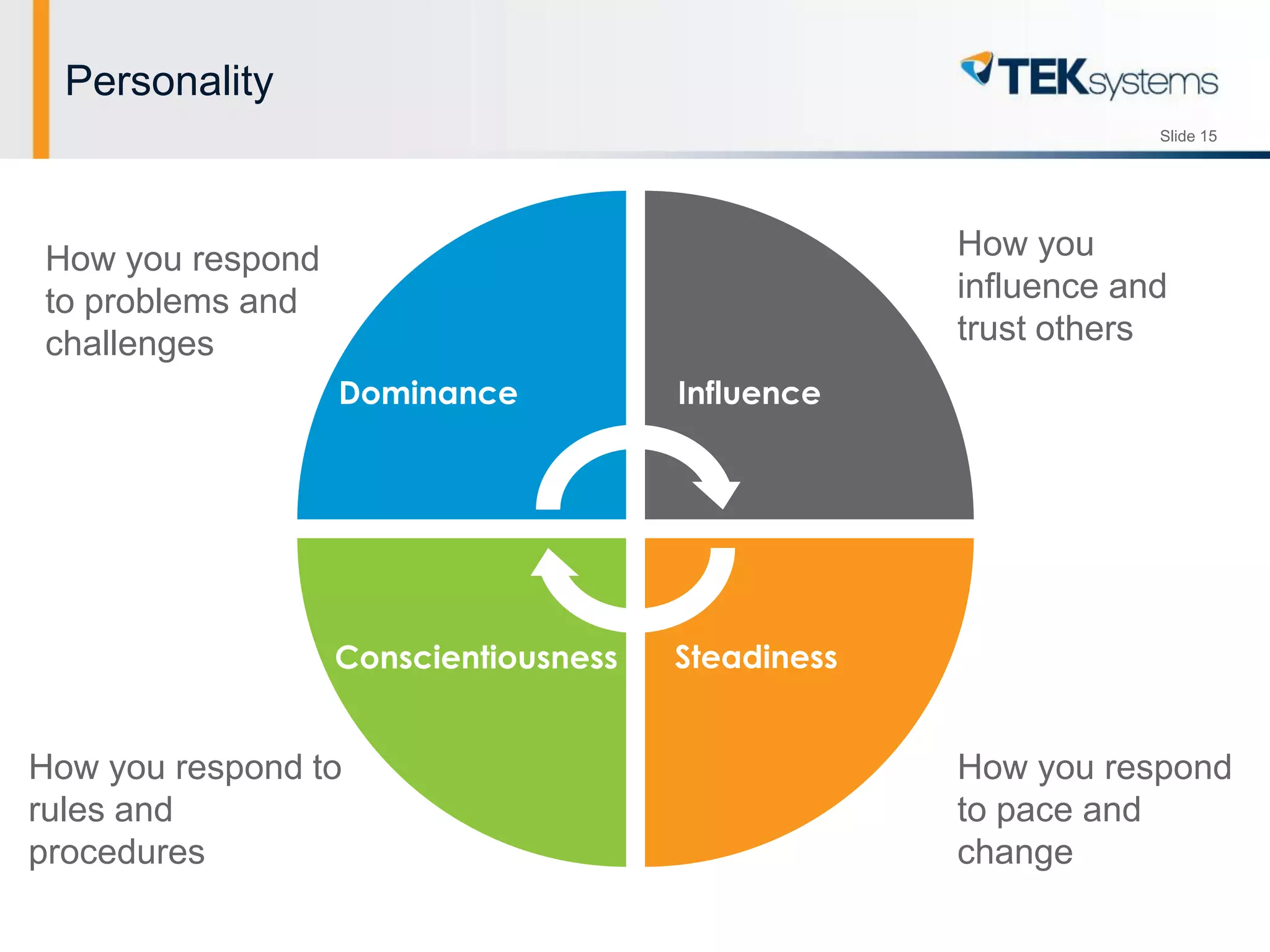
Personality
Dominance Influence
Conscientiousness Steadiness
How you respond
to problems and
challenges
How you
influence and
trust others
How you respond to
rules and
procedures
How you respond
to pace and
change
Slide 16
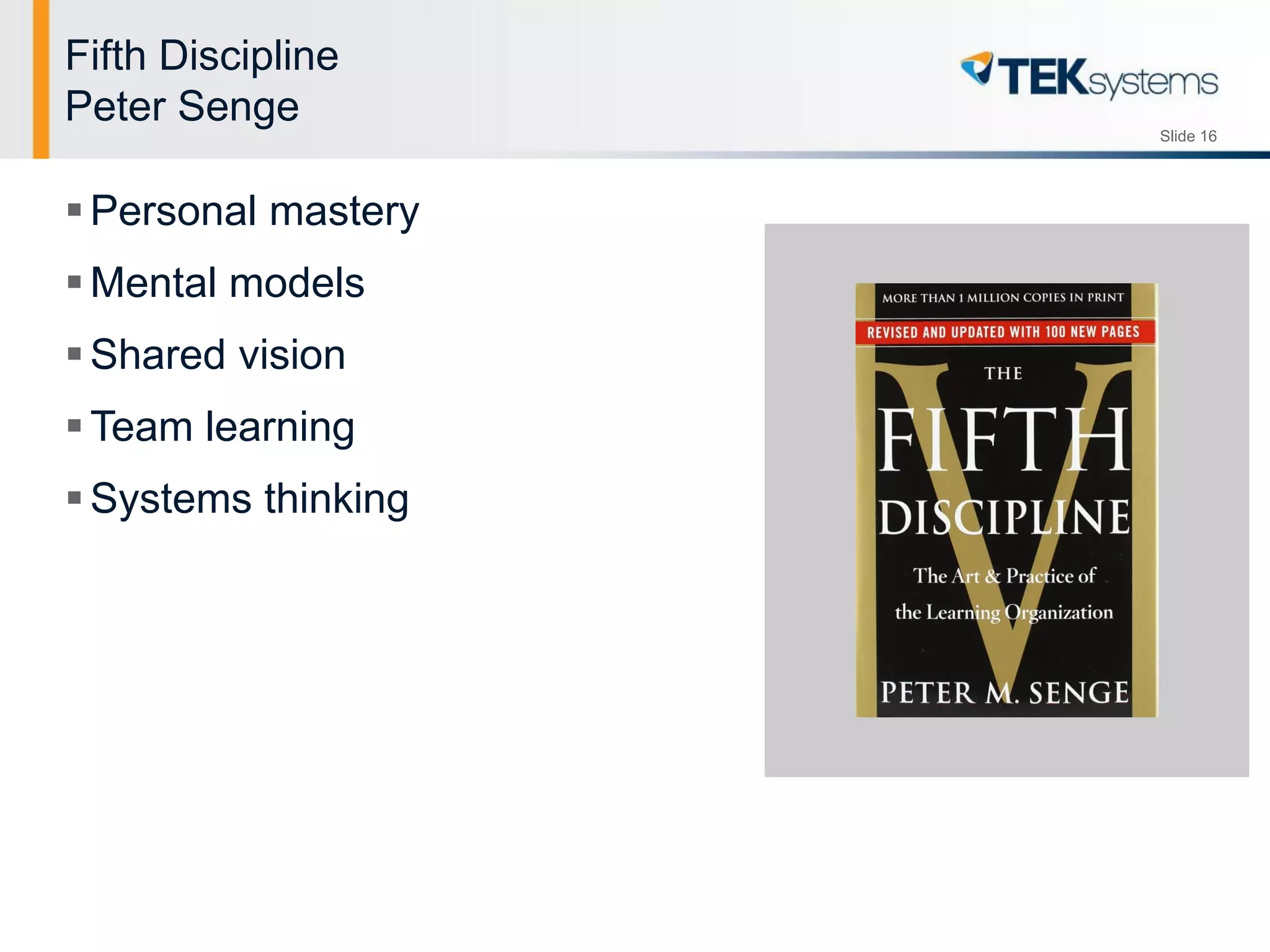
Fifth Discipline
Peter Senge
Personal mastery
Mental models
Shared vision
Team learning
Systems thinking
Slide 17
“Success is hitting that 10 ring [archery bullseye]. But mastery is knowing it
means nothing if you can’t hit it again and again.”
-Sarah Lewis
The “Near Win”
Sarah Lewis
Mastery: Internally driven
 For a lifetime
Success: Externally driven
 For a moment
The “Near Win”
 The unfinished and
incomplete moment
When do we come close to
(mentor) or move away from (trust)
our people?
Slide 19
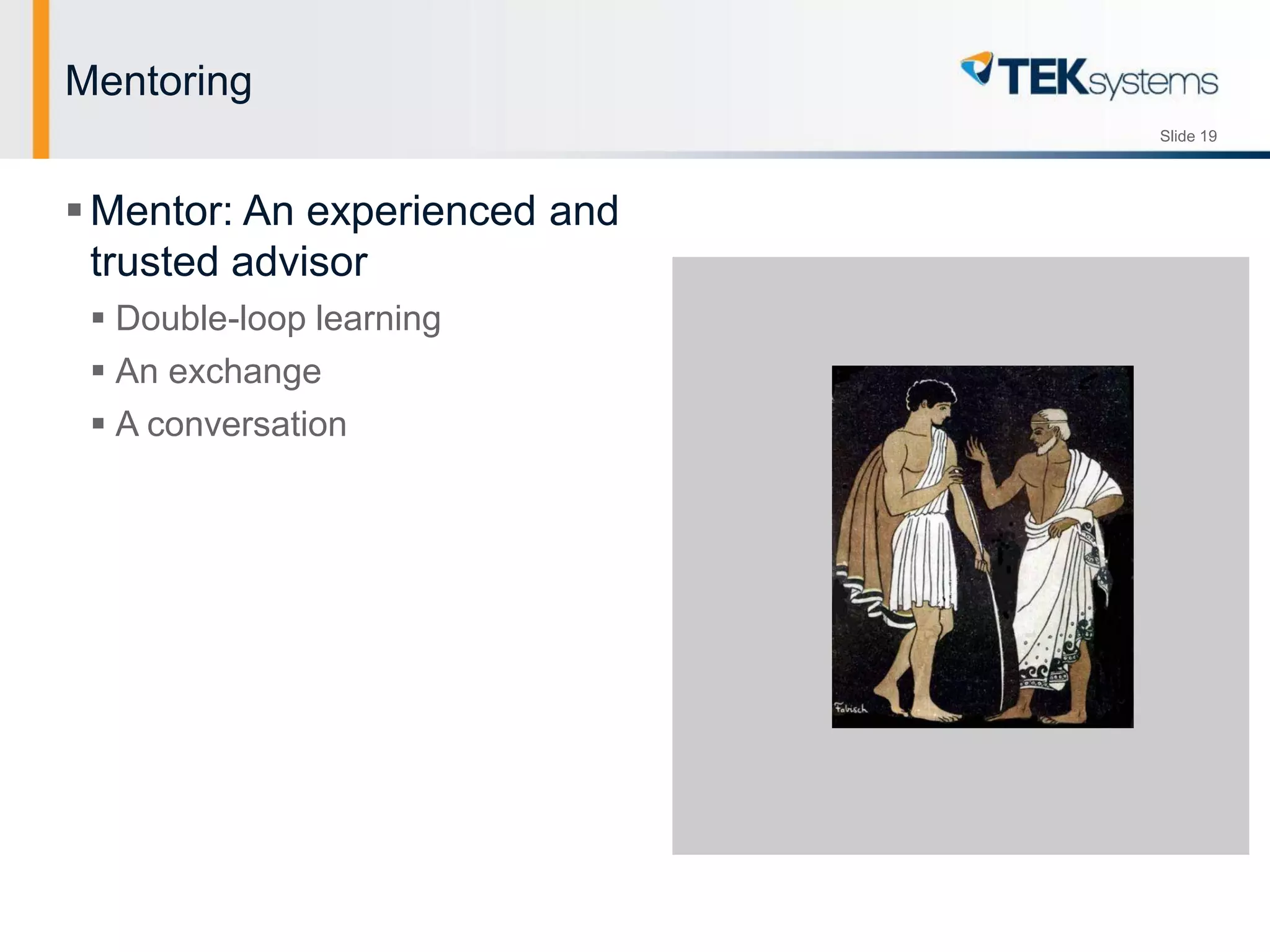
Mentoring
Mentor: An experienced and
trusted advisor
 Double-loop learning
 An exchange
 A conversation
Slide 20
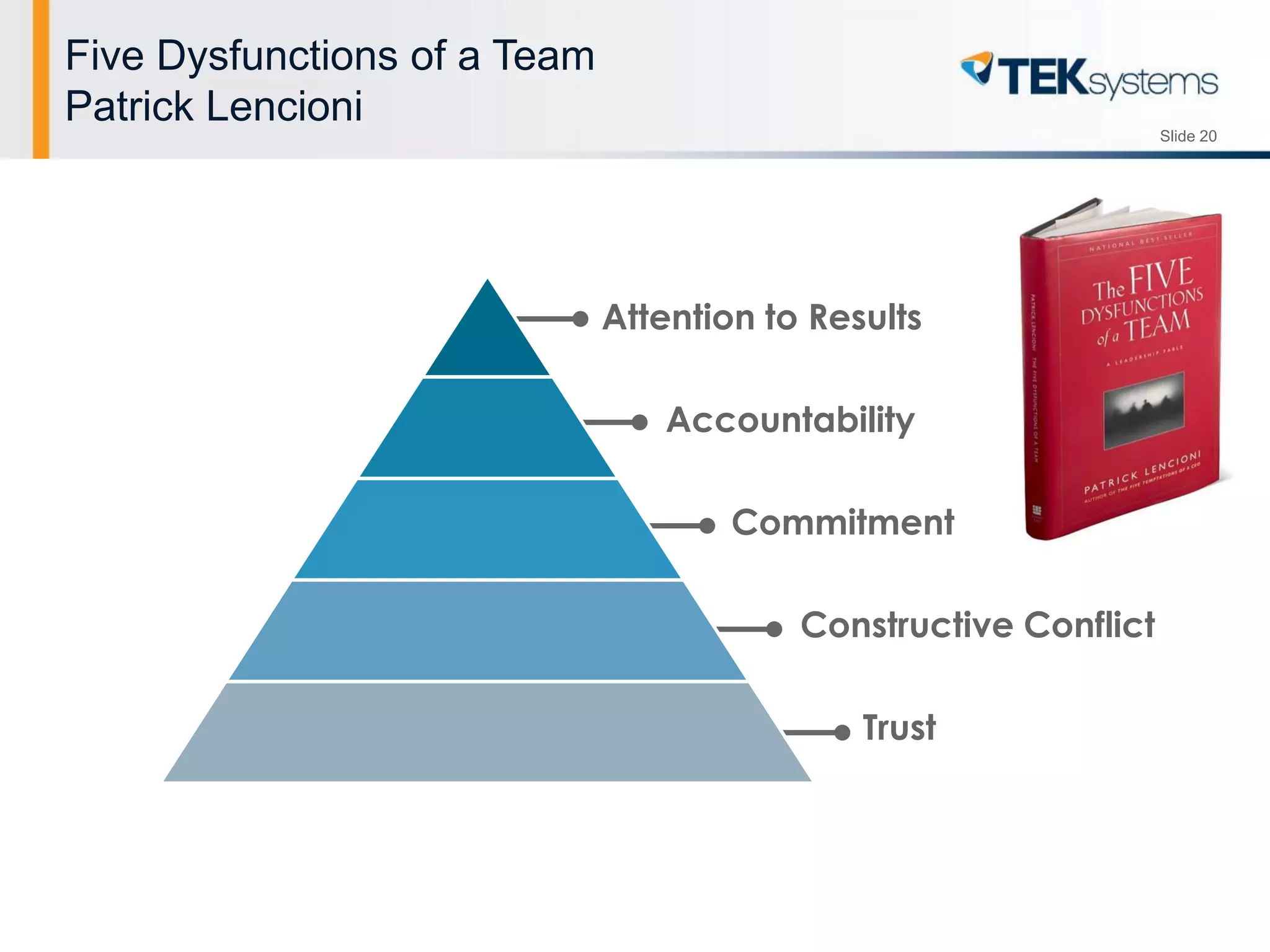
Five Dysfunctions of a Team
Patrick Lencioni
Attention to Results
Accountability
Commitment
Constructive Conflict
Trust
Slide 21
Trust
Presumption of trust
Openness in communications
Honesty and transparency
Follow-through (keeps promises)
Admit mistakes
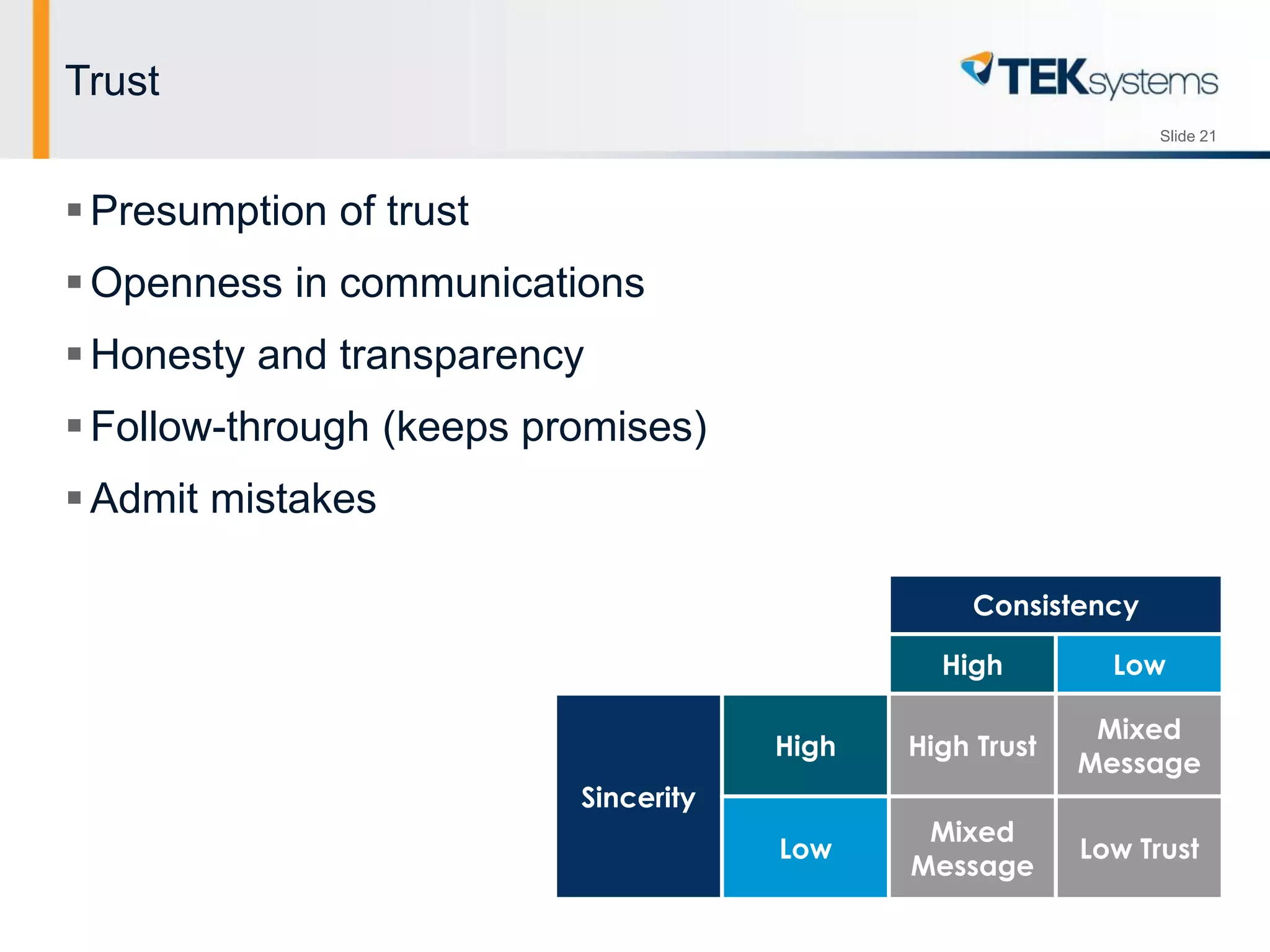
Consistency
High Low
Sincerity
High High Trust
Mixed
Message
Low
Mixed
Message
Low Trust
Slide 22
Effective Personal Interactions
Clean off your desk during conversations
Look for eye color
Ask more questions and make fewer statements
Lubricate the conversation
Sit on the edge of your chair
Take notes
Do not answer the phone
Slide 23
Accountability
Be hard on the problem, soft on the person
Give appropriate responsibility
Ask the other person to write down your instructions
Assign due dates
Get a verbal commitment
Check in early
Follow up later
How can we motivate and get the
best out of our people?
Slide 25
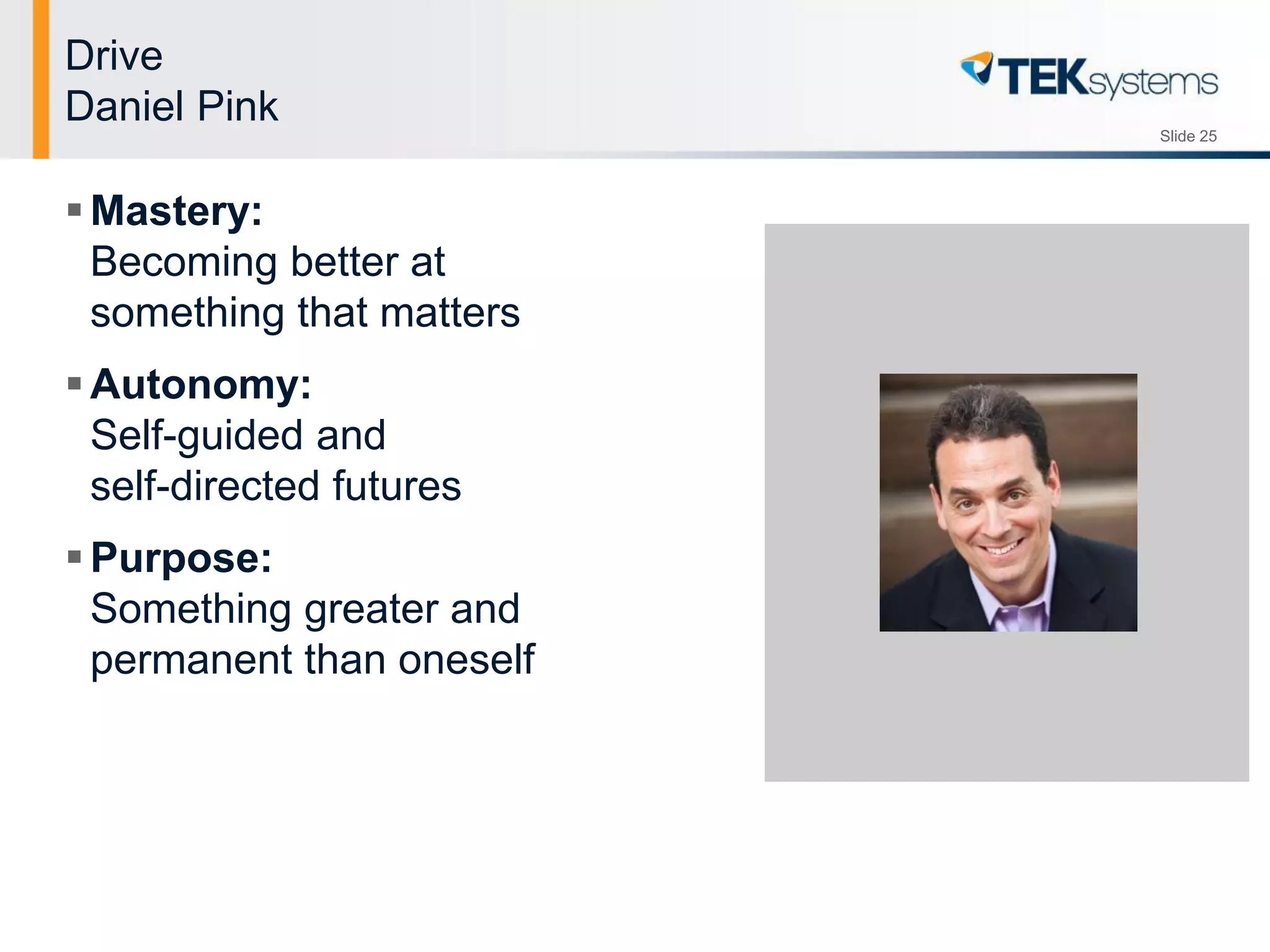
Drive
Daniel Pink
Mastery:
Becoming better at
something that matters
Autonomy:
Self-guided and
self-directed futures
Purpose:
Something greater and
permanent than oneself
Slide 26
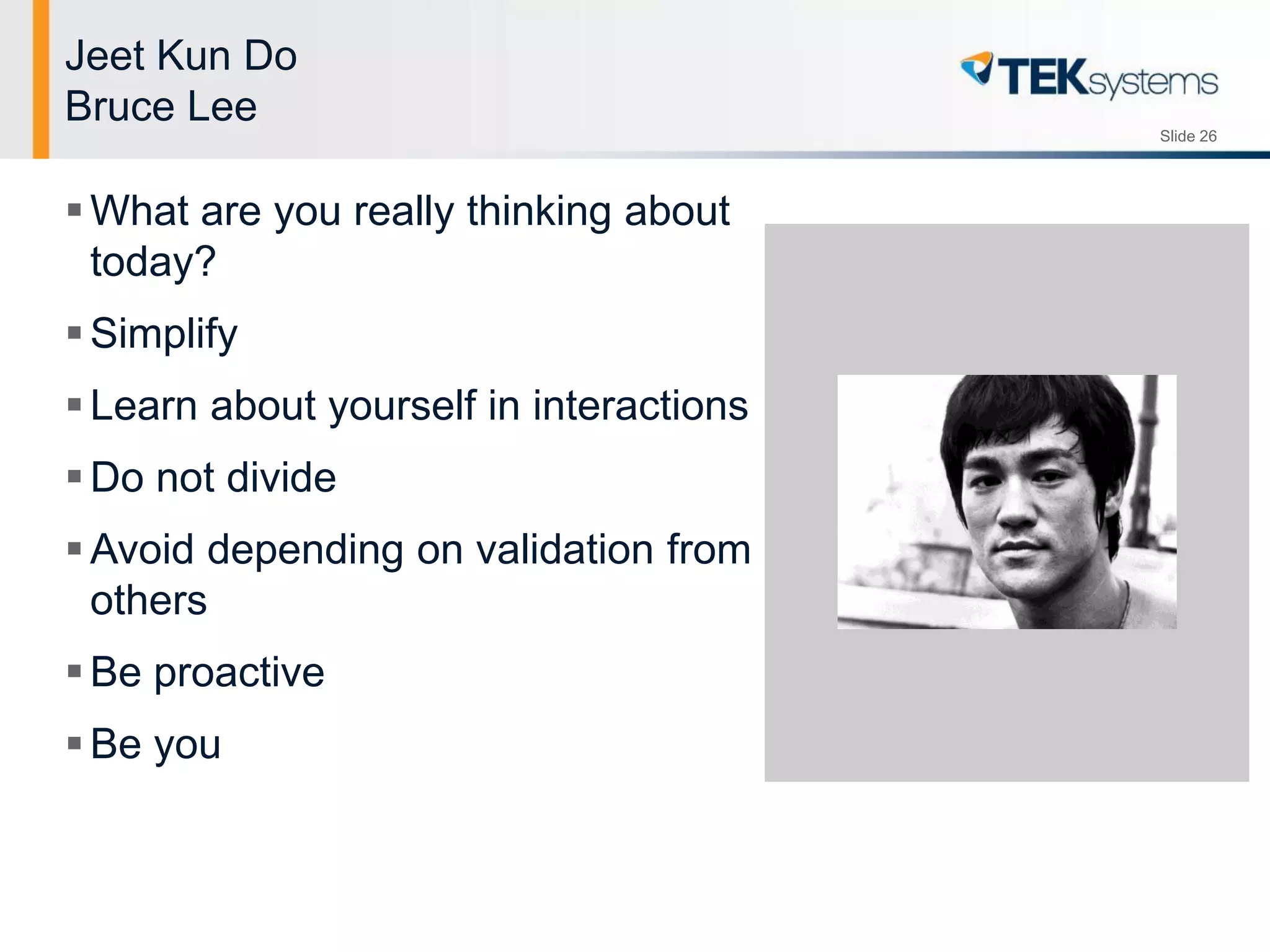
Jeet Kun Do
Bruce Lee
What are you really thinking about
today?
Simplify
Learn about yourself in interactions
Do not divide
Avoid depending on validation from
others
Be proactive
Be you
Slide 27
Talent Development
Select a person
 Choose for talent
Set expectations
 Define the right outcomes
Motivate the person
 Focus on strengths
Develop the person
 Find the right fit
Why do we need our people?
Slide 29
People as Value
“The value of any commodity ... is equal to the quantity of labour which it
enables him to purchase or command. Labour, therefore, is the real
measure of the exchangeable value of all commodities.” -Adam Smith
“It is time to take the asset metaphor to a new level, to think of workers not
as human capital but as human capital owners and investors. Like the
employee-as-asset idea, the image of workers as investors is not exactly
new … Like the asset notion, the investor notion emphasizes value …
Workers, not organizations, own this human capital. Workers, not
organizations, decide when, how and where they will contribute to it. Like
financial investors, some human capital investors are more active than
others. The point is that, as the owners of their human capital, they can
make choices.” -T. Davenport
Slide 30
People as Value
“ No employer today is independent of those about him. He cannot
succeed alone, no matter how great his ability or capital. Business today is
more than ever a question of cooperation.” -Orison Swett Marden
“...while extraordinary products and unique services still afford a
competitive advantage, the one advantage that stands the test of time...is
people.” -Mark Salsbury
“I learned this, at least, by my experiment: that if one advances confidently
in the direction of his dreams, and endeavors to live the life which he has
imagined, he will meet with a success unexpected in common hours.” -
Henry David Thoreau
Slide 31
Thank You
Mcardina@teksystems.com
@MJ_Cardinal
Michael Cardinal

Putting the “People” Back in People, Process and Technology - an ITSM Academy Webinar

  • 1.
    Putting the "People"Back in People, Process and Technology
  • 2.
    Slide 2 Agenda The challenge Whoare our people? What can our people do for the organization? What is the best fit for our people? When do we closely supervise (mentor) people or allow them more flexibility (trust)? How can we motivate and get the best out of our people? Why do we need our people?
  • 3.
    Slide 3 The Challenge Processesand technology are becoming ever more prevalent, complex and ubiquitous People have remained fairly static for at least the last 10,000 years There is a widening gap between the “people” and the “processes and technology” We need to close the gap before it becomes a canyon
  • 4.
    Who are ourpeople?
  • 5.
    Slide 5 Employee –A Modern Concept Employee: a person employed for wages or salary, especially at non-executive levels “Hardly a competent workman can be found who does not devote a considerable amount of time to studying just how slowly he can work and still convince his employer that he is going at a good pace.” – Frederick Winslow Taylor, 1911
  • 6.
    Slide 6 Elements ofCulture “The known environment in which we work, live and interact” -Carroll Quigley Intellectual Spiritual Social Value Organizational Protective
  • 7.
    Slide 7 Creation ofCulture Organization/Enterprise Culture Team/Unit/Department Culture Personal Culture • Values • Ethics • Collaboration • Outcomes • Personality • Talents • Skills
  • 8.
    What can ourpeople do for the organization?
  • 9.
    Slide 9 Problem Solving Fermat’stheorem Smallpox and polio Space exploration Air travel Electricity Human genome “We cannot solve our problems with the same level of thinking that created them.” -Albert Einstein
  • 10.
    Slide 10 Innovation Fire Language Agriculture andtrade Steel Computerization Internet "I want to put a ding in the universe." -Steve Jobs
  • 11.
    Where is thebest fit for our people?
  • 12.
    Slide 12 “Talents arerare and special.” -Marcus Buckingham First, Break All The Rules Marcus Buckingham Talents versus skills  Talents are inherent  Skills are learned Talent types  Striving: Explains the WHY of a person  Thinking: Explains the HOW of a person  Relating: Explains the WHO of a person
  • 13.
    Slide 13 Revolutionary Insight “Peopledo not change that much.” “Do not waste time trying to put in what was left out.” “Try to draw out what was left in… that is hard enough.” “People are not broken, do not try to fix them.” -Marcus Buckingham
  • 14.
    Slide 14 Multiple Intelligences HowardGardner Visual-spatial Bodily-kinesthetic Musical Interpersonal Intrapersonal Linguistic Logical-mathematical
  • 15.
    Slide 15 Personality Dominance Influence ConscientiousnessSteadiness How you respond to problems and challenges How you influence and trust others How you respond to rules and procedures How you respond to pace and change
  • 16.
    Slide 16 Fifth Discipline PeterSenge Personal mastery Mental models Shared vision Team learning Systems thinking
  • 17.
    Slide 17 “Success ishitting that 10 ring [archery bullseye]. But mastery is knowing it means nothing if you can’t hit it again and again.” -Sarah Lewis The “Near Win” Sarah Lewis Mastery: Internally driven  For a lifetime Success: Externally driven  For a moment The “Near Win”  The unfinished and incomplete moment
  • 18.
    When do wecome close to (mentor) or move away from (trust) our people?
  • 19.
    Slide 19 Mentoring Mentor: Anexperienced and trusted advisor  Double-loop learning  An exchange  A conversation
  • 20.
    Slide 20 Five Dysfunctionsof a Team Patrick Lencioni Attention to Results Accountability Commitment Constructive Conflict Trust
  • 21.
    Slide 21 Trust Presumption oftrust Openness in communications Honesty and transparency Follow-through (keeps promises) Admit mistakes Consistency High Low Sincerity High High Trust Mixed Message Low Mixed Message Low Trust
  • 22.
    Slide 22 Effective PersonalInteractions Clean off your desk during conversations Look for eye color Ask more questions and make fewer statements Lubricate the conversation Sit on the edge of your chair Take notes Do not answer the phone
  • 23.
    Slide 23 Accountability Be hardon the problem, soft on the person Give appropriate responsibility Ask the other person to write down your instructions Assign due dates Get a verbal commitment Check in early Follow up later
  • 24.
    How can wemotivate and get the best out of our people?
  • 25.
    Slide 25 Drive Daniel Pink Mastery: Becomingbetter at something that matters Autonomy: Self-guided and self-directed futures Purpose: Something greater and permanent than oneself
  • 26.
    Slide 26 Jeet KunDo Bruce Lee What are you really thinking about today? Simplify Learn about yourself in interactions Do not divide Avoid depending on validation from others Be proactive Be you
  • 27.
    Slide 27 Talent Development Selecta person  Choose for talent Set expectations  Define the right outcomes Motivate the person  Focus on strengths Develop the person  Find the right fit
  • 28.
    Why do weneed our people?
  • 29.
    Slide 29 People asValue “The value of any commodity ... is equal to the quantity of labour which it enables him to purchase or command. Labour, therefore, is the real measure of the exchangeable value of all commodities.” -Adam Smith “It is time to take the asset metaphor to a new level, to think of workers not as human capital but as human capital owners and investors. Like the employee-as-asset idea, the image of workers as investors is not exactly new … Like the asset notion, the investor notion emphasizes value … Workers, not organizations, own this human capital. Workers, not organizations, decide when, how and where they will contribute to it. Like financial investors, some human capital investors are more active than others. The point is that, as the owners of their human capital, they can make choices.” -T. Davenport
  • 30.
    Slide 30 People asValue “ No employer today is independent of those about him. He cannot succeed alone, no matter how great his ability or capital. Business today is more than ever a question of cooperation.” -Orison Swett Marden “...while extraordinary products and unique services still afford a competitive advantage, the one advantage that stands the test of time...is people.” -Mark Salsbury “I learned this, at least, by my experiment: that if one advances confidently in the direction of his dreams, and endeavors to live the life which he has imagined, he will meet with a success unexpected in common hours.” - Henry David Thoreau
  • 31.