Presented by - Aniket Prasad
(Student of IQ City United World school of Business)
Enrollment number –
Batch- 2022-2024
INDUSTRY VISIT
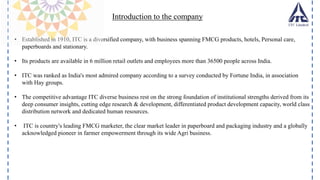
Introduction to the company
• Established in 1910, ITC is a diversified company, with business spanning FMCG products, hotels, Personal care,
paperboards and stationary.
• Its products are available in 6 million retail outlets and employees more than 36500 people across India.
• ITC was ranked as India's most admired company according to a survey conducted by Fortune India, in association
with Hay groups.
• The competitive advantage ITC diverse business rest on the strong foundation of institutional strengths derived from its
deep consumer insights, cutting edge research & development, differentiated product development capacity, world class
distribution network and dedicated human resources.
• ITC is country's leading FMCG marketer, the clear market leader in paperboard and packaging industry and a globally
acknowledged pioneer in farmer empowerment through its wide Agri business.
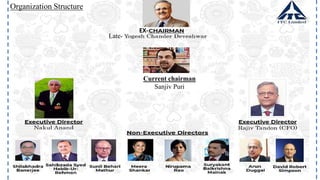
Organization Structure
EX-
Current chairman
Sanjiv Puri
Late-
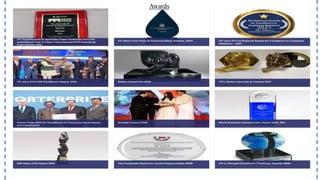
Awards
.
ITC VISION
Sustain ITC's position as one of India's most
valuable corporations through world class
performance, creating growing
value for the Indian economy
and the Company’s
Stakeholders.
ITC MISSION
To enhance the wealth generating capability of
the enterprise in a
globalising environment,
delivering superior and
sustainable stakeholder
Value.
VALUES
ITC's Core Values
are aimed at developing
customer-focused, high-
performance organisation
which creates value for all its
stakeholders:
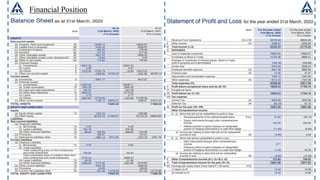
Financial Position
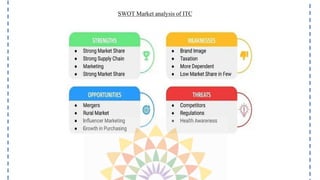
SWOT Market analysis of ITC
ITC ICML Panchla
FMCG Food Product Manufacturer
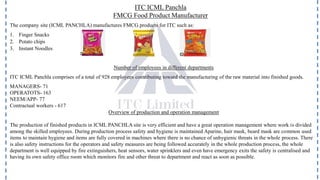
The company site (ICML PANCHLA) manufactures FMCG products for ITC such as:
1. Finger Snacks
2. Potato chips
3. Instant Noodles
Number of employees in different departments
ITC ICML Panchla comprises of a total of 928 employees contributing toward the manufacturing of the raw material into finished goods.
MANAGERS- 71
OPERATOTS- 163
NEEM/APP- 77
Contractual workers - 617
Overview of production and operation management
The production of finished products in ICML PANCHLA site is very efficient and have a great operation management where work is divided
among the skilled employees. During production process safety and hygiene is maintained Aparine, hair mask, beard mask are common used
items to maintain hygiene and items are fully covered in machines where there is no chance of unhygienic threats in the whole process. There
is also safety instructions for the operators and safety measures are being followed accurately in the whole production process, the whole
department is well equipped by fire extinguishers, heat sensors, water sprinklers and even have emergency exits the safety is centralised and
having its own safety office room which monitors fire and other threat to department and react as soon as possible.
OPERATIONAL AREA
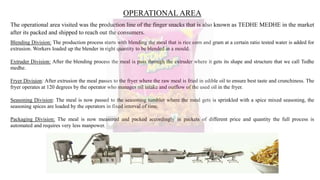
The operational area visited was the production line of the finger snacks that is also known as TEDHE MEDHE in the market
after its packed and shipped to reach out the consumers.
Blending Division: The production process starts with blending the meal that is rice corn and gram at a certain ratio tested water is added for
extrusion. Workers loaded up the blender in right quantity to be blended in a mould.
Extruder Division: After the blending process the meal is pass through the extruder where it gets its shape and structure that we call Tedhe
medhe.
Fryer Division: After extrusion the meal passes to the fryer where the raw meal is fried in edible oil to ensure best taste and crunchiness. The
fryer operates at 120 degrees by the operator who manages oil intake and outflow of the used oil in the fryer.
Seasoning Division: The meal is now passed to the seasoning tumbler where the meal gets is sprinkled with a spice mixed seasoning, the
seasoning spices are loaded by the operators in fixed interval of time.
Packaging Division: The meal is now measured and packed accordingly in packets of different price and quantity the full process is
automated and requires very less manpower.
Productional Area
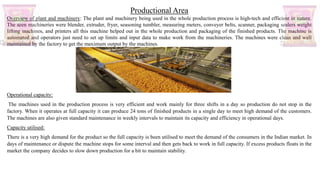
Overview of plant and machinery: The plant and machinery being used in the whole production process is high-tech and efficient in nature.
The seen machineries were blender, extruder, fryer, seasoning tumbler, measuring meters, conveyer belts, scanner, packaging sealers weight
lifting machines, and printers all this machine helped out in the whole production and packaging of the finished products. The machine is
automated and operators just need to set up limits and input data to make work from the machineries. The machines were clean and well
maintained by the factory to get the maximum output by the machines.
Operational capacity:
The machines used in the production process is very efficient and work mainly for three shifts in a day so production do not stop in the
factory. When it operates at full capacity it can produce 24 tons of finished products in a single day to meet high demand of the customers.
The machines are also given standard maintenance in weekly intervals to maintain its capacity and efficiency in operational days.
Capacity utilised:
There is a very high demand for the product so the full capacity is been utilised to meet the demand of the consumers in the Indian market. In
days of maintenance or dispute the machine stops for some interval and then gets back to work in full capacity. If excess products floats in the
market the company decides to slow down production for a bit to maintain stability.
Distribution Network
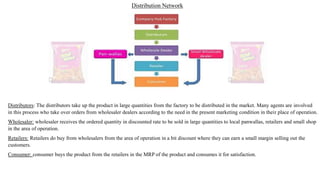
Distributors: The distributors take up the product in large quantities from the factory to be distributed in the market. Many agents are involved
in this process who take over orders from wholesaler dealers according to the need in the present marketing condition in their place of operation.
Wholesaler: wholesaler receives the ordered quantity in discounted rate to be sold in large quantities to local panwallas, retailers and small shop
in the area of operation.
Retailers: Retailers do buy from wholesalers from the area of operation in a bit discount where they can earn a small margin selling out the
customers.
Consumer: consumer buys the product from the retailers in the MRP of the product and consumes it for satisfaction.
Thank You

ITC PPT (1).pptx

  • 1.
    Presented by -Aniket Prasad (Student of IQ City United World school of Business) Enrollment number – Batch- 2022-2024 INDUSTRY VISIT
  • 2.
    Introduction to thecompany • Established in 1910, ITC is a diversified company, with business spanning FMCG products, hotels, Personal care, paperboards and stationary. • Its products are available in 6 million retail outlets and employees more than 36500 people across India. • ITC was ranked as India's most admired company according to a survey conducted by Fortune India, in association with Hay groups. • The competitive advantage ITC diverse business rest on the strong foundation of institutional strengths derived from its deep consumer insights, cutting edge research & development, differentiated product development capacity, world class distribution network and dedicated human resources. • ITC is country's leading FMCG marketer, the clear market leader in paperboard and packaging industry and a globally acknowledged pioneer in farmer empowerment through its wide Agri business.
  • 3.
  • 4.
  • 5.
    . ITC VISION Sustain ITC'sposition as one of India's most valuable corporations through world class performance, creating growing value for the Indian economy and the Company’s Stakeholders. ITC MISSION To enhance the wealth generating capability of the enterprise in a globalising environment, delivering superior and sustainable stakeholder Value. VALUES ITC's Core Values are aimed at developing customer-focused, high- performance organisation which creates value for all its stakeholders:
  • 6.
  • 7.
  • 8.
    ITC ICML Panchla FMCGFood Product Manufacturer The company site (ICML PANCHLA) manufactures FMCG products for ITC such as: 1. Finger Snacks 2. Potato chips 3. Instant Noodles Number of employees in different departments ITC ICML Panchla comprises of a total of 928 employees contributing toward the manufacturing of the raw material into finished goods. MANAGERS- 71 OPERATOTS- 163 NEEM/APP- 77 Contractual workers - 617 Overview of production and operation management The production of finished products in ICML PANCHLA site is very efficient and have a great operation management where work is divided among the skilled employees. During production process safety and hygiene is maintained Aparine, hair mask, beard mask are common used items to maintain hygiene and items are fully covered in machines where there is no chance of unhygienic threats in the whole process. There is also safety instructions for the operators and safety measures are being followed accurately in the whole production process, the whole department is well equipped by fire extinguishers, heat sensors, water sprinklers and even have emergency exits the safety is centralised and having its own safety office room which monitors fire and other threat to department and react as soon as possible.
  • 9.
    OPERATIONAL AREA The operationalarea visited was the production line of the finger snacks that is also known as TEDHE MEDHE in the market after its packed and shipped to reach out the consumers. Blending Division: The production process starts with blending the meal that is rice corn and gram at a certain ratio tested water is added for extrusion. Workers loaded up the blender in right quantity to be blended in a mould. Extruder Division: After the blending process the meal is pass through the extruder where it gets its shape and structure that we call Tedhe medhe. Fryer Division: After extrusion the meal passes to the fryer where the raw meal is fried in edible oil to ensure best taste and crunchiness. The fryer operates at 120 degrees by the operator who manages oil intake and outflow of the used oil in the fryer. Seasoning Division: The meal is now passed to the seasoning tumbler where the meal gets is sprinkled with a spice mixed seasoning, the seasoning spices are loaded by the operators in fixed interval of time. Packaging Division: The meal is now measured and packed accordingly in packets of different price and quantity the full process is automated and requires very less manpower.
  • 10.
    Productional Area Overview ofplant and machinery: The plant and machinery being used in the whole production process is high-tech and efficient in nature. The seen machineries were blender, extruder, fryer, seasoning tumbler, measuring meters, conveyer belts, scanner, packaging sealers weight lifting machines, and printers all this machine helped out in the whole production and packaging of the finished products. The machine is automated and operators just need to set up limits and input data to make work from the machineries. The machines were clean and well maintained by the factory to get the maximum output by the machines. Operational capacity: The machines used in the production process is very efficient and work mainly for three shifts in a day so production do not stop in the factory. When it operates at full capacity it can produce 24 tons of finished products in a single day to meet high demand of the customers. The machines are also given standard maintenance in weekly intervals to maintain its capacity and efficiency in operational days. Capacity utilised: There is a very high demand for the product so the full capacity is been utilised to meet the demand of the consumers in the Indian market. In days of maintenance or dispute the machine stops for some interval and then gets back to work in full capacity. If excess products floats in the market the company decides to slow down production for a bit to maintain stability.
  • 11.
    Distribution Network Distributors: Thedistributors take up the product in large quantities from the factory to be distributed in the market. Many agents are involved in this process who take over orders from wholesaler dealers according to the need in the present marketing condition in their place of operation. Wholesaler: wholesaler receives the ordered quantity in discounted rate to be sold in large quantities to local panwallas, retailers and small shop in the area of operation. Retailers: Retailers do buy from wholesalers from the area of operation in a bit discount where they can earn a small margin selling out the customers. Consumer: consumer buys the product from the retailers in the MRP of the product and consumes it for satisfaction.
  • 12.