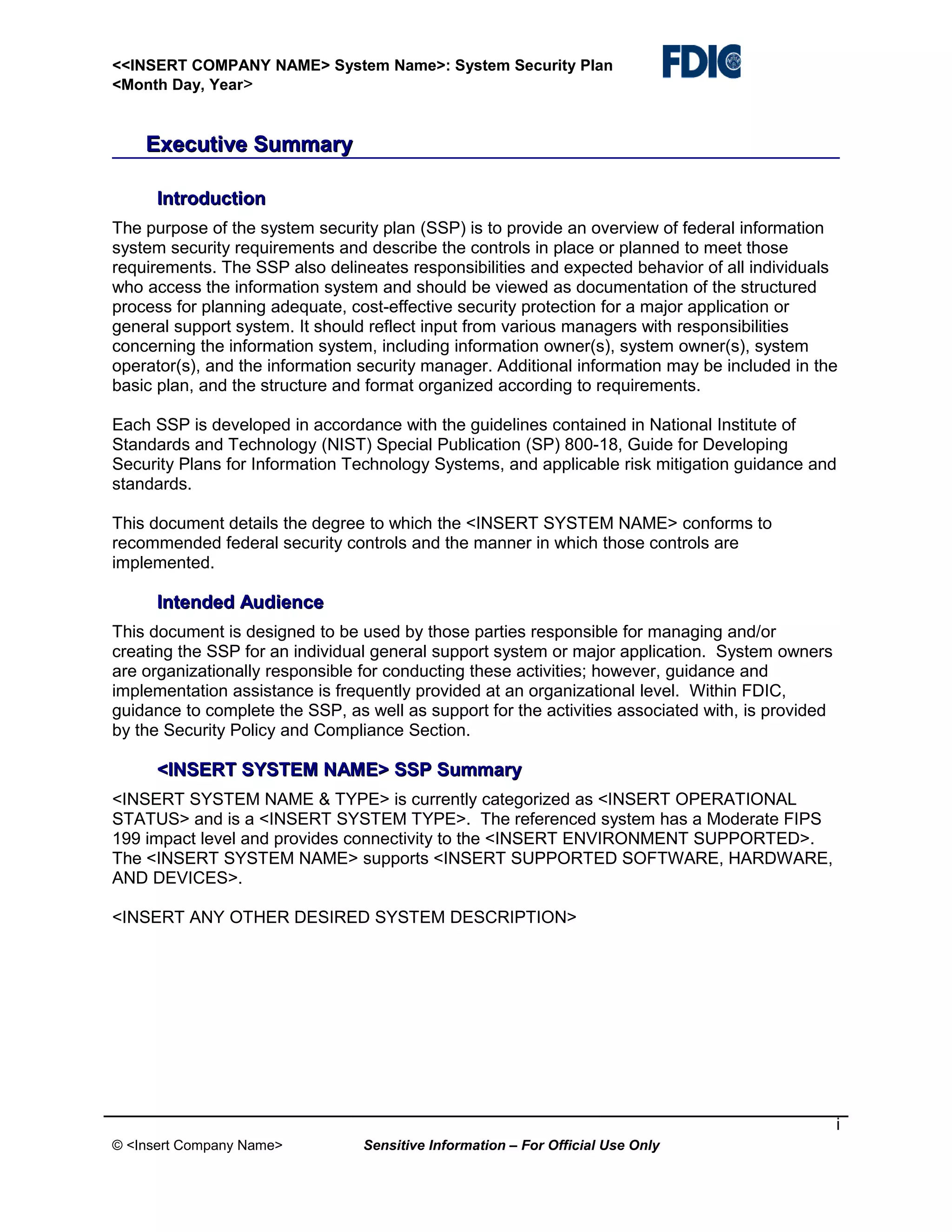
The document provides a system security plan for the <INSERT SYSTEM NAME> system. It contains 3 sections - an executive summary, system description and overview of security controls. The executive summary introduces the system security plan and provides a high-level summary of the <INSERT SYSTEM NAME> system, including that it is categorized as moderate impact and supports <INSERT ENVIRONMENT SUPPORTED>. The system description section provides details on the system technical environment, software, hardware and interconnections. The security controls section identifies which NIST 800-53 controls have been met, partially met, not met or are not applicable for the system.
This section introduces the certification and accreditation program, highlights the purpose of the SSP, and identifies the intended audience and federal security requirements.
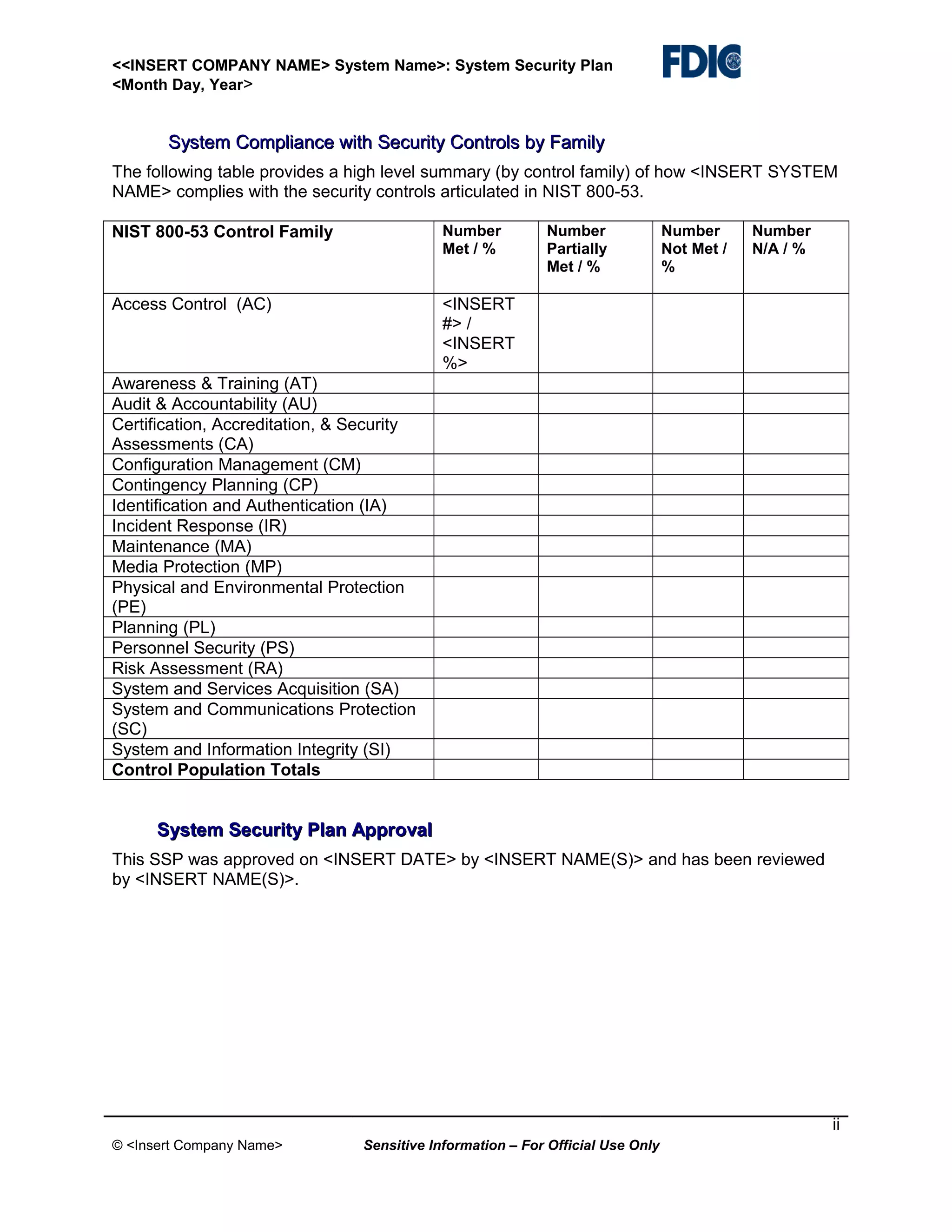
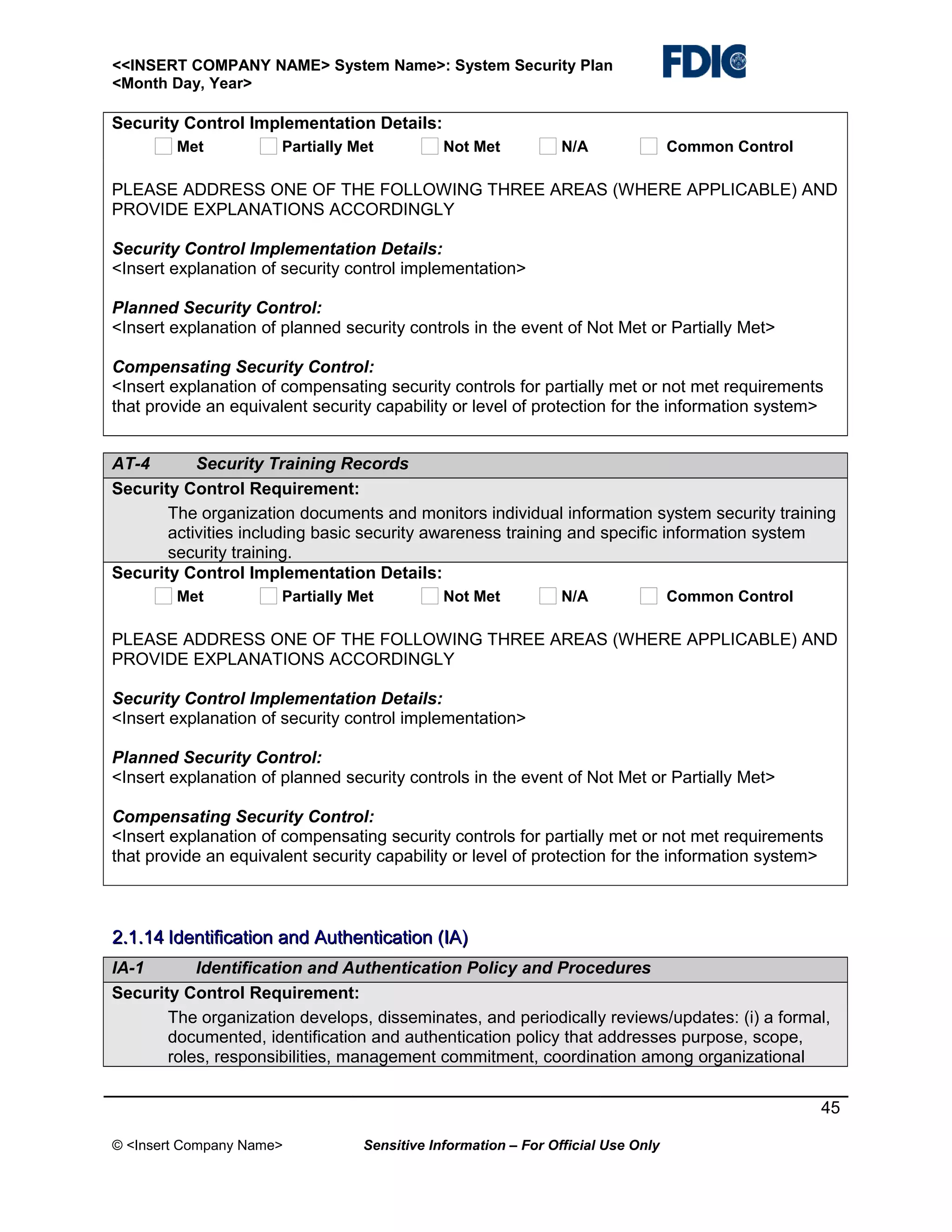
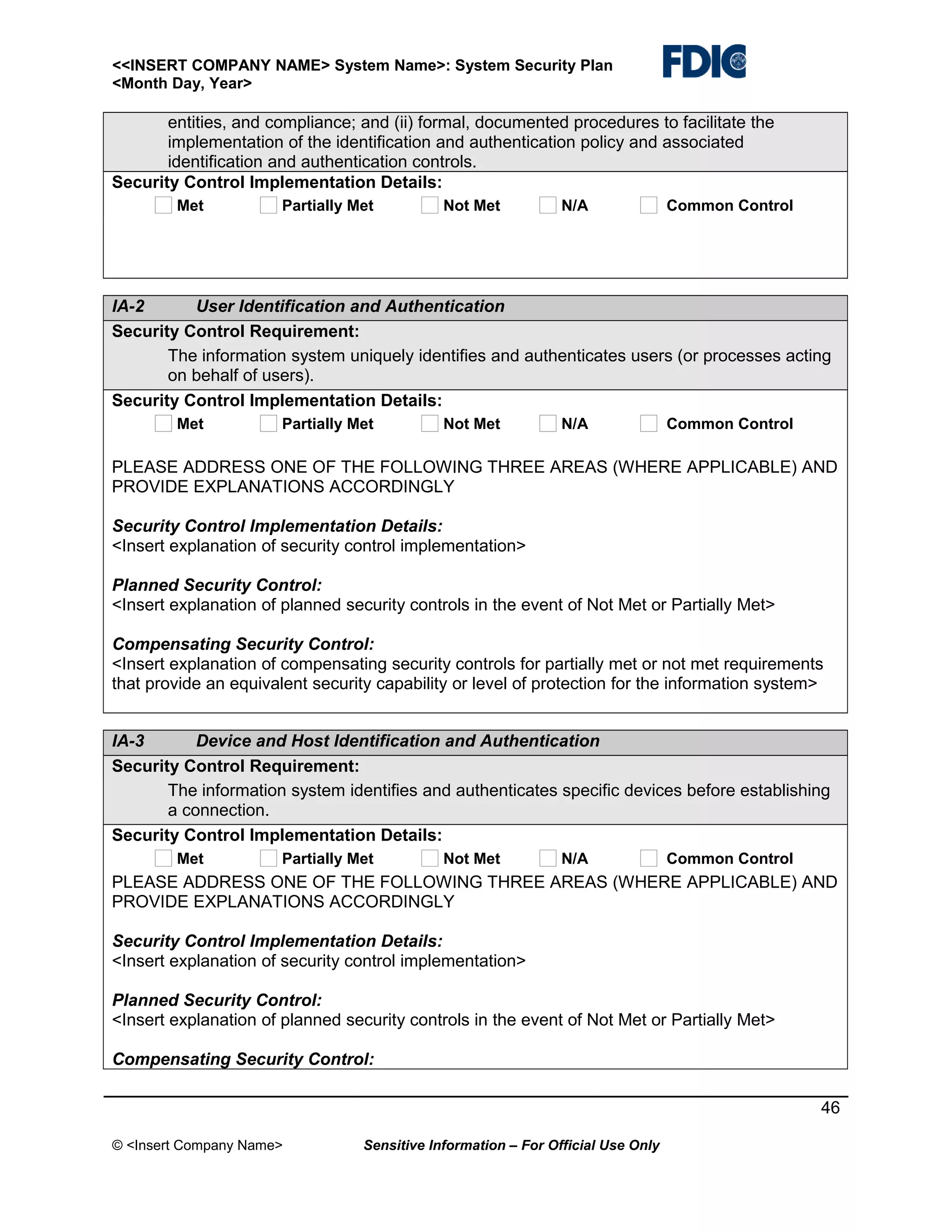
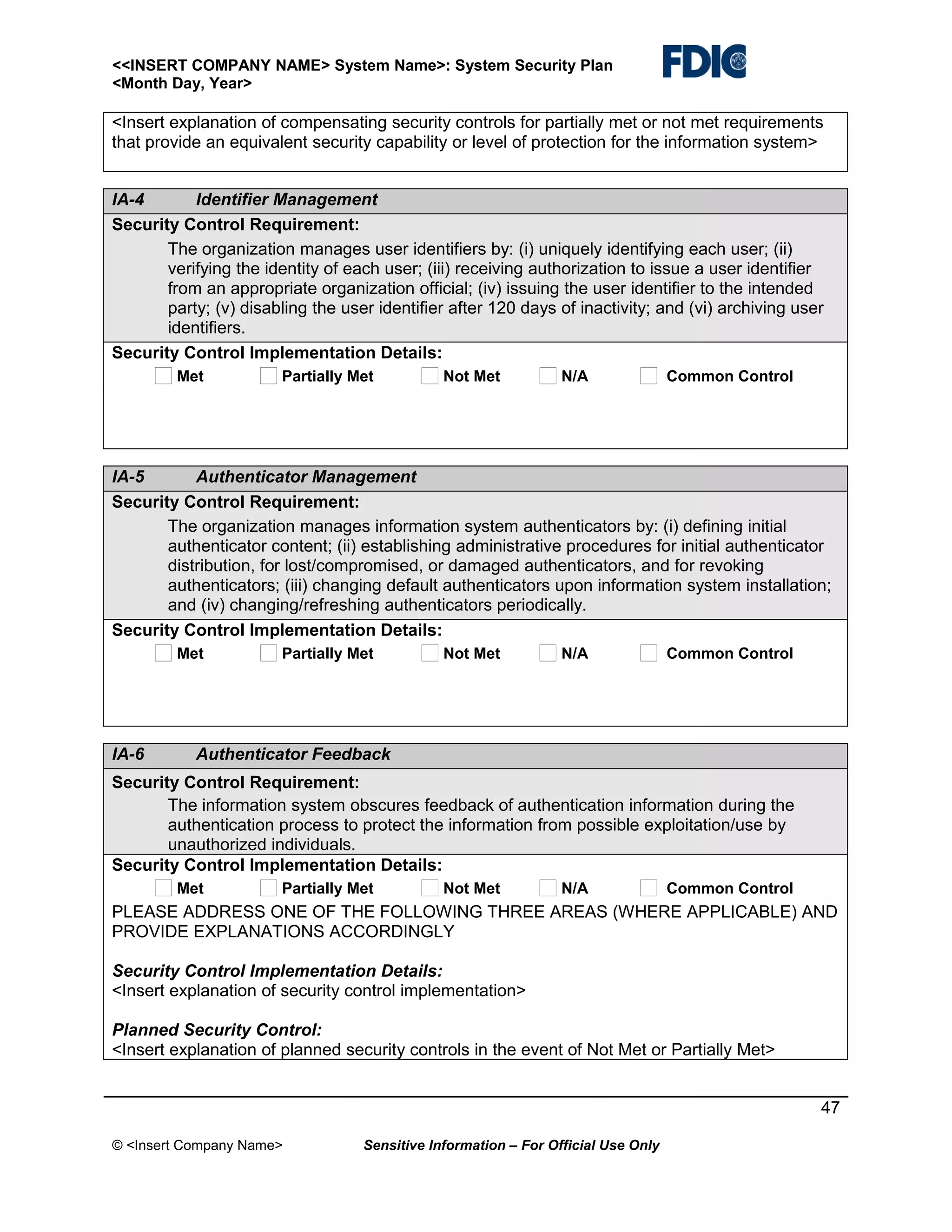
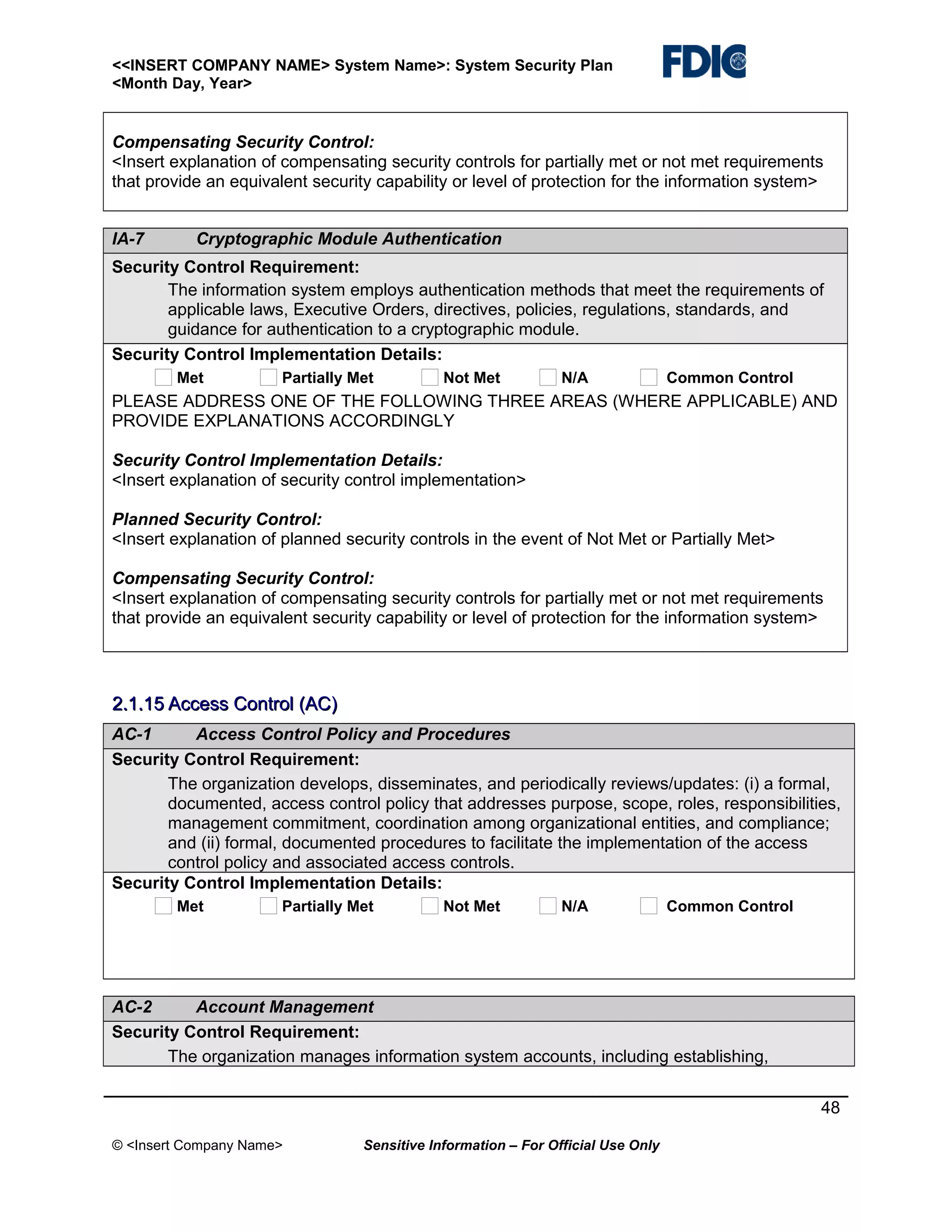
Provides a summary of the system's compliance with NIST 800-53 security controls, detailing performance metrics for various control families.
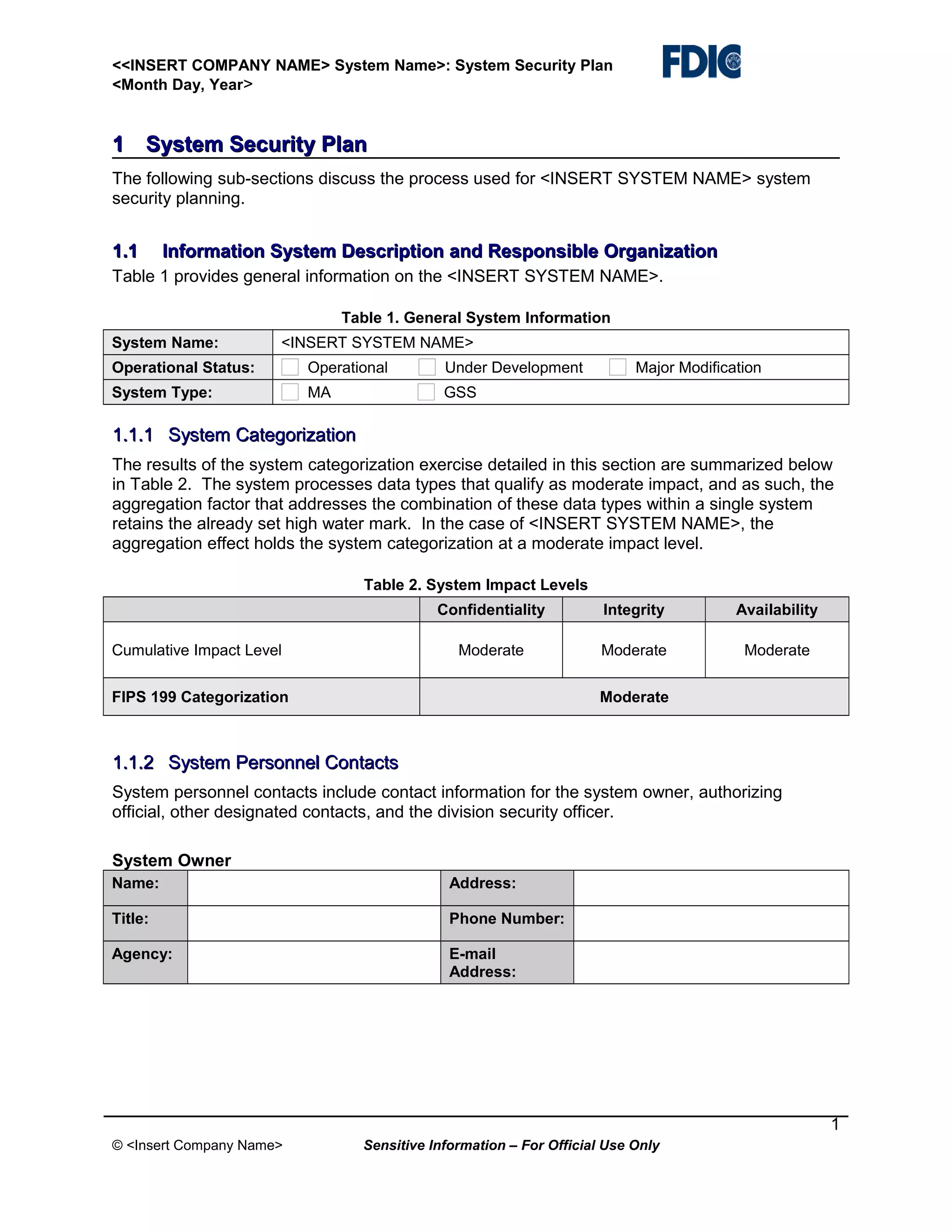
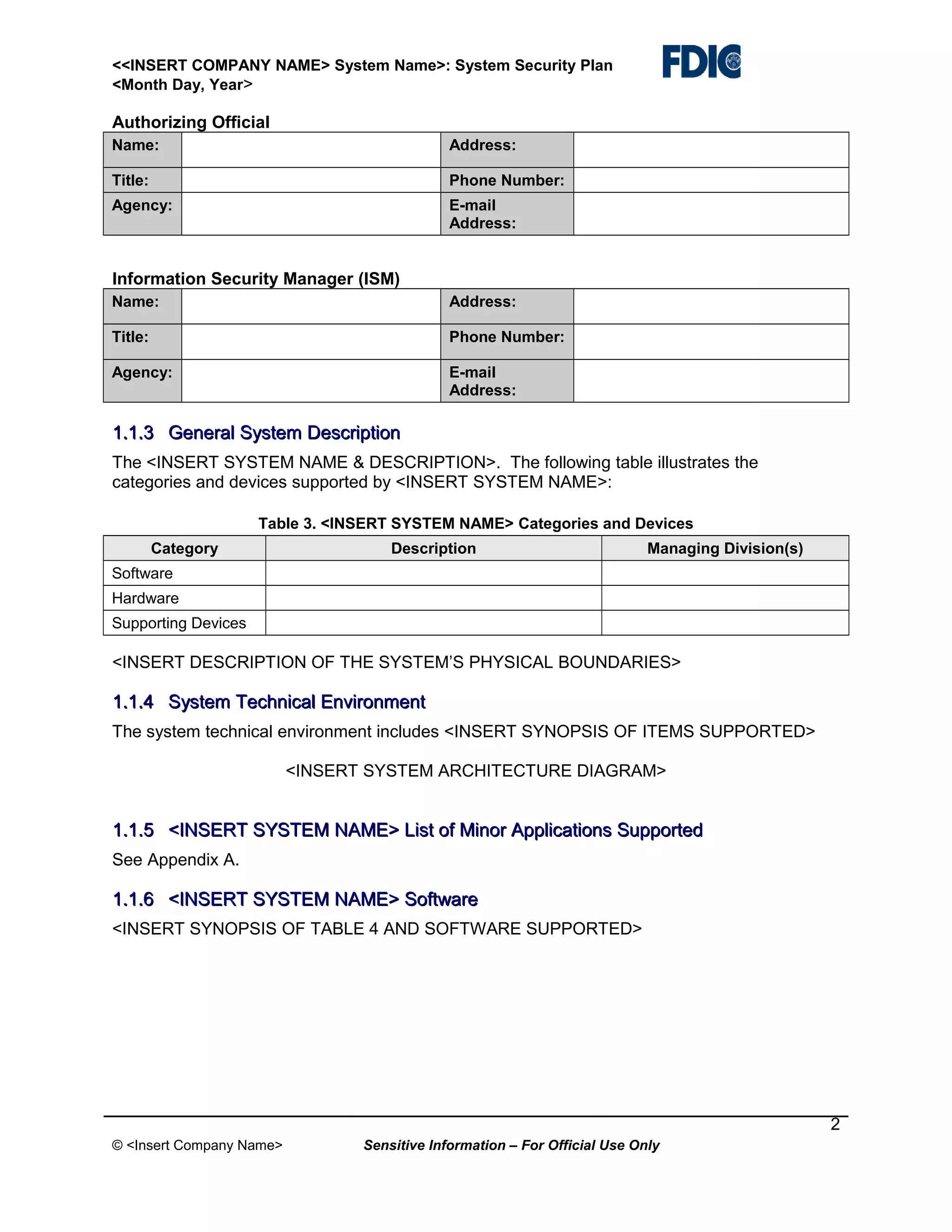
Elaborates on system categorization, operational status, relevant personnel contacts, system description, technical environment, and supported applications/software.
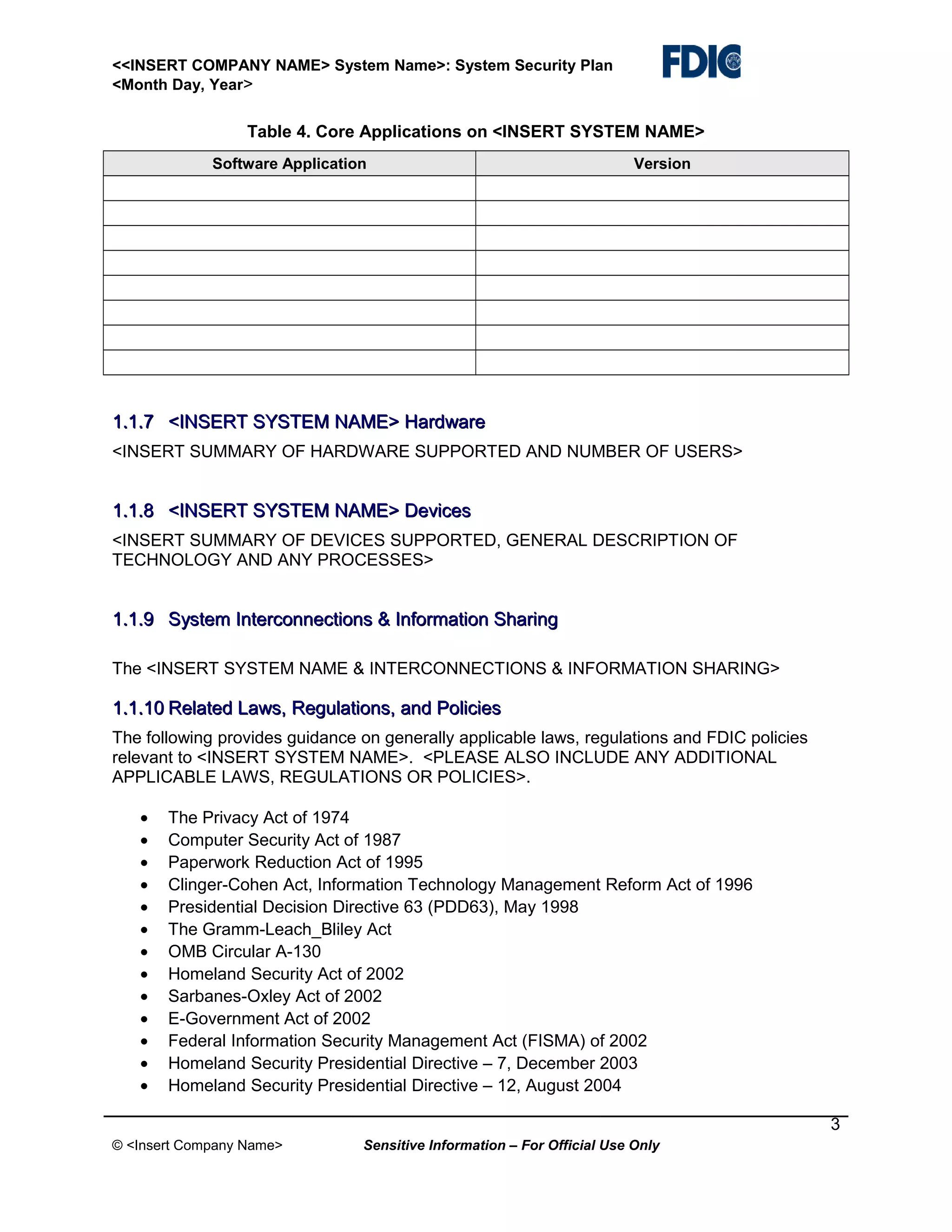
Details applicable laws, regulations, and policies influencing the system's operations and security measures.
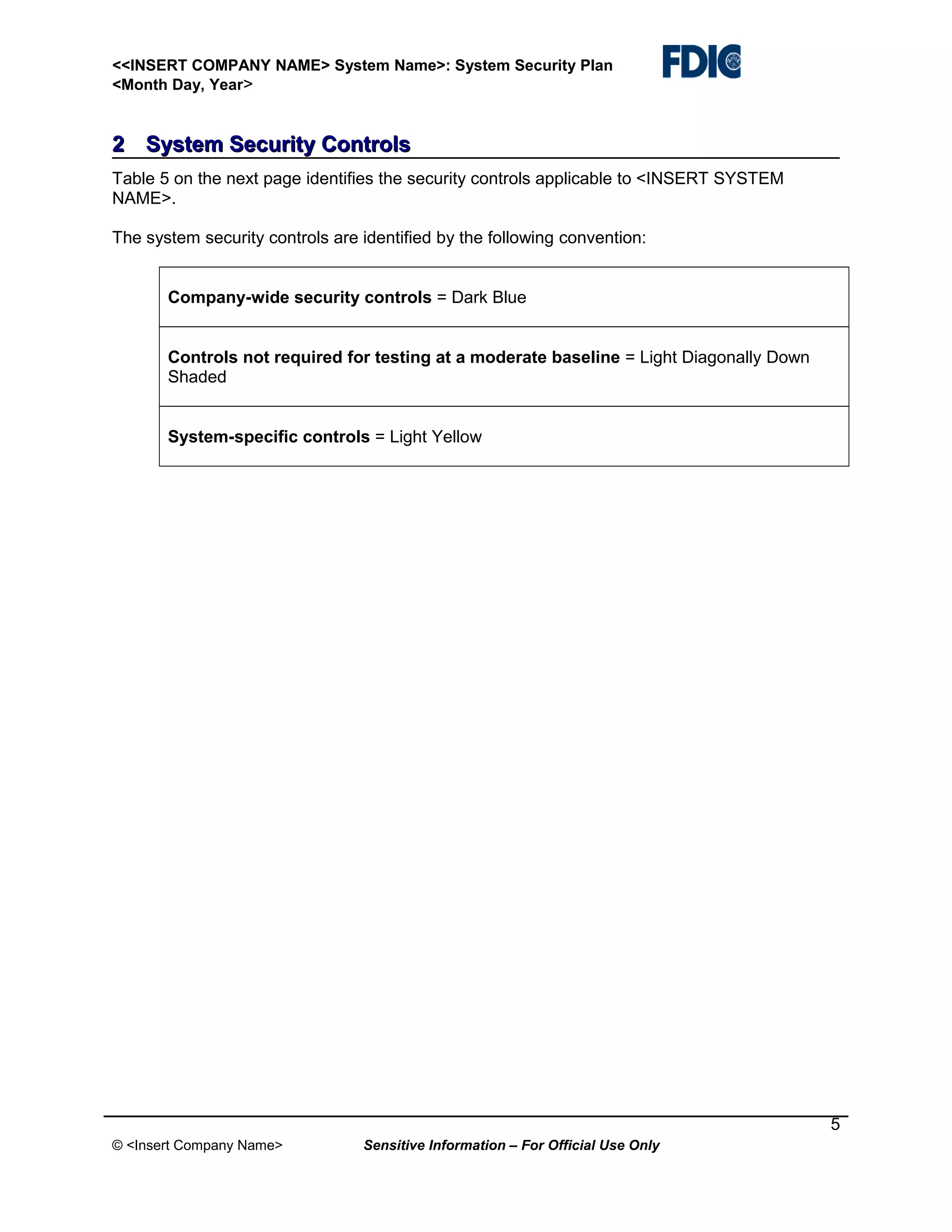
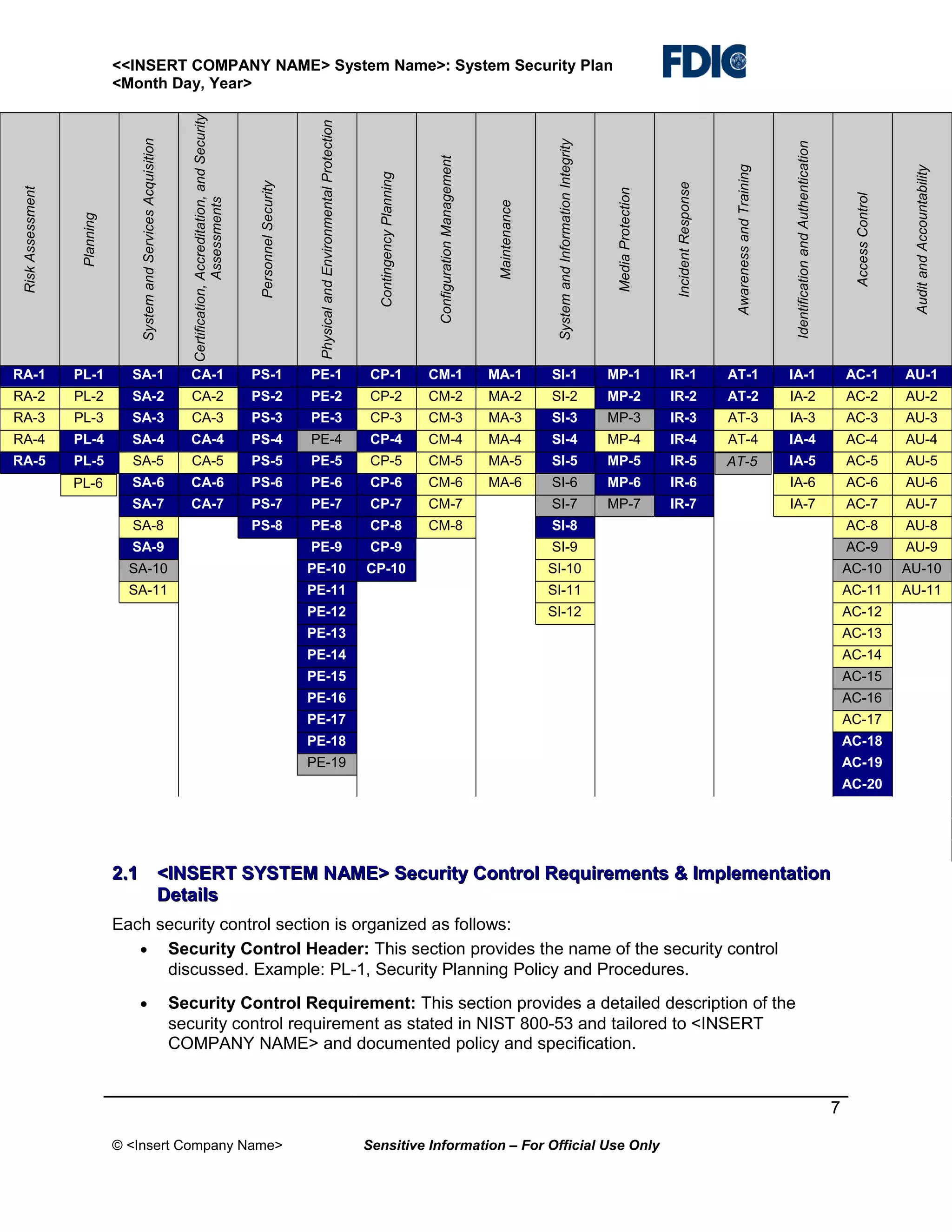
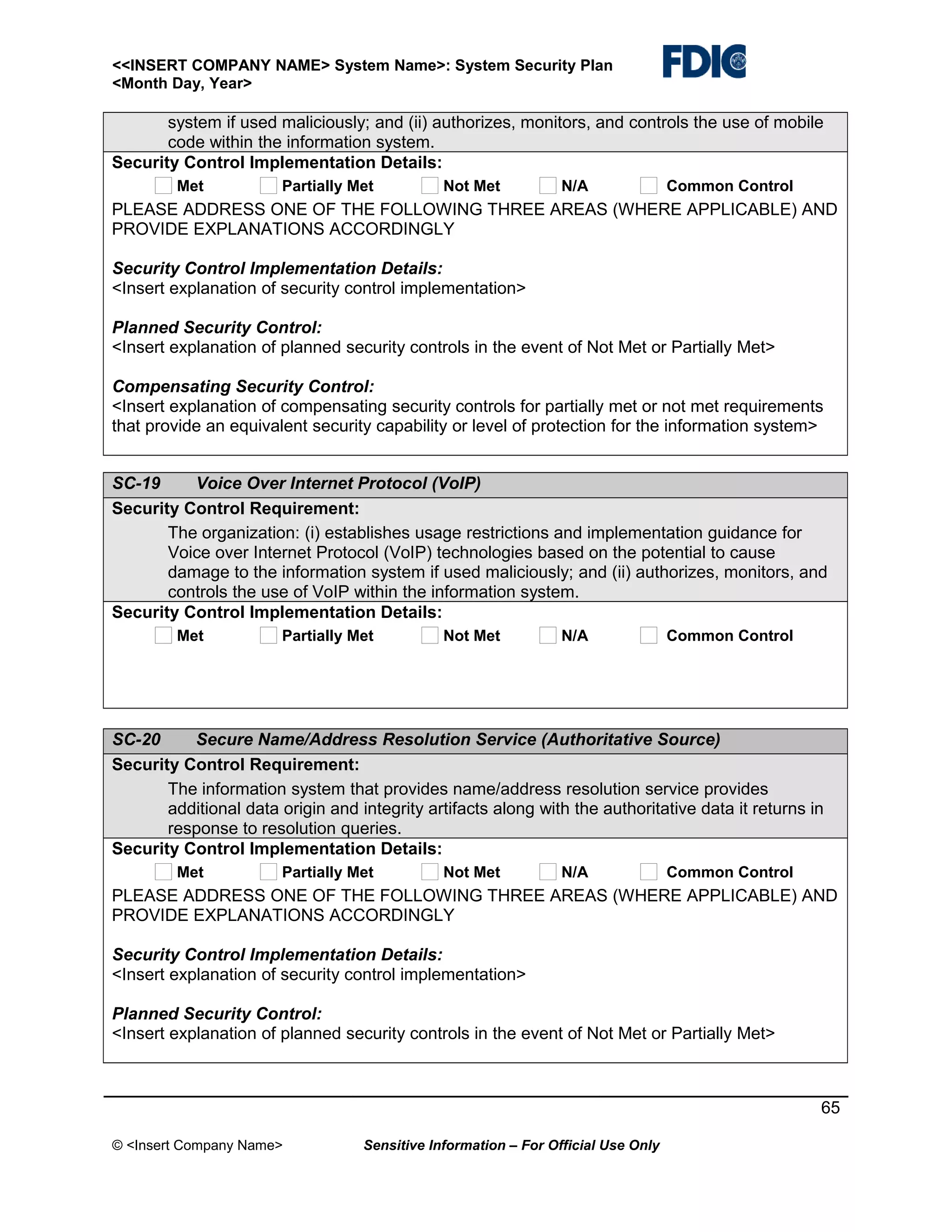
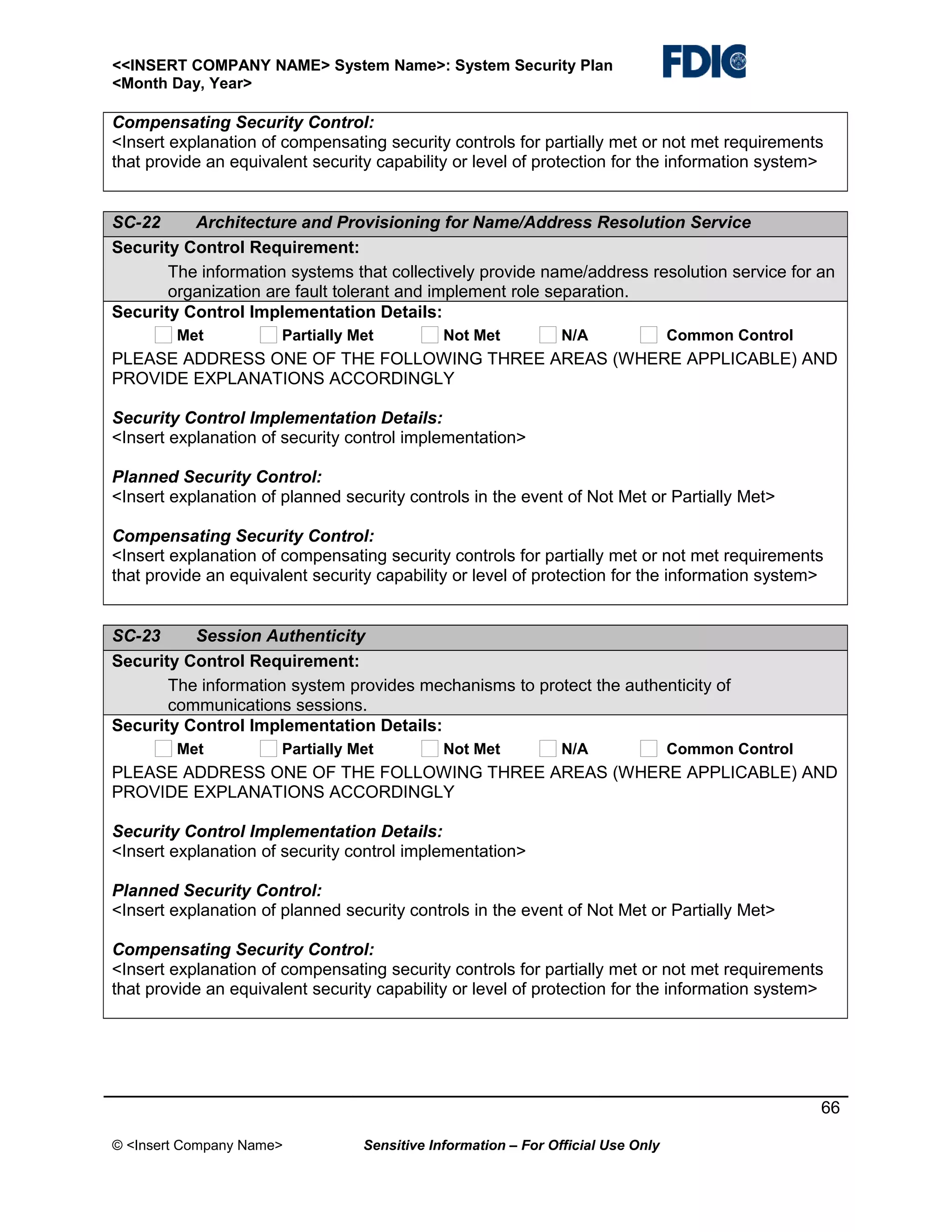
Introduces the system security controls identified in NIST standards, highlighting company-wide and system-specific controls.
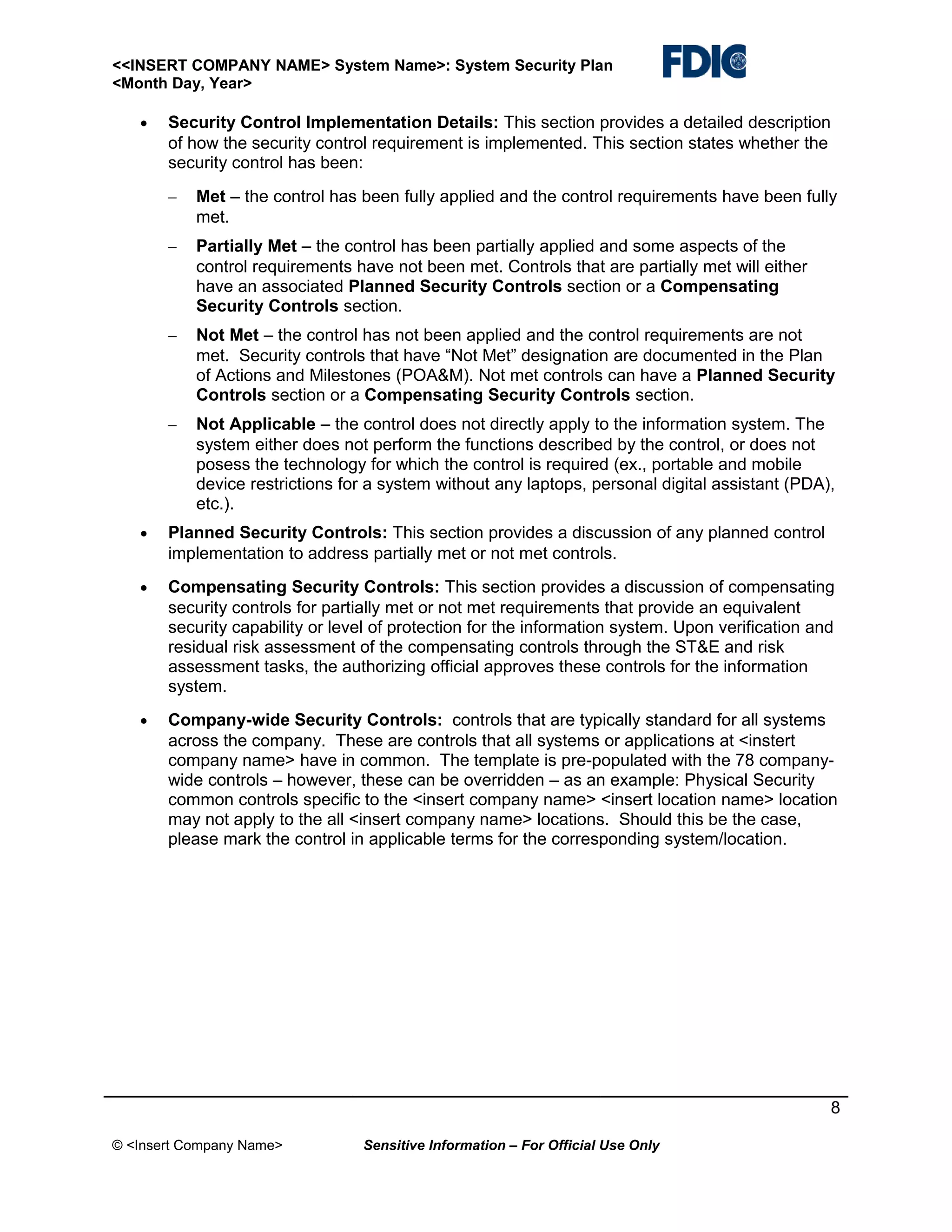
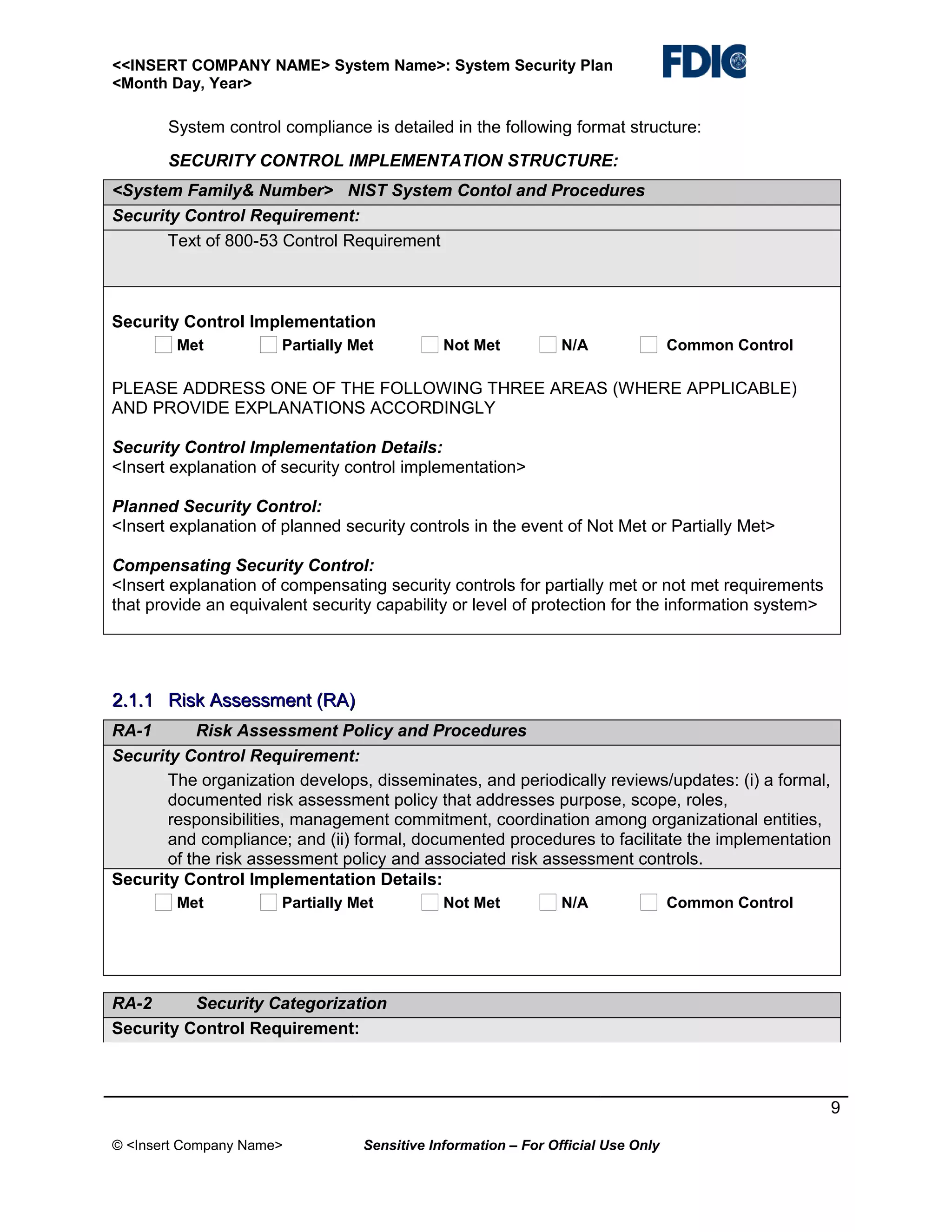
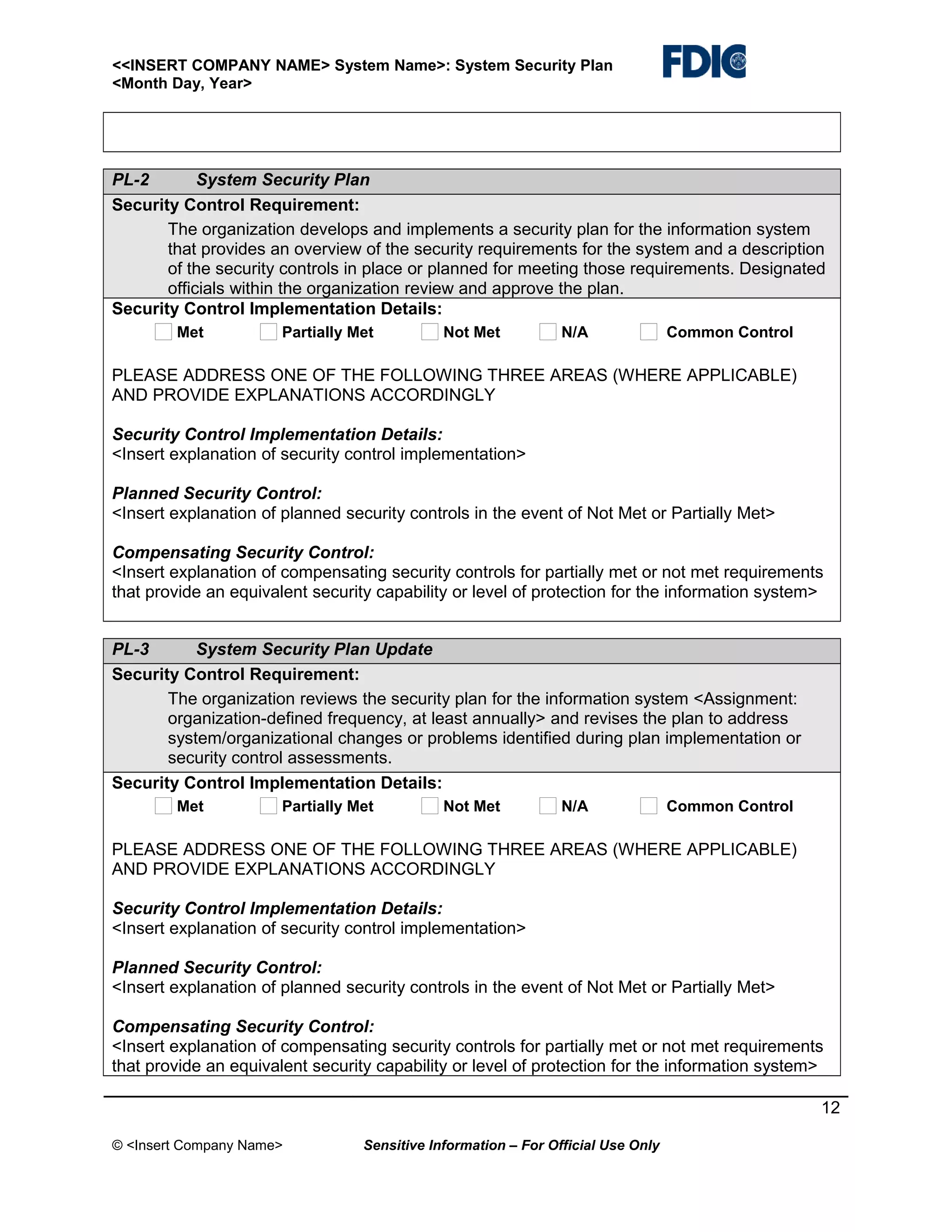
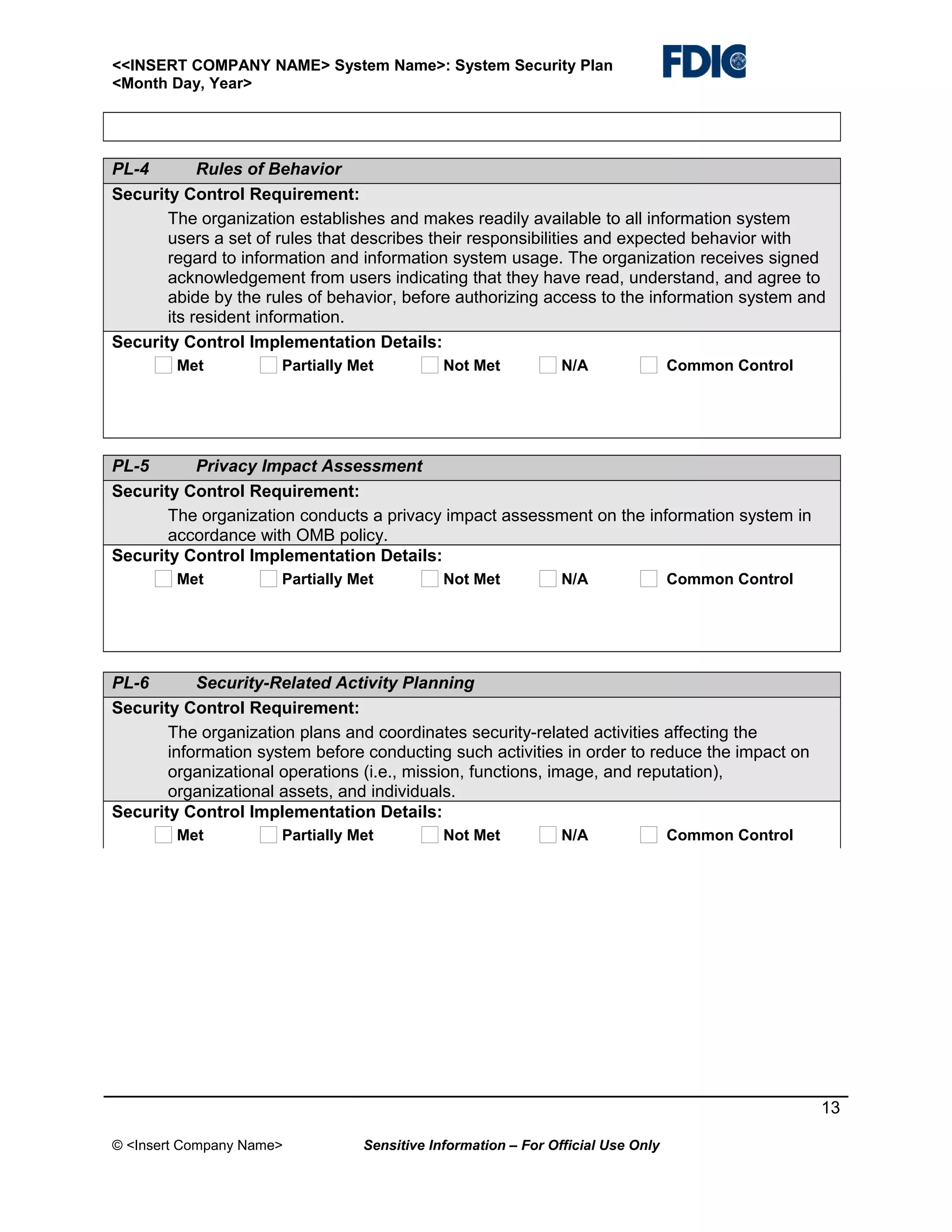
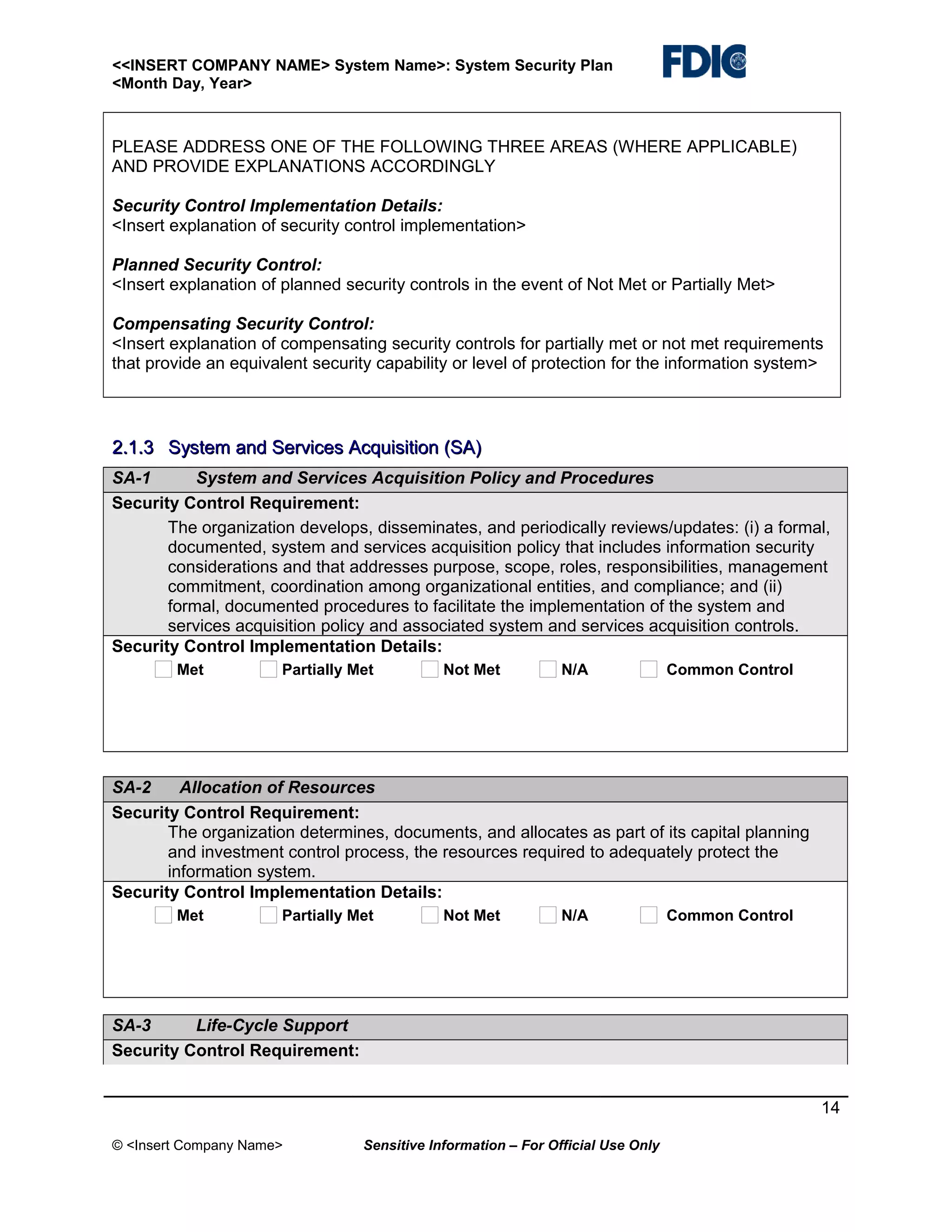
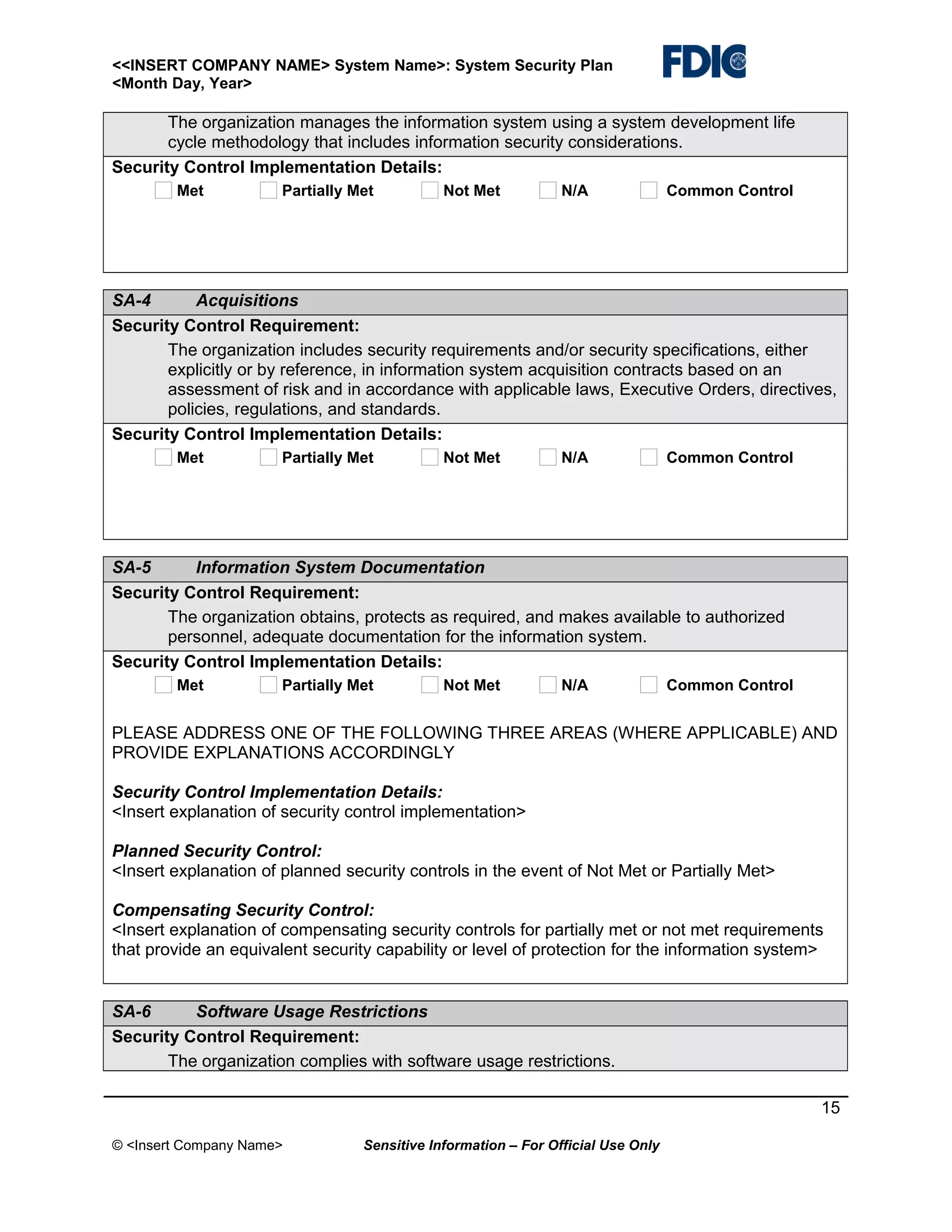
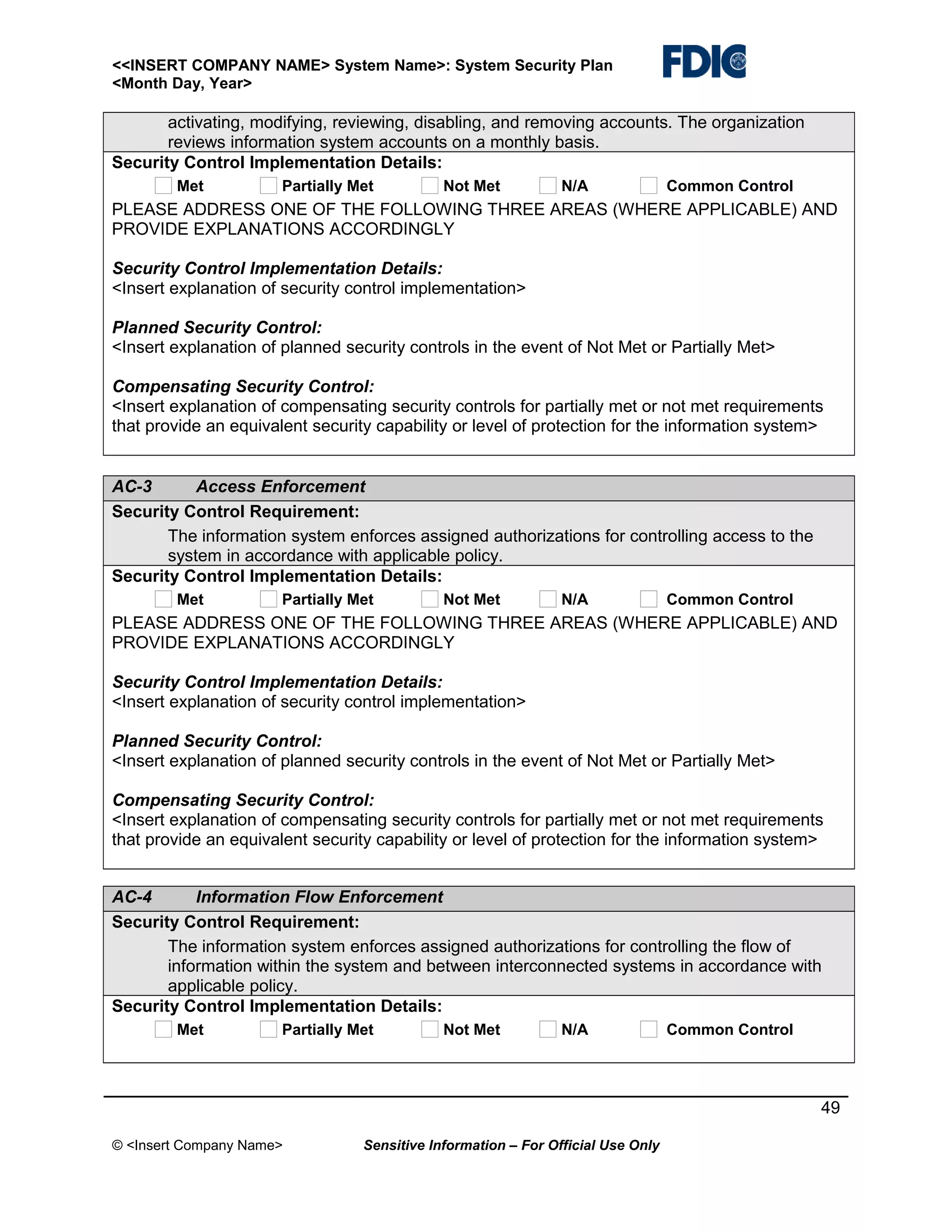
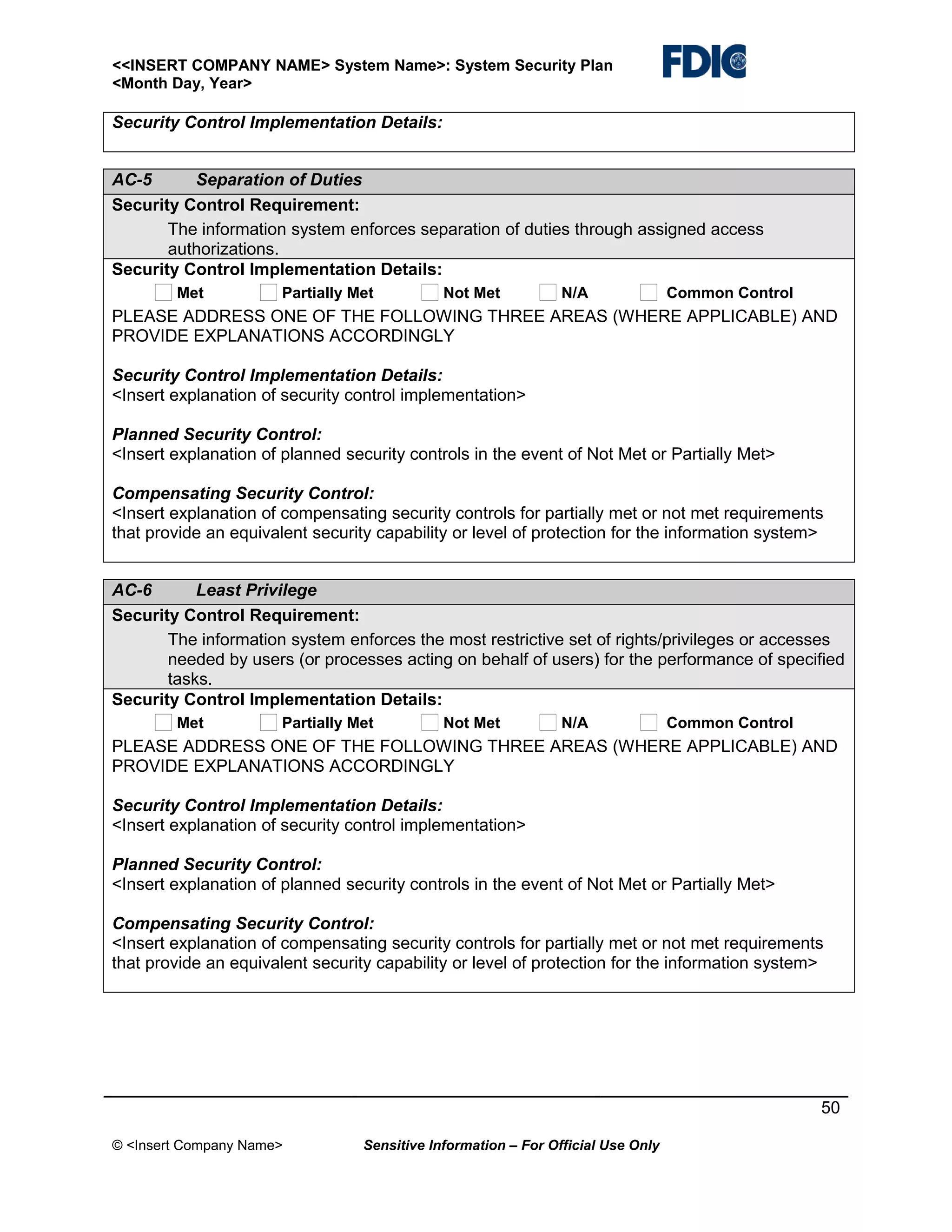
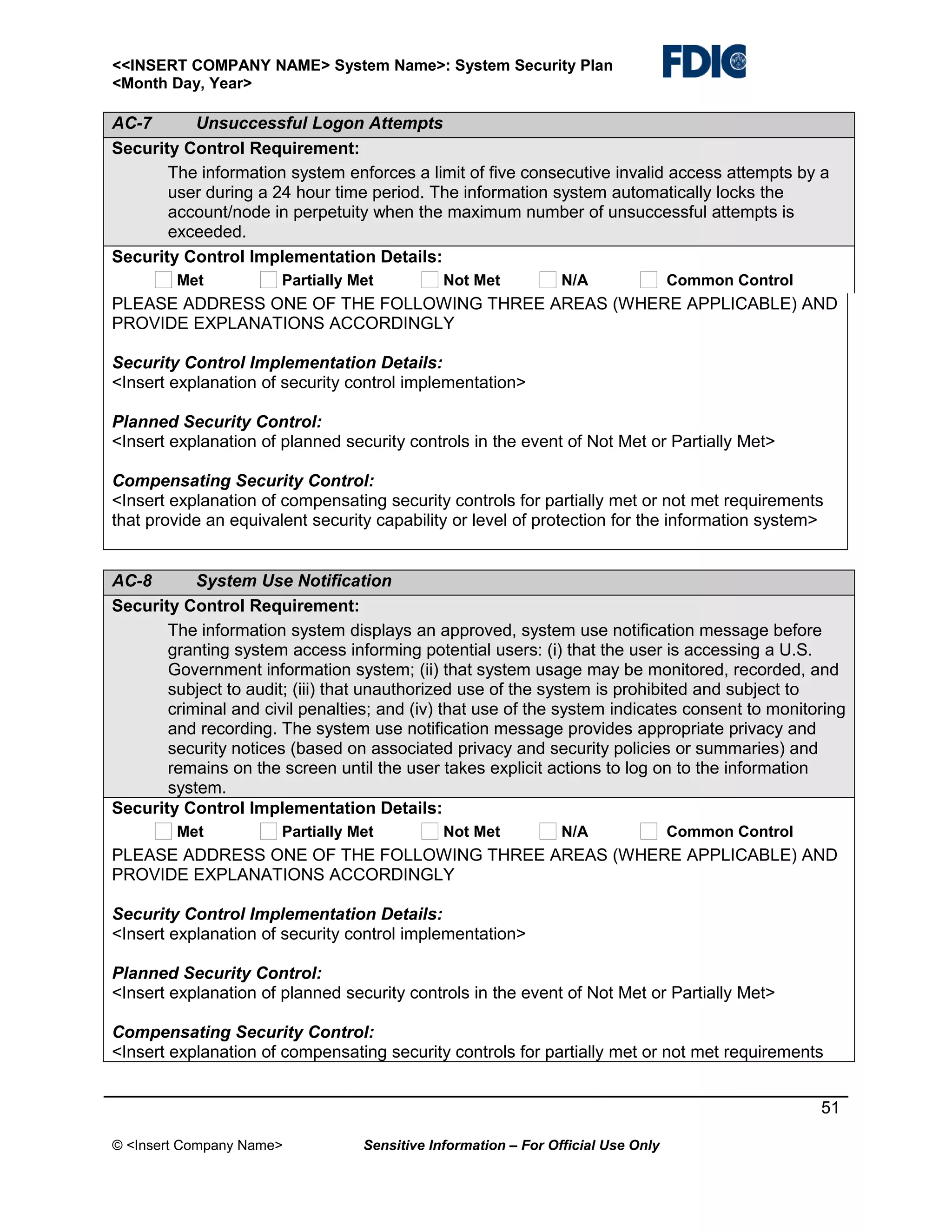
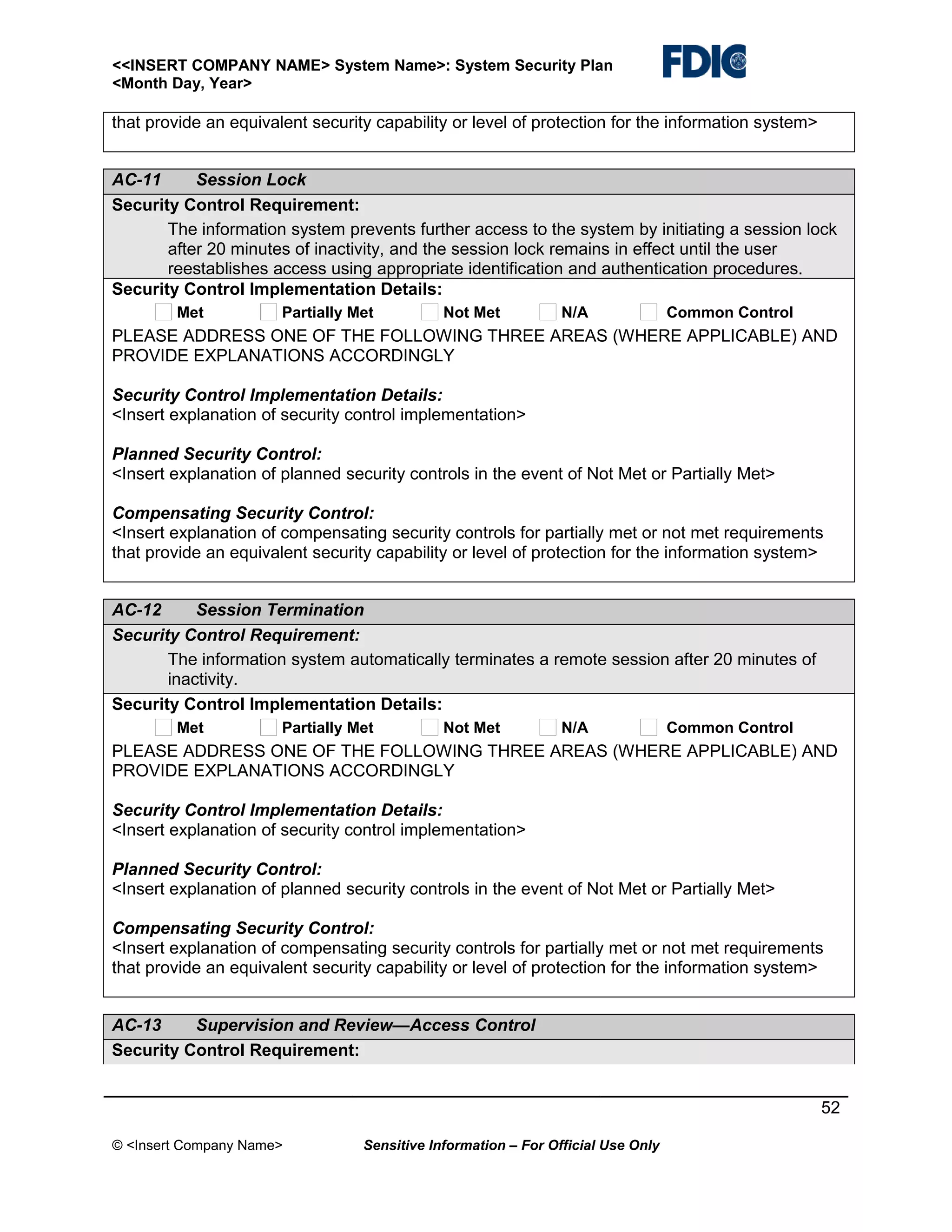
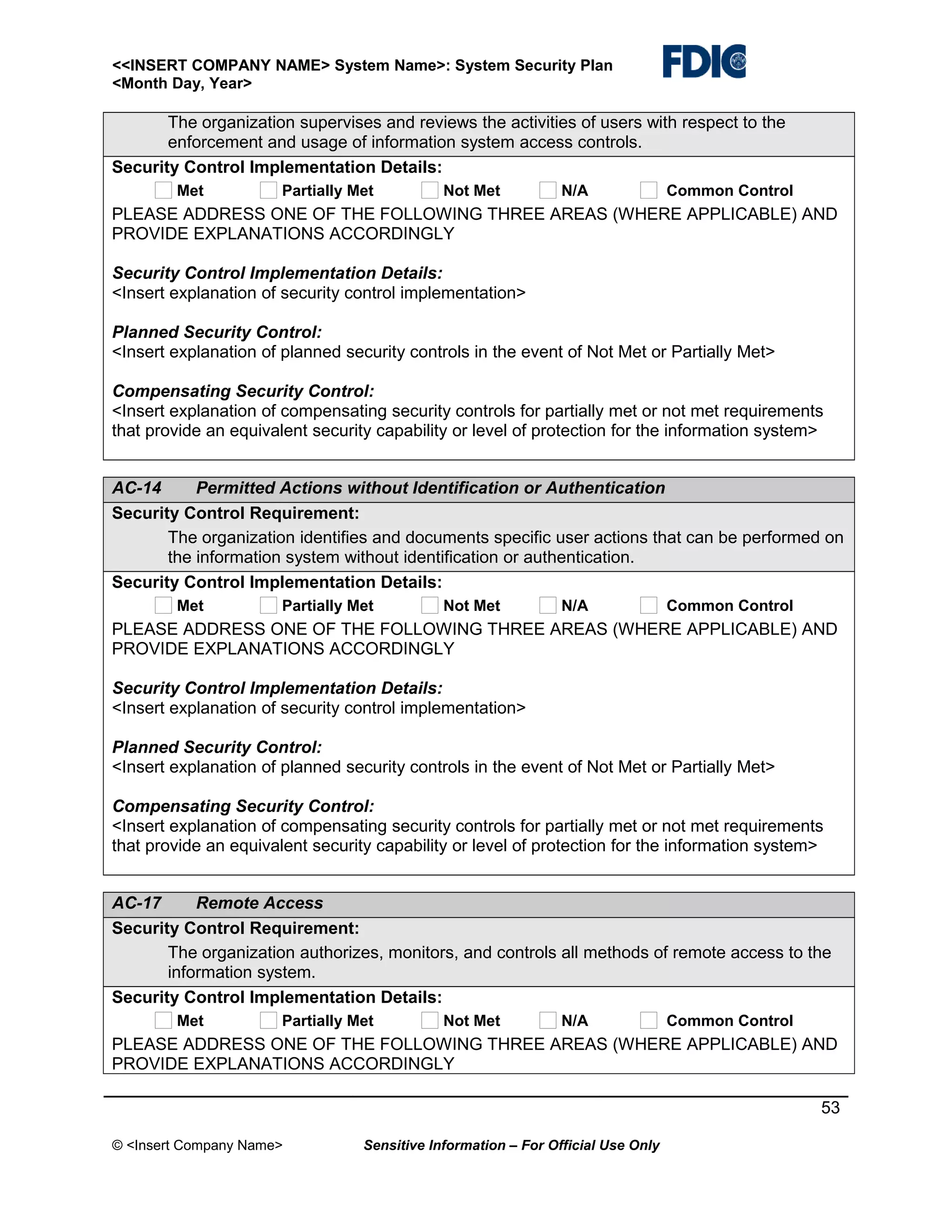
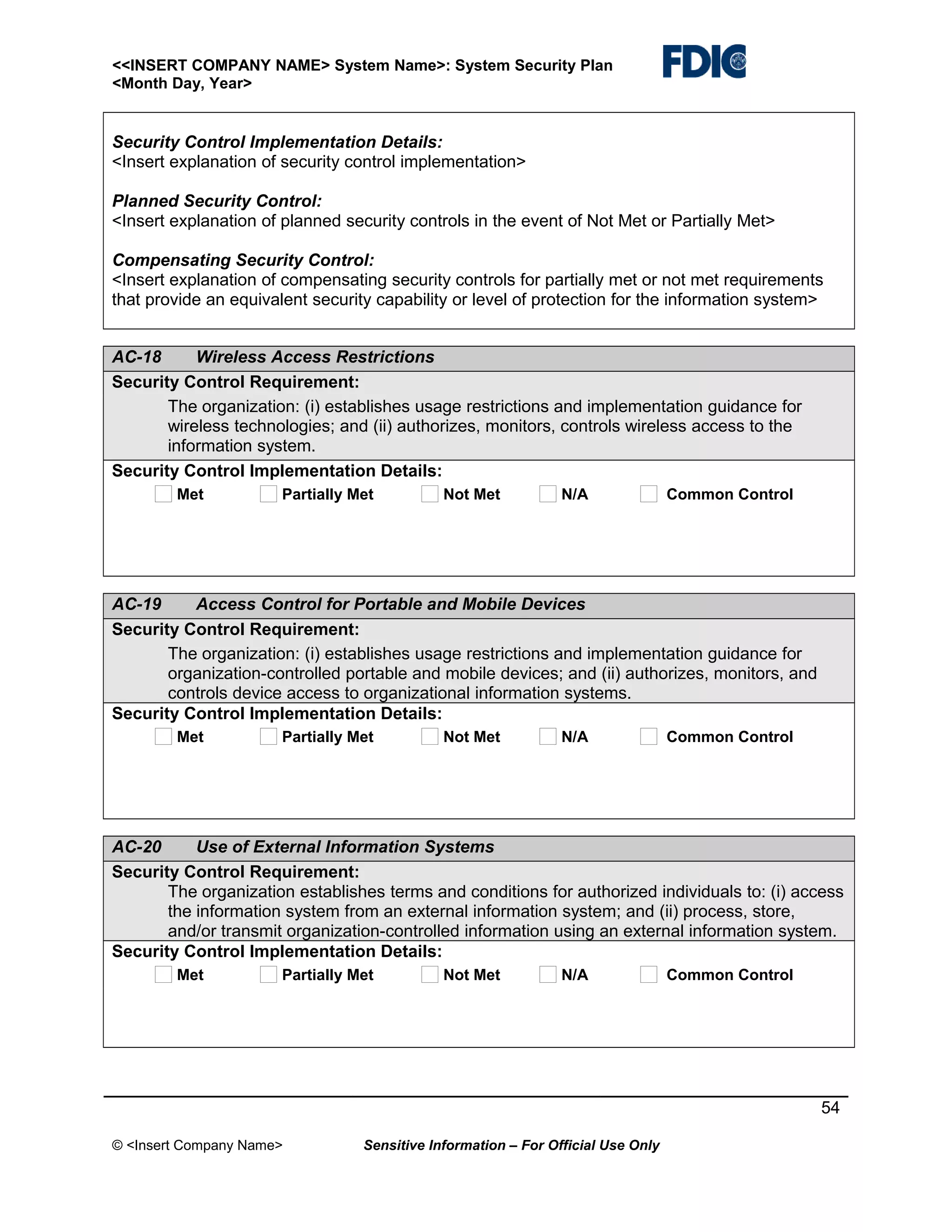
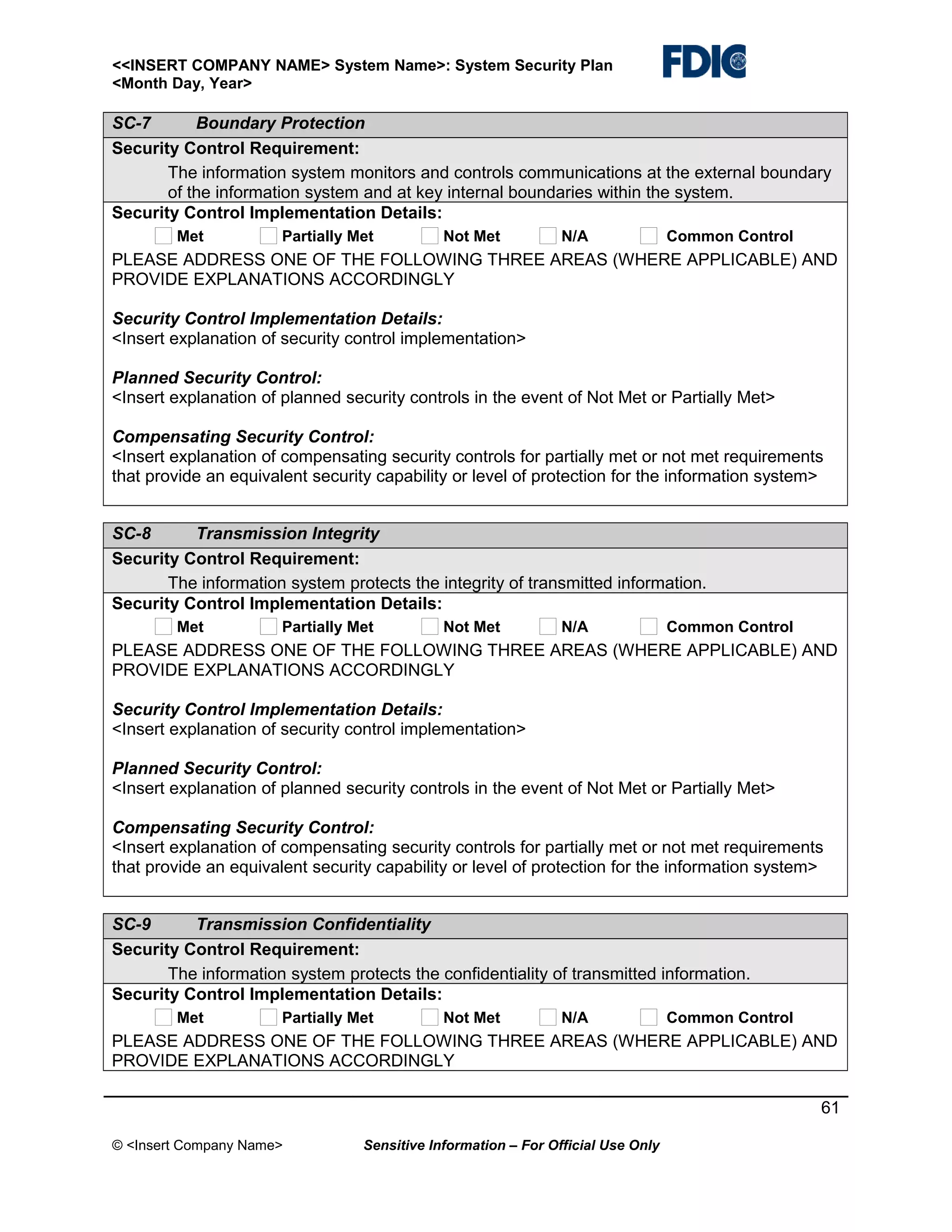
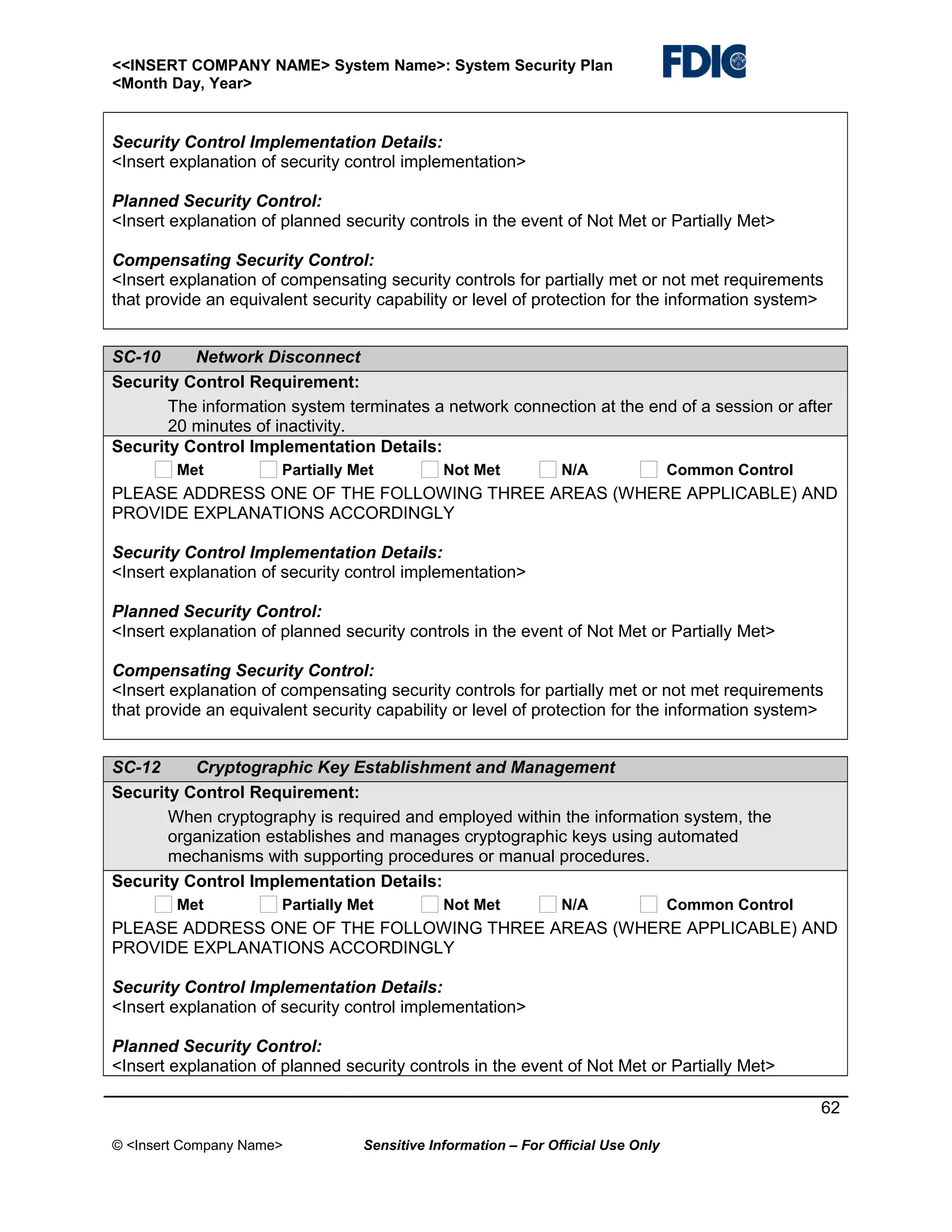
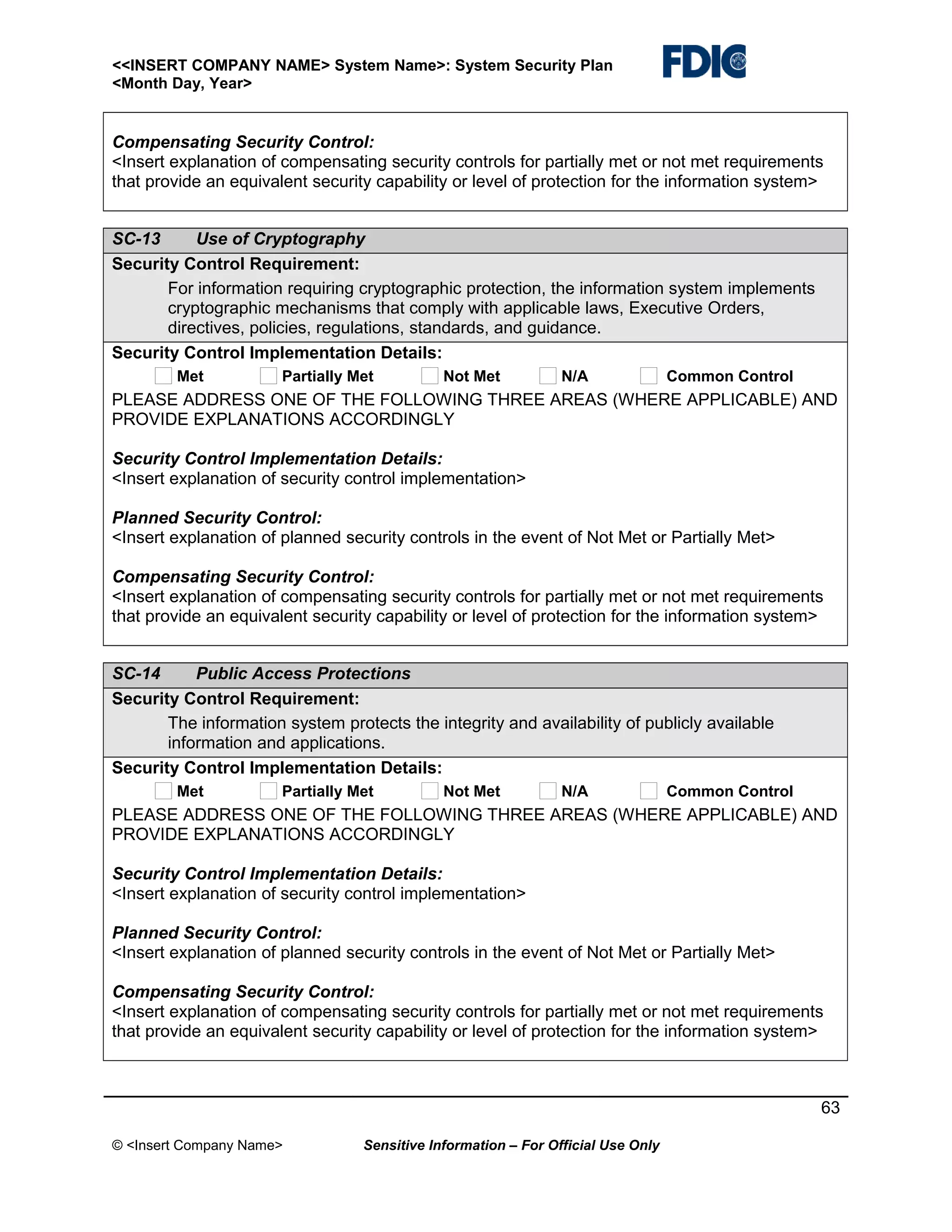
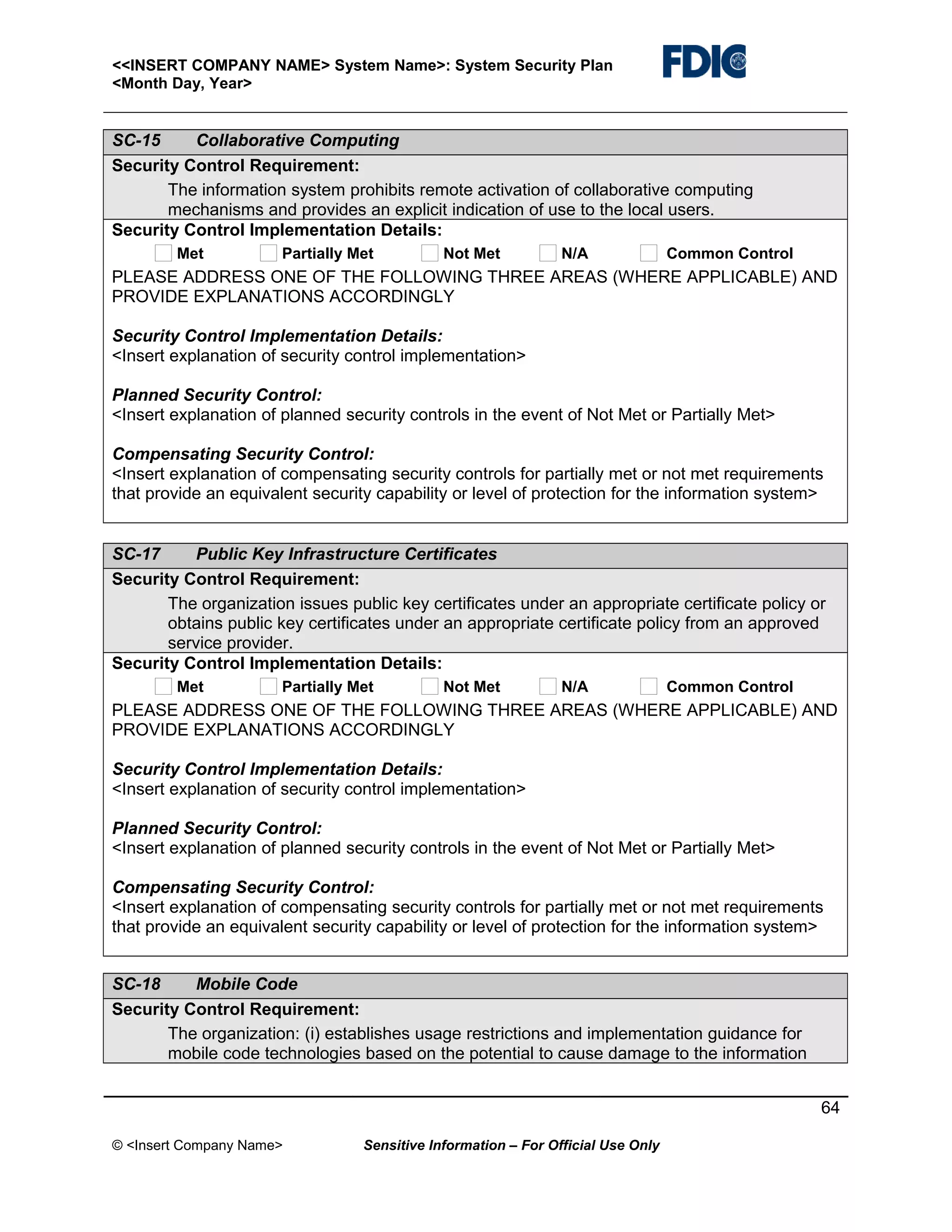
Describes the structure for documenting security control implementation status, detailing compliance levels and any compensatory measures.
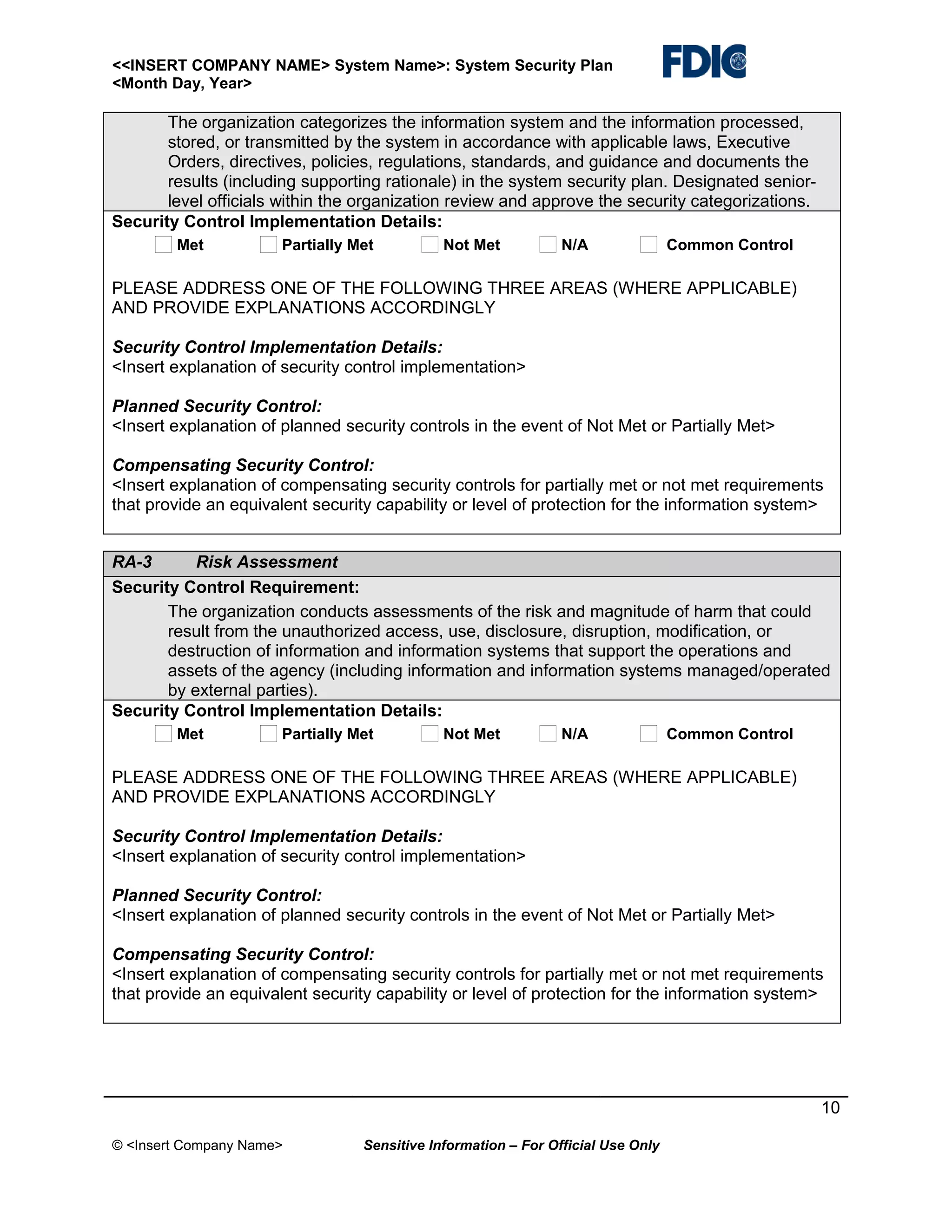
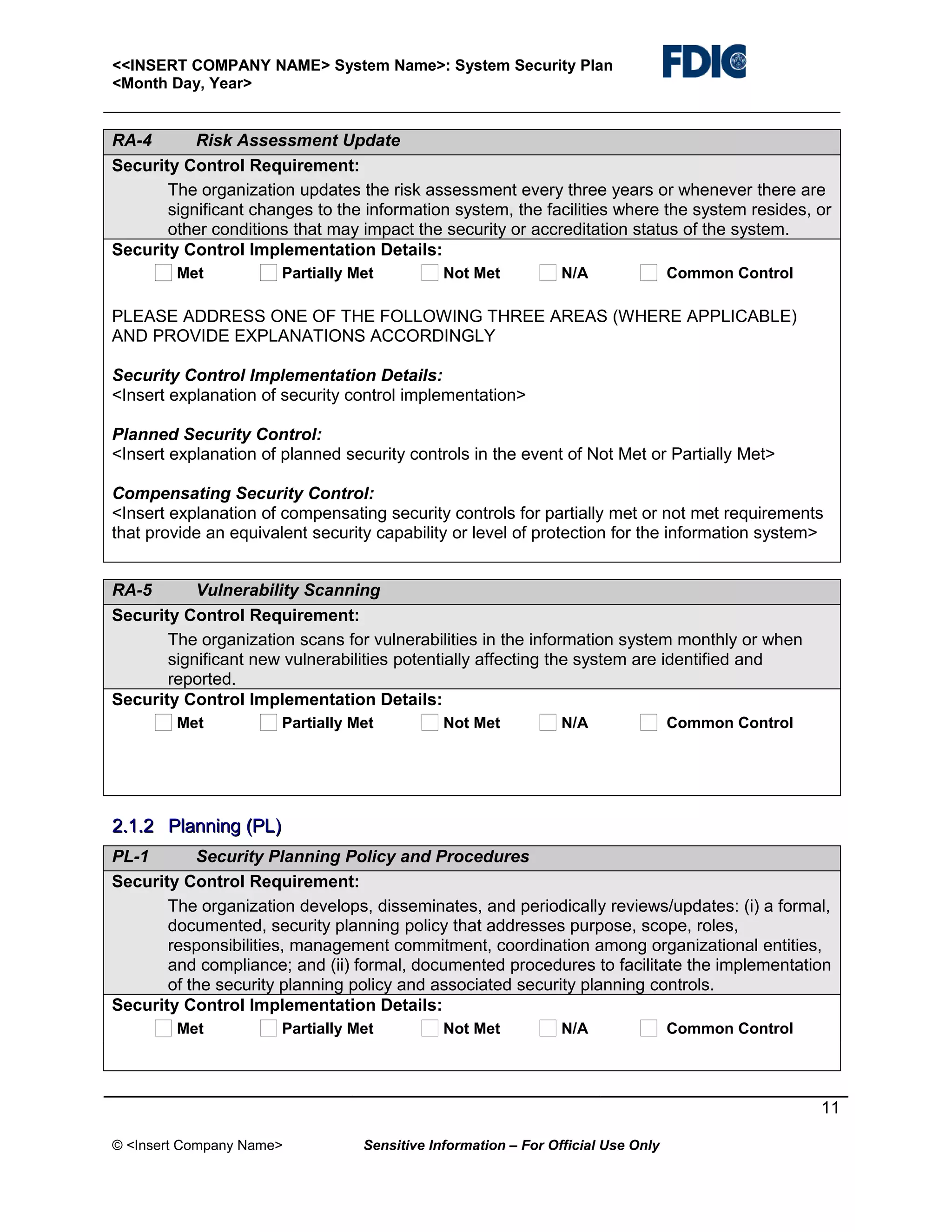
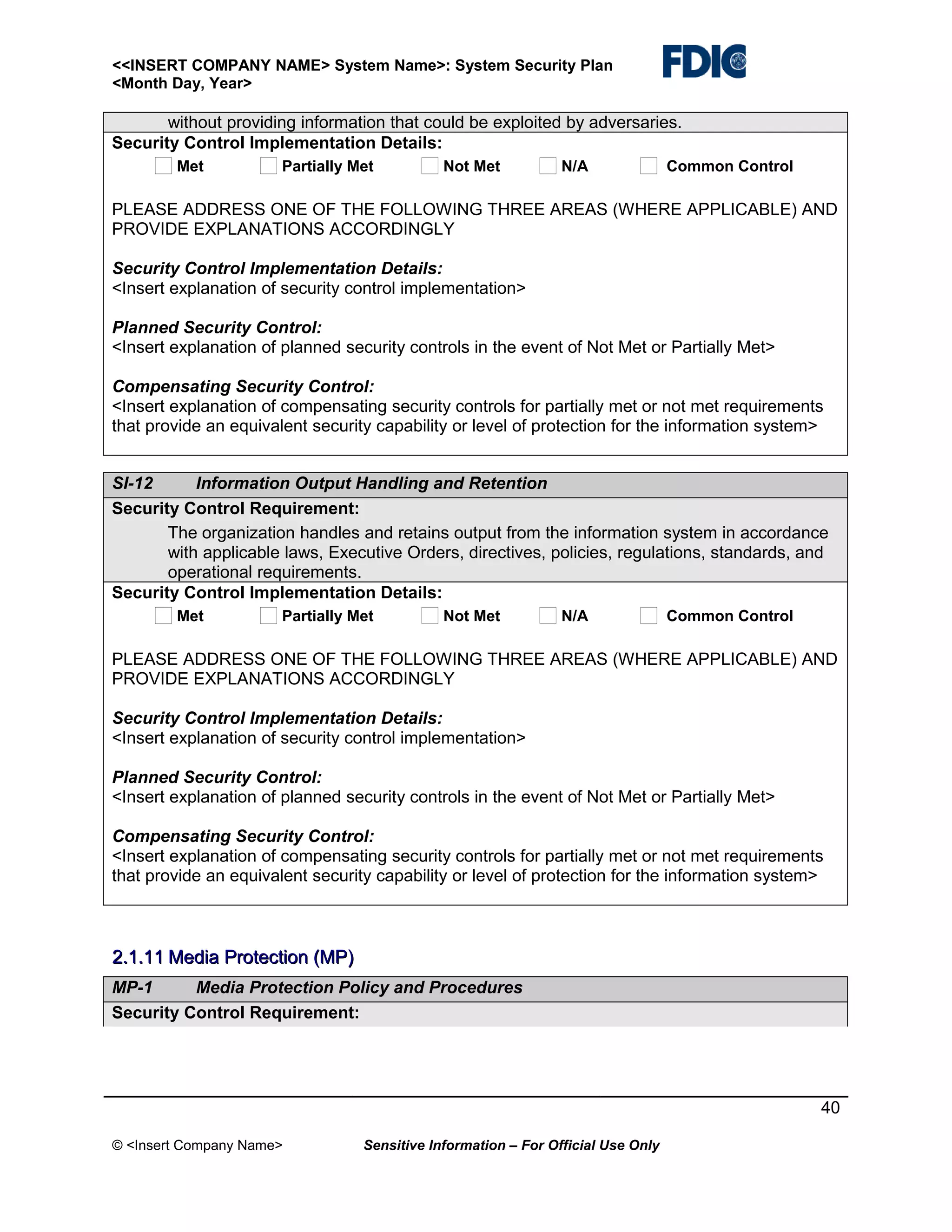
Discusses risk assessment policies, procedures, and requirements for continuous review and update, with specific control requirements outlined.
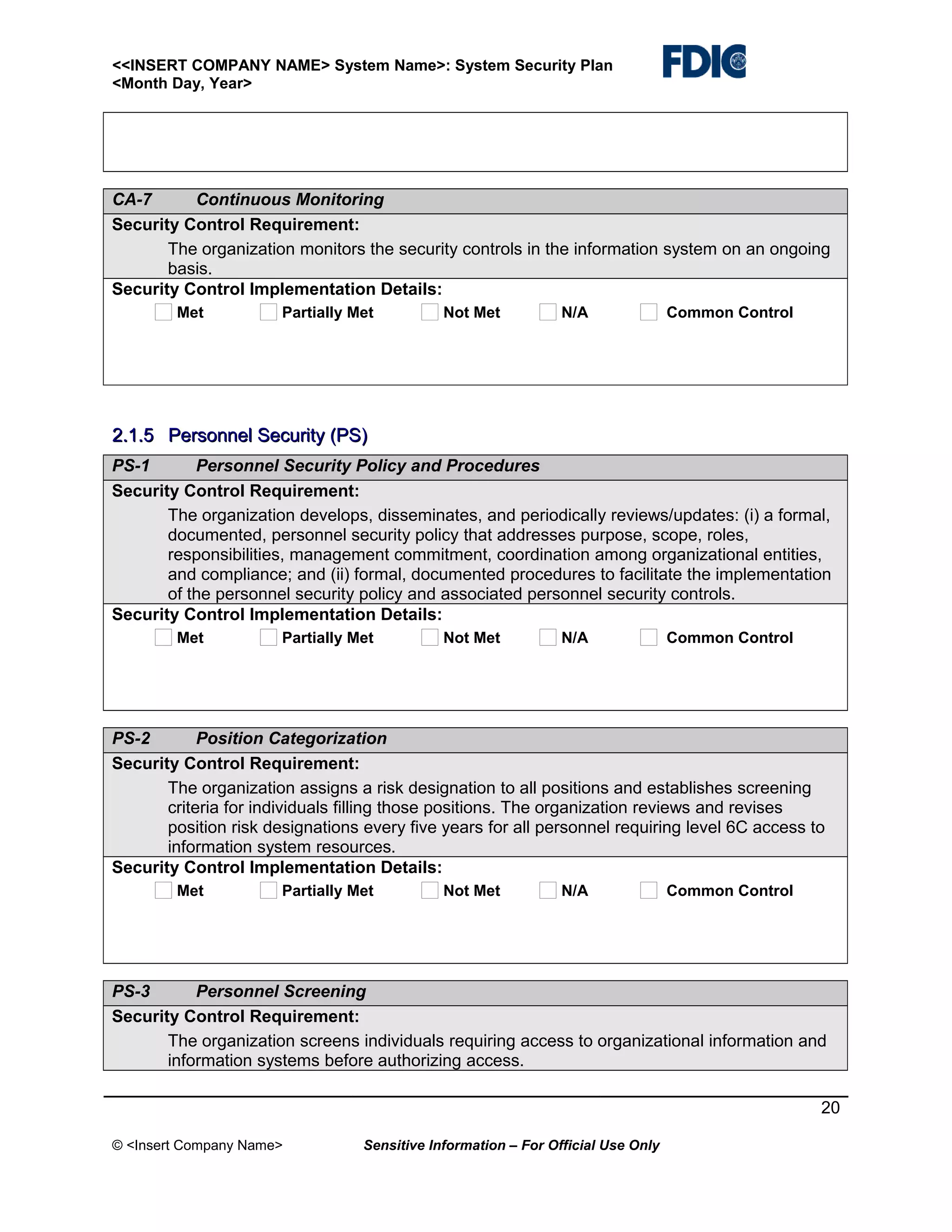
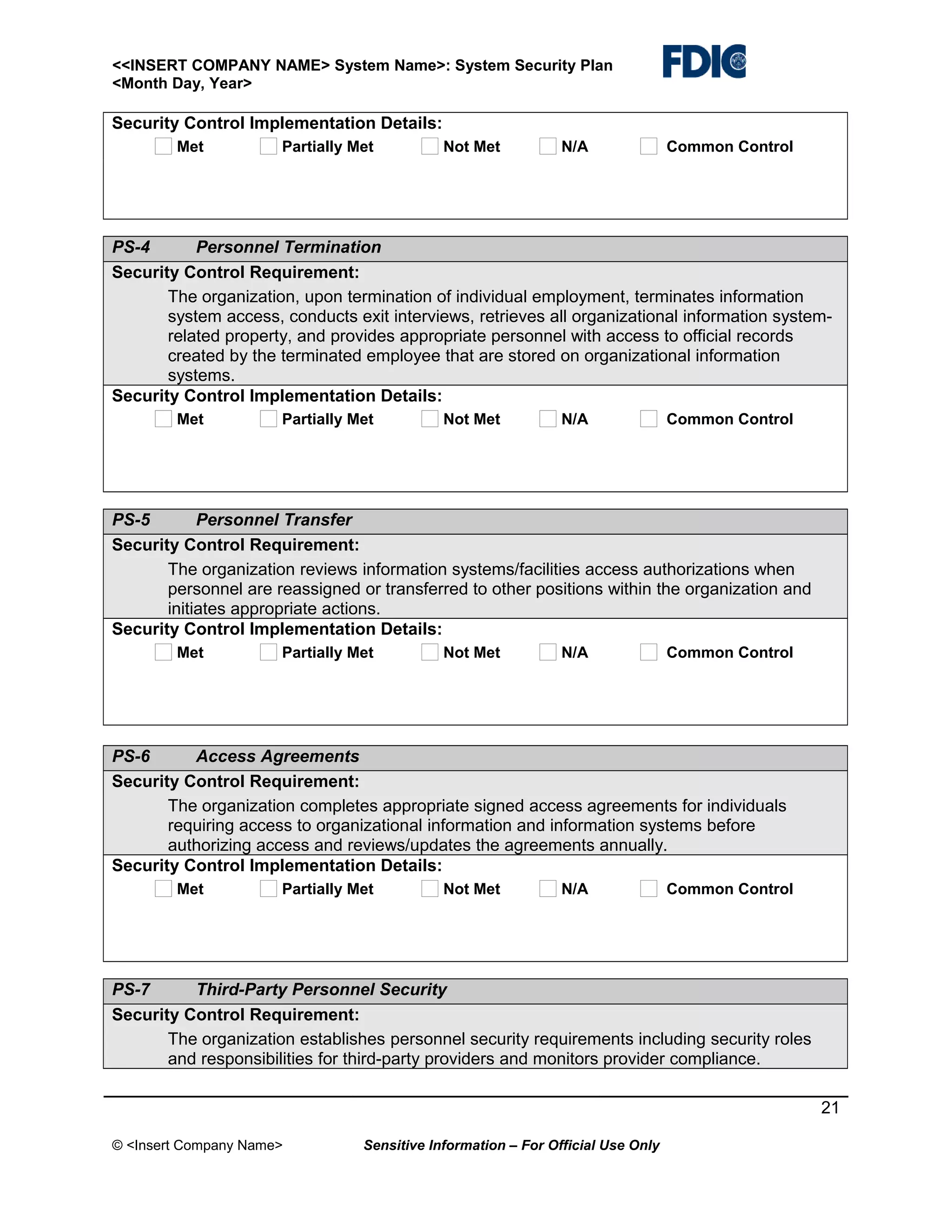
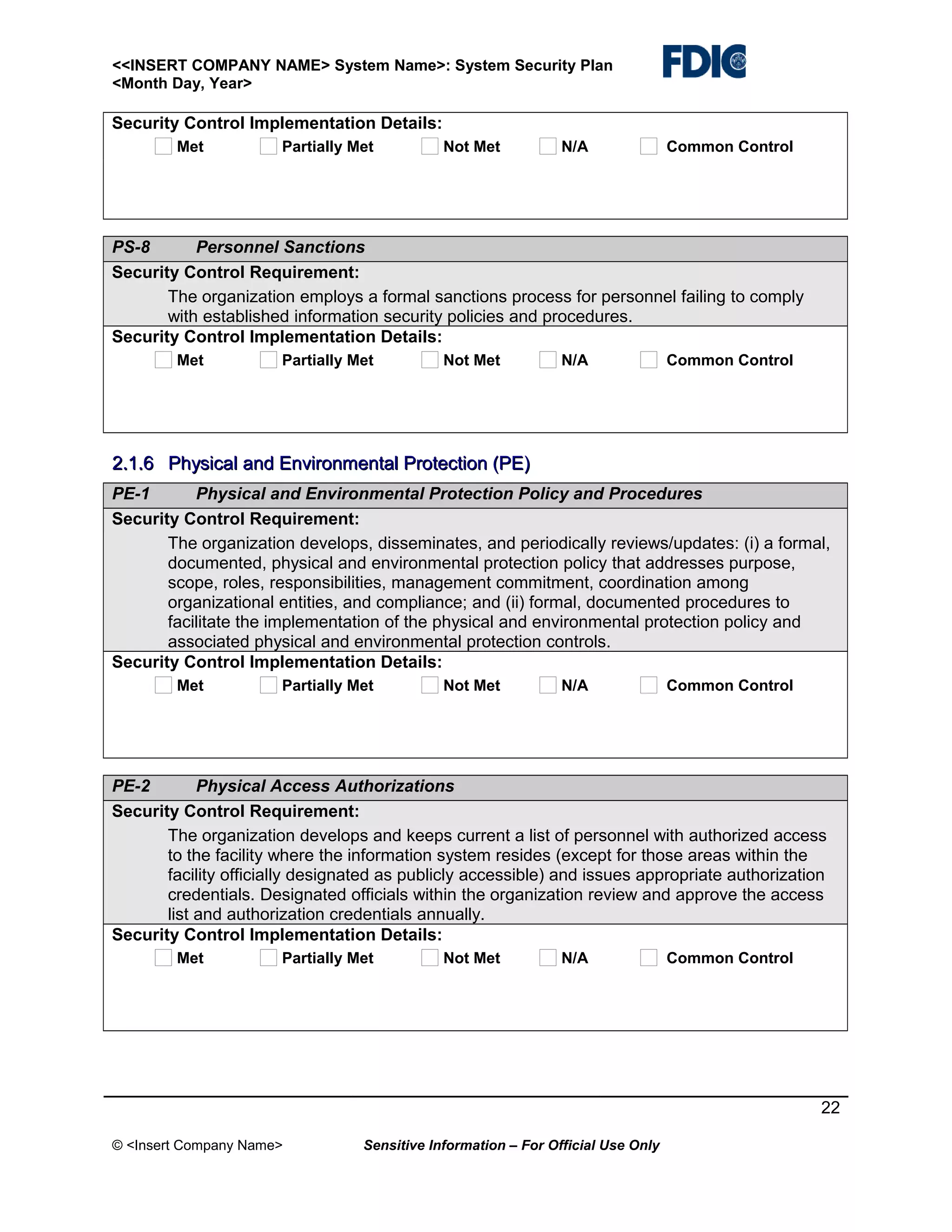
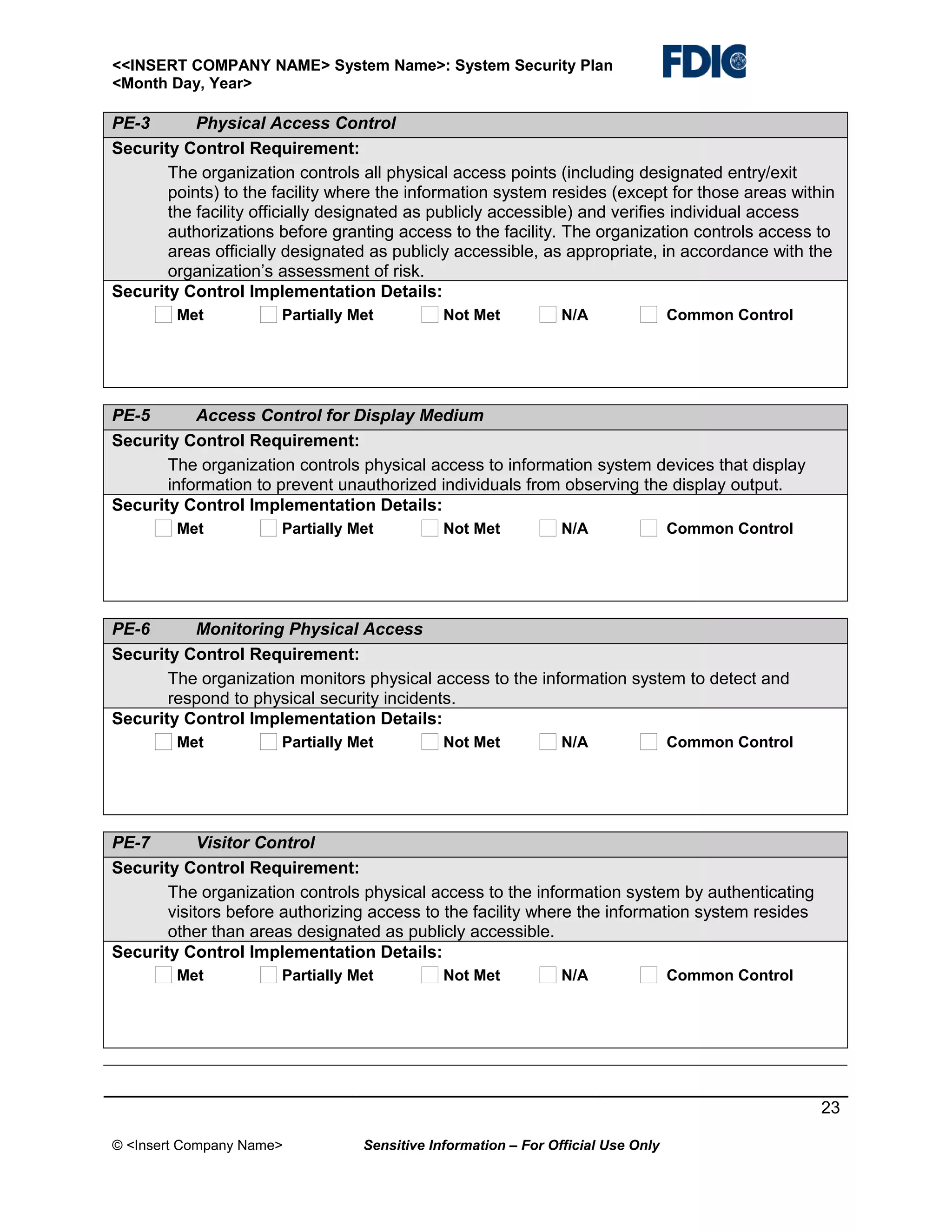
Explains personnel security measures, including background checks, access agreements, and termination procedures; and physical security protections.
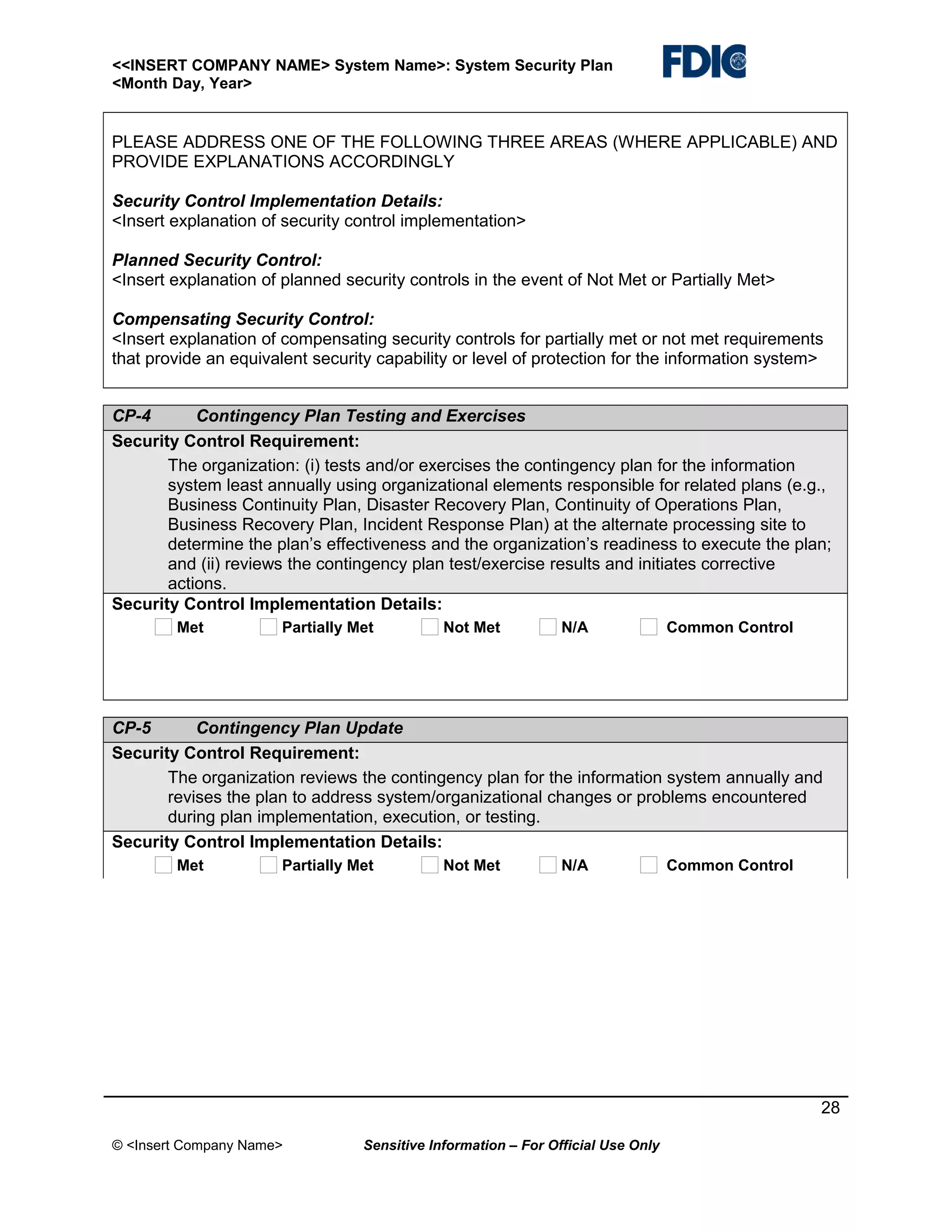
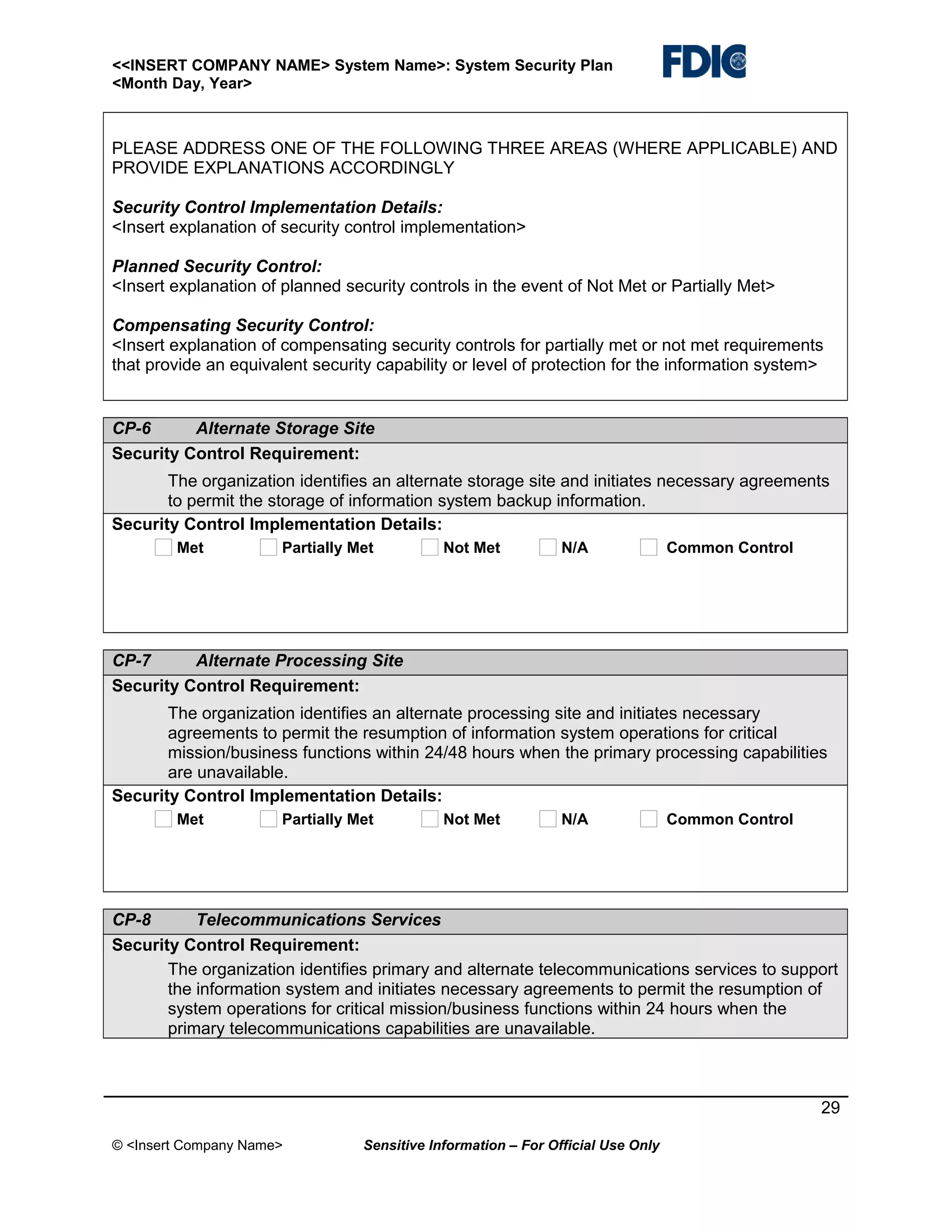
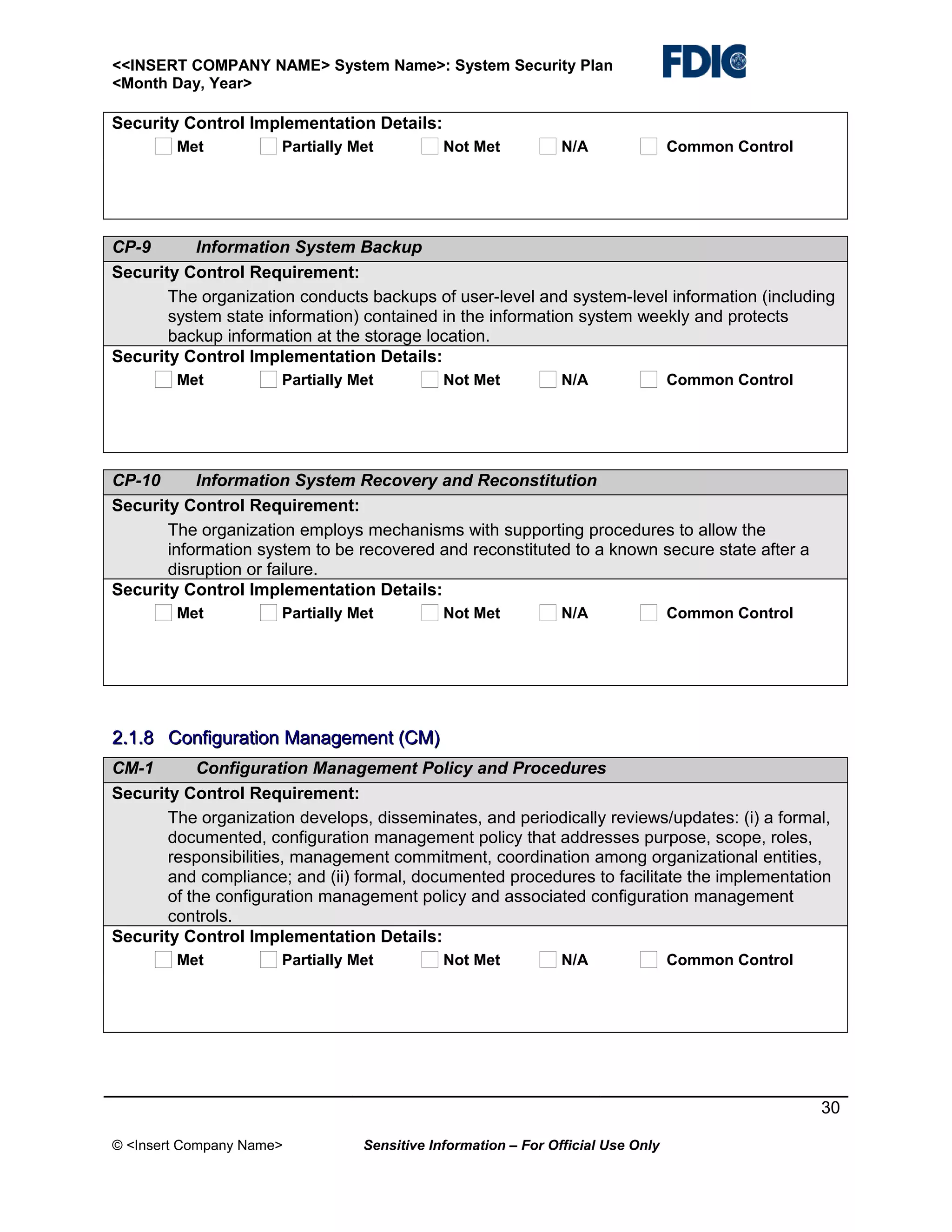
Highlights contingency planning policies and arrangements for maintaining operations during disruptions, including testing and training expectations.
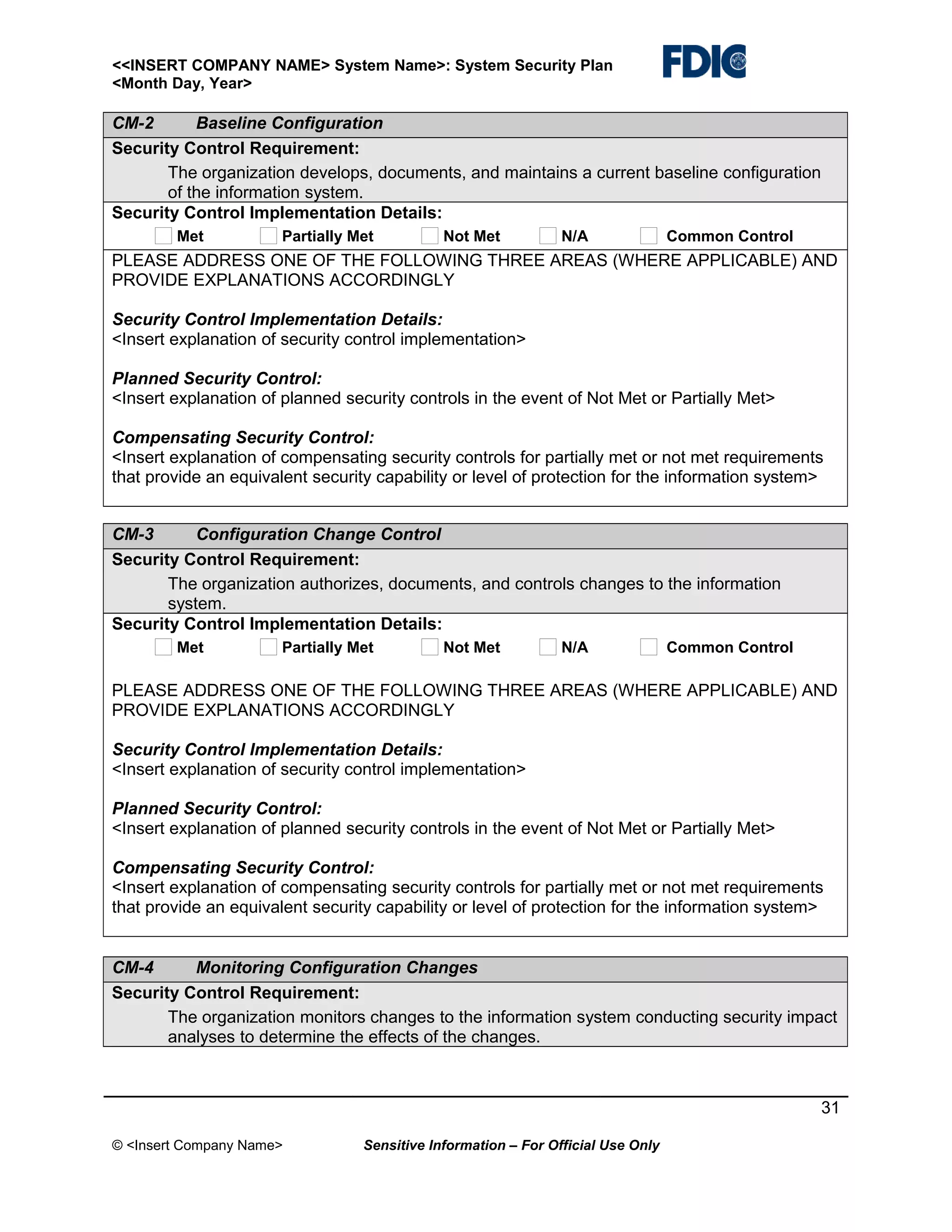
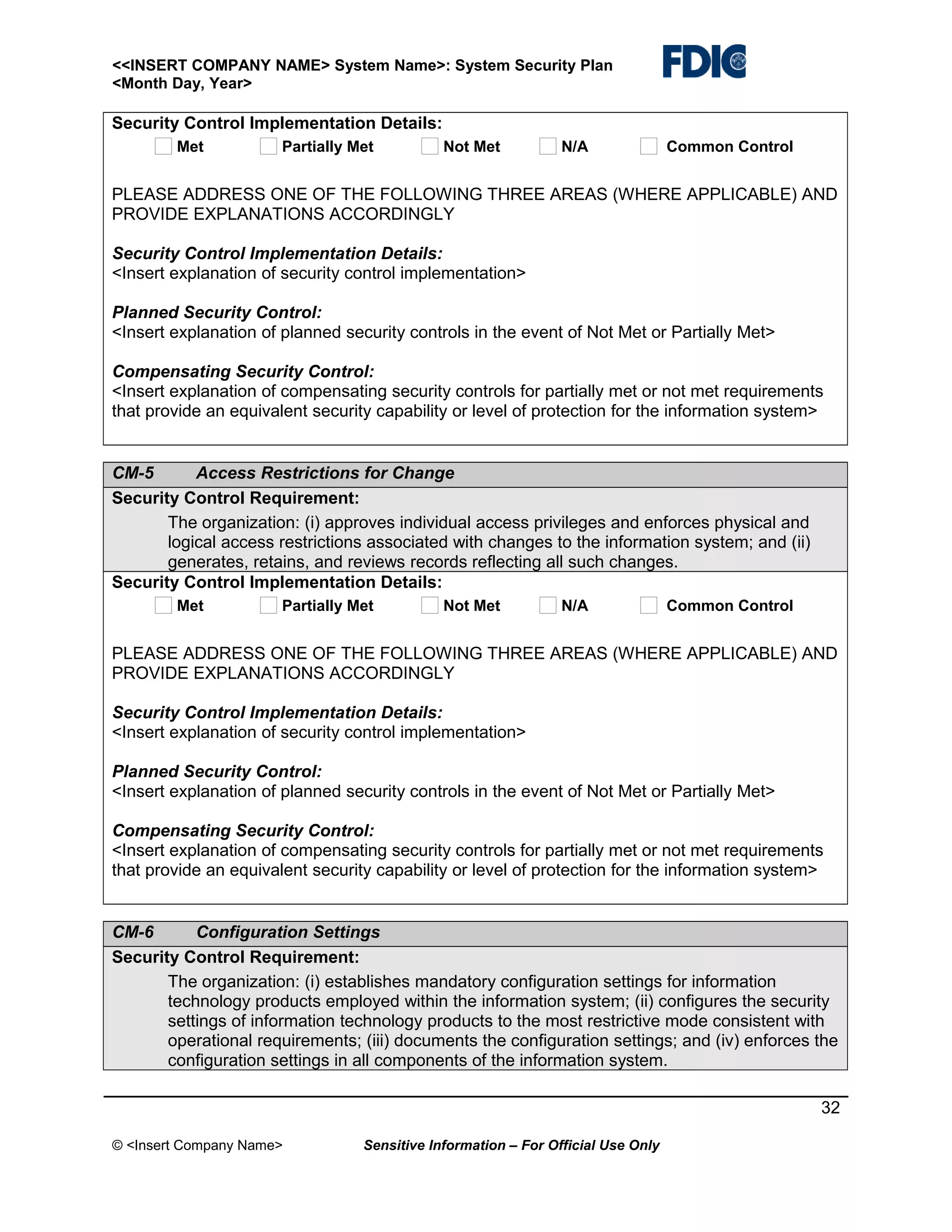
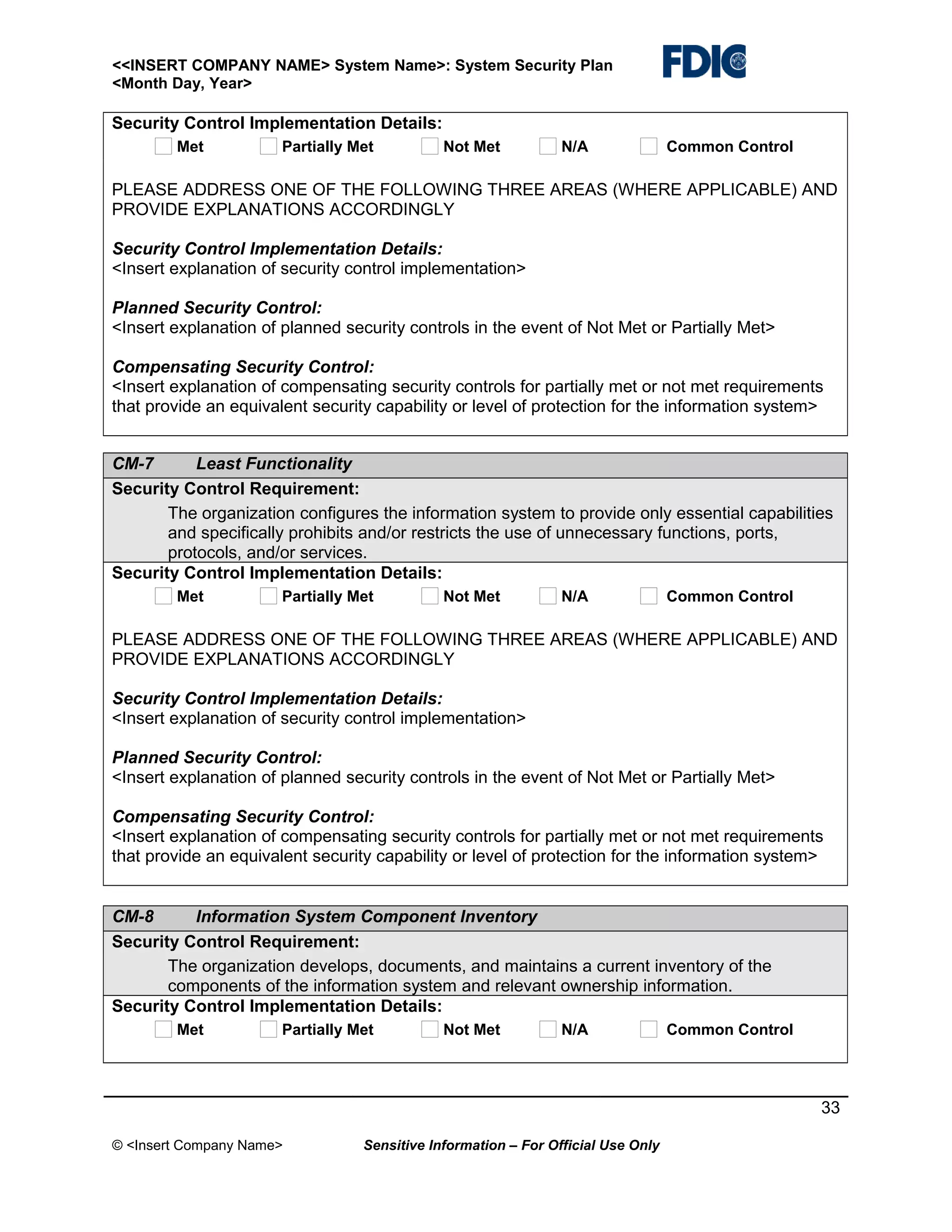
Details configuration management controls, including policy updates, change control procedures, and baseline security configurations.
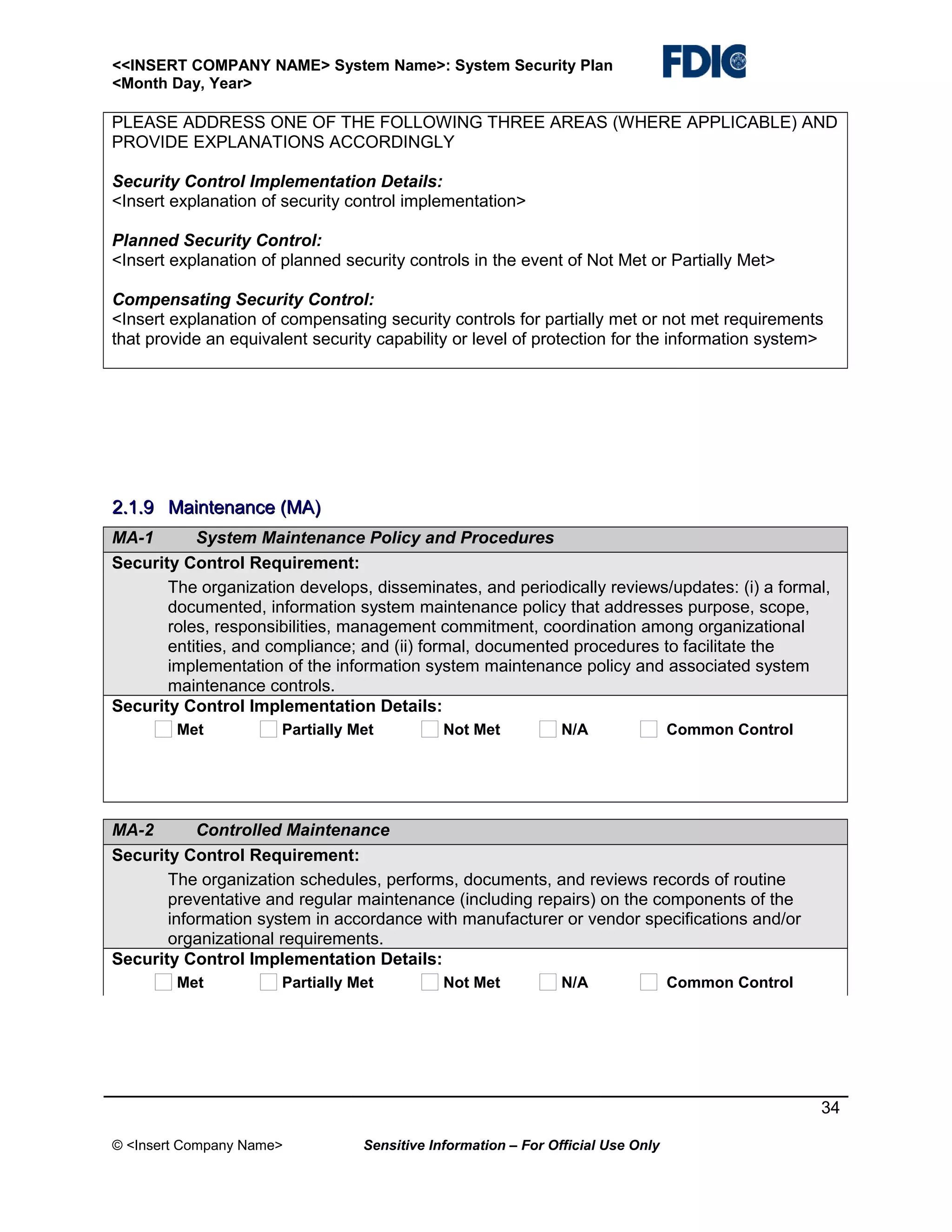
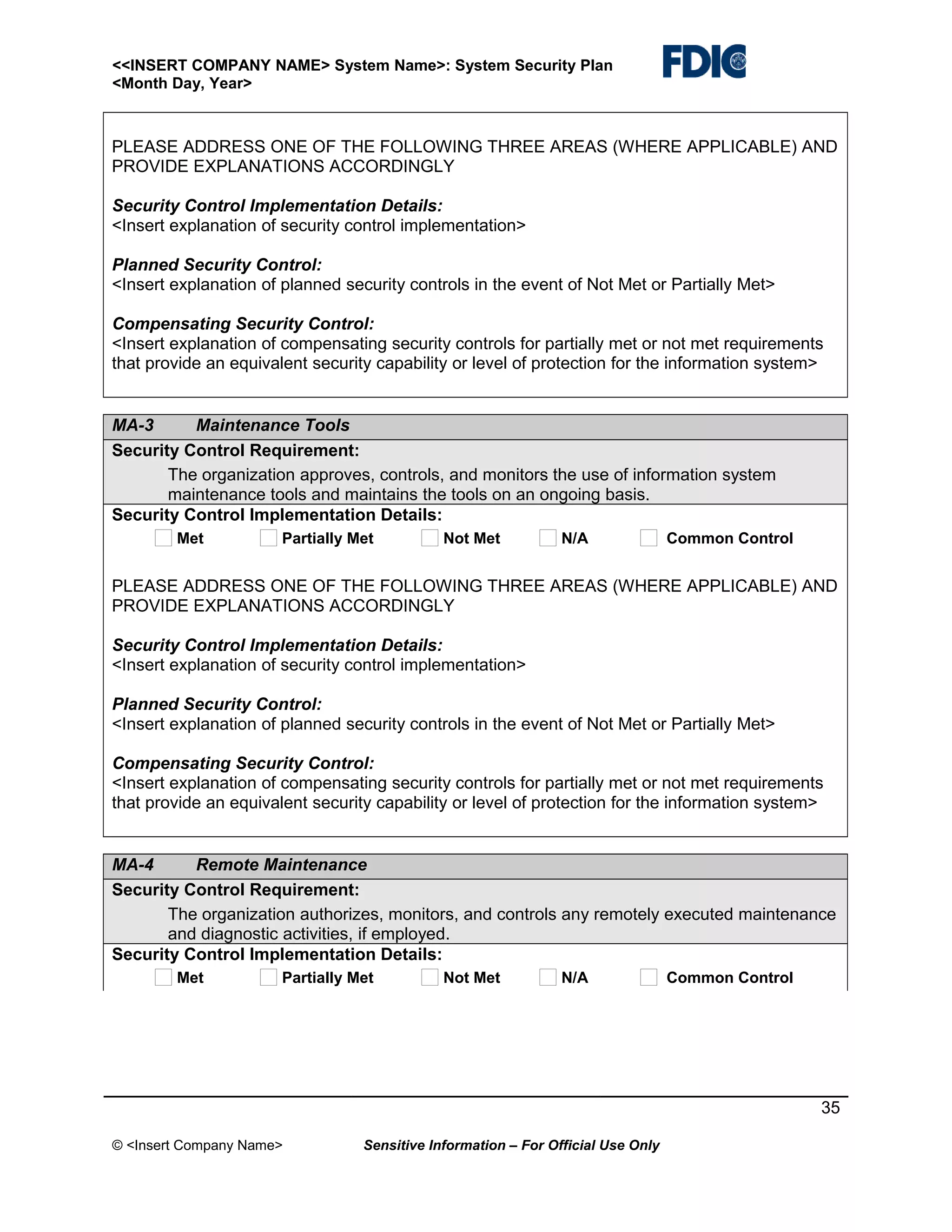
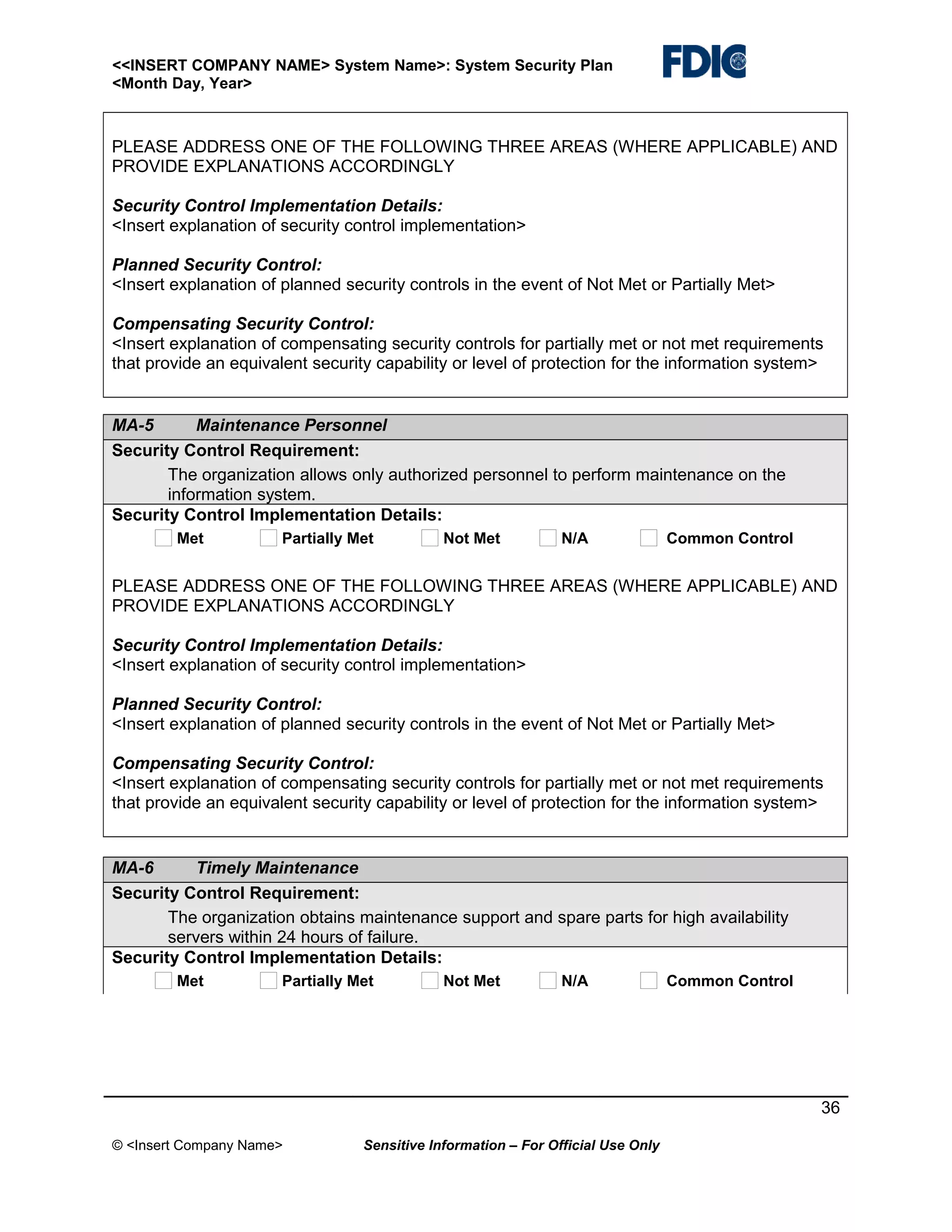
Outlines the maintenance policies and responsibilities, emphasizing routine maintenance procedures and authorized access principles.
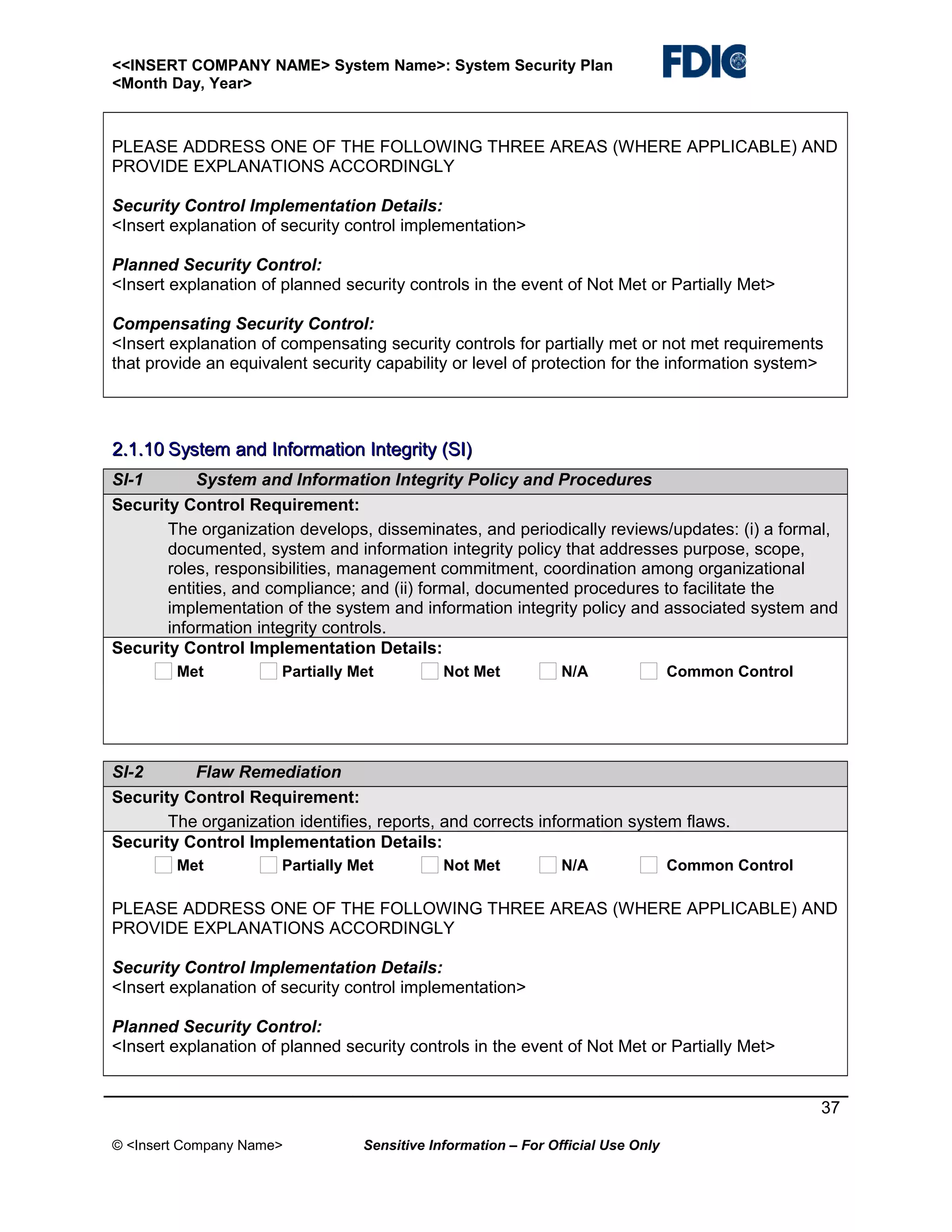
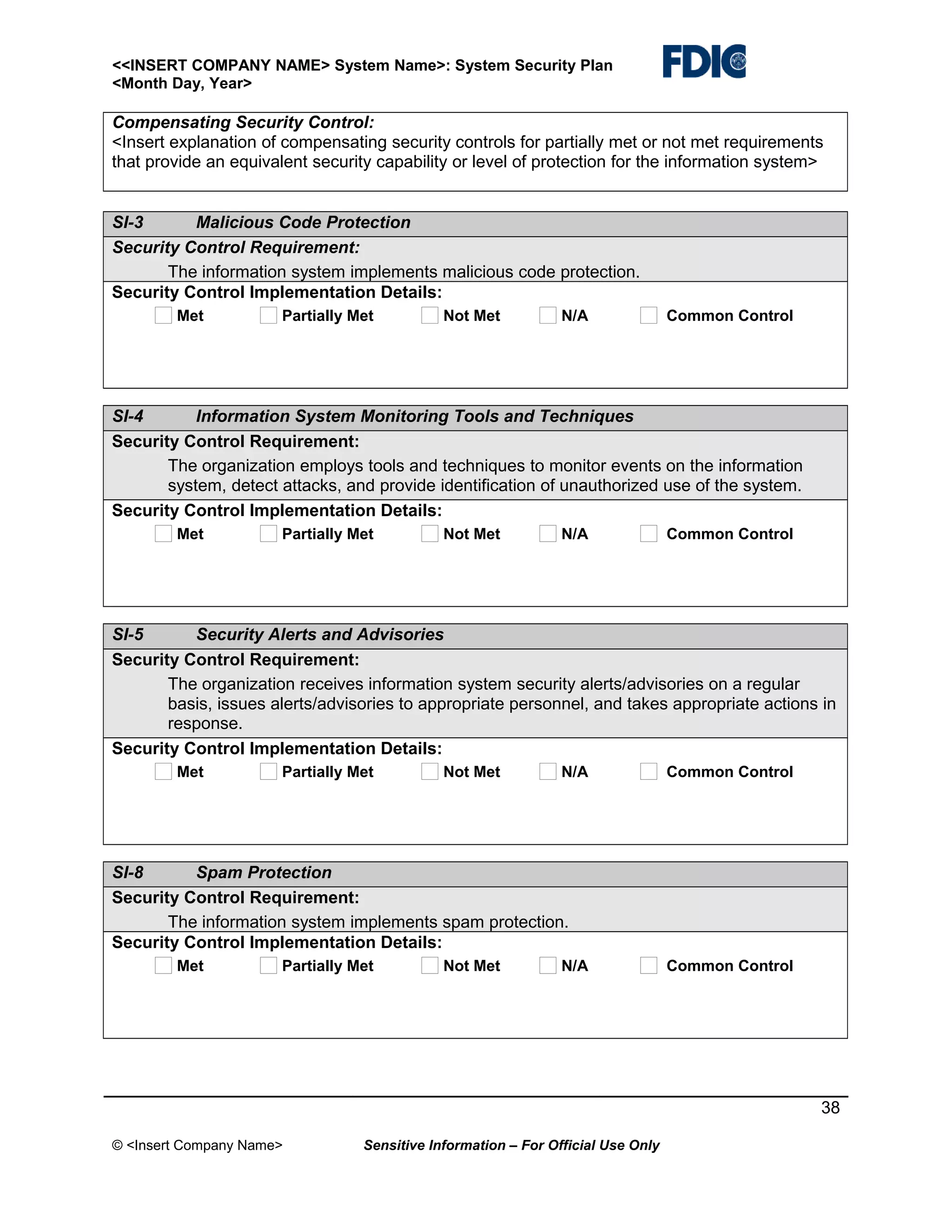
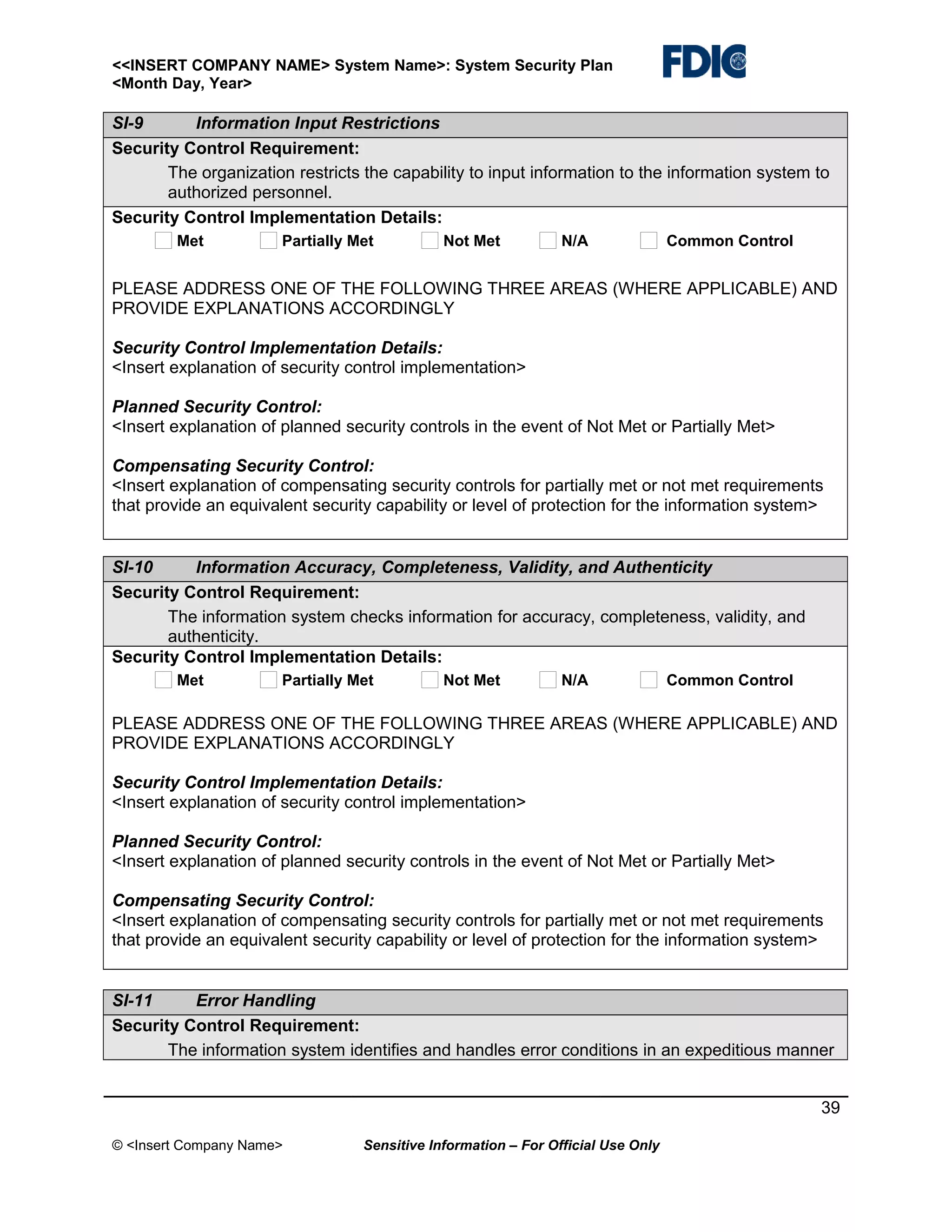
Describes integrity policies, flaw remediation procedures, and monitoring tactics for security incidents, with specific security requirements.
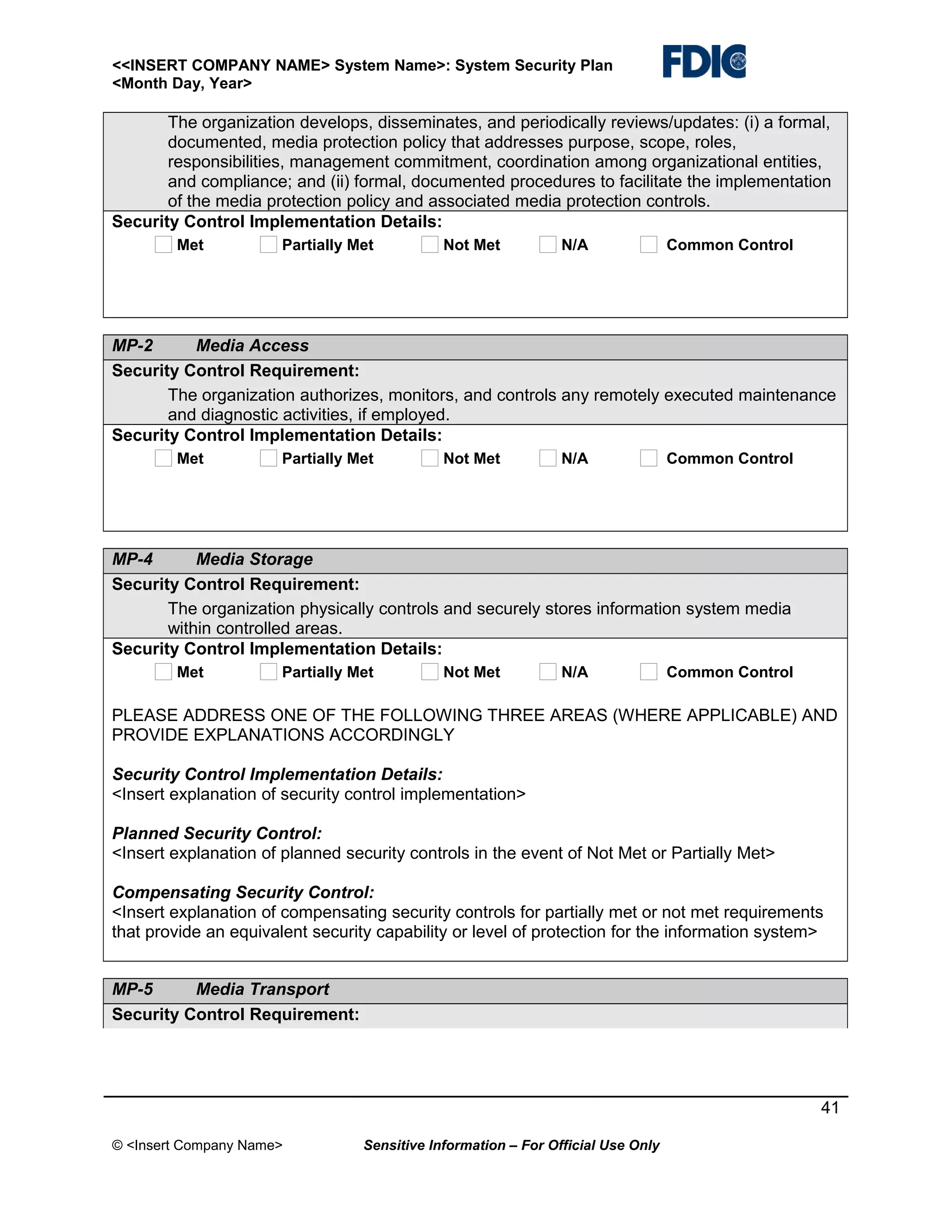
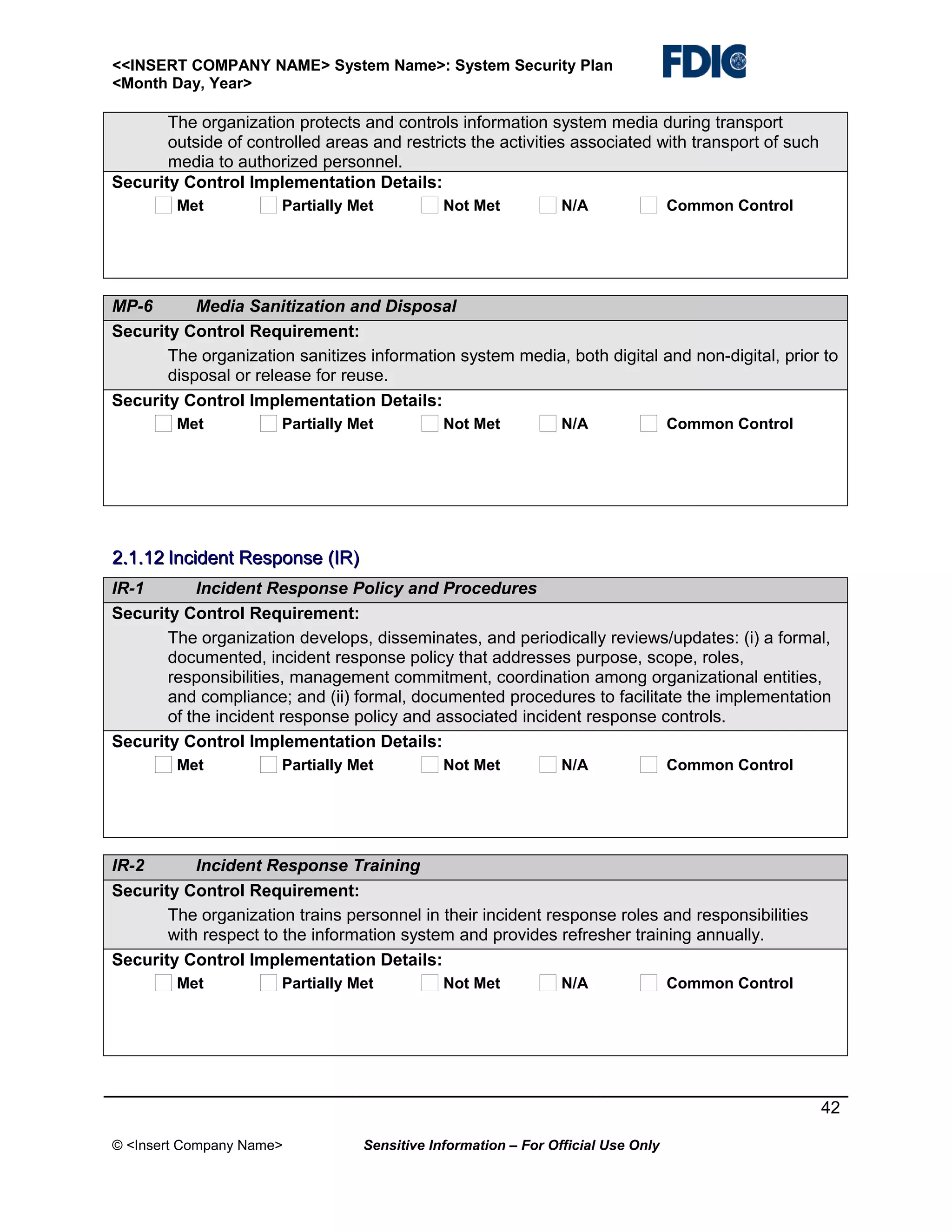
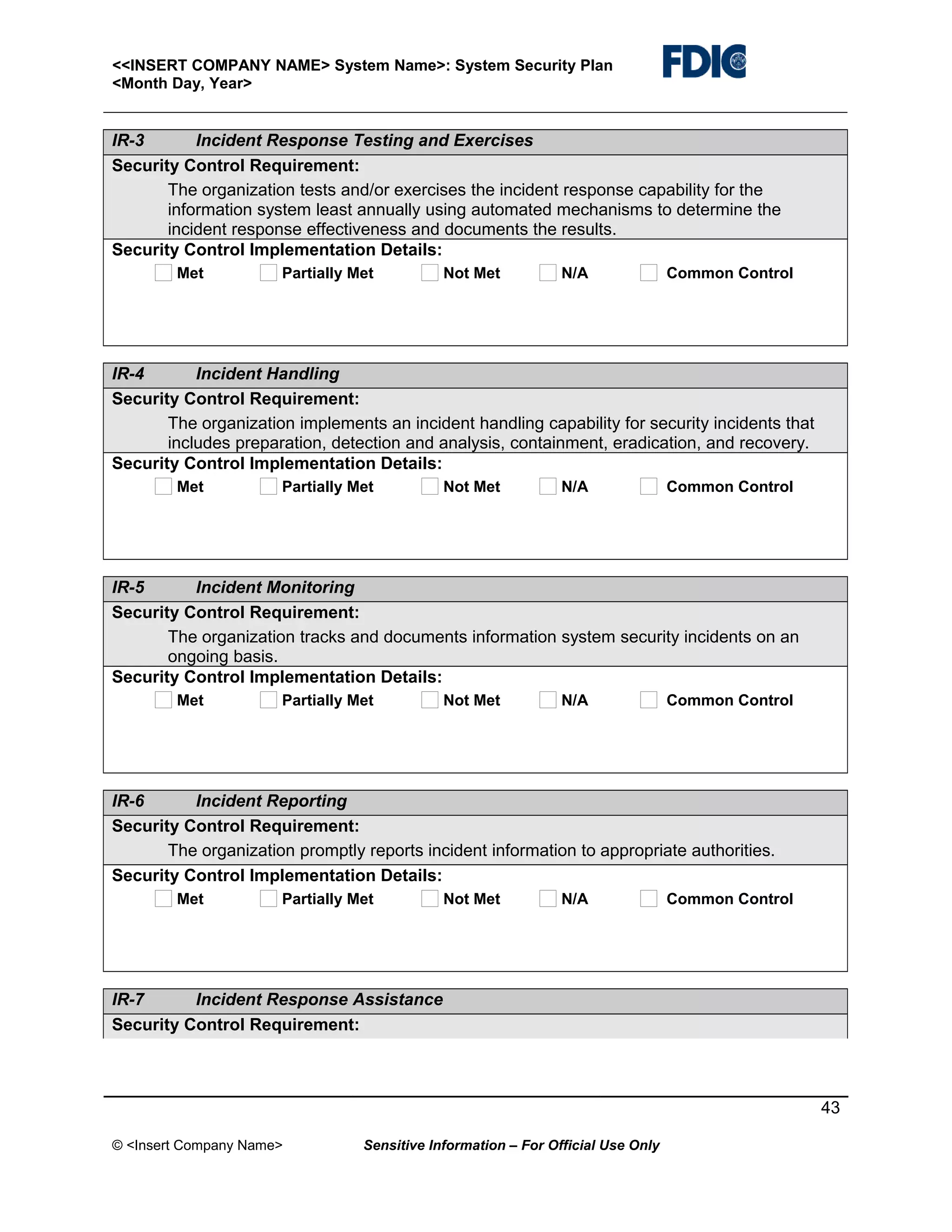
Discusses media protection protocols, incident response policies, and training provided for personnel in managing security incidents.
Outlines security awareness and training policies, expectations, and documentation protocols for personnel involved in the information system.
Focuses on access control policies determining how users authenticate and interact with the system, including role definitions and limitations.
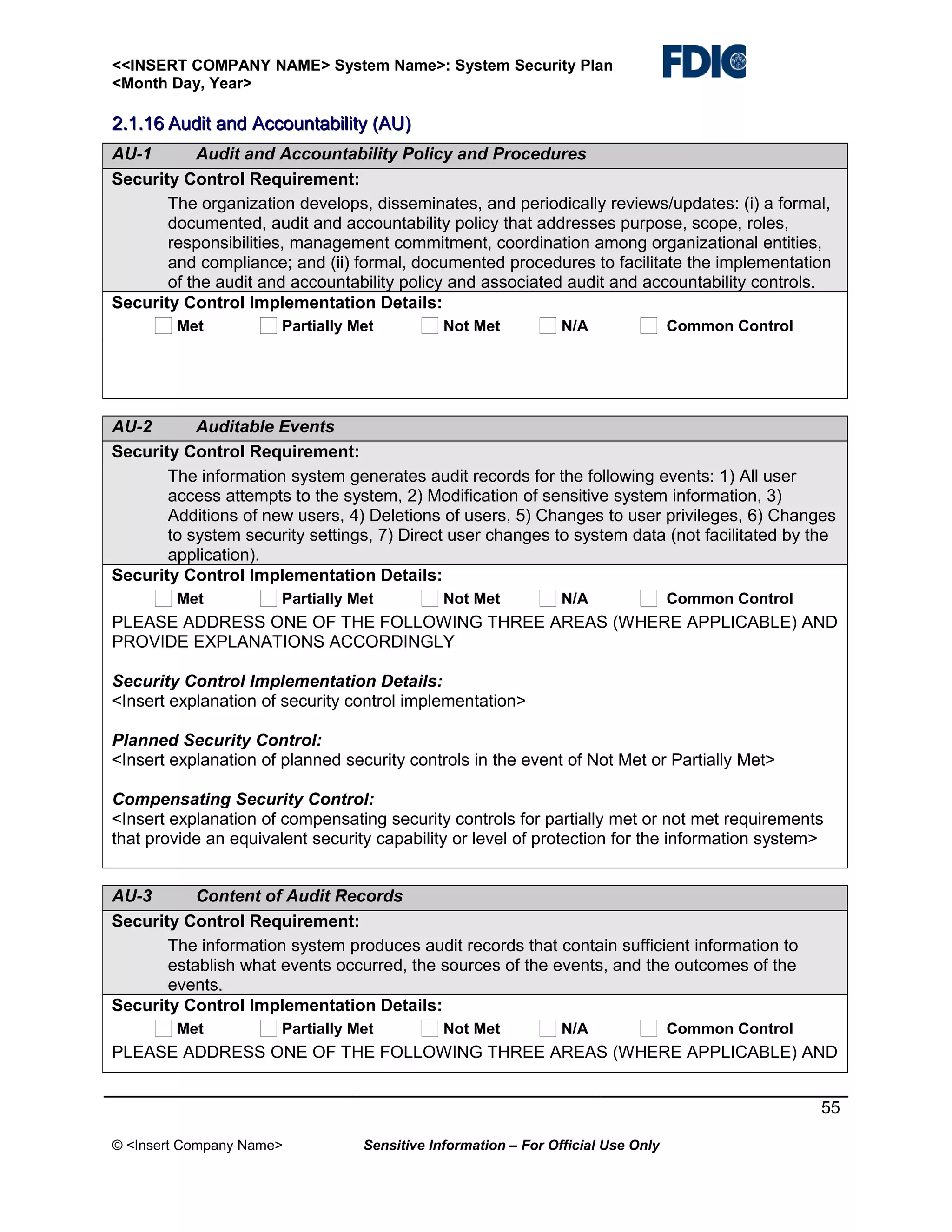
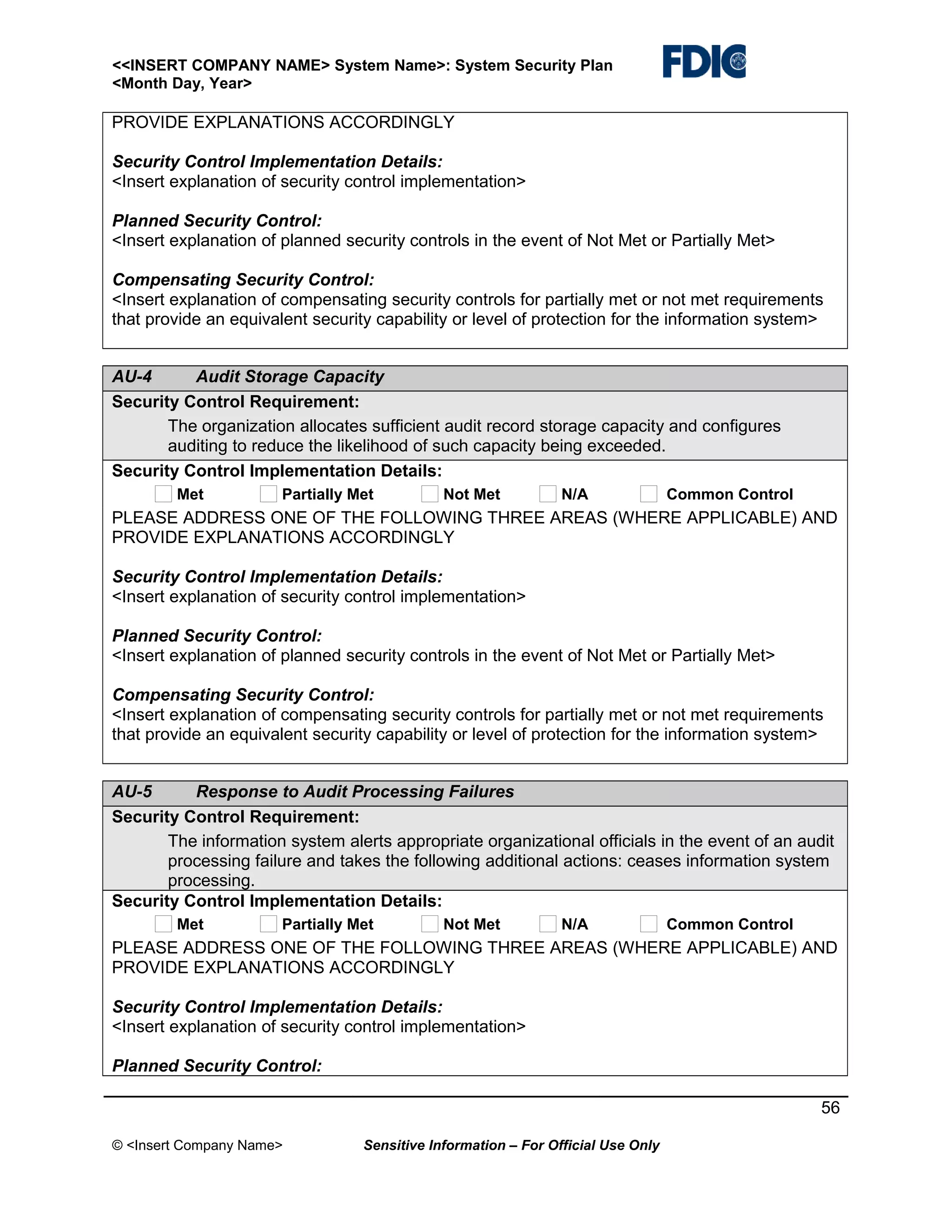
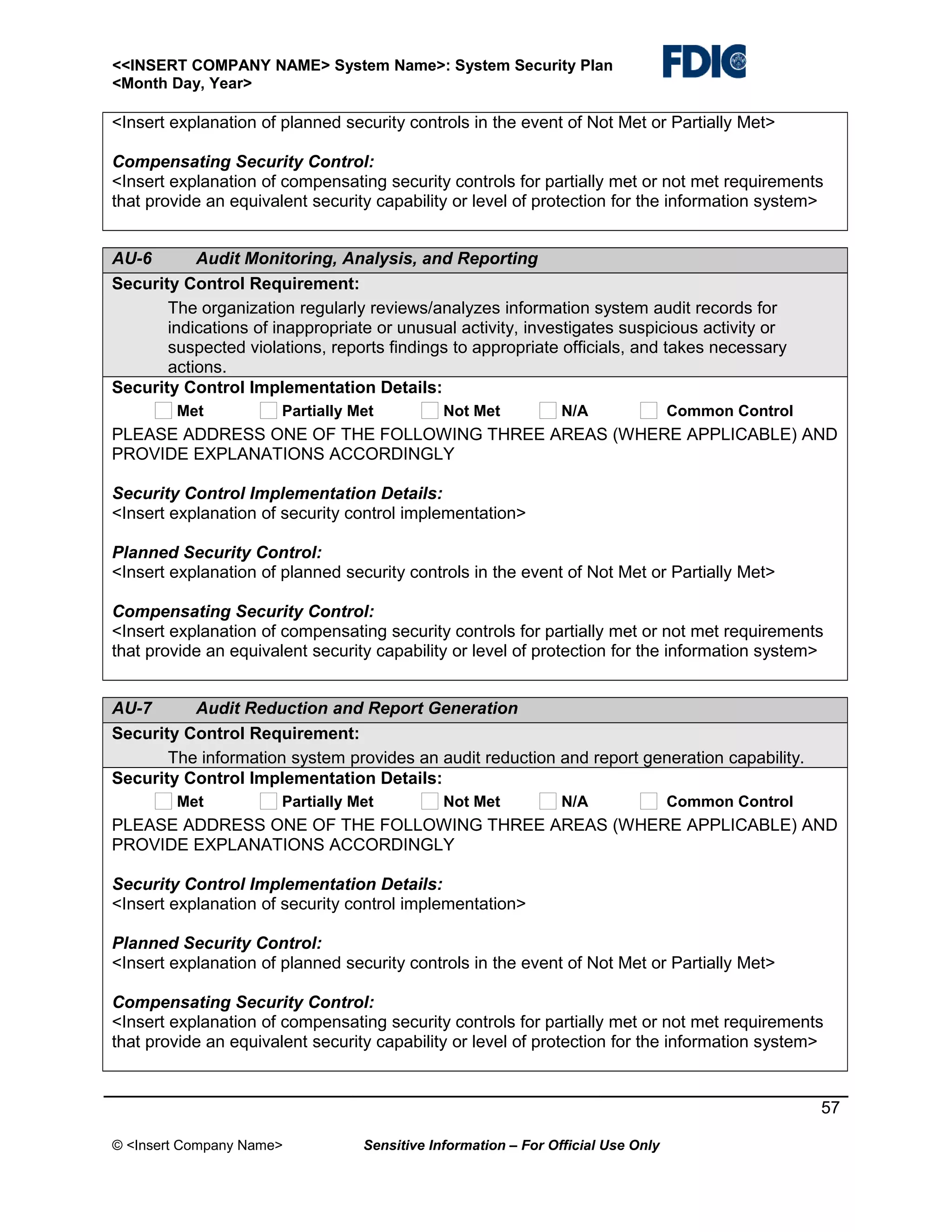
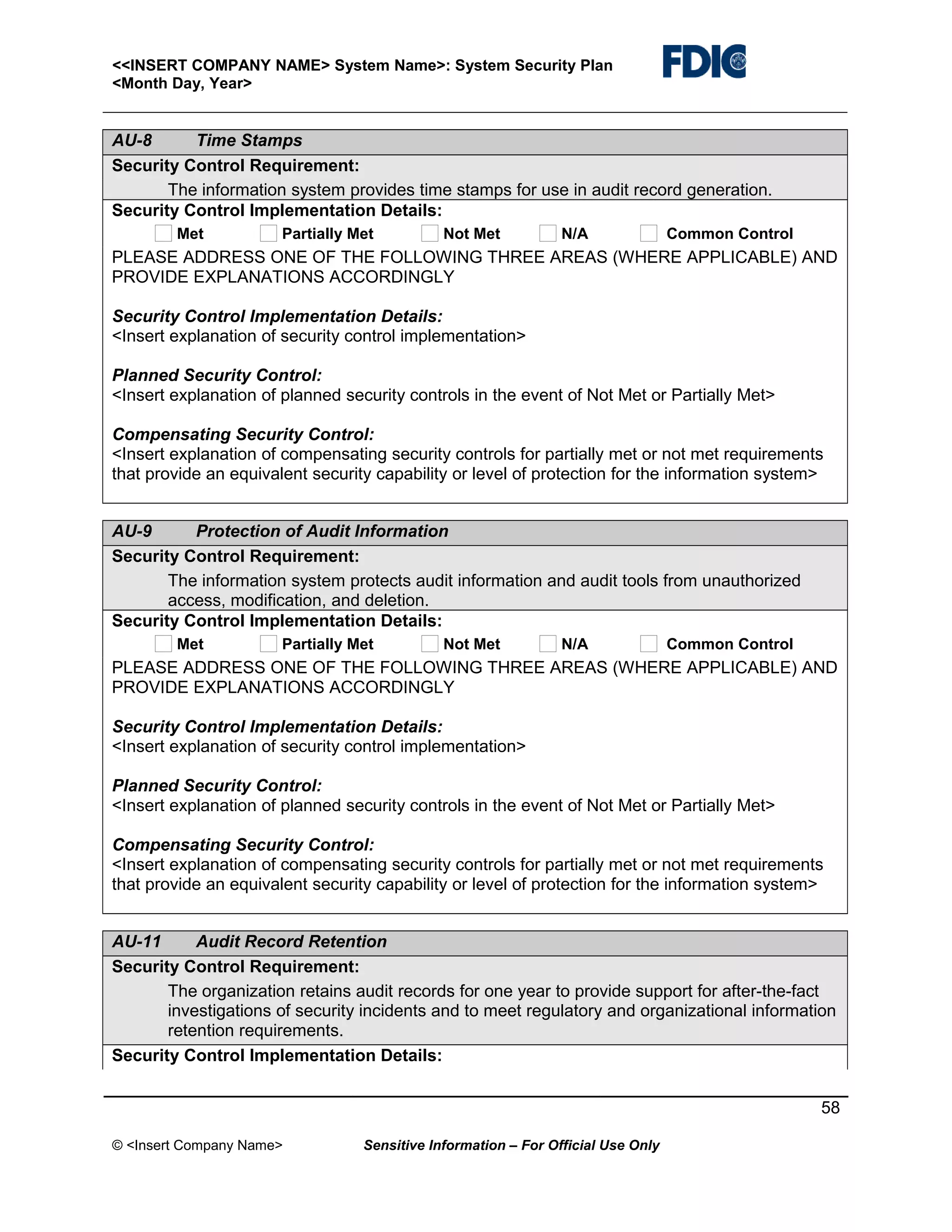
Details the policies surrounding audits, including record generation, storage, monitoring, and reporting procedures for system activity.
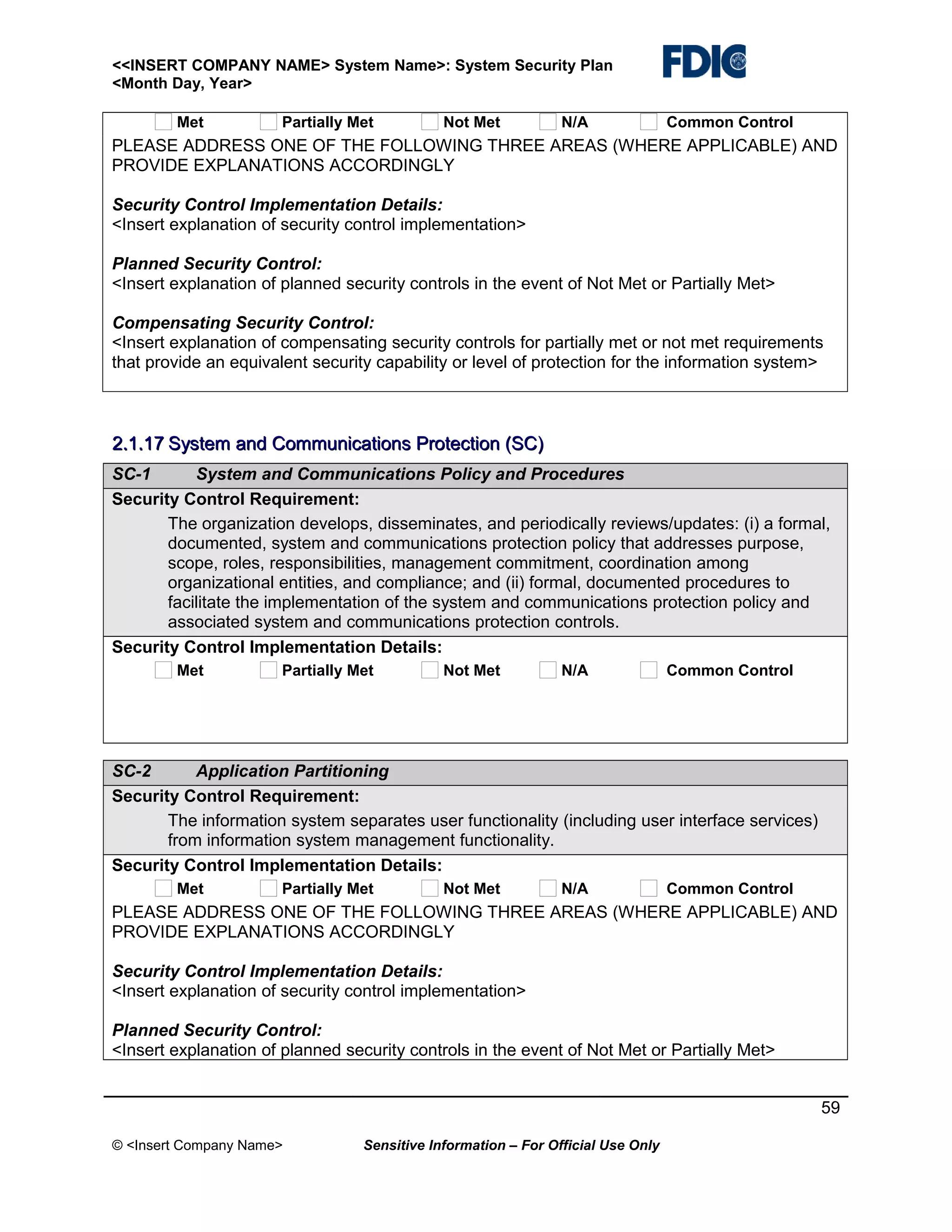
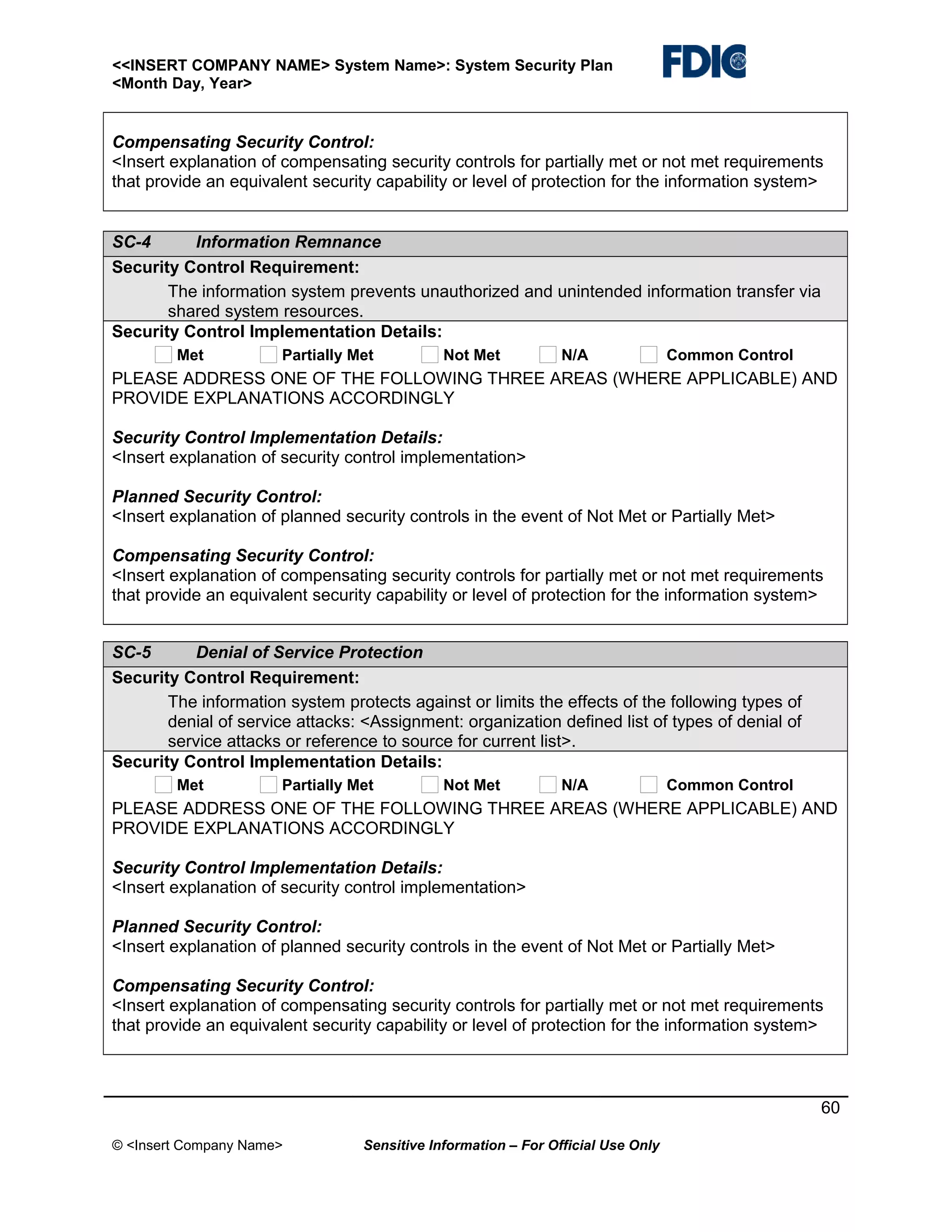
Defines the security measures to protect communications and data integrity, including session protection and cryptographic requirements.
Provides the inventory of minor applications related to the system, supplemented as necessary to support system documentation.
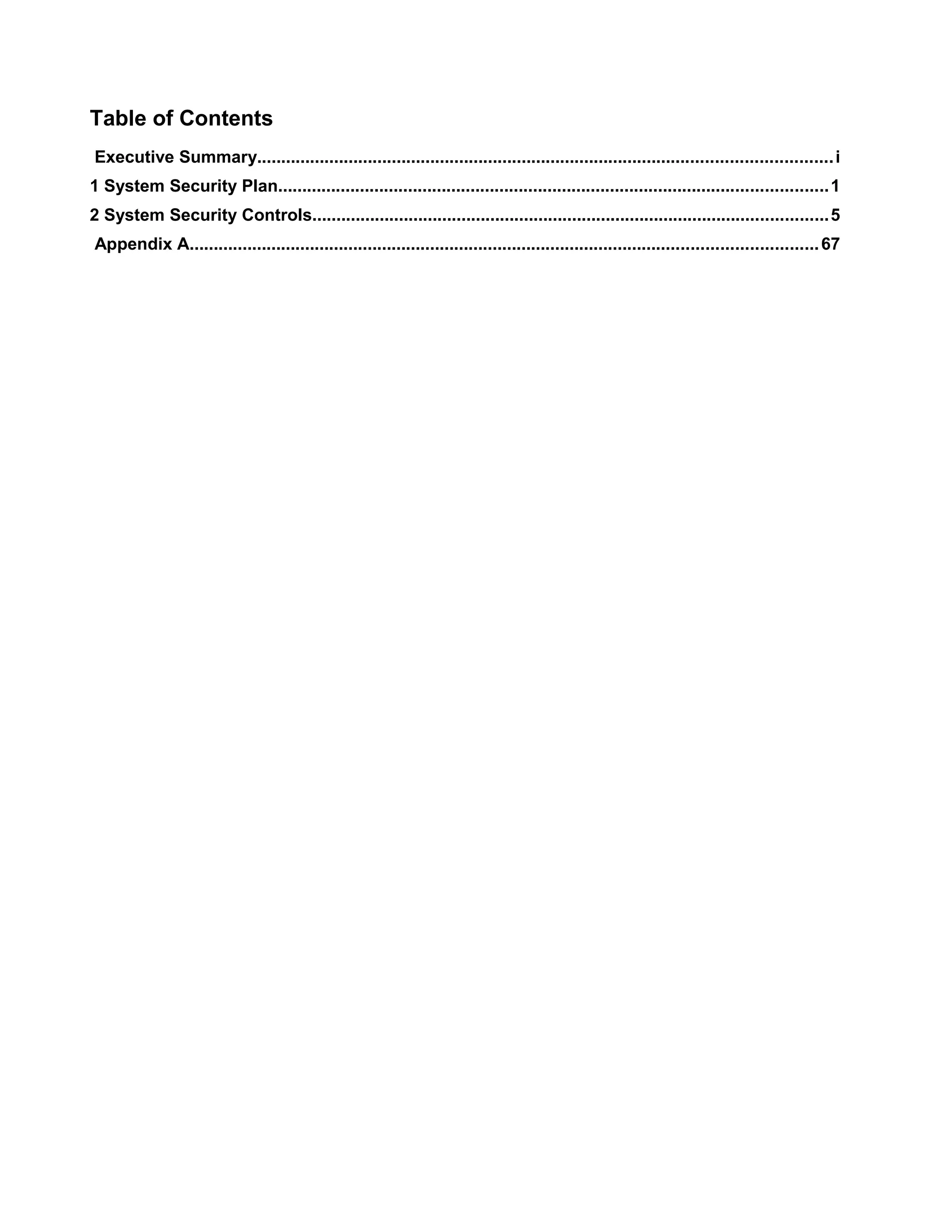
Table of Contents
ExecutiveSummary....................................................................................................................... i
1 System Security Plan..................................................................................................................1
2 System Security Controls...........................................................................................................5
Appendix A.................................................................................................................................. 67
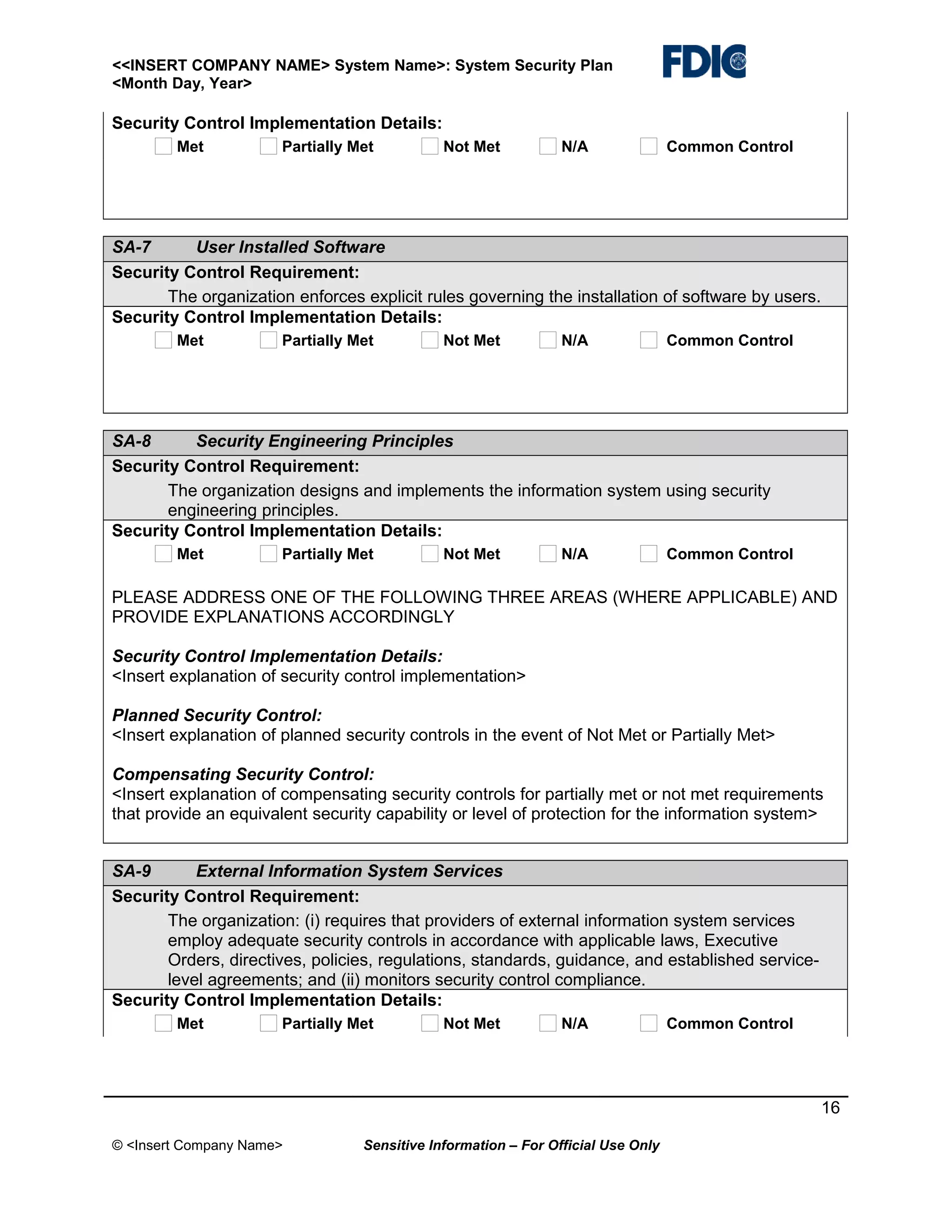
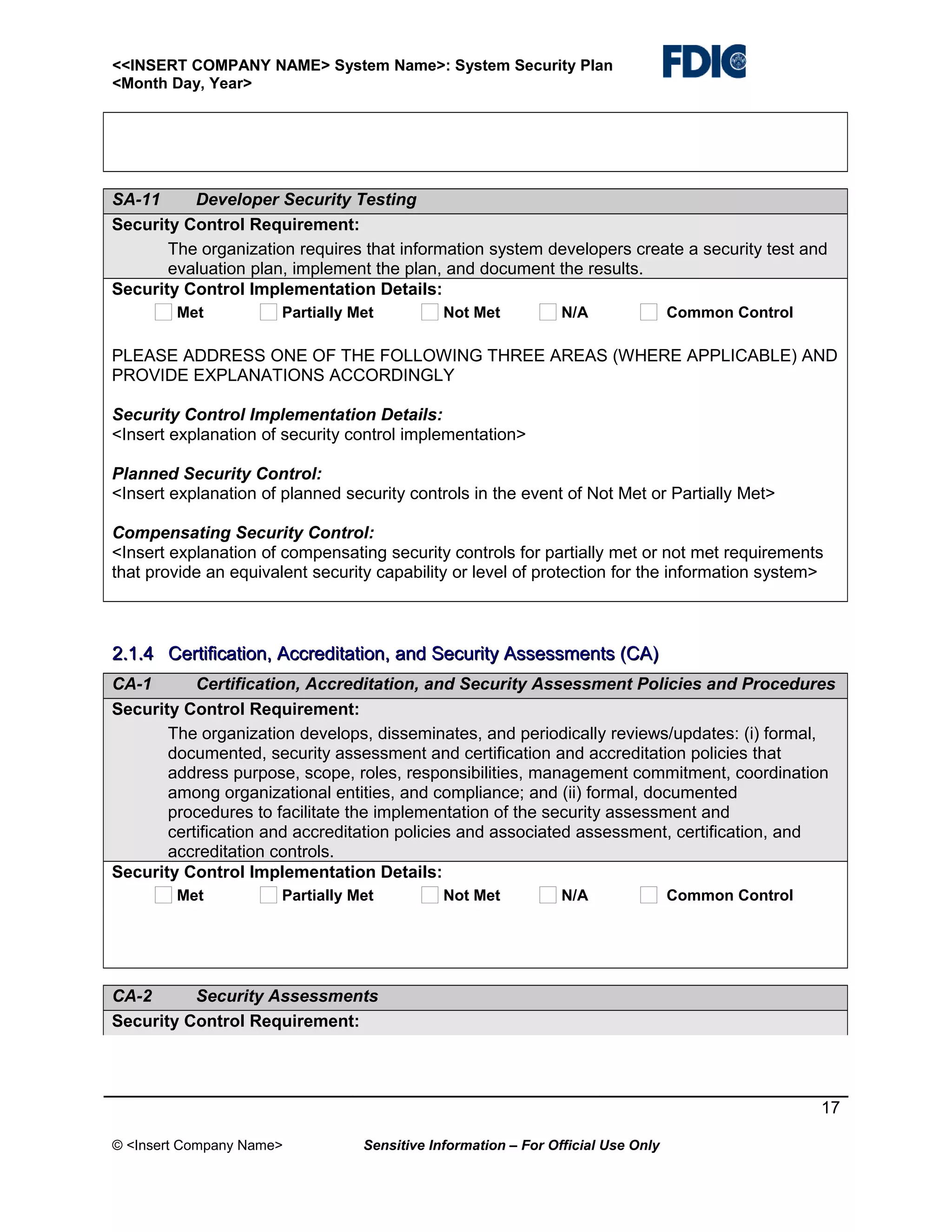
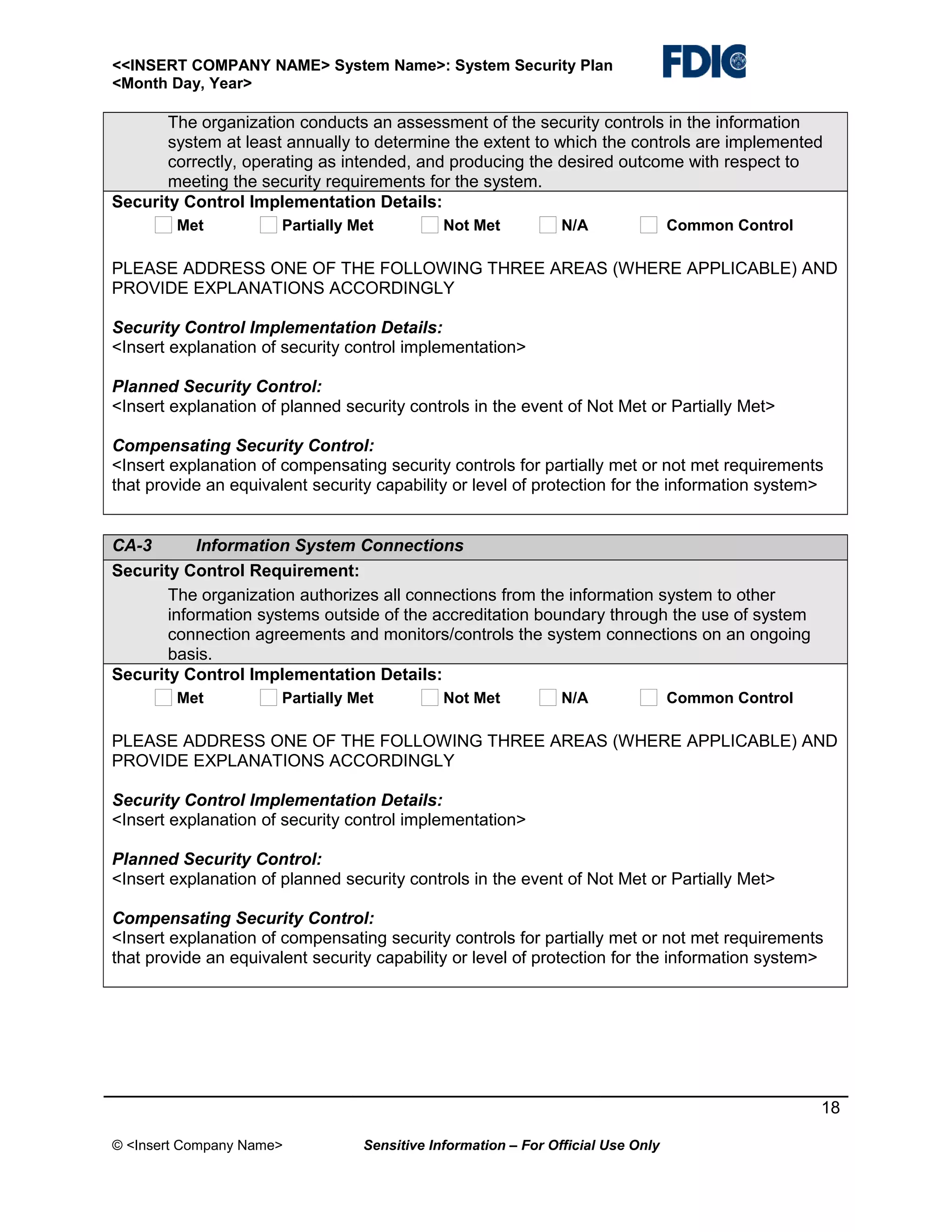
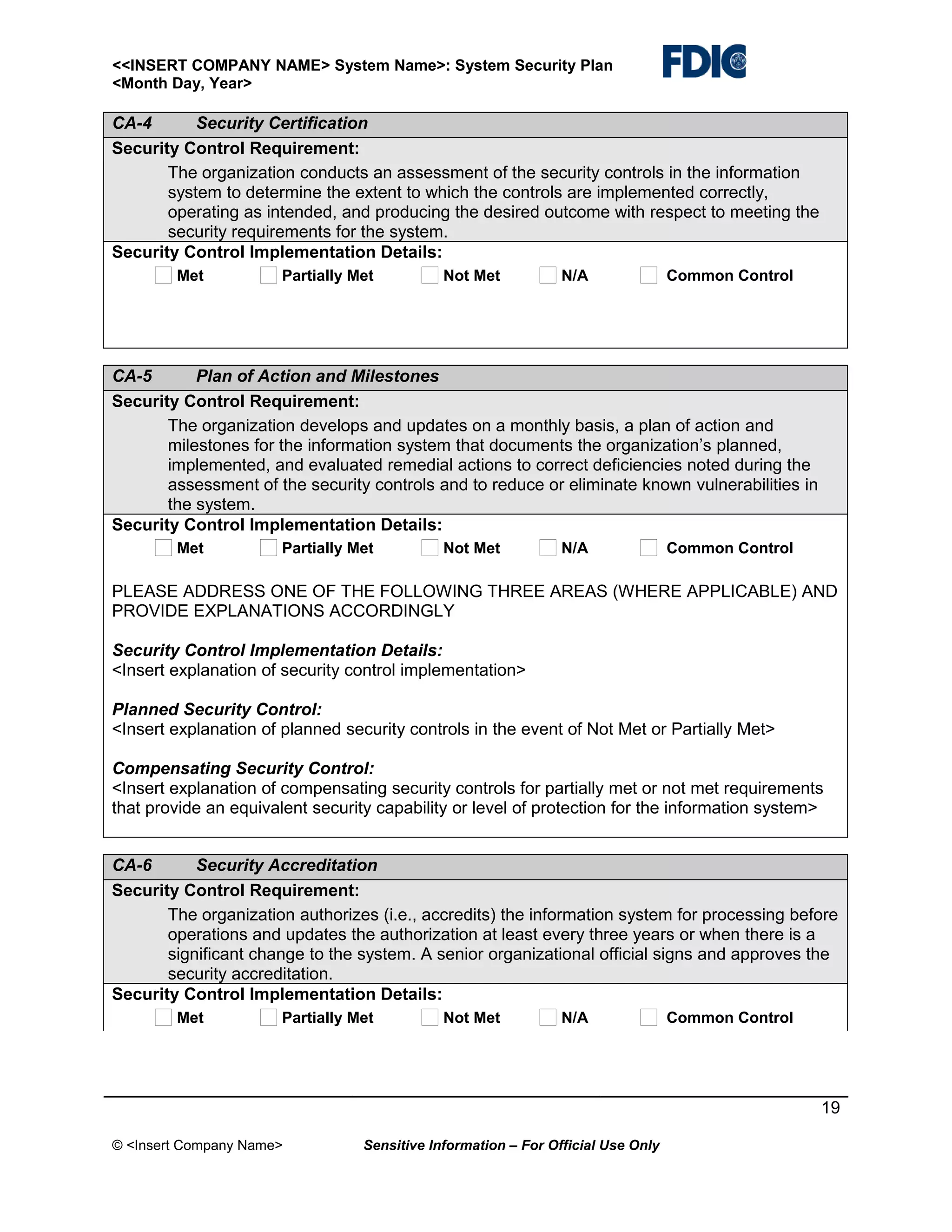
![<<INSERT COMPANY NAME> System Name>: System Security Plan
<Month Day, Year>
The organization provides an incident response support resource that offers advice and
assistance to users of the information system for the handling and reporting of security
incidents. The support resource is an integral part of the organization’s incident
response capability.
Security Control Implementation Details:
Met
Partially Met
Not Met
N/A
Common Control
2.1.13 Awareness and Training (AT)
AT-1
Security Awareness and Training Policy and Procedures
Security Control Requirement:
The organization develops, disseminates, and periodically reviews/updates: (i) a formal,
documented, security awareness and training policy that addresses purpose, scope,
roles, responsibilities, management commitment, coordination among organizational
entities, and compliance; and (ii) formal, documented procedures to facilitate the
implementation of the security awareness and training policy and associated security
awareness and training controls.
Security Control Implementation Details:
Met
Partially Met
Not Met
N/A
Common Control
AT-2
Security Awareness
Security Control Requirement:
The organization provides basic security awareness training to all information system
users (including managers and senior executives) before authorizing access to the
system, when required by system changes, and [Assignment: organization-defined
frequency, at least annually] thereafter.
Security Control Implementation Details:
Met
Partially Met
Not Met
N/A
Common Control
AT-3
Security Training
Security Control Requirement:
The organization identifies personnel that have significant information system security
roles and responsibilities during the system development life cycle, documents those
roles and responsibilities, and provides appropriate information system security training:
(i) before authorizing access to the system or performing assigned duties; (ii) when
required by system changes; and (iii) annually thereafter.
44
© <Insert Company Name>
Sensitive Information – For Official Use Only](https://image.slidesharecdn.com/it-security-plan-template-131108104214-phpapp01/75/It-security-plan-template-49-2048.jpg)


![[Insert System Name (Acronym)]Security Categorization Moderat.docx](https://cdn.slidesharecdn.com/ss_thumbnails/insertsystemnameacronymsecuritycategorizationmoderat-221114182327-b2942933-thumbnail.jpg?width=640&height=640&fit=bounds)


![Vibe Coding vs. Spec-Driven Development [Free Meetup]](https://cdn.slidesharecdn.com/ss_thumbnails/vibecodingvsspecdrivendevelopment-251209105622-43f455e7-thumbnail.jpg?width=640&height=640&fit=bounds)


