ROBOTIC HAND
CONTROLLED BY
HAND GESTURE
• Robotic hand controlled by hand
gesture Robot is a robot which can be
controlled by simple gesture.
• The sensor will record the movement
of hand in a specific direction which
will result in the movement of the
robot in the respective direction.
• The wired connection enables the
user the interact with the robot in a
more friendly way.
• Part 1: Introduction to our Project
• Part 2: Introduction to Implementation Tools
• Part 3 Results and Conclusions
• Part 4: Possible uses
Our “Microcontroller based robotic hand
controlled by hand gesture” robot work on
the principle of flex sensor which records
hand movement and the information is then
transferred to a encoder, which makes it ready
for transmit on the receiving end, the
information is received via wired connection
decoded & then passed on to the Arduino.
Microcontroller which takes various decisions
based on the received information. These
decisions are passed to the motor drive which
triggers the motor in different configuration to
make the robot move in a specific direction.
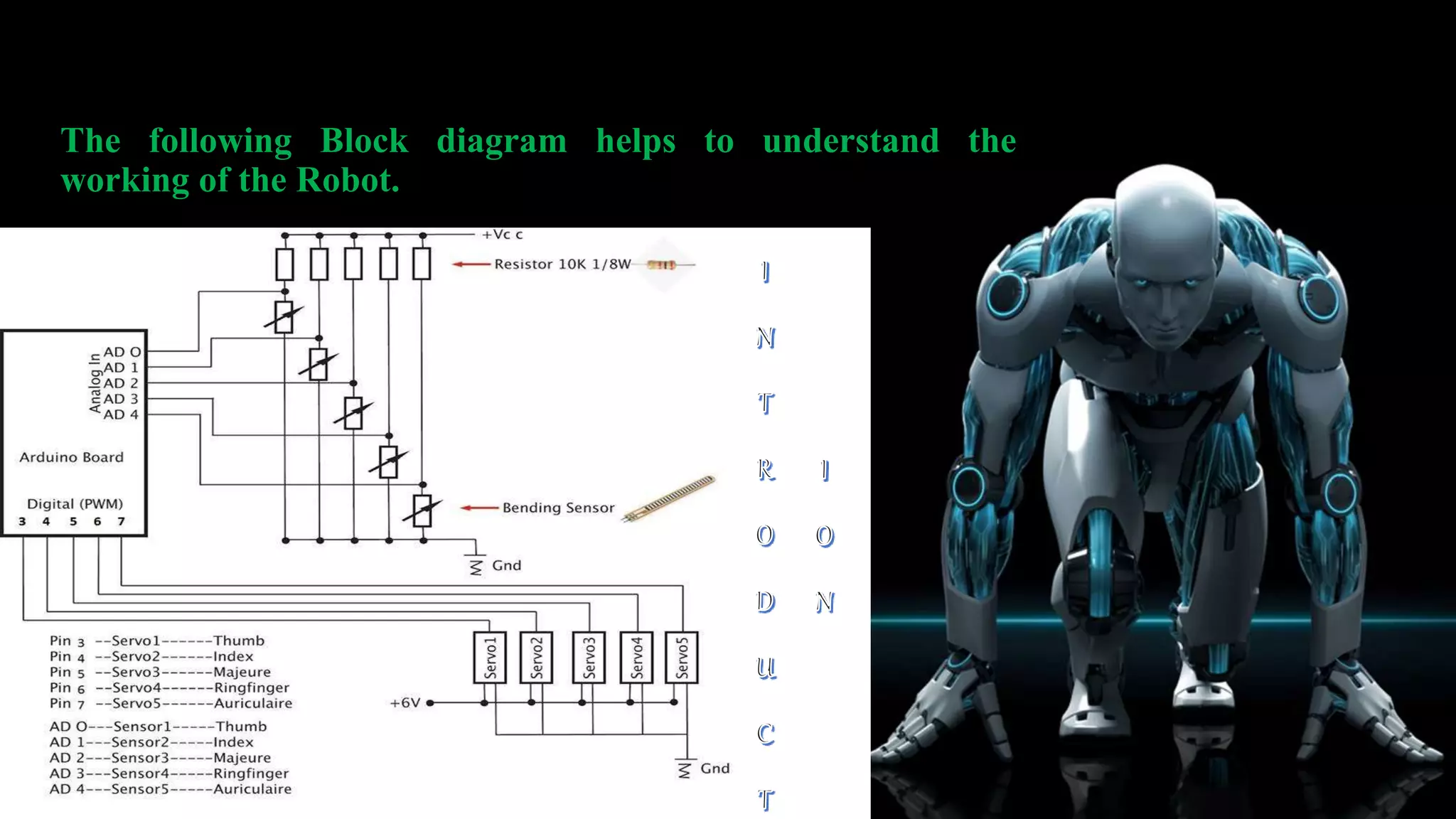
The following Block diagram helps to understand the
working of the Robot.
• Part 1: Introduction to our Project
• Part 2: Introduction to Implementation Tools
• Part 3 Results and Conclusions
• Part 4: Possible uses
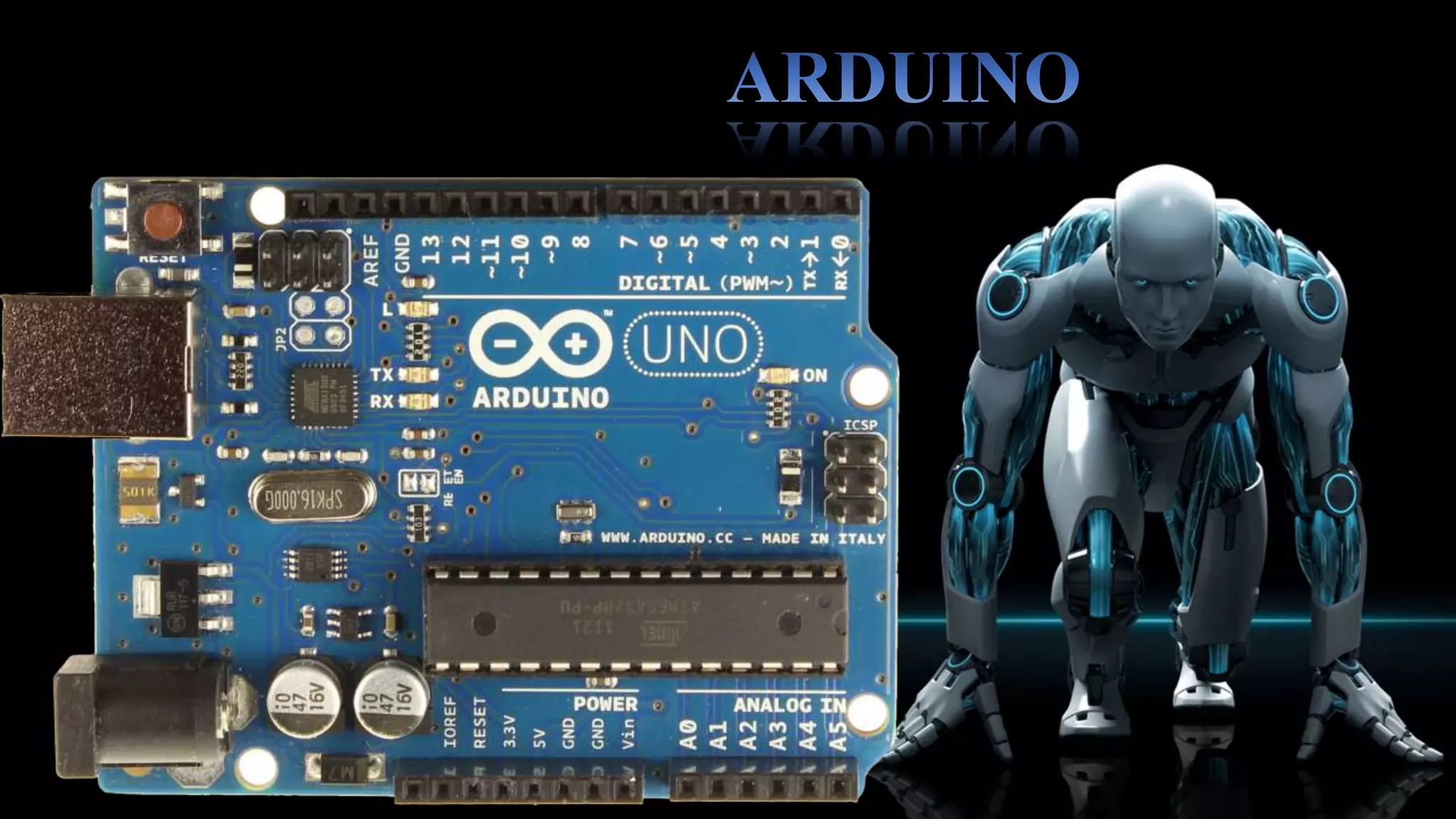
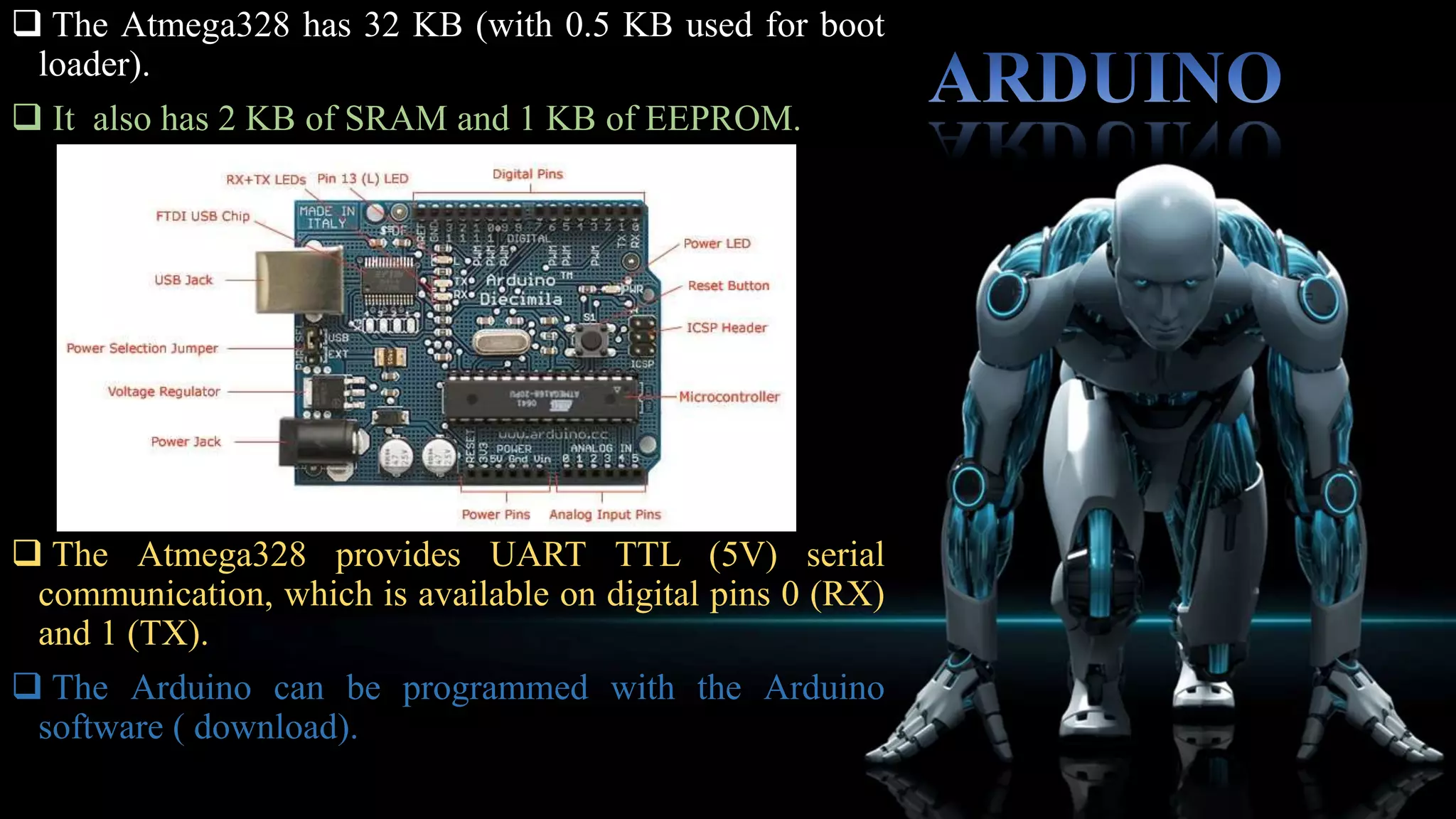
The Arduino is a microcontroller board based on the
ATmega328.
Arduino is a open source electronics prototyping platform
based on flexible, easy to use hardware and software.
The Arduino can sense the environment by receiving input
from a verity of sensor and can effect its surroundings by
controlling motors and other actuators.
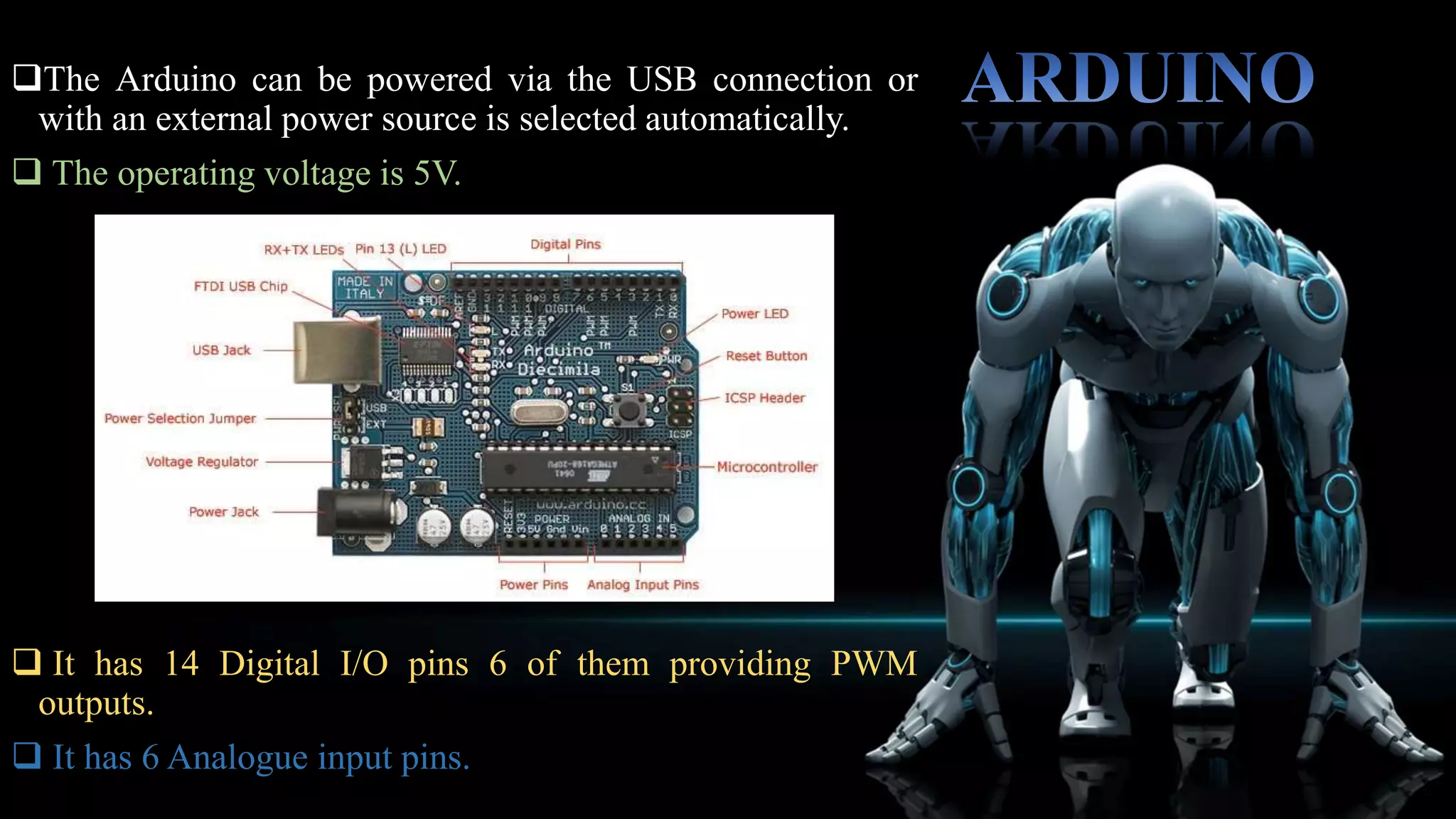
The Arduino can be powered via the USB connection or
with an external power source is selected automatically.
 The operating voltage is 5V.
 It has 14 Digital I/O pins 6 of them providing PWM
outputs.
 It has 6 Analogue input pins.
 The Atmega328 has 32 KB (with 0.5 KB used for boot
loader).
 It also has 2 KB of SRAM and 1 KB of EEPROM.
 The Atmega328 provides UART TTL (5V) serial
communication, which is available on digital pins 0 (RX)
and 1 (TX).
 The Arduino can be programmed with the Arduino
software ( download).
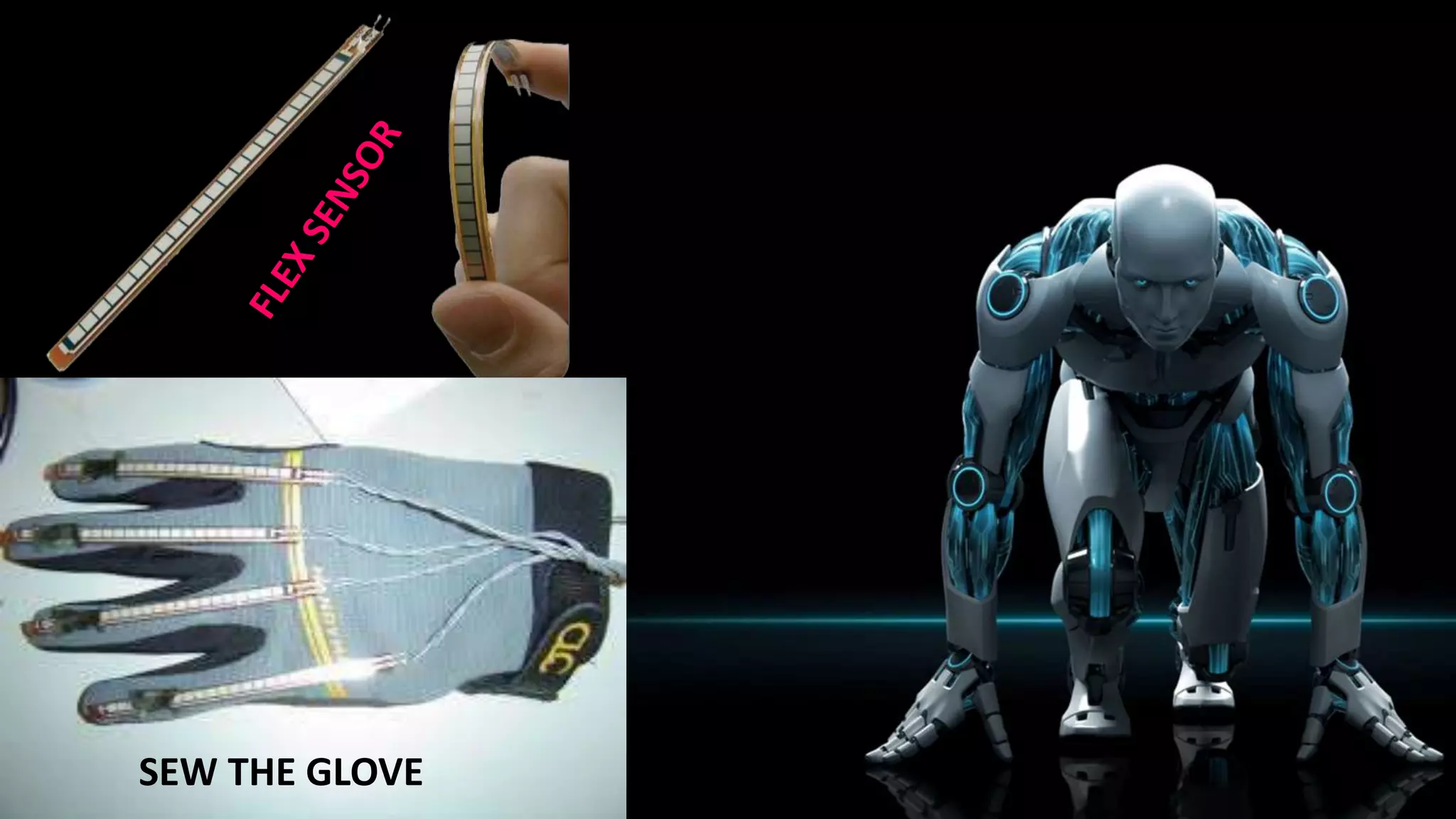
SEW THE GLOVE
FLEX SENSOR
 Flex sensors are sensors that change in resistance on the
amount of bend on the sensor.
 They convert the change in bend to the electrical
resistance, the more the bend , the more the resistance
value.
 Inside the flex sensor are carbon resistive material
elements within the thin flexible substrate.
 More carbon means less resistance.
 They are usually in the form of 1 to 5 inches long that
vary in resistance from approx.: 10KΩ to 50KΩ.
 They are used in gloves to sense the finger movements.
 A 22kΩ resistor is also placed in series with each flex
sensor in order to protect it.
 Flex sensors are used to convert the flexing motion of
the fingers into rotational motion of the servo motors.
FLEX SENSOR
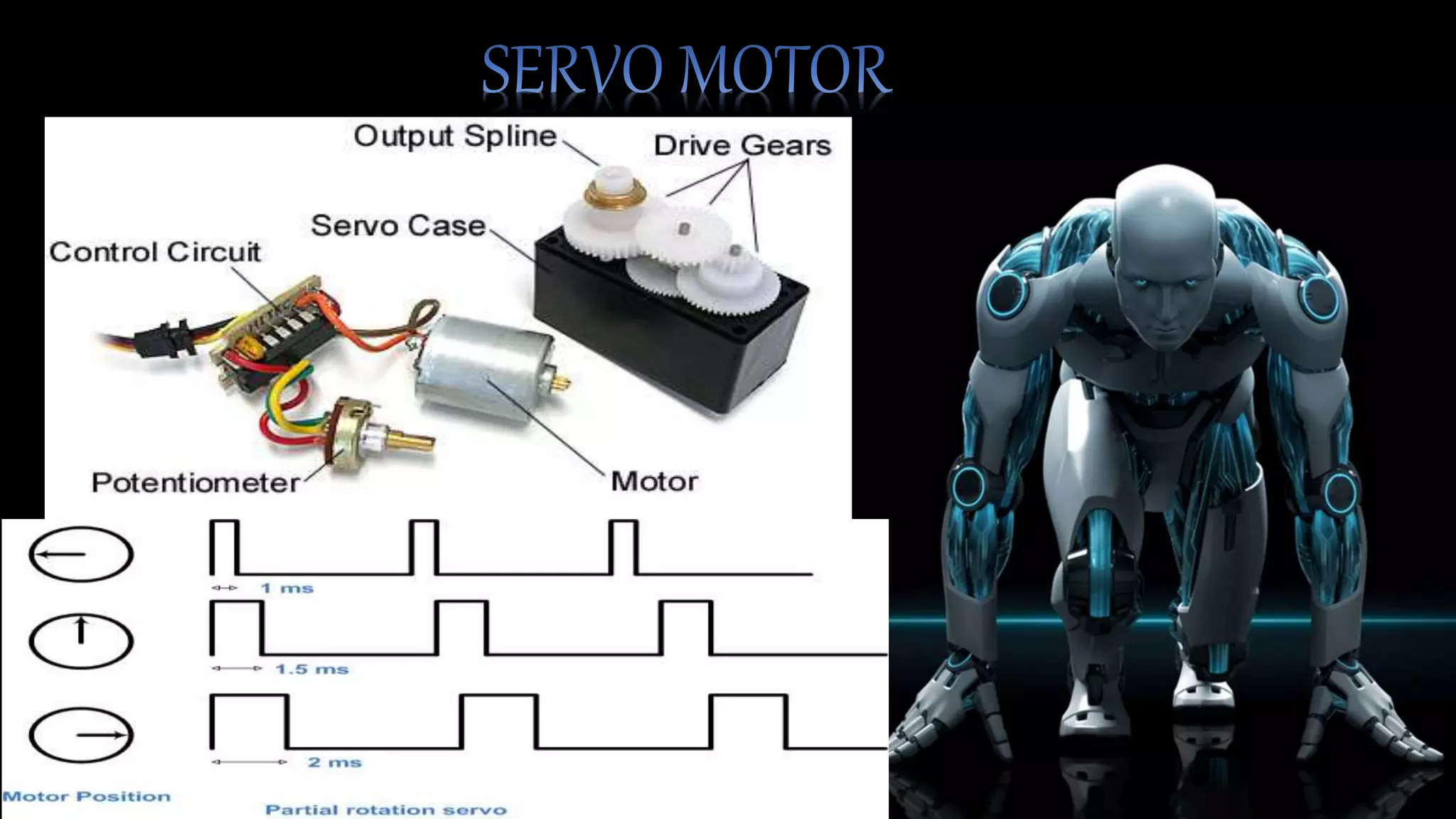
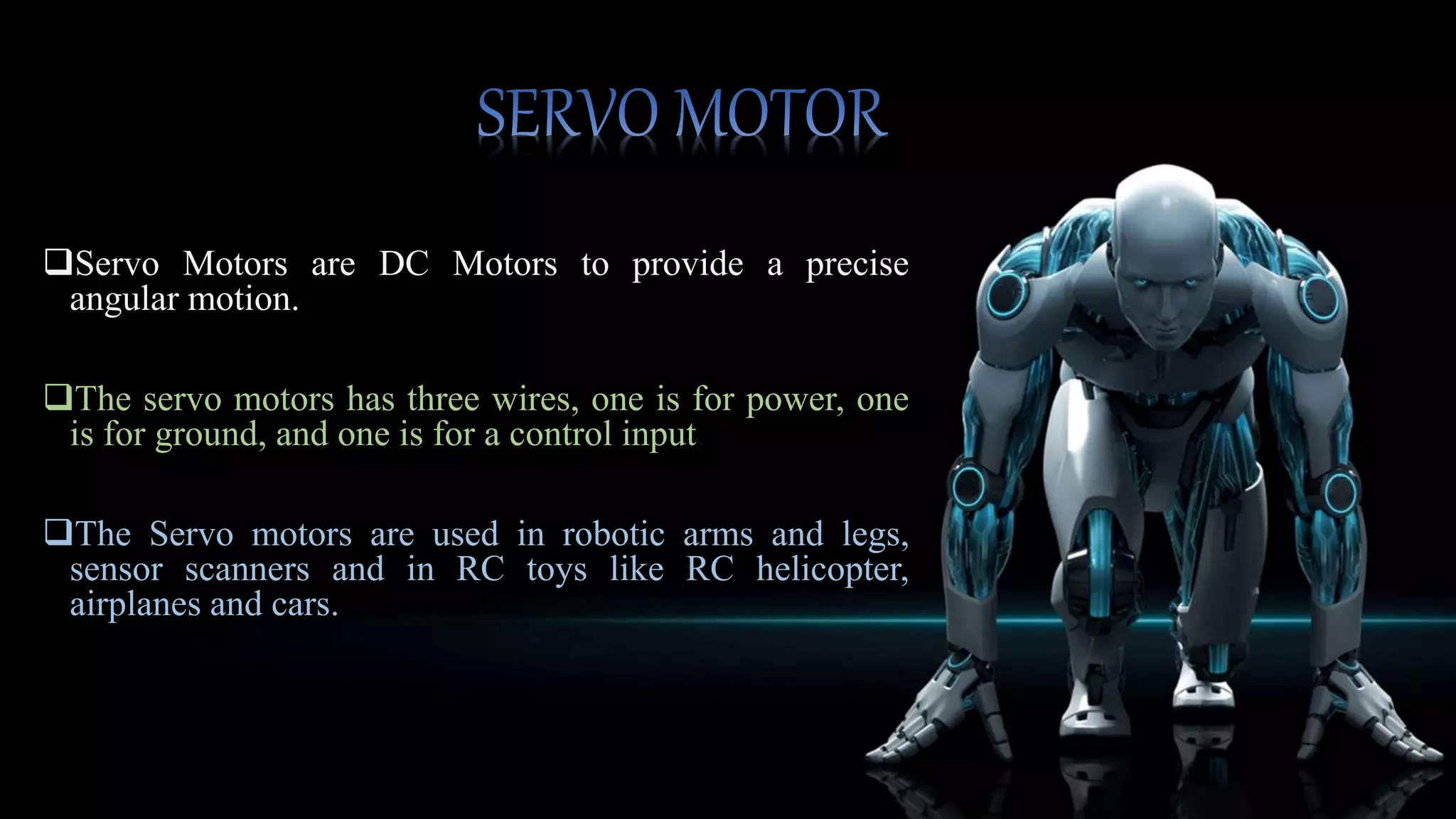
Servo Motors are DC Motors to provide a precise
angular motion.
The servo motors has three wires, one is for power, one
is for ground, and one is for a control input.
The Servo motors are used in robotic arms and legs,
sensor scanners and in RC toys like RC helicopter,
airplanes and cars.
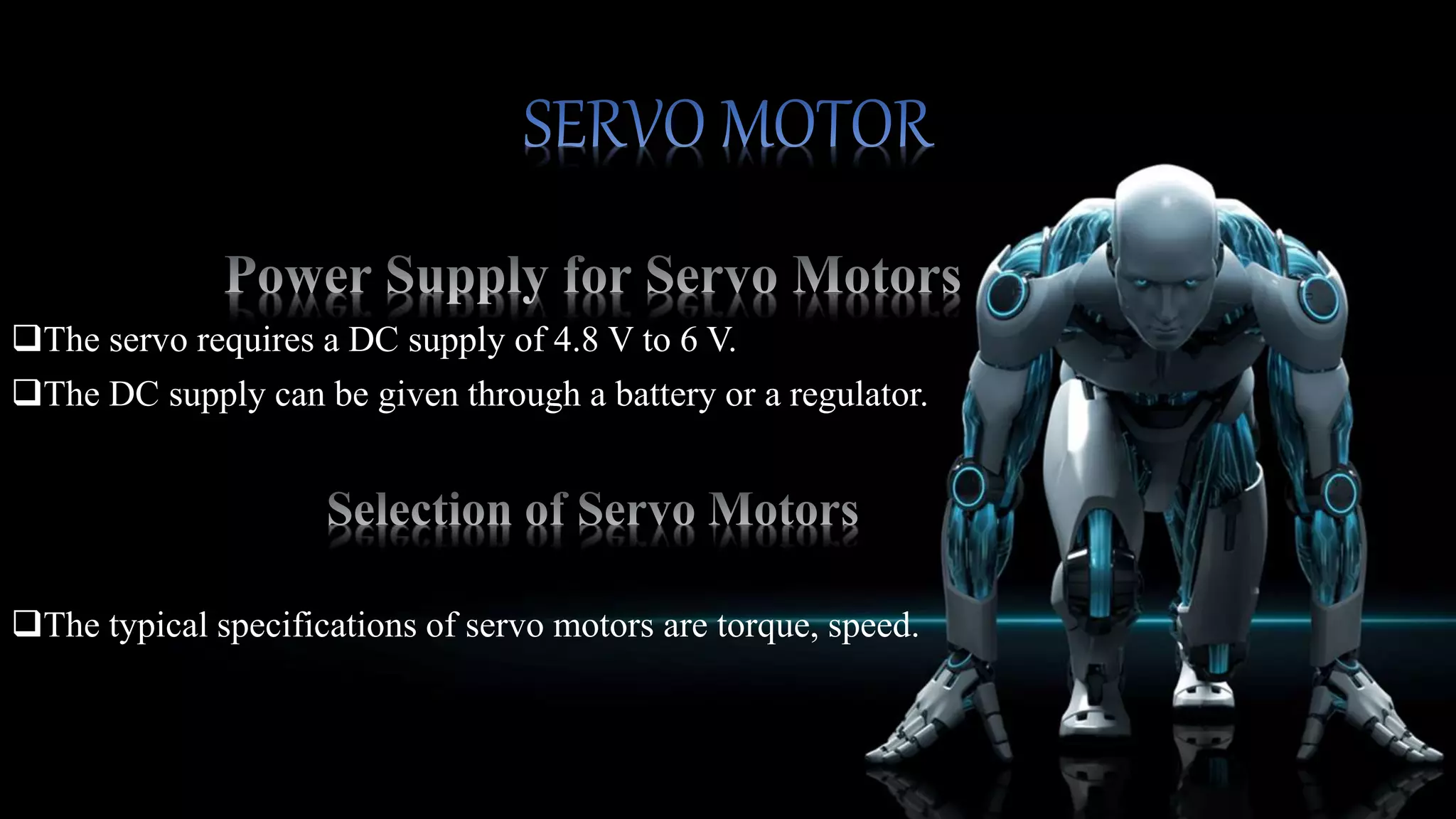
The servo requires a DC supply of 4.8 V to 6 V.
The DC supply can be given through a battery or a regulator.
The typical specifications of servo motors are torque, speed.
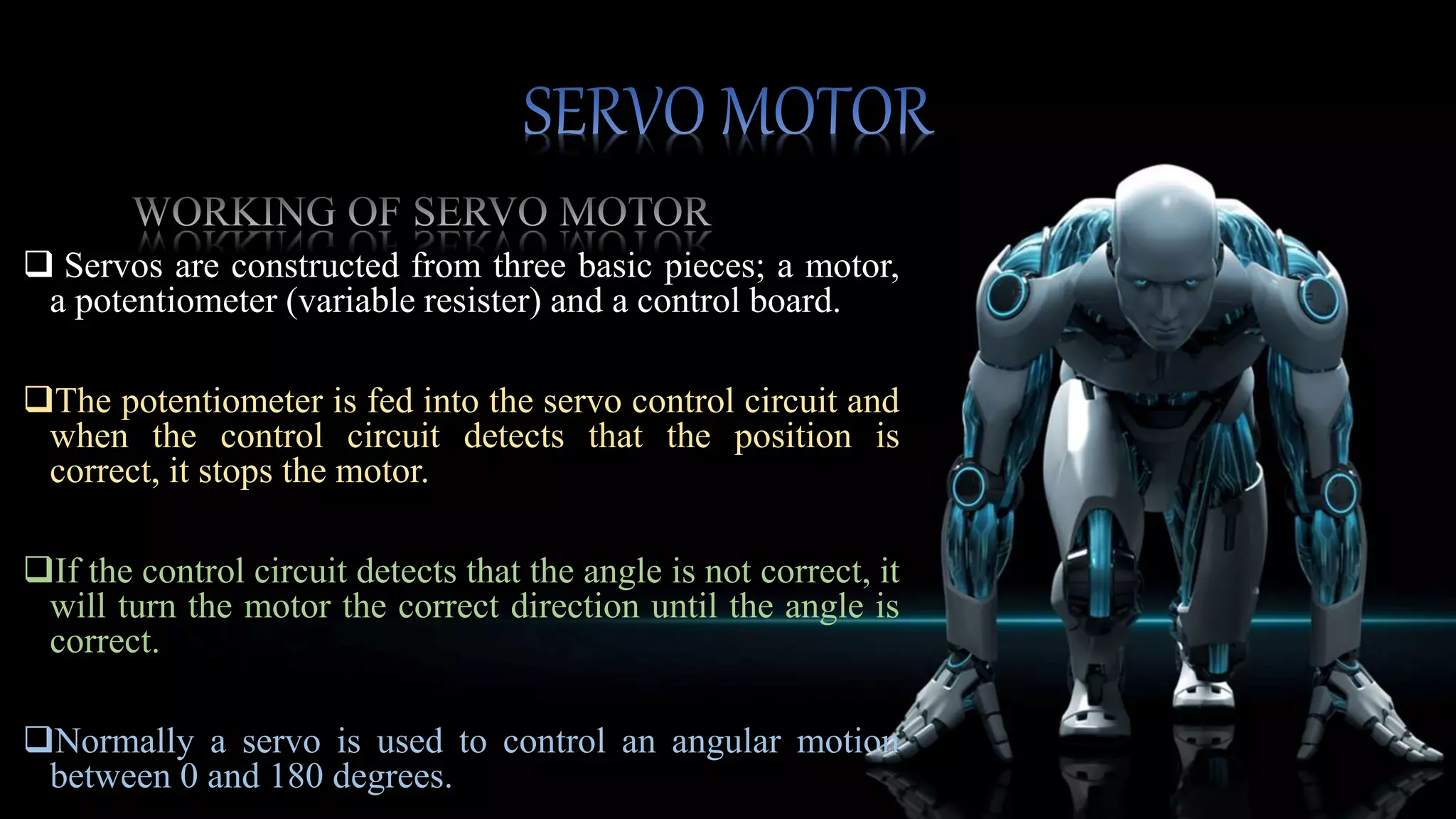
 Servos are constructed from three basic pieces; a motor,
a potentiometer (variable resister) and a control board.
The potentiometer is fed into the servo control circuit and
when the control circuit detects that the position is
correct, it stops the motor.
If the control circuit detects that the angle is not correct, it
will turn the motor the correct direction until the angle is
correct.
Normally a servo is used to control an angular motion
between 0 and 180 degrees.
• Part 1: Introduction to our Project
• Part 2: Introduction to Implementation Tools
• Part 3 Results and Conclusions
• Part 4: Possible uses
CERTANITY
 The over all system perform responsibly well.
 The robotic hand is capable to carry normal routine
function as human hand does.
 The microcontroller accepts inputs from the sensor and
generates the proper control signals based on those inputs.
UNCERTANITY
 The lift capacity of the servo motors on the robotic hand
is limited.
 The usable lifetime of the flex sensors seems to be
limited.
 The sensors themselves are very fragile and easily wear
out from overuse.
 Careful maintenance and protection of the flex sensors is
crucial to successful operation of the system.
• Part 1: Introduction to our Project
• Part 2: Introduction to Implementation Tools
• Part 3 Results and Conclusions
• Part 4: Possible uses
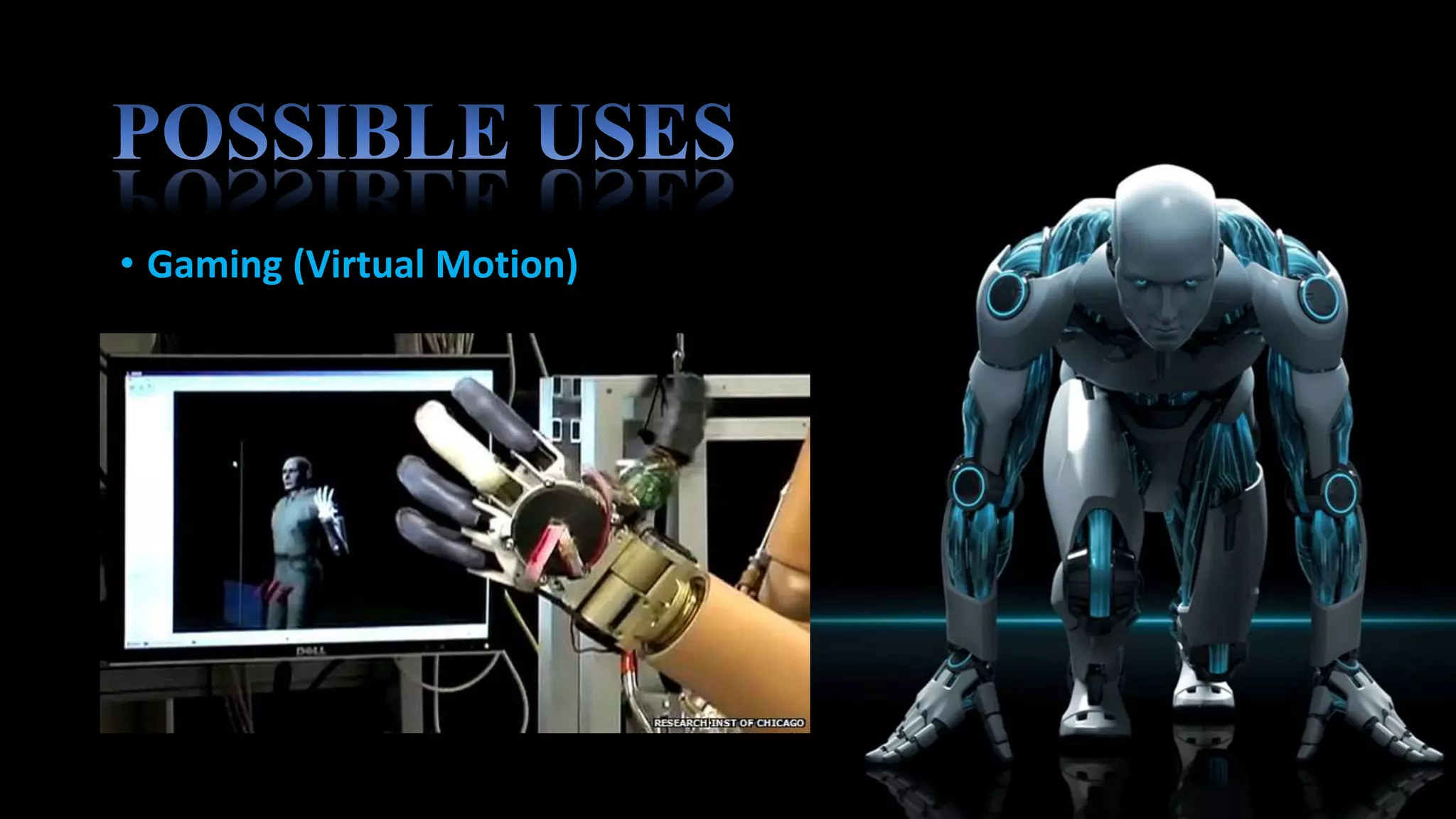
• Gaming (Virtual Motion)
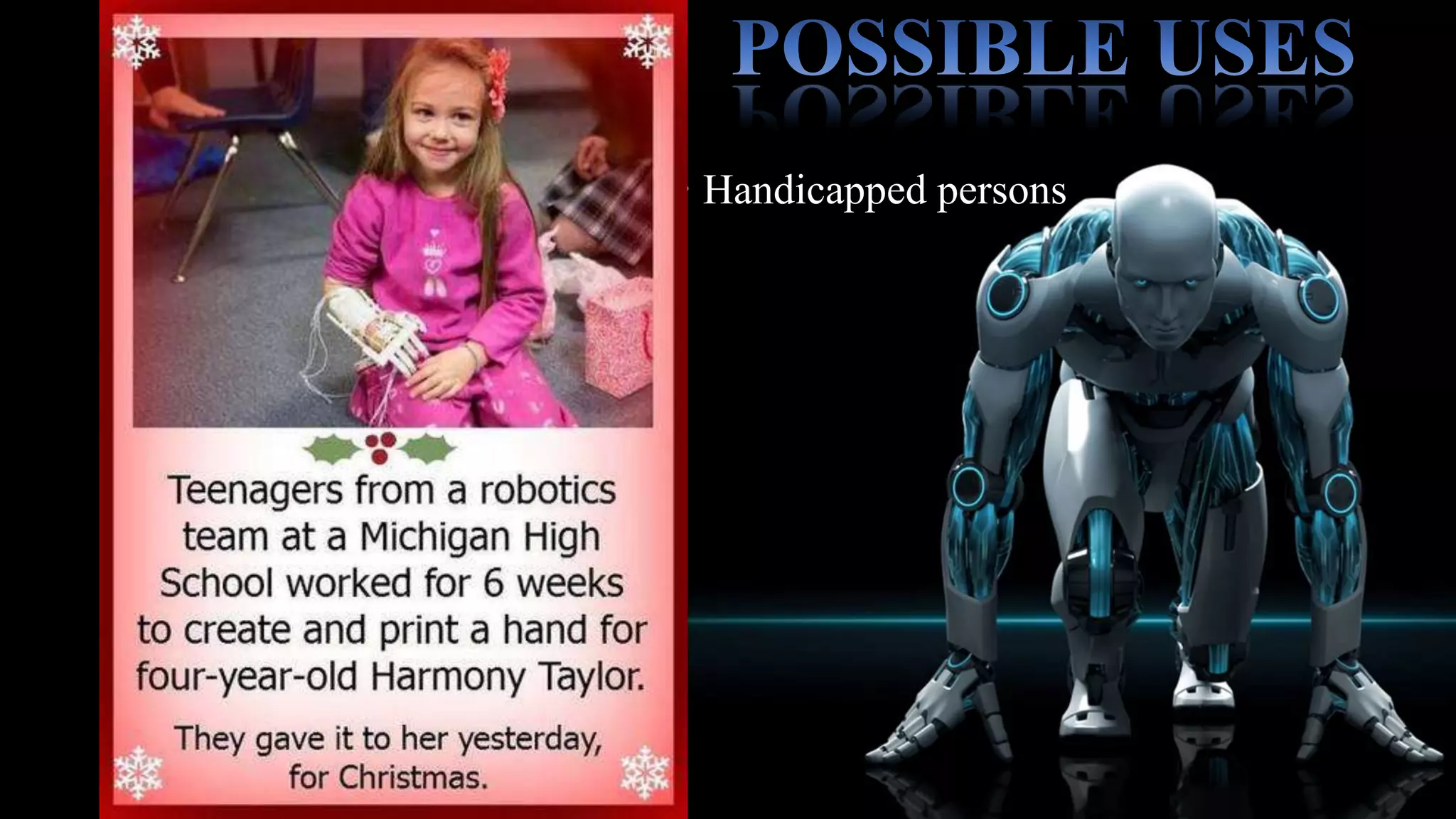
• Handicapped persons
• Musical instrument.
THE END

Robotic Hand

  • 1.
  • 2.
    • Robotic handcontrolled by hand gesture Robot is a robot which can be controlled by simple gesture. • The sensor will record the movement of hand in a specific direction which will result in the movement of the robot in the respective direction. • The wired connection enables the user the interact with the robot in a more friendly way.
  • 3.
    • Part 1:Introduction to our Project • Part 2: Introduction to Implementation Tools • Part 3 Results and Conclusions • Part 4: Possible uses
  • 4.
    Our “Microcontroller basedrobotic hand controlled by hand gesture” robot work on the principle of flex sensor which records hand movement and the information is then transferred to a encoder, which makes it ready for transmit on the receiving end, the information is received via wired connection decoded & then passed on to the Arduino. Microcontroller which takes various decisions based on the received information. These decisions are passed to the motor drive which triggers the motor in different configuration to make the robot move in a specific direction.
  • 5.
    The following Blockdiagram helps to understand the working of the Robot.
  • 6.
    • Part 1:Introduction to our Project • Part 2: Introduction to Implementation Tools • Part 3 Results and Conclusions • Part 4: Possible uses
  • 8.
    The Arduino isa microcontroller board based on the ATmega328. Arduino is a open source electronics prototyping platform based on flexible, easy to use hardware and software. The Arduino can sense the environment by receiving input from a verity of sensor and can effect its surroundings by controlling motors and other actuators.
  • 9.
    The Arduino canbe powered via the USB connection or with an external power source is selected automatically.  The operating voltage is 5V.  It has 14 Digital I/O pins 6 of them providing PWM outputs.  It has 6 Analogue input pins.
  • 10.
     The Atmega328has 32 KB (with 0.5 KB used for boot loader).  It also has 2 KB of SRAM and 1 KB of EEPROM.  The Atmega328 provides UART TTL (5V) serial communication, which is available on digital pins 0 (RX) and 1 (TX).  The Arduino can be programmed with the Arduino software ( download).
  • 11.
  • 12.
    FLEX SENSOR  Flexsensors are sensors that change in resistance on the amount of bend on the sensor.  They convert the change in bend to the electrical resistance, the more the bend , the more the resistance value.  Inside the flex sensor are carbon resistive material elements within the thin flexible substrate.  More carbon means less resistance.
  • 13.
     They areusually in the form of 1 to 5 inches long that vary in resistance from approx.: 10KΩ to 50KΩ.  They are used in gloves to sense the finger movements.  A 22kΩ resistor is also placed in series with each flex sensor in order to protect it.  Flex sensors are used to convert the flexing motion of the fingers into rotational motion of the servo motors. FLEX SENSOR
  • 15.
    Servo Motors areDC Motors to provide a precise angular motion. The servo motors has three wires, one is for power, one is for ground, and one is for a control input. The Servo motors are used in robotic arms and legs, sensor scanners and in RC toys like RC helicopter, airplanes and cars.
  • 16.
    The servo requiresa DC supply of 4.8 V to 6 V. The DC supply can be given through a battery or a regulator. The typical specifications of servo motors are torque, speed.
  • 17.
     Servos areconstructed from three basic pieces; a motor, a potentiometer (variable resister) and a control board. The potentiometer is fed into the servo control circuit and when the control circuit detects that the position is correct, it stops the motor. If the control circuit detects that the angle is not correct, it will turn the motor the correct direction until the angle is correct. Normally a servo is used to control an angular motion between 0 and 180 degrees.
  • 18.
    • Part 1:Introduction to our Project • Part 2: Introduction to Implementation Tools • Part 3 Results and Conclusions • Part 4: Possible uses
  • 19.
    CERTANITY  The overall system perform responsibly well.  The robotic hand is capable to carry normal routine function as human hand does.  The microcontroller accepts inputs from the sensor and generates the proper control signals based on those inputs.
  • 20.
    UNCERTANITY  The liftcapacity of the servo motors on the robotic hand is limited.  The usable lifetime of the flex sensors seems to be limited.  The sensors themselves are very fragile and easily wear out from overuse.  Careful maintenance and protection of the flex sensors is crucial to successful operation of the system.
  • 21.
    • Part 1:Introduction to our Project • Part 2: Introduction to Implementation Tools • Part 3 Results and Conclusions • Part 4: Possible uses
  • 22.
  • 23.
  • 24.
  • 25.