DESIGN & FABRICATION OF PIPE
INSPECTION ROBOT
•INTRODUCTION
•PROBLEM STAEMENT
•FIELD APPLICATION OF PIPE INSPECTION
•INSPECTION METHODS

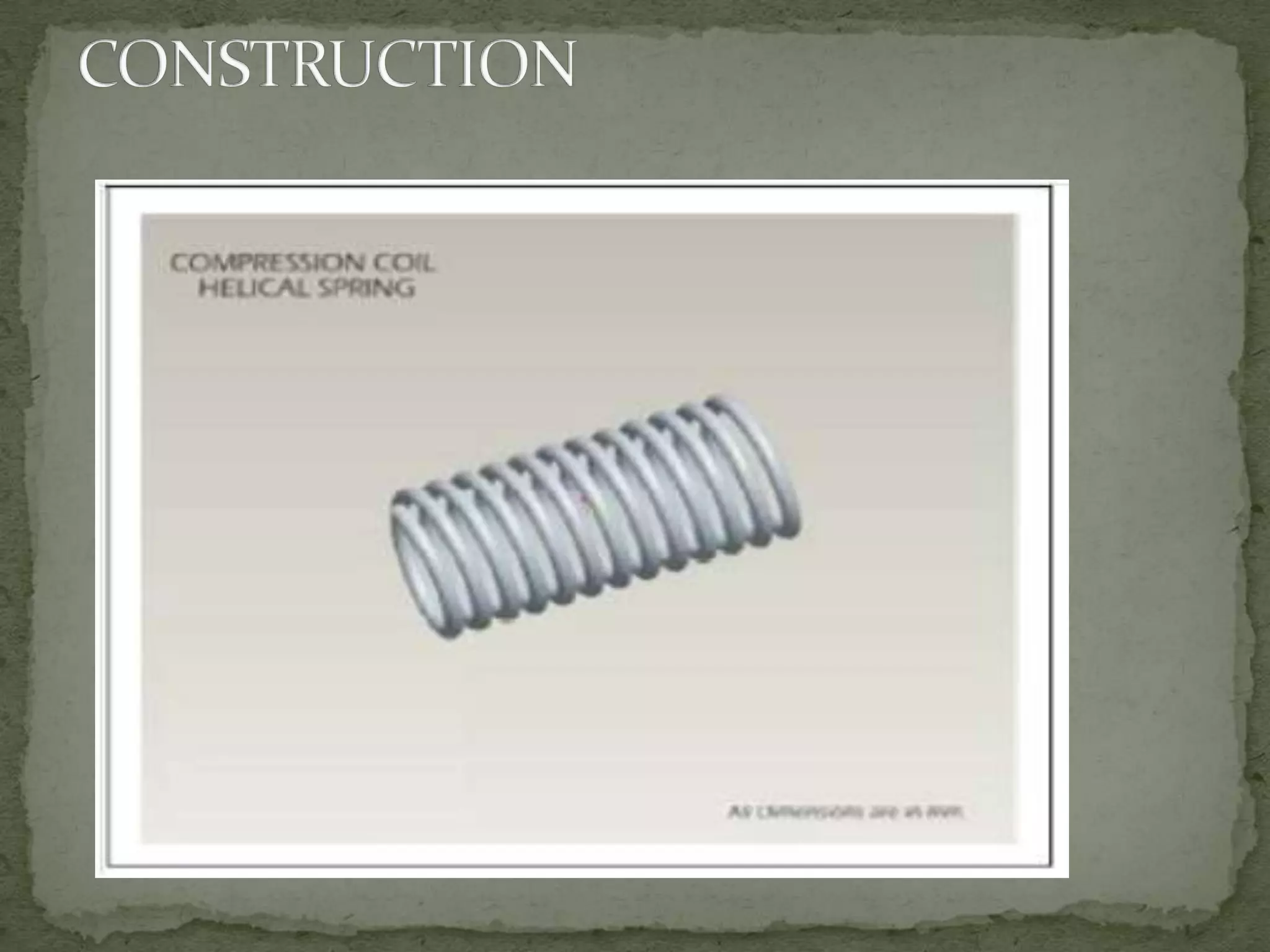
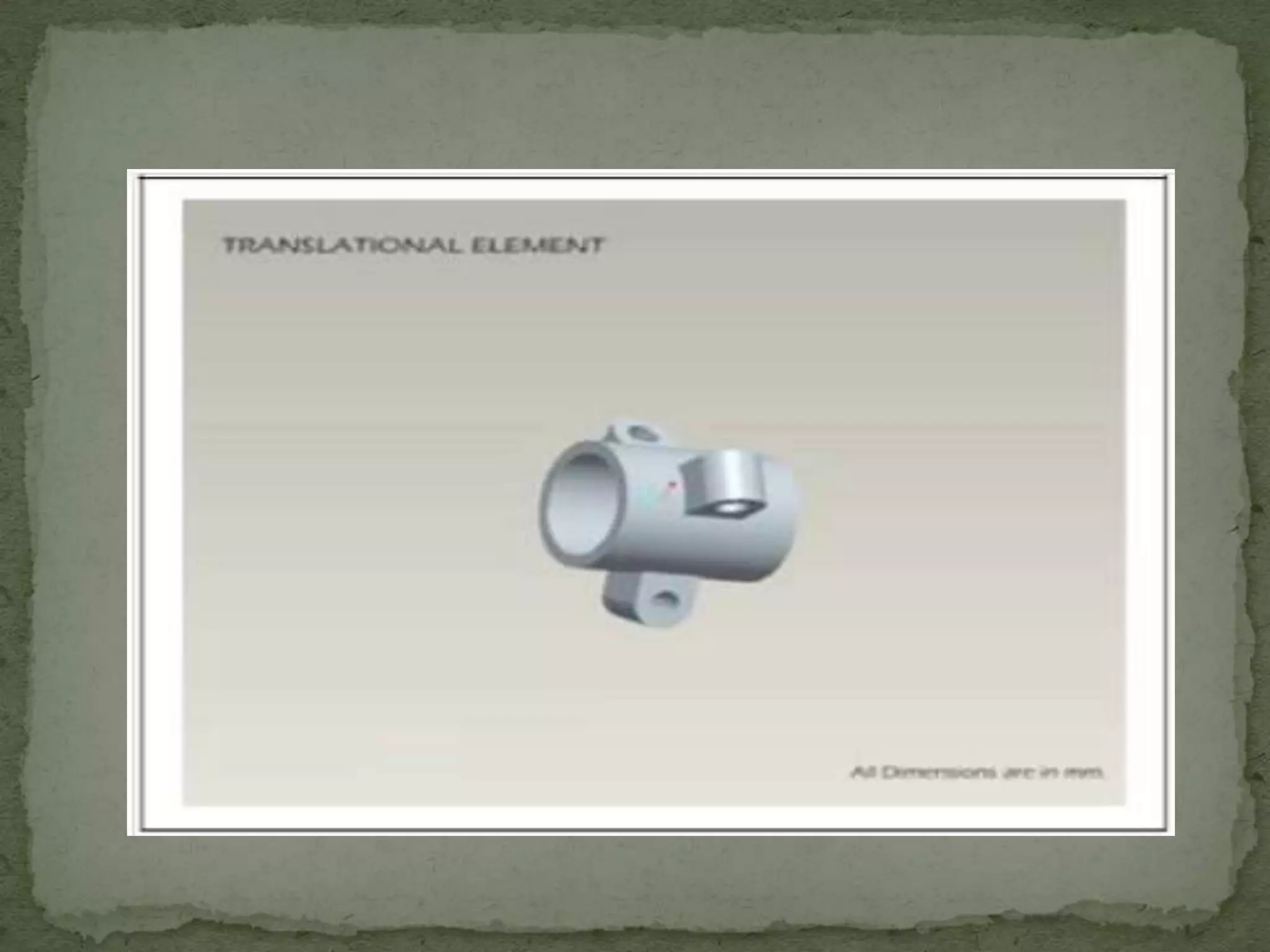
•CONSTRUCTION
•DESIGN
•WORKING
•APPLICATION
•COST ESTIMATION
•ADVANTAGES
•LIMATION
•REFERENCES
Robotics is one of the fastest growing engineering
fields of today. Robots are designed to remove the human
factor from labor intensive or dangerous work and also to

act in inaccessible environment. The use of robots is more
common today than ever before and it is no longer exclusively
used by the heavy production industries.
The inspection of pipes may be relevant for improving

security and efficiency in industrial plants. These
specific operations as inspection, maintenance, cleaning
etc. are expensive, thus the application of the robots appears
to be one of the most attractive solutions. The pipelines
are the major tools for the transportation of drinkable
water, effluent water, fuel oils and gas. A lot of troubles
caused by piping networks aging, corrosion, cracks, and
mechanical damages are possible.
TYPES OF INSPECTION
METHOD
Ultrasonic inspection
MAGNETIC FLUX
X-RAY
Visual Inspection:
Visual Inspection:
Due to the cost of advanced inspection techniques, less
expensive forms of Nondestructive evaluation is often
desired. Visual inspection is currently one of the most
commonly used nondestructive evaluation techniques
because it is relatively inexpensive as it requires minimal, if
any, use of instruments or equipment, and it can be
accomplished without data processing As mentioned
previously, visual inspection can only detect surface
defects. However, a large number of structural deficiencies
have surface indicators (e.g. corrosion, concrete
deterioration). Aside from a limited range of detection,
visual inspection does have further drawbacks. It is
extremely subjective as it depends on the inspector’s
training, visual acuity, and state-of-mind. Also external
factors such as light intensity, structure complexity, and
structure accessibility play a role in determining the
effectiveness of visual inspection
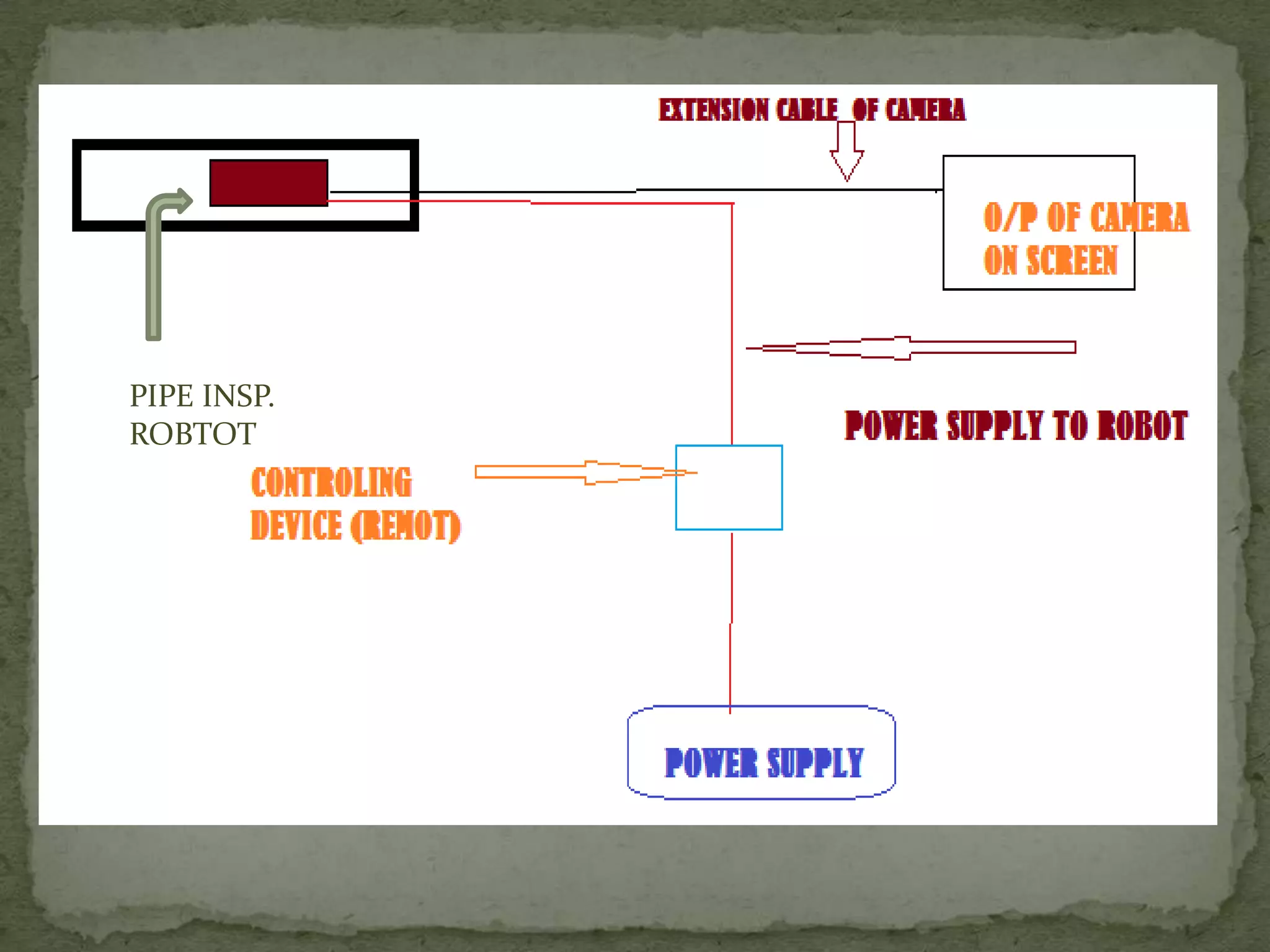
PIPE INSP.
ROBTOT
PARAMETER
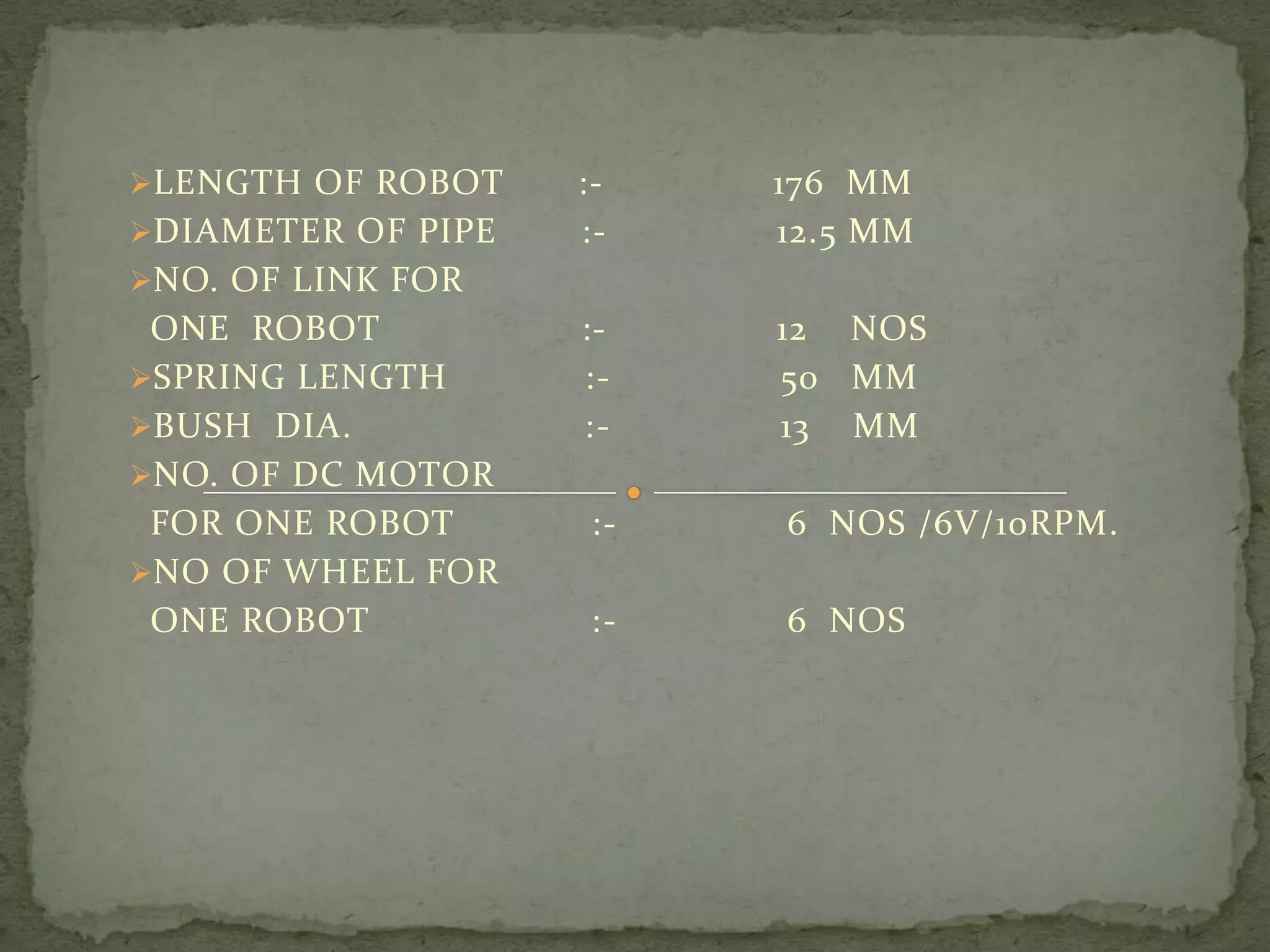
LENGTH OF ROBOT
DIAMETER OF PIPE

::-

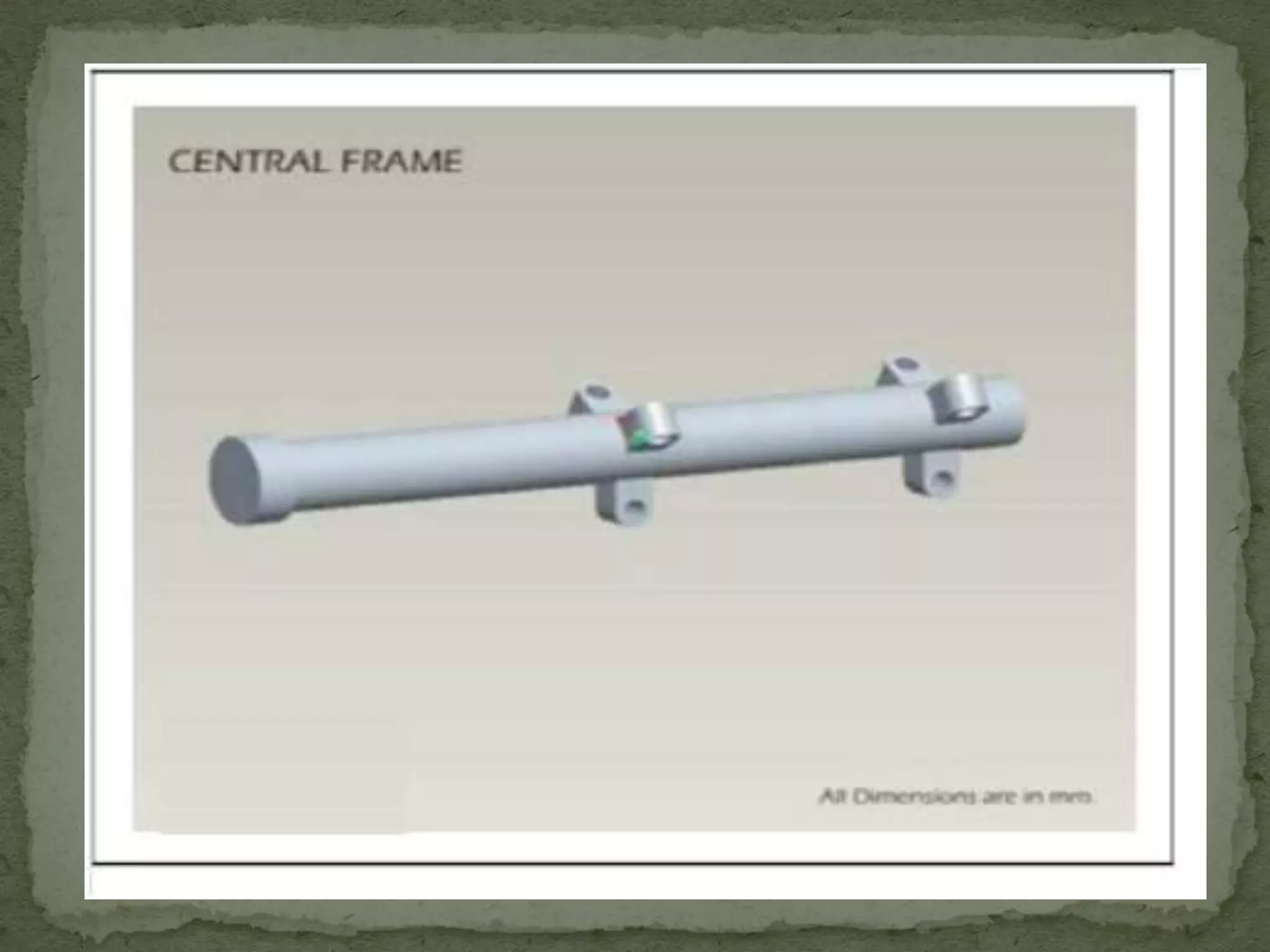
176 MM
12.5 MM

:::-

12 NOS
50 MM
13 MM

:-

6 NOS /6V/10RPM.

:-

6 NOS

NO. OF LINK FOR

ONE ROBOT
SPRING LENGTH
BUSH DIA.
NO. OF DC MOTOR
FOR ONE ROBOT
NO OF WHEEL FOR
ONE ROBOT
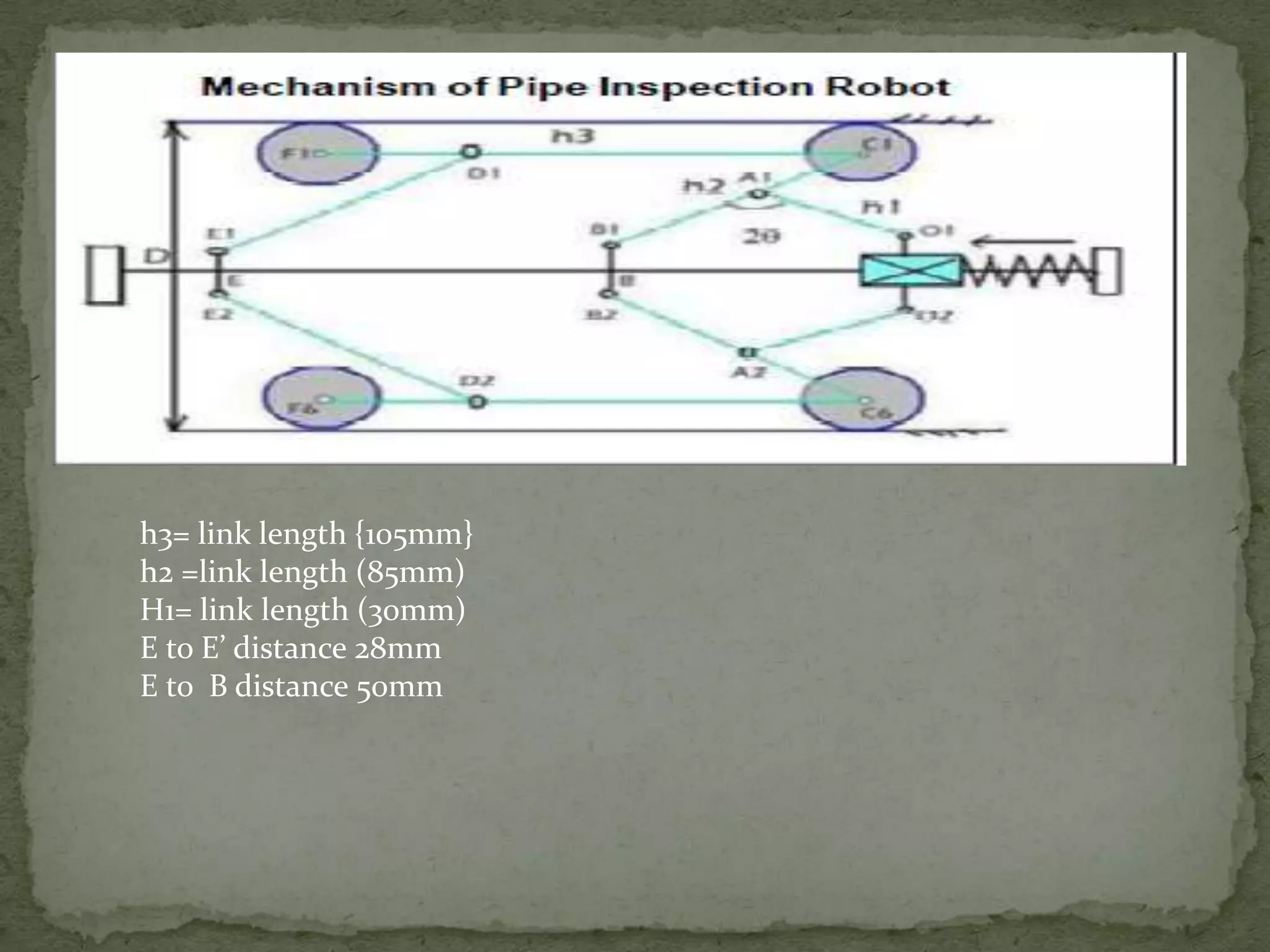
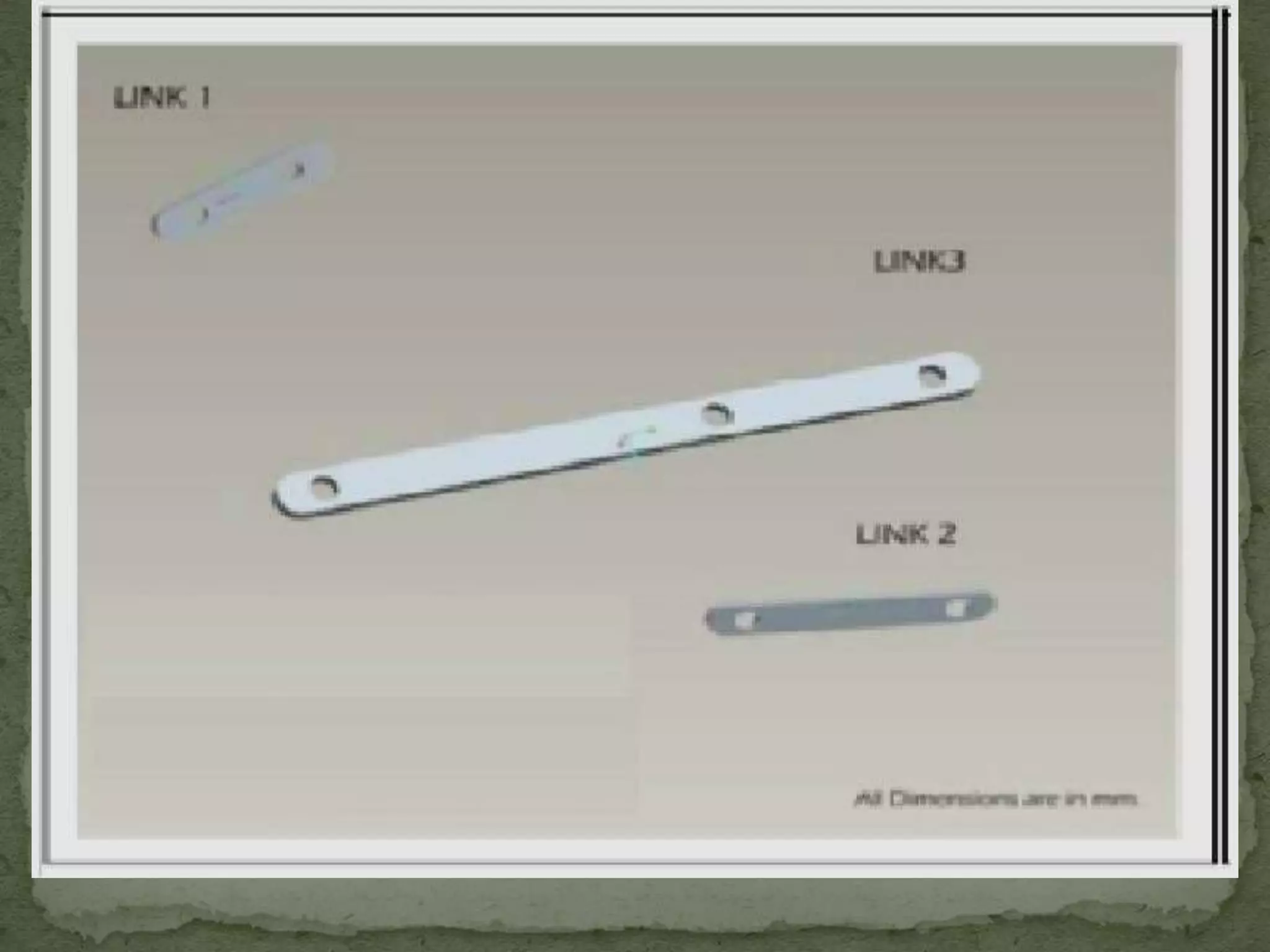
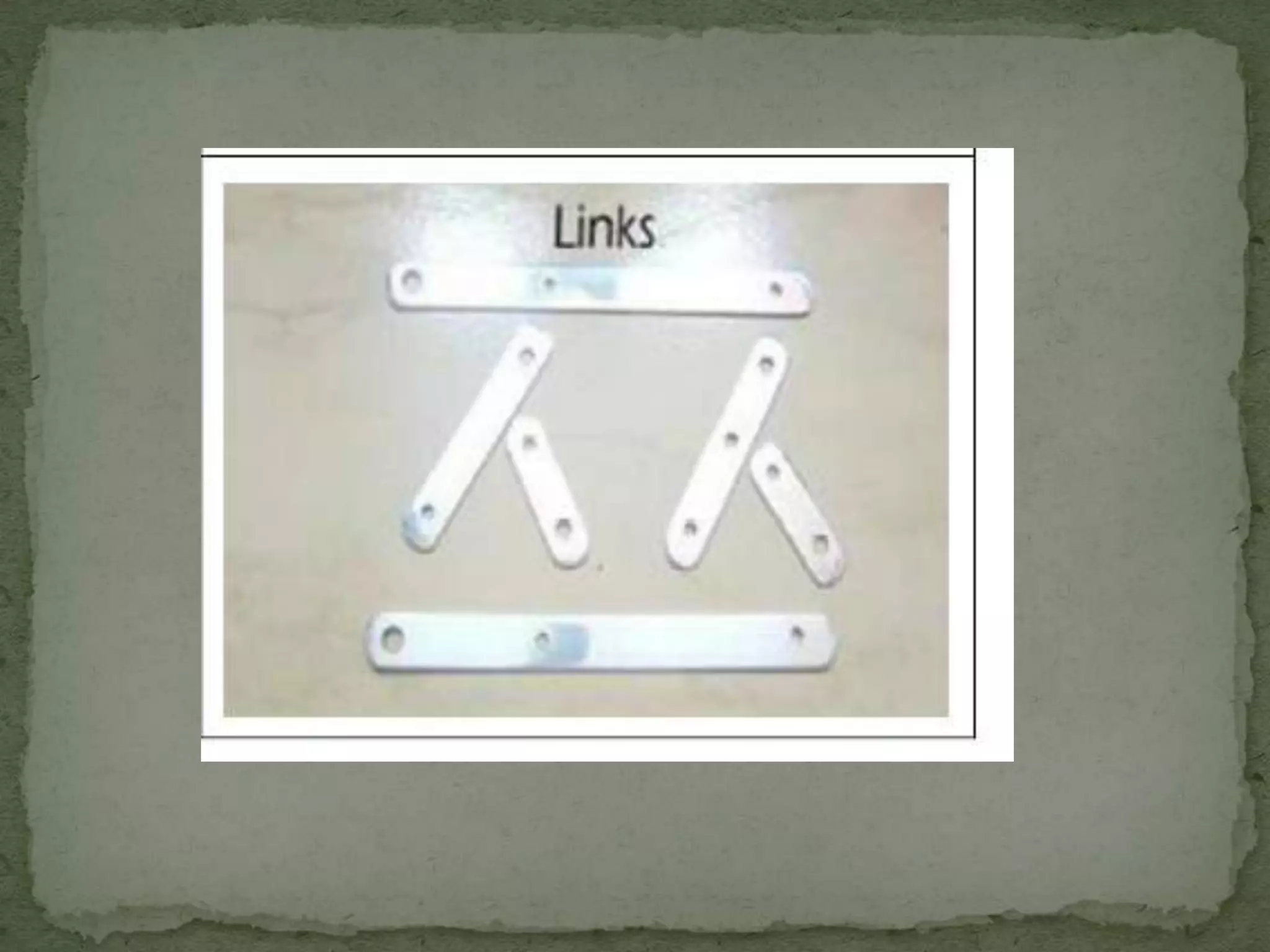
h3= link length {105mm}
h2 =link length (85mm)
H1= link length (30mm)
E to E’ distance 28mm
E to B distance 50mm
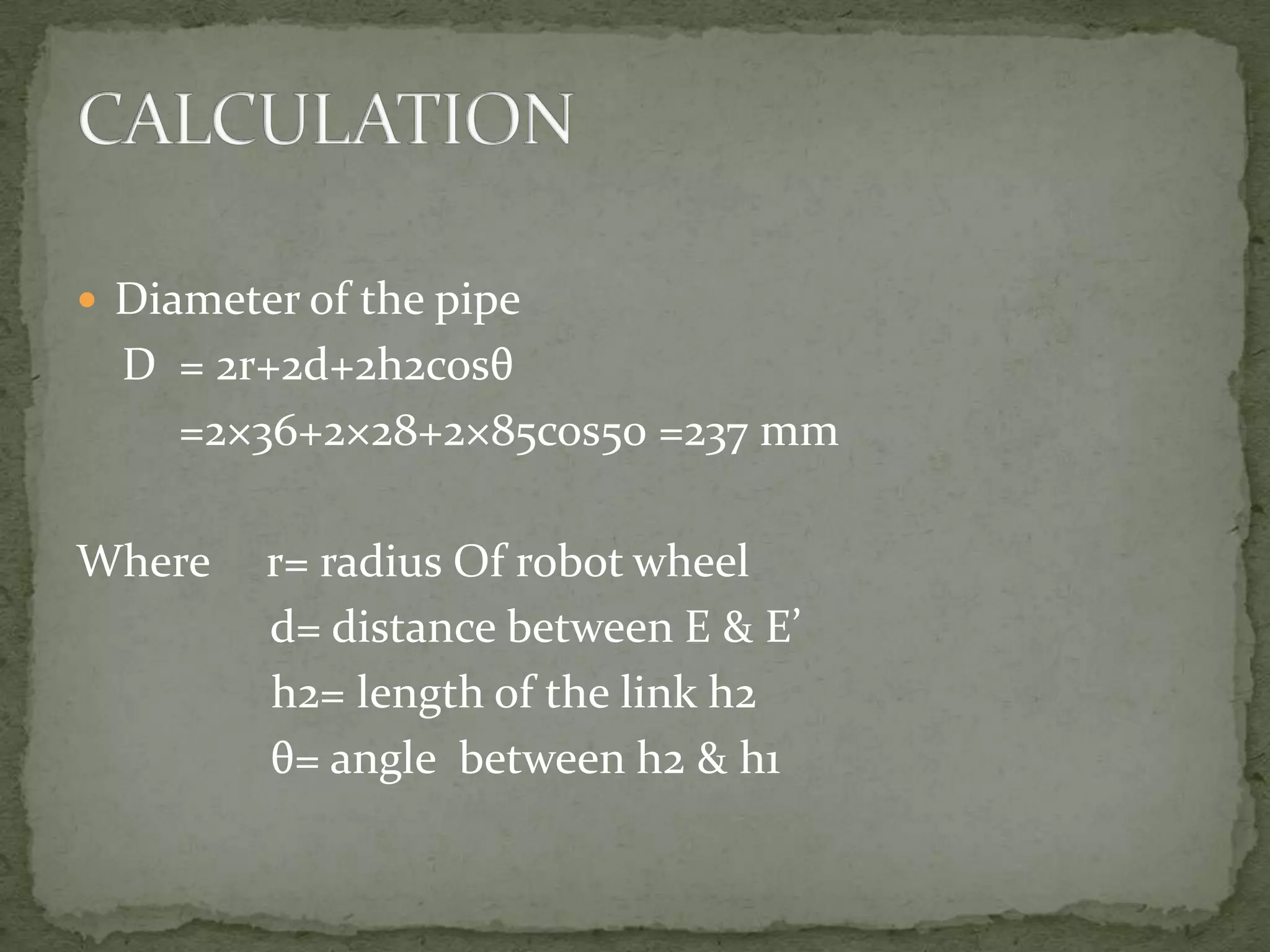
 Diameter of the pipe

D = 2r+2d+2h2cosθ
=2×36+2×28+2×85cos50 =237 mm

Where

r= radius Of robot wheel
d= distance between E & E’
h2= length of the link h2
θ= angle between h2 & h1
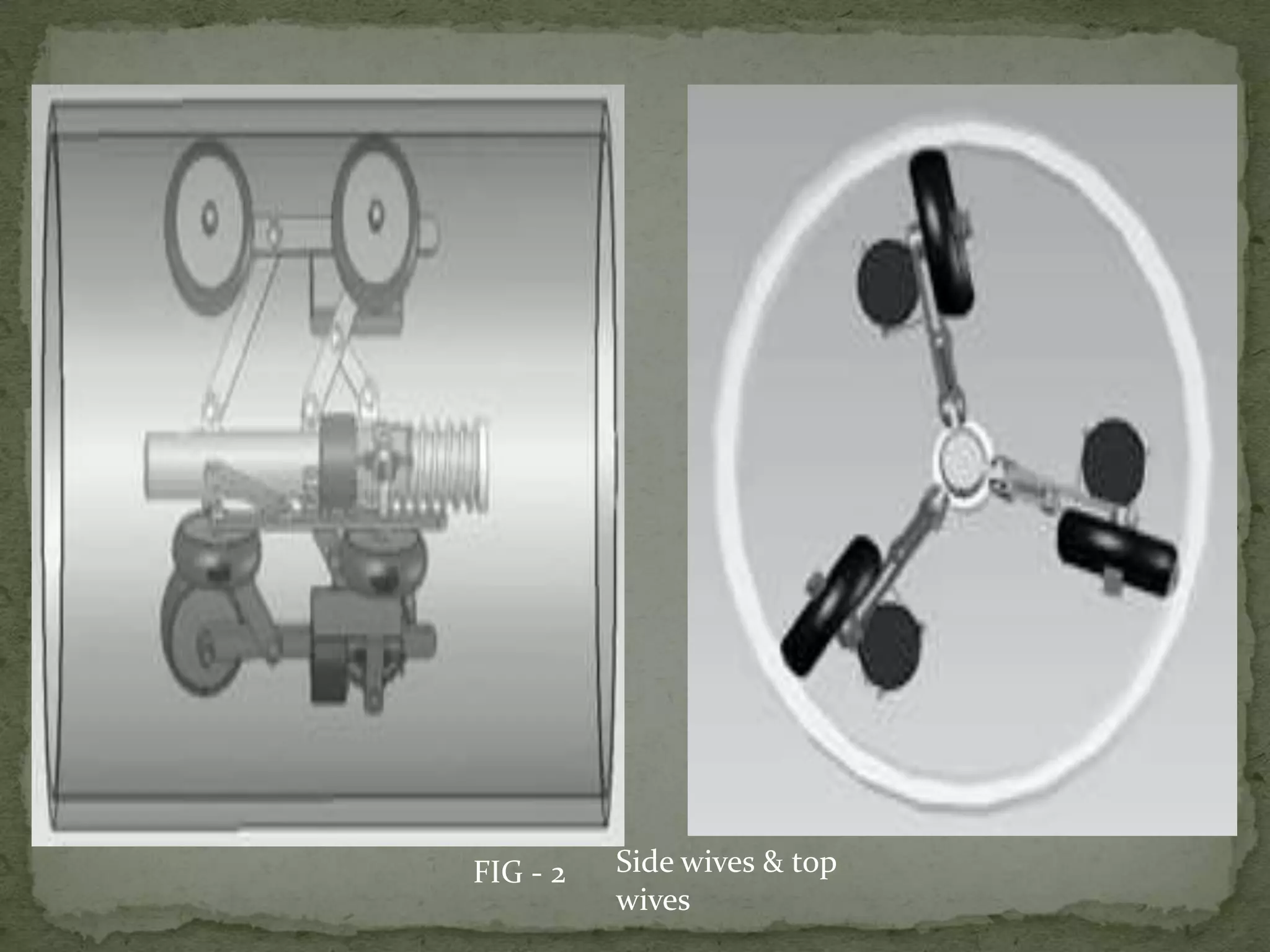
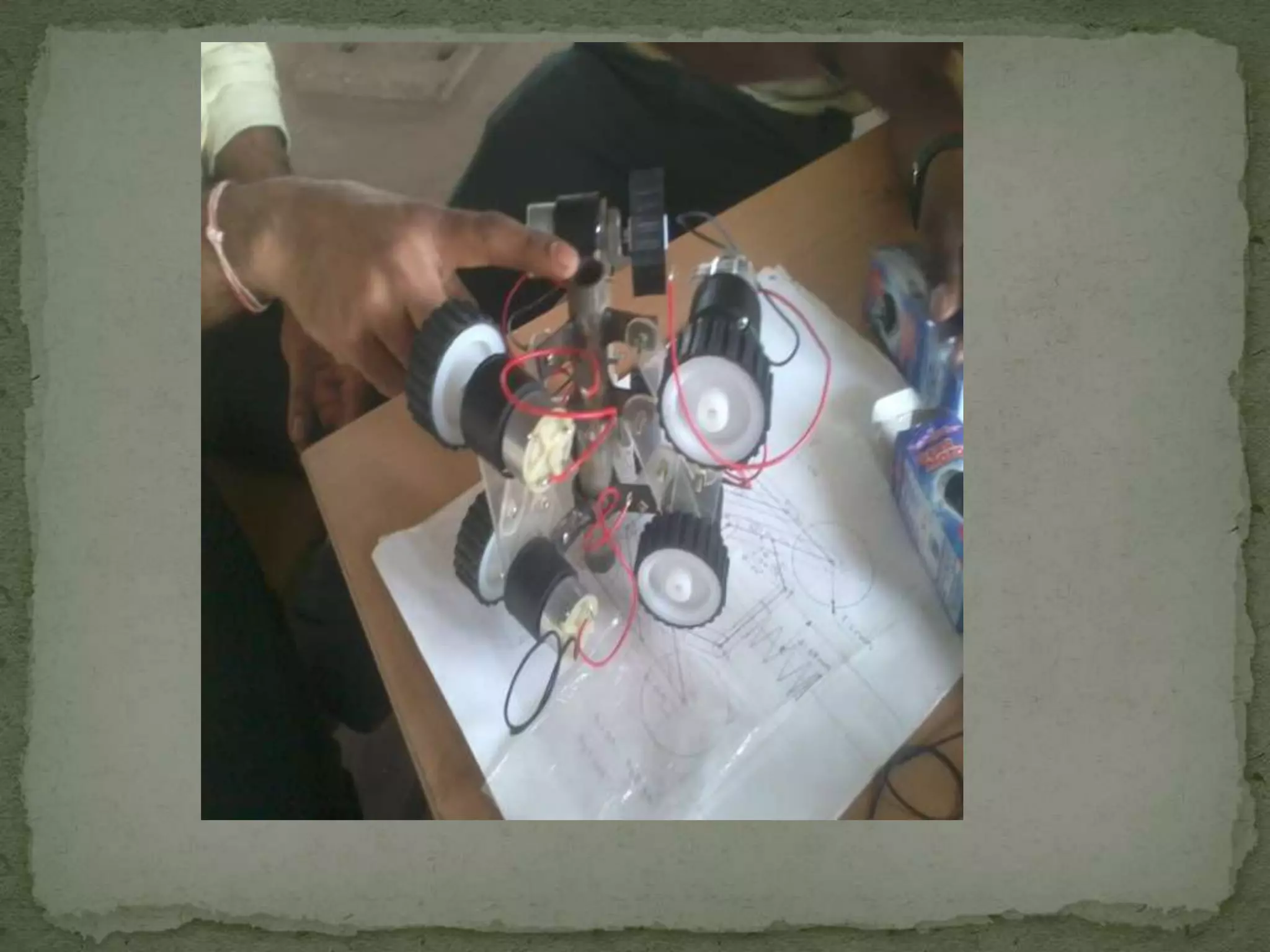
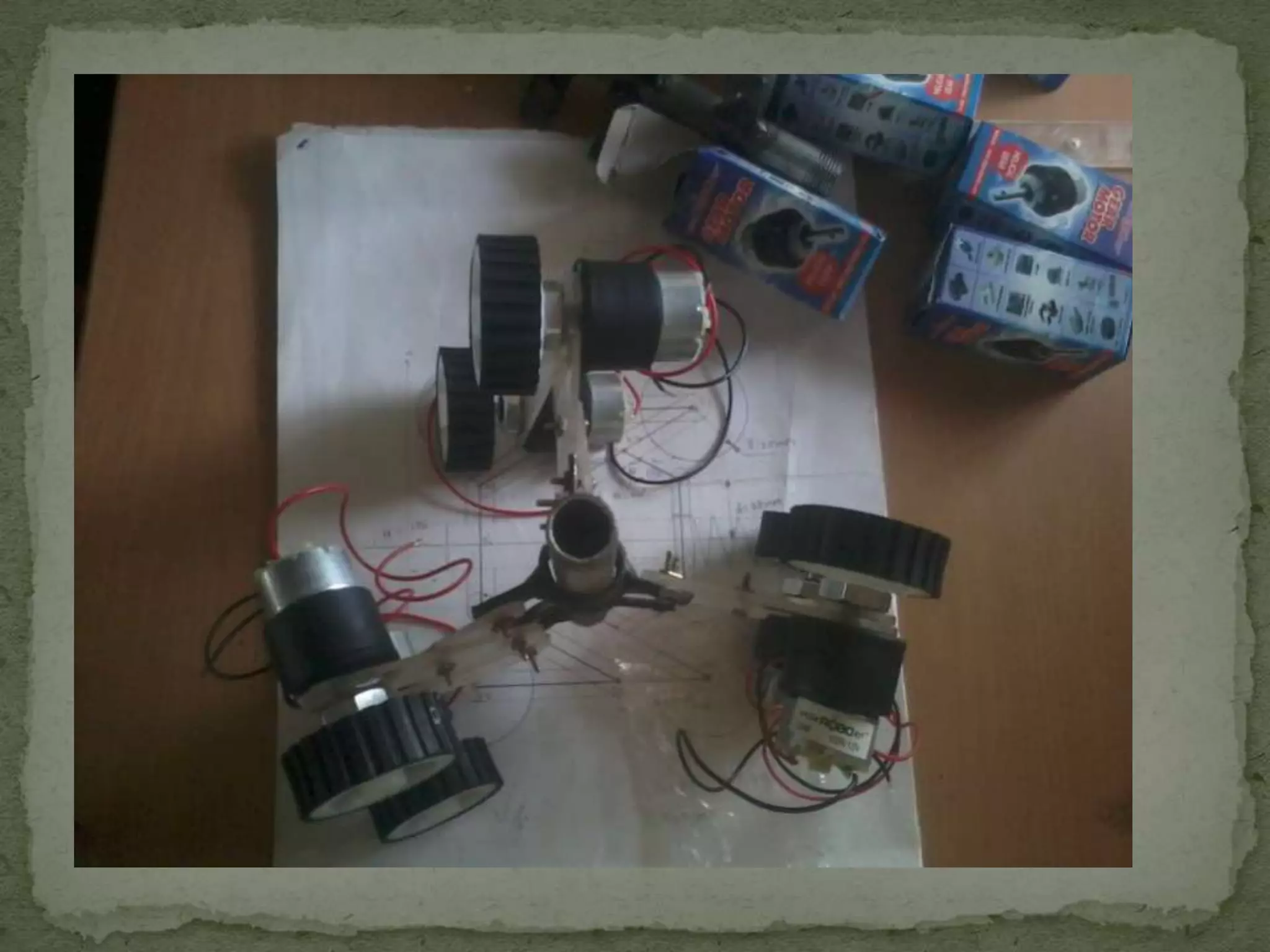
FIG - 2

Side wives & top
wives
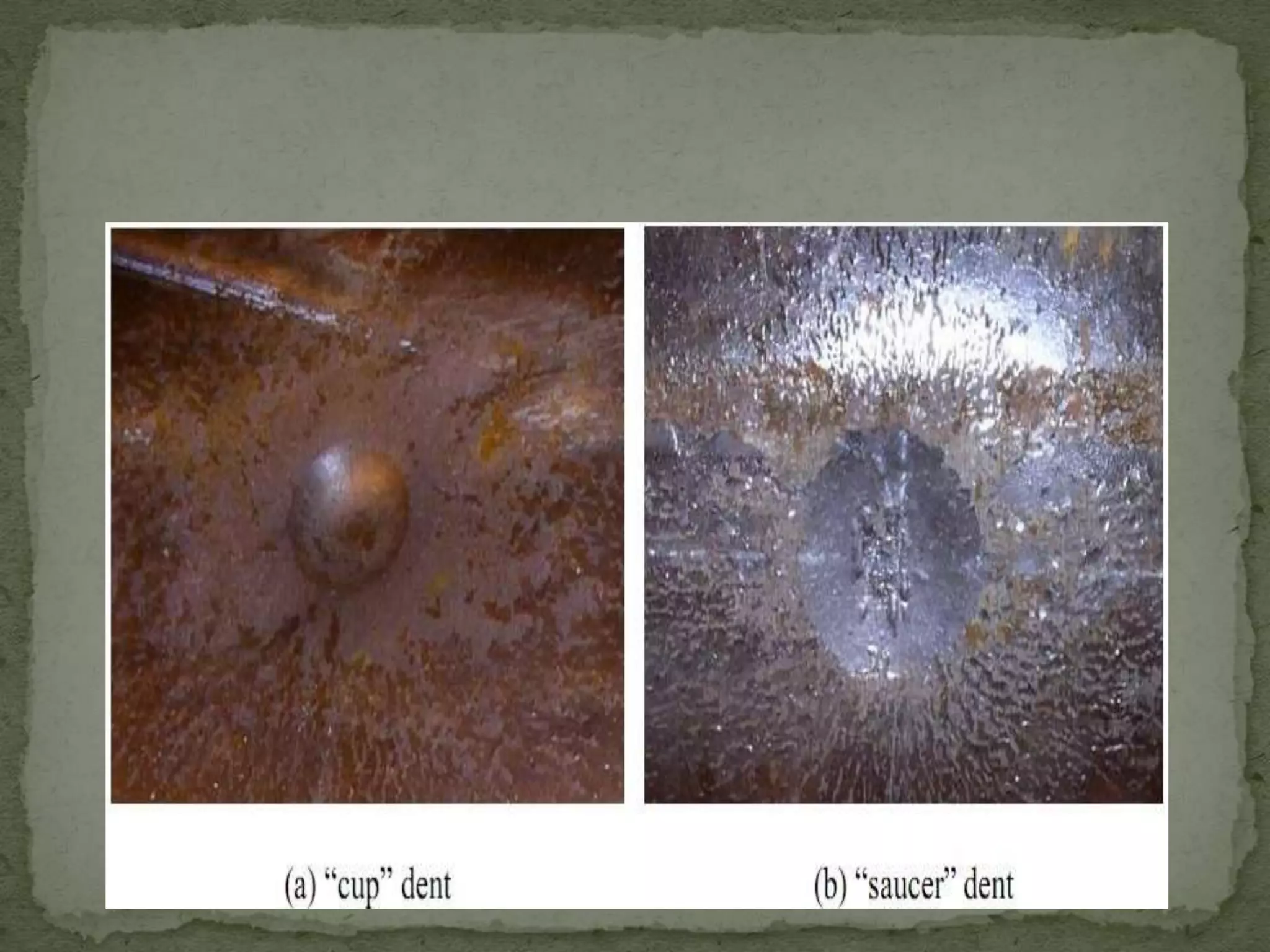
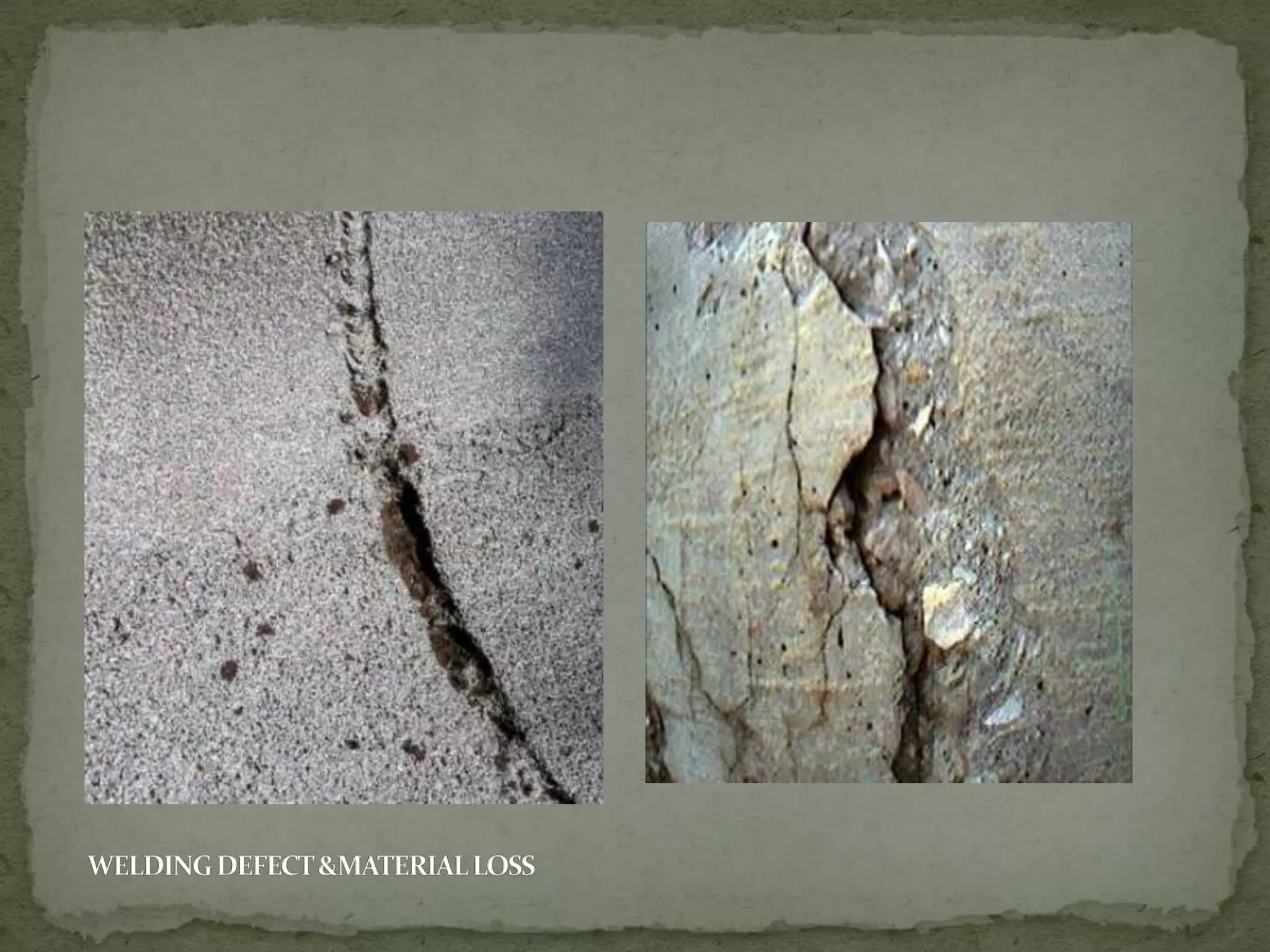
 Corrosion Inside the Pipe.
 Internal defects such as holes , cracks ,

dent marks , material loss , welding defects.
 Internal blockage.
 Pipe Inspection Robot is inspect the situation inside

the pipe which will be recorded and displayed on the
monitor screen, it also facilitates working personnel
for effective observation, detection, quick analysis and
diagnosis .
 Save comprehensive investment, improve work

efficiency, more accurate detection.
 Easy to operate.
 Pipe inspection robots have such limitations as their ability

to turn in a T-shaped pipe or move in a plug valve.
 Another drawback of earlier robots is that the friction

between the pipe and the cables for communication and
power supply makes it difficult to move a long distance. A
fiber optic communication system can reduce the friction.
 This robot does not work inside the water.
NUCLEAR POWER PLANT
CONVENTIONAL POWER PLANT
REFINERIES
CHEMICAL & PETROCHEMICAL PLANT.
 A very important design goal of the robotic systems is the

adaptability to the inner diameters of the pipes. So, we had
proposed a new design in inspecting pipelines. The major
advantage is that it could be used in case of pipe diameter
variation with the simple mechanism. We developed a pipe
inspection robot that can be applied to 140- 180mm
pipeline. The kinematics of mechanism and actuator sizing
of this robot have been investigated. A real prototype was
developed to test the feasibility of this robot for inspection
of in-house pipelines. We used a PCB board that can
operate DC motor. Good conceptive and element design
could manage all the problems. The types of inspection
tasks are very different. A modular design was considered
for PIC that can be easily adapted to new environments
with small changes. Presence of obstacles within the
pipelines is difficult issue.
pipe line inspection robot ppt

pipe line inspection robot ppt

  • 1.
    DESIGN & FABRICATIONOF PIPE INSPECTION ROBOT
  • 2.
    •INTRODUCTION •PROBLEM STAEMENT •FIELD APPLICATIONOF PIPE INSPECTION •INSPECTION METHODS •CONSTRUCTION •DESIGN •WORKING •APPLICATION •COST ESTIMATION •ADVANTAGES •LIMATION •REFERENCES
  • 3.
    Robotics is oneof the fastest growing engineering fields of today. Robots are designed to remove the human factor from labor intensive or dangerous work and also to act in inaccessible environment. The use of robots is more common today than ever before and it is no longer exclusively used by the heavy production industries. The inspection of pipes may be relevant for improving security and efficiency in industrial plants. These specific operations as inspection, maintenance, cleaning etc. are expensive, thus the application of the robots appears to be one of the most attractive solutions. The pipelines are the major tools for the transportation of drinkable water, effluent water, fuel oils and gas. A lot of troubles caused by piping networks aging, corrosion, cracks, and mechanical damages are possible.
  • 4.
    TYPES OF INSPECTION METHOD Ultrasonicinspection MAGNETIC FLUX X-RAY Visual Inspection:
  • 5.
    Visual Inspection: Due tothe cost of advanced inspection techniques, less expensive forms of Nondestructive evaluation is often desired. Visual inspection is currently one of the most commonly used nondestructive evaluation techniques because it is relatively inexpensive as it requires minimal, if any, use of instruments or equipment, and it can be accomplished without data processing As mentioned previously, visual inspection can only detect surface defects. However, a large number of structural deficiencies have surface indicators (e.g. corrosion, concrete deterioration). Aside from a limited range of detection, visual inspection does have further drawbacks. It is extremely subjective as it depends on the inspector’s training, visual acuity, and state-of-mind. Also external factors such as light intensity, structure complexity, and structure accessibility play a role in determining the effectiveness of visual inspection
  • 6.
  • 7.
  • 8.
    LENGTH OF ROBOT DIAMETEROF PIPE ::- 176 MM 12.5 MM :::- 12 NOS 50 MM 13 MM :- 6 NOS /6V/10RPM. :- 6 NOS NO. OF LINK FOR ONE ROBOT SPRING LENGTH BUSH DIA. NO. OF DC MOTOR FOR ONE ROBOT NO OF WHEEL FOR ONE ROBOT
  • 9.
    h3= link length{105mm} h2 =link length (85mm) H1= link length (30mm) E to E’ distance 28mm E to B distance 50mm
  • 10.
     Diameter ofthe pipe D = 2r+2d+2h2cosθ =2×36+2×28+2×85cos50 =237 mm Where r= radius Of robot wheel d= distance between E & E’ h2= length of the link h2 θ= angle between h2 & h1
  • 16.
    FIG - 2 Sidewives & top wives
  • 19.
     Corrosion Insidethe Pipe.  Internal defects such as holes , cracks , dent marks , material loss , welding defects.  Internal blockage.
  • 22.
     Pipe InspectionRobot is inspect the situation inside the pipe which will be recorded and displayed on the monitor screen, it also facilitates working personnel for effective observation, detection, quick analysis and diagnosis .  Save comprehensive investment, improve work efficiency, more accurate detection.  Easy to operate.
  • 23.
     Pipe inspectionrobots have such limitations as their ability to turn in a T-shaped pipe or move in a plug valve.  Another drawback of earlier robots is that the friction between the pipe and the cables for communication and power supply makes it difficult to move a long distance. A fiber optic communication system can reduce the friction.  This robot does not work inside the water.
  • 24.
    NUCLEAR POWER PLANT CONVENTIONALPOWER PLANT REFINERIES CHEMICAL & PETROCHEMICAL PLANT.
  • 25.
     A veryimportant design goal of the robotic systems is the adaptability to the inner diameters of the pipes. So, we had proposed a new design in inspecting pipelines. The major advantage is that it could be used in case of pipe diameter variation with the simple mechanism. We developed a pipe inspection robot that can be applied to 140- 180mm pipeline. The kinematics of mechanism and actuator sizing of this robot have been investigated. A real prototype was developed to test the feasibility of this robot for inspection of in-house pipelines. We used a PCB board that can operate DC motor. Good conceptive and element design could manage all the problems. The types of inspection tasks are very different. A modular design was considered for PIC that can be easily adapted to new environments with small changes. Presence of obstacles within the pipelines is difficult issue.

Editor's Notes

  • #18 FIG.:ACTUAL CONSRUTION