JAINISM
JAINISM 6th Century Bc
 24 Thirthankaras
 Rishabhadeva Was The First Thirthankara
 No Authentic Information Is Availabe About
First 22 Thirthankaras
 Parsvanath Was The 23rd Thirthankara-son
Of Asvasena,the Ruler oF Benares
 Vardhamana Mahavira Was The 24th
Thirthankara
Vardhamana mahavira
Founder of jain community
Attained enlightment after 13 years of
deprivation
Died after commiting salekhana in 467
bc
 Jainism is the smallest of the major
world religion
 Jainism believes in plurality of souls
and not in the existence of god
 It holds that there are as many souls as
there are living beings
 They also accept the existence of souls
even in animals and plants
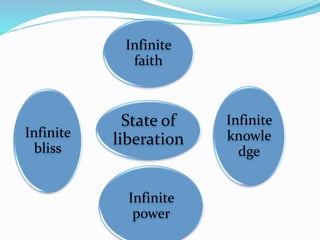
State of
liberation
Infinite
faith
Infinite
knowle
dge
Infinite
power
Infinite
bliss
According to jainism
nirvana or liberation is
obtained through three
jewels(triratnas)
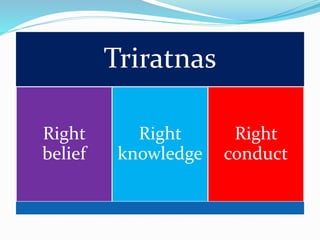
Triratnas
Right
belief
Right
knowledge
Right
conduct
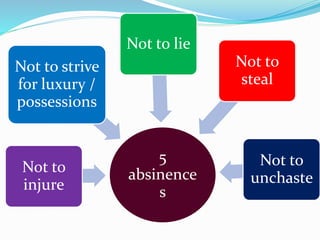
Right conduct implies
5 absinences
5
absinence
s
Not to
injure
Not to strive
for luxury /
possessions
Not to lie
Not to
steal
Not to
unchaste
Ahimsa is a vital principle of jainism
Jainism reject s the idea of creator of
the world
Jainism emphasises syat –vada or ane-
kant-vada which lays the mind open to
truth coming from any quarter
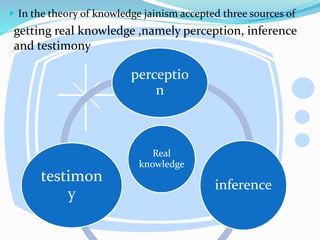
 In the theory of knowledge jainism accepted three sources of
getting real knowledge ,namely perception, inference
and testimony
Real
knowledge
perceptio
n
inference
testimon
y
Practical teachings of jainism Triratnas considered as the three precious principles of
life
 Five vows or absciences to indicate general character
 Ahimsa is the formost virtue in indian thought but in
jainism it requires distinct meaning and depth
 Emphasizing the individualistic aspects , jainism
emphasizes on the development of personality as the
final aim
 Jaina teachings are social and tolerant and believes in
happiness of all
 There are two levels of discipline depending on the
severity if rhe vows which are different for the monks of
lay life
 the aim of life is to get oneself disentangled from karma
.Jainism believes in Transmigration of soul.
 Monks means dissolution of partnership between soul
and matter , restoring the ideal character of the jiva
 Jainism rejects good as creator of this world as a need to
create the world would be inconsistent with his
necessary perfection
Jaina views are both realativistic and pluralistic
as it recognizes jivas and the material objects
The primary aim of Jainism is the perfection of
the soul rather than the interpretation of the
universe ,hence it fails to find ultimate solutions
of the metaphysical problem
Aim of education
 Truth is relativistic and pluralist in a state of 'may be ' .
 Knowledge ,therefore may be viewed differently .nothing fixed
 Self realisation as jiva is divine . education must focus on his
divinity and remove the material bond of soul
 Education should lead to self enlightenment and restore the
full powers of jiva
 Development of personality as an individual .hence more
stress on individual aims
 Teaching should give necessary jnana and penance to
help jiva
 Cessation of karma wolud disassociate jiva from it and
regain it's power and glory .
 Teaching must help train one for it
 Believes in Transmigration of soul .hence education may
partly be the preparation for the next world
Curriculum
Punya an paap are the two principles of the nine
categories .hence education should develop sense of
discrimination
Education should include provision for attainment of
triratnas,the precious principles of life ,that bring
happiness ,success and love here and now
Education ahould inculate non violence as a
virtue practiced and not only aspired for
that would be socially desirable
Teaching of nine principles called as nine
categories of Jainism to dissolve the
partnership between soul and matter
Method of teaching
Knowledge is through senses and meditation
.teaching must develop these faculties
Teaching should be social and tolerant and
should bring happiness to all
Jiva is essentially karmic , therefore education
must be action based and ideally oriented
Discipline
Emphasis on self discipline and hard work
Practical discipline is essential for release from the
bondage
Happiness and bliss through action .man is a free
moral agent responsible for all his deliberate action
Educational implications
Major contribution: art ,architecture ,and literature.
Strong emphasis on no violence: it's strong emphasis on
violence accent on multiple facets of truth , morality and
ethics
Integrated: Jain philosophy in the development of Indian
philosophy has been significant .Jain philosophy like
ahimsa ,karma , moksha , sansara and like has been 41
assimilated into philosophies of other India. Religion like
Hinduism and buddhism
Concept of compassion : sense of sympathy
extends to all living beings even to animals as
stated in both Jainism and Buddhism
Contribution to a strain of pacifism : absolute
respect for living beings is stressed ,best way to
resist evil is through non violence ,it is successfully
used in Jainism and Buddhism
Law of karma (cause and effect): Universe is ruled
by moral law which punishes all sins and rewards
good deeds , belief that our character creates it's
own heaven and hell is significant in nearly all
schools of philosophy
Highest state of knowledge : intuition through
which man achieves a realization of oneness of the
universe
Nine tattvas
Jiva soul or living being
Ajiva nonliving substances
Asrava cause of the influx of karma
Bandh bondage of karma
Punya virtue
Papa sin
Samvara arrest of the influx of karma
Nirjara exhaustion of the
accumulated karma
Moksha total liberation from karma

Jainism

  • 1.
  • 2.
    JAINISM 6th CenturyBc  24 Thirthankaras  Rishabhadeva Was The First Thirthankara  No Authentic Information Is Availabe About First 22 Thirthankaras  Parsvanath Was The 23rd Thirthankara-son Of Asvasena,the Ruler oF Benares  Vardhamana Mahavira Was The 24th Thirthankara
  • 3.
    Vardhamana mahavira Founder ofjain community Attained enlightment after 13 years of deprivation Died after commiting salekhana in 467 bc
  • 4.
     Jainism isthe smallest of the major world religion  Jainism believes in plurality of souls and not in the existence of god  It holds that there are as many souls as there are living beings  They also accept the existence of souls even in animals and plants
  • 5.
  • 6.
    According to jainism nirvanaor liberation is obtained through three jewels(triratnas)
  • 7.
  • 8.
  • 9.
    5 absinence s Not to injure Not tostrive for luxury / possessions Not to lie Not to steal Not to unchaste
  • 10.
    Ahimsa is avital principle of jainism Jainism reject s the idea of creator of the world Jainism emphasises syat –vada or ane- kant-vada which lays the mind open to truth coming from any quarter
  • 11.
     In thetheory of knowledge jainism accepted three sources of getting real knowledge ,namely perception, inference and testimony Real knowledge perceptio n inference testimon y
  • 12.
    Practical teachings ofjainism Triratnas considered as the three precious principles of life  Five vows or absciences to indicate general character  Ahimsa is the formost virtue in indian thought but in jainism it requires distinct meaning and depth  Emphasizing the individualistic aspects , jainism emphasizes on the development of personality as the final aim  Jaina teachings are social and tolerant and believes in happiness of all
  • 13.
     There aretwo levels of discipline depending on the severity if rhe vows which are different for the monks of lay life  the aim of life is to get oneself disentangled from karma .Jainism believes in Transmigration of soul.  Monks means dissolution of partnership between soul and matter , restoring the ideal character of the jiva  Jainism rejects good as creator of this world as a need to create the world would be inconsistent with his necessary perfection
  • 14.
    Jaina views areboth realativistic and pluralistic as it recognizes jivas and the material objects The primary aim of Jainism is the perfection of the soul rather than the interpretation of the universe ,hence it fails to find ultimate solutions of the metaphysical problem
  • 15.
    Aim of education Truth is relativistic and pluralist in a state of 'may be ' .  Knowledge ,therefore may be viewed differently .nothing fixed  Self realisation as jiva is divine . education must focus on his divinity and remove the material bond of soul  Education should lead to self enlightenment and restore the full powers of jiva  Development of personality as an individual .hence more stress on individual aims
  • 16.
     Teaching shouldgive necessary jnana and penance to help jiva  Cessation of karma wolud disassociate jiva from it and regain it's power and glory .  Teaching must help train one for it  Believes in Transmigration of soul .hence education may partly be the preparation for the next world
  • 17.
    Curriculum Punya an paapare the two principles of the nine categories .hence education should develop sense of discrimination Education should include provision for attainment of triratnas,the precious principles of life ,that bring happiness ,success and love here and now
  • 18.
    Education ahould inculatenon violence as a virtue practiced and not only aspired for that would be socially desirable Teaching of nine principles called as nine categories of Jainism to dissolve the partnership between soul and matter
  • 19.
    Method of teaching Knowledgeis through senses and meditation .teaching must develop these faculties Teaching should be social and tolerant and should bring happiness to all Jiva is essentially karmic , therefore education must be action based and ideally oriented
  • 20.
    Discipline Emphasis on selfdiscipline and hard work Practical discipline is essential for release from the bondage Happiness and bliss through action .man is a free moral agent responsible for all his deliberate action
  • 21.
    Educational implications Major contribution:art ,architecture ,and literature. Strong emphasis on no violence: it's strong emphasis on violence accent on multiple facets of truth , morality and ethics Integrated: Jain philosophy in the development of Indian philosophy has been significant .Jain philosophy like ahimsa ,karma , moksha , sansara and like has been 41 assimilated into philosophies of other India. Religion like Hinduism and buddhism
  • 22.
    Concept of compassion: sense of sympathy extends to all living beings even to animals as stated in both Jainism and Buddhism Contribution to a strain of pacifism : absolute respect for living beings is stressed ,best way to resist evil is through non violence ,it is successfully used in Jainism and Buddhism
  • 23.
    Law of karma(cause and effect): Universe is ruled by moral law which punishes all sins and rewards good deeds , belief that our character creates it's own heaven and hell is significant in nearly all schools of philosophy Highest state of knowledge : intuition through which man achieves a realization of oneness of the universe
  • 24.
    Nine tattvas Jiva soulor living being Ajiva nonliving substances Asrava cause of the influx of karma Bandh bondage of karma Punya virtue Papa sin Samvara arrest of the influx of karma Nirjara exhaustion of the accumulated karma Moksha total liberation from karma