ISLAMIC THOUGHTS IN EDUCATION
MAIN TOPICS FOR DISCUSSION Etymology History Metaphysics Five pillars of Islam Islamic education
ETYMOLOGY-ISLAM Arabic word – sallam Meaning – peace, complete submission (to god), and unbreakable ( by stones of ignorance)
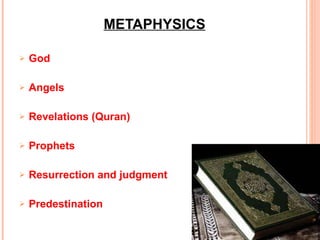
METAPHYSICS God Angels Revelations (Quran) Prophets Resurrection and judgment Predestination
FIVE  PILLARS  OF ISLAM 1.  The shahadah (creed) 2.  Daily prayers (salat) 3.  Almsgiving (zakat) 4.  Fasting during Ramadan and  5.  The pilgrimage to Mecca (hajj)
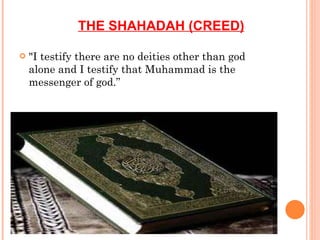
THE SHAHADAH (CREED) "I testify there are no deities other than god alone and I testify that Muhammad is the messenger of god.”
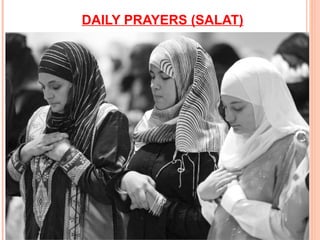
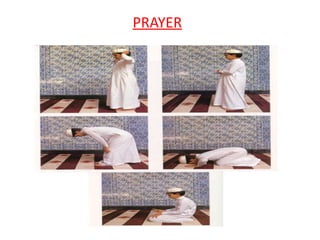
DAILY PRAYERS (SALAT)
PRAYER
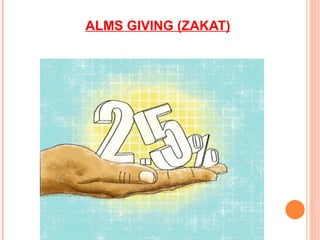
ALMS GIVING (ZAKAT)
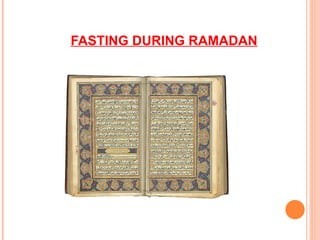
FASTING DURING RAMADAN
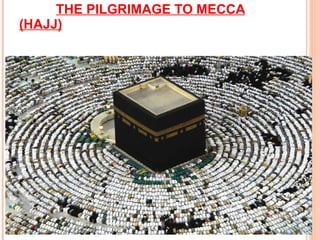
THE PILGRIMAGE TO MECCA (HAJJ)
ISLAMIC EDUCATION Aims of education Curriculum Organization of Islamic education Methods of teaching Role of teacher Educational implications
AIMS OF EDUCATION   Preparation of the individual for future life. Religious knowledge for salvation Propagation of religious knowledge Propagation of Islamic law and Islamic value system
CURRICULUM Quran The biography of hazrath Muhammad Laws of Islam Arabic and Persian languages Grammar Literature Logic Philosophy Astrology History Geography Agriculture Unani system of medicine Sanskrit for Hindu children  
ORGANIZATION OF ISLAMIC EDUCATION  Bismillah  (a ritual at the age of four) Maktab  (primary school) Madrasa
METHODS OF TEACHING Memory method for memorization of various aspects of knowledge Recitation method Reading method Writing method Oral methods
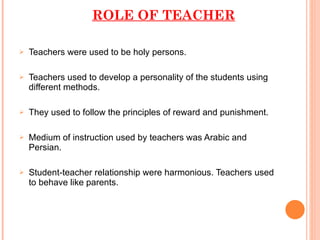
ROLE OF TEACHER Teachers were used to be holy persons. Teachers used to develop a personality of the students using different methods. They used to follow the principles of reward and punishment. Medium of instruction used by teachers was Arabic and Persian. Student-teacher relationship were harmonious. Teachers used to behave like parents.
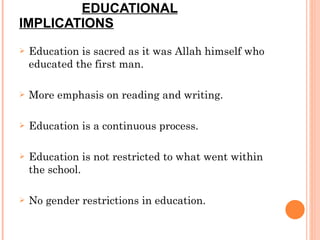
EDUCATIONAL IMPLICATIONS Education is sacred as it was Allah himself who educated the first man. More emphasis on reading and writing. Education is a continuous process. Education is not restricted to what went within the school. No gender restrictions in education.
THANK YOU

Islamic thoughts in education

  • 1.
  • 2.
    MAIN TOPICS FORDISCUSSION Etymology History Metaphysics Five pillars of Islam Islamic education
  • 3.
    ETYMOLOGY-ISLAM Arabic word– sallam Meaning – peace, complete submission (to god), and unbreakable ( by stones of ignorance)
  • 4.
    METAPHYSICS God AngelsRevelations (Quran) Prophets Resurrection and judgment Predestination
  • 5.
    FIVE PILLARS OF ISLAM 1. The shahadah (creed) 2. Daily prayers (salat) 3. Almsgiving (zakat) 4. Fasting during Ramadan and 5. The pilgrimage to Mecca (hajj)
  • 6.
    THE SHAHADAH (CREED)"I testify there are no deities other than god alone and I testify that Muhammad is the messenger of god.”
  • 7.
  • 8.
  • 9.
  • 10.
  • 11.
    THE PILGRIMAGE TOMECCA (HAJJ)
  • 12.
    ISLAMIC EDUCATION Aimsof education Curriculum Organization of Islamic education Methods of teaching Role of teacher Educational implications
  • 13.
    AIMS OF EDUCATION Preparation of the individual for future life. Religious knowledge for salvation Propagation of religious knowledge Propagation of Islamic law and Islamic value system
  • 14.
    CURRICULUM Quran Thebiography of hazrath Muhammad Laws of Islam Arabic and Persian languages Grammar Literature Logic Philosophy Astrology History Geography Agriculture Unani system of medicine Sanskrit for Hindu children  
  • 15.
    ORGANIZATION OF ISLAMICEDUCATION Bismillah (a ritual at the age of four) Maktab (primary school) Madrasa
  • 16.
    METHODS OF TEACHINGMemory method for memorization of various aspects of knowledge Recitation method Reading method Writing method Oral methods
  • 17.
    ROLE OF TEACHERTeachers were used to be holy persons. Teachers used to develop a personality of the students using different methods. They used to follow the principles of reward and punishment. Medium of instruction used by teachers was Arabic and Persian. Student-teacher relationship were harmonious. Teachers used to behave like parents.
  • 18.
    EDUCATIONAL IMPLICATIONS Educationis sacred as it was Allah himself who educated the first man. More emphasis on reading and writing. Education is a continuous process. Education is not restricted to what went within the school. No gender restrictions in education.
  • 19.