


Invasive
Species
By Kendall Arthur
Invasive Species
 “An  alien species whose introduction
  does or is likely to cause economic or
  environmental harm or harm to human
  health…”
 “ „Alien species‟ means, with respect to a
  particular ecosystem, any species that is
  not native to that ecosystem.”
Threats
 Disease
 Predators
 Competition
 Hybridization
 Habitat   alteration
     Example: Zebra Muscles
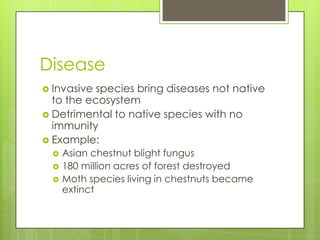
Disease
 Invasive species bring diseases not native
  to the ecosystem
 Detrimental to native species with no
  immunity
 Example:
     Asian chestnut blight fungus
     180 million acres of forest destroyed
     Moth species living in chestnuts became
      extinct
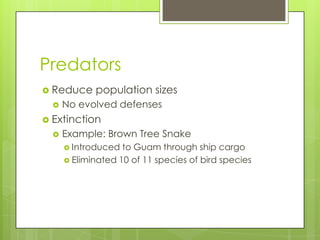
Predators
 Reduce     population sizes
     No evolved defenses
 Extinction
     Example: Brown Tree Snake
       Introduced  to Guam through ship cargo
       Eliminated 10 of 11 species of bird species
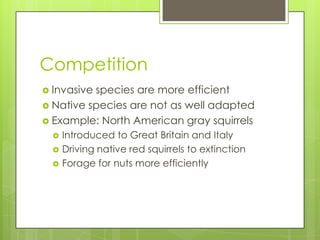
Competition
 Invasivespecies are more efficient
 Native species are not as well adapted
 Example: North American gray squirrels
     Introduced to Great Britain and Italy
     Driving native red squirrels to extinction
     Forage for nuts more efficiently
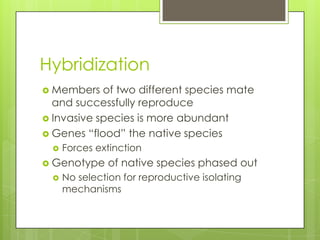
Hybridization
 Members   of two different species mate
  and successfully reproduce
 Invasive species is more abundant
 Genes “flood” the native species
     Forces extinction
 Genotype     of native species phased out
     No selection for reproductive isolating
      mechanisms
Habitat Alteration
 Introduced   species alter the ecological
  make up
 Cause harm to native species
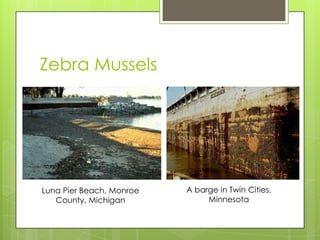
 Example: Zebra Mussels
Zebra Mussels
 Brought    to U.S. (Great Lakes) from Russia
  in ballast of ships
 Filter large amounts of water
 Reduce densities of planktonic organisms
 Settle in dense masses over expansive
  areas
 30 freshwater mussel species threatened
  with extinction by competition
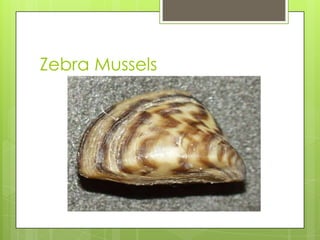
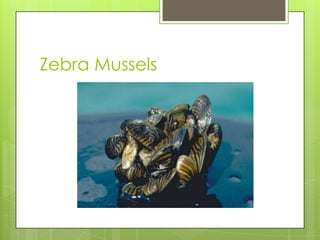
Zebra Mussels
Zebra Mussels
Zebra Mussels


Luna Pier Beach, Monroe   A barge in Twin Cities,
   County, Michigan            Minnesota
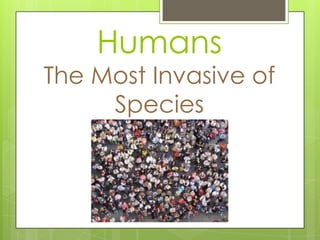
Humans
The Most Invasive of
     Species
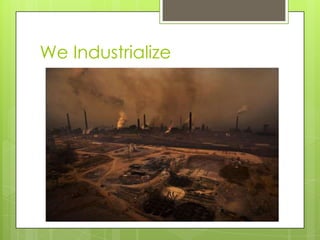
We Industrialize
Pollution
 Chemical   pollutants
    Pesticides
    SO2, CO, nitrogen oxides
 Changes    metabolism
    Chemical imbalances
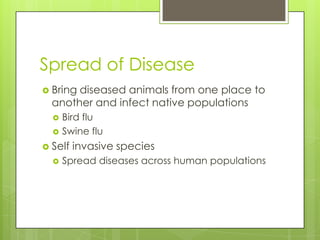
Spread of Disease
 Bringdiseased animals from one place to
  another and infect native populations
     Bird flu
     Swine flu
 Self   invasive species
     Spread diseases across human populations
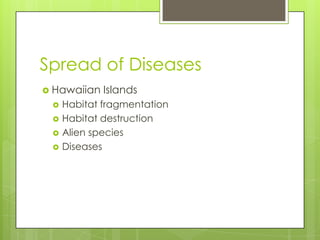
Spread of Diseases
 Hawaiian   Islands
    Habitat fragmentation
    Habitat destruction
    Alien species
    Diseases
We Develop
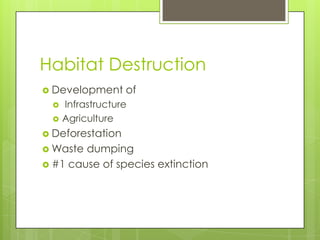
Habitat Destruction
 Development      of
     Infrastructure
     Agriculture
 Deforestation
 Waste dumping
 #1 cause of species extinction
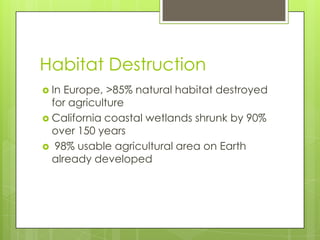
Habitat Destruction
 In Europe, >85% natural habitat destroyed
  for agriculture
 California coastal wetlands shrunk by 90%
  over 150 years
 98% usable agricultural area on Earth
  already developed
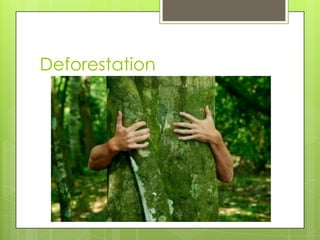
Deforestation
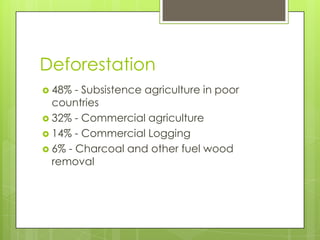
 48%  - Subsistence agriculture in poor
  countries
 32% - Commercial agriculture
 14% - Commercial Logging
 6% - Charcoal and other fuel wood
  removal
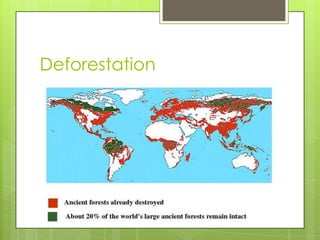
Deforestation
Deforestation
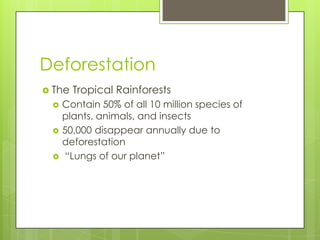
 The   Tropical Rainforests
    Contain 50% of all 10 million species of
     plants, animals, and insects
    50,000 disappear annually due to
     deforestation
    “Lungs of our planet”
Deforestation
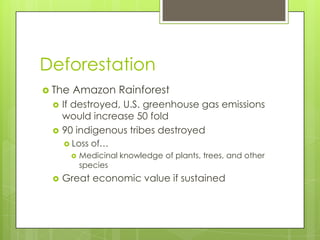
 The   Amazon Rainforest
    If destroyed, U.S. greenhouse gas emissions
     would increase 50 fold
    90 indigenous tribes destroyed
      Loss   of…
           Medicinal knowledge of plants, trees, and other
            species
    Great economic value if sustained
Deforestation
We Innovate
Competition
 The ultimate competitors
 Make our own resources
 Can outcompete any species
 Exploiting resources
Overexploitation
 Hunting
     Medicine
     Clothing
     Trophies
 Overfishing
     Shark fin soup outlawed in California
 Overgrazing
     Agriculture
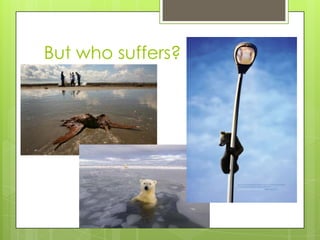
But who suffers?
Extinction
 Main   reason
     Human overpopulation of the earth
 Extinction rate of species accelerated
  starting 1600 AD
 80% of all extinctions due to habitat
  destruction by humans
One last thing….
We suffer
 We  pose a threat to future generations
 We have negative effect on them, but
  they have no effect on us
 Must maintain the earth for the future
 We are the greatest threats to ourselves
In Conclusion…
 Invasive species are a danger to many
  different ecosystems
 Humans are the most invasive species
 What must be done?
     Maintenance
     Education
     Reforms
     Protection of ecosystems
Sources
"FARM: Farm Animal Rights Movement." The Cost of
        Disappearing Rainforests. Google Blogger, 14 Oct
        2010. Web. 21 Nov. 2011.
Hogan, C Michael. ”Causes of Extinction." Encyclopedia of
       Earth. 2010. Web. 21 Nov 2011. <http://
       www.eoearth.org/article/Causes_of_extinction?
       topic=58074>.
Hogan, C Michael. “Deforestation.” Encyclopedia of Earth.
       2010. Web. 21 Nov 2011. http://www.eoearth.org/
       article/Deforestation?topic=58071
McGinley, Mark. "Invasive species". Encyclopedia of Earth. 2010.
       Web. 21 Nov 2011. http://www.eoearth.org/article/
       Invasive_species?topic=49513.

Invasive species kendall arthur

  • 1.
  • 2.
    Invasive Species  “An alien species whose introduction does or is likely to cause economic or environmental harm or harm to human health…”  “ „Alien species‟ means, with respect to a particular ecosystem, any species that is not native to that ecosystem.”
  • 3.
    Threats  Disease  Predators Competition  Hybridization  Habitat alteration  Example: Zebra Muscles
  • 4.
    Disease  Invasive speciesbring diseases not native to the ecosystem  Detrimental to native species with no immunity  Example:  Asian chestnut blight fungus  180 million acres of forest destroyed  Moth species living in chestnuts became extinct
  • 5.
    Predators  Reduce population sizes  No evolved defenses  Extinction  Example: Brown Tree Snake  Introduced to Guam through ship cargo  Eliminated 10 of 11 species of bird species
  • 6.
    Competition  Invasivespecies aremore efficient  Native species are not as well adapted  Example: North American gray squirrels  Introduced to Great Britain and Italy  Driving native red squirrels to extinction  Forage for nuts more efficiently
  • 7.
    Hybridization  Members of two different species mate and successfully reproduce  Invasive species is more abundant  Genes “flood” the native species  Forces extinction  Genotype of native species phased out  No selection for reproductive isolating mechanisms
  • 8.
    Habitat Alteration  Introduced species alter the ecological make up  Cause harm to native species  Example: Zebra Mussels
  • 9.
    Zebra Mussels  Brought to U.S. (Great Lakes) from Russia in ballast of ships  Filter large amounts of water  Reduce densities of planktonic organisms  Settle in dense masses over expansive areas  30 freshwater mussel species threatened with extinction by competition
  • 10.
  • 11.
  • 12.
    Zebra Mussels Luna PierBeach, Monroe A barge in Twin Cities, County, Michigan Minnesota
  • 13.
  • 14.
  • 15.
    Pollution  Chemical pollutants  Pesticides  SO2, CO, nitrogen oxides  Changes metabolism  Chemical imbalances
  • 16.
    Spread of Disease Bringdiseased animals from one place to another and infect native populations  Bird flu  Swine flu  Self invasive species  Spread diseases across human populations
  • 17.
    Spread of Diseases Hawaiian Islands  Habitat fragmentation  Habitat destruction  Alien species  Diseases
  • 18.
  • 19.
    Habitat Destruction  Development of  Infrastructure  Agriculture  Deforestation  Waste dumping  #1 cause of species extinction
  • 20.
    Habitat Destruction  InEurope, >85% natural habitat destroyed for agriculture  California coastal wetlands shrunk by 90% over 150 years  98% usable agricultural area on Earth already developed
  • 21.
    Deforestation  48% - Subsistence agriculture in poor countries  32% - Commercial agriculture  14% - Commercial Logging  6% - Charcoal and other fuel wood removal
  • 22.
  • 23.
    Deforestation  The Tropical Rainforests  Contain 50% of all 10 million species of plants, animals, and insects  50,000 disappear annually due to deforestation  “Lungs of our planet”
  • 24.
    Deforestation  The Amazon Rainforest  If destroyed, U.S. greenhouse gas emissions would increase 50 fold  90 indigenous tribes destroyed  Loss of…  Medicinal knowledge of plants, trees, and other species  Great economic value if sustained
  • 25.
  • 26.
  • 27.
    Competition  The ultimatecompetitors  Make our own resources  Can outcompete any species  Exploiting resources
  • 28.
    Overexploitation  Hunting  Medicine  Clothing  Trophies  Overfishing  Shark fin soup outlawed in California  Overgrazing  Agriculture
  • 29.
  • 30.
    Extinction  Main reason  Human overpopulation of the earth  Extinction rate of species accelerated starting 1600 AD  80% of all extinctions due to habitat destruction by humans
  • 31.
  • 32.
    We suffer  We pose a threat to future generations  We have negative effect on them, but they have no effect on us  Must maintain the earth for the future  We are the greatest threats to ourselves
  • 33.
    In Conclusion…  Invasivespecies are a danger to many different ecosystems  Humans are the most invasive species  What must be done?  Maintenance  Education  Reforms  Protection of ecosystems
  • 34.
    Sources "FARM: Farm AnimalRights Movement." The Cost of Disappearing Rainforests. Google Blogger, 14 Oct 2010. Web. 21 Nov. 2011. Hogan, C Michael. ”Causes of Extinction." Encyclopedia of Earth. 2010. Web. 21 Nov 2011. <http:// www.eoearth.org/article/Causes_of_extinction? topic=58074>. Hogan, C Michael. “Deforestation.” Encyclopedia of Earth. 2010. Web. 21 Nov 2011. http://www.eoearth.org/ article/Deforestation?topic=58071 McGinley, Mark. "Invasive species". Encyclopedia of Earth. 2010. Web. 21 Nov 2011. http://www.eoearth.org/article/ Invasive_species?topic=49513.