a group of organisms
that can reproduce
with one another in
nature and produce
fertile offspring
refers to the
number of
organisms in a
specific area
maximum size of
the population
an environment
can support
is anything that
constrains/limits the
population’s size and
slows or stops it from
growing
refers to the variety
of living species on
Earth, including
plants, animals,
bacteria and fungi.
Causes of Species
Extinction
Natural Causes of
Extinction
Climatic Heating and Cooling
The biodiverse Earth can't keep up with the rapid
changes in temperature and climate. The species
are not used to severe weather conditions and long
seasons, or a changing chemical make-up of their
surroundings.
 As more species die, it is only making it more
difficult for the survivors to find food. The warmer
climates we are used to present-day are perfect for
diseases and epidemics to thrive.
Changes in Sea Levels
The changes in sea levels is a result, in part, of the
melting freshwater. The denser, saltier water sinks
that marine life depends on.
A small rise in the ocean floor can displace a lot of
water onto land that is all ready occupied.
The gases from the volcanic activity can also be
absorbed by the water, thus changing the chemical
composition, making it unsuitable for some life.
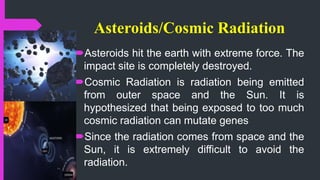
Asteroids/Cosmic Radiation
Asteroids hit the earth with extreme force. The
impact site is completely destroyed.
Cosmic Radiation is radiation being emitted
from outer space and the Sun. It is
hypothesized that being exposed to too much
cosmic radiation can mutate genes
Since the radiation comes from space and the
Sun, it is extremely difficult to avoid the
radiation.
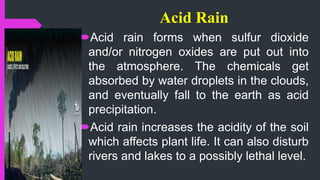
Acid Rain
Acid rain forms when sulfur dioxide
and/or nitrogen oxides are put out into
the atmosphere. The chemicals get
absorbed by water droplets in the clouds,
and eventually fall to the earth as acid
precipitation.
Acid rain increases the acidity of the soil
which affects plant life. It can also disturb
rivers and lakes to a possibly lethal level.
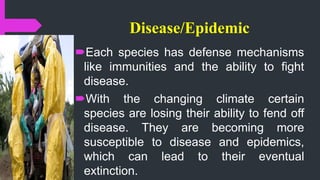
Disease/Epidemic
Each species has defense mechanisms
like immunities and the ability to fight
disease.
With the changing climate certain
species are losing their ability to fend off
disease. They are becoming more
susceptible to disease and epidemics,
which can lead to their eventual
extinction.
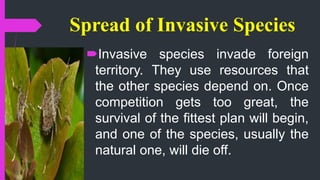
Spread of Invasive Species
Invasive species invade foreign
territory. They use resources that
the other species depend on. Once
competition gets too great, the
survival of the fittest plan will begin,
and one of the species, usually the
natural one, will die off.
Natural factors usually occur at a slower
rate than human factors and therefore
cause a lower extinction rate.
Human activities occur at a faster rate
and cause higher extinction
rates. Human activities are mostly
responsible for the present extinction
rates.
Human Causes of
Extinction
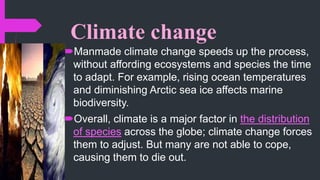
Climate change
Manmade climate change speeds up the process,
without affording ecosystems and species the time
to adapt. For example, rising ocean temperatures
and diminishing Arctic sea ice affects marine
biodiversity.
Overall, climate is a major factor in the distribution
of species across the globe; climate change forces
them to adjust. But many are not able to cope,
causing them to die out.
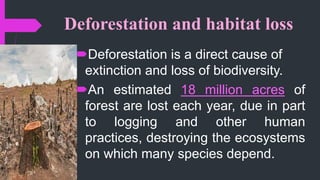
Deforestation and habitat loss
Deforestation is a direct cause of
extinction and loss of biodiversity.
An estimated 18 million acres of
forest are lost each year, due in part
to logging and other human
practices, destroying the ecosystems
on which many species depend.
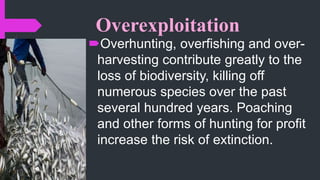
Overexploitation
Overhunting, overfishing and over-
harvesting contribute greatly to the
loss of biodiversity, killing off
numerous species over the past
several hundred years. Poaching
and other forms of hunting for profit
increase the risk of extinction.
Invasive species
The introduction of non-native
species into an ecosystem can
threaten endemic wildlife (either
as predators or competing for
resources), affect human health
and upset economies.
Pollution
From the burning of fossil fuels
(releasing dangerous chemicals into the
atmosphere and, in some cases,
depleting ozone levels) to dumping 19
billion pounds of plastic into the ocean
every year, pollution completely disrupts
the Earth's ecosystems.
causes-of-species-extinction 2.pptx

causes-of-species-extinction 2.pptx

  • 2.
    a group oforganisms that can reproduce with one another in nature and produce fertile offspring
  • 3.
    refers to the numberof organisms in a specific area
  • 4.
    maximum size of thepopulation an environment can support
  • 5.
    is anything that constrains/limitsthe population’s size and slows or stops it from growing
  • 6.
    refers to thevariety of living species on Earth, including plants, animals, bacteria and fungi.
  • 7.
  • 8.
  • 9.
    Climatic Heating andCooling The biodiverse Earth can't keep up with the rapid changes in temperature and climate. The species are not used to severe weather conditions and long seasons, or a changing chemical make-up of their surroundings.  As more species die, it is only making it more difficult for the survivors to find food. The warmer climates we are used to present-day are perfect for diseases and epidemics to thrive.
  • 10.
    Changes in SeaLevels The changes in sea levels is a result, in part, of the melting freshwater. The denser, saltier water sinks that marine life depends on. A small rise in the ocean floor can displace a lot of water onto land that is all ready occupied. The gases from the volcanic activity can also be absorbed by the water, thus changing the chemical composition, making it unsuitable for some life.
  • 11.
    Asteroids/Cosmic Radiation Asteroids hitthe earth with extreme force. The impact site is completely destroyed. Cosmic Radiation is radiation being emitted from outer space and the Sun. It is hypothesized that being exposed to too much cosmic radiation can mutate genes Since the radiation comes from space and the Sun, it is extremely difficult to avoid the radiation.
  • 12.
    Acid Rain Acid rainforms when sulfur dioxide and/or nitrogen oxides are put out into the atmosphere. The chemicals get absorbed by water droplets in the clouds, and eventually fall to the earth as acid precipitation. Acid rain increases the acidity of the soil which affects plant life. It can also disturb rivers and lakes to a possibly lethal level.
  • 13.
    Disease/Epidemic Each species hasdefense mechanisms like immunities and the ability to fight disease. With the changing climate certain species are losing their ability to fend off disease. They are becoming more susceptible to disease and epidemics, which can lead to their eventual extinction.
  • 14.
    Spread of InvasiveSpecies Invasive species invade foreign territory. They use resources that the other species depend on. Once competition gets too great, the survival of the fittest plan will begin, and one of the species, usually the natural one, will die off.
  • 15.
    Natural factors usuallyoccur at a slower rate than human factors and therefore cause a lower extinction rate. Human activities occur at a faster rate and cause higher extinction rates. Human activities are mostly responsible for the present extinction rates.
  • 16.
  • 17.
    Climate change Manmade climatechange speeds up the process, without affording ecosystems and species the time to adapt. For example, rising ocean temperatures and diminishing Arctic sea ice affects marine biodiversity. Overall, climate is a major factor in the distribution of species across the globe; climate change forces them to adjust. But many are not able to cope, causing them to die out.
  • 18.
    Deforestation and habitatloss Deforestation is a direct cause of extinction and loss of biodiversity. An estimated 18 million acres of forest are lost each year, due in part to logging and other human practices, destroying the ecosystems on which many species depend.
  • 19.
    Overexploitation Overhunting, overfishing andover- harvesting contribute greatly to the loss of biodiversity, killing off numerous species over the past several hundred years. Poaching and other forms of hunting for profit increase the risk of extinction.
  • 20.
    Invasive species The introductionof non-native species into an ecosystem can threaten endemic wildlife (either as predators or competing for resources), affect human health and upset economies.
  • 21.
    Pollution From the burningof fossil fuels (releasing dangerous chemicals into the atmosphere and, in some cases, depleting ozone levels) to dumping 19 billion pounds of plastic into the ocean every year, pollution completely disrupts the Earth's ecosystems.

Editor's Notes

  • #10 Whereas weather refers to short-term changes in the atmosphere, climate describes what the weather is like over a long period of time in a specific area.
  • #13 Sulfur oxide- colorless gas coming from burning of fossil fuels, nitrogen oxides is emitted by automobiles, trucks, power plants, turbines
  • #14 Susceptible-madaling kapitan
  • #18 Klima- pangmatagalang kalagayan at katangian ng panahon sa isang takdang lugar o rehiyon. Marso-Mayo –Tuyo at mainit na panahon, Hunyo- November- Tagulan, Disyembre-Pebrero- Malamig na tuyong panahon. Ang climate change ay ang pagbabago ng klima o panahon dahil sa pagtaas ng mga greenhouse gases.
  • #20 Poaching or illegaly catching or hunting
  • #22 Pollution is the introduction of harmful materials into the environment. These harmful materials are called pollutants. These can also be created by human activity, such as trash or run off produced by factories. Pollutants damage the quality or air, water and land.