Conducted by ICT Committee (Batch 2022-24),
Department of English, MKBU
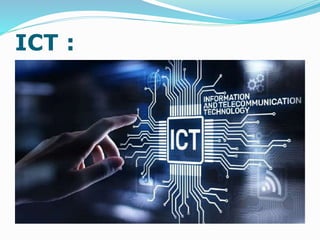
ICT :
What is ICT ?
 Use of technology to manage and process
information and facilitate communication.
 ICT plays a crucial role in today's modern society
and is integral to various fields, including
education, healthcare, business, entertainment,
and government.
 It continues to evolve rapidly, impacting how
people live, work, and interact with one another.
Why ICT in an Educational Institution ?
 Enhanced Teaching and Learning
ICT provides educators with tools and resources to
enhance their teaching methods. It offers interactive learning
materials, multimedia content, and educational software that
can cater to diverse learning styles and engage students more
effectively.
 Access to Information:
The internet allows students and teachers to access vast
amounts of information and knowledge from around the world.
 E-Learning and Online Courses:
ICT enables the creation and delivery of e-learning
courses, allowing students to study remotely and at their own
pace.
Continue…
 Collaboration and Communication:
ICT tools such as email, instant messaging,
discussion forums, and video conferencing facilitate
communication and collaboration among students and
teachers.
 Data Management and Analytics:
Educational institutions use ICT to manage student
records, attendance, grades, and other administrative
tasks efficiently.
 Digital Assessment and Evaluation:
ICT allows for the creation and administration of
online assessments, reducing the time and effort
required for grading.
Continue…
 Personalized Learning:
With ICT, educators can tailor learning experiences
to individual students' needs and abilities.
 Global Collaboration:
ICT facilitates collaborations between students and
educators from different parts of the world.
ICT empowers both students and educators,
making education more accessible, engaging, and
effective.
ICT Tools: (Hardware)
 View Board
 View Camera
 PC
 Laptop
 Mike
 Speaker
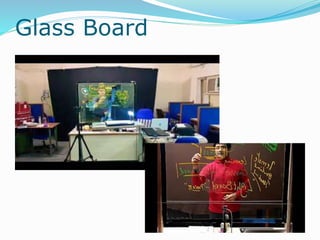
 Glass Board
View Board
View Board
 Touch Screen
 Pen
 Easy Access Shortcut Keys
 Type USB & Type C for Connection
 HDMI
 Network: Wi-Fi, Ethernet
 White Board
 Class Collaboration Tool (Practical in class)
Based on Windows System
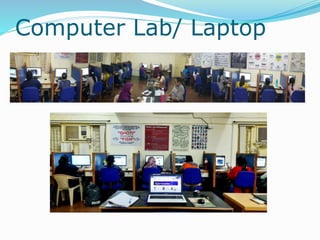
Computer Lab/ Laptop
Glass Board
Glass Board
E-mail
 Your email address to be your name:
If you're looking for a more professional-
sounding email address that you can use for
years, sticking with your name is the best way
to go.
 Display Name:
When you log-in from your mail or done
conversation with mail at that time display
name shown.
Display Name
Setting
Google
Manage your
Google Account
Personal Info
Name
Coming soon…
 ICT Workshop Part 2
 Prepared by Rajeshvariba Rana

Introductory ICT Workshop Part 1.pptx

  • 1.
    Conducted by ICTCommittee (Batch 2022-24), Department of English, MKBU
  • 2.
  • 3.
    What is ICT?  Use of technology to manage and process information and facilitate communication.  ICT plays a crucial role in today's modern society and is integral to various fields, including education, healthcare, business, entertainment, and government.  It continues to evolve rapidly, impacting how people live, work, and interact with one another.
  • 4.
    Why ICT inan Educational Institution ?  Enhanced Teaching and Learning ICT provides educators with tools and resources to enhance their teaching methods. It offers interactive learning materials, multimedia content, and educational software that can cater to diverse learning styles and engage students more effectively.  Access to Information: The internet allows students and teachers to access vast amounts of information and knowledge from around the world.  E-Learning and Online Courses: ICT enables the creation and delivery of e-learning courses, allowing students to study remotely and at their own pace.
  • 5.
    Continue…  Collaboration andCommunication: ICT tools such as email, instant messaging, discussion forums, and video conferencing facilitate communication and collaboration among students and teachers.  Data Management and Analytics: Educational institutions use ICT to manage student records, attendance, grades, and other administrative tasks efficiently.  Digital Assessment and Evaluation: ICT allows for the creation and administration of online assessments, reducing the time and effort required for grading.
  • 6.
    Continue…  Personalized Learning: WithICT, educators can tailor learning experiences to individual students' needs and abilities.  Global Collaboration: ICT facilitates collaborations between students and educators from different parts of the world. ICT empowers both students and educators, making education more accessible, engaging, and effective.
  • 7.
    ICT Tools: (Hardware) View Board  View Camera  PC  Laptop  Mike  Speaker  Glass Board
  • 8.
  • 9.
  • 10.
     Touch Screen Pen  Easy Access Shortcut Keys  Type USB & Type C for Connection  HDMI  Network: Wi-Fi, Ethernet  White Board  Class Collaboration Tool (Practical in class) Based on Windows System
  • 11.
  • 12.
  • 13.
  • 14.
    E-mail  Your emailaddress to be your name: If you're looking for a more professional- sounding email address that you can use for years, sticking with your name is the best way to go.  Display Name: When you log-in from your mail or done conversation with mail at that time display name shown.
  • 15.
  • 16.
    Coming soon…  ICTWorkshop Part 2
  • 17.
     Prepared byRajeshvariba Rana