Introduction to the
Ministerial Form of
Government
Cristita Marie Giangan
Outline
 Conceptual Background
 Relevant Provisions in the FAB
 Some Important Terms and Concepts
 The Ministerial Form of Government
 Fundamental Concepts
 Ministerial Form of Government: Key Terms
 Advantages
 Challenges and Considerations
Conceptual Background
Relevant Provisions in the FAB
“The government of the Bangsamoro shall have a ministerial
form.
The Parties agree to entrench an electoral system suitable to a
ministerial form of government. The electoral system shall
allow democratic participation, ensure accountability of
public officers primarily to their constituents and encourage
formation of genuinely principled political parties. The
electoral system shall be contained in the Bangsamoro Basic
Law to be implemented through legislation enacted by the
Bangsamoro Government and correlated with national laws.”
(FAB Section I, No.2)
Some Fundamental Terms
 Ministerial Form of Government
 Otherwise known as the parliamentary form of
government
 The country’s chief executive (head of government) is
elected by the legislative branch of government
(parliament)
 Electoral System
 A set of methods that governs how the citizens elect
members of the legislative and the executive branches
of government
 Also called a voting system
Some Fundamental Terms
 Political Party
 Is a political organization that tries to influence
and/or control government policies by capturing
political power through fielding candidates with
aligned views in elections
 Genuinely Principled Political Parties
 Political parties that compete in elections based
on their programmatic profile composed of
clearly defined political platforms
The Ministerial Form of
Government
Fundamental Concepts
Government and Administration
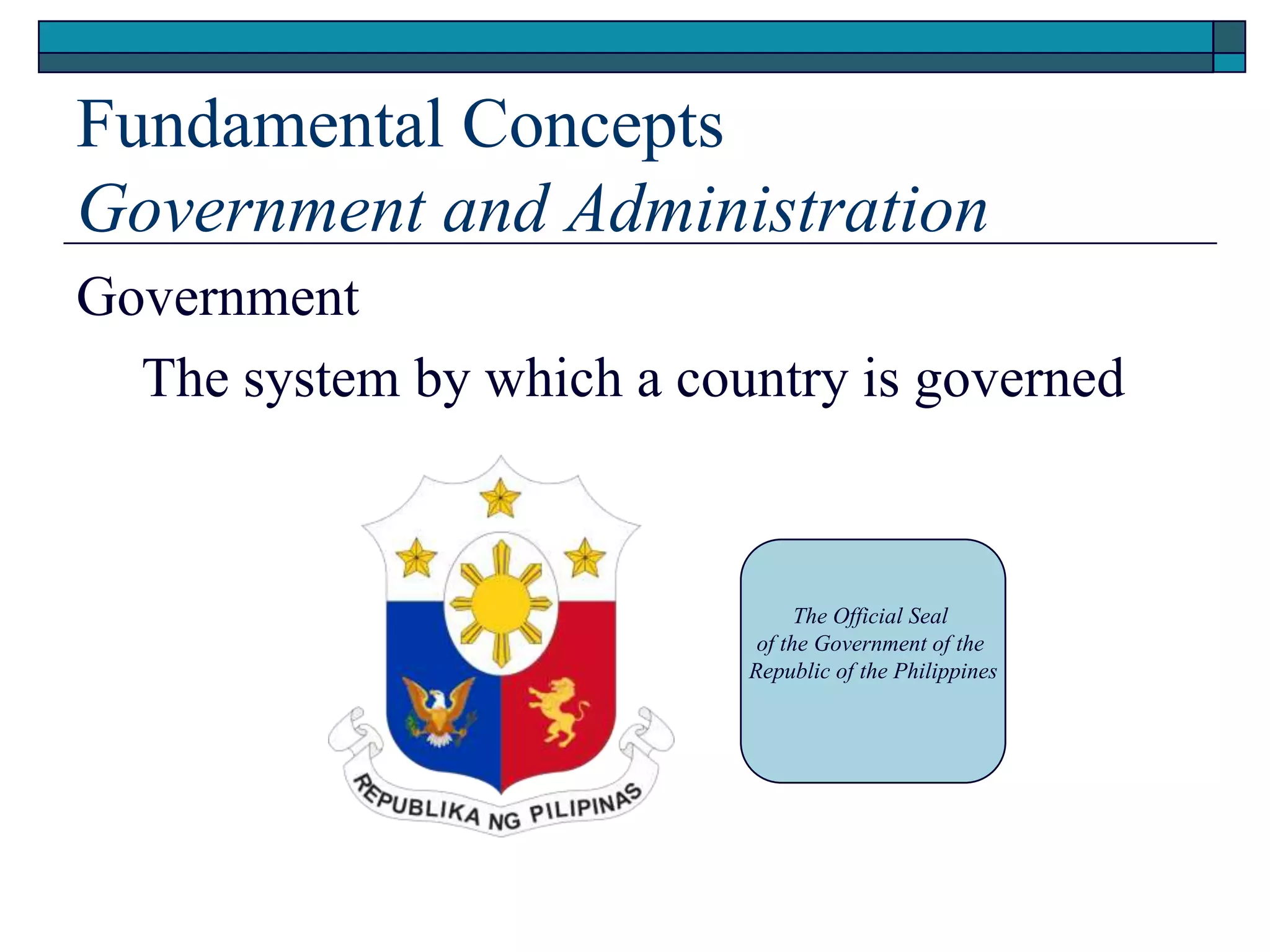
Government
The system by which a country is governed
The Official Seal
of the Government of the
Republic of the Philippines
Fundamental Concepts
Government and Administration
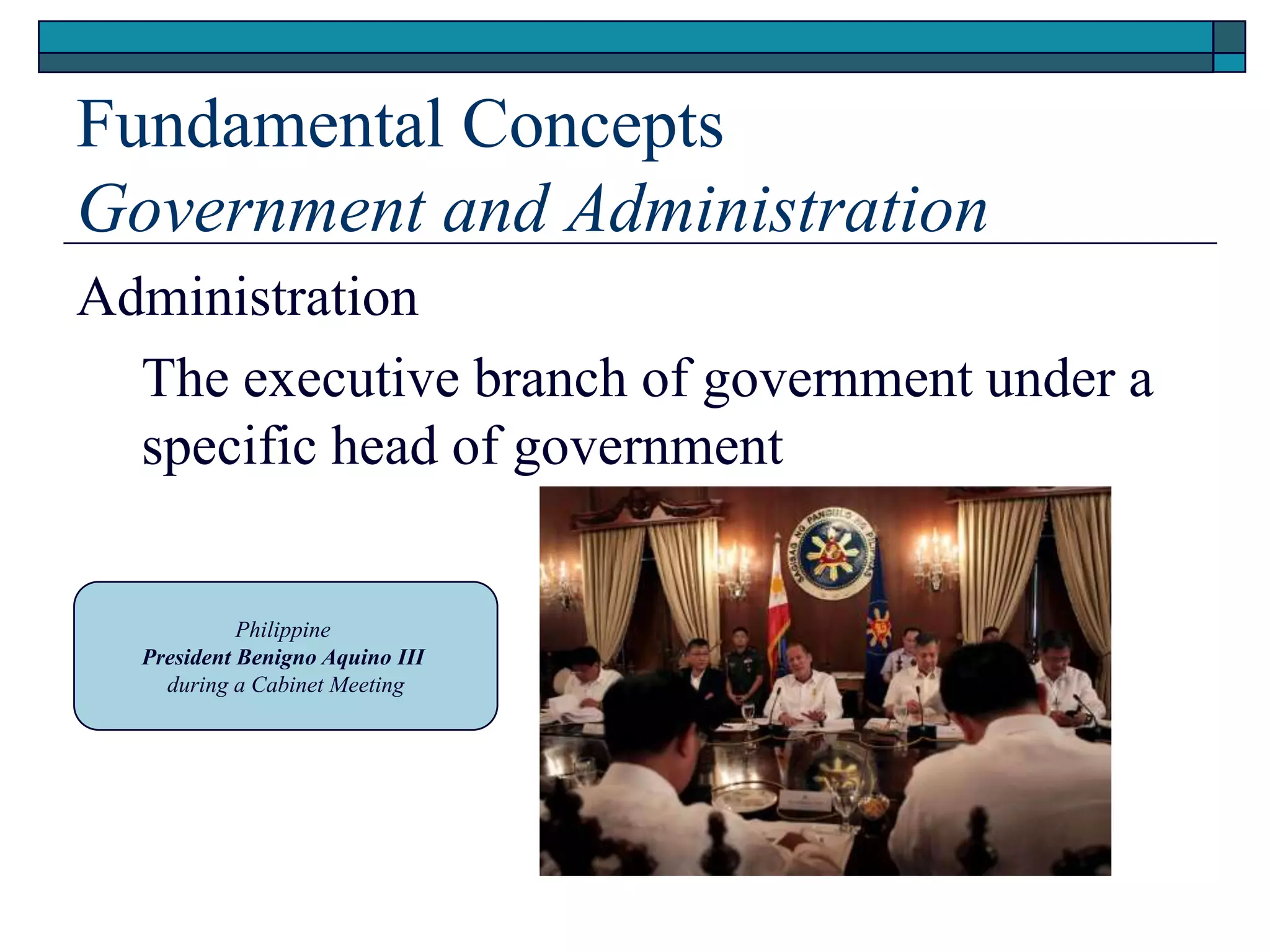
Administration
The executive branch of government under a
specific head of government
Philippine
President Benigno Aquino III
during a Cabinet Meeting
Fundamental Concepts
Branches of Government
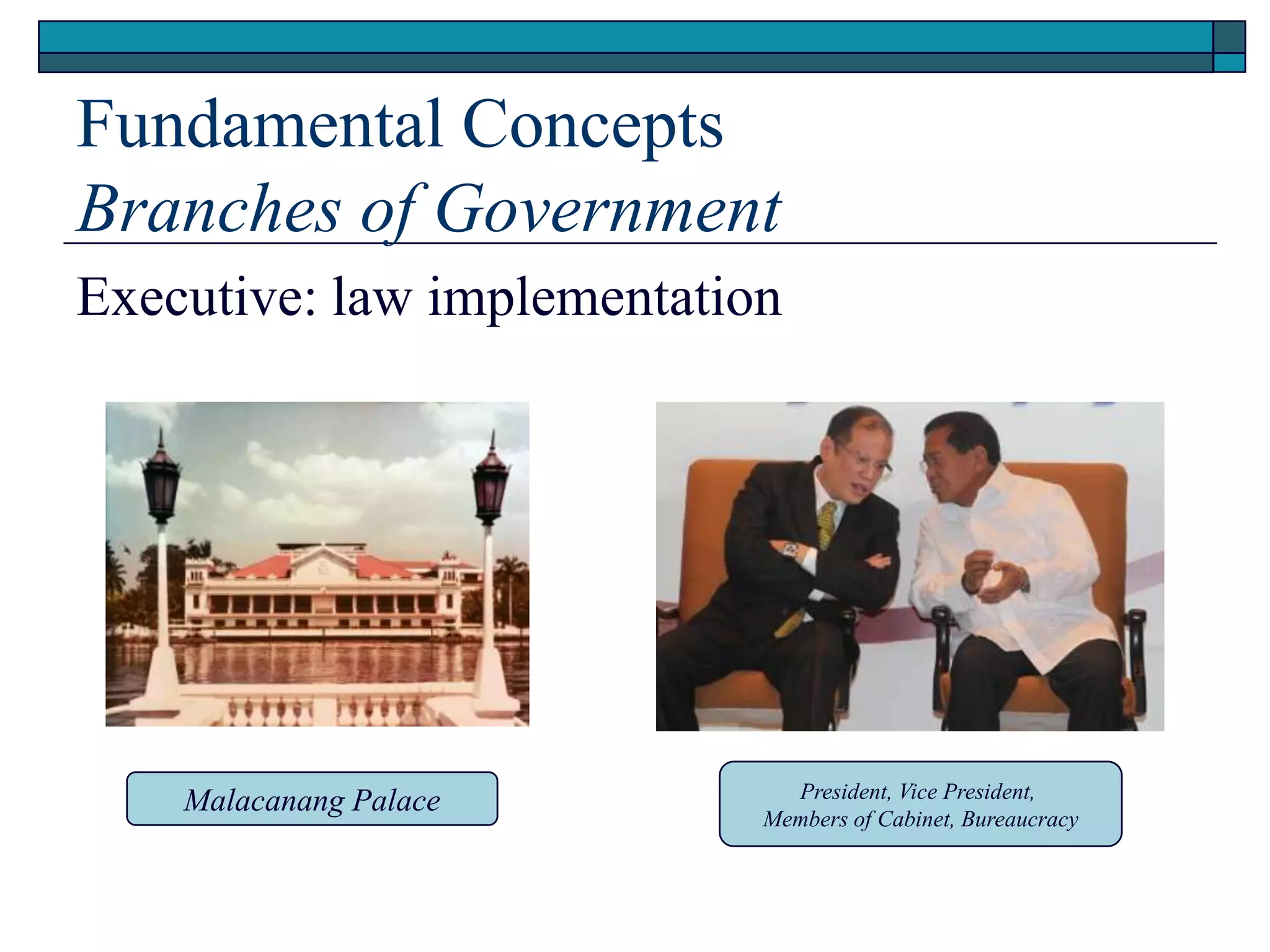
Executive: law implementation
Malacanang Palace President, Vice President,
Members of Cabinet, Bureaucracy
Fundamental Concepts
Branches of Government
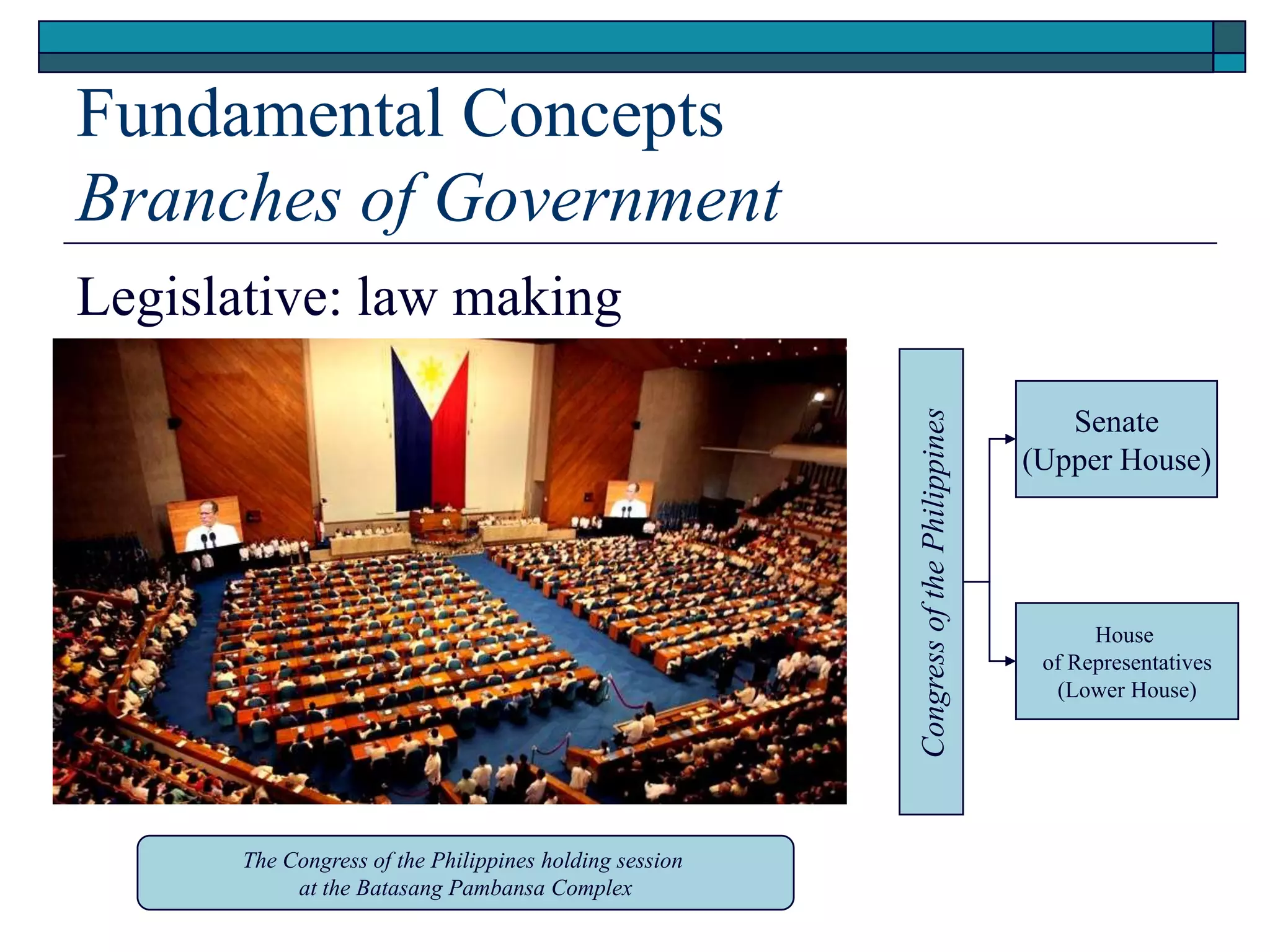
Legislative: law making
The Congress of the Philippines holding session
at the Batasang Pambansa Complex
Senate
(Upper House)
House
of Representatives
(Lower House)
CongressofthePhilippines
Fundamental Concepts
Branches of Government
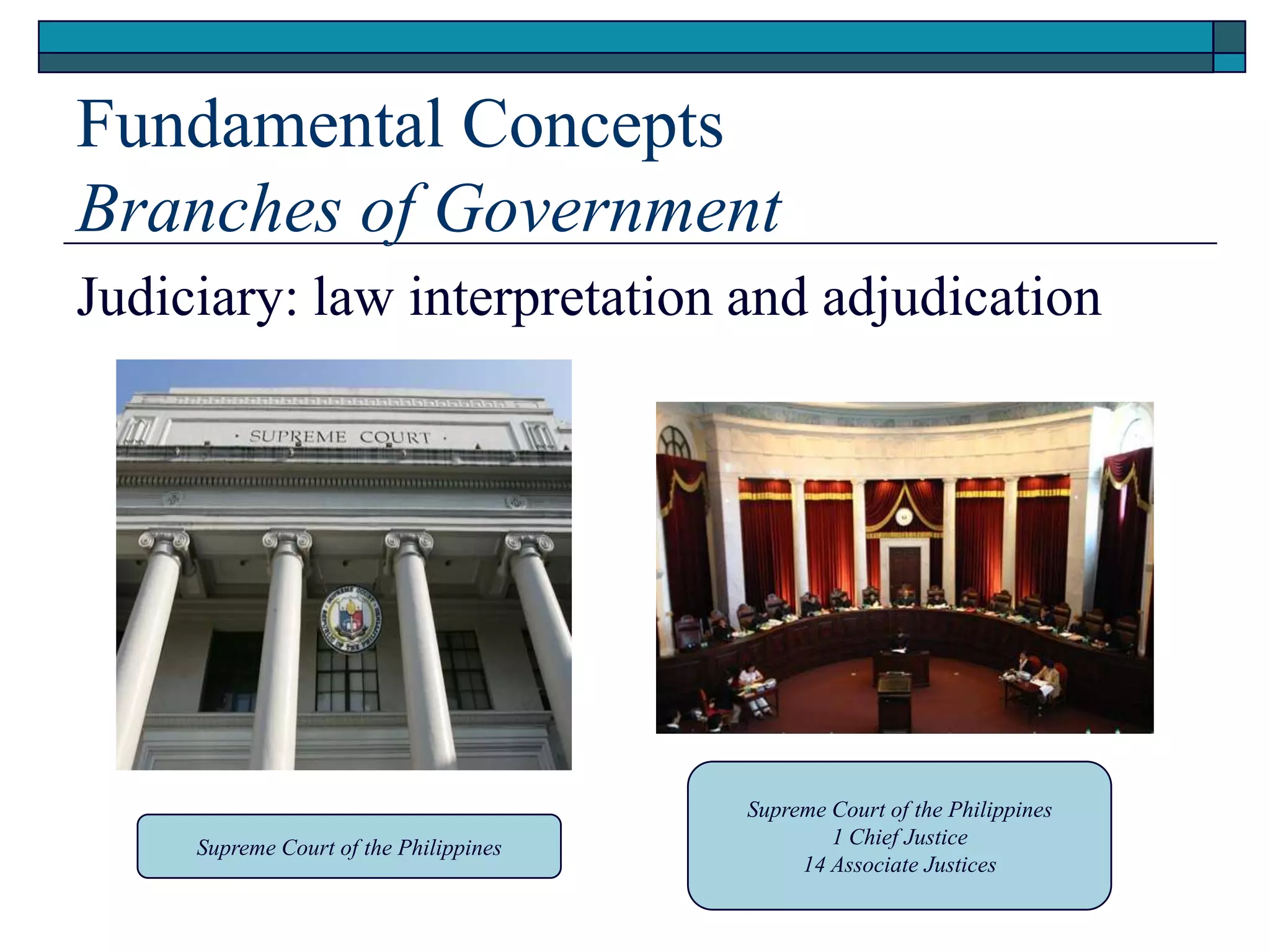
Judiciary: law interpretation and adjudication
Supreme Court of the Philippines
1 Chief Justice
14 Associate Justices
Fundamental Concepts
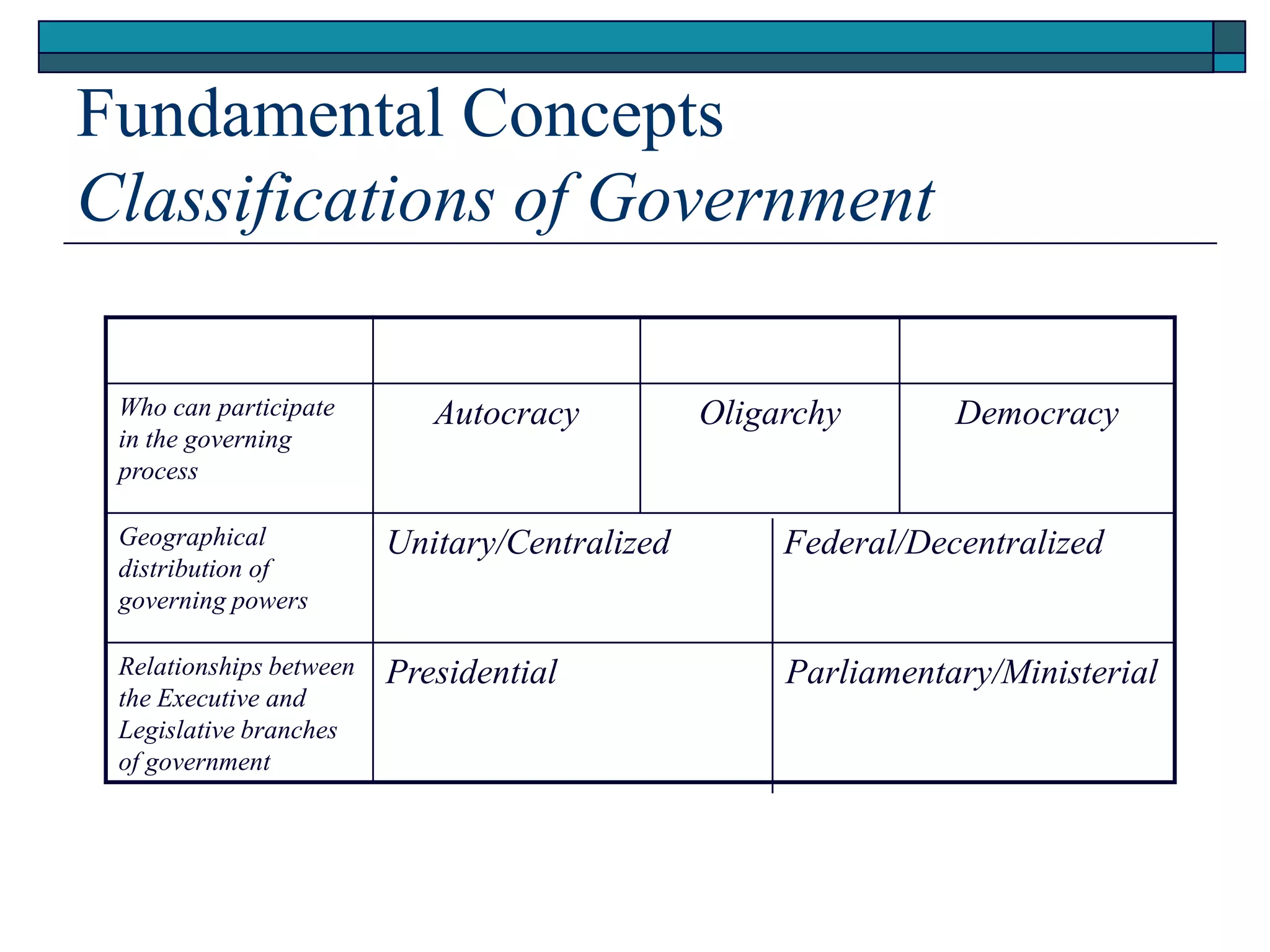
Classifications of Government
Who can participate
in the governing
process
Autocracy Oligarchy Democracy
Geographical
distribution of
governing powers
Unitary/Centralized Federal/Decentralized
Relationships between
the Executive and
Legislative branches
of government
Presidential Parliamentary/Ministerial
Ministerial Form of
Government
The Details
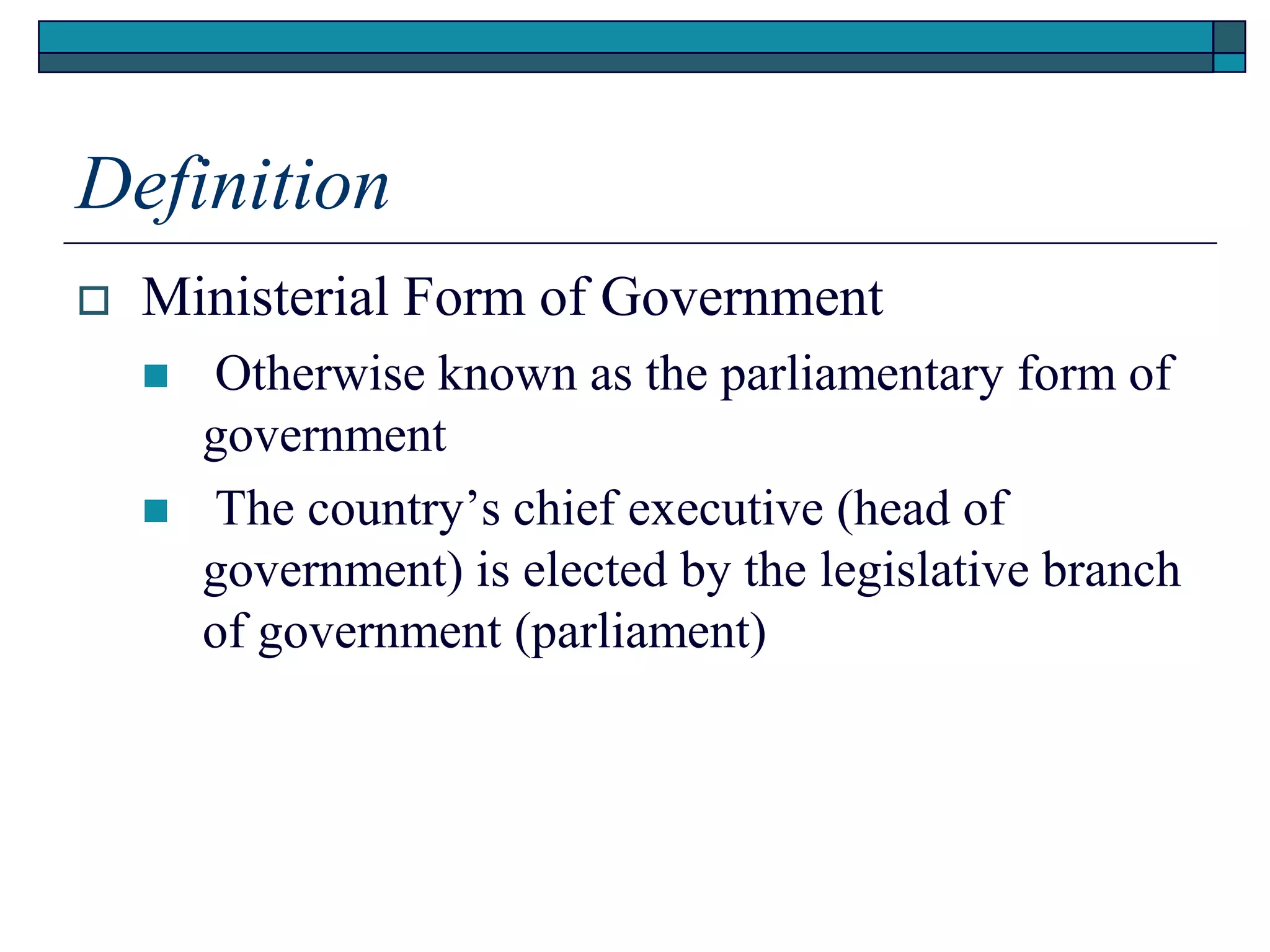
Definition
 Ministerial Form of Government
 Otherwise known as the parliamentary form of
government
 The country’s chief executive (head of
government) is elected by the legislative branch
of government (parliament)
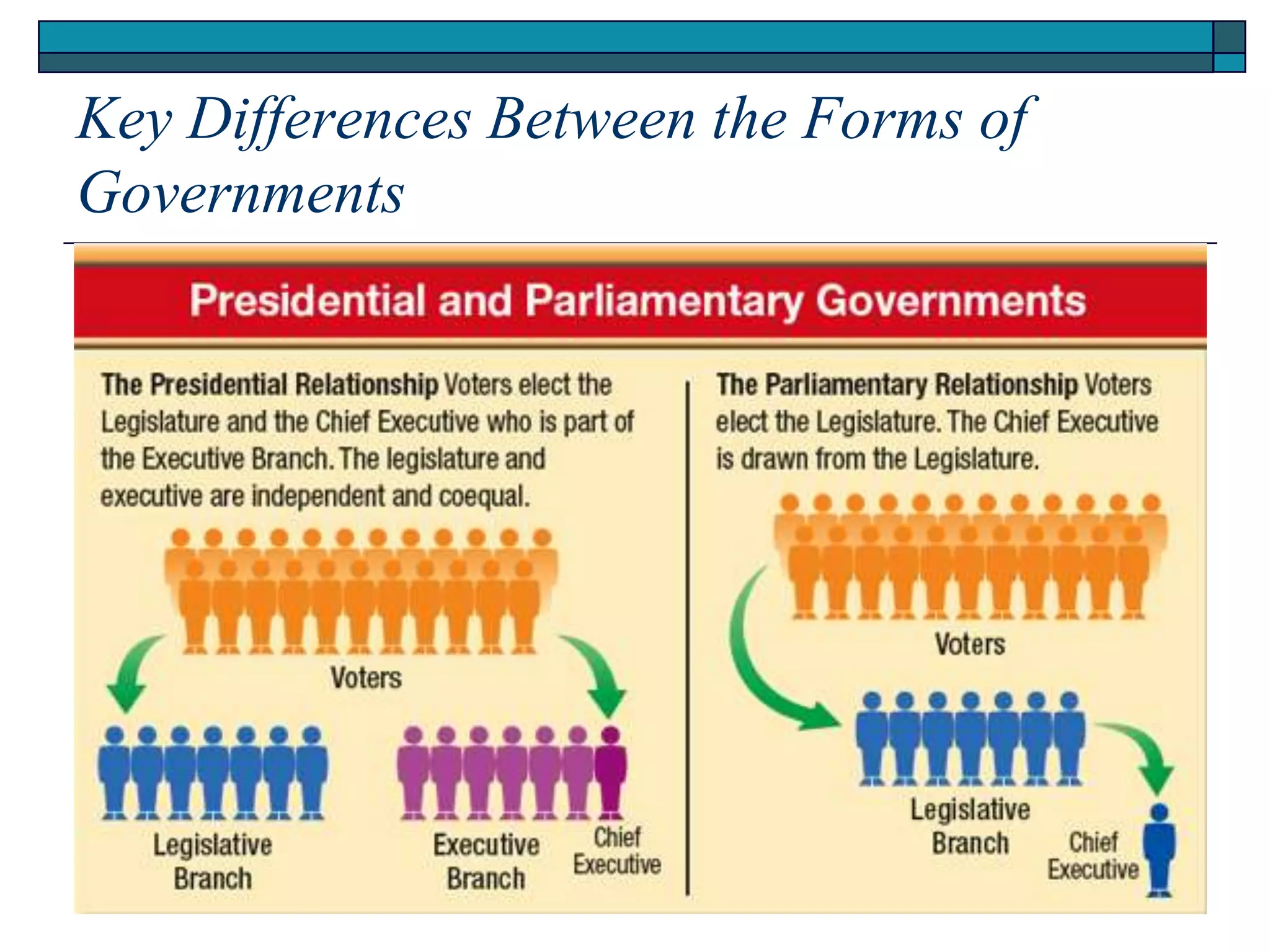
Key Differences Between the Forms of
Governments
Key Differences Between the Forms of
Governments
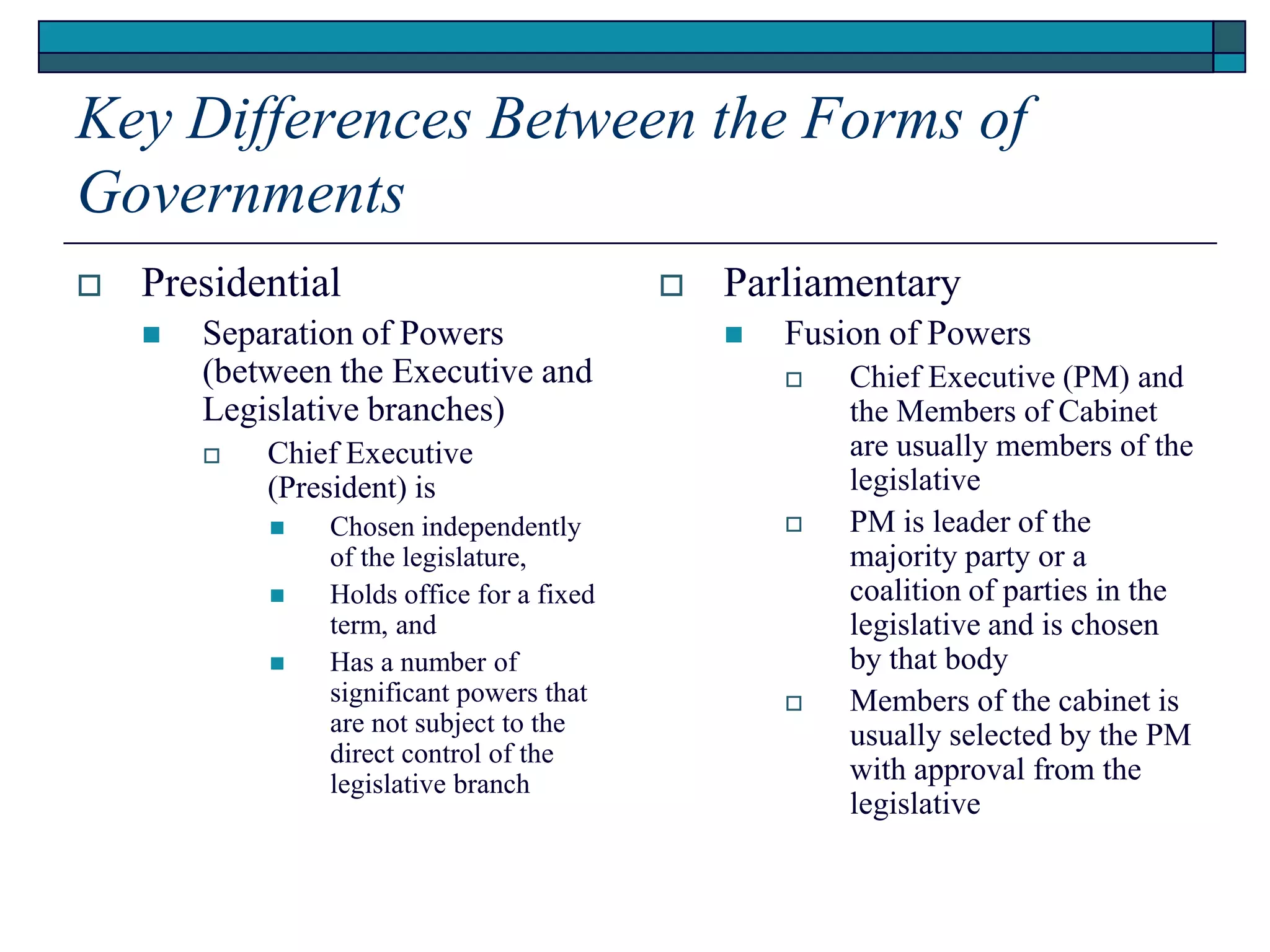
 Presidential
 Separation of Powers
(between the Executive and
Legislative branches)
 Chief Executive
(President) is
 Chosen independently
of the legislature,
 Holds office for a fixed
term, and
 Has a number of
significant powers that
are not subject to the
direct control of the
legislative branch
 Parliamentary
 Fusion of Powers
 Chief Executive (PM) and
the Members of Cabinet
are usually members of the
legislative
 PM is leader of the
majority party or a
coalition of parties in the
legislative and is chosen
by that body
 Members of the cabinet is
usually selected by the PM
with approval from the
legislative
Key Differences Between the Forms of
Governments
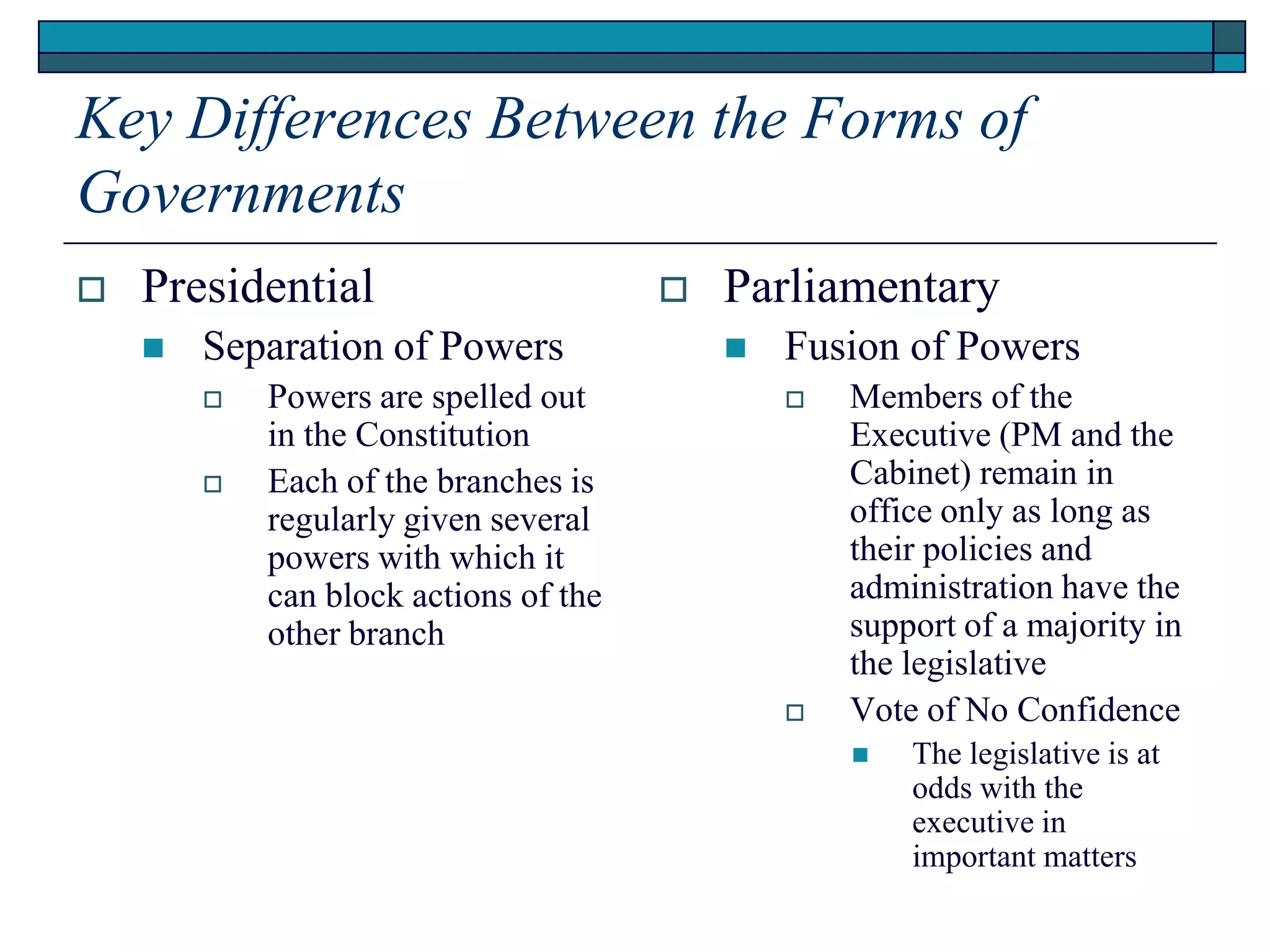
 Presidential
 Separation of Powers
 Powers are spelled out
in the Constitution
 Each of the branches is
regularly given several
powers with which it
can block actions of the
other branch
 Parliamentary
 Fusion of Powers
 Members of the
Executive (PM and the
Cabinet) remain in
office only as long as
their policies and
administration have the
support of a majority in
the legislative
 Vote of No Confidence
 The legislative is at
odds with the
executive in
important matters
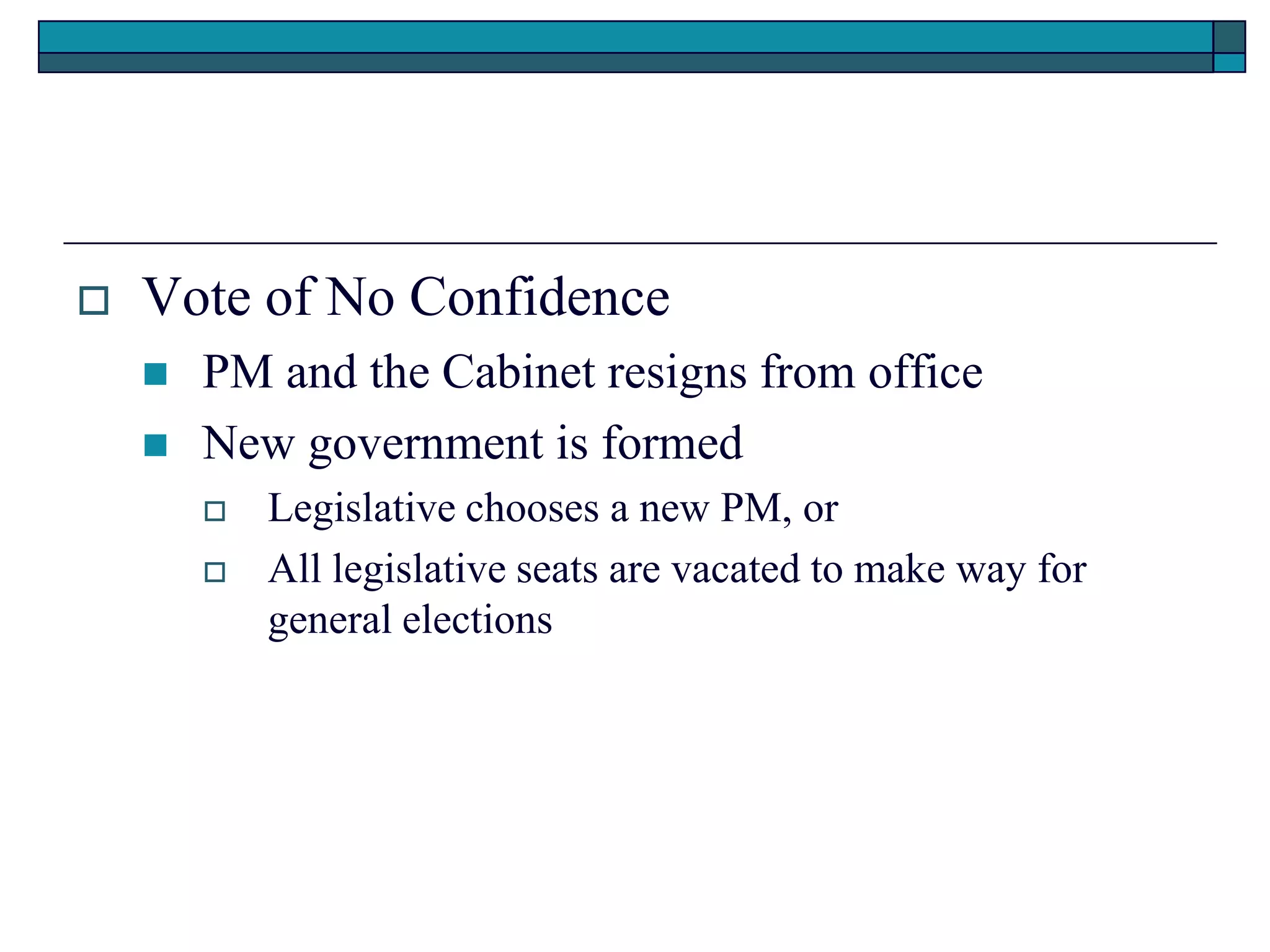
 Vote of No Confidence
 PM and the Cabinet resigns from office
 New government is formed
 Legislative chooses a new PM, or
 All legislative seats are vacated to make way for
general elections
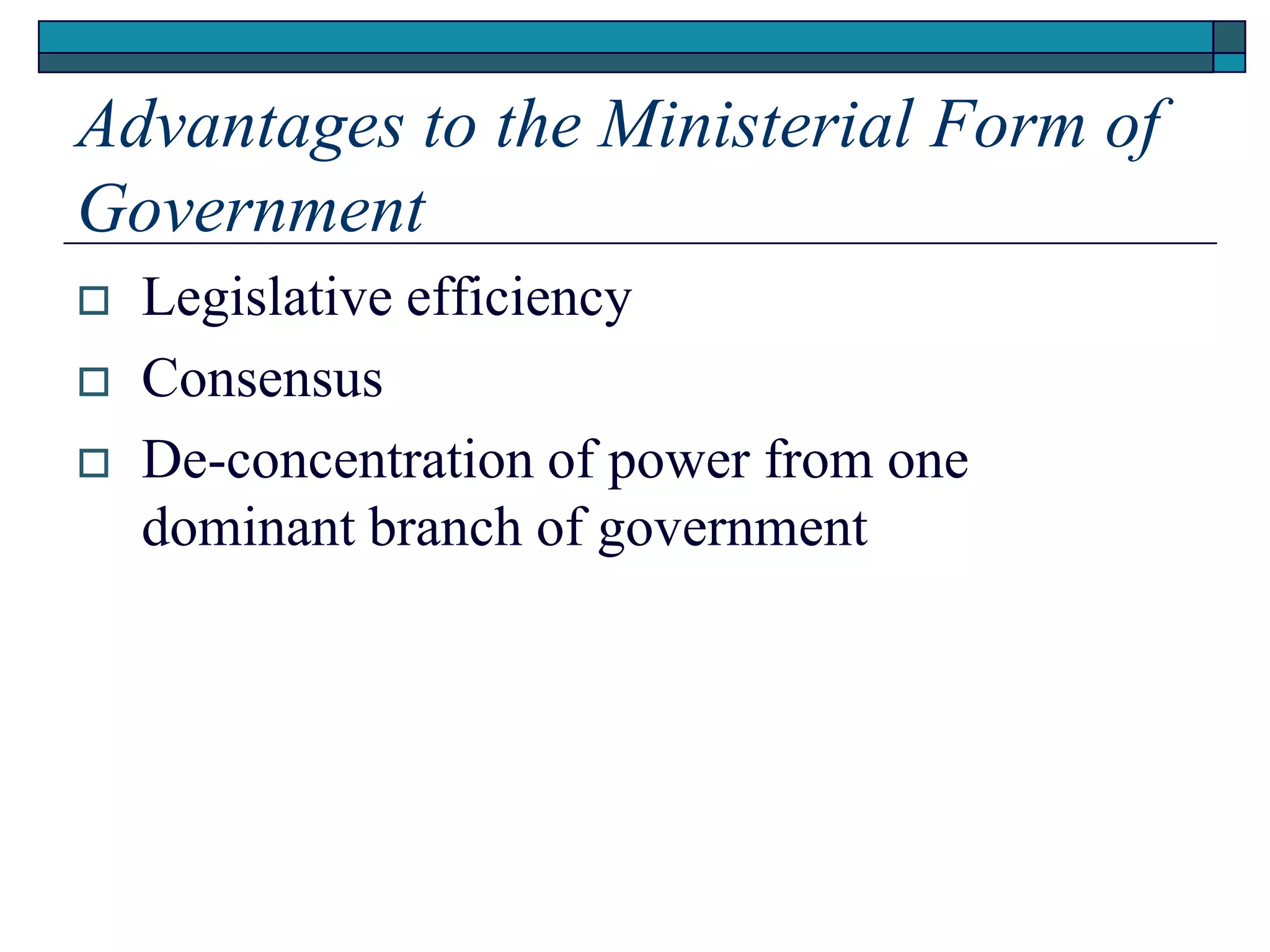
Advantages to the Ministerial Form of
Government
 Legislative efficiency
 Consensus
 De-concentration of power from one
dominant branch of government
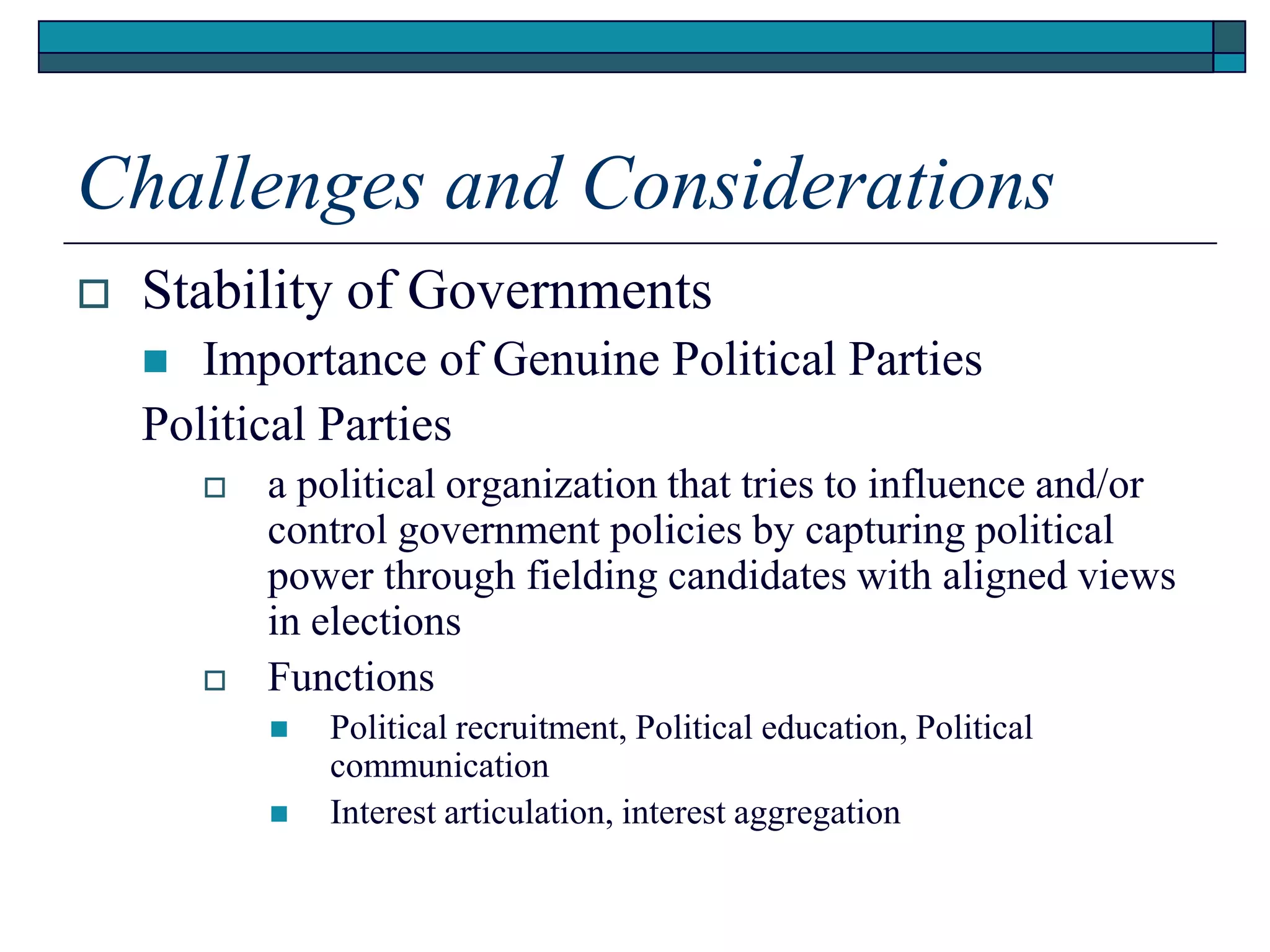
Challenges and Considerations
 Stability of Governments
 Importance of Genuine Political Parties
Political Parties
 a political organization that tries to influence and/or
control government policies by capturing political
power through fielding candidates with aligned views
in elections
 Functions
 Political recruitment, Political education, Political
communication
 Interest articulation, interest aggregation
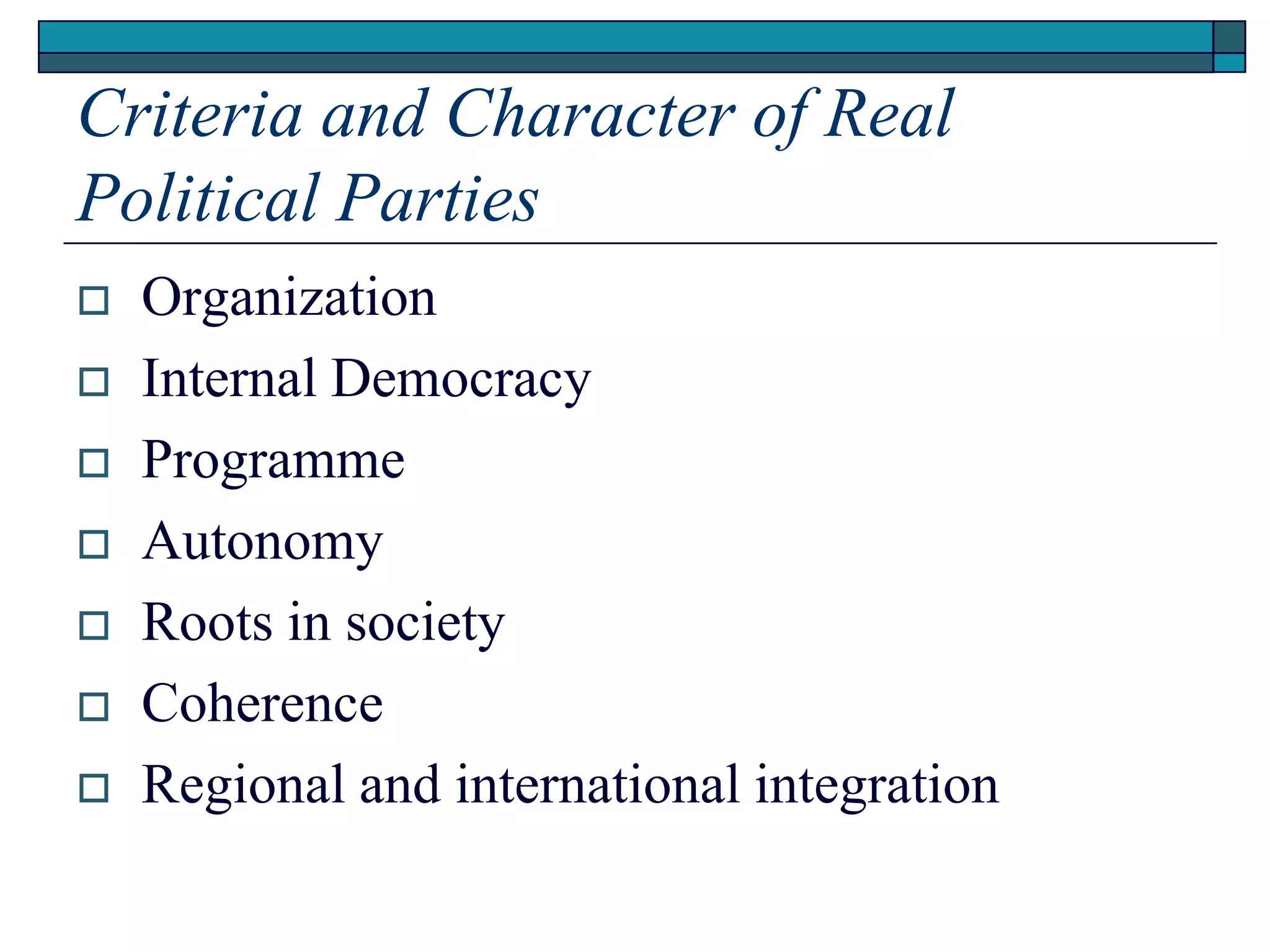
Criteria and Character of Real
Political Parties
 Organization
 Internal Democracy
 Programme
 Autonomy
 Roots in society
 Coherence
 Regional and international integration
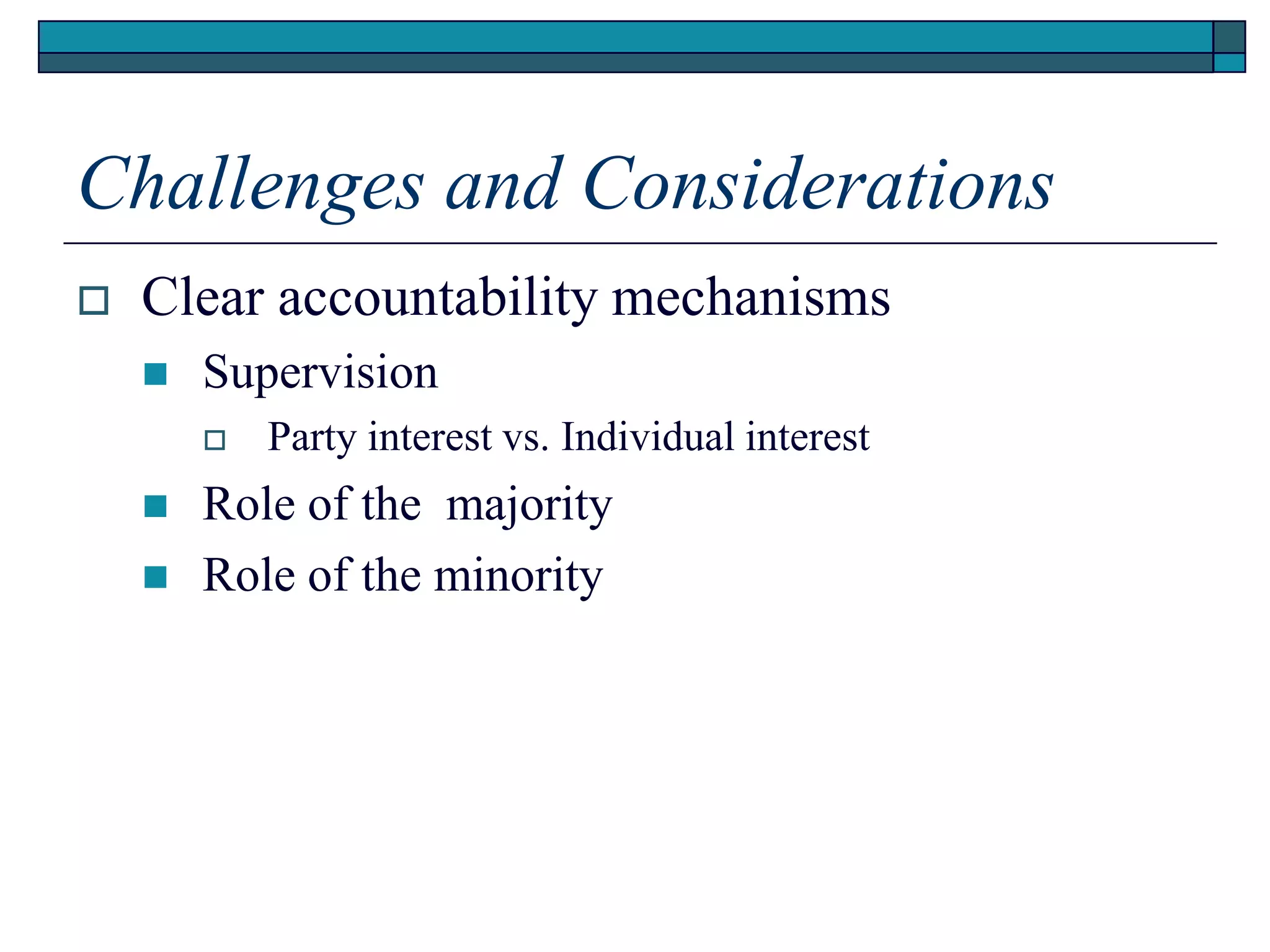
Challenges and Considerations
 Clear accountability mechanisms
 Supervision
 Party interest vs. Individual interest
 Role of the majority
 Role of the minority
Questions?

Introduction to the ministerial form of government

  • 1.
    Introduction to the MinisterialForm of Government Cristita Marie Giangan
  • 2.
    Outline  Conceptual Background Relevant Provisions in the FAB  Some Important Terms and Concepts  The Ministerial Form of Government  Fundamental Concepts  Ministerial Form of Government: Key Terms  Advantages  Challenges and Considerations
  • 3.
  • 4.
    Relevant Provisions inthe FAB “The government of the Bangsamoro shall have a ministerial form. The Parties agree to entrench an electoral system suitable to a ministerial form of government. The electoral system shall allow democratic participation, ensure accountability of public officers primarily to their constituents and encourage formation of genuinely principled political parties. The electoral system shall be contained in the Bangsamoro Basic Law to be implemented through legislation enacted by the Bangsamoro Government and correlated with national laws.” (FAB Section I, No.2)
  • 5.
    Some Fundamental Terms Ministerial Form of Government  Otherwise known as the parliamentary form of government  The country’s chief executive (head of government) is elected by the legislative branch of government (parliament)  Electoral System  A set of methods that governs how the citizens elect members of the legislative and the executive branches of government  Also called a voting system
  • 6.
    Some Fundamental Terms Political Party  Is a political organization that tries to influence and/or control government policies by capturing political power through fielding candidates with aligned views in elections  Genuinely Principled Political Parties  Political parties that compete in elections based on their programmatic profile composed of clearly defined political platforms
  • 7.
    The Ministerial Formof Government
  • 8.
    Fundamental Concepts Government andAdministration Government The system by which a country is governed The Official Seal of the Government of the Republic of the Philippines
  • 9.
    Fundamental Concepts Government andAdministration Administration The executive branch of government under a specific head of government Philippine President Benigno Aquino III during a Cabinet Meeting
  • 10.
    Fundamental Concepts Branches ofGovernment Executive: law implementation Malacanang Palace President, Vice President, Members of Cabinet, Bureaucracy
  • 11.
    Fundamental Concepts Branches ofGovernment Legislative: law making The Congress of the Philippines holding session at the Batasang Pambansa Complex Senate (Upper House) House of Representatives (Lower House) CongressofthePhilippines
  • 12.
    Fundamental Concepts Branches ofGovernment Judiciary: law interpretation and adjudication Supreme Court of the Philippines Supreme Court of the Philippines 1 Chief Justice 14 Associate Justices
  • 13.
    Fundamental Concepts Classifications ofGovernment Who can participate in the governing process Autocracy Oligarchy Democracy Geographical distribution of governing powers Unitary/Centralized Federal/Decentralized Relationships between the Executive and Legislative branches of government Presidential Parliamentary/Ministerial
  • 14.
  • 15.
    Definition  Ministerial Formof Government  Otherwise known as the parliamentary form of government  The country’s chief executive (head of government) is elected by the legislative branch of government (parliament)
  • 16.
    Key Differences Betweenthe Forms of Governments
  • 17.
    Key Differences Betweenthe Forms of Governments  Presidential  Separation of Powers (between the Executive and Legislative branches)  Chief Executive (President) is  Chosen independently of the legislature,  Holds office for a fixed term, and  Has a number of significant powers that are not subject to the direct control of the legislative branch  Parliamentary  Fusion of Powers  Chief Executive (PM) and the Members of Cabinet are usually members of the legislative  PM is leader of the majority party or a coalition of parties in the legislative and is chosen by that body  Members of the cabinet is usually selected by the PM with approval from the legislative
  • 18.
    Key Differences Betweenthe Forms of Governments  Presidential  Separation of Powers  Powers are spelled out in the Constitution  Each of the branches is regularly given several powers with which it can block actions of the other branch  Parliamentary  Fusion of Powers  Members of the Executive (PM and the Cabinet) remain in office only as long as their policies and administration have the support of a majority in the legislative  Vote of No Confidence  The legislative is at odds with the executive in important matters
  • 19.
     Vote ofNo Confidence  PM and the Cabinet resigns from office  New government is formed  Legislative chooses a new PM, or  All legislative seats are vacated to make way for general elections
  • 20.
    Advantages to theMinisterial Form of Government  Legislative efficiency  Consensus  De-concentration of power from one dominant branch of government
  • 21.
    Challenges and Considerations Stability of Governments  Importance of Genuine Political Parties Political Parties  a political organization that tries to influence and/or control government policies by capturing political power through fielding candidates with aligned views in elections  Functions  Political recruitment, Political education, Political communication  Interest articulation, interest aggregation
  • 22.
    Criteria and Characterof Real Political Parties  Organization  Internal Democracy  Programme  Autonomy  Roots in society  Coherence  Regional and international integration
  • 23.
    Challenges and Considerations Clear accountability mechanisms  Supervision  Party interest vs. Individual interest  Role of the majority  Role of the minority
  • 24.