Essential Questions: How did the delegates at the Constitutional Convention divide powers in the new government? How is the system of separation of powers setup? How does the system of checks and balances prevent one branch from becoming to powerful? Separation of Powers & Checks and Balances
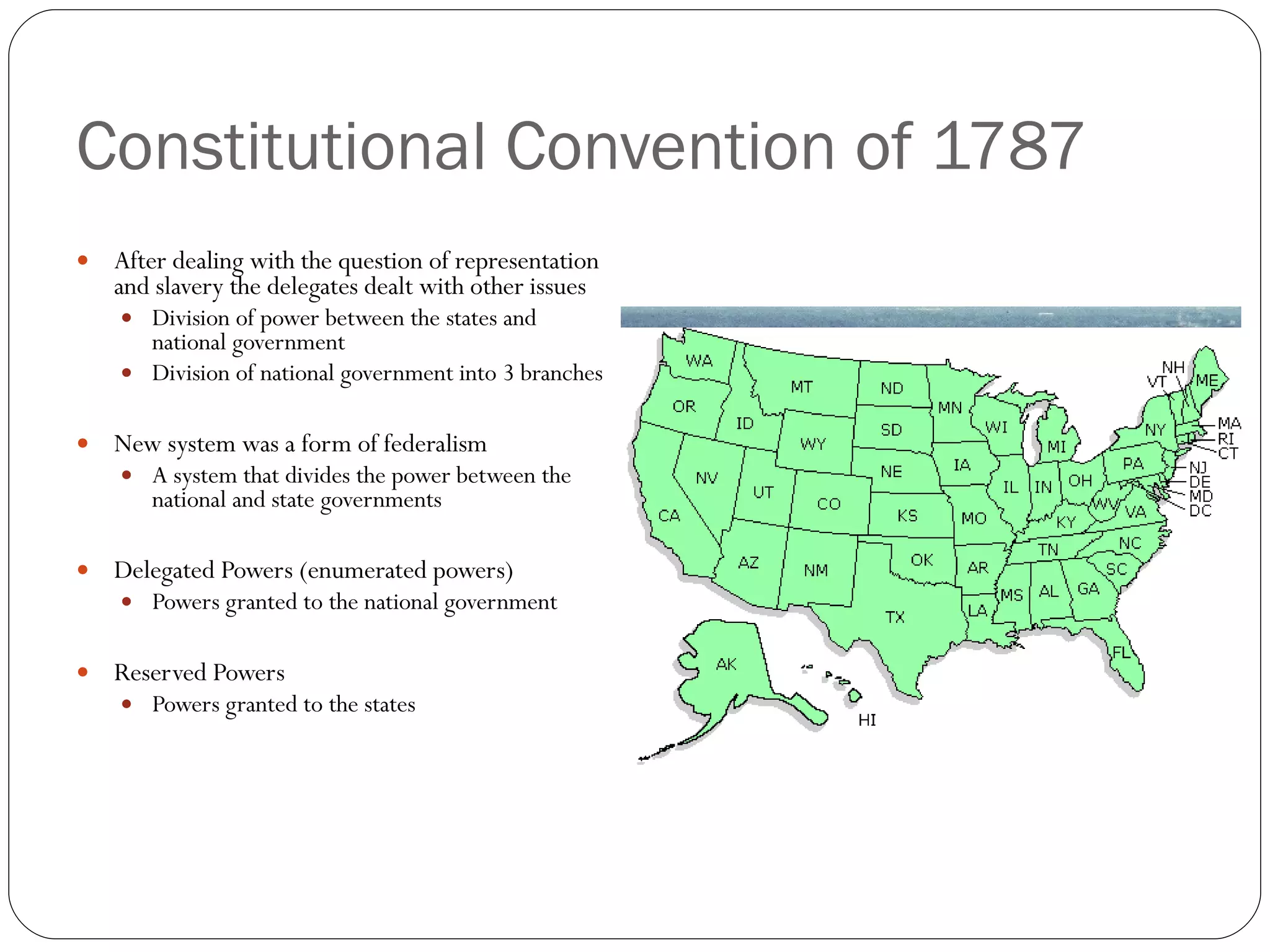
Constitutional Convention of 1787 After dealing with the question of representation and slavery the delegates dealt with other issues Division of power between the states and national government Division of national government into 3 branches New system was a form of federalism A system that divides the power between the national and state governments Delegated Powers (enumerated powers) Powers granted to the national government Reserved Powers Powers granted to the states
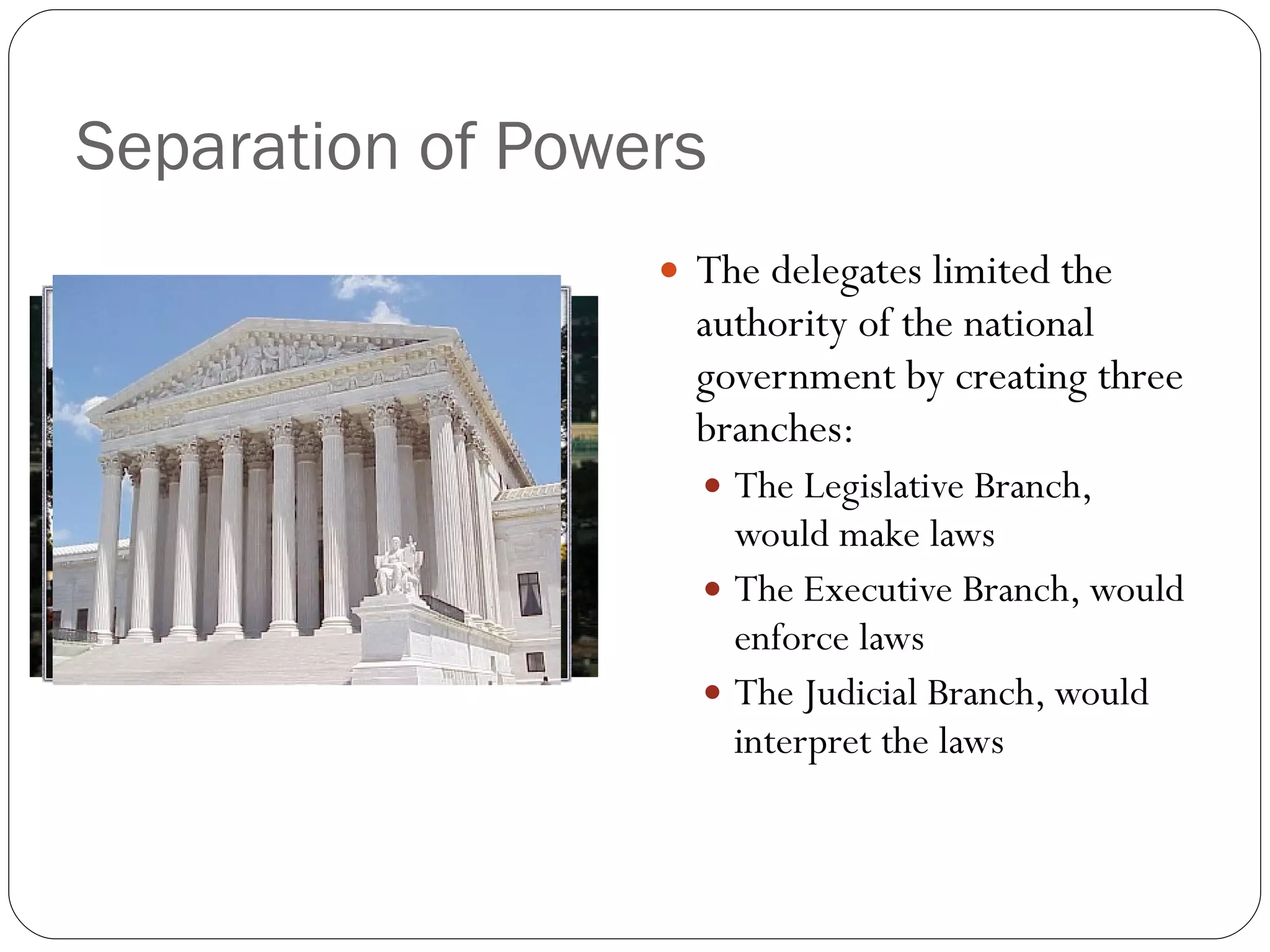
Separation of Powers The delegates limited the authority of the national government by creating three branches: The Legislative Branch, would make laws The Executive Branch, would enforce laws The Judicial Branch, would interpret the laws
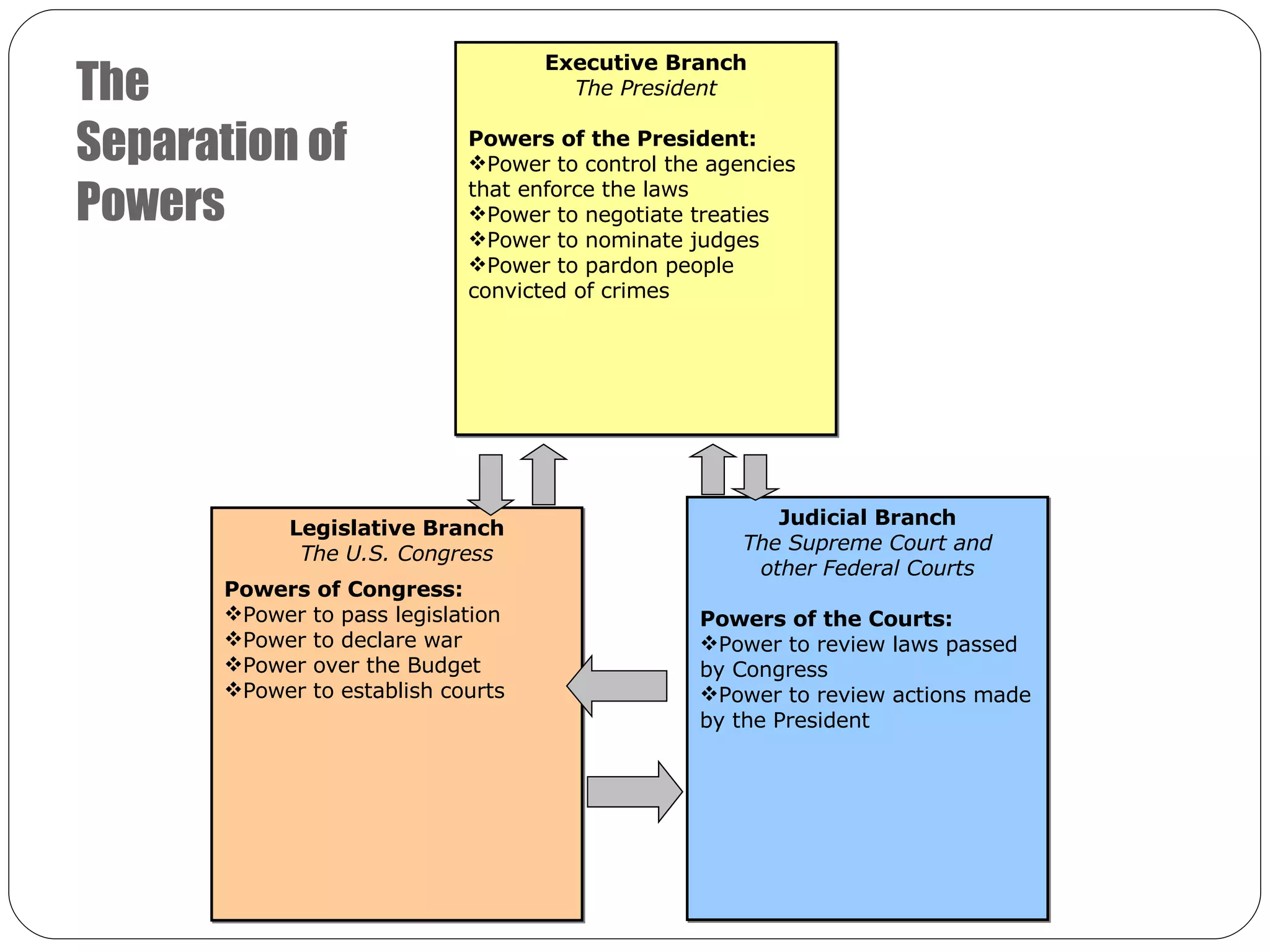
The Separation of Powers Executive Branch The President Powers of the President: Power to control the agencies that enforce the laws Power to negotiate treaties Power to nominate judges Power to pardon people convicted of crimes Legislative Branch The U.S. Congress Powers of Congress: Power to pass legislation Power to declare war Power over the Budget Power to establish courts Judicial Branch The Supreme Court and other Federal Courts Powers of the Courts: Power to review laws passed by Congress Power to review actions made by the President
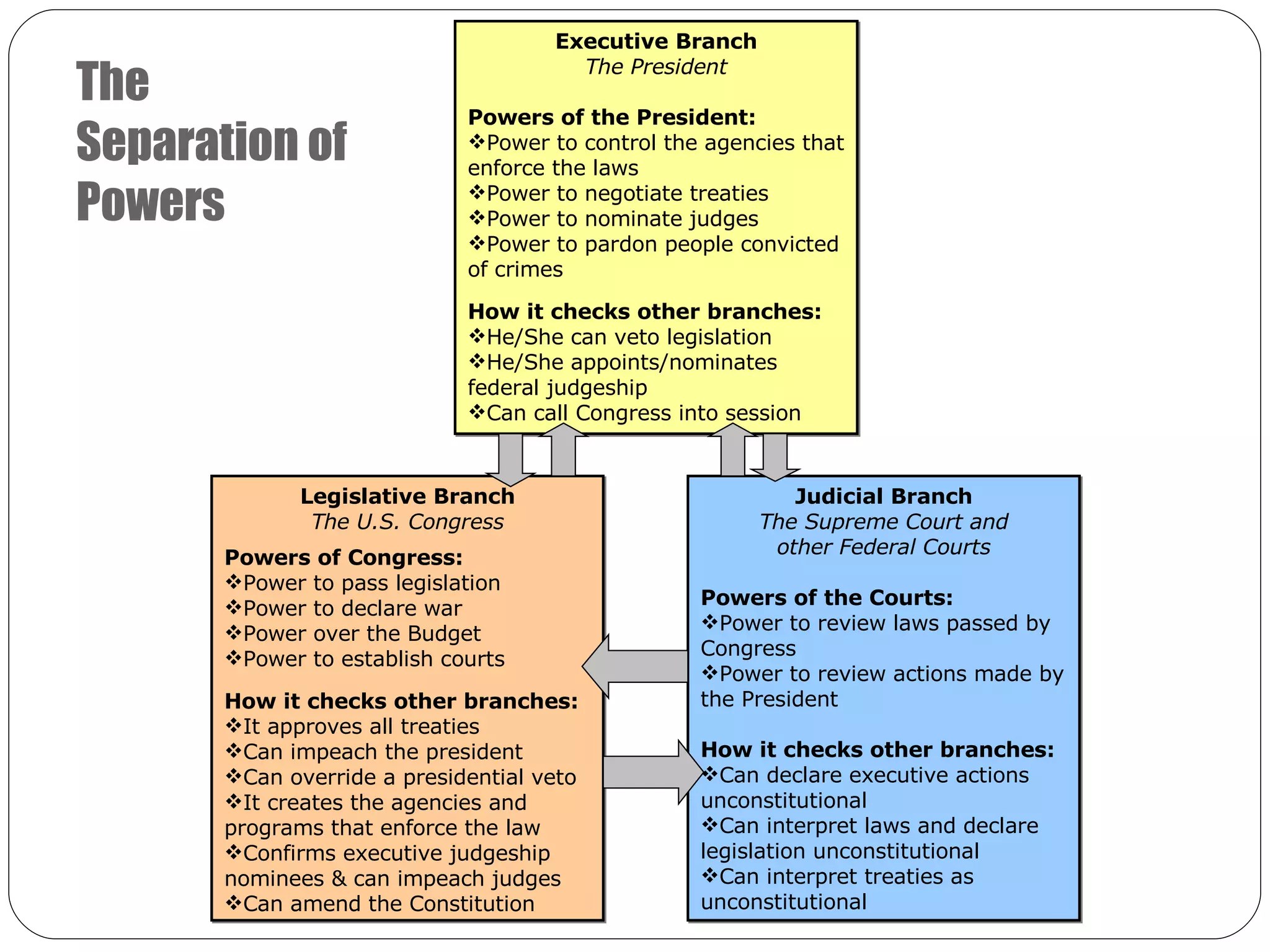
The Separation of Powers Executive Branch The President Powers of the President: Power to control the agencies that enforce the laws Power to negotiate treaties Power to nominate judges Power to pardon people convicted of crimes How it checks other branches: He/She can veto legislation He/She appoints/nominates federal judgeship Can call Congress into session Legislative Branch The U.S. Congress Powers of Congress: Power to pass legislation Power to declare war Power over the Budget Power to establish courts How it checks other branches: It approves all treaties Can impeach the president Can override a presidential veto It creates the agencies and programs that enforce the law Confirms executive judgeship nominees & can impeach judges Can amend the Constitution Judicial Branch The Supreme Court and other Federal Courts Powers of the Courts: Power to review laws passed by Congress Power to review actions made by the President How it checks other branches: Can declare executive actions unconstitutional Can interpret laws and declare legislation unconstitutional Can interpret treaties as unconstitutional
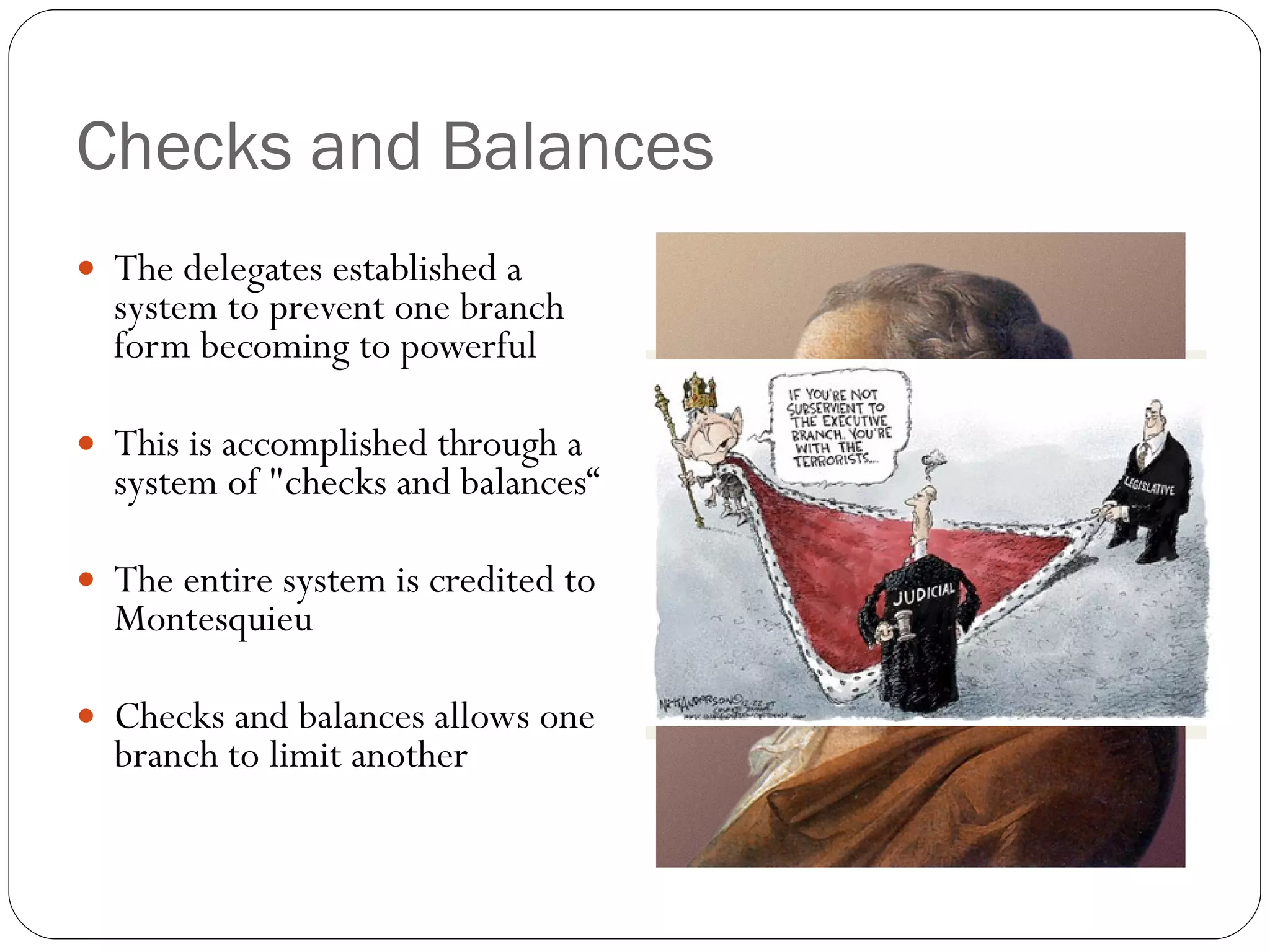
Checks and Balances The delegates established a system to prevent one branch form becoming to powerful This is accomplished through a system of "checks and balances“ The entire system is credited to Montesquieu Checks and balances allows one branch to limit another
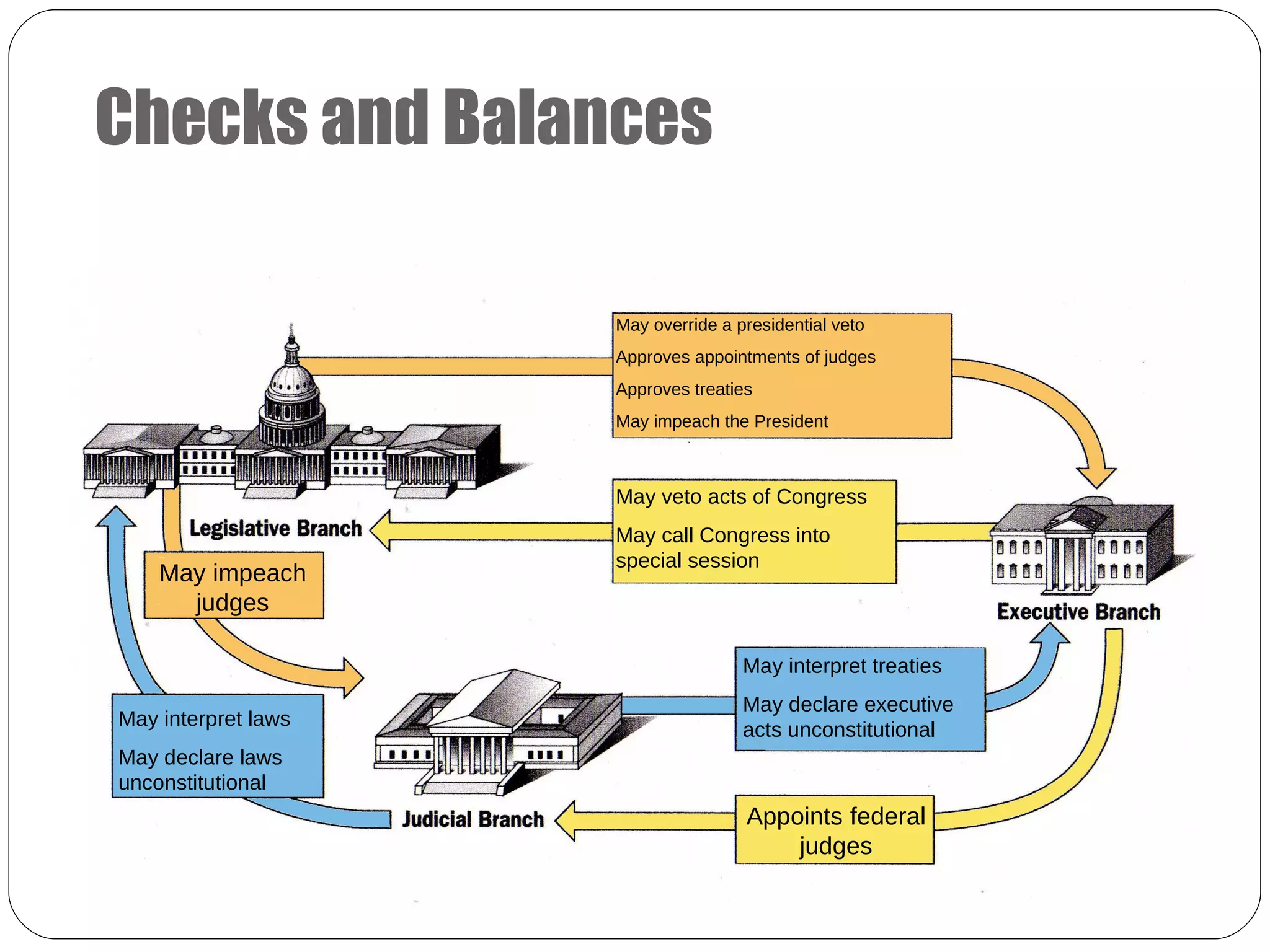
Checks and Balances May impeach judges May interpret laws May declare laws unconstitutional May interpret treaties May declare executive acts unconstitutional Appoints federal judges May veto acts of Congress May call Congress into special session May override a presidential veto Approves appointments of judges Approves treaties May impeach the President

Separation Of Powers

  • 1.
    Essential Questions: Howdid the delegates at the Constitutional Convention divide powers in the new government? How is the system of separation of powers setup? How does the system of checks and balances prevent one branch from becoming to powerful? Separation of Powers & Checks and Balances
  • 2.
    Constitutional Convention of1787 After dealing with the question of representation and slavery the delegates dealt with other issues Division of power between the states and national government Division of national government into 3 branches New system was a form of federalism A system that divides the power between the national and state governments Delegated Powers (enumerated powers) Powers granted to the national government Reserved Powers Powers granted to the states
  • 3.
    Separation of PowersThe delegates limited the authority of the national government by creating three branches: The Legislative Branch, would make laws The Executive Branch, would enforce laws The Judicial Branch, would interpret the laws
  • 4.
    The Separation ofPowers Executive Branch The President Powers of the President: Power to control the agencies that enforce the laws Power to negotiate treaties Power to nominate judges Power to pardon people convicted of crimes Legislative Branch The U.S. Congress Powers of Congress: Power to pass legislation Power to declare war Power over the Budget Power to establish courts Judicial Branch The Supreme Court and other Federal Courts Powers of the Courts: Power to review laws passed by Congress Power to review actions made by the President
  • 5.
    The Separation ofPowers Executive Branch The President Powers of the President: Power to control the agencies that enforce the laws Power to negotiate treaties Power to nominate judges Power to pardon people convicted of crimes How it checks other branches: He/She can veto legislation He/She appoints/nominates federal judgeship Can call Congress into session Legislative Branch The U.S. Congress Powers of Congress: Power to pass legislation Power to declare war Power over the Budget Power to establish courts How it checks other branches: It approves all treaties Can impeach the president Can override a presidential veto It creates the agencies and programs that enforce the law Confirms executive judgeship nominees & can impeach judges Can amend the Constitution Judicial Branch The Supreme Court and other Federal Courts Powers of the Courts: Power to review laws passed by Congress Power to review actions made by the President How it checks other branches: Can declare executive actions unconstitutional Can interpret laws and declare legislation unconstitutional Can interpret treaties as unconstitutional
  • 6.
    Checks and BalancesThe delegates established a system to prevent one branch form becoming to powerful This is accomplished through a system of "checks and balances“ The entire system is credited to Montesquieu Checks and balances allows one branch to limit another
  • 7.
    Checks and BalancesMay impeach judges May interpret laws May declare laws unconstitutional May interpret treaties May declare executive acts unconstitutional Appoints federal judges May veto acts of Congress May call Congress into special session May override a presidential veto Approves appointments of judges Approves treaties May impeach the President