Introduction to Strategic Management - Module 1 – MG University - Manu Melwin Joy
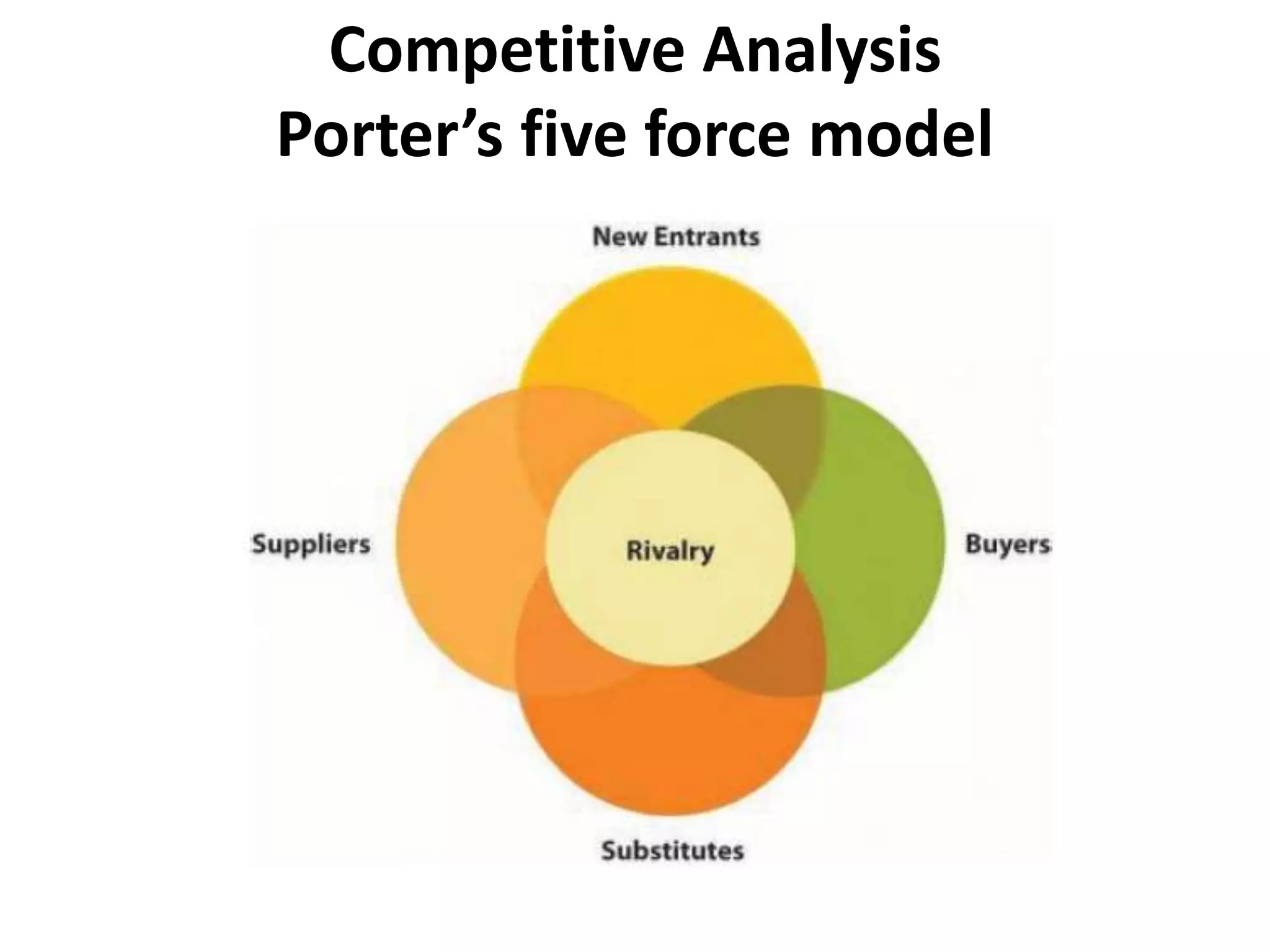
The document outlines an introduction to strategic management, covering essential concepts such as strategy definitions, characteristics, and the strategic management process. It details the importance of environmental analysis using the PESTEL framework, competitive analysis through Porter's Five Forces model, and emphasizes the significance of clear vision and mission statements for organizations. The content is designed for academic and instructional purposes within the context of management studies.
Prepared By
Kindly restrictthe use of slides for personal purpose.
Please seek permission to reproduce the same in public forms and presentations.
Manu Melwin Joy
Assistant Professor
Ilahia School of Management Studies
Kerala, India.
Phone – 9744551114
Mail – manu_melwinjoy@yahoo.com
3.
Contents
• Introduction toStrategic Management.
• Concept of Strategy.
• Process of Strategy.
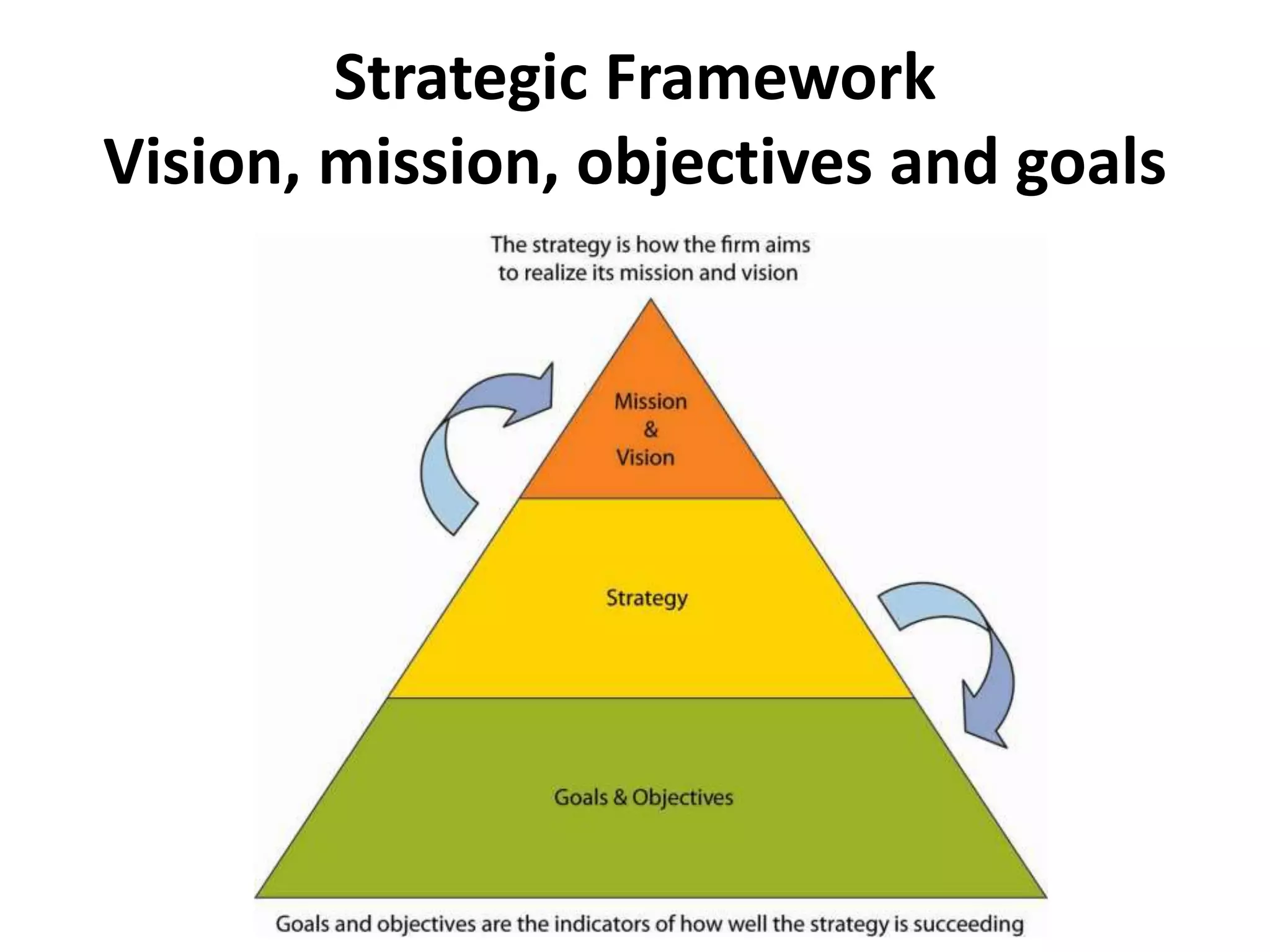
• Strategic Framework.
• Vision, Mission, Objectives and Goals.
• Strategic Analysis.
• Environmental Analysis.
• Competitive forces.
• Internal analysis.
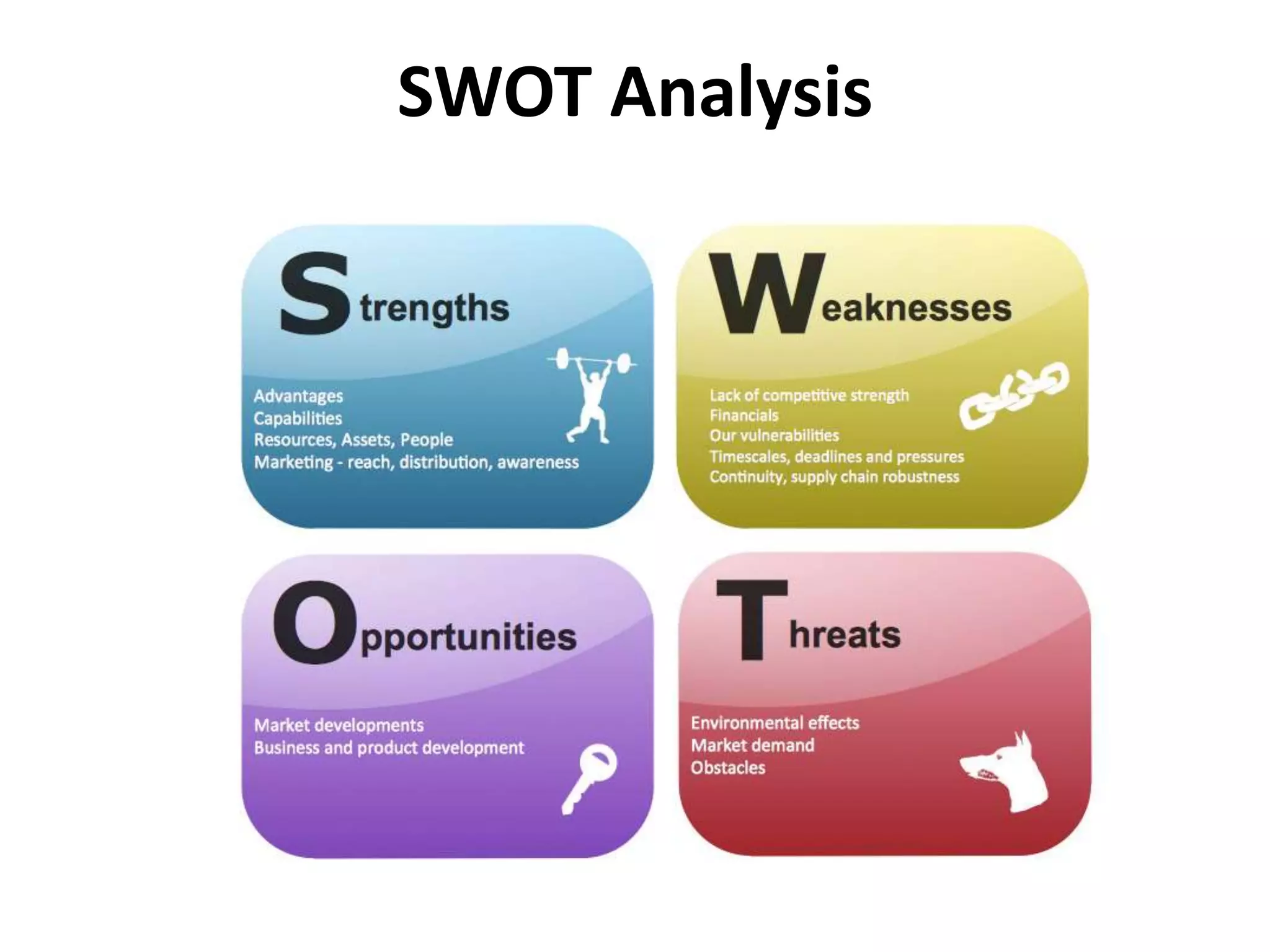
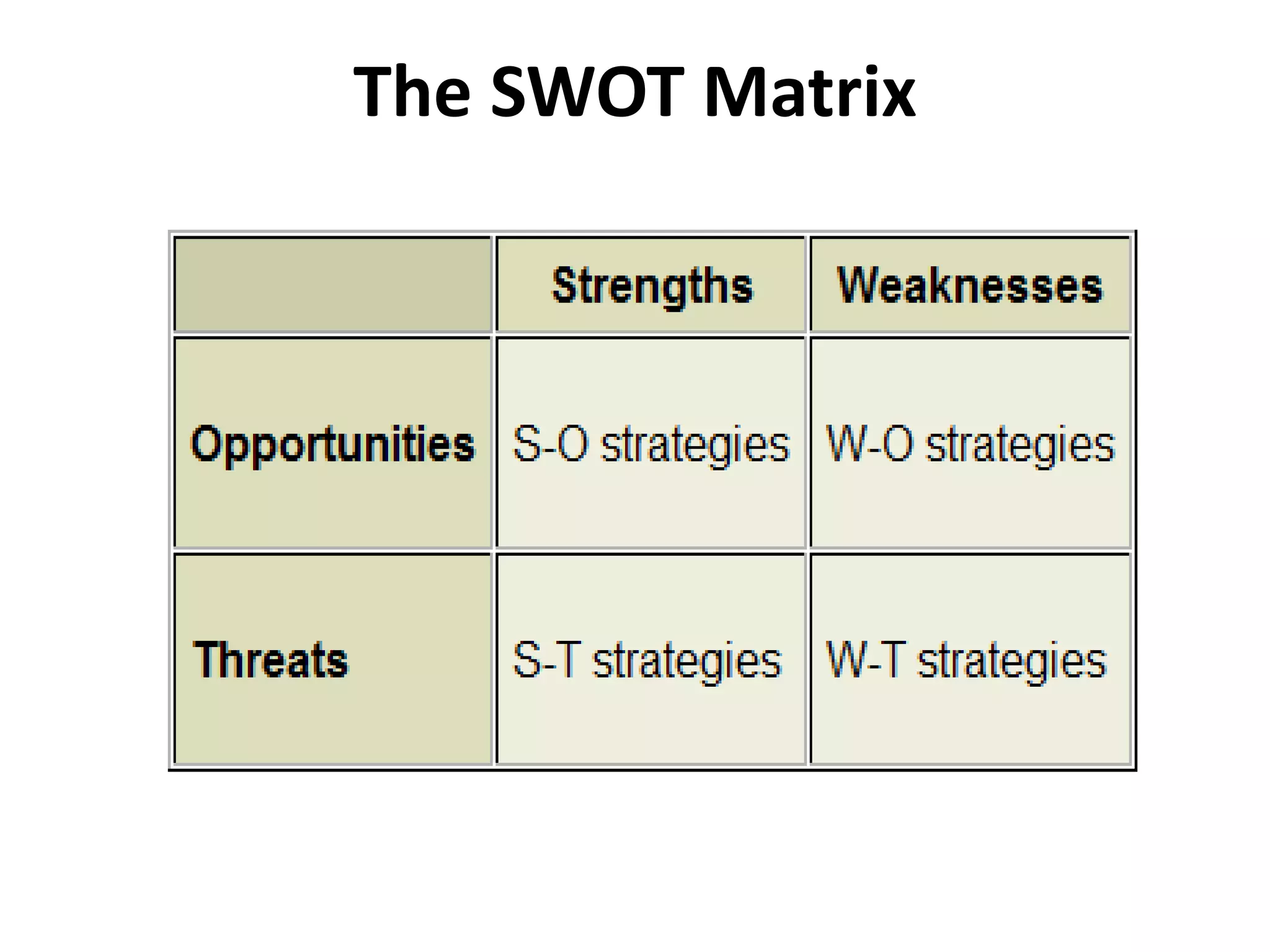
• SWOT Analysis.
4.
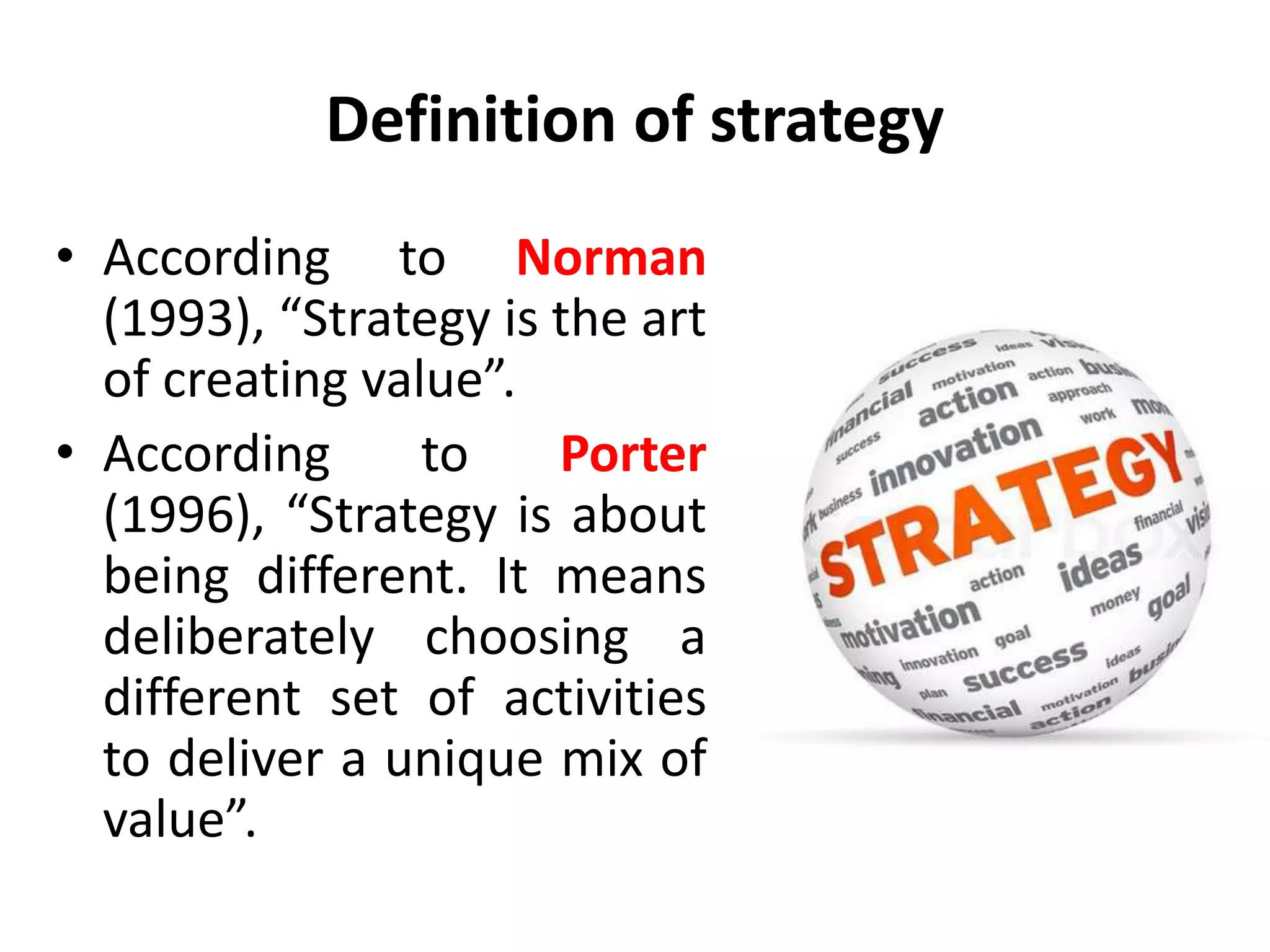
Definition of strategy
•According to Norman
(1993), “Strategy is the art
of creating value”.
• According to Porter
(1996), “Strategy is about
being different. It means
deliberately choosing a
different set of activities
to deliver a unique mix of
value”.
5.
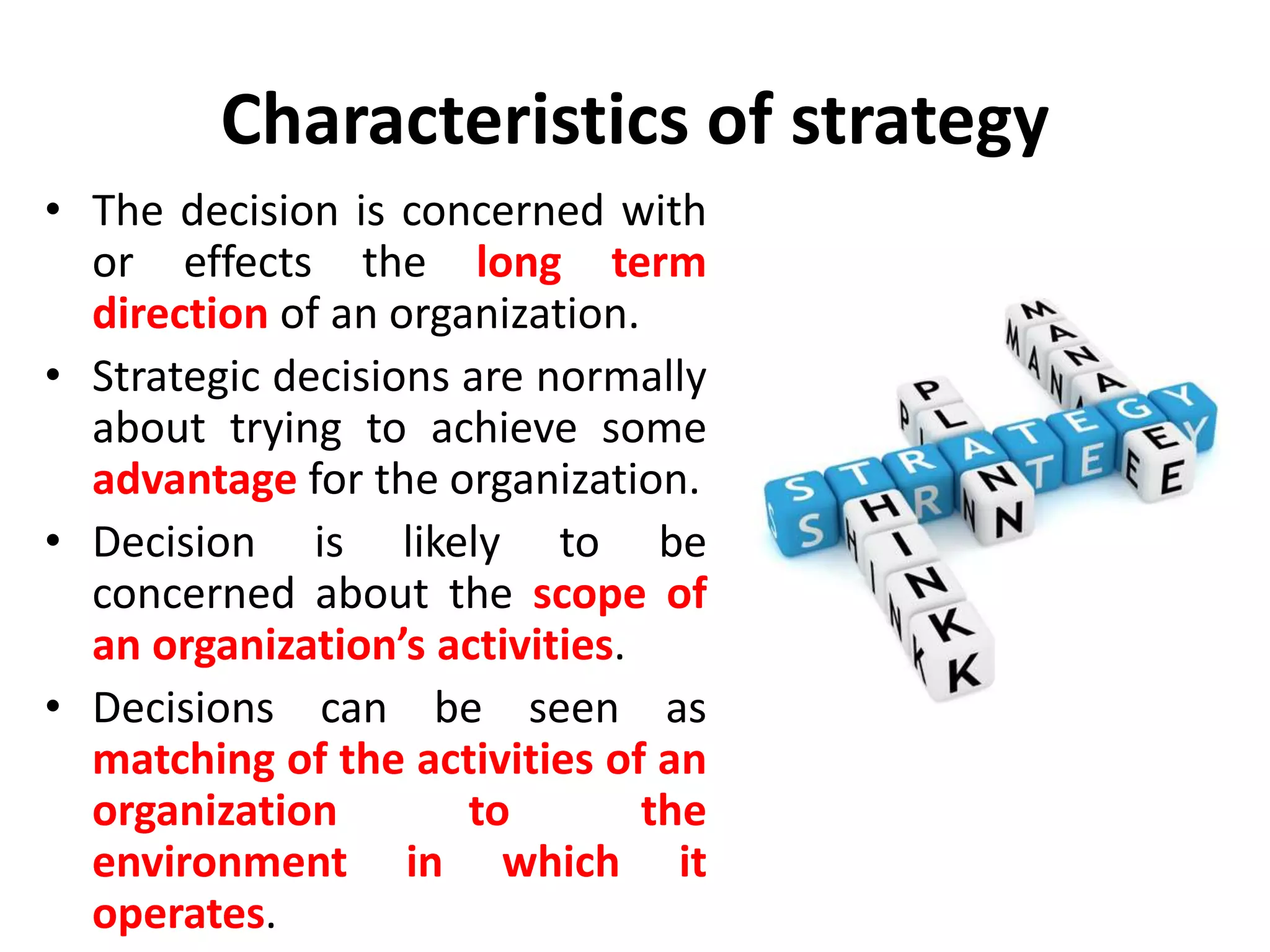
Characteristics of strategy
•The decision is concerned with
or effects the long term
direction of an organization.
• Strategic decisions are normally
about trying to achieve some
advantage for the organization.
• Decision is likely to be
concerned about the scope of
an organization’s activities.
• Decisions can be seen as
matching of the activities of an
organization to the
environment in which it
operates.
6.
Characteristics of strategy
•Decisions have major
financial or other
resource implications.
• Decision will have a major
impact outside the
organization.
• Strategic decisions are
likely to affect operations
decisions.
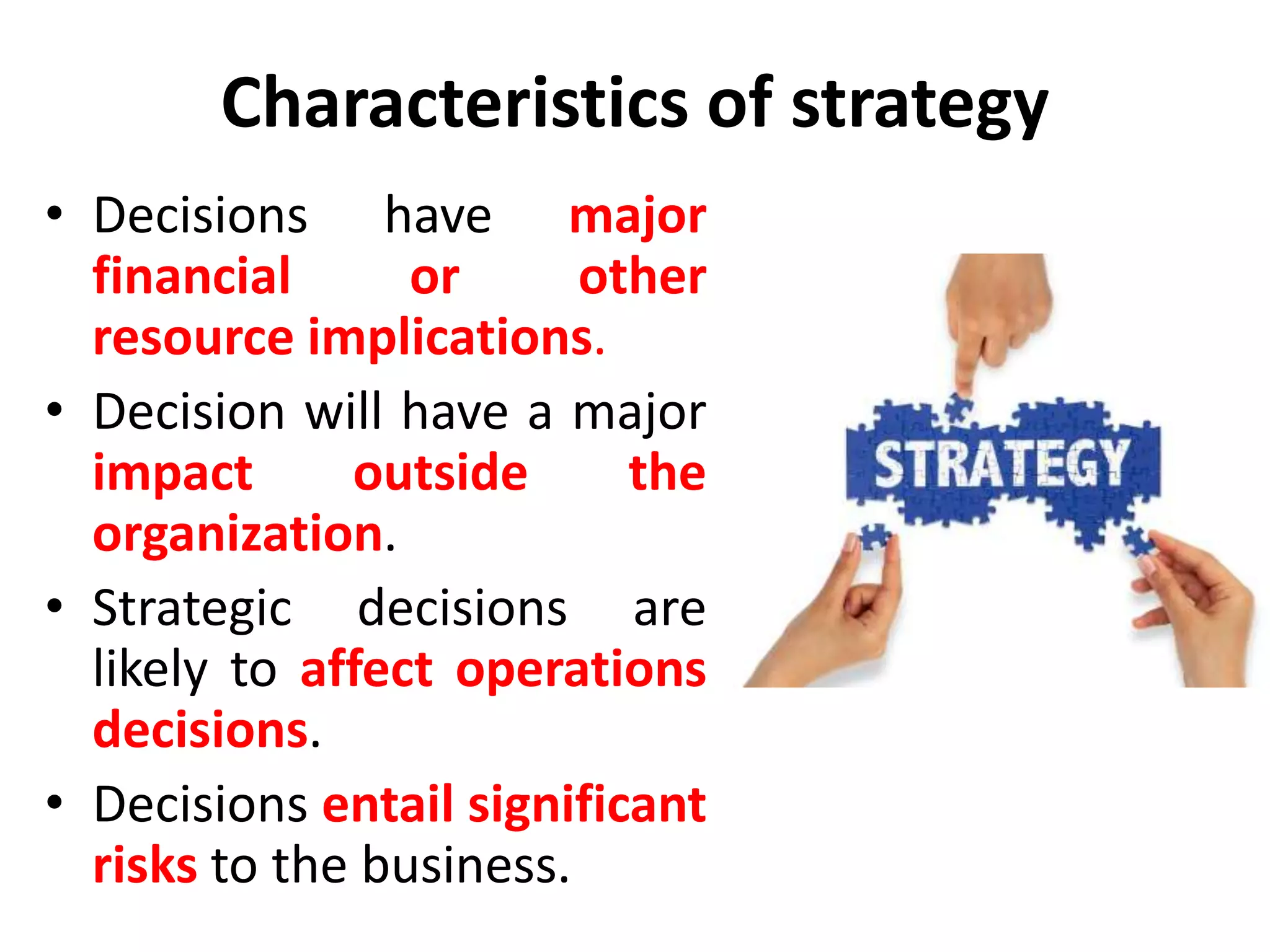
• Decisions entail significant
risks to the business.
7.
5 Ps ofstrategy
• Professor Henry Mintzberg
of McGill University in
Montreal, Canada,
articulated what he labeled
as “the 5 Ps of strategy.”
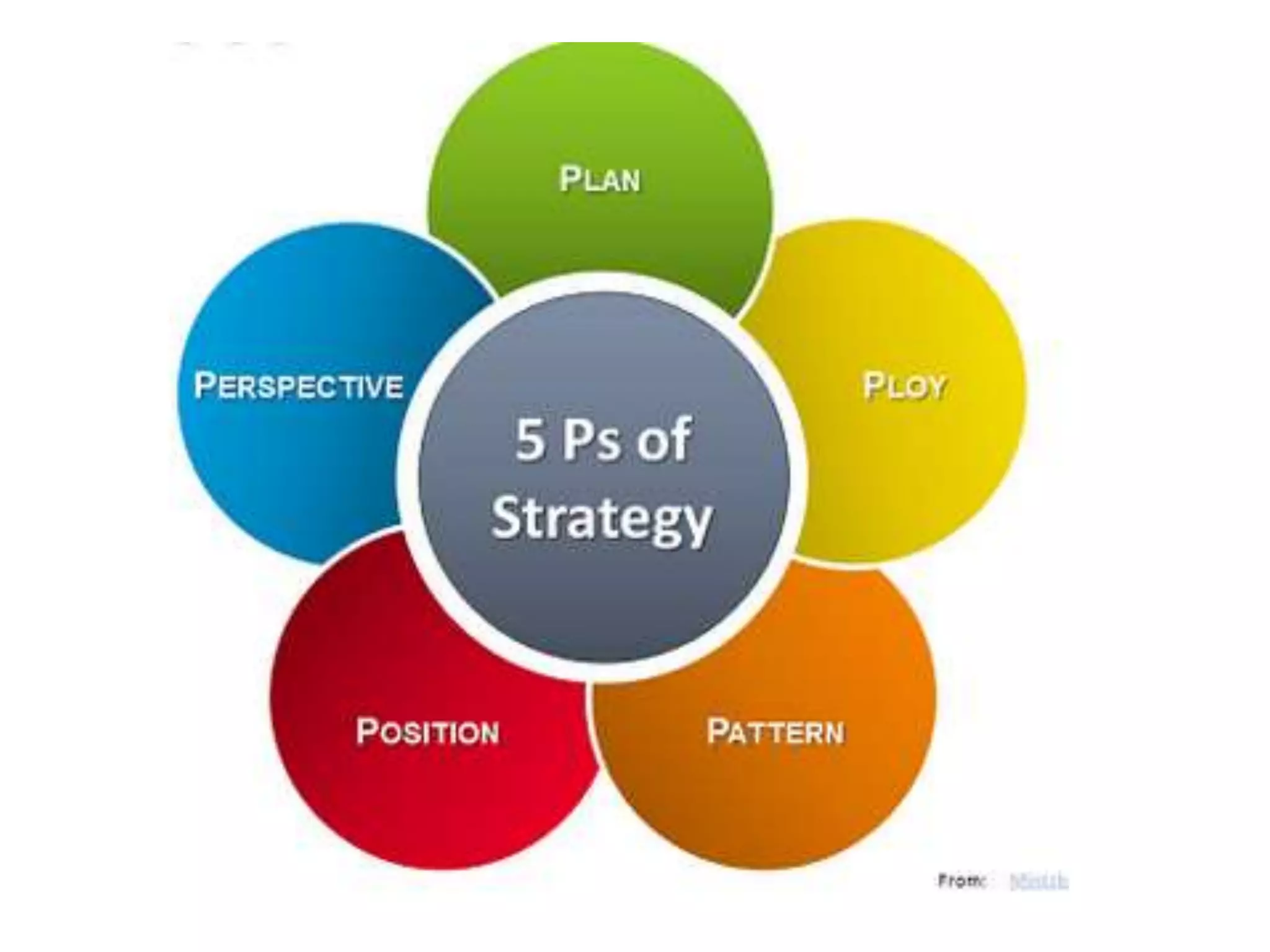
• According to Mintzberg,
understanding how strategy
can be viewed as a plan, as
a ploy, as a position, as a
pattern, and as a
perspective is important.
9.
Process of strategy
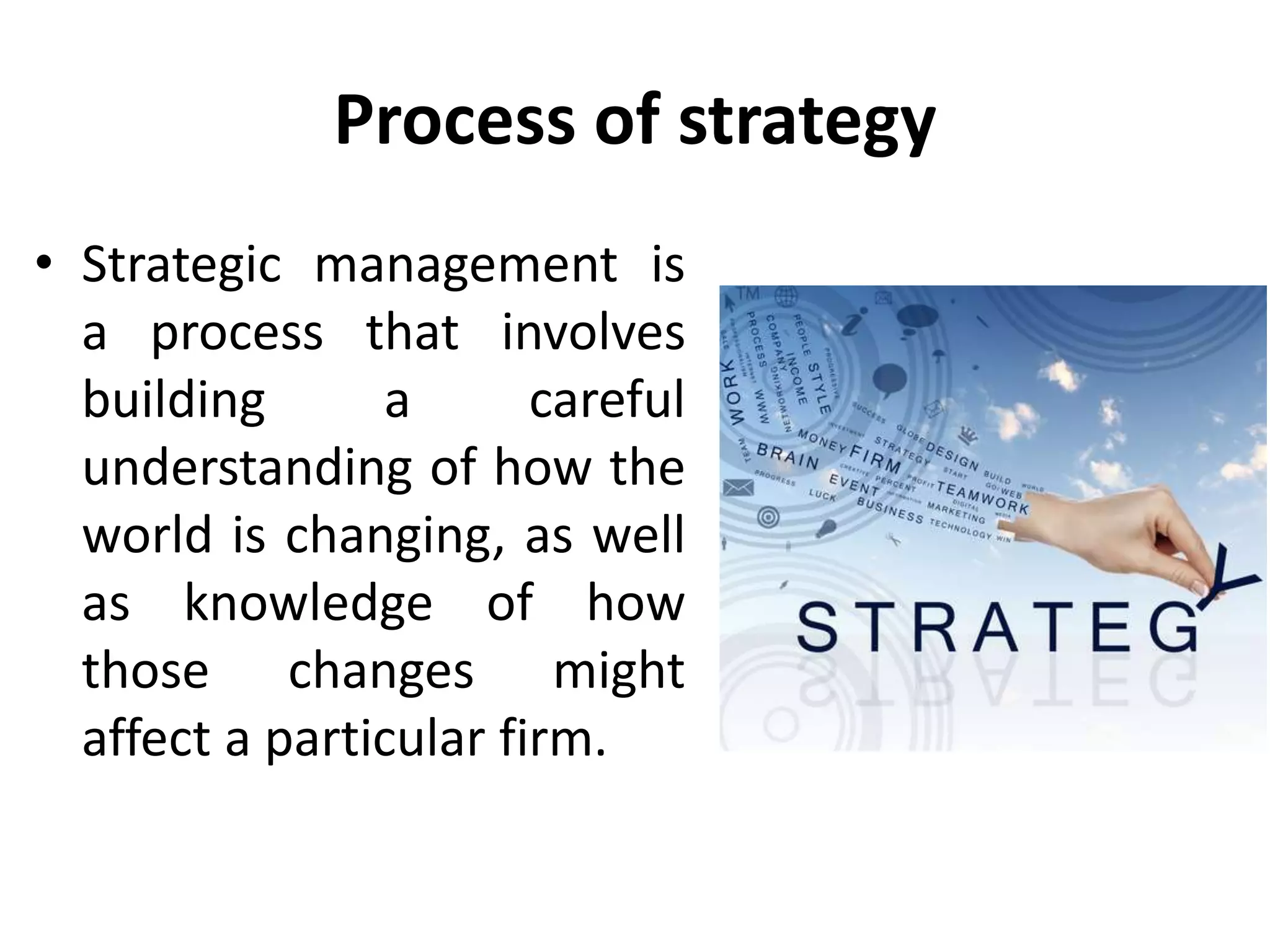
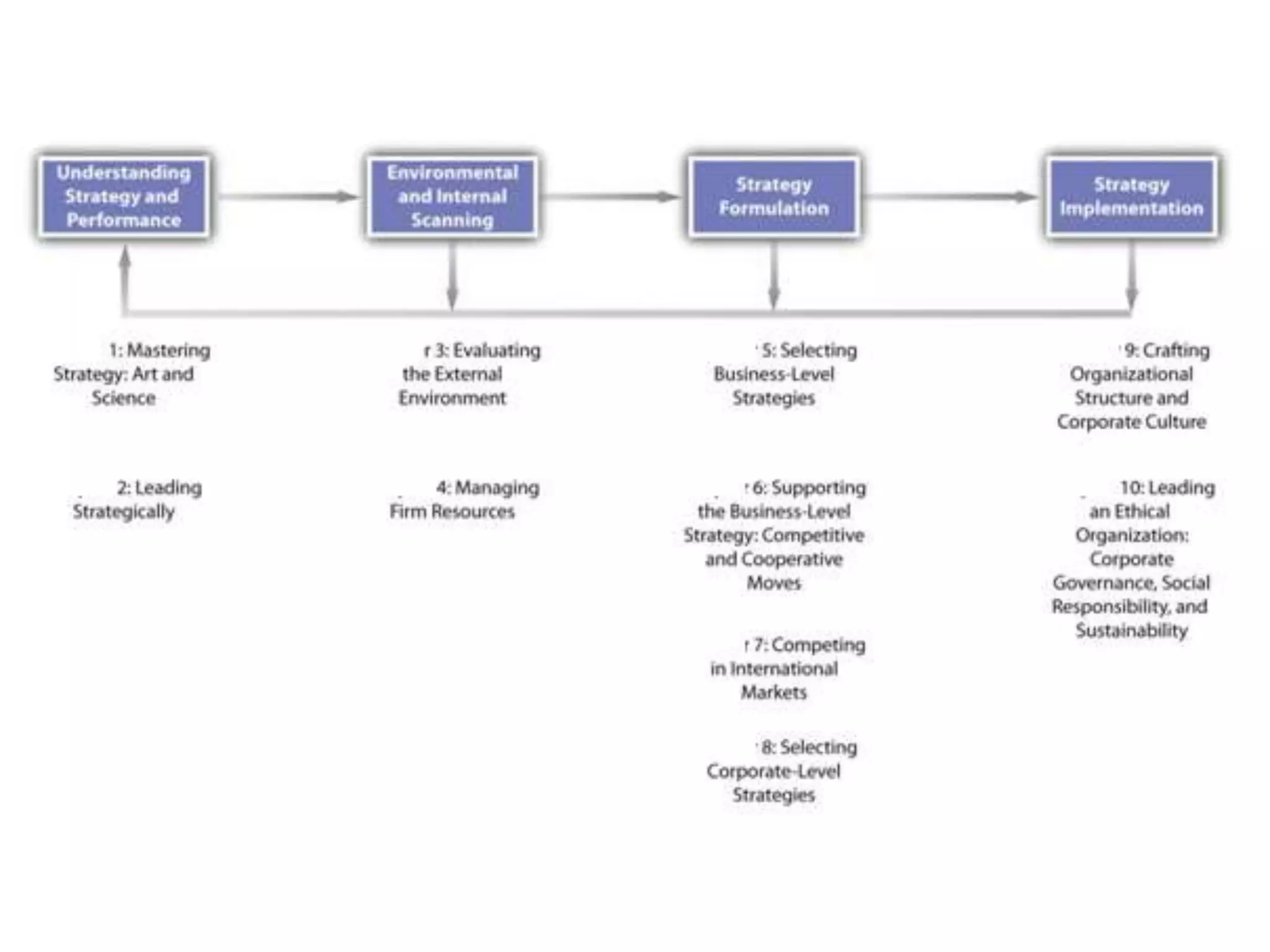
•Strategic management is
a process that involves
building a careful
understanding of how the
world is changing, as well
as knowledge of how
those changes might
affect a particular firm.
Examples of visionstatement
• Hindustan Lever Ltd – Our
vision is to meet the
everyday needs of people
everywhere.
15.
Mission - Definition
•Mission statement is a
statement of purpose and
function.
• It answers the following
questions.
– Why the organization does
exist?
– What is its value addition?
– What is its function?
– How does it want to be
positioned in the market and
minds of customer?
– What business is it in?
16.
Characteristics of mission
•It draws on the belief
systems.
• It must be future oriented
and portray your
organization as it will be,
as if it already exists
• It must focus on one
common purpose.
• It must be specific to the
organization, not generic.
17.
Example of MissionStatement
• Ranbaxy Laboratories
Ltd – Our mission is to
become a research
based international
pharmaceutical
company.
Nike’s strategic goals
•Protect Nike’s position as
the number one athletic
brand in America.
• Build a strong
momentum in the
growing fitness market.
• Intensify the company’s
efforts to develop
products that women
need and want.
21.
Environmental analysis
• WhyDoes the Environment
Matter?
– First, the environment
provides resources that an
organization needs in order to
create goods and services.
– Second, the environment is a
source of opportunities and
threats for an organization.
– Third, the environment shapes
the various strategic decisions
that executives make as they
attempt to lead their
organizations to success.
22.
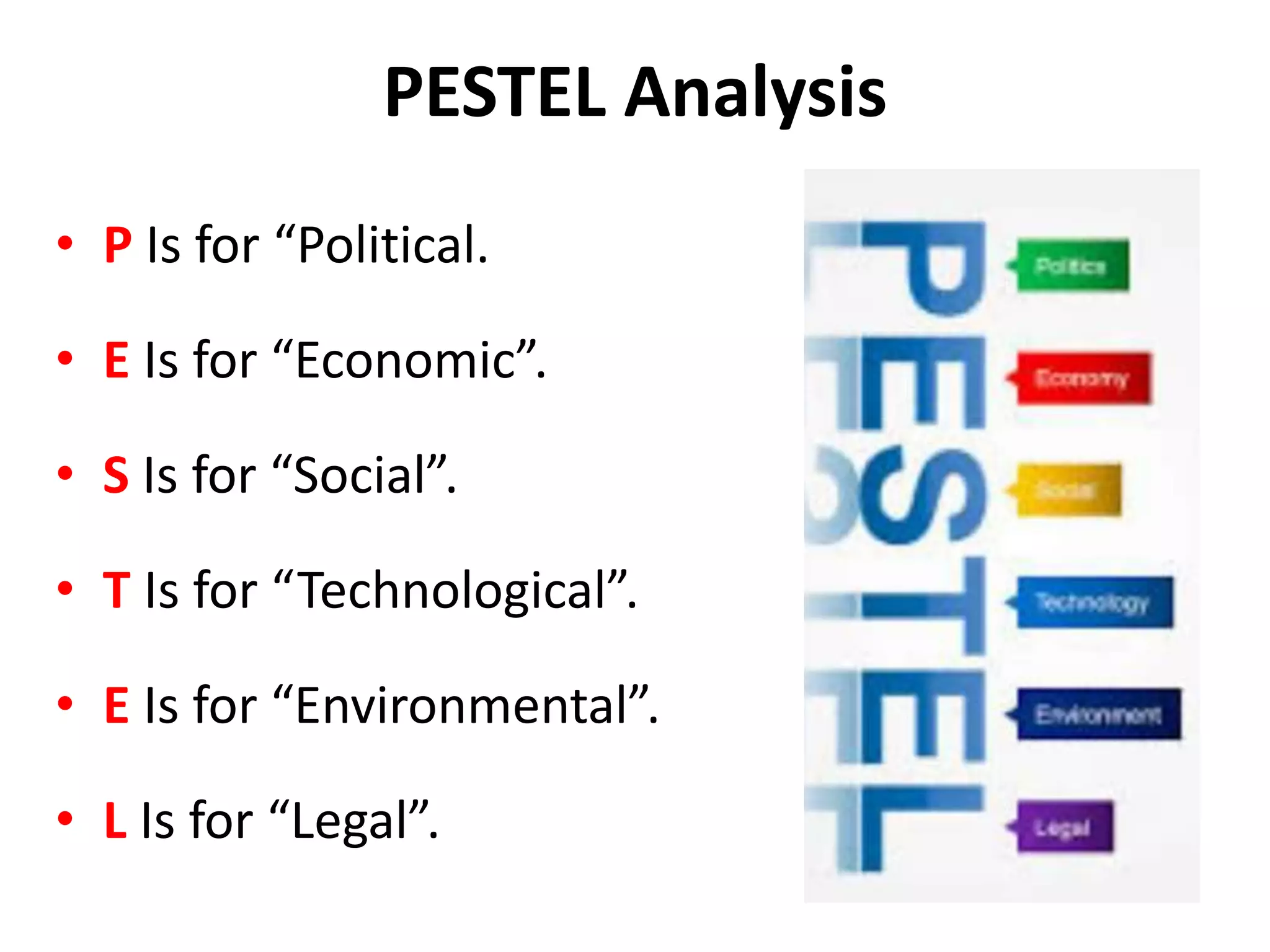
PESTEL Analysis
• PIs for “Political.
• E Is for “Economic”.
• S Is for “Social”.
• T Is for “Technological”.
• E Is for “Environmental”.
• L Is for “Legal”.




![str_mgnt_1comp_mode[2].ppt and its components](https://cdn.slidesharecdn.com/ss_thumbnails/strmgnt1compmode2-240630151143-2120a020-thumbnail.jpg?width=640&height=640&fit=bounds)


