AS6230:
Introduction to
Research
1.
Whakawhangatanga
We are in this together: The ID Crisis
2.
Why are we here?
More Words = More Confidence
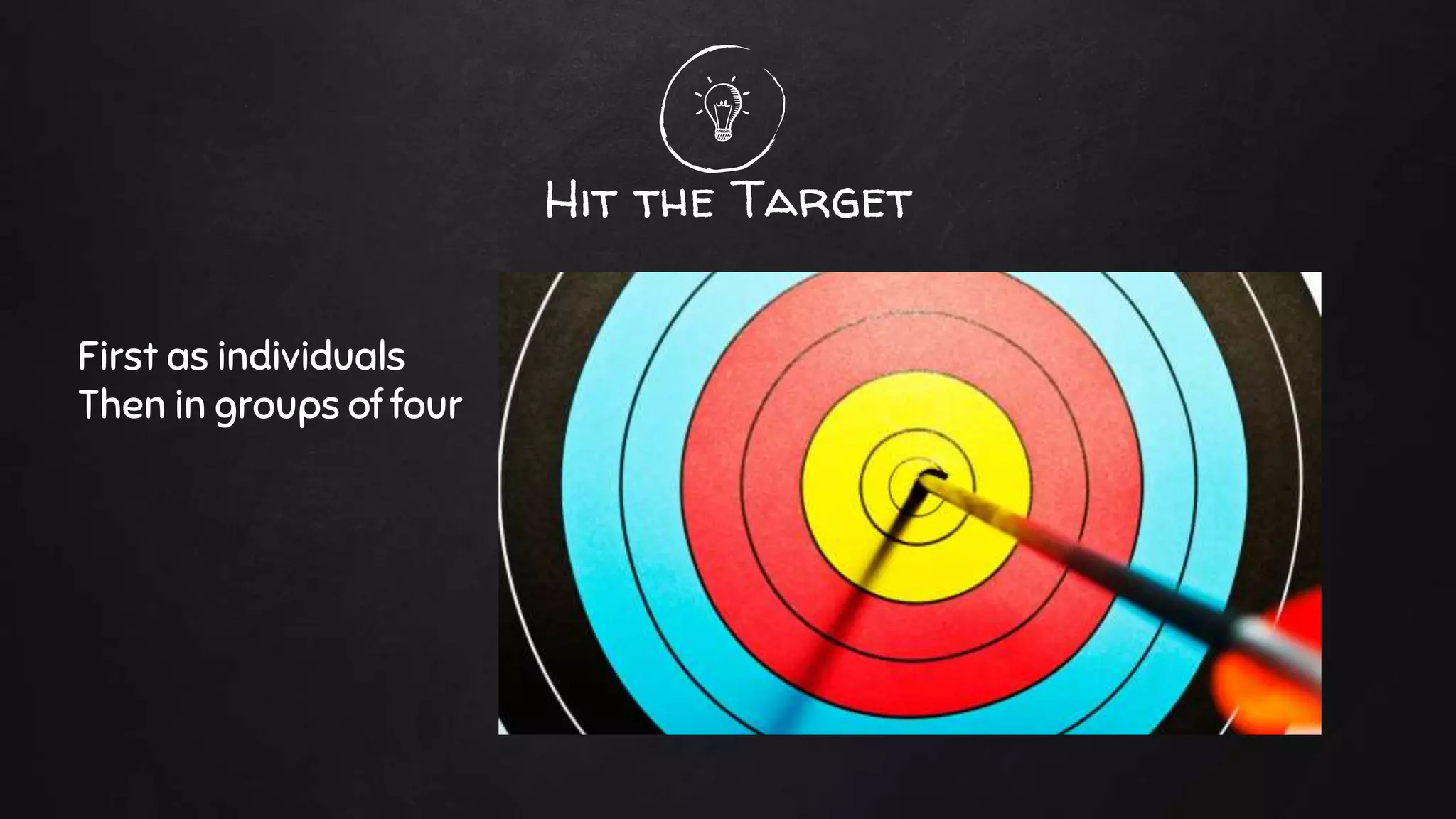
Hit the Target
First as individuals
Then in groups of four
3.
It All Comes Down the to
Question
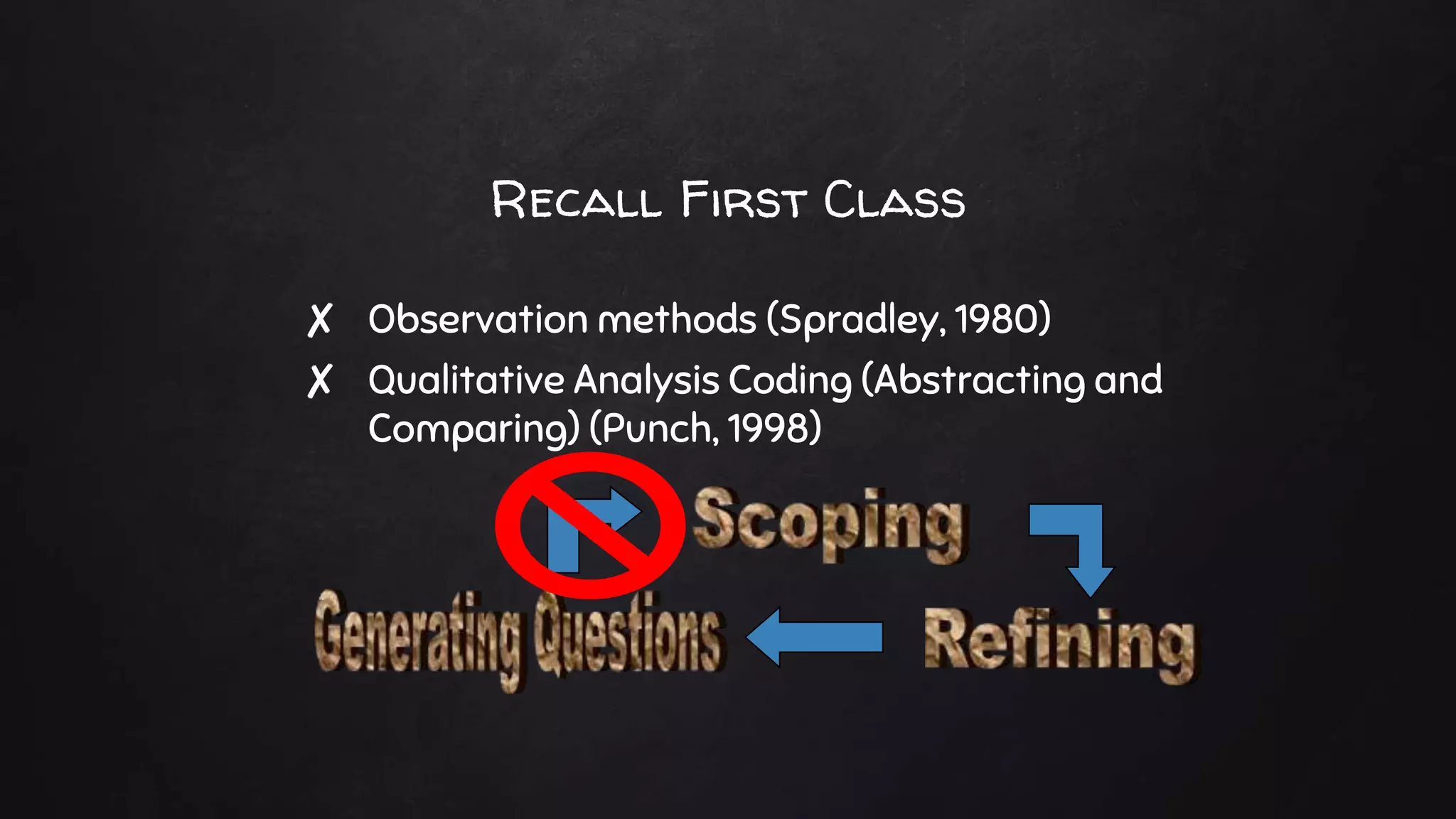
Recall First Class
✘ Observation methods (Spradley, 1980)
✘ Qualitative Analysis Coding (Abstracting and
Comparing) (Punch, 1998)
Your Question Determines Your Methodology
Which, in turn, determines your Methods of
data-gathering
Where to next….
✘Locating your questions within a paradigm of research
✘Outlining the constraints of your research
Time, money, contextual etc
✘Selecting an appropriate methodology
✘Make sure there is fusion between the questions, paradigm (theory),
constraints, and methodology
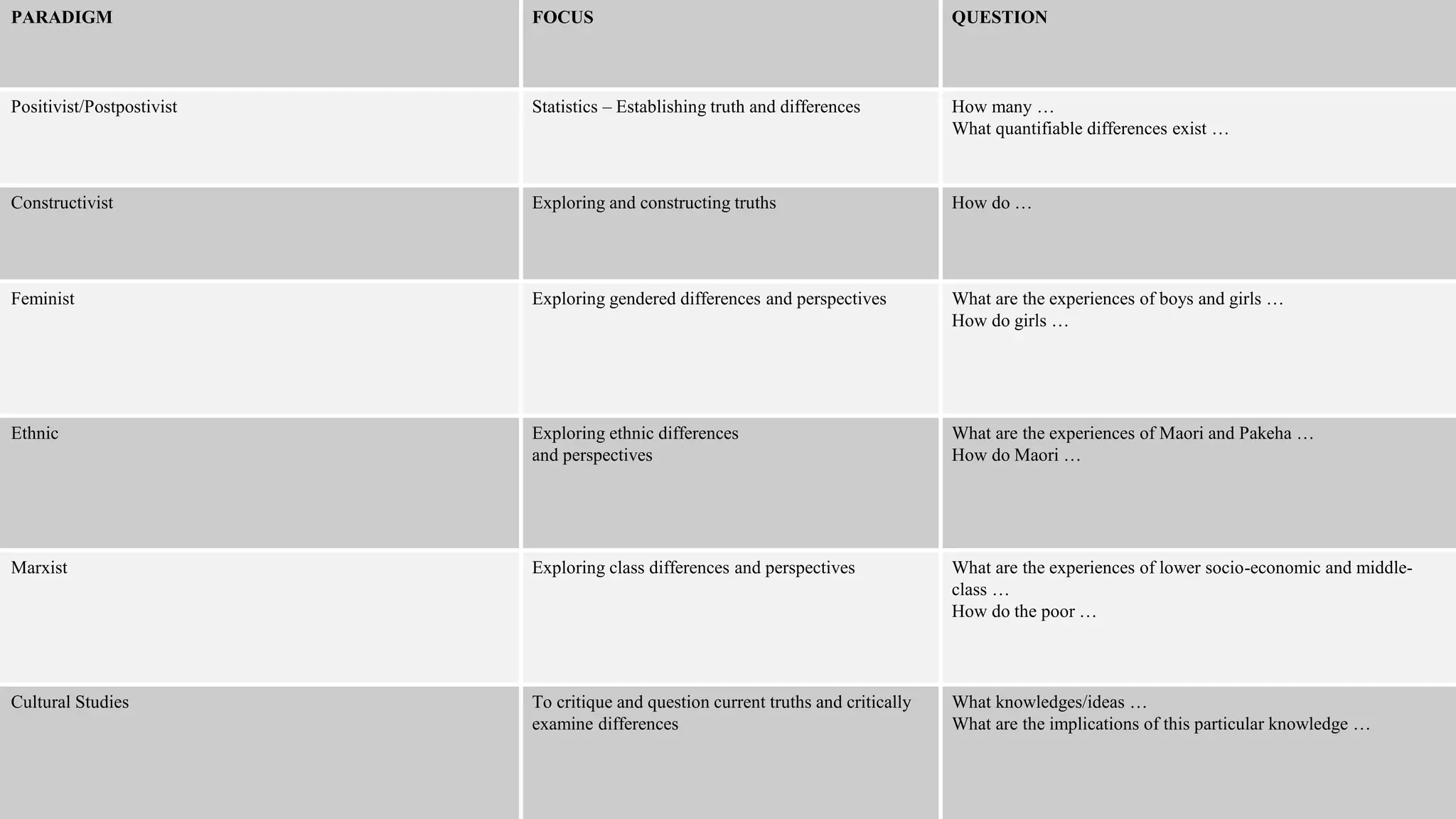
PARADIGM FOCUS QUESTION
Positivist/Postpostivist Statistics – Establishing truth and differences How many …
What quantifiable differences exist …
Constructivist Exploring and constructing truths How do …
Feminist Exploring gendered differences and perspectives What are the experiences of boys and girls …
How do girls …
Ethnic Exploring ethnic differences
and perspectives
What are the experiences of Maori and Pakeha …
How do Maori …
Marxist Exploring class differences and perspectives What are the experiences of lower socio-economic and middle-
class …
How do the poor …
Cultural Studies To critique and question current truths and critically
examine differences
What knowledges/ideas …
What are the implications of this particular knowledge …
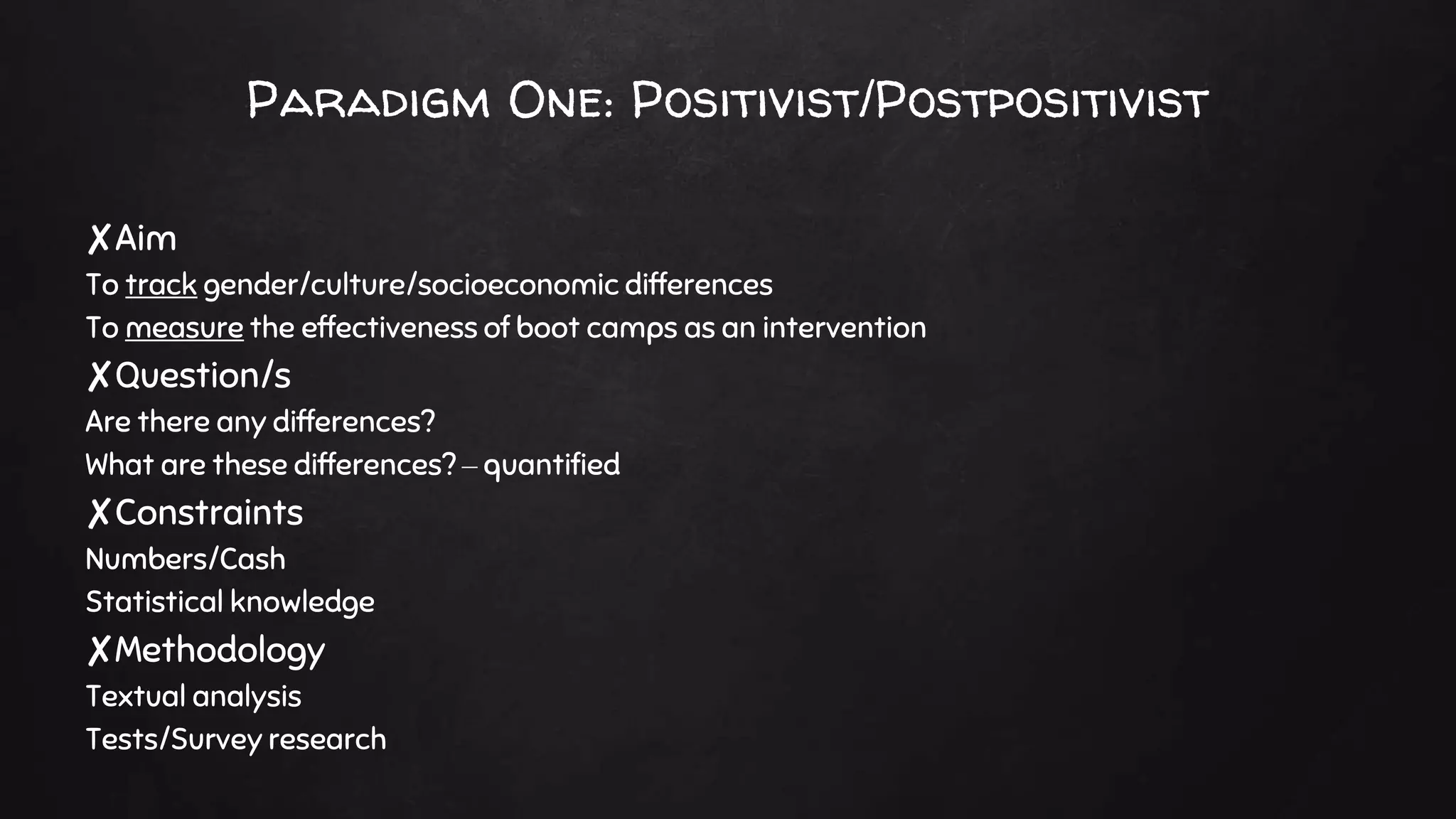
Paradigm One: Positivist/Postpositivist
✘Aim
To track gender/culture/socioeconomic differences
To measure the effectiveness of boot camps as an intervention
✘Question/s
Are there any differences?
What are these differences? – quantified
✘Constraints
Numbers/Cash
Statistical knowledge
✘Methodology
Textual analysis
Tests/Survey research
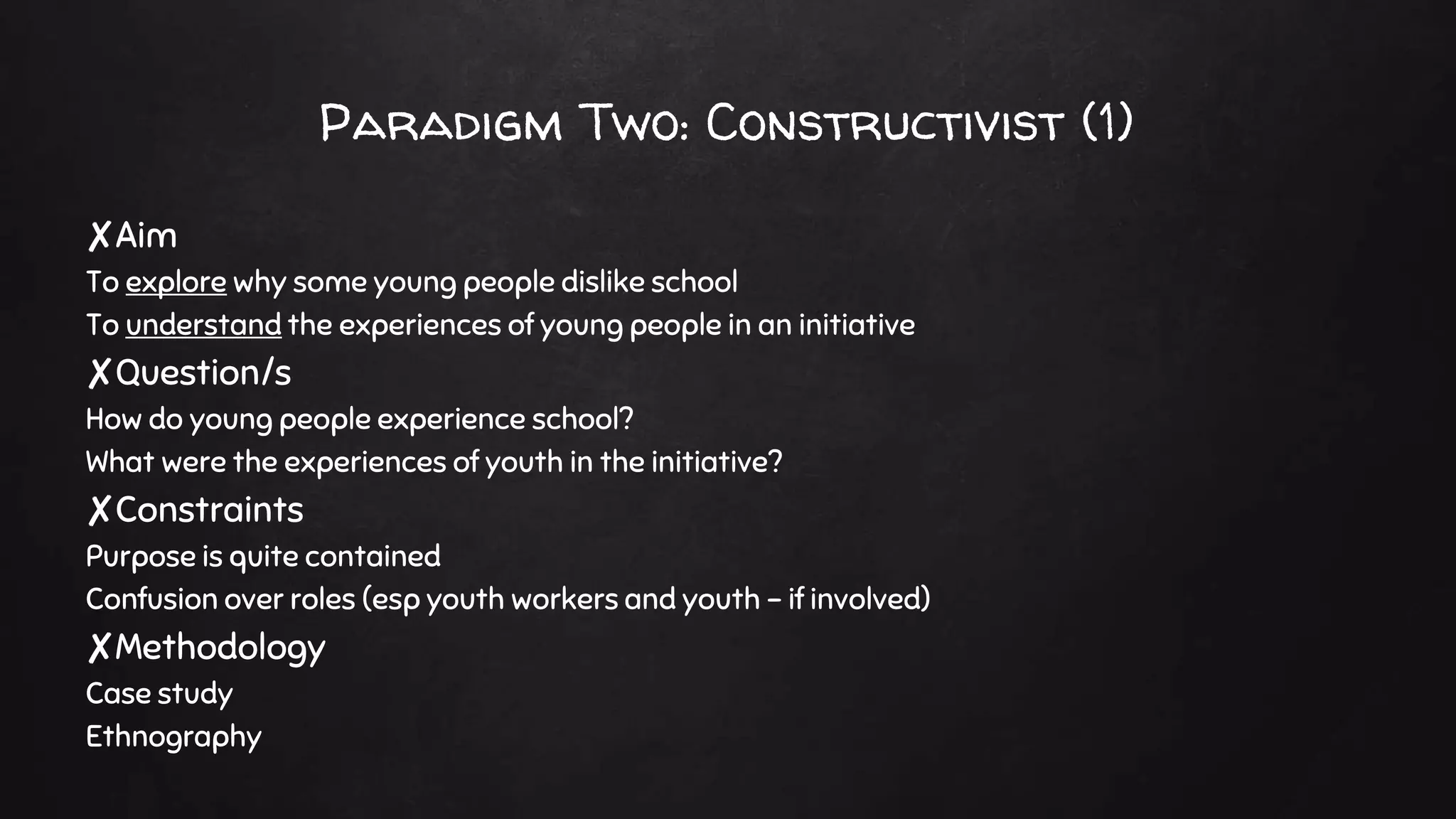
Paradigm Two: Constructivist (1)
✘Aim
To explore why some young people dislike school
To understand the experiences of young people in an initiative
✘Question/s
How do young people experience school?
What were the experiences of youth in the initiative?
✘Constraints
Purpose is quite contained
Confusion over roles (esp youth workers and youth – if involved)
✘Methodology
Case study
Ethnography
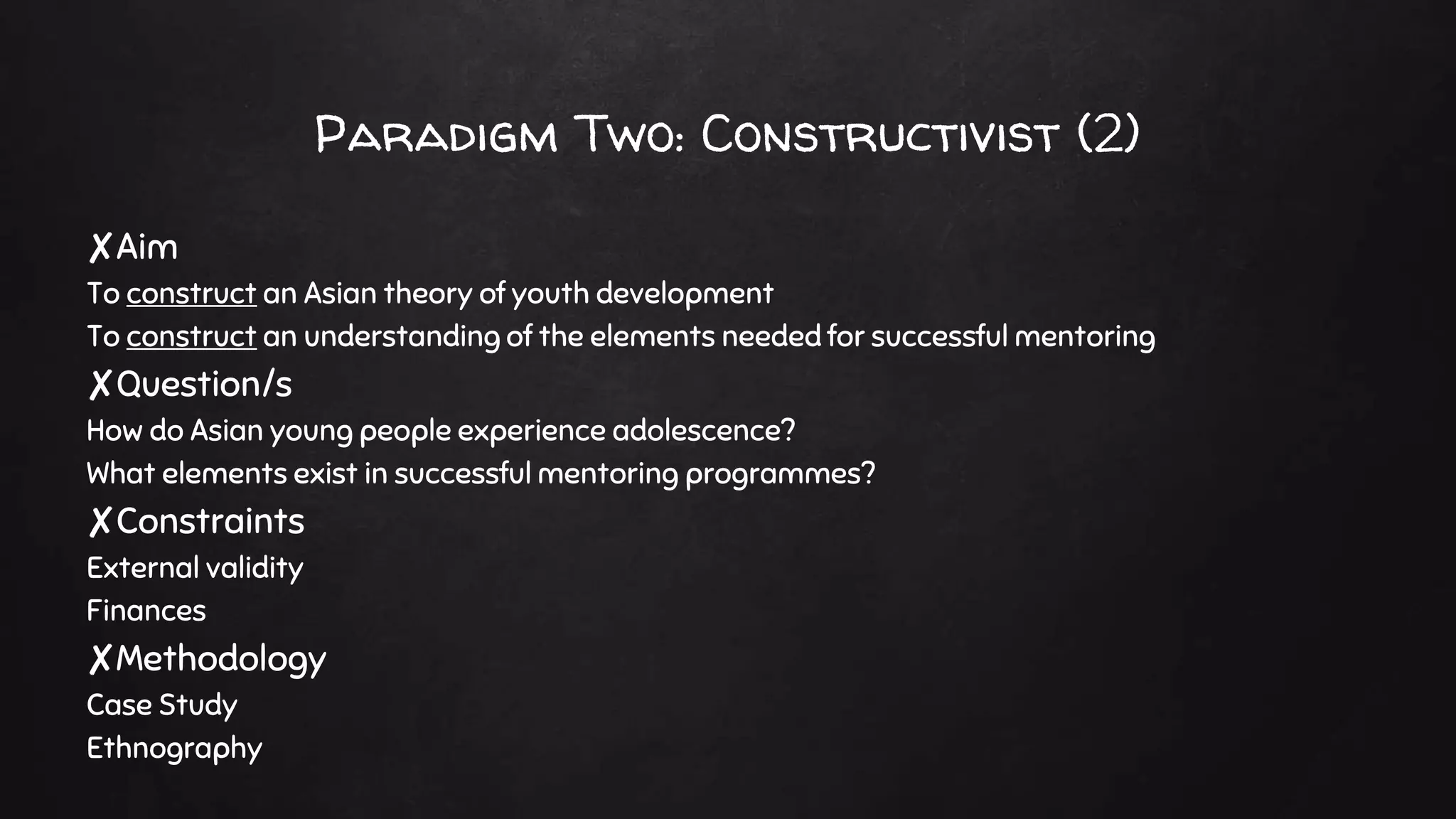
Paradigm Two: Constructivist (2)
✘Aim
To construct an Asian theory of youth development
To construct an understanding of the elements needed for successful mentoring
✘Question/s
How do Asian young people experience adolescence?
What elements exist in successful mentoring programmes?
✘Constraints
External validity
Finances
✘Methodology
Case Study
Ethnography
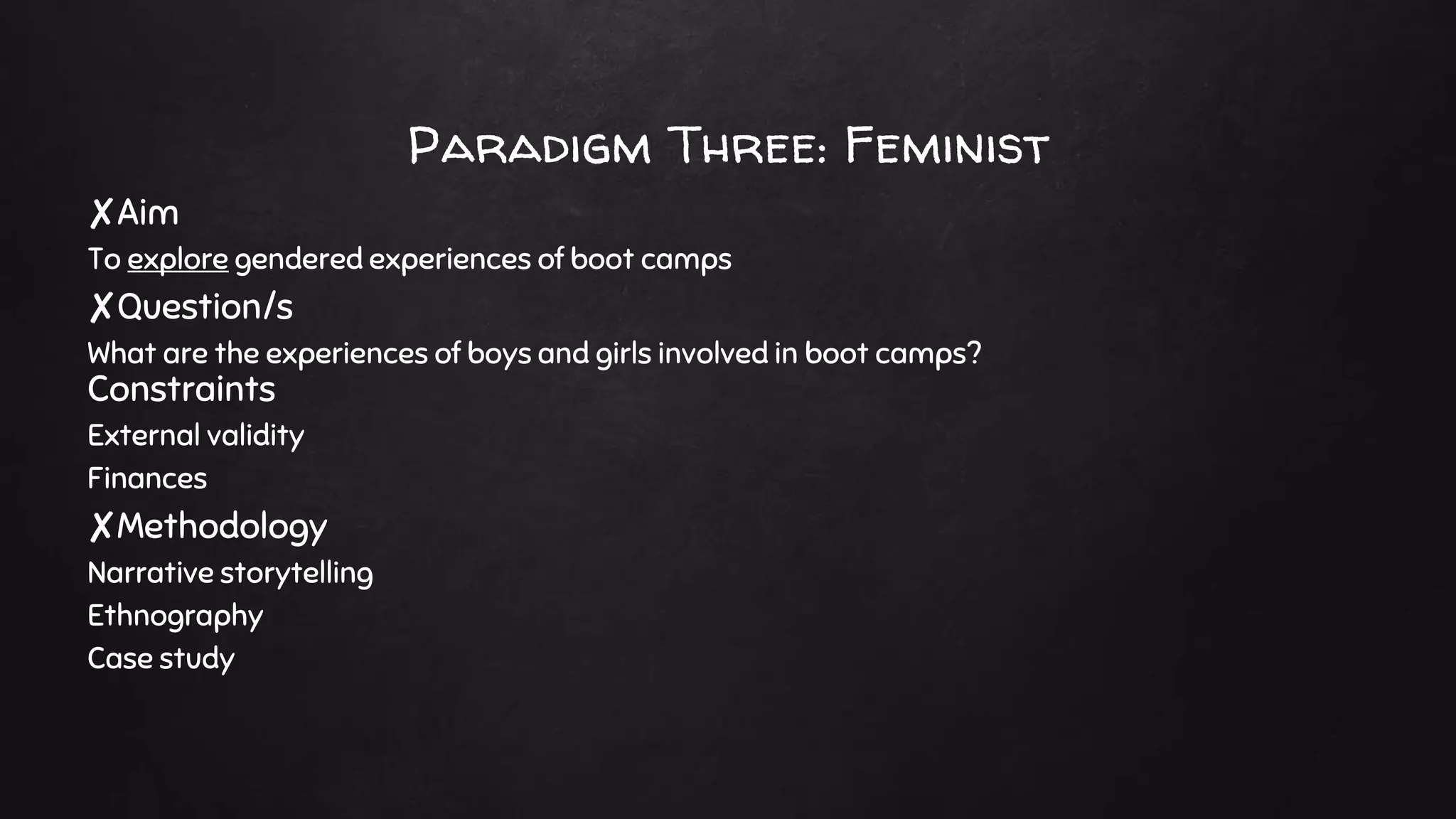
Paradigm Three: Feminist
✘Aim
To explore gendered experiences of boot camps
✘Question/s
What are the experiences of boys and girls involved in boot camps?
Constraints
External validity
Finances
✘Methodology
Narrative storytelling
Ethnography
Case study
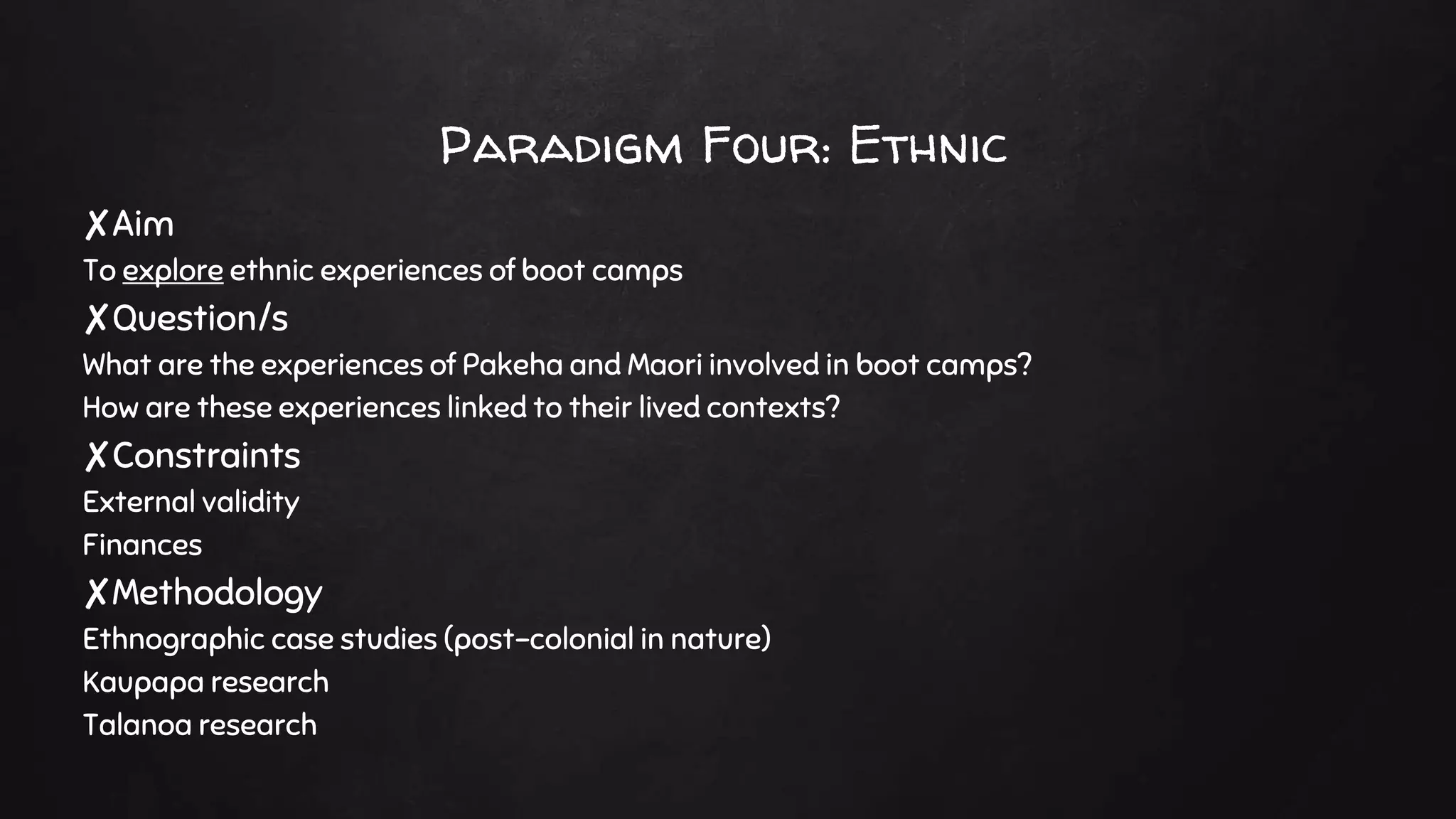
Paradigm Four: Ethnic
✘Aim
To explore ethnic experiences of boot camps
✘Question/s
What are the experiences of Pakeha and Maori involved in boot camps?
How are these experiences linked to their lived contexts?
✘Constraints
External validity
Finances
✘Methodology
Ethnographic case studies (post-colonial in nature)
Kaupapa research
Talanoa research
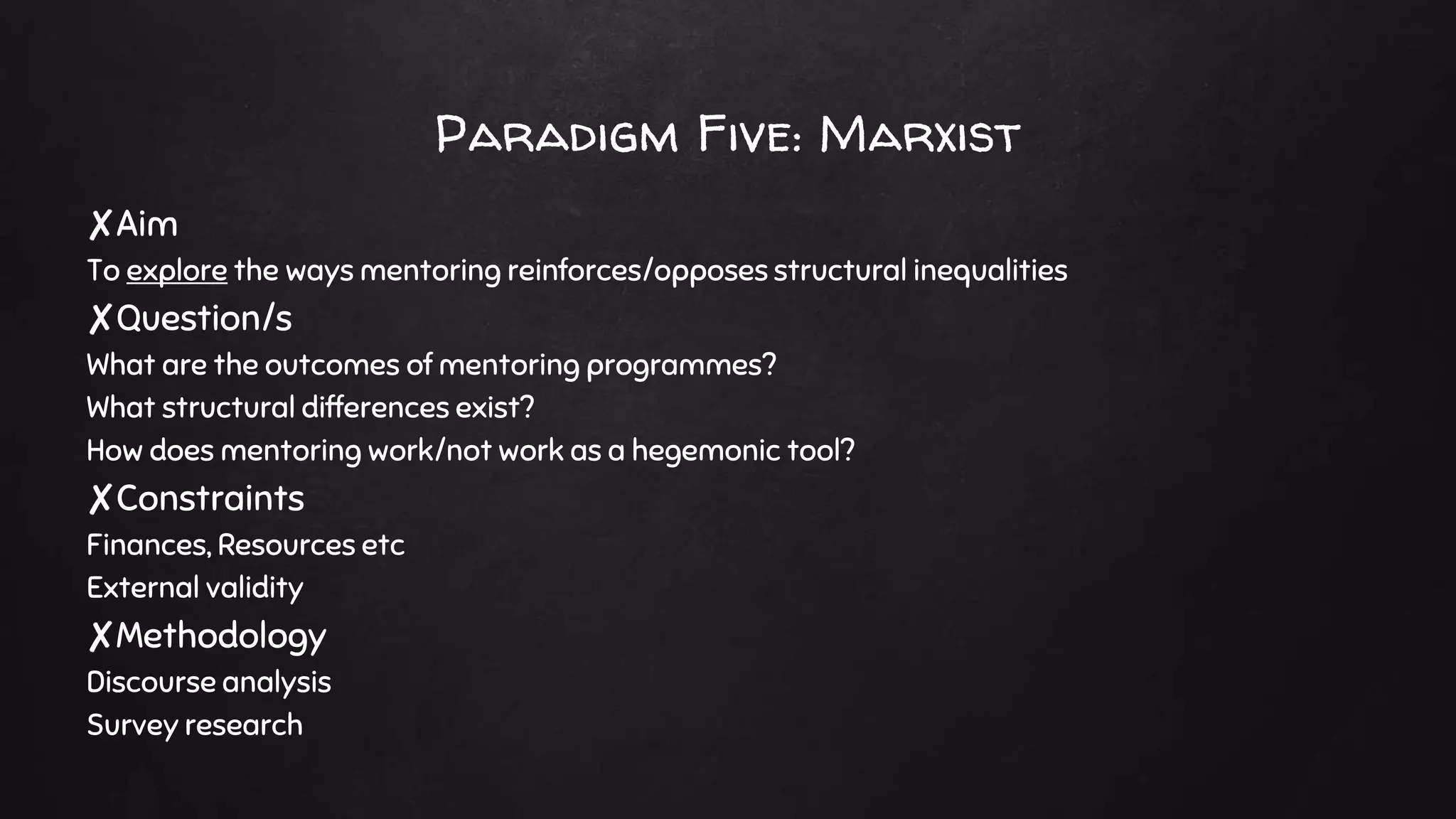
Paradigm Five: Marxist
✘Aim
To explore the ways mentoring reinforces/opposes structural inequalities
✘Question/s
What are the outcomes of mentoring programmes?
What structural differences exist?
How does mentoring work/not work as a hegemonic tool?
✘Constraints
Finances, Resources etc
External validity
✘Methodology
Discourse analysis
Survey research
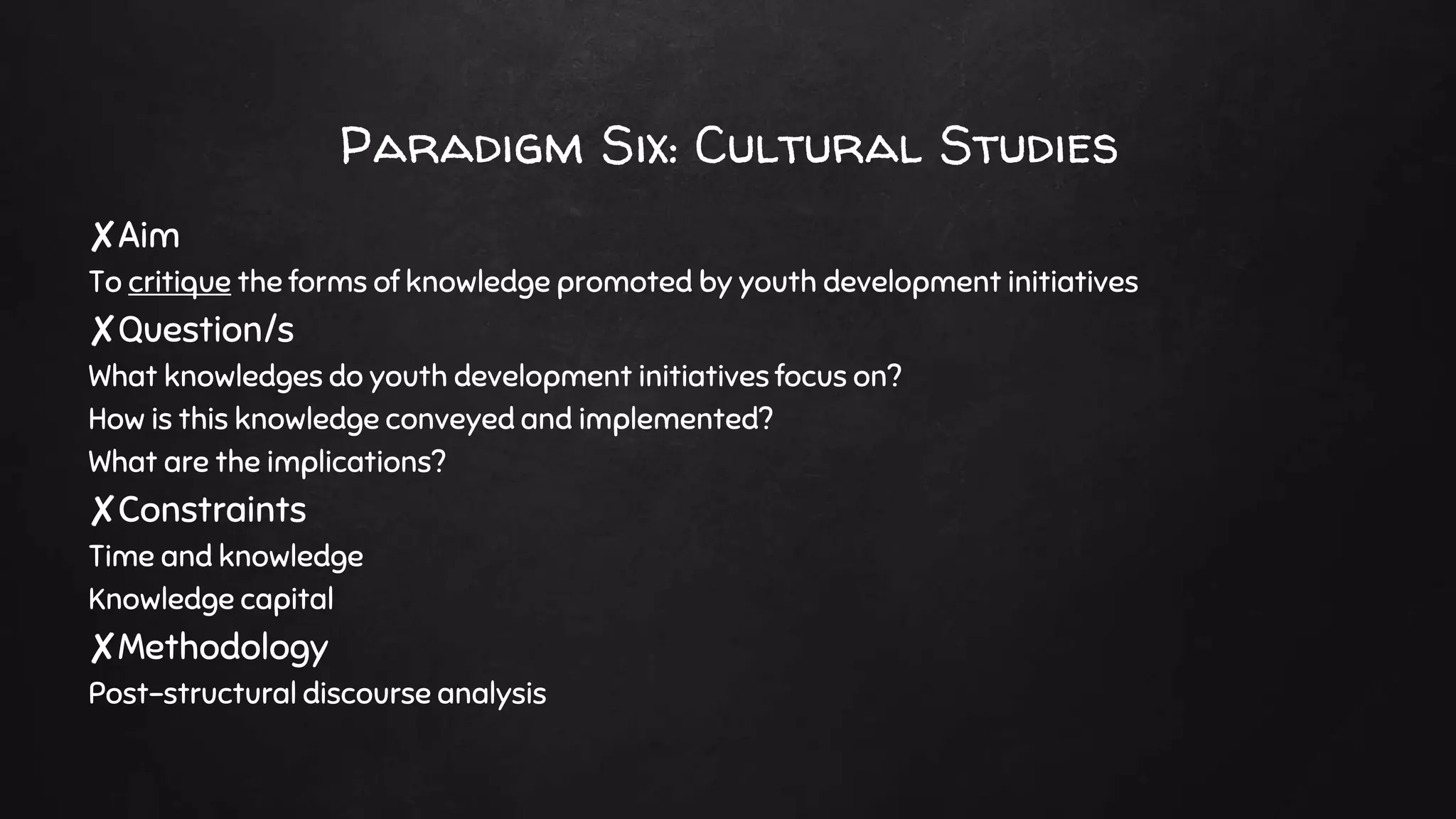
Paradigm Six: Cultural Studies
✘Aim
To critique the forms of knowledge promoted by youth development initiatives
✘Question/s
What knowledges do youth development initiatives focus on?
How is this knowledge conveyed and implemented?
What are the implications?
✘Constraints
Time and knowledge
Knowledge capital
✘Methodology
Post-structural discourse analysis
Paradigm Seven: Mixed
✘Aim
To measure student success in boot camps and find the factors which lead to success
✘Question/s
To what rate do young people reduce offending after boot camps?
What factors led to evidence of improvement?
✘Constraints
External validity
✘Methodology
Survey research
Case study
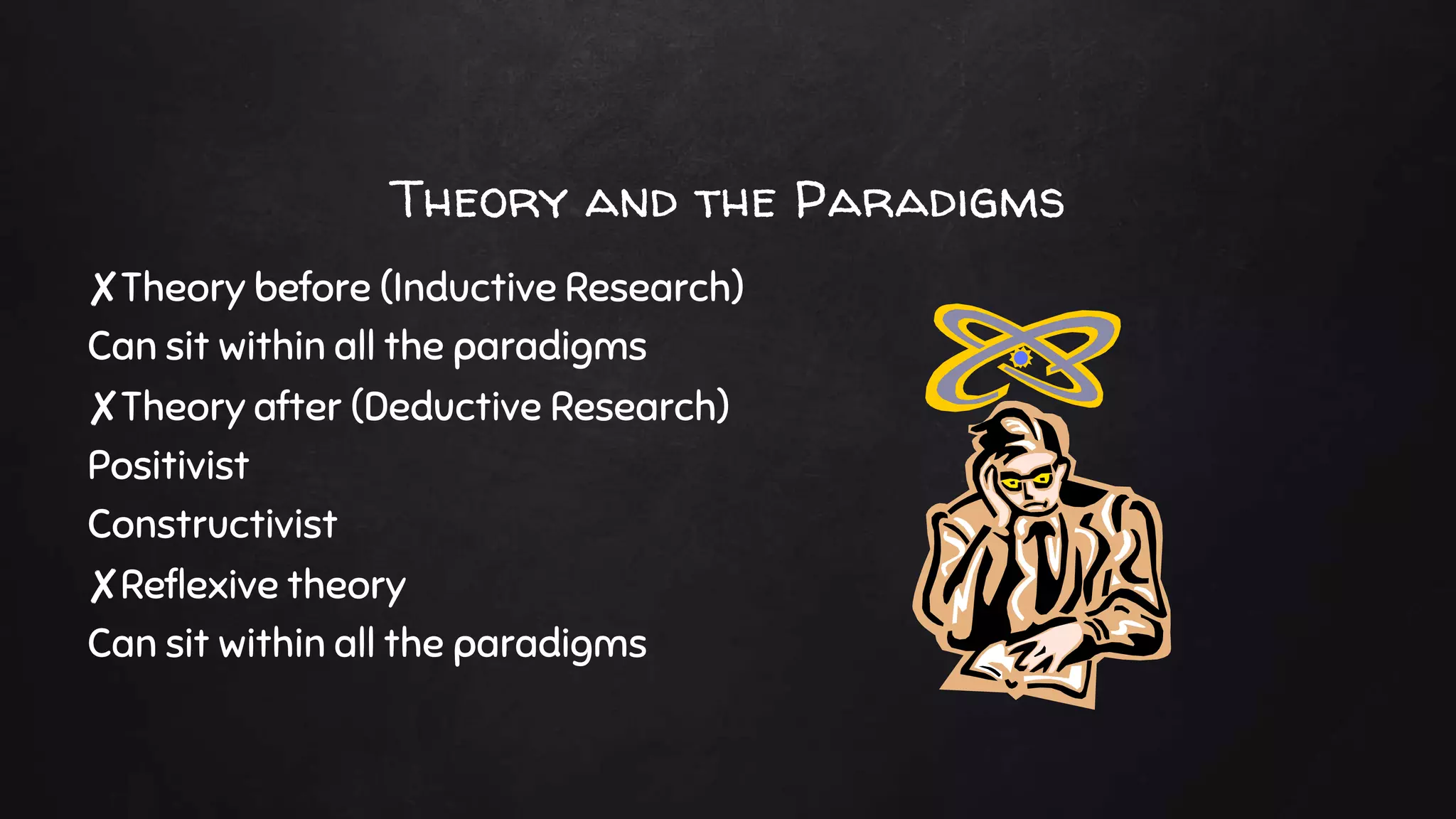
Theory and the Paradigms
✘Theory before (Inductive Research)
Can sit within all the paradigms
✘Theory after (Deductive Research)
Positivist
Constructivist
✘Reflexive theory
Can sit within all the paradigms
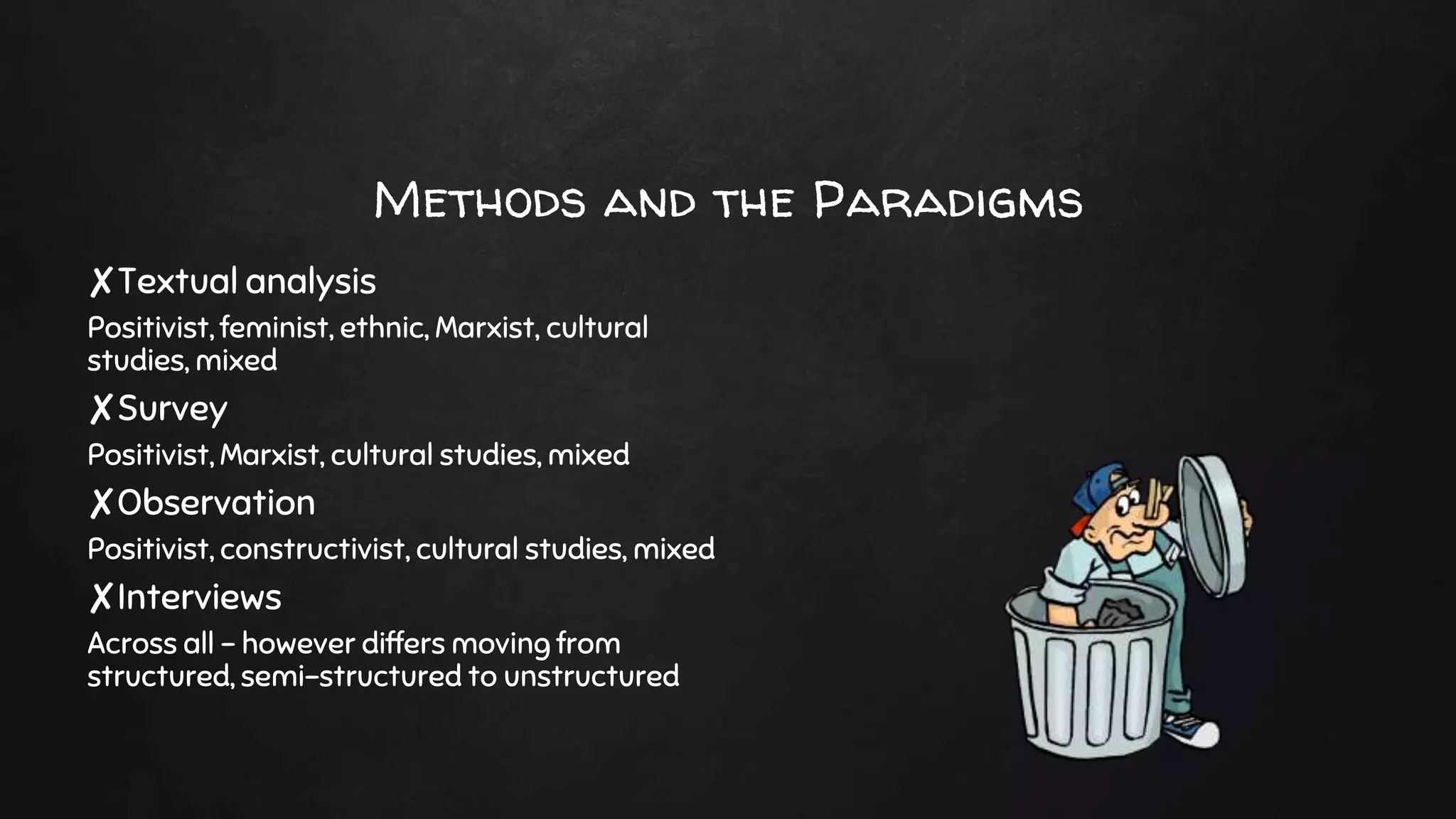
Methods and the Paradigms
✘Textual analysis
Positivist, feminist, ethnic, Marxist, cultural
studies, mixed
✘Survey
Positivist, Marxist, cultural studies, mixed
✘Observation
Positivist, constructivist, cultural studies, mixed
✘Interviews
Across all – however differs moving from
structured, semi-structured to unstructured
4.
Time for a Break
It All Comes Down to a Question
5.
Research Ethics
Working ethically
✘Code of Ethics
✘More than a bureaucratic
process
✘Involves action and
reflection
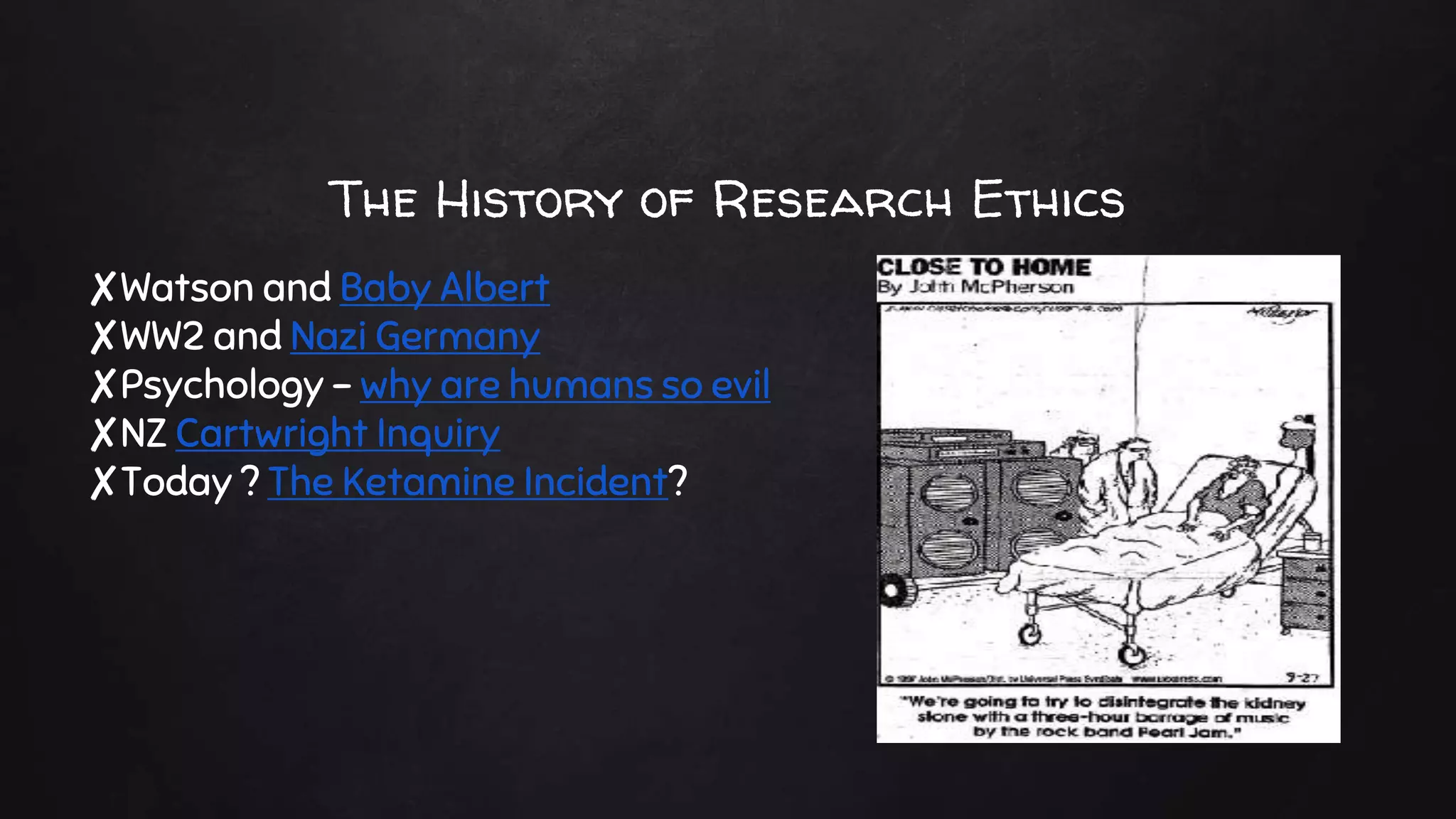
The History of Research Ethics
✘Watson and Baby Albert
✘WW2 and Nazi Germany
✘Psychology – why are humans so evil
✘NZ Cartwright Inquiry
✘Today ? The Ketamine Incident?
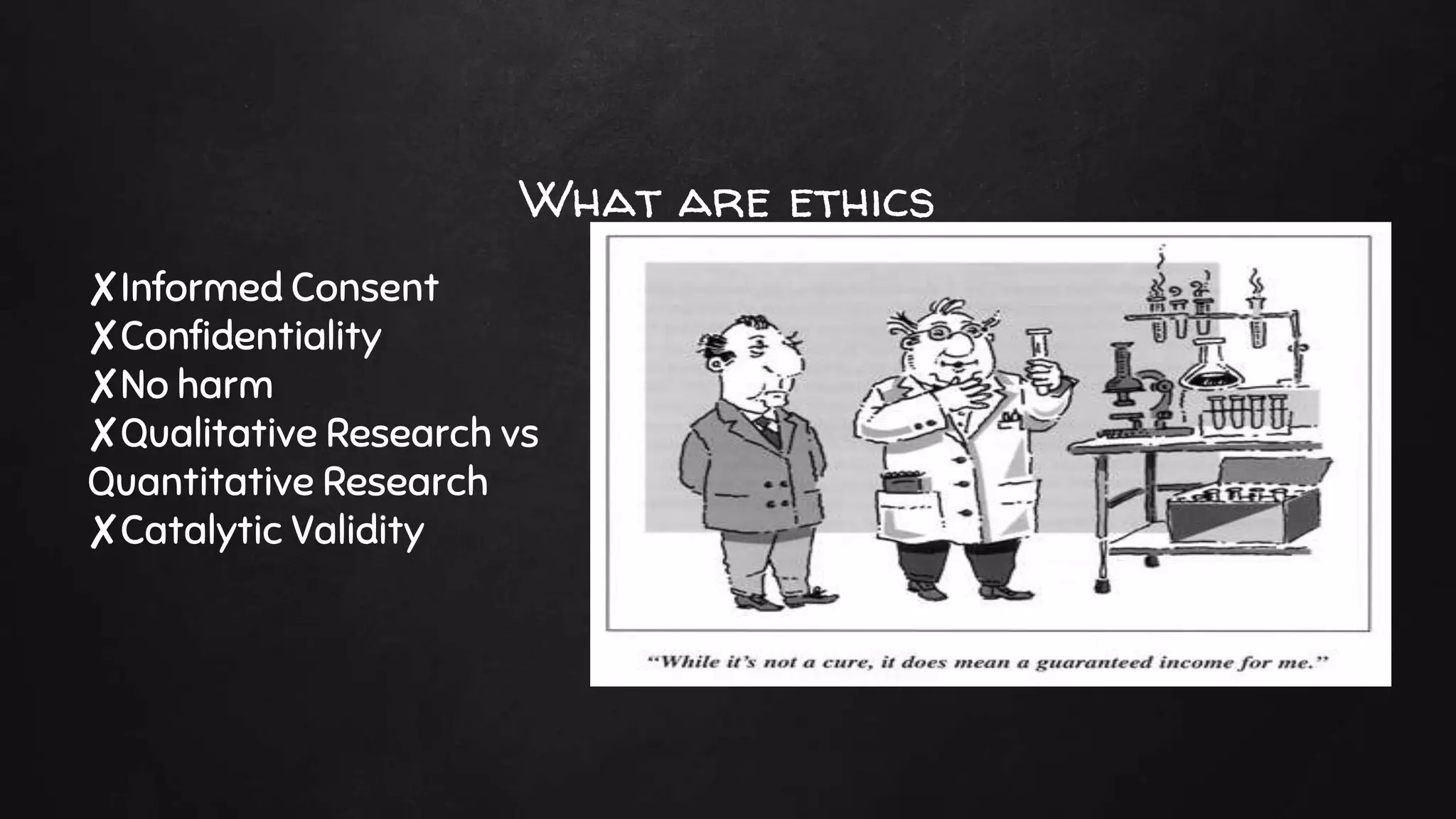
What are ethics
✘Informed Consent
✘Confidentiality
✘No harm
✘Qualitative Research vs
Quantitative Research
✘Catalytic Validity
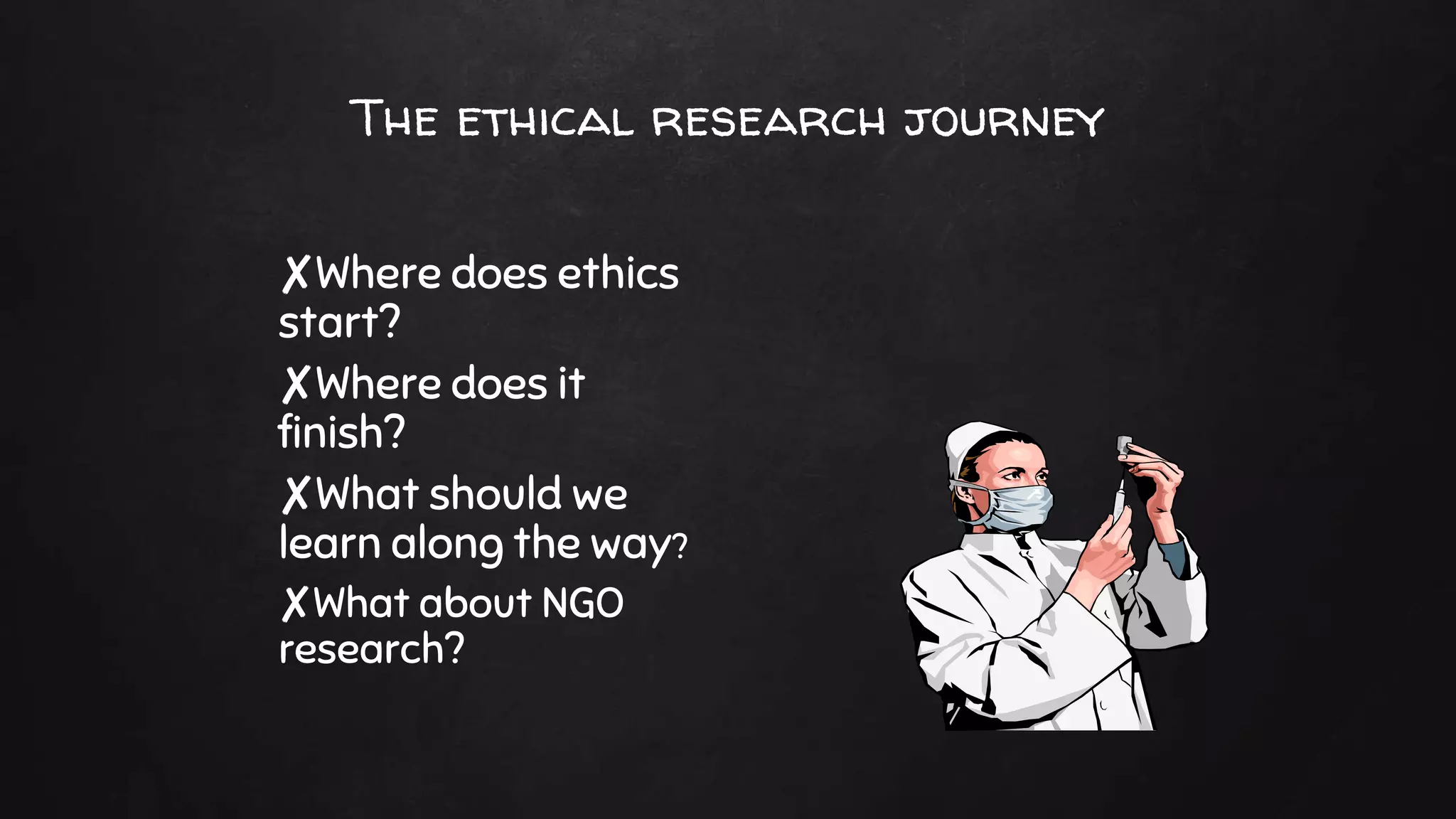
The ethical research journey
✘Where does ethics
start?
✘Where does it
finish?
✘What should we
learn along the way?
✘What about NGO
research?
The type of research you are doing and the type of
methodology you are using determines how ethics will
inform your research
Ethics and research
Getting through ethics applications
✘Know what the committee wants in addition to your application:
✘Copies of instruments, consent/information forms or valid
explanation
✘Letterheads on all information to participants
✘Lockable storage/passwords etc
✘But what if there is no committee?
✘Create a plan!
Questions and Reflections
6.
Lunch
7.
Revising and Cementing
Reading Backwards
✘ In groups, create a mindmap presentation showing:
✘The Research Topic
✘The Research Question
✘How it aligns to the Methodology and Methods
✘How Research Ethics have been incorporated
Your Turn
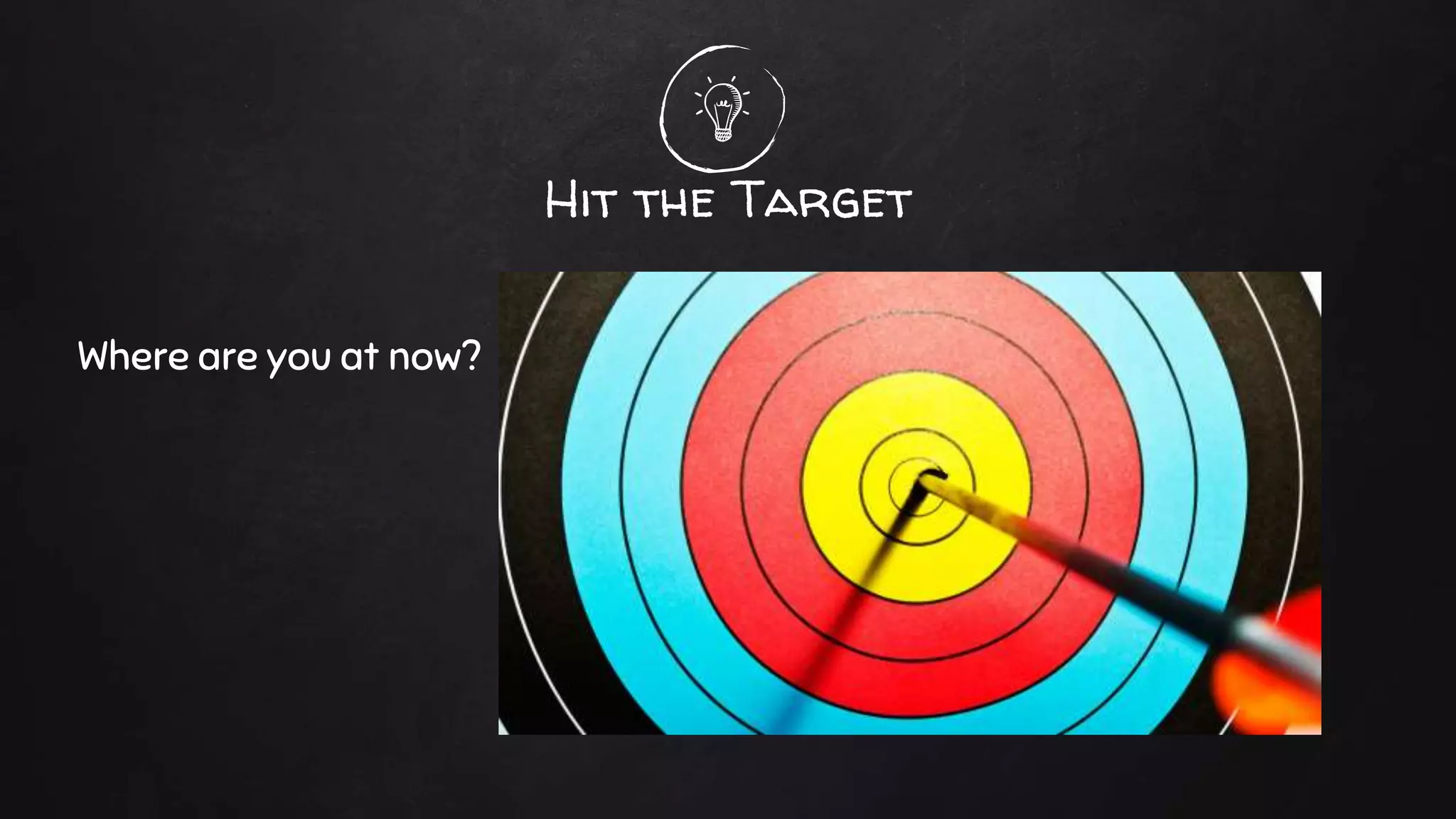
Hit the Target
Where are you at now?
thanks!
Any questions?
Credits
Special thanks to all the people who made and released
these awesome resources for free:
✘ Presentation template by SlidesCarnival
✘ Photographs by Unsplash

Introduction to Research Day Two

  • 1.
  • 2.
    1. Whakawhangatanga We are inthis together: The ID Crisis
  • 3.
    2. Why are wehere? More Words = More Confidence
  • 4.
    Hit the Target Firstas individuals Then in groups of four
  • 5.
    3. It All ComesDown the to Question
  • 6.
    Recall First Class ✘Observation methods (Spradley, 1980) ✘ Qualitative Analysis Coding (Abstracting and Comparing) (Punch, 1998)
  • 7.
    Your Question DeterminesYour Methodology Which, in turn, determines your Methods of data-gathering
  • 8.
    Where to next…. ✘Locatingyour questions within a paradigm of research ✘Outlining the constraints of your research Time, money, contextual etc ✘Selecting an appropriate methodology ✘Make sure there is fusion between the questions, paradigm (theory), constraints, and methodology
  • 9.
    PARADIGM FOCUS QUESTION Positivist/PostpostivistStatistics – Establishing truth and differences How many … What quantifiable differences exist … Constructivist Exploring and constructing truths How do … Feminist Exploring gendered differences and perspectives What are the experiences of boys and girls … How do girls … Ethnic Exploring ethnic differences and perspectives What are the experiences of Maori and Pakeha … How do Maori … Marxist Exploring class differences and perspectives What are the experiences of lower socio-economic and middle- class … How do the poor … Cultural Studies To critique and question current truths and critically examine differences What knowledges/ideas … What are the implications of this particular knowledge …
  • 10.
    Paradigm One: Positivist/Postpositivist ✘Aim Totrack gender/culture/socioeconomic differences To measure the effectiveness of boot camps as an intervention ✘Question/s Are there any differences? What are these differences? – quantified ✘Constraints Numbers/Cash Statistical knowledge ✘Methodology Textual analysis Tests/Survey research
  • 11.
    Paradigm Two: Constructivist(1) ✘Aim To explore why some young people dislike school To understand the experiences of young people in an initiative ✘Question/s How do young people experience school? What were the experiences of youth in the initiative? ✘Constraints Purpose is quite contained Confusion over roles (esp youth workers and youth – if involved) ✘Methodology Case study Ethnography
  • 12.
    Paradigm Two: Constructivist(2) ✘Aim To construct an Asian theory of youth development To construct an understanding of the elements needed for successful mentoring ✘Question/s How do Asian young people experience adolescence? What elements exist in successful mentoring programmes? ✘Constraints External validity Finances ✘Methodology Case Study Ethnography
  • 13.
    Paradigm Three: Feminist ✘Aim Toexplore gendered experiences of boot camps ✘Question/s What are the experiences of boys and girls involved in boot camps? Constraints External validity Finances ✘Methodology Narrative storytelling Ethnography Case study
  • 14.
    Paradigm Four: Ethnic ✘Aim Toexplore ethnic experiences of boot camps ✘Question/s What are the experiences of Pakeha and Maori involved in boot camps? How are these experiences linked to their lived contexts? ✘Constraints External validity Finances ✘Methodology Ethnographic case studies (post-colonial in nature) Kaupapa research Talanoa research
  • 15.
    Paradigm Five: Marxist ✘Aim Toexplore the ways mentoring reinforces/opposes structural inequalities ✘Question/s What are the outcomes of mentoring programmes? What structural differences exist? How does mentoring work/not work as a hegemonic tool? ✘Constraints Finances, Resources etc External validity ✘Methodology Discourse analysis Survey research
  • 16.
    Paradigm Six: CulturalStudies ✘Aim To critique the forms of knowledge promoted by youth development initiatives ✘Question/s What knowledges do youth development initiatives focus on? How is this knowledge conveyed and implemented? What are the implications? ✘Constraints Time and knowledge Knowledge capital ✘Methodology Post-structural discourse analysis
  • 17.
    Paradigm Seven: Mixed ✘Aim Tomeasure student success in boot camps and find the factors which lead to success ✘Question/s To what rate do young people reduce offending after boot camps? What factors led to evidence of improvement? ✘Constraints External validity ✘Methodology Survey research Case study
  • 18.
    Theory and theParadigms ✘Theory before (Inductive Research) Can sit within all the paradigms ✘Theory after (Deductive Research) Positivist Constructivist ✘Reflexive theory Can sit within all the paradigms
  • 19.
    Methods and theParadigms ✘Textual analysis Positivist, feminist, ethnic, Marxist, cultural studies, mixed ✘Survey Positivist, Marxist, cultural studies, mixed ✘Observation Positivist, constructivist, cultural studies, mixed ✘Interviews Across all – however differs moving from structured, semi-structured to unstructured
  • 20.
  • 21.
    It All ComesDown to a Question
  • 22.
  • 23.
    Working ethically ✘Code ofEthics ✘More than a bureaucratic process ✘Involves action and reflection
  • 24.
    The History ofResearch Ethics ✘Watson and Baby Albert ✘WW2 and Nazi Germany ✘Psychology – why are humans so evil ✘NZ Cartwright Inquiry ✘Today ? The Ketamine Incident?
  • 25.
    What are ethics ✘InformedConsent ✘Confidentiality ✘No harm ✘Qualitative Research vs Quantitative Research ✘Catalytic Validity
  • 26.
    The ethical researchjourney ✘Where does ethics start? ✘Where does it finish? ✘What should we learn along the way? ✘What about NGO research?
  • 27.
    The type ofresearch you are doing and the type of methodology you are using determines how ethics will inform your research Ethics and research
  • 28.
    Getting through ethicsapplications ✘Know what the committee wants in addition to your application: ✘Copies of instruments, consent/information forms or valid explanation ✘Letterheads on all information to participants ✘Lockable storage/passwords etc ✘But what if there is no committee? ✘Create a plan!
  • 29.
  • 30.
  • 31.
  • 32.
    Reading Backwards ✘ Ingroups, create a mindmap presentation showing: ✘The Research Topic ✘The Research Question ✘How it aligns to the Methodology and Methods ✘How Research Ethics have been incorporated
  • 33.
  • 34.
    Hit the Target Whereare you at now?
  • 35.
  • 36.
    Credits Special thanks toall the people who made and released these awesome resources for free: ✘ Presentation template by SlidesCarnival ✘ Photographs by Unsplash