

LOGO
Click to edit Master subtitle style
ORGANIZATIONAL
BEHAVIOR
OPINION
“YOU NEED A JOB TO GET A
EXPERIENCE AND YOU NEED
EXPERIENCE TO GET A JOB”
WHAT IS
ORGANIZATIONAL
BEHAVIOR
WHAT IS ORGANIZATIONAL BEHAVIOR
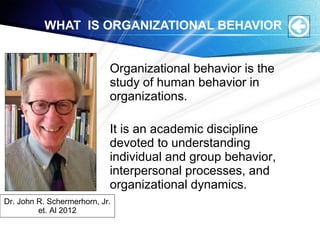
Organizational behavior is the
study of human behavior in
organizations.
It is an academic discipline
devoted to understanding
individual and group behavior,
interpersonal processes, and
organizational dynamics.
Dr. John R. Schermerhorn, Jr.
et. Al 2012
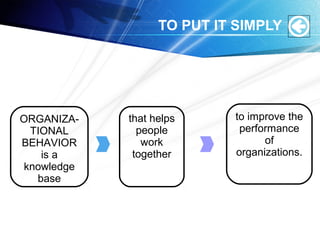
TO PUT IT SIMPLY
that helps
people
work
together
ORGANIZA-
TIONAL
BEHAVIOR
is a
knowledge
base
to improve the
performance
of
organizations.
NATURE OF ORGANIZATION
SPECIALIZATION AND DIVISION OF WORK
-ASSIGN RESPONSIBILITY FOR EACH
ORGANIZATIONAL COMPONENT TO A SPECIFIC
INDIVIDUAL OR GROUP THEREOF
-WHEN THERE IS A DESIGNATED EXPERT IN A
FIELD, IT IS A SPECIALIZATION
-EFFORTS OF THE OPERATIVES ARE
COORDINATED TO ALLOW THE PROCESS AT
HAND TO FUNCTION CORRECTLY
-CERTAIN OPERATIVES OCCUPY POSITIONS OF
MANAGEMENT AT VARIOUS POINTS IN THE
PROCESS TO ENSURE COORDINATION
CHARACTERISTICS OF AN ORGANIZATION
NATURE OF ORGANIZATION
COMPOSITION OF INDIVIDUALS
AND GROUPS
• AN ORGANIZATION IS COMPOSED OF
GROUPS OF INDIVIDUALS AND
INDIVIDUALS
• INDIVIDUALS ARE ALSO GROUPED INTO
DEPARTMENTS AND THEIR WORK IS
COORDINATED AND DIRECTED
TOWARDS ORGANIZATIONAL GOALS
CHARACTERISTICS OF AN ORGANIZATION
• WORK IS DIVIDED AND ASSIGNED TO
INDIVIDUALS TO ACHIEVE
ORGANIZATIONAL OBJECTIVES
• INTEGRATION IS COLLECTING ALL
TASKS DONE BY ALL INDIVIDUALS
WHICH ARE COORDINATED WITH THE
TASKS OF OTHERS
NATURE OF ORGANIZATION
CHARACTERISTICS OF AN ORGANIZATION
COMPOSITION OF INDIVIDUALS
AND GROUPS
NATURE OF ORGANIZATION
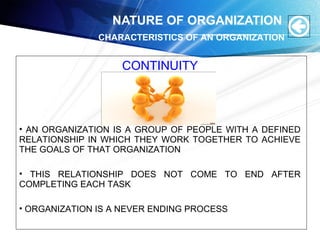
CONTINUITY
• AN ORGANIZATION IS A GROUP OF PEOPLE WITH A DEFINED
RELATIONSHIP IN WHICH THEY WORK TOGETHER TO ACHIEVE
THE GOALS OF THAT ORGANIZATION
• THIS RELATIONSHIP DOES NOT COME TO END AFTER
COMPLETING EACH TASK
• ORGANIZATION IS A NEVER ENDING PROCESS
CHARACTERISTICS OF AN ORGANIZATION
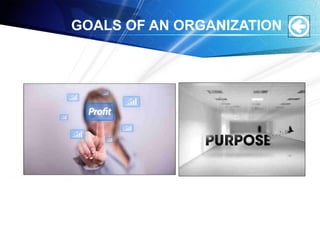
GOALS OF AN ORGANIZATION
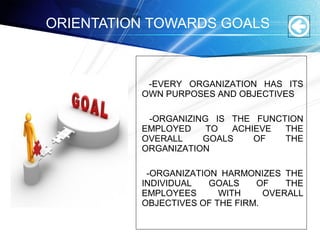
-EVERY ORGANIZATION HAS ITS
OWN PURPOSES AND OBJECTIVES
-ORGANIZING IS THE FUNCTION
EMPLOYED TO ACHIEVE THE
OVERALL GOALS OF THE
ORGANIZATION
-ORGANIZATION HARMONIZES THE
INDIVIDUAL GOALS OF THE
EMPLOYEES WITH OVERALL
OBJECTIVES OF THE FIRM.
ORIENTATION TOWARDS GOALS
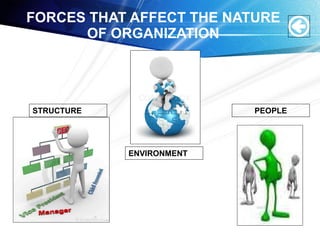
FORCES THAT AFFECT THE NATURE
OF ORGANIZATION
ENVIRONMENT
STRUCTURE PEOPLE
ORGANIZATIONAL
STRUCTURE/DESIGN
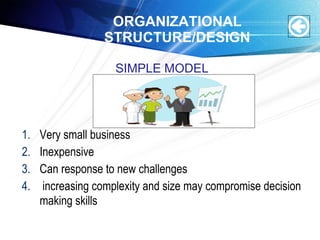
SIMPLE MODEL
1. Very small business
2. Inexpensive
3. Can response to new challenges
4. increasing complexity and size may compromise decision
making skills
ORGANIZATIONAL
STRUCTURE/DESIGN
MODERN
ORGANIZATIONAL DESIGN
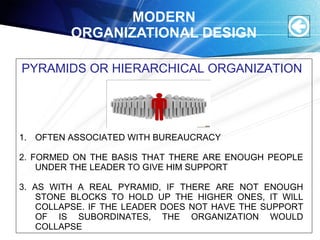
PYRAMIDS OR HIERARCHICAL ORGANIZATION
1. OFTEN ASSOCIATED WITH BUREAUCRACY
2. FORMED ON THE BASIS THAT THERE ARE ENOUGH PEOPLE
UNDER THE LEADER TO GIVE HIM SUPPORT
3. AS WITH A REAL PYRAMID, IF THERE ARE NOT ENOUGH
STONE BLOCKS TO HOLD UP THE HIGHER ONES, IT WILL
COLLAPSE. IF THE LEADER DOES NOT HAVE THE SUPPORT
OF IS SUBORDINATES, THE ORGANIZATION WOULD
COLLAPSE
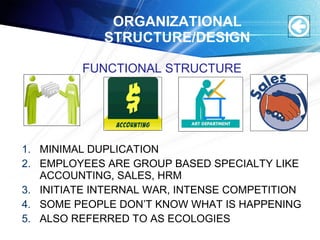
FUNCTIONAL STRUCTURE
1. MINIMAL DUPLICATION
2. EMPLOYEES ARE GROUP BASED SPECIALTY LIKE
ACCOUNTING, SALES, HRM
3. INITIATE INTERNAL WAR, INTENSE COMPETITION
4. SOME PEOPLE DON’T KNOW WHAT IS HAPPENING
5. ALSO REFERRED TO AS ECOLOGIES
ORGANIZATIONAL
STRUCTURE/DESIGN
MODERN
ORGANIZATIONAL DESIGN
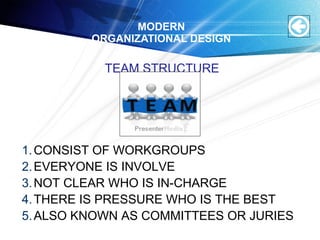
TEAM STRUCTURE
1.CONSIST OF WORKGROUPS
2.EVERYONE IS INVOLVE
3.NOT CLEAR WHO IS IN-CHARGE
4.THERE IS PRESSURE WHO IS THE BEST
5.ALSO KNOWN AS COMMITTEES OR JURIES
MODERN
ORGANIZATIONAL DESIGN
MATRIX STRUCTURE
1. ASSIGN SPECIALIST FROM DIFFERENT FUNCTIONAL AREAS
TO A PROJECT
2. THERE IS A PRIORITY WITH PROJECTS. BECAUSE
COMPETITING COMPANIES TRY TO DOMINATE THE MARKET
BY MEANS OF TECHNOLOGY, SYSTEM AND OTHERS
3. FASTER DECISION-MAKING
4. RESPONSIVE TO ENVIRONMENT
MODERN
ORGANIZATIONAL DESIGN
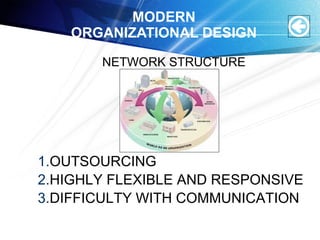
NETWORK STRUCTURE
1.OUTSOURCING
2.HIGHLY FLEXIBLE AND RESPONSIVE
3.DIFFICULTY WITH COMMUNICATION
ENVIRONMENT
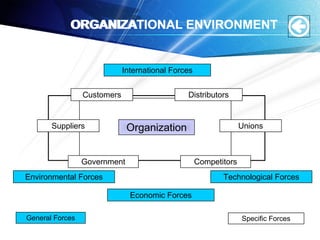
ORGANIZATIONAL ENVIRONMENTORGANIZATIONAL ENVIRONMENT
ORGANIZATIONAL ENVIRONMENT
SET OF FORCES SURROUNDING AN ORGANIZATION. MAY
AFFECT ITS OPERATION AND ACCESS TO SCARCE RESOURCES
ORGANIZATIONAL DOMAIN
THE RANGE OF GOODS AND SERVICES THAT THE
ORGANIZATION PRODUCES, AND THE CUSTOMERS AND OTHER
STAKEHOLDERS WHOM IT SERVES
ORGANIZATIONAL ENVIRONMENTORGANIZATIONAL ENVIRONMENT
Organization
Specific Forces
Economic Forces
International Forces
Customers
Government
Suppliers Unions
Distributors
Competitors
General Forces
Technological ForcesEnvironmental Forces
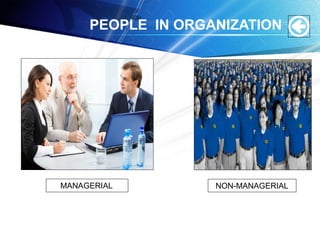
PEOPLE IN ORGANIZATION
MANAGERIAL NON-MANAGERIAL
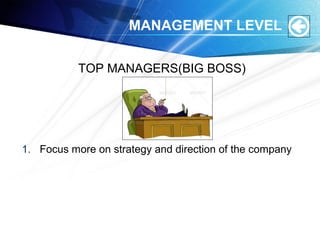
MANAGEMENT LEVEL
TOP MANAGERS(BIG BOSS)
1. Focus more on strategy and direction of the company
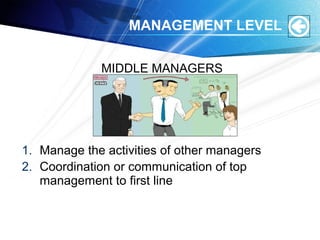
MANAGEMENT LEVEL
MIDDLE MANAGERS
1. Manage the activities of other managers
2. Coordination or communication of top
management to first line
MANAGEMENT LEVEL
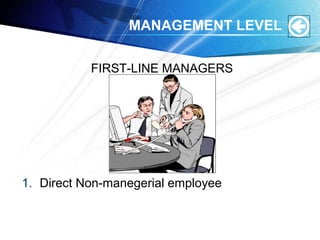
FIRST-LINE MANAGERS
1. Direct Non-manegerial employee
MANAGEMENT FUNCTIONS
•PLANNING sets objectives and identifies the
actions needed to achieve them
•ORGANIZING divides up tasks and arranges
resources to accomplish them.
•LEADING creates enthusiasm to work hard to
accomplish tasks successfully
•CONTROLLING monitors performance and takes
any needed corrective action.
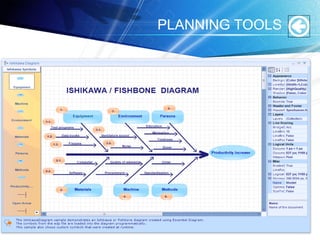
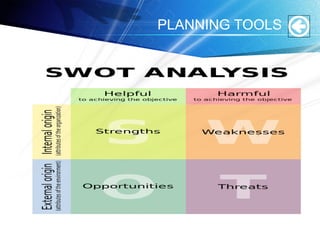
PLANNING TOOLS
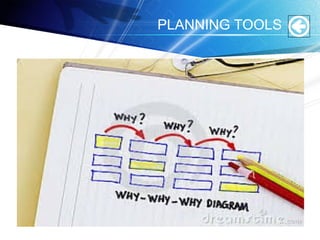
PLANNING TOOLS
PLANNING TOOLS
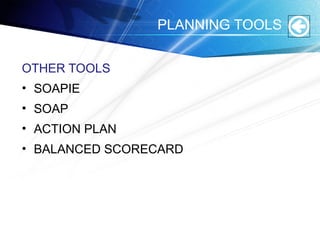
OTHER TOOLS
• SOAPIE
• SOAP
• ACTION PLAN
• BALANCED SCORECARD
PLANNING TOOLS
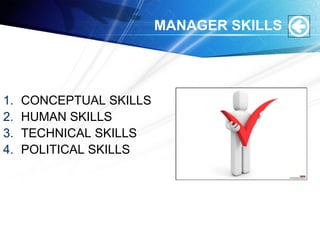
MANAGER SKILLS
1. CONCEPTUAL SKILLS
2. HUMAN SKILLS
3. TECHNICAL SKILLS
4. POLITICAL SKILLS
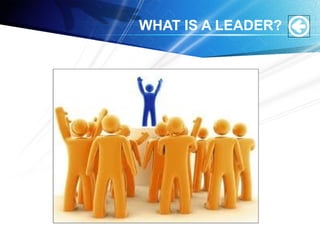
WHAT IS A LEADER?
WHAT IS A LEADER?
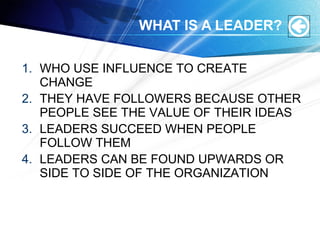
1. WHO USE INFLUENCE TO CREATE
CHANGE
2. THEY HAVE FOLLOWERS BECAUSE OTHER
PEOPLE SEE THE VALUE OF THEIR IDEAS
3. LEADERS SUCCEED WHEN PEOPLE
FOLLOW THEM
4. LEADERS CAN BE FOUND UPWARDS OR
SIDE TO SIDE OF THE ORGANIZATION
WHO IS THE BETTER LEADER A RESEARCH
BY ALICE EAGLEY ?
RESEARCH BY EAGLEY
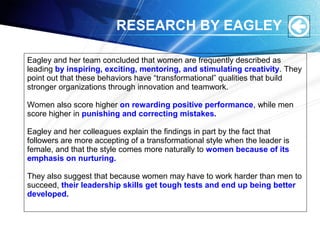
Eagley and her team concluded that women are frequently described as
leading by inspiring, exciting, mentoring, and stimulating creativity. They
point out that these behaviors have “transformational” qualities that build
stronger organizations through innovation and teamwork.
Women also score higher on rewarding positive performance, while men
score higher in punishing and correcting mistakes.
Eagley and her colleagues explain the findings in part by the fact that
followers are more accepting of a transformational style when the leader is
female, and that the style comes more naturally to women because of its
emphasis on nurturing.
They also suggest that because women may have to work harder than men to
succeed, their leadership skills get tough tests and end up being better
developed.
LEADERSHIP NURTURE OR NATURE
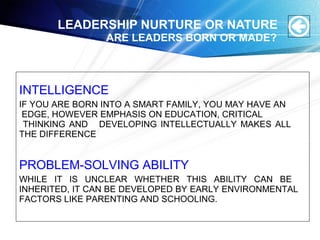
INTELLIGENCE
IF YOU ARE BORN INTO A SMART FAMILY, YOU MAY HAVE AN
EDGE, HOWEVER EMPHASIS ON EDUCATION, CRITICAL
THINKING AND DEVELOPING INTELLECTUALLY MAKES ALL
THE DIFFERENCE
PROBLEM-SOLVING ABILITY
WHILE IT IS UNCLEAR WHETHER THIS ABILITY CAN BE
INHERITED, IT CAN BE DEVELOPED BY EARLY ENVIRONMENTAL
FACTORS LIKE PARENTING AND SCHOOLING.
ARE LEADERS BORN OR MADE?
LEADERSHIP NURTURE OR NATURE
TAKE CHARGE PERSONALITY
FACTORS LIKE EXTROVERSION ARE INHERITED AND STRONGLY
CORRELATED WITH LEADERSHIP ABILITY, ALONG WITH
SOCIABILITY. ALTHOUGH INTROVERTS CAN MAKE GREAT
LEADERS AS WELL. IT DEPENDS ON THE LEADERSHIP STYLE.
DISCIPLINE
WHILE SOME PEOPLE ARE NATURALLY MORE RESERVED THAN
OTHERS, PEOPLE WHO CAN DELAY IMMEDIATE GRATIFICATION
FOR LONG-TERM SUCCESS TEND TO MAKE THE BEST LEADERS.
ARE LEADERS BORN OR MADE?
WHAT IS A SUPERVISOR
 A supervisor is responsible for the day-to-day operations of a
business group to ensure employees are working toward a
common goal, remaining productive, and avoiding conflict and
negative competition
 the supervisor does not have authority to make significant
decisions as they relate to the workforce. A supervisor can
assign work tasks, realign tasks within a department, or take
corrective actions to resolve employee disputes and
productivity issues.
 a supervisor cannot hire, fire, or promote employees without
consulting with a manager who is privy to higher-level
organizational issues and concerns.
WHAT IS A SUPERVISOR
Communicates effectively – Shares information and encourages
candid and open dialog. Ensures that p. eople share information and
have access to information they need to perform their tasks effectively
Demonstrated technical expertise – Understands the production
systems necessary to operate the business successfully. Performs job
tasks successfully.
Responsible and completes work without close supervision –
Ability to work independently, solve problems and move ahead without
constant instructions.
Leadership ability – Confident, knows himself well, people gravitate to
him, and commands respect and trust among peers and others.
Organized – Organizes time and priorities to achieve business results
in a timely manner
SKILLS OF A GOOD SUPERVISOR
WHAT IS A SUPERVISOR
Adapts to and implements change – Accepts that change is
inevitable andembraces change with innovation, courage, and
resiliency.
Promotes key values – Consistently demonstrates work ethics and
values. Conducts duties of the position with truth, sincerity, and
fairness.
Team and people building skills – Understands the importance of
mentoring and coaching employees. Shows enthusiasm for helping
others improve or develop new skills.
Uses sound judgment – Applies knowledge of the business and tasks
and uses common sense and analysis to make the best decision.
Produces results – Directs his/her actions and the actions of others
toward achieving goals that are critical to the success of the operation
SKILLS OF A GOOD SUPERVISOR
CAREER STAGES
Growth – The early years (4 to 13 years old) is a time when the
individual first becomes aware of the future. People start to find ways to
develop competencies and to achieve in order to increase control over
their life.
Exploration – From the early teens to mid-twenties, people begin to
crystallize, specify and implement an occupational choice. Different roles
are tried and various occupational options are explored though school,
leisure, part-time work and volunteering. “Trial jobs” may be tested
before more firmly finding a more stable and appropriate fit.
Establishment – In the mid-twenties through mid-forties, typically a
suitable field is selected and efforts are made to secure a long-term
place in the chosen career. Young adulthood tends to be a time for
stabilizing, consolidating, building momentum and moving up. Obtaining
certifications, credentials, and advanced degrees may be the norm.
CAREER STAGES
Maintenance - This stage usually happens in the mid-forties to mid-sixties and is
characterized by constancy: 1) Holding on (stagnating or plateauing), or 2)
Keeping up (updating or enriching). Continuity, stress, safety and stability tend
to be the standard. Sometimes people feel risk adverse with various career
options which may lead to frustration or even depression. In middle adulthood we
may ask ourselves, “What have I done with my life? or Is this all there is? or even
What do I truly want?” For men, state of health or career accomplishment may
predominate. Women sometimes perceive this period as an opportunity to
pursue new personal or professional goals now that their nurturing role has
peaked.
Disengagement – The mid-sixties is typically marked by decelerating from
formal employment to finding new roles with a view to retirement. Baby Boomers
are teaching us that this stage should be more appropriately named “Re-
inventment.” They are completely redesigning the notion of “retirement”
preferring to work in some form while pursuing new or renewed outside interests.
In later adulthood, there may be a need to assist or mentor younger members of
society or seek self-employment.
LOGO
Click to edit Master subtitle style
Thank
You !

Introduction to Organizational behavior

  • 1.
    LOGO Click to editMaster subtitle style ORGANIZATIONAL BEHAVIOR
  • 2.
    OPINION “YOU NEED AJOB TO GET A EXPERIENCE AND YOU NEED EXPERIENCE TO GET A JOB”
  • 3.
  • 4.
    WHAT IS ORGANIZATIONALBEHAVIOR Organizational behavior is the study of human behavior in organizations. It is an academic discipline devoted to understanding individual and group behavior, interpersonal processes, and organizational dynamics. Dr. John R. Schermerhorn, Jr. et. Al 2012
  • 5.
    TO PUT ITSIMPLY that helps people work together ORGANIZA- TIONAL BEHAVIOR is a knowledge base to improve the performance of organizations.
  • 6.
    NATURE OF ORGANIZATION SPECIALIZATIONAND DIVISION OF WORK -ASSIGN RESPONSIBILITY FOR EACH ORGANIZATIONAL COMPONENT TO A SPECIFIC INDIVIDUAL OR GROUP THEREOF -WHEN THERE IS A DESIGNATED EXPERT IN A FIELD, IT IS A SPECIALIZATION -EFFORTS OF THE OPERATIVES ARE COORDINATED TO ALLOW THE PROCESS AT HAND TO FUNCTION CORRECTLY -CERTAIN OPERATIVES OCCUPY POSITIONS OF MANAGEMENT AT VARIOUS POINTS IN THE PROCESS TO ENSURE COORDINATION CHARACTERISTICS OF AN ORGANIZATION
  • 7.
    NATURE OF ORGANIZATION COMPOSITIONOF INDIVIDUALS AND GROUPS • AN ORGANIZATION IS COMPOSED OF GROUPS OF INDIVIDUALS AND INDIVIDUALS • INDIVIDUALS ARE ALSO GROUPED INTO DEPARTMENTS AND THEIR WORK IS COORDINATED AND DIRECTED TOWARDS ORGANIZATIONAL GOALS CHARACTERISTICS OF AN ORGANIZATION
  • 8.
    • WORK ISDIVIDED AND ASSIGNED TO INDIVIDUALS TO ACHIEVE ORGANIZATIONAL OBJECTIVES • INTEGRATION IS COLLECTING ALL TASKS DONE BY ALL INDIVIDUALS WHICH ARE COORDINATED WITH THE TASKS OF OTHERS NATURE OF ORGANIZATION CHARACTERISTICS OF AN ORGANIZATION COMPOSITION OF INDIVIDUALS AND GROUPS
  • 9.
    NATURE OF ORGANIZATION CONTINUITY •AN ORGANIZATION IS A GROUP OF PEOPLE WITH A DEFINED RELATIONSHIP IN WHICH THEY WORK TOGETHER TO ACHIEVE THE GOALS OF THAT ORGANIZATION • THIS RELATIONSHIP DOES NOT COME TO END AFTER COMPLETING EACH TASK • ORGANIZATION IS A NEVER ENDING PROCESS CHARACTERISTICS OF AN ORGANIZATION
  • 10.
    GOALS OF ANORGANIZATION
  • 11.
    -EVERY ORGANIZATION HASITS OWN PURPOSES AND OBJECTIVES -ORGANIZING IS THE FUNCTION EMPLOYED TO ACHIEVE THE OVERALL GOALS OF THE ORGANIZATION -ORGANIZATION HARMONIZES THE INDIVIDUAL GOALS OF THE EMPLOYEES WITH OVERALL OBJECTIVES OF THE FIRM. ORIENTATION TOWARDS GOALS
  • 12.
    FORCES THAT AFFECTTHE NATURE OF ORGANIZATION ENVIRONMENT STRUCTURE PEOPLE
  • 13.
  • 14.
    SIMPLE MODEL 1. Verysmall business 2. Inexpensive 3. Can response to new challenges 4. increasing complexity and size may compromise decision making skills ORGANIZATIONAL STRUCTURE/DESIGN
  • 15.
    MODERN ORGANIZATIONAL DESIGN PYRAMIDS ORHIERARCHICAL ORGANIZATION 1. OFTEN ASSOCIATED WITH BUREAUCRACY 2. FORMED ON THE BASIS THAT THERE ARE ENOUGH PEOPLE UNDER THE LEADER TO GIVE HIM SUPPORT 3. AS WITH A REAL PYRAMID, IF THERE ARE NOT ENOUGH STONE BLOCKS TO HOLD UP THE HIGHER ONES, IT WILL COLLAPSE. IF THE LEADER DOES NOT HAVE THE SUPPORT OF IS SUBORDINATES, THE ORGANIZATION WOULD COLLAPSE
  • 16.
    FUNCTIONAL STRUCTURE 1. MINIMALDUPLICATION 2. EMPLOYEES ARE GROUP BASED SPECIALTY LIKE ACCOUNTING, SALES, HRM 3. INITIATE INTERNAL WAR, INTENSE COMPETITION 4. SOME PEOPLE DON’T KNOW WHAT IS HAPPENING 5. ALSO REFERRED TO AS ECOLOGIES ORGANIZATIONAL STRUCTURE/DESIGN
  • 17.
    MODERN ORGANIZATIONAL DESIGN TEAM STRUCTURE 1.CONSISTOF WORKGROUPS 2.EVERYONE IS INVOLVE 3.NOT CLEAR WHO IS IN-CHARGE 4.THERE IS PRESSURE WHO IS THE BEST 5.ALSO KNOWN AS COMMITTEES OR JURIES
  • 18.
    MODERN ORGANIZATIONAL DESIGN MATRIX STRUCTURE 1.ASSIGN SPECIALIST FROM DIFFERENT FUNCTIONAL AREAS TO A PROJECT 2. THERE IS A PRIORITY WITH PROJECTS. BECAUSE COMPETITING COMPANIES TRY TO DOMINATE THE MARKET BY MEANS OF TECHNOLOGY, SYSTEM AND OTHERS 3. FASTER DECISION-MAKING 4. RESPONSIVE TO ENVIRONMENT
  • 19.
    MODERN ORGANIZATIONAL DESIGN NETWORK STRUCTURE 1.OUTSOURCING 2.HIGHLYFLEXIBLE AND RESPONSIVE 3.DIFFICULTY WITH COMMUNICATION
  • 20.
  • 21.
    ORGANIZATIONAL ENVIRONMENTORGANIZATIONAL ENVIRONMENT ORGANIZATIONALENVIRONMENT SET OF FORCES SURROUNDING AN ORGANIZATION. MAY AFFECT ITS OPERATION AND ACCESS TO SCARCE RESOURCES ORGANIZATIONAL DOMAIN THE RANGE OF GOODS AND SERVICES THAT THE ORGANIZATION PRODUCES, AND THE CUSTOMERS AND OTHER STAKEHOLDERS WHOM IT SERVES
  • 22.
    ORGANIZATIONAL ENVIRONMENTORGANIZATIONAL ENVIRONMENT Organization SpecificForces Economic Forces International Forces Customers Government Suppliers Unions Distributors Competitors General Forces Technological ForcesEnvironmental Forces
  • 23.
  • 24.
    MANAGEMENT LEVEL TOP MANAGERS(BIGBOSS) 1. Focus more on strategy and direction of the company
  • 25.
    MANAGEMENT LEVEL MIDDLE MANAGERS 1.Manage the activities of other managers 2. Coordination or communication of top management to first line
  • 26.
    MANAGEMENT LEVEL FIRST-LINE MANAGERS 1.Direct Non-manegerial employee
  • 27.
    MANAGEMENT FUNCTIONS •PLANNING setsobjectives and identifies the actions needed to achieve them •ORGANIZING divides up tasks and arranges resources to accomplish them. •LEADING creates enthusiasm to work hard to accomplish tasks successfully •CONTROLLING monitors performance and takes any needed corrective action.
  • 28.
  • 29.
  • 30.
  • 31.
    OTHER TOOLS • SOAPIE •SOAP • ACTION PLAN • BALANCED SCORECARD PLANNING TOOLS
  • 32.
    MANAGER SKILLS 1. CONCEPTUALSKILLS 2. HUMAN SKILLS 3. TECHNICAL SKILLS 4. POLITICAL SKILLS
  • 33.
    WHAT IS ALEADER?
  • 34.
    WHAT IS ALEADER? 1. WHO USE INFLUENCE TO CREATE CHANGE 2. THEY HAVE FOLLOWERS BECAUSE OTHER PEOPLE SEE THE VALUE OF THEIR IDEAS 3. LEADERS SUCCEED WHEN PEOPLE FOLLOW THEM 4. LEADERS CAN BE FOUND UPWARDS OR SIDE TO SIDE OF THE ORGANIZATION
  • 35.
    WHO IS THEBETTER LEADER A RESEARCH BY ALICE EAGLEY ?
  • 36.
    RESEARCH BY EAGLEY Eagleyand her team concluded that women are frequently described as leading by inspiring, exciting, mentoring, and stimulating creativity. They point out that these behaviors have “transformational” qualities that build stronger organizations through innovation and teamwork. Women also score higher on rewarding positive performance, while men score higher in punishing and correcting mistakes. Eagley and her colleagues explain the findings in part by the fact that followers are more accepting of a transformational style when the leader is female, and that the style comes more naturally to women because of its emphasis on nurturing. They also suggest that because women may have to work harder than men to succeed, their leadership skills get tough tests and end up being better developed.
  • 37.
    LEADERSHIP NURTURE ORNATURE INTELLIGENCE IF YOU ARE BORN INTO A SMART FAMILY, YOU MAY HAVE AN EDGE, HOWEVER EMPHASIS ON EDUCATION, CRITICAL THINKING AND DEVELOPING INTELLECTUALLY MAKES ALL THE DIFFERENCE PROBLEM-SOLVING ABILITY WHILE IT IS UNCLEAR WHETHER THIS ABILITY CAN BE INHERITED, IT CAN BE DEVELOPED BY EARLY ENVIRONMENTAL FACTORS LIKE PARENTING AND SCHOOLING. ARE LEADERS BORN OR MADE?
  • 38.
    LEADERSHIP NURTURE ORNATURE TAKE CHARGE PERSONALITY FACTORS LIKE EXTROVERSION ARE INHERITED AND STRONGLY CORRELATED WITH LEADERSHIP ABILITY, ALONG WITH SOCIABILITY. ALTHOUGH INTROVERTS CAN MAKE GREAT LEADERS AS WELL. IT DEPENDS ON THE LEADERSHIP STYLE. DISCIPLINE WHILE SOME PEOPLE ARE NATURALLY MORE RESERVED THAN OTHERS, PEOPLE WHO CAN DELAY IMMEDIATE GRATIFICATION FOR LONG-TERM SUCCESS TEND TO MAKE THE BEST LEADERS. ARE LEADERS BORN OR MADE?
  • 39.
    WHAT IS ASUPERVISOR  A supervisor is responsible for the day-to-day operations of a business group to ensure employees are working toward a common goal, remaining productive, and avoiding conflict and negative competition  the supervisor does not have authority to make significant decisions as they relate to the workforce. A supervisor can assign work tasks, realign tasks within a department, or take corrective actions to resolve employee disputes and productivity issues.  a supervisor cannot hire, fire, or promote employees without consulting with a manager who is privy to higher-level organizational issues and concerns.
  • 40.
    WHAT IS ASUPERVISOR Communicates effectively – Shares information and encourages candid and open dialog. Ensures that p. eople share information and have access to information they need to perform their tasks effectively Demonstrated technical expertise – Understands the production systems necessary to operate the business successfully. Performs job tasks successfully. Responsible and completes work without close supervision – Ability to work independently, solve problems and move ahead without constant instructions. Leadership ability – Confident, knows himself well, people gravitate to him, and commands respect and trust among peers and others. Organized – Organizes time and priorities to achieve business results in a timely manner SKILLS OF A GOOD SUPERVISOR
  • 41.
    WHAT IS ASUPERVISOR Adapts to and implements change – Accepts that change is inevitable andembraces change with innovation, courage, and resiliency. Promotes key values – Consistently demonstrates work ethics and values. Conducts duties of the position with truth, sincerity, and fairness. Team and people building skills – Understands the importance of mentoring and coaching employees. Shows enthusiasm for helping others improve or develop new skills. Uses sound judgment – Applies knowledge of the business and tasks and uses common sense and analysis to make the best decision. Produces results – Directs his/her actions and the actions of others toward achieving goals that are critical to the success of the operation SKILLS OF A GOOD SUPERVISOR
  • 42.
    CAREER STAGES Growth –The early years (4 to 13 years old) is a time when the individual first becomes aware of the future. People start to find ways to develop competencies and to achieve in order to increase control over their life. Exploration – From the early teens to mid-twenties, people begin to crystallize, specify and implement an occupational choice. Different roles are tried and various occupational options are explored though school, leisure, part-time work and volunteering. “Trial jobs” may be tested before more firmly finding a more stable and appropriate fit. Establishment – In the mid-twenties through mid-forties, typically a suitable field is selected and efforts are made to secure a long-term place in the chosen career. Young adulthood tends to be a time for stabilizing, consolidating, building momentum and moving up. Obtaining certifications, credentials, and advanced degrees may be the norm.
  • 43.
    CAREER STAGES Maintenance -This stage usually happens in the mid-forties to mid-sixties and is characterized by constancy: 1) Holding on (stagnating or plateauing), or 2) Keeping up (updating or enriching). Continuity, stress, safety and stability tend to be the standard. Sometimes people feel risk adverse with various career options which may lead to frustration or even depression. In middle adulthood we may ask ourselves, “What have I done with my life? or Is this all there is? or even What do I truly want?” For men, state of health or career accomplishment may predominate. Women sometimes perceive this period as an opportunity to pursue new personal or professional goals now that their nurturing role has peaked. Disengagement – The mid-sixties is typically marked by decelerating from formal employment to finding new roles with a view to retirement. Baby Boomers are teaching us that this stage should be more appropriately named “Re- inventment.” They are completely redesigning the notion of “retirement” preferring to work in some form while pursuing new or renewed outside interests. In later adulthood, there may be a need to assist or mentor younger members of society or seek self-employment.
  • 44.
    LOGO Click to editMaster subtitle style Thank You !