Introduction to Nutrigenetics
& Personalised Nutrition
Presented by Janani Tamilvanan, Founder, Geneobe Wellness
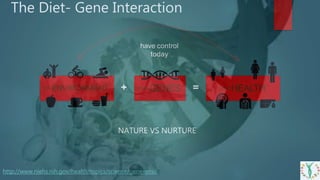
+ =
have control
today
THE ENVIRONMENT YOUR GENES YOUR HEALTH
http://www.niehs.nih.gov/health/topics/science/gene-env/
The Diet- Gene Interaction
NATURE VS NURTURE
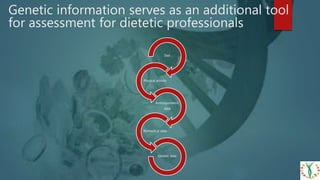
Genetic information serves as an additional tool
for assessment for dietetic professionals
Diet
Physical activity
Anthropometric
data
Biomedical data
Genetic data
Nutri +genetics = (the study of interaction
between nutrients & genes)
• AIMS TO UNRAVEL THE
INTERACTIONS BETWEEN NUTRIENTS
AND GENES.
• IT IS MORE SPECIFIC IN NATURE.
INDIVIDUALS VARY IN THEIR
NUTRIENT METABOLISM AND
RESPONSE TO DIET.
• IT HOLDS THE POTENTIAL TO PROVIDE
BETTER NUTRITIONAL ADVICE TO
PREVENT OR TO OVERCOME DISEASE
RISKS.
The Personalised Nutrition Approach
In this personalised nutrition approach:
• We analyse genetic variations found in human DNA called single nucleotide polymorphisms
(SNPs). Almost all of DNA are the same (99.9%) and 0.1% is different and that is due to these
SNPs.
• These SNPs are common genetic variations, some of these variations have no effect while
others are known to be very important for health status and disease risk.
• The variations can affect gene function, altering the way nutrients are metabolised. This can
have a detrimental effect on the body, influencing human phenotype – the observable,
physical characteristic of a person.
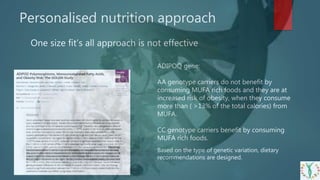
Personalised nutrition approach
One size fit’s all approach is not effective
ADIPOQ gene:
AA genotype carriers do not benefit by
consuming MUFA rich foods and they are at
increased risk of obesity, when they consume
more than ( >13% of the total calories) from
MUFA.
CC genotype carriers benefit by consuming
MUFA rich foods.
Based on the type of genetic variation, dietary
recommendations are designed.
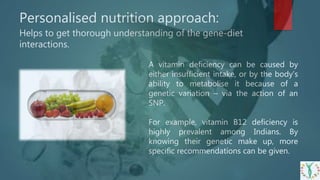
A vitamin deficiency can be caused by
either insufficient intake, or by the body’s
ability to metabolise it because of a
genetic variation – via the action of an
SNP.
For example, vitamin B12 deficiency is
highly prevalent among Indians. By
knowing their genetic make up, more
specific recommendations can be given.
Personalised nutrition approach:
Helps to get thorough understanding of the gene-diet
interactions.
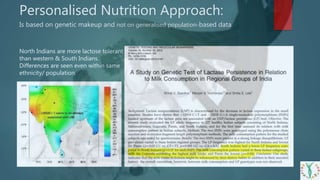
Personalised Nutrition Approach:
Is based on genetic makeup and not on generalised population-based data
North Indians are more lactose tolerant
than western & South Indians.
Differences are seen even within same
ethnicity/ population.
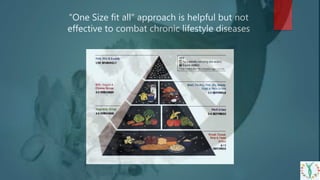
“One Size fit all” approach is helpful but not
effective to combat chronic lifestyle diseases
Thank you
Janani@Geneobe.com
www.geneobe.com

Introduction to nutrigenetics by geneobe

  • 1.
    Introduction to Nutrigenetics &Personalised Nutrition Presented by Janani Tamilvanan, Founder, Geneobe Wellness
  • 2.
    + = have control today THEENVIRONMENT YOUR GENES YOUR HEALTH http://www.niehs.nih.gov/health/topics/science/gene-env/ The Diet- Gene Interaction NATURE VS NURTURE
  • 3.
    Genetic information servesas an additional tool for assessment for dietetic professionals Diet Physical activity Anthropometric data Biomedical data Genetic data
  • 4.
    Nutri +genetics =(the study of interaction between nutrients & genes) • AIMS TO UNRAVEL THE INTERACTIONS BETWEEN NUTRIENTS AND GENES. • IT IS MORE SPECIFIC IN NATURE. INDIVIDUALS VARY IN THEIR NUTRIENT METABOLISM AND RESPONSE TO DIET. • IT HOLDS THE POTENTIAL TO PROVIDE BETTER NUTRITIONAL ADVICE TO PREVENT OR TO OVERCOME DISEASE RISKS.
  • 5.
    The Personalised NutritionApproach In this personalised nutrition approach: • We analyse genetic variations found in human DNA called single nucleotide polymorphisms (SNPs). Almost all of DNA are the same (99.9%) and 0.1% is different and that is due to these SNPs. • These SNPs are common genetic variations, some of these variations have no effect while others are known to be very important for health status and disease risk. • The variations can affect gene function, altering the way nutrients are metabolised. This can have a detrimental effect on the body, influencing human phenotype – the observable, physical characteristic of a person.
  • 6.
    Personalised nutrition approach Onesize fit’s all approach is not effective ADIPOQ gene: AA genotype carriers do not benefit by consuming MUFA rich foods and they are at increased risk of obesity, when they consume more than ( >13% of the total calories) from MUFA. CC genotype carriers benefit by consuming MUFA rich foods. Based on the type of genetic variation, dietary recommendations are designed.
  • 7.
    A vitamin deficiencycan be caused by either insufficient intake, or by the body’s ability to metabolise it because of a genetic variation – via the action of an SNP. For example, vitamin B12 deficiency is highly prevalent among Indians. By knowing their genetic make up, more specific recommendations can be given. Personalised nutrition approach: Helps to get thorough understanding of the gene-diet interactions.
  • 8.
    Personalised Nutrition Approach: Isbased on genetic makeup and not on generalised population-based data North Indians are more lactose tolerant than western & South Indians. Differences are seen even within same ethnicity/ population.
  • 9.
    “One Size fitall” approach is helpful but not effective to combat chronic lifestyle diseases
  • 10.

Editor's Notes

  • #3 Human health is the result of constant interaction between genes and environmental factors which are our diets and lifestyle. We are 97 to 99% genetically identical and the fundamental processes of food metabolism in every human body are the same. This is why eating healthy and staying active are beneficial to everyone. However, the 1 to 3% genome difference among us makes us respond differently to different types of food. This is why personalized diets are necessary. One size doesn’t fit all is the concept behind personalised nutrition. A mismatch between genes and diet would inevitably lead to detrimental effects on our health. These effects over a period of time manifest as a chronic disease(gbhealthwatch.com). How many of you here are diabetic/ hypertensive/ high cholesterol or a cardiac ailment? Let’s have a look at the global and also Indian scenario on the NCD’s which are nothing but the non communicable diseases which are nothing but lifestyle related diseases to put in simpler terms.