CPD course for teachers on lmscampus.com
 This lesson covers the
 general definitions of mobile learning
 brief history of mobile learning
 tools and technologies for mobile learning
 advantages and disadvantages of mobile learning
 mobile learning skill-set for teachers
 At the end of this lesson, the learner should
be able to:
 Define mobile learning correctly;
 Discuss the tools and characteristics of mlearning;
 Mention the advantages and disadvantages of
mlearning;
 List mLearning skillset required of teachers
 Mobile learning is a broad
phrase used to describe the
use of any portable
information and
communication technology
device to access and consume
educational contents or
resources for learning online or
offline from anywhere and at
anytime.
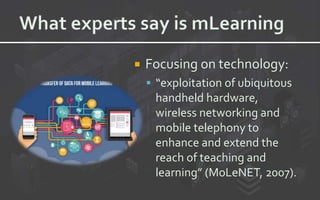
 Focusing on technology:
 “exploitation of ubiquitous
handheld hardware,
wireless networking and
mobile telephony to
enhance and extend the
reach of teaching and
learning” (MoLeNET, 2007).
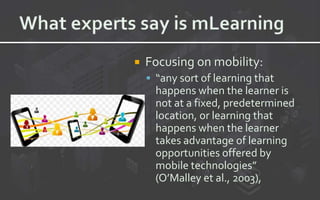
 Focusing on mobility:
 “any sort of learning that
happens when the learner is
not at a fixed, predetermined
location, or learning that
happens when the learner
takes advantage of learning
opportunities offered by
mobile technologies”
(O’Malley et al., 2003),
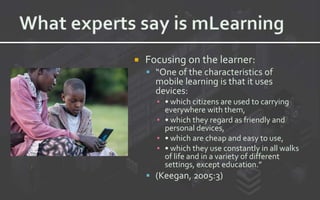
 Focusing on the learner:
 “One of the characteristics of
mobile learning is that it uses
devices:
▪ • which citizens are used to carrying
everywhere with them,
▪ • which they regard as friendly and
personal devices,
▪ • which are cheap and easy to use,
▪ • which they use constantly in all walks
of life and in a variety of different
settings, except education.”
 (Keegan, 2005:3)
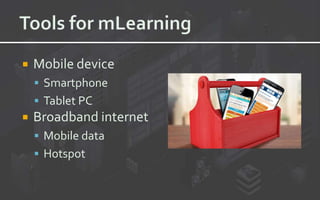
 Mobile device
 Smartphone
 Tablet PC
 Broadband internet
 Mobile data
 Hotspot
 Learning Management
System (LMS)
 Instructional Design Models
 SCORM
 Web 2.0
 ZOOM
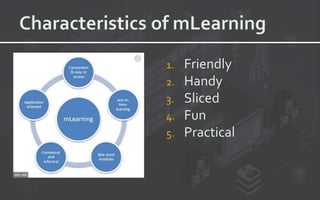
1. Friendly
2. Handy
3. Sliced
4. Fun
5. Practical
1. Learner
2. Content
3. Evaluation
4. Instructor
5. Peers
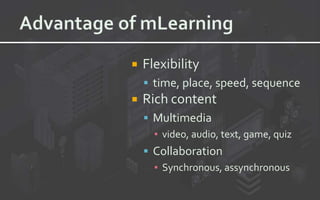
 Flexibility
 time, place, speed, sequence
 Rich content
 Multimedia
▪ video, audio, text, game, quiz
 Collaboration
▪ Synchronous, assynchronous
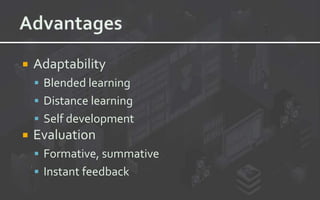
 Adaptability
 Blended learning
 Distance learning
 Self development
 Evaluation
 Formative, summative
 Instant feedback
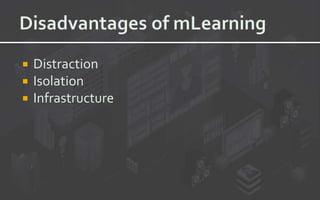
 Distraction
 Isolation
 Infrastructure
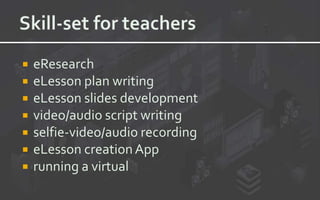
 eResearch
 eLesson plan writing
 eLesson slides development
 video/audio script writing
 selfie-video/audio recording
 eLesson creationApp
 running a virtual
 We defined mobile learning
 We mentioned 4 M-Learning examples
 We looked at a brief history of M-Learning
 We discussed the merits and demerits of
Mlearning
 We listed the M-Learning skill-set for
teachers

Introduction to mobile learning

  • 1.
    CPD course forteachers on lmscampus.com
  • 2.
     This lessoncovers the  general definitions of mobile learning  brief history of mobile learning  tools and technologies for mobile learning  advantages and disadvantages of mobile learning  mobile learning skill-set for teachers
  • 3.
     At theend of this lesson, the learner should be able to:  Define mobile learning correctly;  Discuss the tools and characteristics of mlearning;  Mention the advantages and disadvantages of mlearning;  List mLearning skillset required of teachers
  • 4.
     Mobile learningis a broad phrase used to describe the use of any portable information and communication technology device to access and consume educational contents or resources for learning online or offline from anywhere and at anytime.
  • 5.
     Focusing ontechnology:  “exploitation of ubiquitous handheld hardware, wireless networking and mobile telephony to enhance and extend the reach of teaching and learning” (MoLeNET, 2007).
  • 6.
     Focusing onmobility:  “any sort of learning that happens when the learner is not at a fixed, predetermined location, or learning that happens when the learner takes advantage of learning opportunities offered by mobile technologies” (O’Malley et al., 2003),
  • 7.
     Focusing onthe learner:  “One of the characteristics of mobile learning is that it uses devices: ▪ • which citizens are used to carrying everywhere with them, ▪ • which they regard as friendly and personal devices, ▪ • which are cheap and easy to use, ▪ • which they use constantly in all walks of life and in a variety of different settings, except education.”  (Keegan, 2005:3)
  • 9.
     Mobile device Smartphone  Tablet PC  Broadband internet  Mobile data  Hotspot
  • 10.
     Learning Management System(LMS)  Instructional Design Models  SCORM  Web 2.0  ZOOM
  • 11.
    1. Friendly 2. Handy 3.Sliced 4. Fun 5. Practical
  • 12.
    1. Learner 2. Content 3.Evaluation 4. Instructor 5. Peers
  • 13.
     Flexibility  time,place, speed, sequence  Rich content  Multimedia ▪ video, audio, text, game, quiz  Collaboration ▪ Synchronous, assynchronous
  • 14.
     Adaptability  Blendedlearning  Distance learning  Self development  Evaluation  Formative, summative  Instant feedback
  • 15.
  • 16.
     eResearch  eLessonplan writing  eLesson slides development  video/audio script writing  selfie-video/audio recording  eLesson creationApp  running a virtual
  • 17.
     We definedmobile learning  We mentioned 4 M-Learning examples  We looked at a brief history of M-Learning  We discussed the merits and demerits of Mlearning  We listed the M-Learning skill-set for teachers