By:
Dr. Parveen Vashisth
Assistant Professor, CDLU Sirsa
 Management is what managers ‘do’, It is the process of
coordinating work activities with and through other people so
that work activities are completed efficiently and effectively.
The Term ‘Management’ is used to refer the process of
Managing the activities of Enterprise.
 Management is an attainment of organizational goals in an
effective and efficient manner through planning, organizing,
staffing, directing and controlling organizational resources.
 Organizational resources include Men(human beings), Money,
Machines, Methods and Materials.
 Louis E Boone & David L Kurtz- “The use of people and
other resources to accomplish objectives.”
 Mary Parker Follet- “The act of getting things done through
people.”
 Frederick Taylor defines “Management is the art of knowing
what you want to do in the best and cheapest way.”
 Management is a distinct process.
 Management is an organized activity
 Management aims at the accomplishment of predetermined
objectives.
 Management is both a science and an art.
 Management is a group activity
 Management principles are universal in nature
 Management integrates human and other resources.
 It’s a Process
 It is inborn & Acquired Ability.
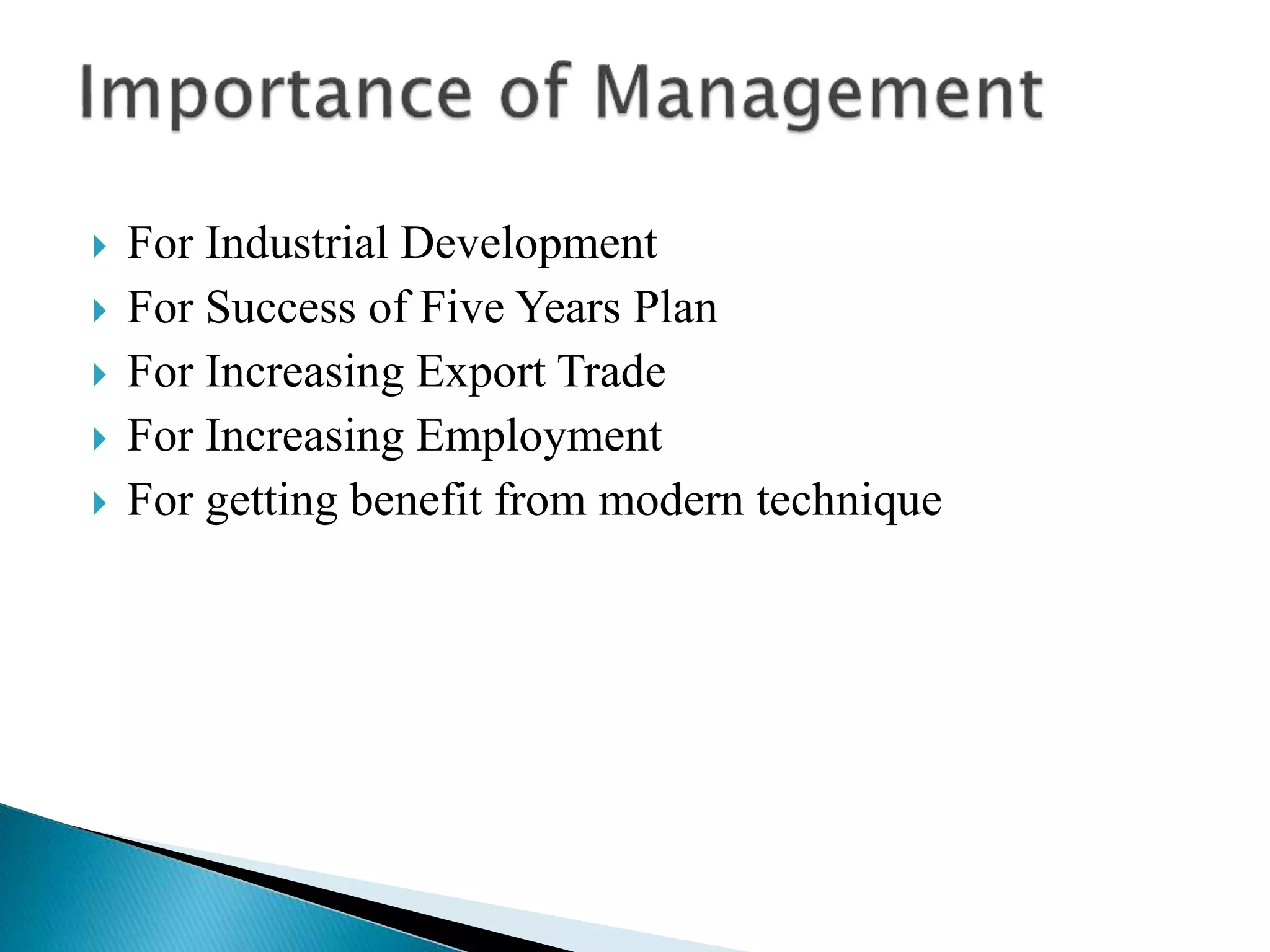
 For Industrial Development
 For Success of Five Years Plan
 For Increasing Export Trade
 For Increasing Employment
 For getting benefit from modern technique
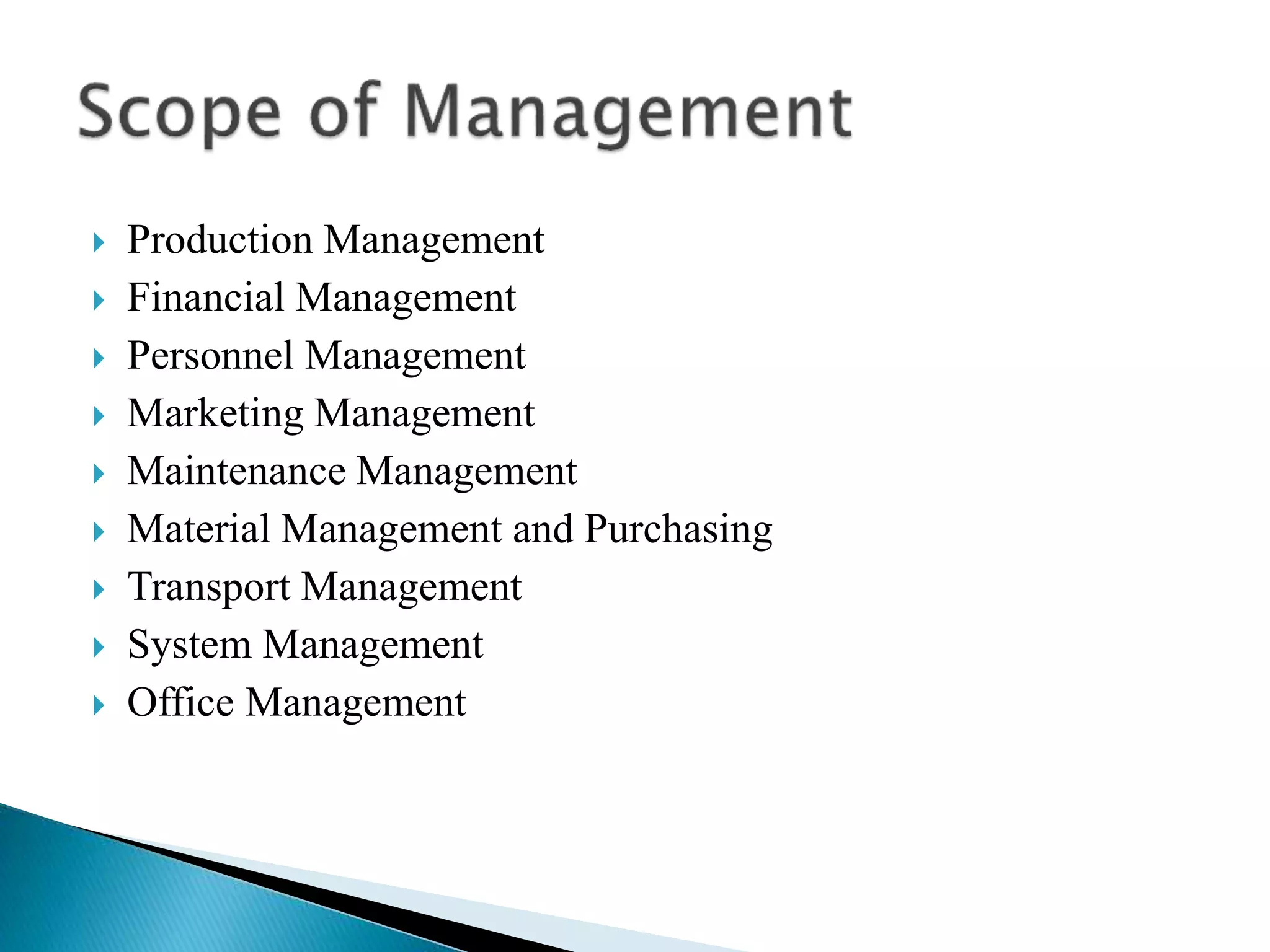
 Production Management
 Financial Management
 Personnel Management
 Marketing Management
 Maintenance Management
 Material Management and Purchasing
 Transport Management
 System Management
 Office Management
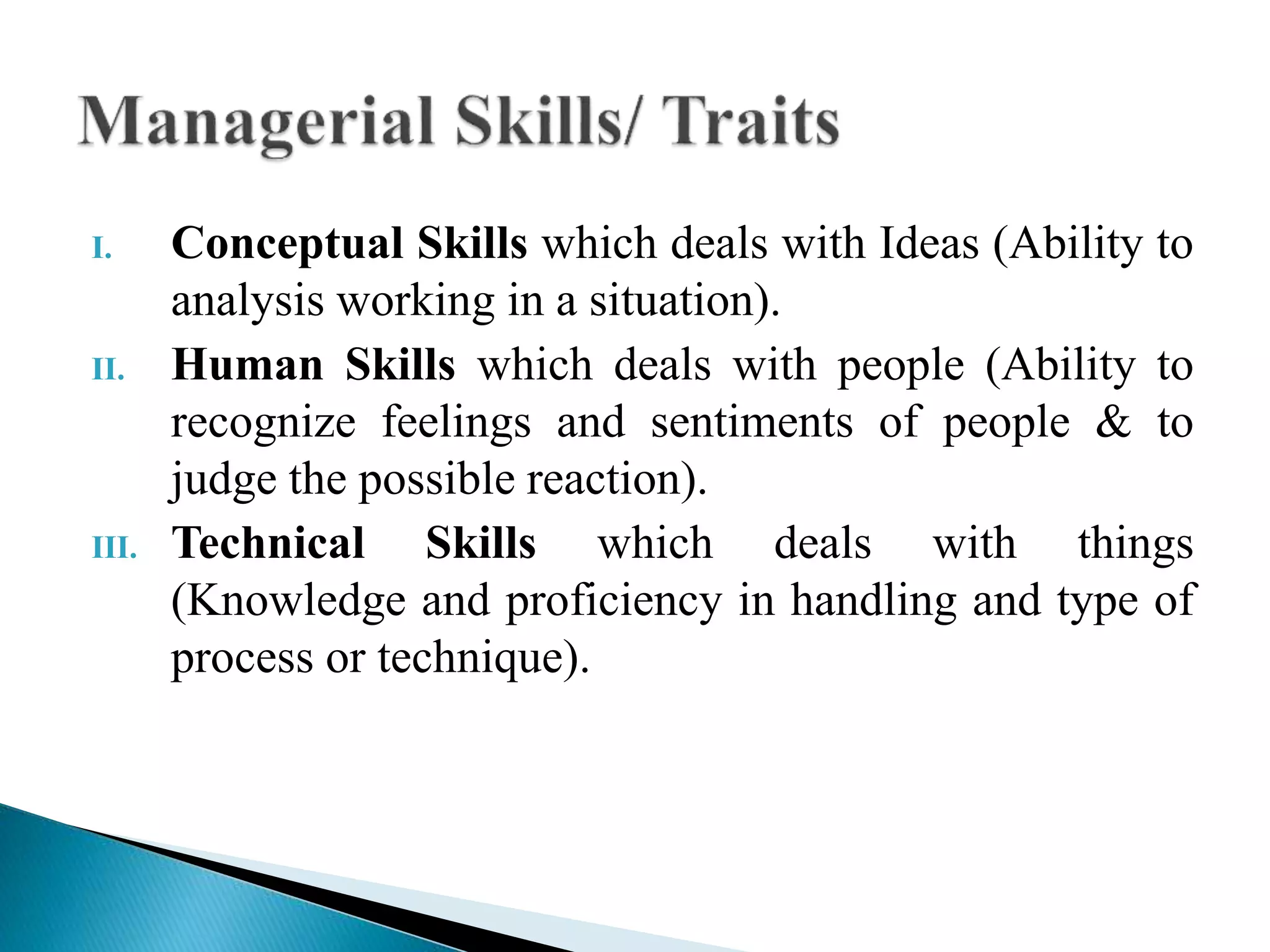
I. Conceptual Skills which deals with Ideas (Ability to
analysis working in a situation).
II. Human Skills which deals with people (Ability to
recognize feelings and sentiments of people & to
judge the possible reaction).
III. Technical Skills which deals with things
(Knowledge and proficiency in handling and type of
process or technique).
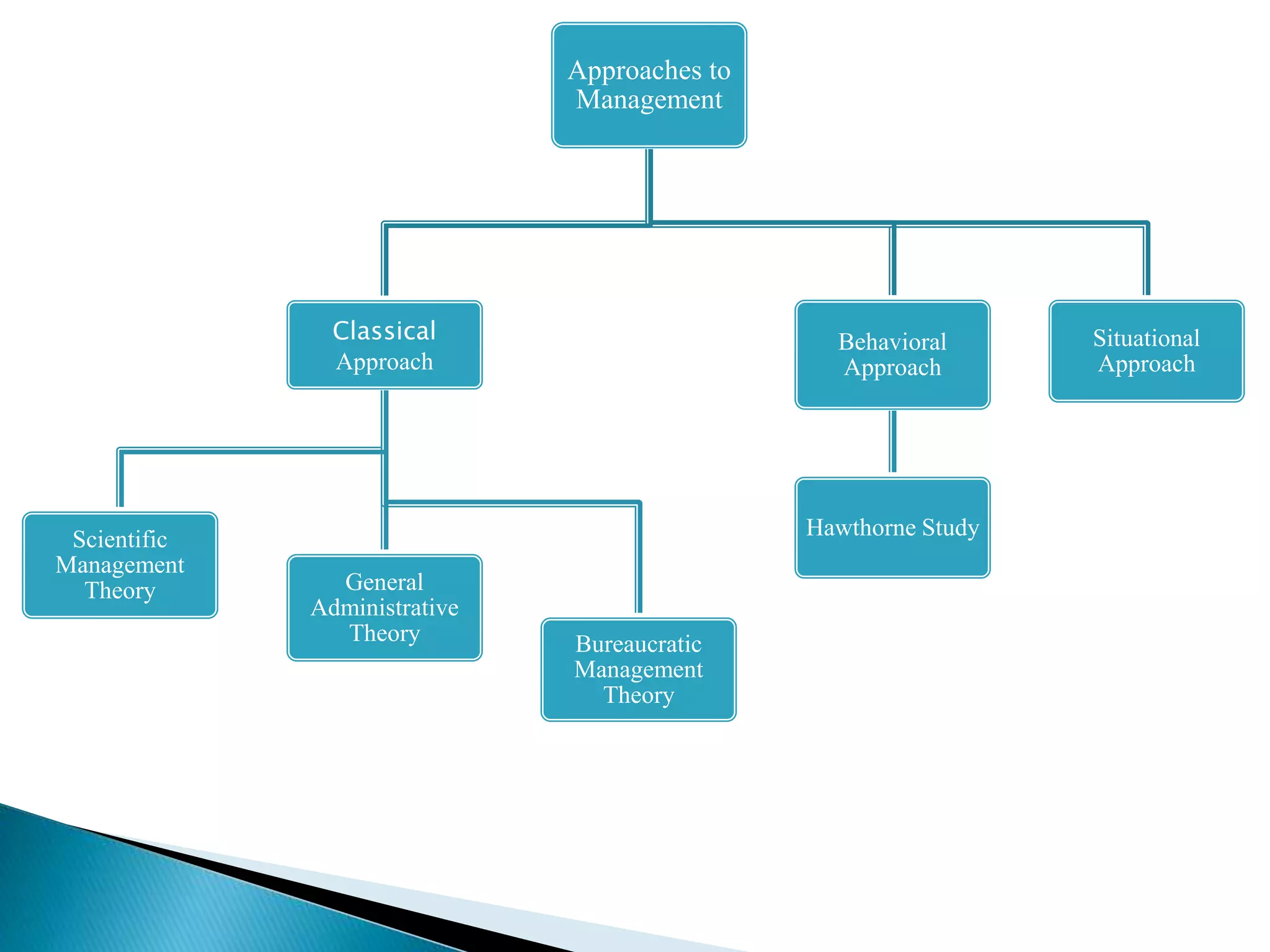
Approaches to
Management
Classical
Approach
Scientific
Management
Theory General
Administrative
Theory Bureaucratic
Management
Theory
Behavioral
Approach
Hawthorne Study
Situational
Approach
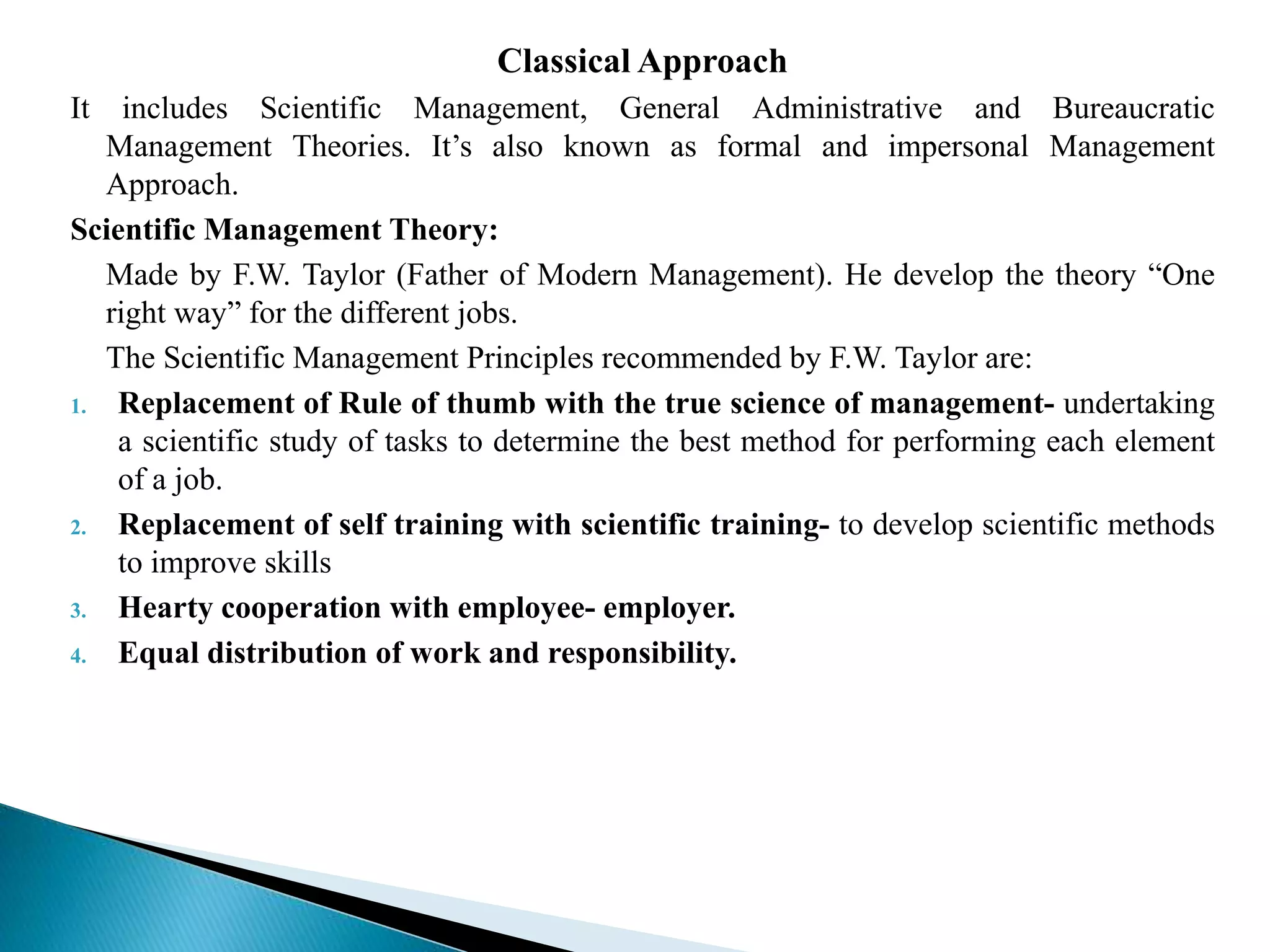
Classical Approach
It includes Scientific Management, General Administrative and Bureaucratic
Management Theories. It’s also known as formal and impersonal Management
Approach.
Scientific Management Theory:
Made by F.W. Taylor (Father of Modern Management). He develop the theory “One
right way” for the different jobs.
The Scientific Management Principles recommended by F.W. Taylor are:
1. Replacement of Rule of thumb with the true science of management- undertaking
a scientific study of tasks to determine the best method for performing each element
of a job.
2. Replacement of self training with scientific training- to develop scientific methods
to improve skills
3. Hearty cooperation with employee- employer.
4. Equal distribution of work and responsibility.
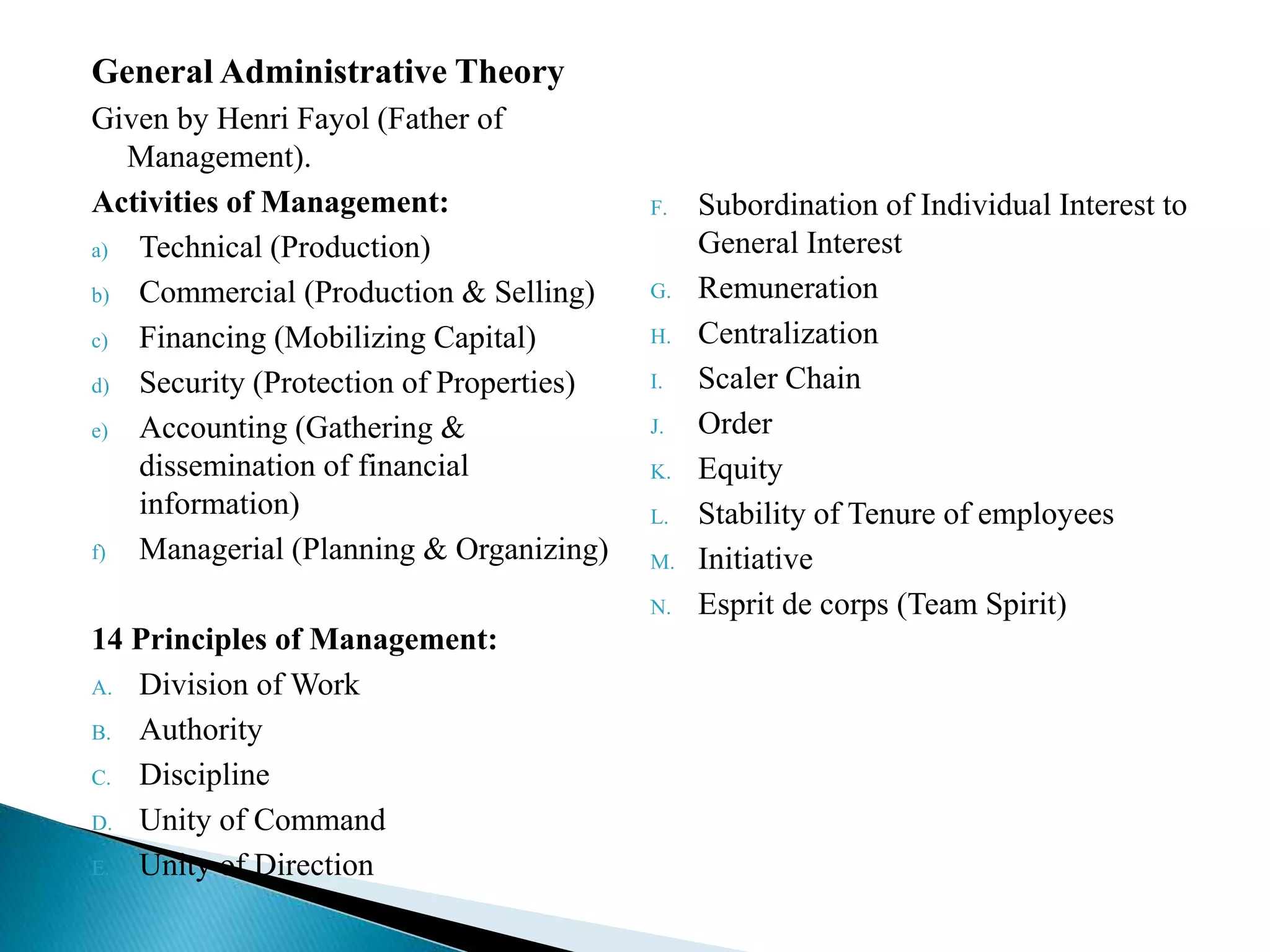
General Administrative Theory
Given by Henri Fayol (Father of
Management).
Activities of Management:
a) Technical (Production)
b) Commercial (Production & Selling)
c) Financing (Mobilizing Capital)
d) Security (Protection of Properties)
e) Accounting (Gathering &
dissemination of financial
information)
f) Managerial (Planning & Organizing)
14 Principles of Management:
A. Division of Work
B. Authority
C. Discipline
D. Unity of Command
E. Unity of Direction
F. Subordination of Individual Interest to
General Interest
G. Remuneration
H. Centralization
I. Scaler Chain
J. Order
K. Equity
L. Stability of Tenure of employees
M. Initiative
N. Esprit de corps (Team Spirit)
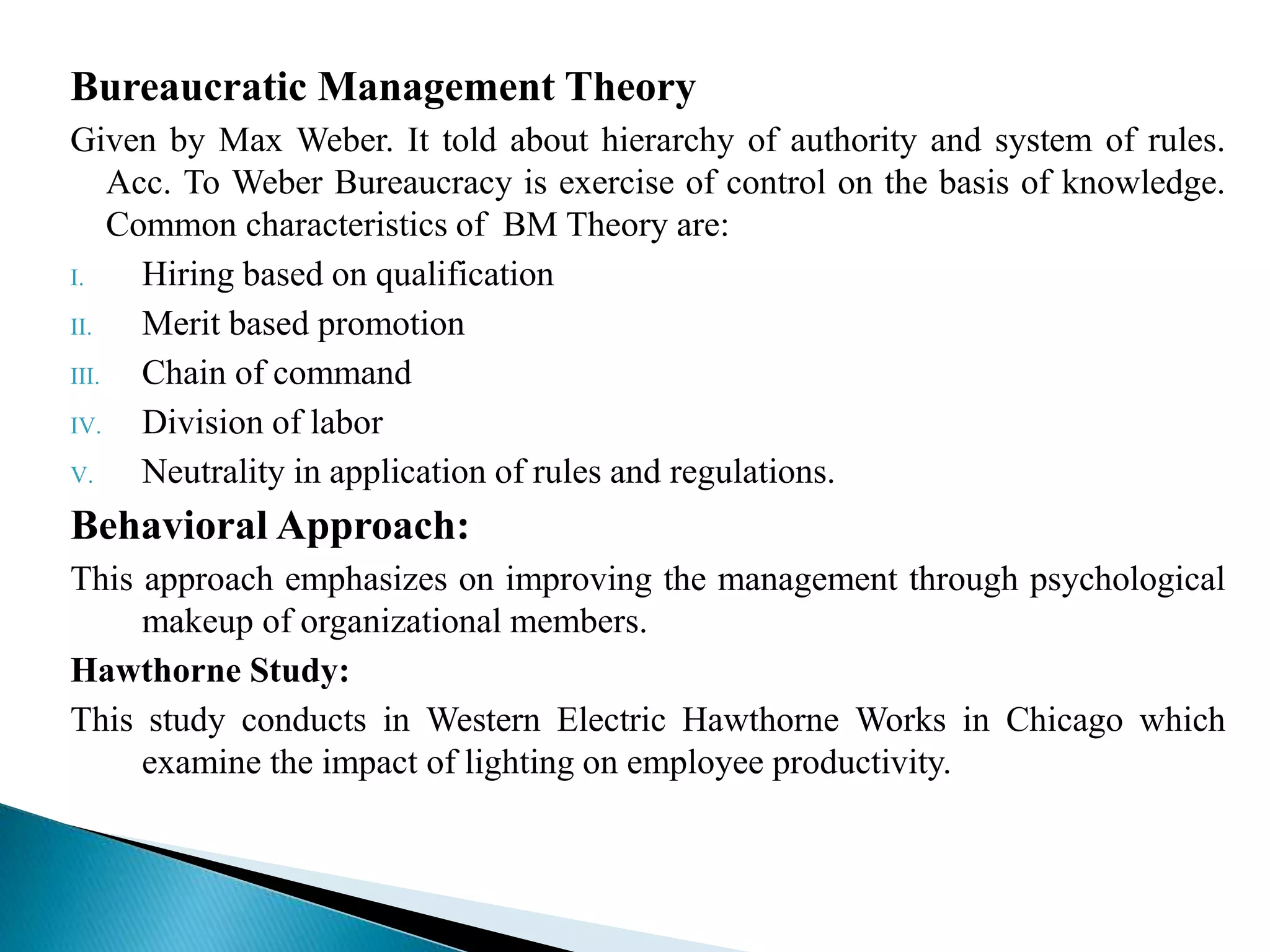
Bureaucratic Management Theory
Given by Max Weber. It told about hierarchy of authority and system of rules.
Acc. To Weber Bureaucracy is exercise of control on the basis of knowledge.
Common characteristics of BM Theory are:
I. Hiring based on qualification
II. Merit based promotion
III. Chain of command
IV. Division of labor
V. Neutrality in application of rules and regulations.
Behavioral Approach:
This approach emphasizes on improving the management through psychological
makeup of organizational members.
Hawthorne Study:
This study conducts in Western Electric Hawthorne Works in Chicago which
examine the impact of lighting on employee productivity.
Hawthorne Study
Two groups of employees were generated i.e. Experimental group & Control
group. The lighting level remains normal for control group throughout the
experiment. However it was changed at regular interval for Experimental
group. The productivity was changed of both the groups in tune with the
lighting level.
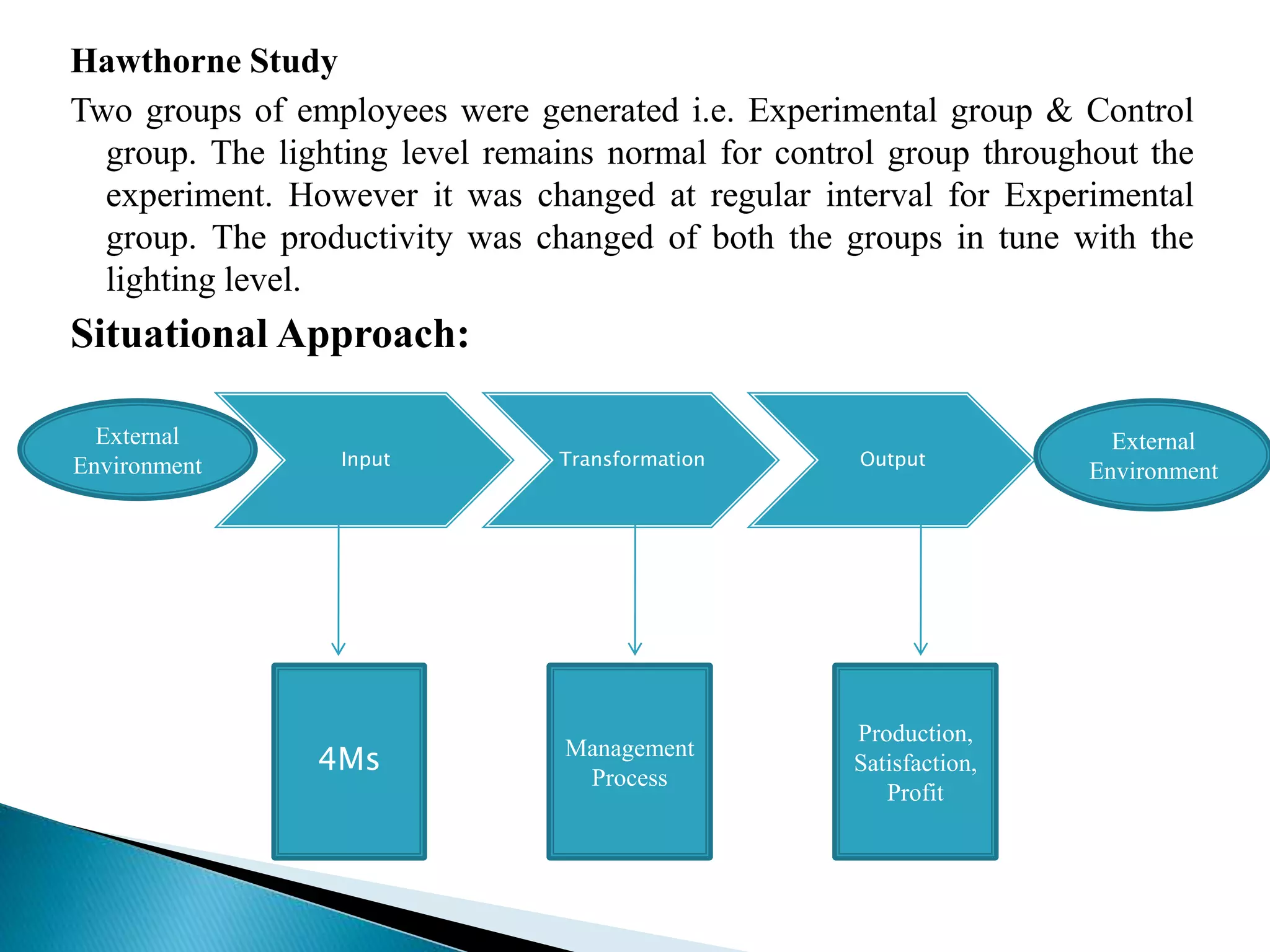
Situational Approach:
Input Transformation Output
External
Environment
External
Environment
4Ms Management
Process
Production,
Satisfaction,
Profit
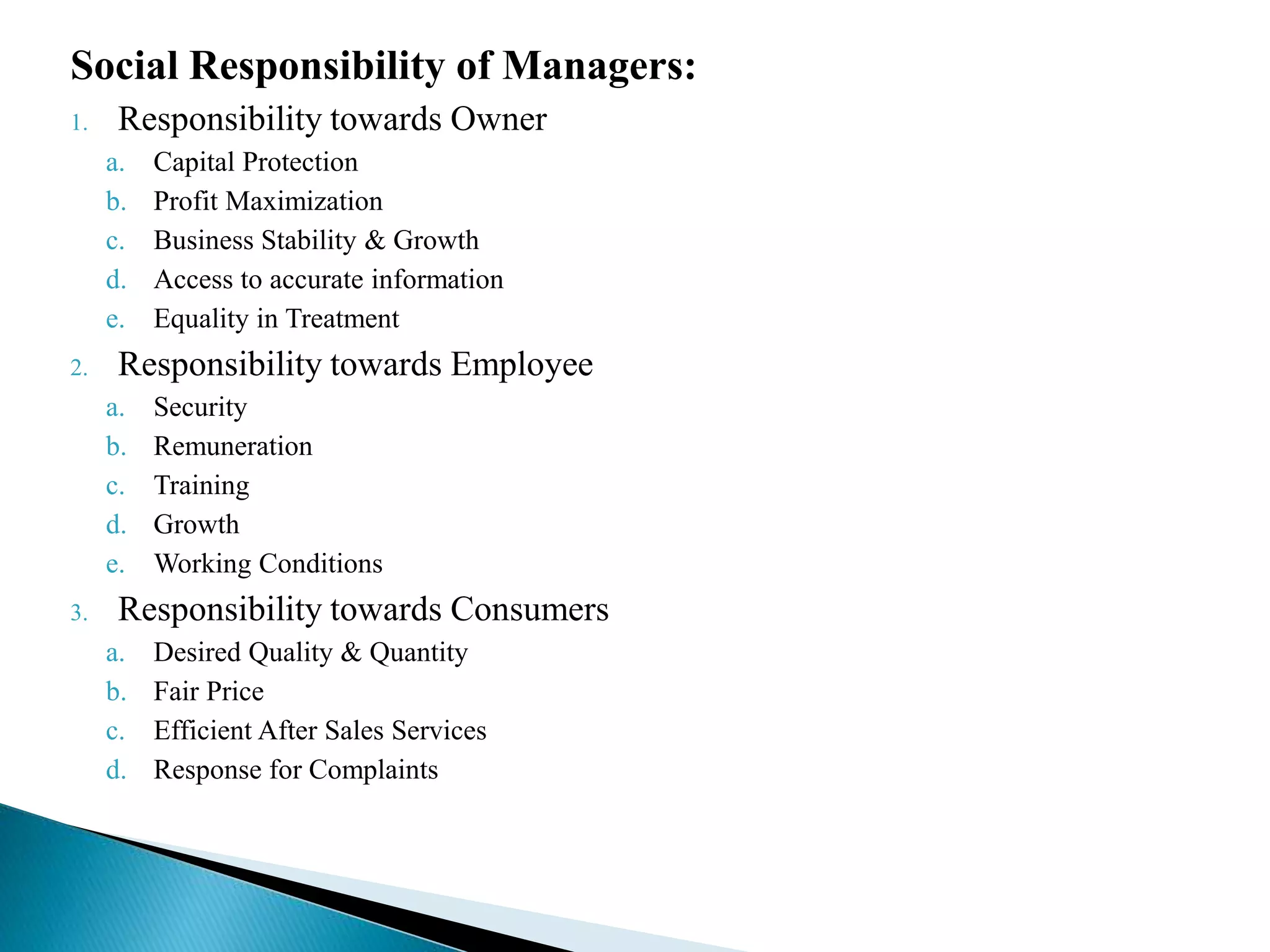
Social Responsibility of Managers:
1. Responsibility towards Owner
a. Capital Protection
b. Profit Maximization
c. Business Stability & Growth
d. Access to accurate information
e. Equality in Treatment
2. Responsibility towards Employee
a. Security
b. Remuneration
c. Training
d. Growth
e. Working Conditions
3. Responsibility towards Consumers
a. Desired Quality & Quantity
b. Fair Price
c. Efficient After Sales Services
d. Response for Complaints
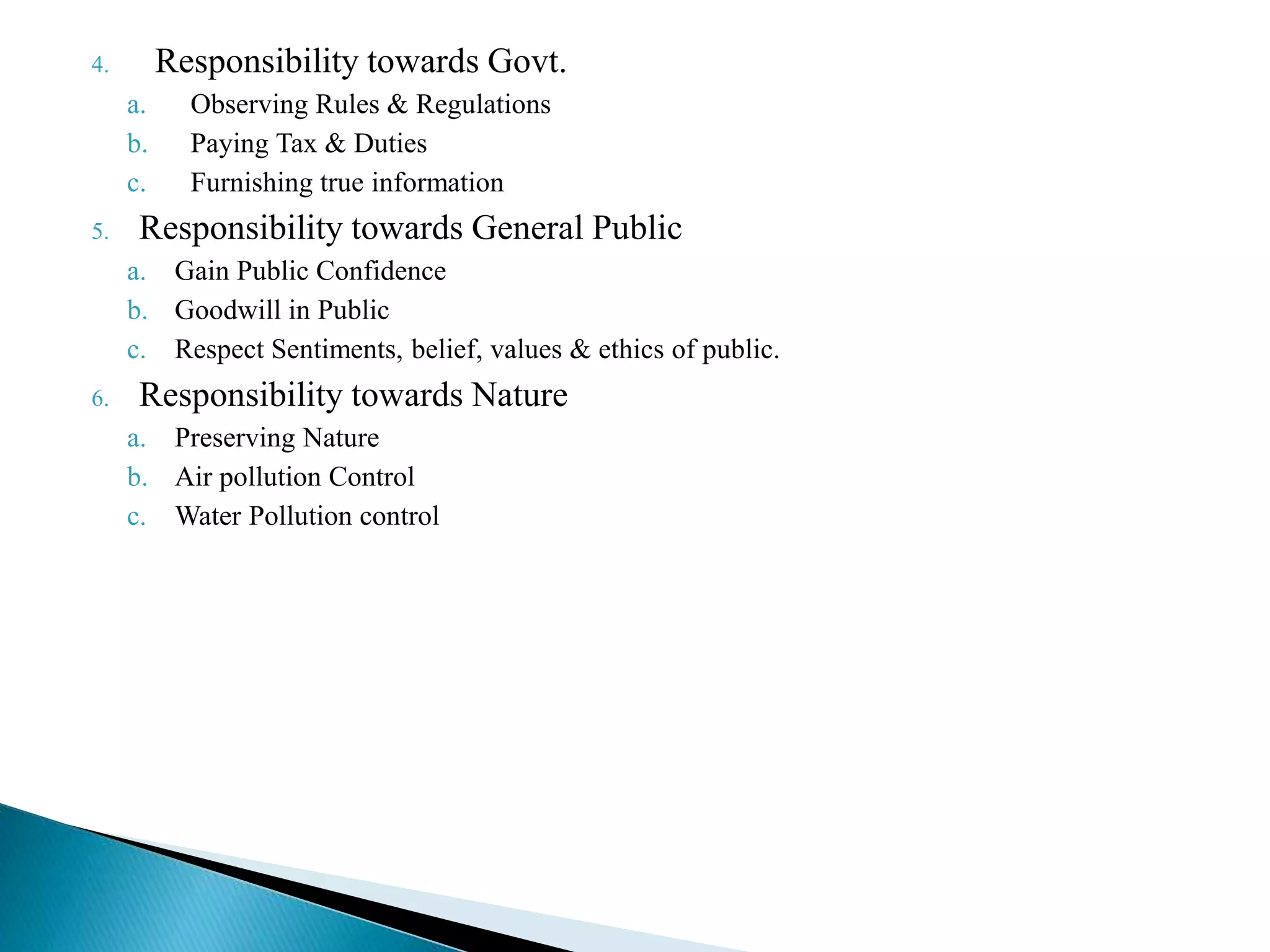
4. Responsibility towards Govt.
a. Observing Rules & Regulations
b. Paying Tax & Duties
c. Furnishing true information
5. Responsibility towards General Public
a. Gain Public Confidence
b. Goodwill in Public
c. Respect Sentiments, belief, values & ethics of public.
6. Responsibility towards Nature
a. Preserving Nature
b. Air pollution Control
c. Water Pollution control
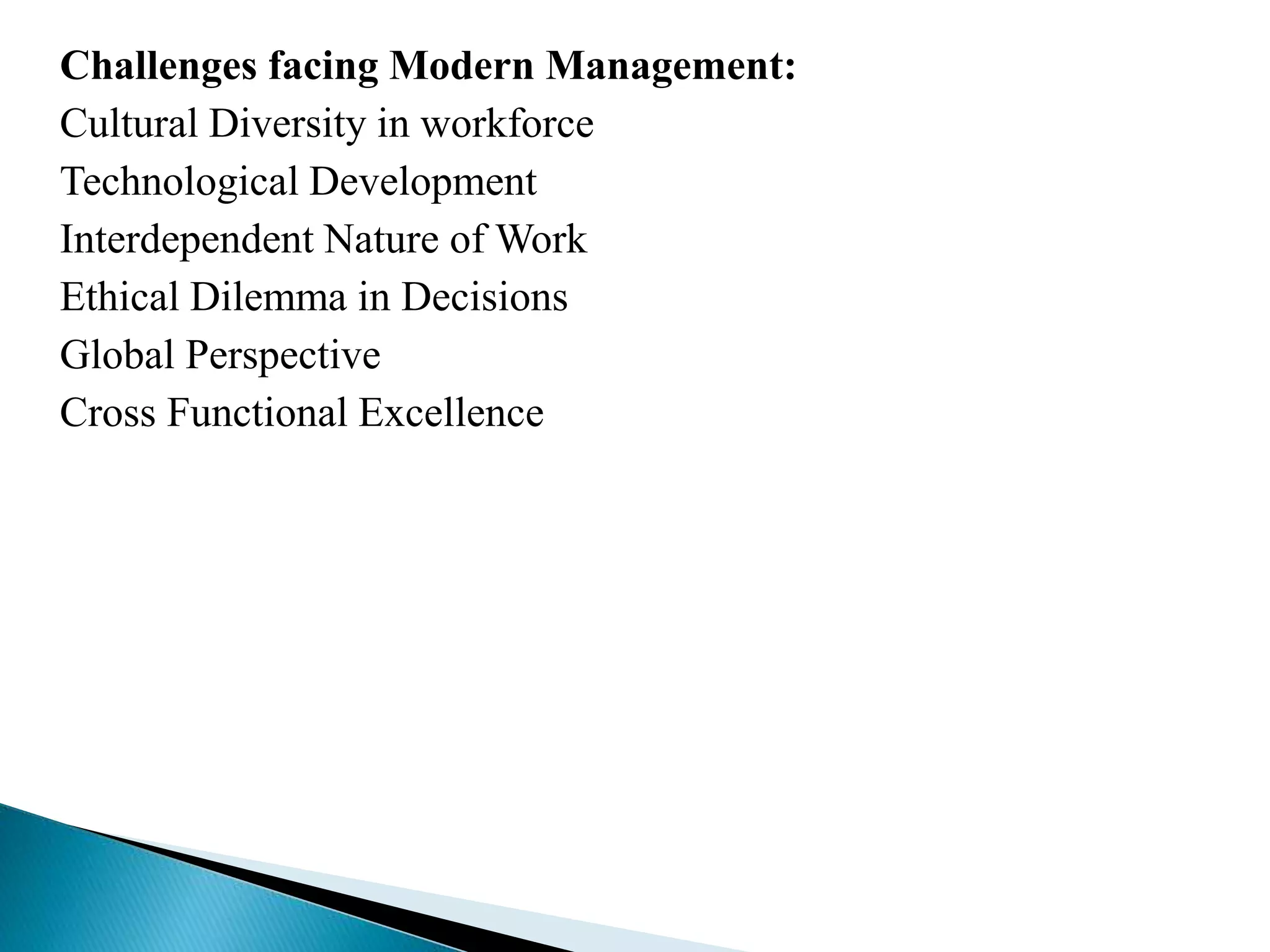
Challenges facing Modern Management:
Cultural Diversity in workforce
Technological Development
Interdependent Nature of Work
Ethical Dilemma in Decisions
Global Perspective
Cross Functional Excellence
INTRODUCTION TO MANAGEMENT

INTRODUCTION TO MANAGEMENT

  • 1.
  • 2.
     Management iswhat managers ‘do’, It is the process of coordinating work activities with and through other people so that work activities are completed efficiently and effectively. The Term ‘Management’ is used to refer the process of Managing the activities of Enterprise.  Management is an attainment of organizational goals in an effective and efficient manner through planning, organizing, staffing, directing and controlling organizational resources.  Organizational resources include Men(human beings), Money, Machines, Methods and Materials.
  • 3.
     Louis EBoone & David L Kurtz- “The use of people and other resources to accomplish objectives.”  Mary Parker Follet- “The act of getting things done through people.”  Frederick Taylor defines “Management is the art of knowing what you want to do in the best and cheapest way.”
  • 4.
     Management isa distinct process.  Management is an organized activity  Management aims at the accomplishment of predetermined objectives.  Management is both a science and an art.  Management is a group activity  Management principles are universal in nature  Management integrates human and other resources.  It’s a Process  It is inborn & Acquired Ability.
  • 5.
     For IndustrialDevelopment  For Success of Five Years Plan  For Increasing Export Trade  For Increasing Employment  For getting benefit from modern technique
  • 6.
     Production Management Financial Management  Personnel Management  Marketing Management  Maintenance Management  Material Management and Purchasing  Transport Management  System Management  Office Management
  • 7.
    I. Conceptual Skillswhich deals with Ideas (Ability to analysis working in a situation). II. Human Skills which deals with people (Ability to recognize feelings and sentiments of people & to judge the possible reaction). III. Technical Skills which deals with things (Knowledge and proficiency in handling and type of process or technique).
  • 8.
    Approaches to Management Classical Approach Scientific Management Theory General Administrative TheoryBureaucratic Management Theory Behavioral Approach Hawthorne Study Situational Approach
  • 9.
    Classical Approach It includesScientific Management, General Administrative and Bureaucratic Management Theories. It’s also known as formal and impersonal Management Approach. Scientific Management Theory: Made by F.W. Taylor (Father of Modern Management). He develop the theory “One right way” for the different jobs. The Scientific Management Principles recommended by F.W. Taylor are: 1. Replacement of Rule of thumb with the true science of management- undertaking a scientific study of tasks to determine the best method for performing each element of a job. 2. Replacement of self training with scientific training- to develop scientific methods to improve skills 3. Hearty cooperation with employee- employer. 4. Equal distribution of work and responsibility.
  • 10.
    General Administrative Theory Givenby Henri Fayol (Father of Management). Activities of Management: a) Technical (Production) b) Commercial (Production & Selling) c) Financing (Mobilizing Capital) d) Security (Protection of Properties) e) Accounting (Gathering & dissemination of financial information) f) Managerial (Planning & Organizing) 14 Principles of Management: A. Division of Work B. Authority C. Discipline D. Unity of Command E. Unity of Direction F. Subordination of Individual Interest to General Interest G. Remuneration H. Centralization I. Scaler Chain J. Order K. Equity L. Stability of Tenure of employees M. Initiative N. Esprit de corps (Team Spirit)
  • 11.
    Bureaucratic Management Theory Givenby Max Weber. It told about hierarchy of authority and system of rules. Acc. To Weber Bureaucracy is exercise of control on the basis of knowledge. Common characteristics of BM Theory are: I. Hiring based on qualification II. Merit based promotion III. Chain of command IV. Division of labor V. Neutrality in application of rules and regulations. Behavioral Approach: This approach emphasizes on improving the management through psychological makeup of organizational members. Hawthorne Study: This study conducts in Western Electric Hawthorne Works in Chicago which examine the impact of lighting on employee productivity.
  • 12.
    Hawthorne Study Two groupsof employees were generated i.e. Experimental group & Control group. The lighting level remains normal for control group throughout the experiment. However it was changed at regular interval for Experimental group. The productivity was changed of both the groups in tune with the lighting level. Situational Approach: Input Transformation Output External Environment External Environment 4Ms Management Process Production, Satisfaction, Profit
  • 13.
    Social Responsibility ofManagers: 1. Responsibility towards Owner a. Capital Protection b. Profit Maximization c. Business Stability & Growth d. Access to accurate information e. Equality in Treatment 2. Responsibility towards Employee a. Security b. Remuneration c. Training d. Growth e. Working Conditions 3. Responsibility towards Consumers a. Desired Quality & Quantity b. Fair Price c. Efficient After Sales Services d. Response for Complaints
  • 14.
    4. Responsibility towardsGovt. a. Observing Rules & Regulations b. Paying Tax & Duties c. Furnishing true information 5. Responsibility towards General Public a. Gain Public Confidence b. Goodwill in Public c. Respect Sentiments, belief, values & ethics of public. 6. Responsibility towards Nature a. Preserving Nature b. Air pollution Control c. Water Pollution control
  • 15.
    Challenges facing ModernManagement: Cultural Diversity in workforce Technological Development Interdependent Nature of Work Ethical Dilemma in Decisions Global Perspective Cross Functional Excellence