Testing of Hypothesis
&
Parametric and Non- Parametric Tests
By:
Dr. Parveen Vashisth
Assistant Professor
CDLU Sirsa
Tests of Hypothesis:
A hypothesis is an assumption about the
population parameters to be tasted based on
sample information. The statistical testing of
hypothesis is the most important technique in
statistical inference. Hypothesis tests are widely
used in business and industry for making
business decision.
Procedure of Hypothesis Testing:
1. Setting up a Hypothesis
1. Null Hypothesis (H0)
2. Alternative Hypothesis (H1)
2. Set up a Suitable Significance level
i.e. ɑ= 0.5 it means 5% level of significance (95%
confidence that we have made right decision.
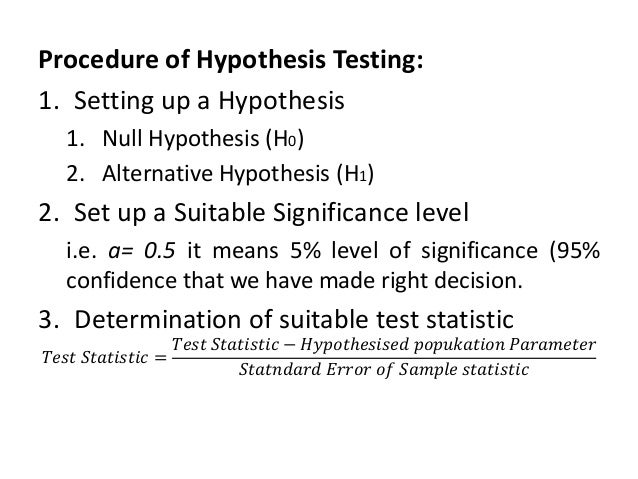
3. Determination of suitable test statistic
𝑇𝑒𝑠𝑡 𝑆𝑡𝑎𝑡𝑖𝑠𝑡𝑖𝑐 =
𝑇𝑒𝑠𝑡 𝑆𝑡𝑎𝑡𝑖𝑠𝑡𝑖𝑐 − 𝐻𝑦𝑝𝑜𝑡ℎ𝑒𝑠𝑖𝑠𝑒𝑑 𝑝𝑜𝑝𝑢𝑘𝑎𝑡𝑖𝑜𝑛 𝑃𝑎𝑟𝑎𝑚𝑒𝑡𝑒𝑟
𝑆𝑡𝑎𝑡𝑛𝑑𝑎𝑟𝑑 𝐸𝑟𝑟𝑜𝑟 𝑜𝑓 𝑆𝑎𝑚𝑝𝑙𝑒 𝑠𝑡𝑎𝑡𝑖𝑠𝑡𝑖𝑐
4. Determine the critical Region: Establishing a
critical region is similar to determining a
100(1-ɑ)% confidence interval.
5. Doing Computation
6. Making final decision.
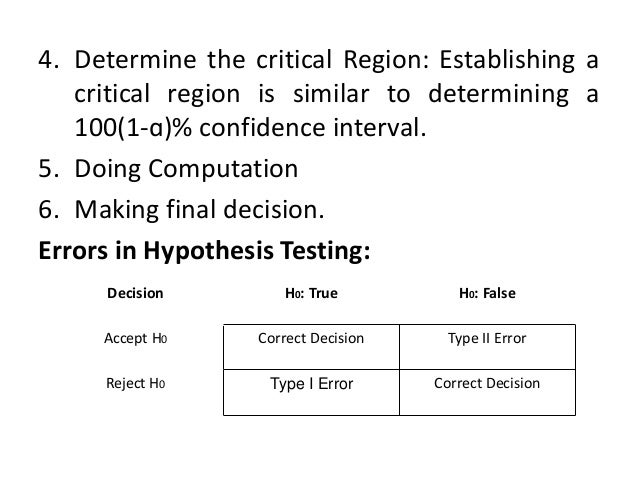
Errors in Hypothesis Testing:
Decision H0: True H0: False
Accept H0 Correct Decision Type II Error
Reject H0 Type I Error Correct Decision
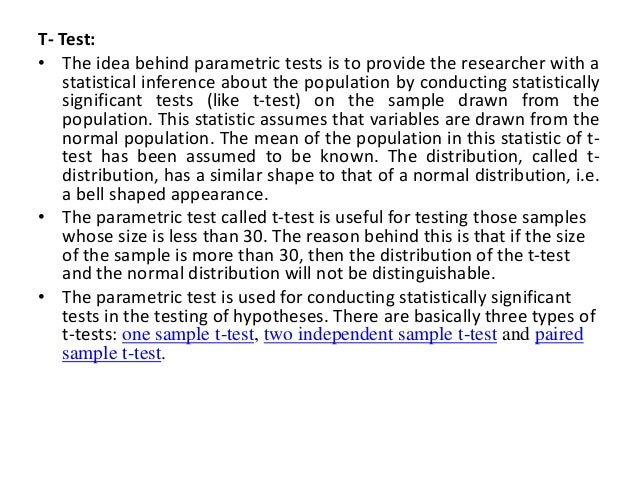
T- Test:
• The idea behind parametric tests is to provide the researcher with a
statistical inference about the population by conducting statistically
significant tests (like t-test) on the sample drawn from the
population. This statistic assumes that variables are drawn from the
normal population. The mean of the population in this statistic of t-
test has been assumed to be known. The distribution, called t-
distribution, has a similar shape to that of a normal distribution, i.e.
a bell shaped appearance.
• The parametric test called t-test is useful for testing those samples
whose size is less than 30. The reason behind this is that if the size
of the sample is more than 30, then the distribution of the t-test
and the normal distribution will not be distinguishable.
• The parametric test is used for conducting statistically significant
tests in the testing of hypotheses. There are basically three types of
t-tests: one sample t-test, two independent sample t-test and paired
sample t-test.
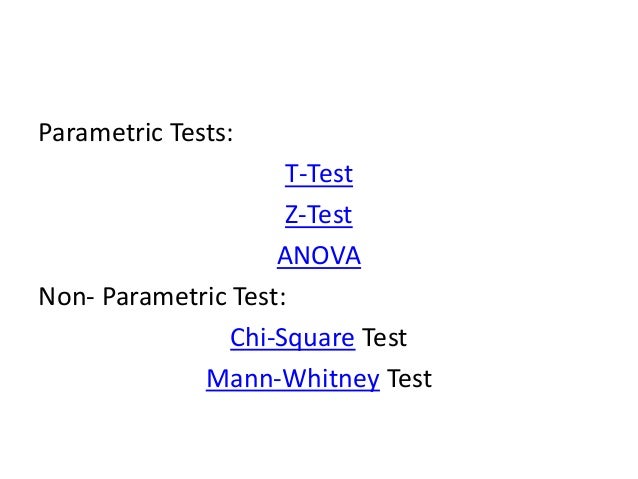
Parametric Tests:
T-Test
Z-Test
ANOVA
Non- Parametric Test:
Chi-Square Test
Mann-Whitney Test

Testing of hypothesis

  • 1.
    Testing of Hypothesis & Parametricand Non- Parametric Tests By: Dr. Parveen Vashisth Assistant Professor CDLU Sirsa
  • 2.
    Tests of Hypothesis: Ahypothesis is an assumption about the population parameters to be tasted based on sample information. The statistical testing of hypothesis is the most important technique in statistical inference. Hypothesis tests are widely used in business and industry for making business decision.
  • 3.
    Procedure of HypothesisTesting: 1. Setting up a Hypothesis 1. Null Hypothesis (H0) 2. Alternative Hypothesis (H1) 2. Set up a Suitable Significance level i.e. ɑ= 0.5 it means 5% level of significance (95% confidence that we have made right decision. 3. Determination of suitable test statistic 𝑇𝑒𝑠𝑡 𝑆𝑡𝑎𝑡𝑖𝑠𝑡𝑖𝑐 = 𝑇𝑒𝑠𝑡 𝑆𝑡𝑎𝑡𝑖𝑠𝑡𝑖𝑐 − 𝐻𝑦𝑝𝑜𝑡ℎ𝑒𝑠𝑖𝑠𝑒𝑑 𝑝𝑜𝑝𝑢𝑘𝑎𝑡𝑖𝑜𝑛 𝑃𝑎𝑟𝑎𝑚𝑒𝑡𝑒𝑟 𝑆𝑡𝑎𝑡𝑛𝑑𝑎𝑟𝑑 𝐸𝑟𝑟𝑜𝑟 𝑜𝑓 𝑆𝑎𝑚𝑝𝑙𝑒 𝑠𝑡𝑎𝑡𝑖𝑠𝑡𝑖𝑐
  • 4.
    4. Determine thecritical Region: Establishing a critical region is similar to determining a 100(1-ɑ)% confidence interval. 5. Doing Computation 6. Making final decision. Errors in Hypothesis Testing: Decision H0: True H0: False Accept H0 Correct Decision Type II Error Reject H0 Type I Error Correct Decision
  • 5.
    T- Test: • Theidea behind parametric tests is to provide the researcher with a statistical inference about the population by conducting statistically significant tests (like t-test) on the sample drawn from the population. This statistic assumes that variables are drawn from the normal population. The mean of the population in this statistic of t- test has been assumed to be known. The distribution, called t- distribution, has a similar shape to that of a normal distribution, i.e. a bell shaped appearance. • The parametric test called t-test is useful for testing those samples whose size is less than 30. The reason behind this is that if the size of the sample is more than 30, then the distribution of the t-test and the normal distribution will not be distinguishable. • The parametric test is used for conducting statistically significant tests in the testing of hypotheses. There are basically three types of t-tests: one sample t-test, two independent sample t-test and paired sample t-test.
  • 6.
    Parametric Tests: T-Test Z-Test ANOVA Non- ParametricTest: Chi-Square Test Mann-Whitney Test