By:
Dr. Parveen Vashisth
Assistant Professor, CDLU Sirsa
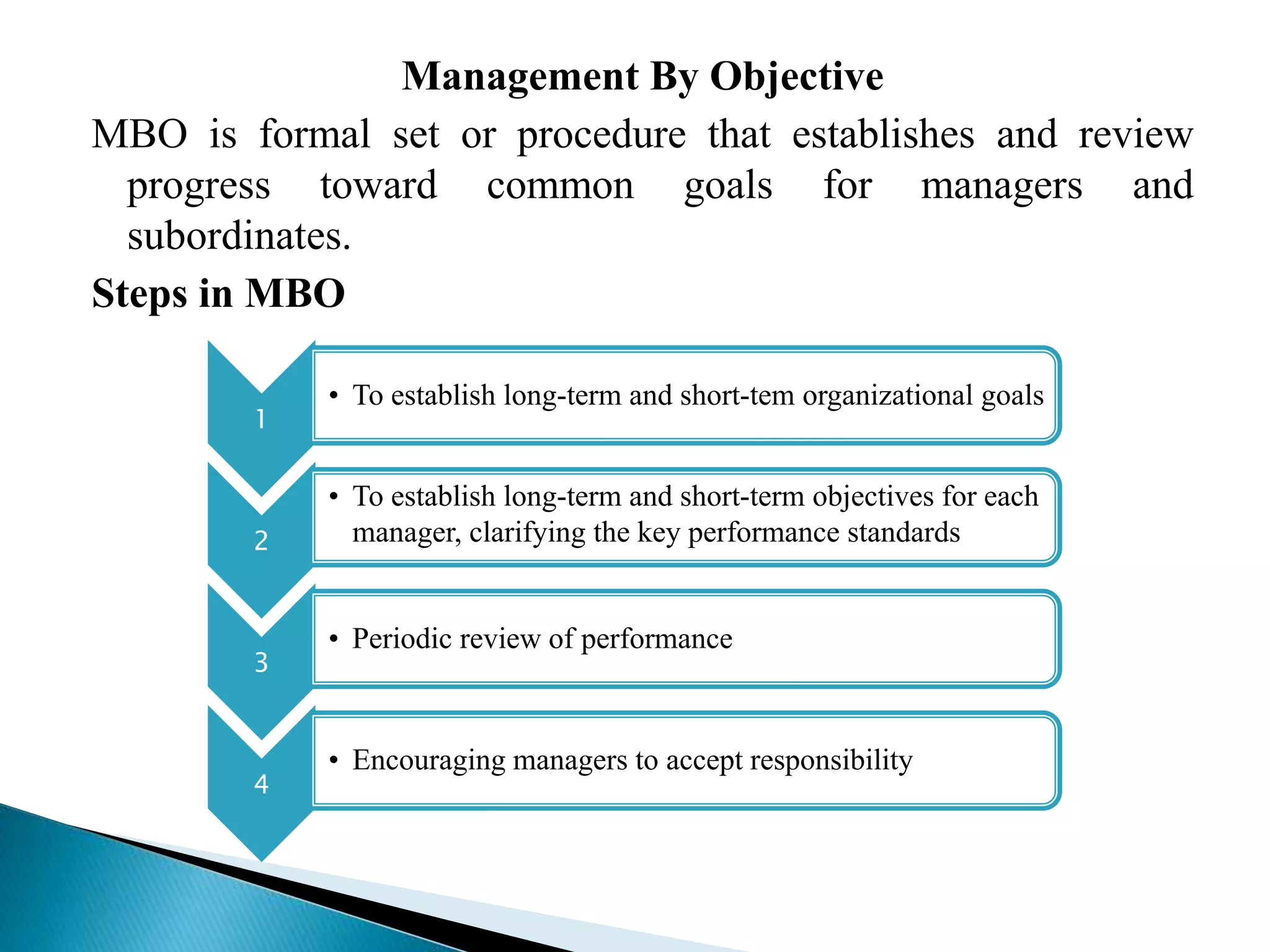
Management By Objective
MBO is formal set or procedure that establishes and review
progress toward common goals for managers and
subordinates.
Steps in MBO
1
• To establish long-term and short-tem organizational goals
2
• To establish long-term and short-term objectives for each
manager, clarifying the key performance standards
3
• Periodic review of performance
4
• Encouraging managers to accept responsibility
 The need for planning will be recognized
 It provides for objectives and accountability for performance
 It encourages participative management
 It helps in job enrichment
 It provides for a good feedback system
 PLANNING
 ORGANIZING
 STAFFING
 DIRECTING
 CONTROLLING
• Planning is determining the objectives and formulating the methods to
achieve them. It is more simply said than done. A job well planned is half
done. During planning one needs to ask oneself the following:
 What am I trying to accomplish i.e. what is my objective?
 What resources do I have and do I need to accomplish the same?
 What are the methods and means to achieve the objectives?
 Is this the optimal path?
 Planning is deciding in advance what to do, how to do, when to do it who
is to do it.
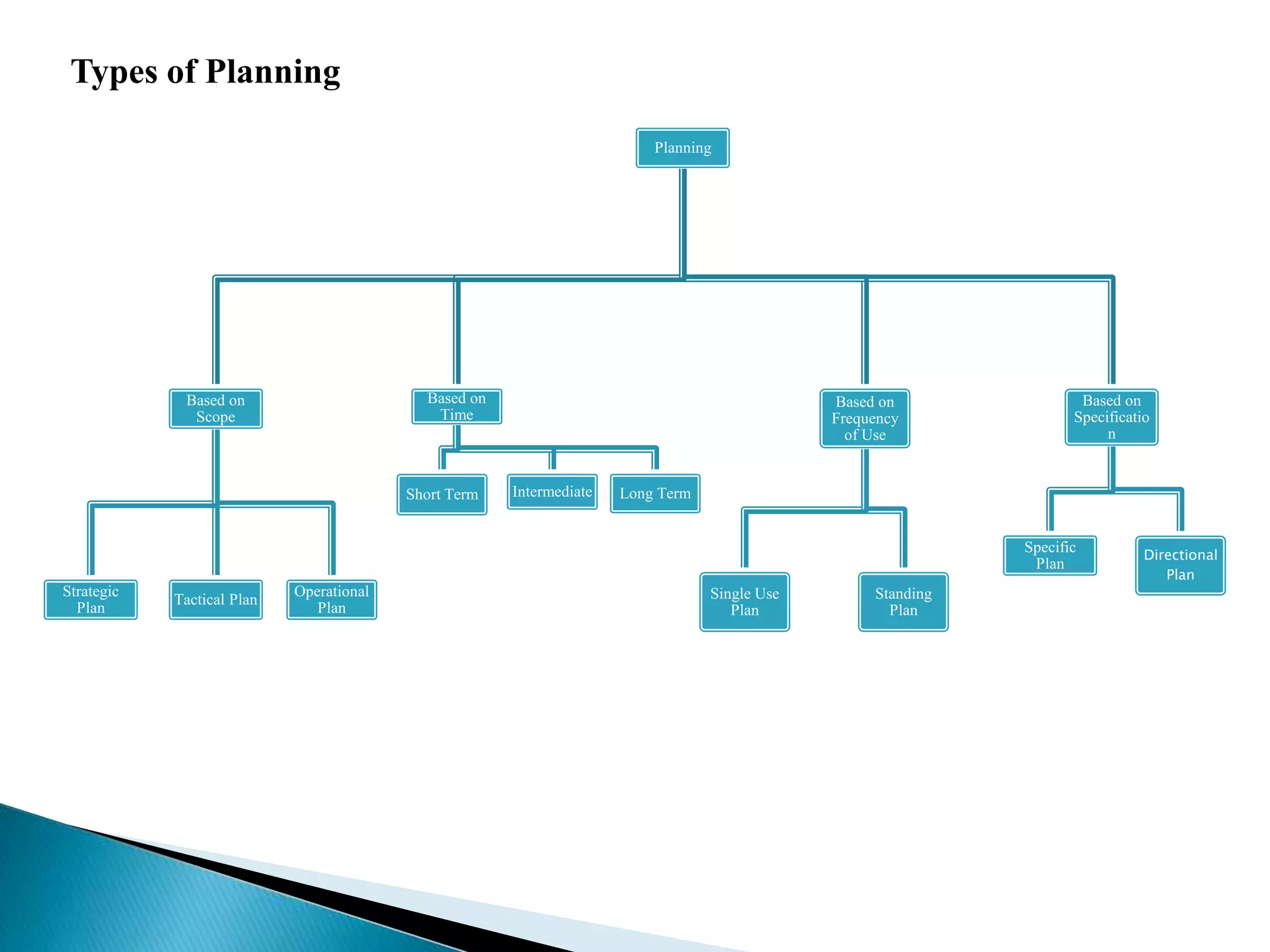
Types of Planning
Planning
Based on
Scope
Strategic
Plan
Tactical Plan
Operational
Plan
Based on
Time
Short Term Intermediate Long Term
Based on
Frequency
of Use
Single Use
Plan
Standing
Plan
Based on
Specificatio
n
Specific
Plan
Directional
Plan
 Take Time to Plan
 Planning can be Top to Down or Bottom to Top
 Involve and Communicate with all those Concerned
 Plans must be Flexible and Dynamic
 Evaluate and Revise
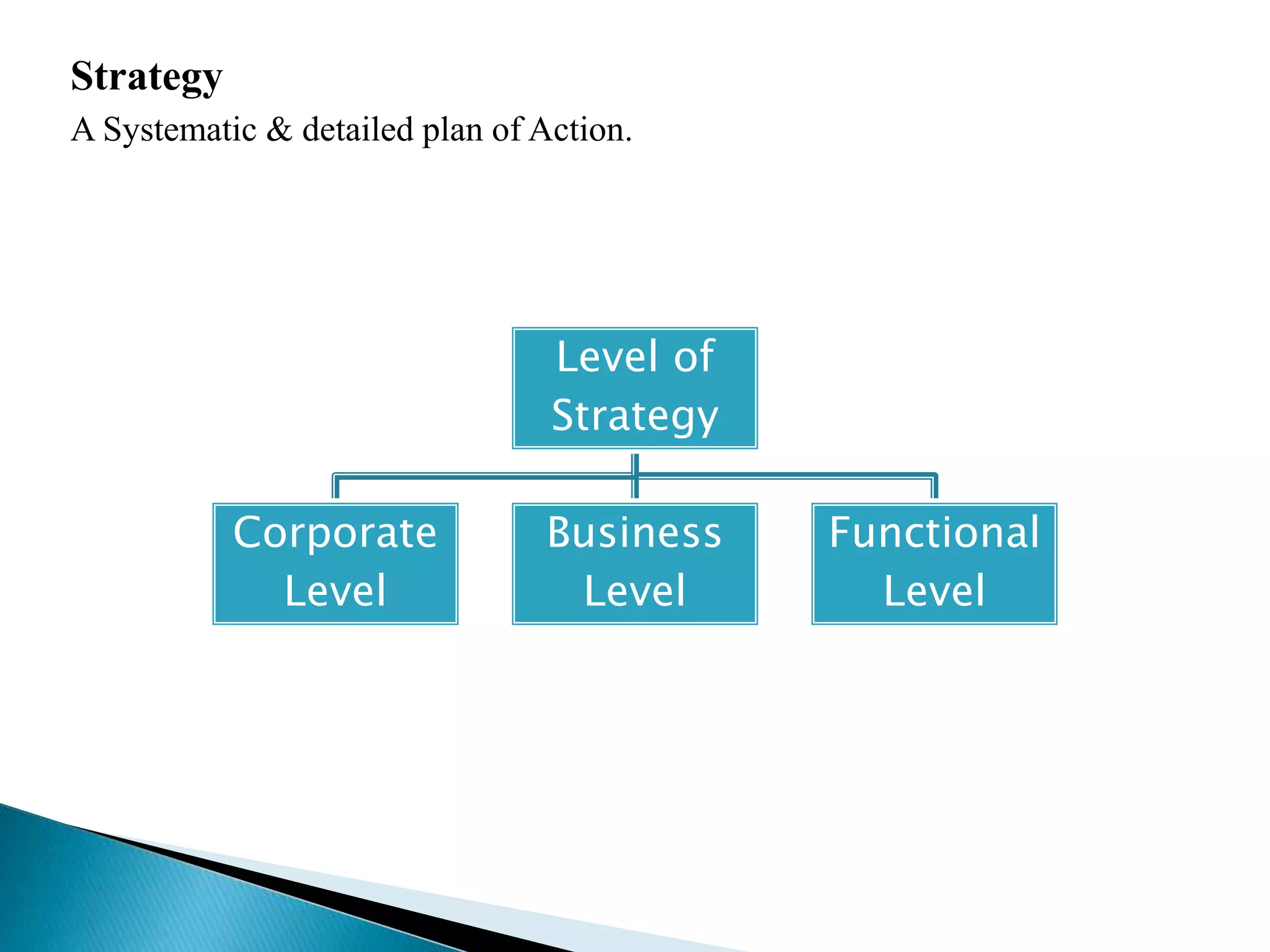
Strategy
A Systematic & detailed plan of Action.
Level of
Strategy
Corporate
Level
Business
Level
Functional
Level
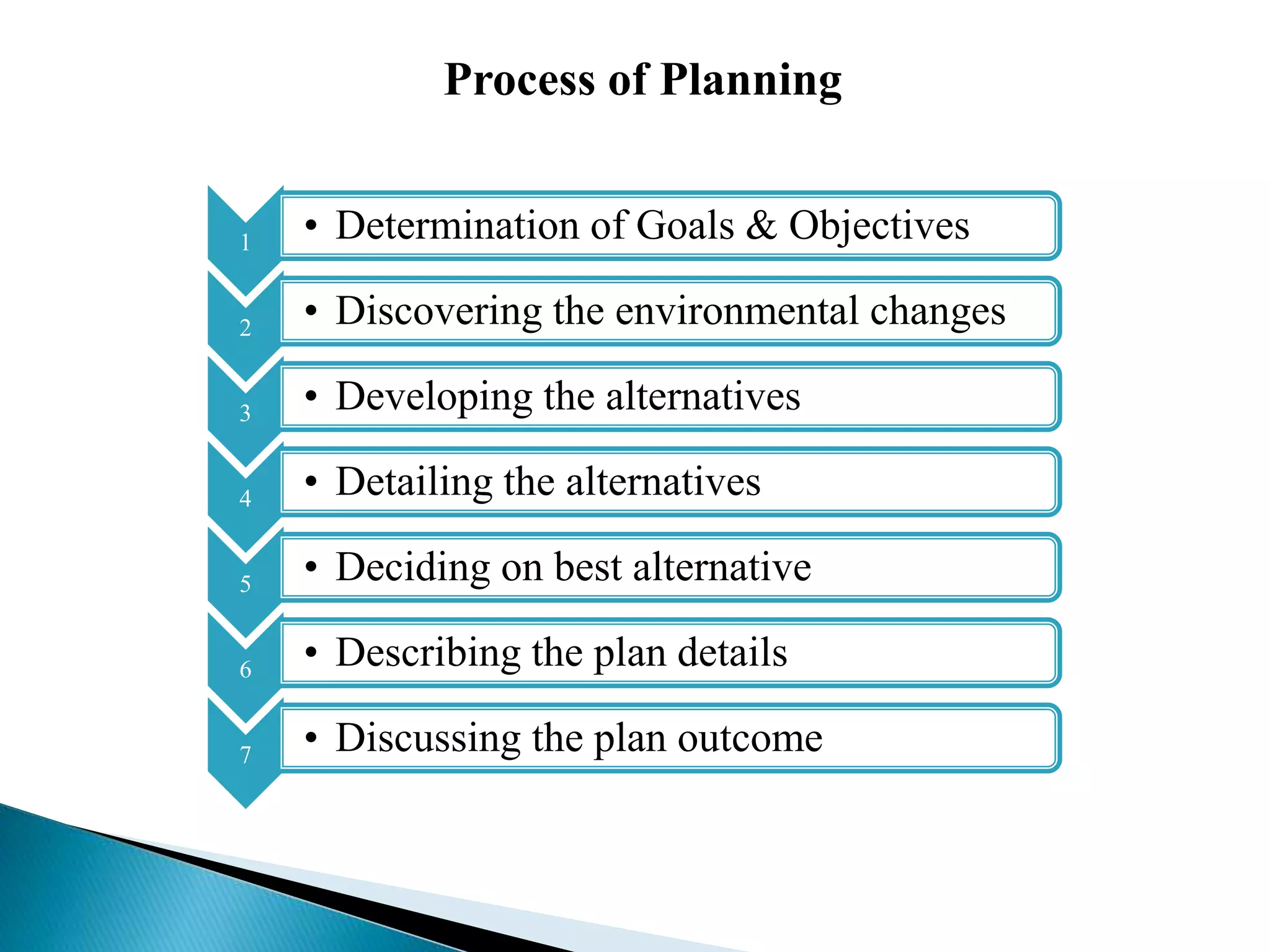
Process of Planning
1 • Determination of Goals & Objectives
2 • Discovering the environmental changes
3 • Developing the alternatives
4 • Detailing the alternatives
5 • Deciding on best alternative
6 • Describing the plan details
7 • Discussing the plan outcome
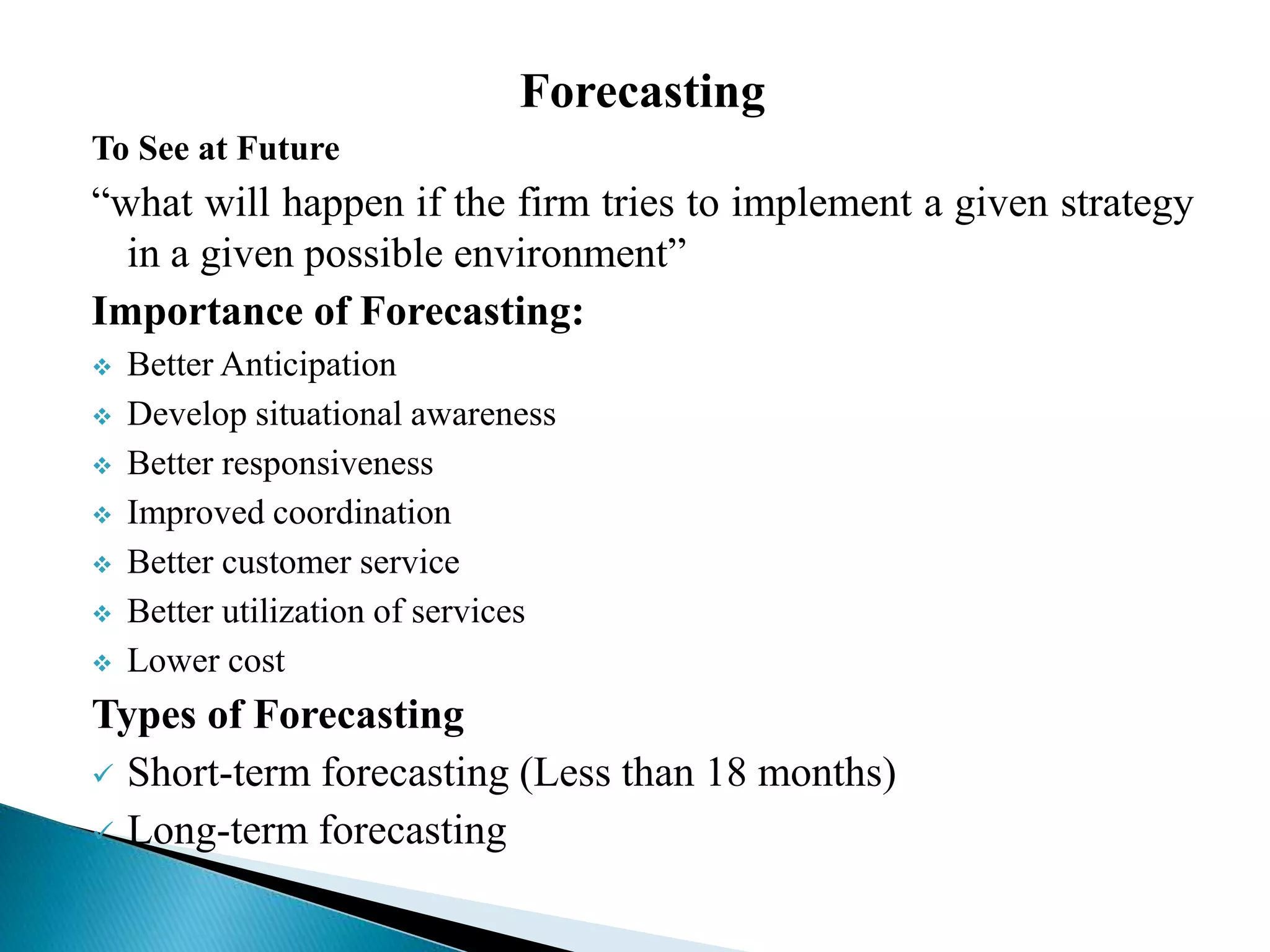
Forecasting
To See at Future
“what will happen if the firm tries to implement a given strategy
in a given possible environment”
Importance of Forecasting:
 Better Anticipation
 Develop situational awareness
 Better responsiveness
 Improved coordination
 Better customer service
 Better utilization of services
 Lower cost
Types of Forecasting
 Short-term forecasting (Less than 18 months)
 Long-term forecasting
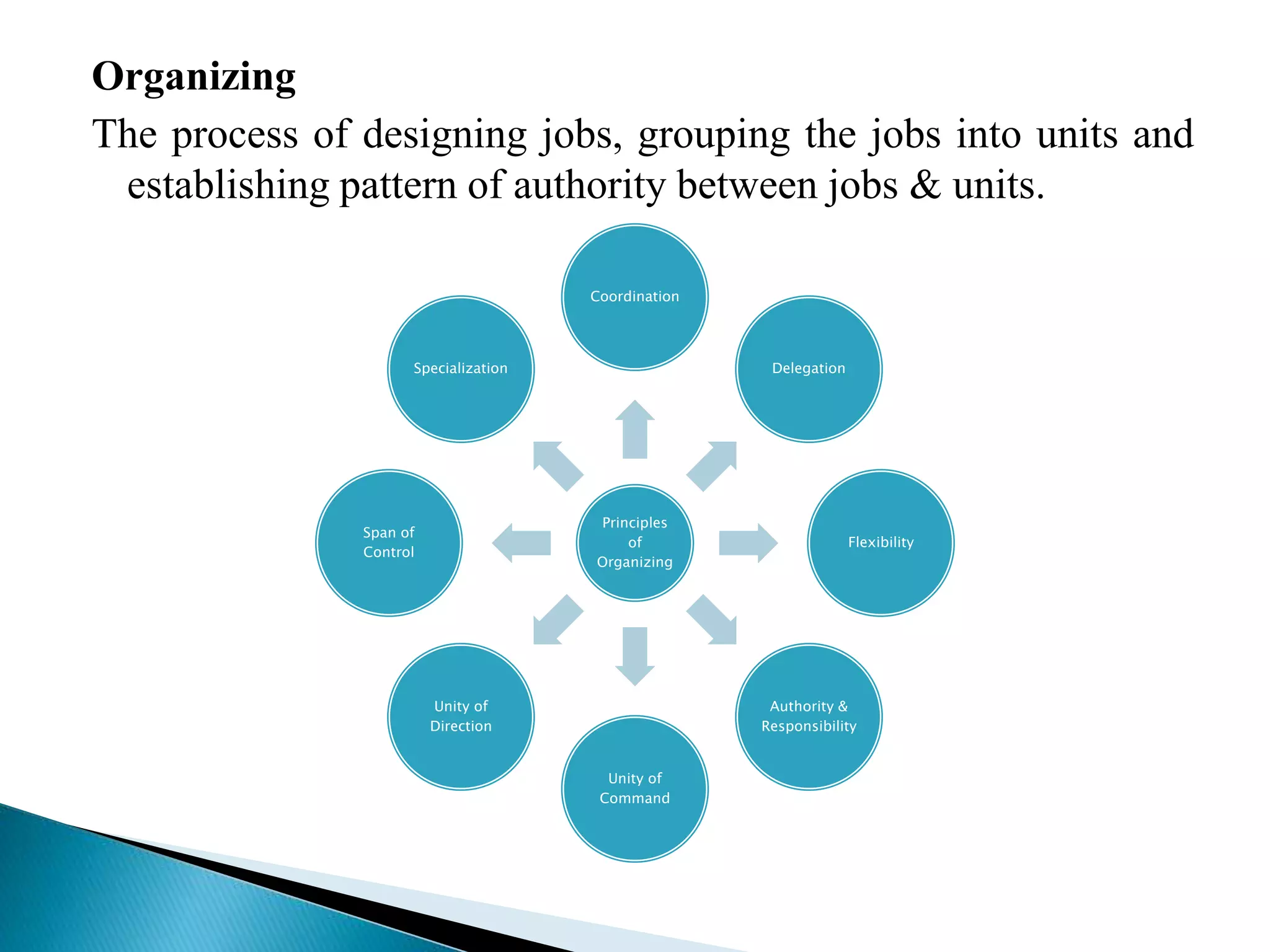
Organizing
The process of designing jobs, grouping the jobs into units and
establishing pattern of authority between jobs & units.
Principles
of
Organizing
Coordination
Delegation
Flexibility
Authority &
Responsibility
Unity of
Command
Unity of
Direction
Span of
Control
Specialization
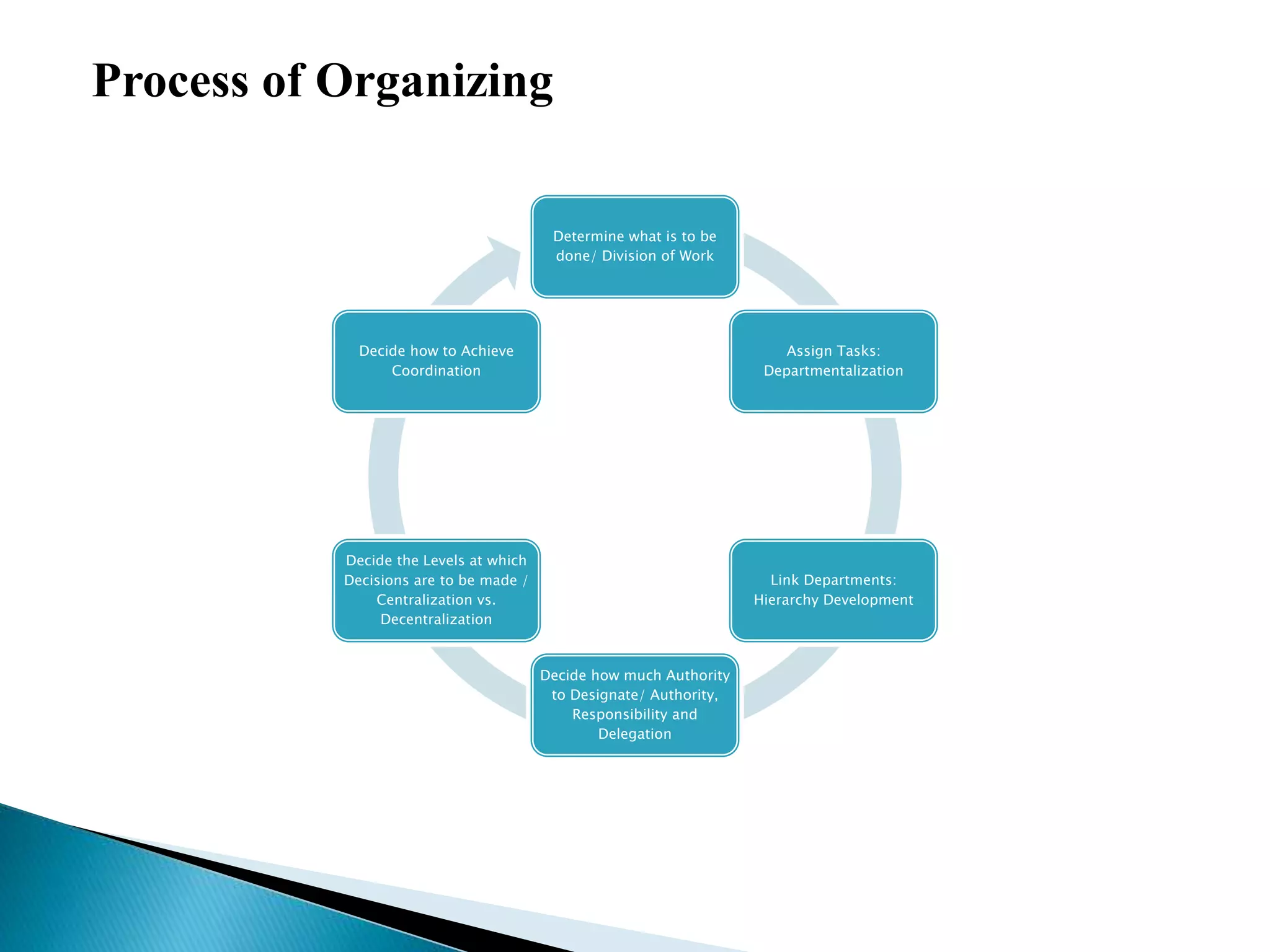
Process of Organizing
Determine what is to be
done/ Division of Work
Assign Tasks:
Departmentalization
Link Departments:
Hierarchy Development
Decide how much Authority
to Designate/ Authority,
Responsibility and
Delegation
Decide the Levels at which
Decisions are to be made /
Centralization vs.
Decentralization
Decide how to Achieve
Coordination
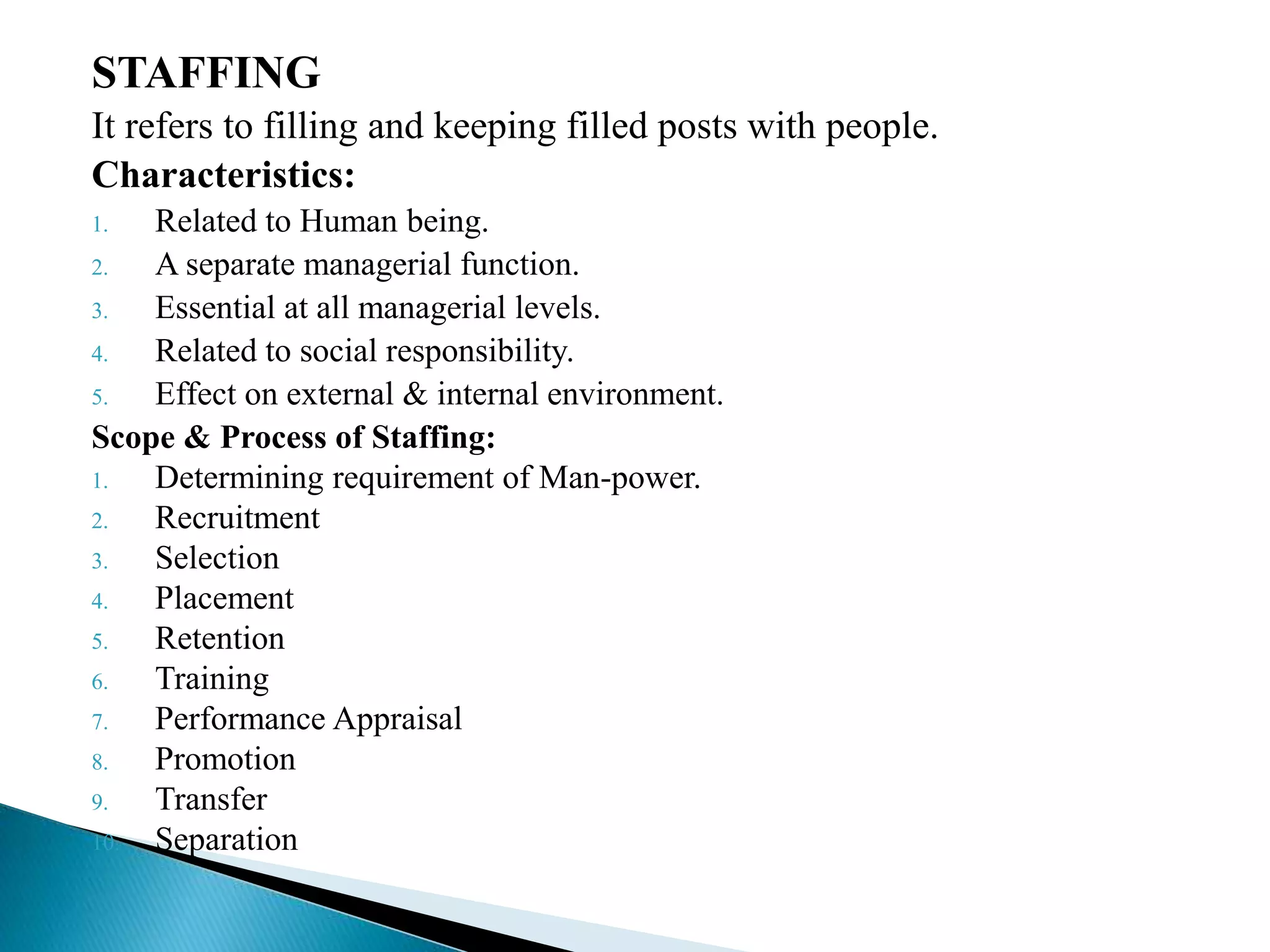
STAFFING
It refers to filling and keeping filled posts with people.
Characteristics:
1. Related to Human being.
2. A separate managerial function.
3. Essential at all managerial levels.
4. Related to social responsibility.
5. Effect on external & internal environment.
Scope & Process of Staffing:
1. Determining requirement of Man-power.
2. Recruitment
3. Selection
4. Placement
5. Retention
6. Training
7. Performance Appraisal
8. Promotion
9. Transfer
10. Separation
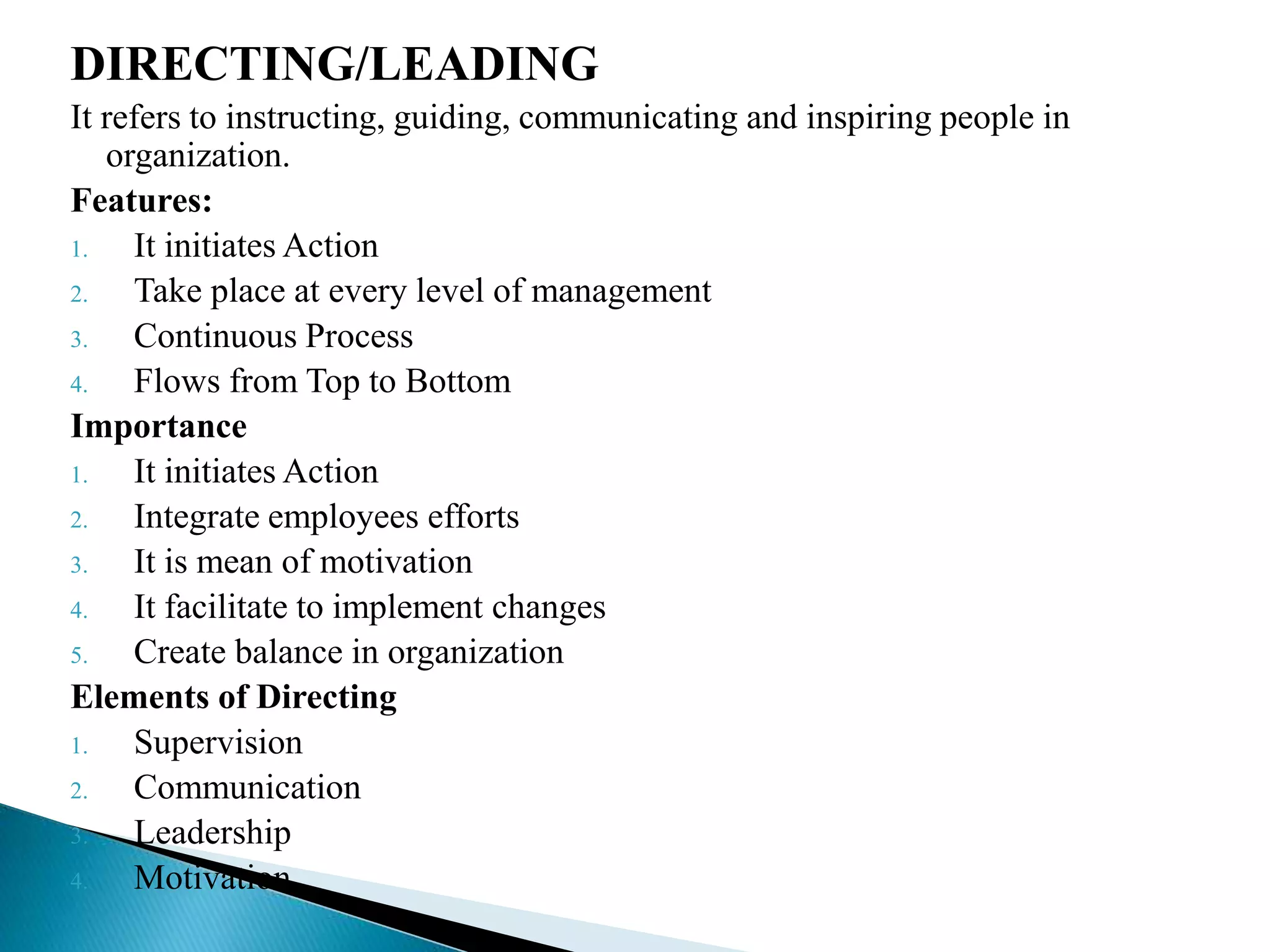
DIRECTING/LEADING
It refers to instructing, guiding, communicating and inspiring people in
organization.
Features:
1. It initiates Action
2. Take place at every level of management
3. Continuous Process
4. Flows from Top to Bottom
Importance
1. It initiates Action
2. Integrate employees efforts
3. It is mean of motivation
4. It facilitate to implement changes
5. Create balance in organization
Elements of Directing
1. Supervision
2. Communication
3. Leadership
4. Motivation
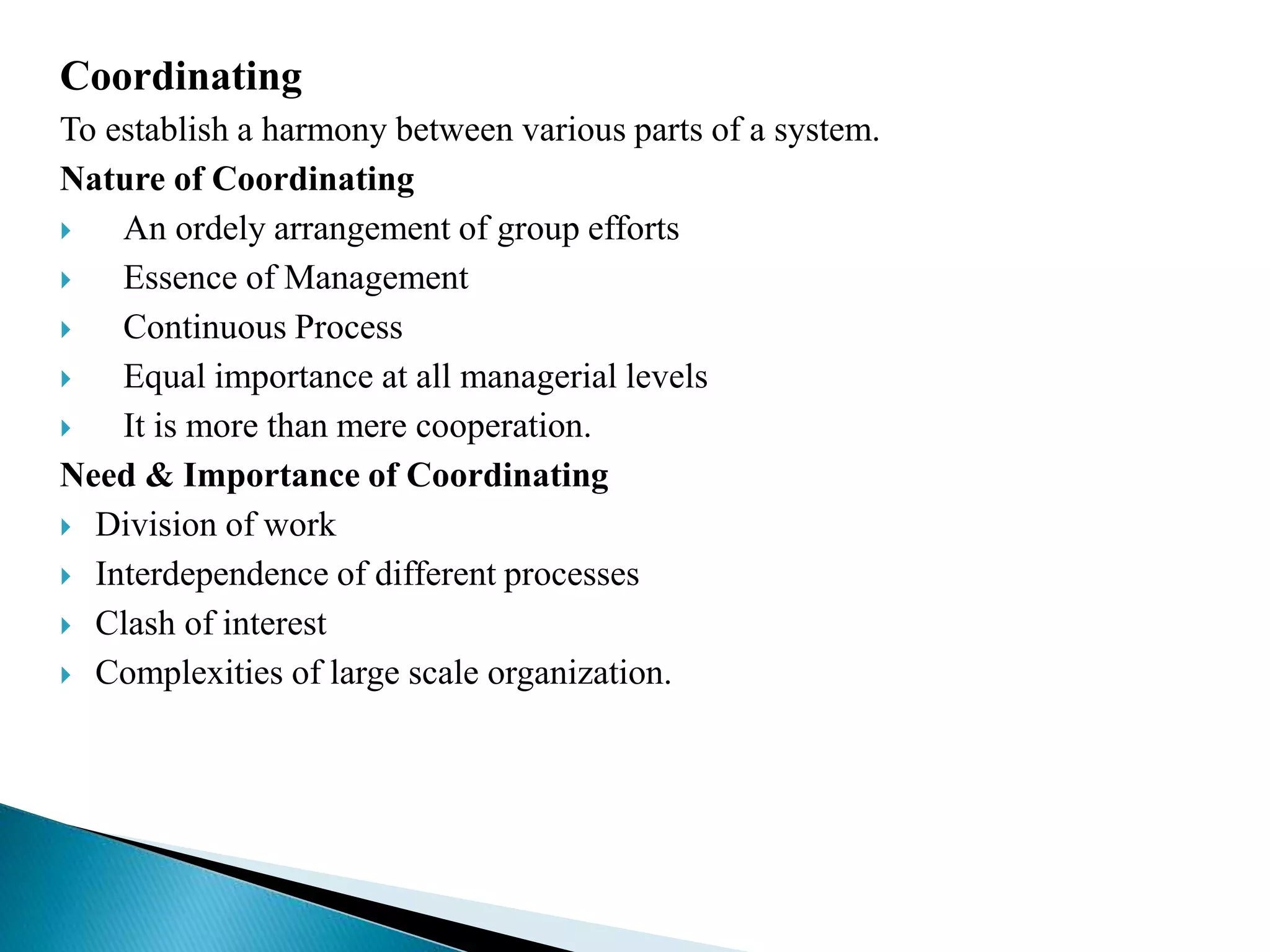
Coordinating
To establish a harmony between various parts of a system.
Nature of Coordinating
 An ordely arrangement of group efforts
 Essence of Management
 Continuous Process
 Equal importance at all managerial levels
 It is more than mere cooperation.
Need & Importance of Coordinating
 Division of work
 Interdependence of different processes
 Clash of interest
 Complexities of large scale organization.
Principles of Coordination
 Early Start
 Direct Contract
 Continuity
 Reciprocal Relationship
Difficulties of Coordination
1. Difference b/w organizational & individual goal
2. Difference b/w goals of individuals
3. Difference in work progress evaluation
4. Complicated organizational Structure
Controlling
Process of taking steps to bring actual results & desired results closer together.
Objectives
To Evaluate the Work Progress
Apply to corrective Measures
To Gain Maximum Cooperation of HR
To maximize utilization of Material & Machine
To fix responsibility
To motivate employees
To face the changing environment
To check & avoid undesirable activities
Controlling Process
2. Measurement of
Actual
Performance
1. Setting
Performance
Standards
3. Comparison
of Actual with
Standard
4. Analyzing
Deviation
5. Taking Corrective
Action
Do Noting
Do Noting
Do Noting
Do Noting
Is standard
being
attained?
Is deviation
acceptable?
Is standard
acceptable?
Revising
the
standard
Y
Y
Y
Y
N
N
N
 Feed Forward Control-Control that attempts to
identify and prevent deviations before they occur is
called feed forward control, sometimes called
preliminary or preventive control.
 Concurrent Control-Control that monitors ongoing
employee activities during their progress, to ensure
they are consistent with quality standards, is called
concurrent control.
 Feedback Control-In this case, the control takes
place after the action. Sometimes called post-
action or output control
 Establish Standards of Performance
 Measure Actual Performance
 Compare Performance to Standards:
 Take Corrective Action
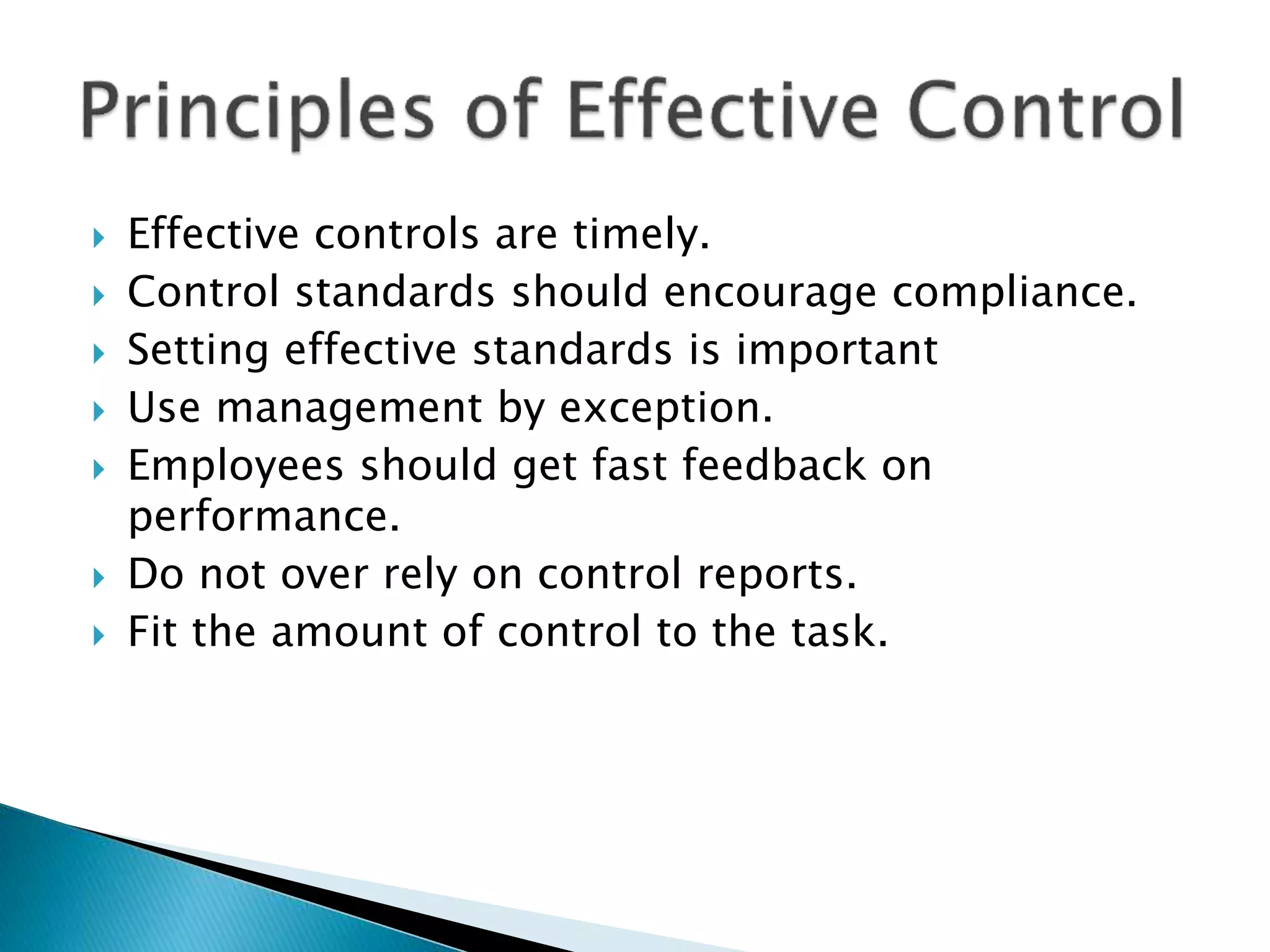
 Effective controls are timely.
 Control standards should encourage compliance.
 Setting effective standards is important
 Use management by exception.
 Employees should get fast feedback on
performance.
 Do not over rely on control reports.
 Fit the amount of control to the task.

FUNCTIONS OF MANAGEMENT.pptx

  • 1.
  • 2.
    Management By Objective MBOis formal set or procedure that establishes and review progress toward common goals for managers and subordinates. Steps in MBO 1 • To establish long-term and short-tem organizational goals 2 • To establish long-term and short-term objectives for each manager, clarifying the key performance standards 3 • Periodic review of performance 4 • Encouraging managers to accept responsibility
  • 3.
     The needfor planning will be recognized  It provides for objectives and accountability for performance  It encourages participative management  It helps in job enrichment  It provides for a good feedback system
  • 5.
     PLANNING  ORGANIZING STAFFING  DIRECTING  CONTROLLING
  • 6.
    • Planning isdetermining the objectives and formulating the methods to achieve them. It is more simply said than done. A job well planned is half done. During planning one needs to ask oneself the following:  What am I trying to accomplish i.e. what is my objective?  What resources do I have and do I need to accomplish the same?  What are the methods and means to achieve the objectives?  Is this the optimal path?  Planning is deciding in advance what to do, how to do, when to do it who is to do it.
  • 7.
    Types of Planning Planning Basedon Scope Strategic Plan Tactical Plan Operational Plan Based on Time Short Term Intermediate Long Term Based on Frequency of Use Single Use Plan Standing Plan Based on Specificatio n Specific Plan Directional Plan
  • 8.
     Take Timeto Plan  Planning can be Top to Down or Bottom to Top  Involve and Communicate with all those Concerned  Plans must be Flexible and Dynamic  Evaluate and Revise
  • 9.
    Strategy A Systematic &detailed plan of Action. Level of Strategy Corporate Level Business Level Functional Level
  • 10.
    Process of Planning 1• Determination of Goals & Objectives 2 • Discovering the environmental changes 3 • Developing the alternatives 4 • Detailing the alternatives 5 • Deciding on best alternative 6 • Describing the plan details 7 • Discussing the plan outcome
  • 11.
    Forecasting To See atFuture “what will happen if the firm tries to implement a given strategy in a given possible environment” Importance of Forecasting:  Better Anticipation  Develop situational awareness  Better responsiveness  Improved coordination  Better customer service  Better utilization of services  Lower cost Types of Forecasting  Short-term forecasting (Less than 18 months)  Long-term forecasting
  • 12.
    Organizing The process ofdesigning jobs, grouping the jobs into units and establishing pattern of authority between jobs & units. Principles of Organizing Coordination Delegation Flexibility Authority & Responsibility Unity of Command Unity of Direction Span of Control Specialization
  • 13.
    Process of Organizing Determinewhat is to be done/ Division of Work Assign Tasks: Departmentalization Link Departments: Hierarchy Development Decide how much Authority to Designate/ Authority, Responsibility and Delegation Decide the Levels at which Decisions are to be made / Centralization vs. Decentralization Decide how to Achieve Coordination
  • 14.
    STAFFING It refers tofilling and keeping filled posts with people. Characteristics: 1. Related to Human being. 2. A separate managerial function. 3. Essential at all managerial levels. 4. Related to social responsibility. 5. Effect on external & internal environment. Scope & Process of Staffing: 1. Determining requirement of Man-power. 2. Recruitment 3. Selection 4. Placement 5. Retention 6. Training 7. Performance Appraisal 8. Promotion 9. Transfer 10. Separation
  • 15.
    DIRECTING/LEADING It refers toinstructing, guiding, communicating and inspiring people in organization. Features: 1. It initiates Action 2. Take place at every level of management 3. Continuous Process 4. Flows from Top to Bottom Importance 1. It initiates Action 2. Integrate employees efforts 3. It is mean of motivation 4. It facilitate to implement changes 5. Create balance in organization Elements of Directing 1. Supervision 2. Communication 3. Leadership 4. Motivation
  • 16.
    Coordinating To establish aharmony between various parts of a system. Nature of Coordinating  An ordely arrangement of group efforts  Essence of Management  Continuous Process  Equal importance at all managerial levels  It is more than mere cooperation. Need & Importance of Coordinating  Division of work  Interdependence of different processes  Clash of interest  Complexities of large scale organization.
  • 17.
    Principles of Coordination Early Start  Direct Contract  Continuity  Reciprocal Relationship Difficulties of Coordination 1. Difference b/w organizational & individual goal 2. Difference b/w goals of individuals 3. Difference in work progress evaluation 4. Complicated organizational Structure
  • 18.
    Controlling Process of takingsteps to bring actual results & desired results closer together. Objectives To Evaluate the Work Progress Apply to corrective Measures To Gain Maximum Cooperation of HR To maximize utilization of Material & Machine To fix responsibility To motivate employees To face the changing environment To check & avoid undesirable activities
  • 19.
    Controlling Process 2. Measurementof Actual Performance 1. Setting Performance Standards 3. Comparison of Actual with Standard 4. Analyzing Deviation 5. Taking Corrective Action Do Noting Do Noting Do Noting Do Noting Is standard being attained? Is deviation acceptable? Is standard acceptable? Revising the standard Y Y Y Y N N N
  • 20.
     Feed ForwardControl-Control that attempts to identify and prevent deviations before they occur is called feed forward control, sometimes called preliminary or preventive control.  Concurrent Control-Control that monitors ongoing employee activities during their progress, to ensure they are consistent with quality standards, is called concurrent control.  Feedback Control-In this case, the control takes place after the action. Sometimes called post- action or output control
  • 21.
     Establish Standardsof Performance  Measure Actual Performance  Compare Performance to Standards:  Take Corrective Action
  • 22.
     Effective controlsare timely.  Control standards should encourage compliance.  Setting effective standards is important  Use management by exception.  Employees should get fast feedback on performance.  Do not over rely on control reports.  Fit the amount of control to the task.