Cybersecurity
Overview
Cybersecurity is crucialin today's digital landscape, protecting sensitive
information from cyber threats. It encompasses various practices and
technologies aimed at safeguarding systems, networks, and data from
unauthorized access, damage, or theft.
2.
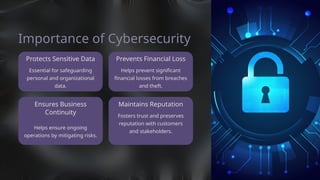
Essential for safeguarding
personaland organizational
data.
Maintains Reputation
Protects Sensitive Data
Helps ensure ongoing
operations by mitigating risks.
Prevents Financial Loss
Helps prevent significant
financial losses from breaches
and theft.
Ensures Business
Continuity
Importance of Cybersecurity
Fosters trust and preserves
reputation with customers
and stakeholders.
3.
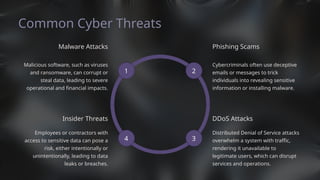
Phishing Scams
DDoS Attacks
InsiderThreats
Malware Attacks
Common Cyber Threats
Cybercriminals often use deceptive
emails or messages to trick
individuals into revealing sensitive
information or installing malware.
Malicious software, such as viruses
and ransomware, can corrupt or
steal data, leading to severe
operational and financial impacts.
Employees or contractors with
access to sensitive data can pose a
risk, either intentionally or
unintentionally, leading to data
leaks or breaches.
Distributed Denial of Service attacks
overwhelm a system with traffic,
rendering it unavailable to
legitimate users, which can disrupt
services and operations.
4 3
2
1
4.
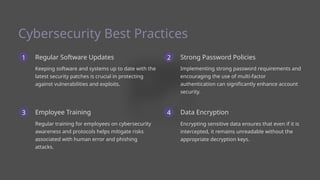
Cybersecurity Best Practices
StrongPassword Policies
1 Regular Software Updates
Data Encryption
2
Encrypting sensitive data ensures that even if it is
intercepted, it remains unreadable without the
appropriate decryption keys.
4
Implementing strong password requirements and
encouraging the use of multi-factor
authentication can significantly enhance account
security.
Employee Training
Regular training for employees on cybersecurity
awareness and protocols helps mitigate risks
associated with human error and phishing
attacks.
Keeping software and systems up to date with the
latest security patches is crucial in protecting
against vulnerabilities and exploits.
3
5.
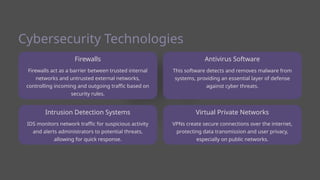
Virtual Private Networks
VPNscreate secure connections over the internet,
protecting data transmission and user privacy,
especially on public networks.
Cybersecurity Technologies
IDS monitors network traffic for suspicious activity
and alerts administrators to potential threats,
allowing for quick response.
Antivirus Software
Firewalls act as a barrier between trusted internal
networks and untrusted external networks,
controlling incoming and outgoing traffic based on
security rules.
Firewalls
Intrusion Detection Systems
This software detects and removes malware from
systems, providing an essential layer of defense
against cyber threats.
6.
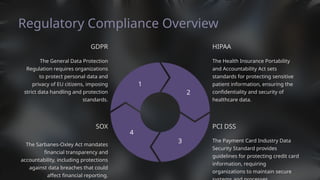
The Payment CardIndustry Data
Security Standard provides
guidelines for protecting credit card
information, requiring
organizations to maintain secure
PCI DSS
The Sarbanes-Oxley Act mandates
financial transparency and
accountability, including protections
against data breaches that could
affect financial reporting.
Regulatory Compliance Overview
GDPR
SOX
The Health Insurance Portability
and Accountability Act sets
standards for protecting sensitive
patient information, ensuring the
confidentiality and security of
healthcare data.
HIPAA
The General Data Protection
Regulation requires organizations
to protect personal data and
privacy of EU citizens, imposing
strict data handling and protection
standards.
1
2
4
3
7.
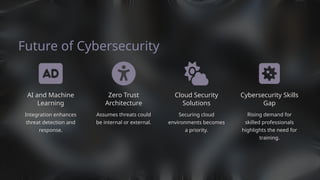
Cybersecurity Skills
Gap
Securing cloud
environmentsbecomes
a priority.
Zero Trust
Architecture
Assumes threats could
be internal or external.
Rising demand for
skilled professionals
highlights the need for
training.
Future of Cybersecurity
Cloud Security
Solutions
AI and Machine
Learning
Integration enhances
threat detection and
response.


![CYBERSECURITYcoll[1].pptx](https://cdn.slidesharecdn.com/ss_thumbnails/cybersecuritycoll1-231207002815-f4e5387d-thumbnail.jpg?width=640&height=640&fit=bounds)


