Cybersecurity
Overview
Courtesy of an online course by Center for Information Assurance and
Cybersecurity (CIAC), University of Washington
By Thanuja Seneviratne
Agenda
 Cybersecurity Landscape
 Cybersecurity History (1990s to Present)
 Cybersecurity Basics
 Cybersecurity Education
 International & US Perspective
 Legal Perspective (US and non-US)
 Cyber Law
 Threat Actors and Trends
Cybersecurity Landscape
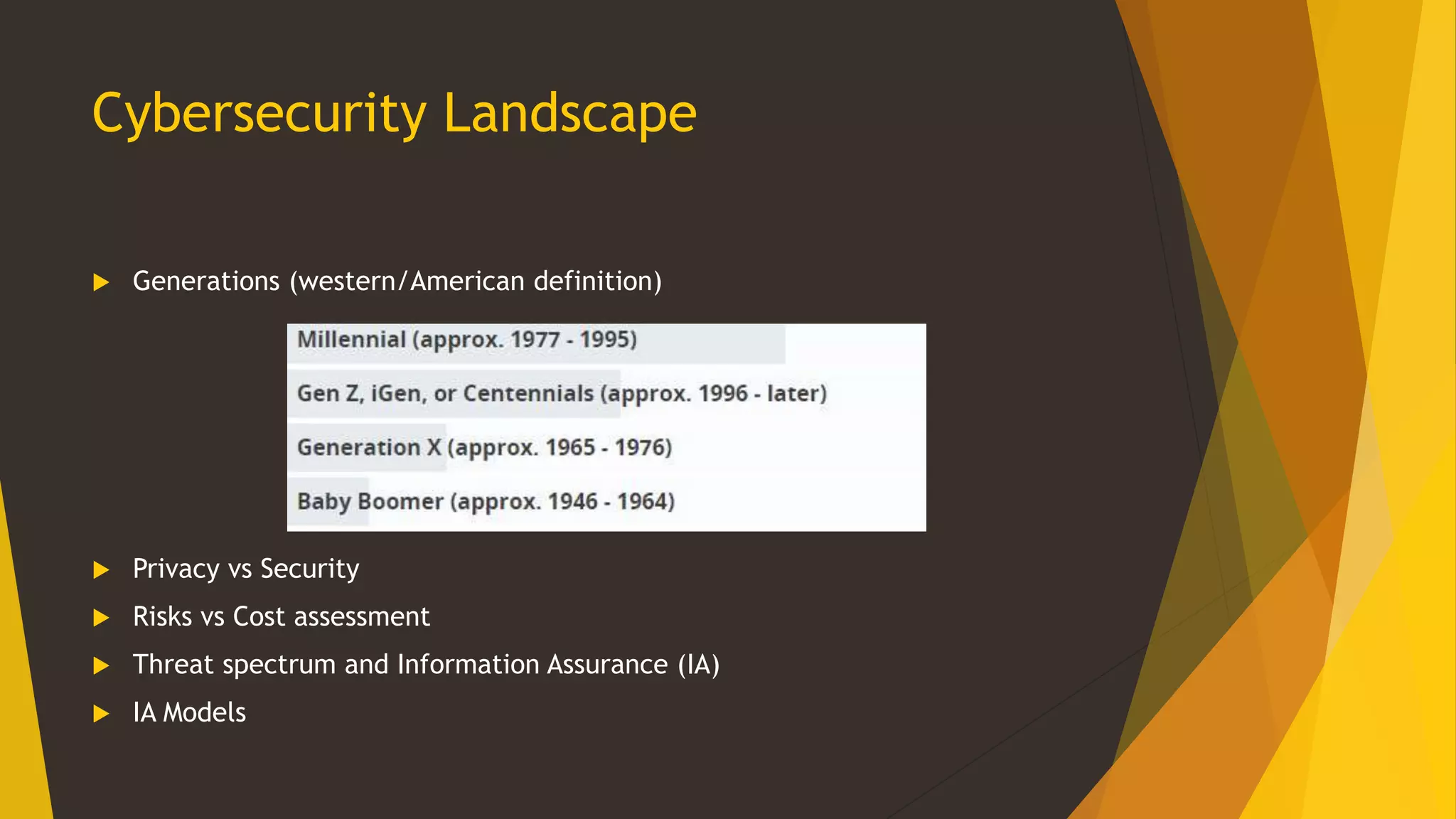
 Generations (western/American definition)
 Privacy vs Security
 Risks vs Cost assessment
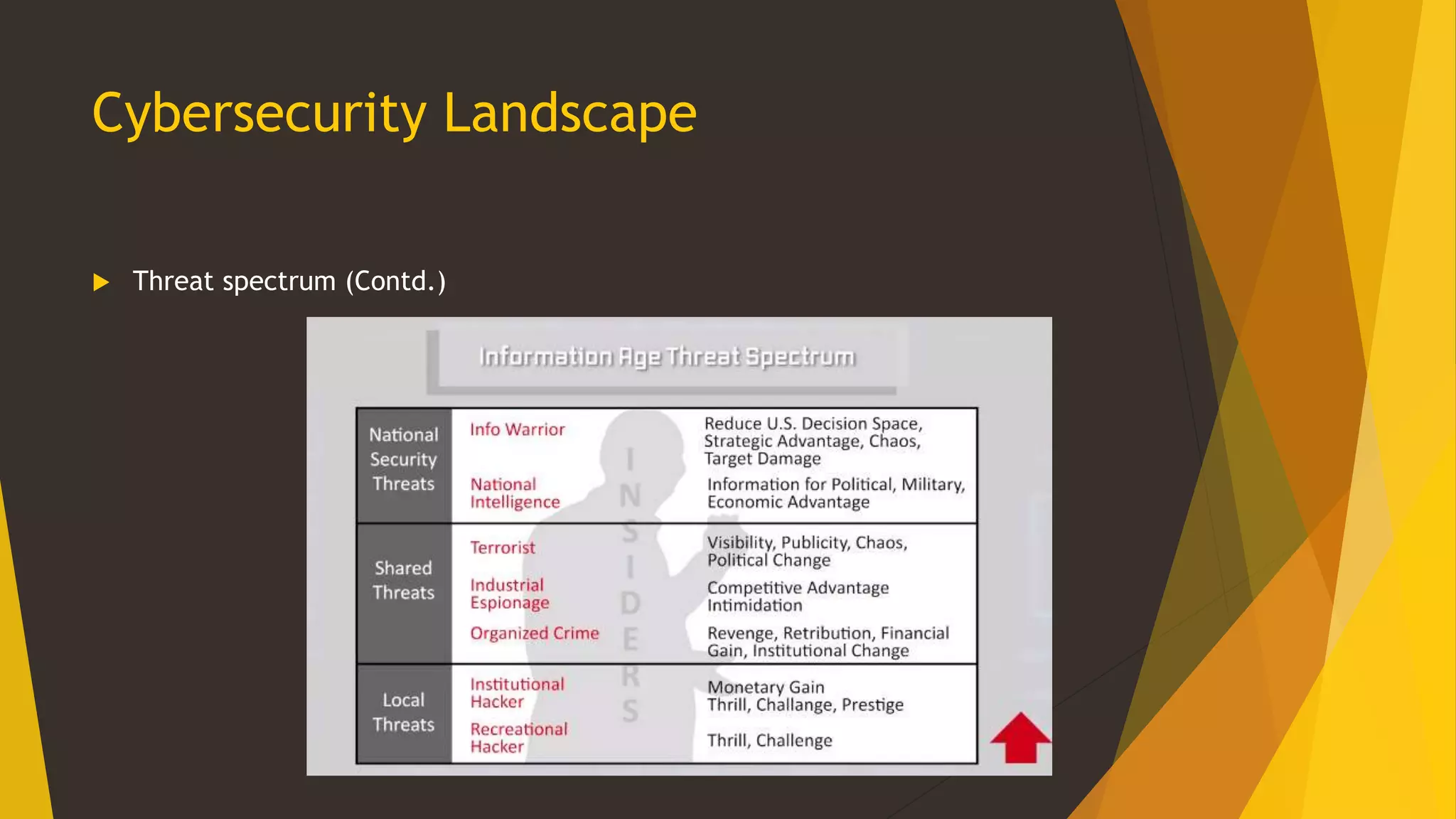
 Threat spectrum and Information Assurance (IA)
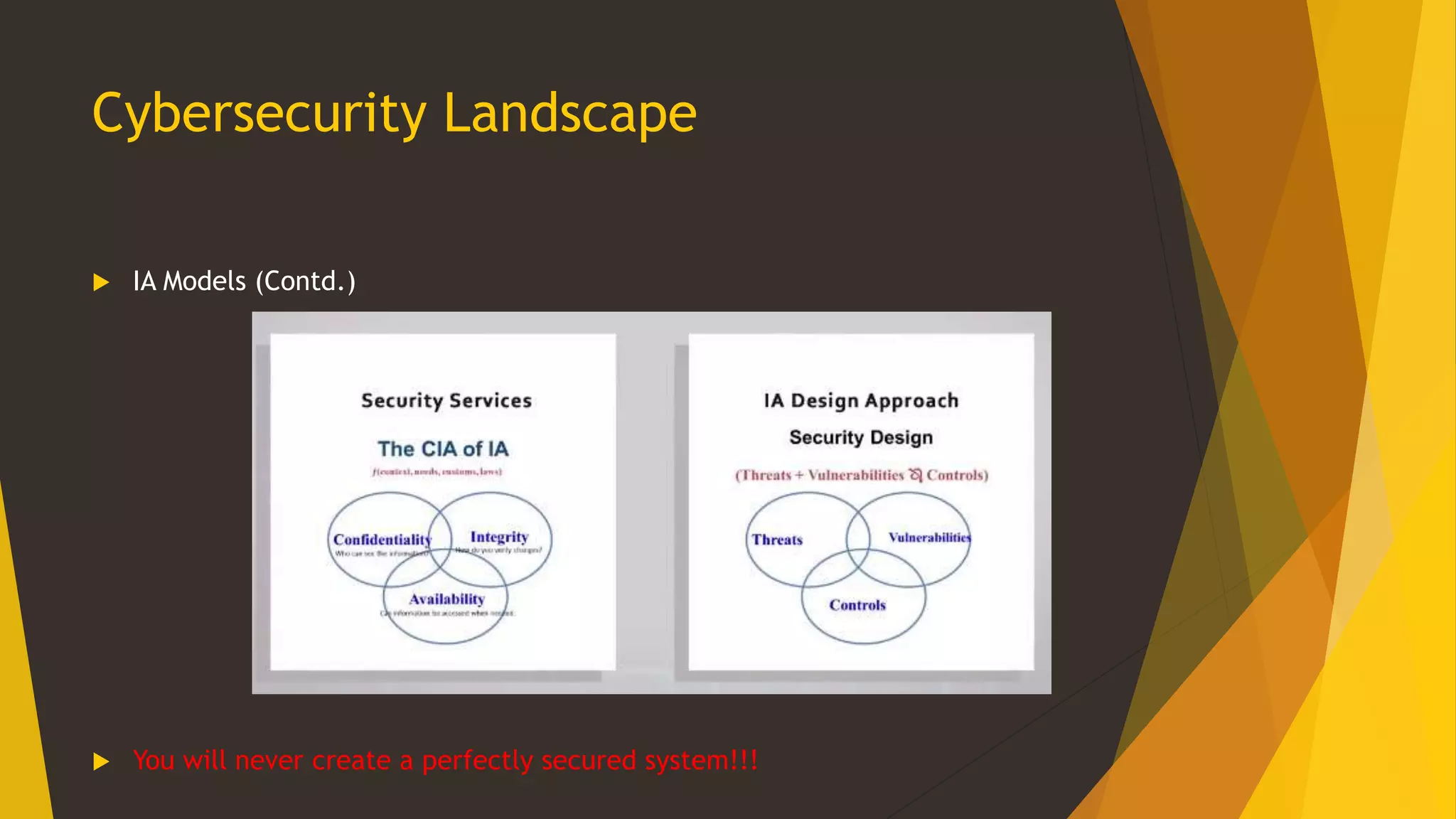
 IA Models
Cybersecurity Landscape
 Threat spectrum (Contd.)
Cybersecurity Landscape
 IA Models (Contd.)
 You will never create a perfectly secured system!!!
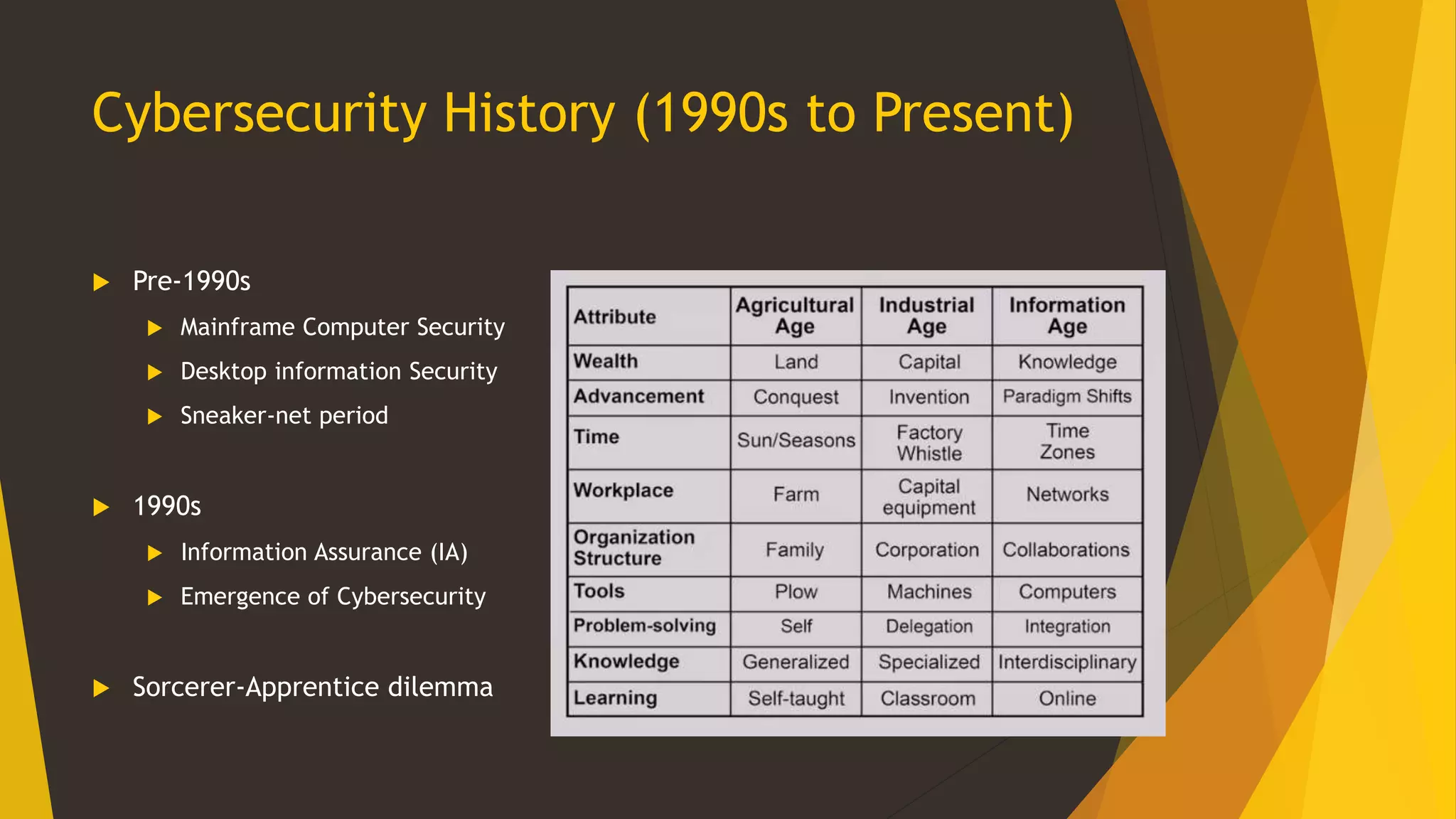
Cybersecurity History (1990s to Present)
 Pre-1990s
 Mainframe Computer Security
 Desktop information Security
 Sneaker-net period
 1990s
 Information Assurance (IA)
 Emergence of Cybersecurity
 Sorcerer-Apprentice dilemma
Cybersecurity Concepts
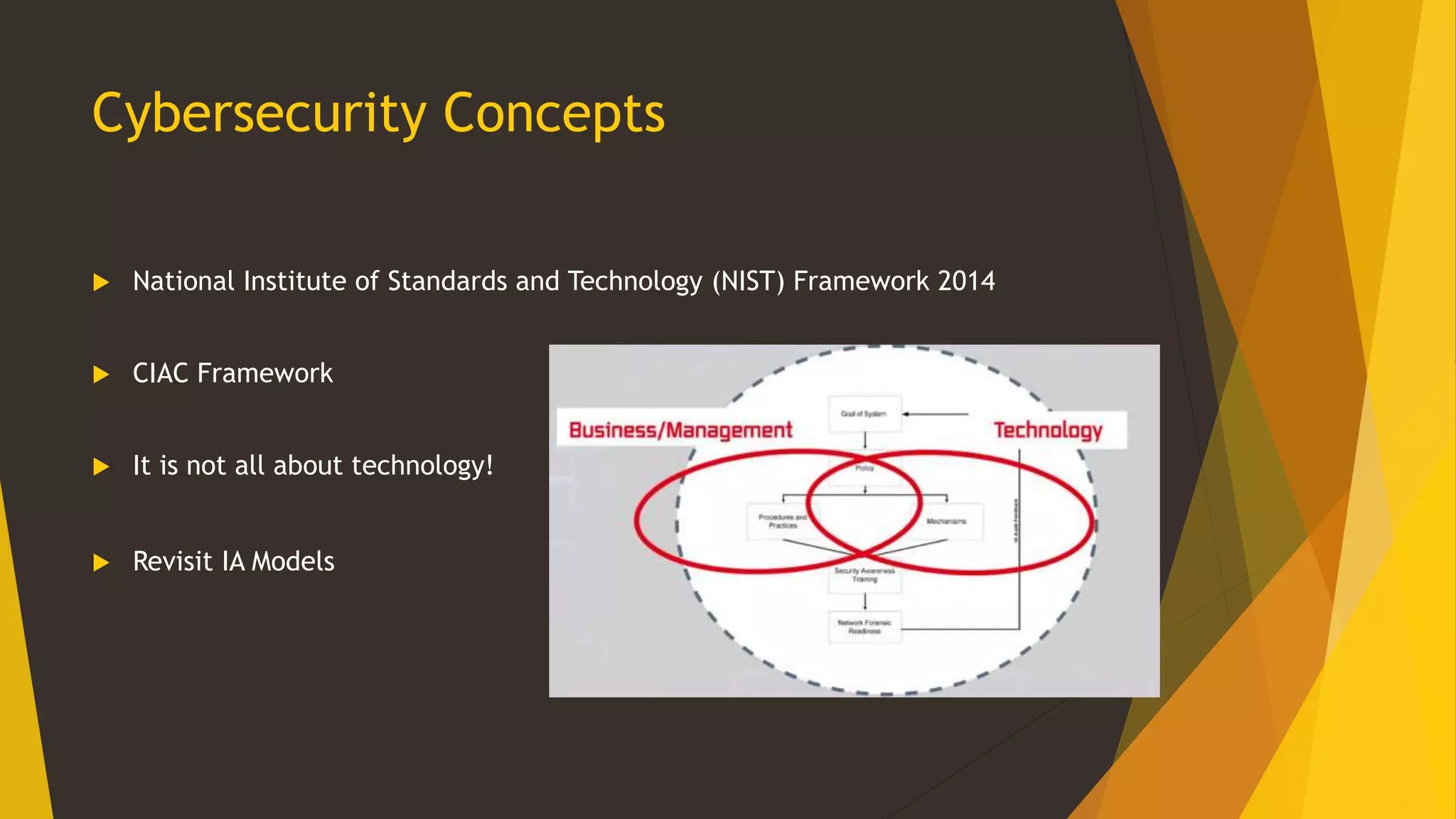
 National Institute of Standards and Technology (NIST) Framework 2014
 CIAC Framework
 It is not all about technology!
 Revisit IA Models
Cybersecurity Concepts
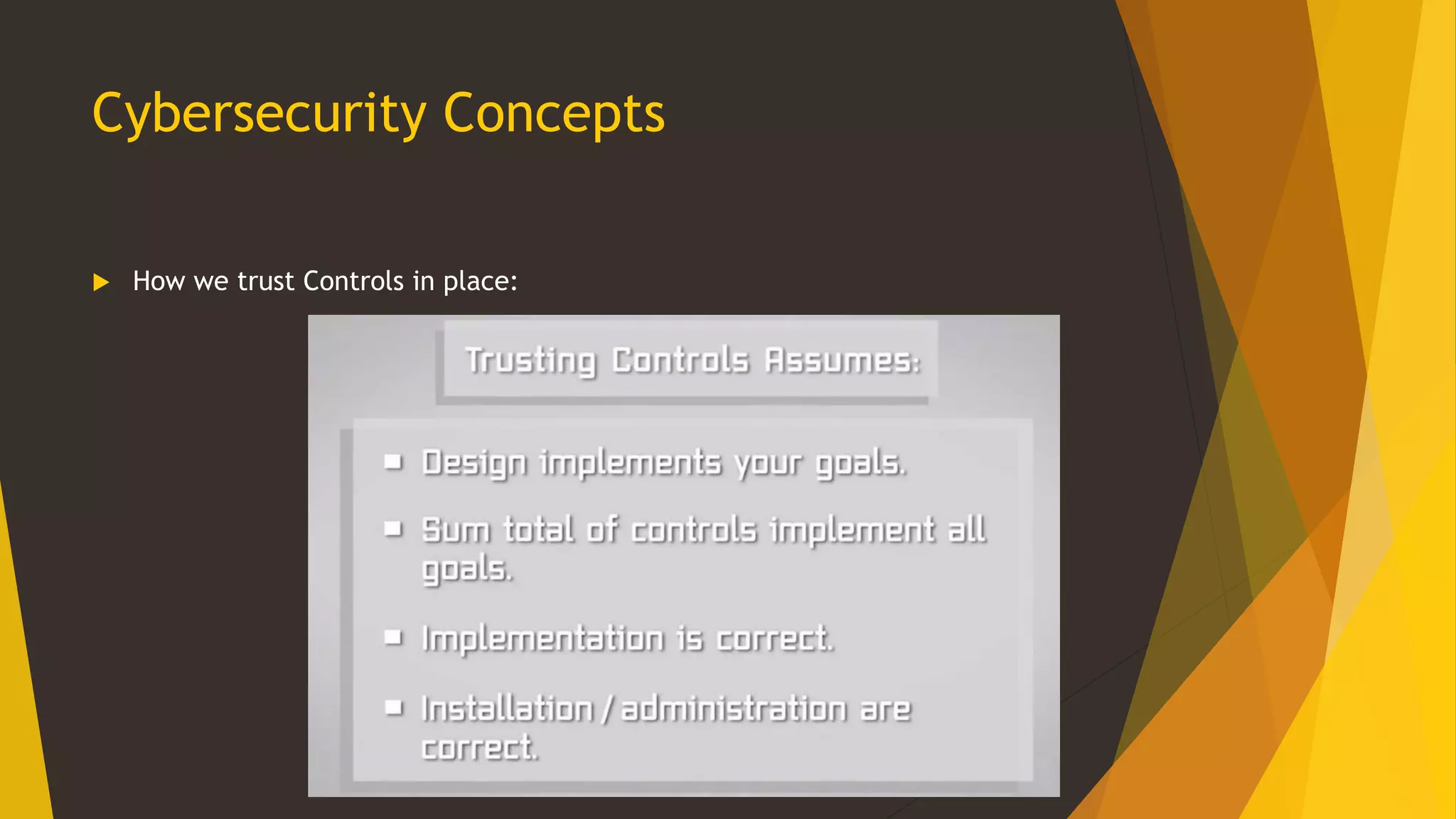
 How we trust Controls in place:
Cybersecurity Education
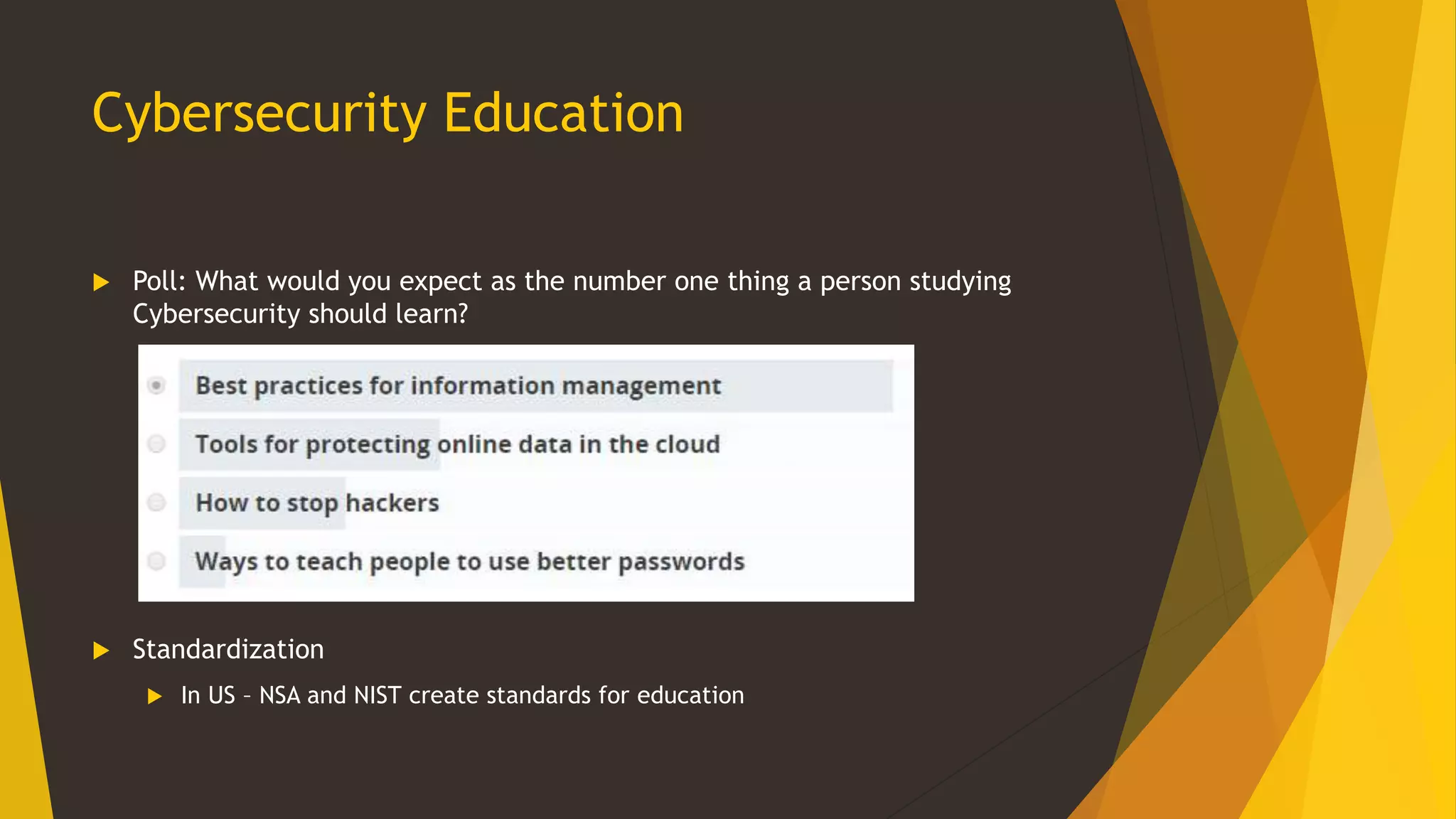
 Poll: What would you expect as the number one thing a person studying
Cybersecurity should learn?
 Standardization
 In US – NSA and NIST create standards for education
Cybersecurity Education
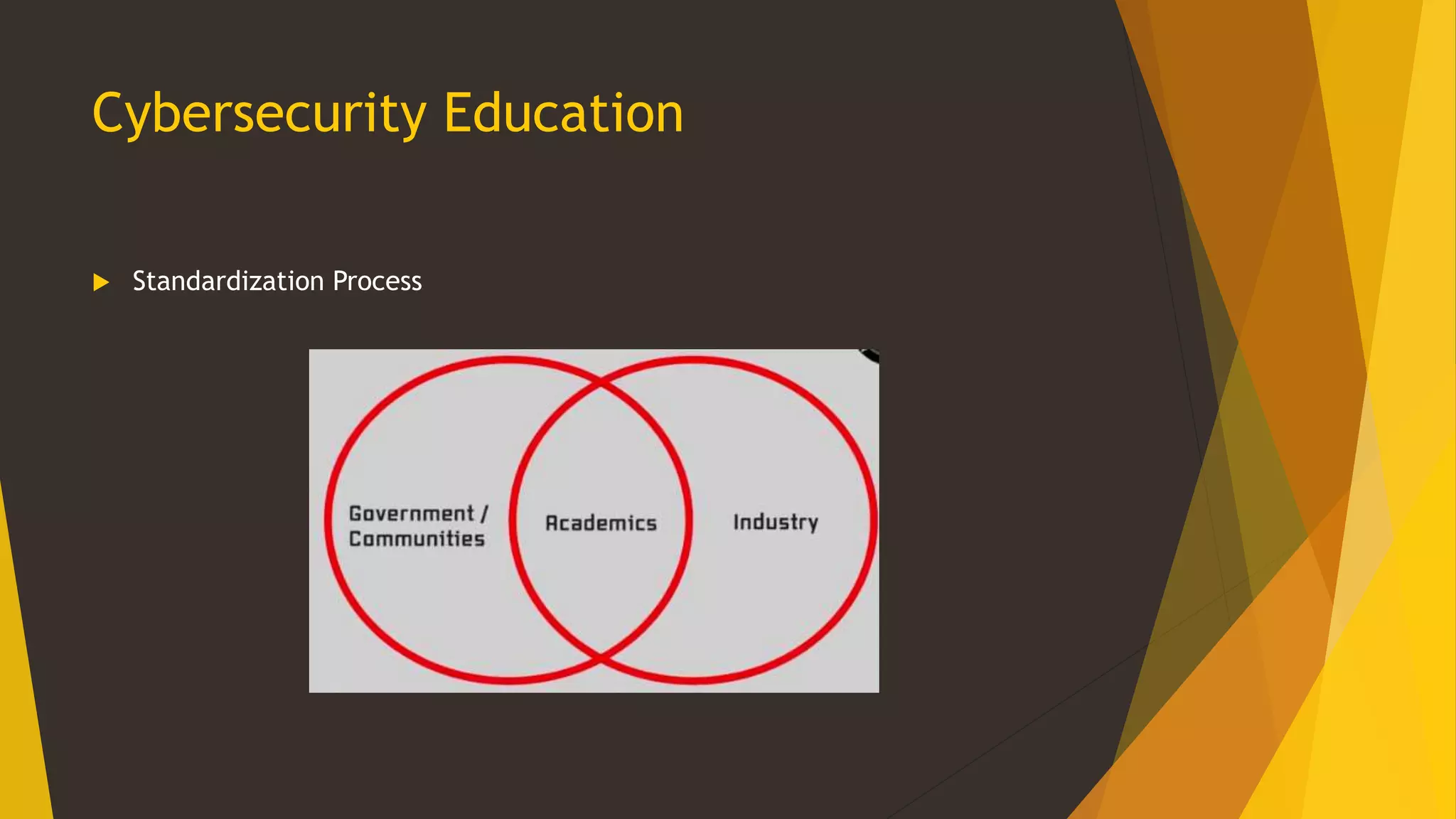
 Standardization Process
Cybersecurity Education
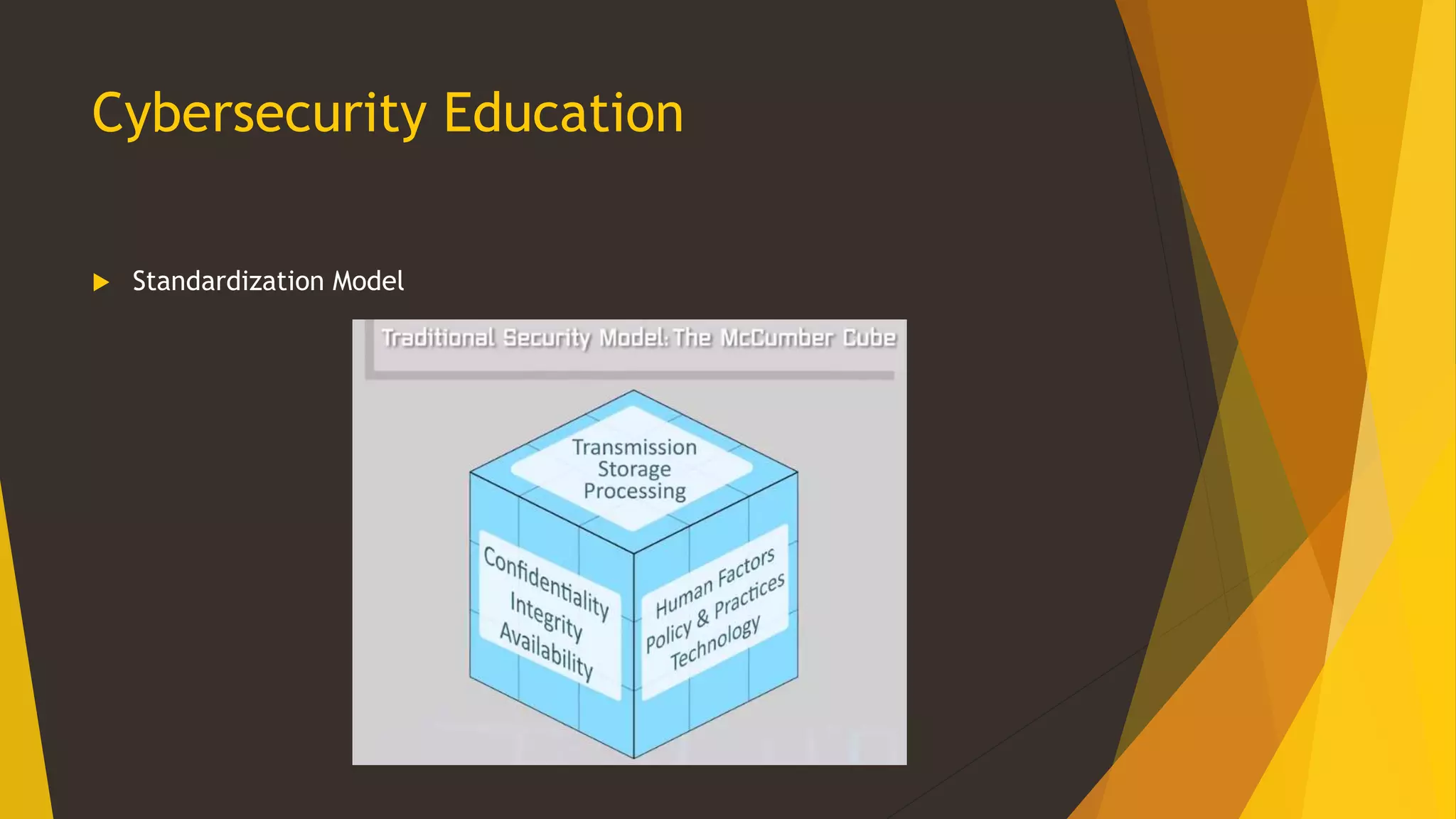
 Standardization Model
International & US Perspective
 Estonia vs Russia cyberwar – first ever cyberwar!
 DoS attack for the internet
 Cyber-breach becomes an act of war?
 NATO and US DoD Policies
 Tallinn Cyber Warfare Manual 2.0 (2016)
 DoD Cyber Strategy (2015)
 NATO Cyber definitions
 https://ccdcoe.org/cyber-definitions.html
 DoD policy document
 https://d37djvu3ytnwxt.cloudfront.net/assets/courseware/v1/8c234585bc977d858cfdac646d04
bc21/asset-
v1:UWashingtonX+CYB001x+1T2017+type@asset+block/Final_2015_DoD_CYBER_STRATEGY_for_w
eb.pdf
 Cyber Defense
 Active or Passive?
International & US Perspective
 Main threats:
 Damage Critical Infrastructure
 Disrupting Lines of communication
 Growth in Internet of Things
 More info:
 Films: Die Hard 4 (Live Free or Die Hard)
 Documentaries: PBS Frontline “Cyberwar”
 TV: Mr. Robot , CSI: Cyber
Legal Perspective (US and Non-US)
 Complicated!
 If “legal context” is the same, each sector will have different laws to complicate things
 Strategies implemented for the same law in different sectors could be different and lead
to interpretations
 Not enough laws in US or International level
 Some laws are legacy; overlapped with other laws
 Conflict with international boundaries
 Laws are sector specific (healthcare, military etc)
 “Black swan” events and the legal basis
 2008-09 economic crash
 System breaches, hacks are not Black Swan
Cyber Law
 General Law to IT Law to Cyber Law
 Time to lawyer up!
 Growing cyber threats, cyber attacks with Internet boom
 New wave of cyber security issues with emergence of IoT
 Regulators’ dilemma
 Reactive measures too costly - governments and companies need to know
 IS Risk assessment – minimalist approach or maximize with a lot preventive
strategies
 Organic problem solving – C-Suite, middle management, operational management
(IT), lawyers, consultants work together for better strategy
Threat Actors and Trends
 Human error leading to malicious acts
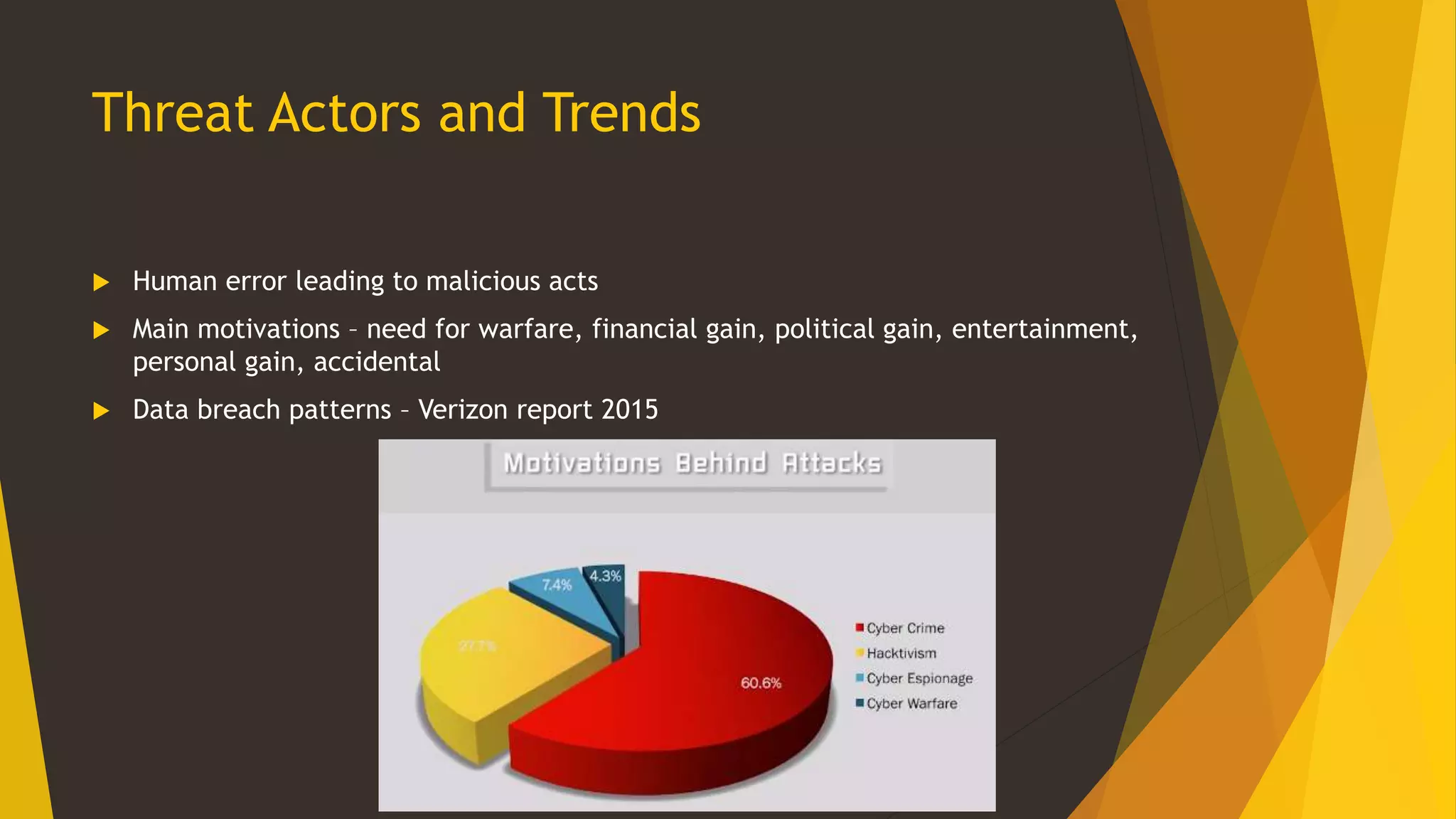
 Main motivations – need for warfare, financial gain, political gain, entertainment,
personal gain, accidental
 Data breach patterns – Verizon report 2015
Threat Actors and Trends
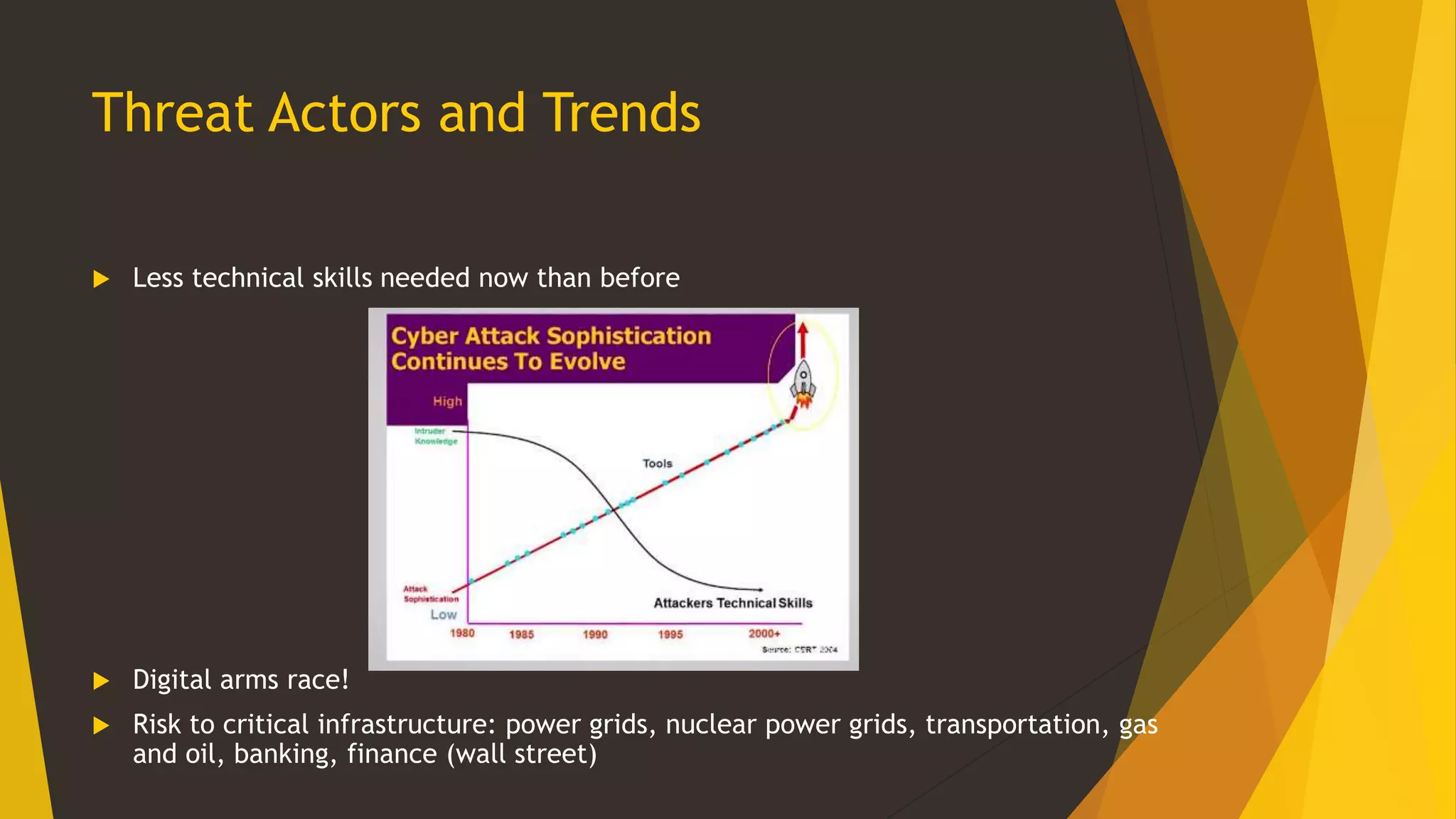
 Less technical skills needed now than before
 Digital arms race!
 Risk to critical infrastructure: power grids, nuclear power grids, transportation, gas
and oil, banking, finance (wall street)

Cybersecurity - Overview

  • 1.
    Cybersecurity Overview Courtesy of anonline course by Center for Information Assurance and Cybersecurity (CIAC), University of Washington By Thanuja Seneviratne
  • 2.
    Agenda  Cybersecurity Landscape Cybersecurity History (1990s to Present)  Cybersecurity Basics  Cybersecurity Education  International & US Perspective  Legal Perspective (US and non-US)  Cyber Law  Threat Actors and Trends
  • 3.
    Cybersecurity Landscape  Generations(western/American definition)  Privacy vs Security  Risks vs Cost assessment  Threat spectrum and Information Assurance (IA)  IA Models
  • 4.
  • 5.
    Cybersecurity Landscape  IAModels (Contd.)  You will never create a perfectly secured system!!!
  • 6.
    Cybersecurity History (1990sto Present)  Pre-1990s  Mainframe Computer Security  Desktop information Security  Sneaker-net period  1990s  Information Assurance (IA)  Emergence of Cybersecurity  Sorcerer-Apprentice dilemma
  • 7.
    Cybersecurity Concepts  NationalInstitute of Standards and Technology (NIST) Framework 2014  CIAC Framework  It is not all about technology!  Revisit IA Models
  • 8.
    Cybersecurity Concepts  Howwe trust Controls in place:
  • 9.
    Cybersecurity Education  Poll:What would you expect as the number one thing a person studying Cybersecurity should learn?  Standardization  In US – NSA and NIST create standards for education
  • 10.
  • 11.
  • 12.
    International & USPerspective  Estonia vs Russia cyberwar – first ever cyberwar!  DoS attack for the internet  Cyber-breach becomes an act of war?  NATO and US DoD Policies  Tallinn Cyber Warfare Manual 2.0 (2016)  DoD Cyber Strategy (2015)  NATO Cyber definitions  https://ccdcoe.org/cyber-definitions.html  DoD policy document  https://d37djvu3ytnwxt.cloudfront.net/assets/courseware/v1/8c234585bc977d858cfdac646d04 bc21/asset- v1:UWashingtonX+CYB001x+1T2017+type@asset+block/Final_2015_DoD_CYBER_STRATEGY_for_w eb.pdf  Cyber Defense  Active or Passive?
  • 13.
    International & USPerspective  Main threats:  Damage Critical Infrastructure  Disrupting Lines of communication  Growth in Internet of Things  More info:  Films: Die Hard 4 (Live Free or Die Hard)  Documentaries: PBS Frontline “Cyberwar”  TV: Mr. Robot , CSI: Cyber
  • 14.
    Legal Perspective (USand Non-US)  Complicated!  If “legal context” is the same, each sector will have different laws to complicate things  Strategies implemented for the same law in different sectors could be different and lead to interpretations  Not enough laws in US or International level  Some laws are legacy; overlapped with other laws  Conflict with international boundaries  Laws are sector specific (healthcare, military etc)  “Black swan” events and the legal basis  2008-09 economic crash  System breaches, hacks are not Black Swan
  • 15.
    Cyber Law  GeneralLaw to IT Law to Cyber Law  Time to lawyer up!  Growing cyber threats, cyber attacks with Internet boom  New wave of cyber security issues with emergence of IoT  Regulators’ dilemma  Reactive measures too costly - governments and companies need to know  IS Risk assessment – minimalist approach or maximize with a lot preventive strategies  Organic problem solving – C-Suite, middle management, operational management (IT), lawyers, consultants work together for better strategy
  • 16.
    Threat Actors andTrends  Human error leading to malicious acts  Main motivations – need for warfare, financial gain, political gain, entertainment, personal gain, accidental  Data breach patterns – Verizon report 2015
  • 17.
    Threat Actors andTrends  Less technical skills needed now than before  Digital arms race!  Risk to critical infrastructure: power grids, nuclear power grids, transportation, gas and oil, banking, finance (wall street)

Editor's Notes

  • #17 Verizon report: https://drive.google.com/file/d/0B4VR740-MLJVUklqR2JzLWFpVVE/view Top 9 patterns: http://www.citon.com/top-9-patterns-for-security-incidents-and-breaches/