Cybersecurity Challenges: Identifying Key
Threats and Trends
We have moved into an era where digital transformation is at the core of almost every global business
strategy, and that explains why cybersecurity services have become a boardroom-level concern. In
addition to the increasing sophistication of cyberattacks, the growing dependence on digital assets has
compelled businesses to be on their toes. For today’s enterprises, a cybersecurity strategy cannot be
an afterthought. They must not only defend against the existing threats, but also stay prepared for the
cyber risks of tomorrow.
Don’t worry, this comprehensive blog has got all the information and insights you need to secure your
sensitive data, infrastructure, and reputational assets. Whether you're a startup or a multinational
corporation, this guide has got you covered.
What is Cybersecurity All About?
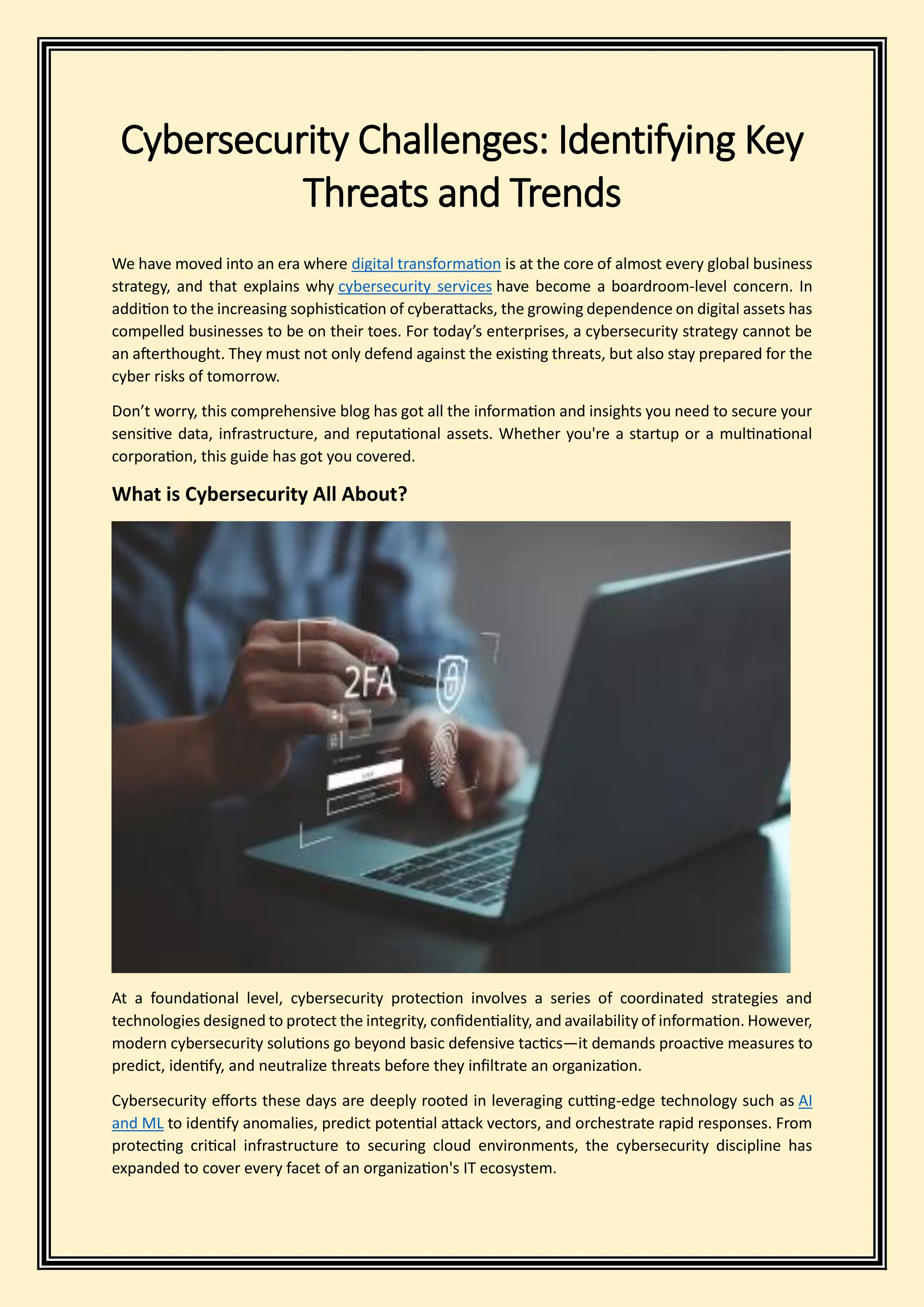
At a foundational level, cybersecurity protection involves a series of coordinated strategies and
technologies designed to protect the integrity, confidentiality, and availability of information. However,
modern cybersecurity solutions go beyond basic defensive tactics—it demands proactive measures to
predict, identify, and neutralize threats before they infiltrate an organization.
Cybersecurity efforts these days are deeply rooted in leveraging cutting-edge technology such as AI
and ML to identify anomalies, predict potential attack vectors, and orchestrate rapid responses. From
protecting critical infrastructure to securing cloud environments, the cybersecurity discipline has
expanded to cover every facet of an organization's IT ecosystem.
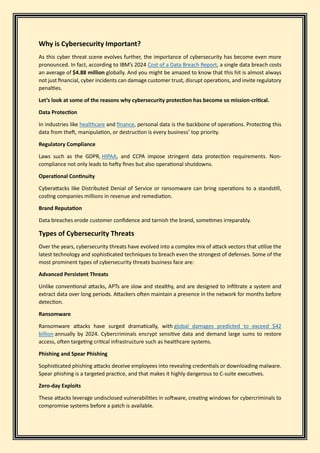
Why is Cybersecurity Important?
As this cyber threat scene evolves further, the importance of cybersecurity has become even more
pronounced. In fact, according to IBM’s 2024 Cost of a Data Breach Report, a single data breach costs
an average of $4.88 million globally. And you might be amazed to know that this hit is almost always
not just financial, cyber incidents can damage customer trust, disrupt operations, and invite regulatory
penalties.
Let’s look at some of the reasons why cybersecurity protection has become so mission-critical.
Data Protection
In industries like healthcare and finance, personal data is the backbone of operations. Protecting this
data from theft, manipulation, or destruction is every business’ top priority.
Regulatory Compliance
Laws such as the GDPR, HIPAA, and CCPA impose stringent data protection requirements. Non-
compliance not only leads to hefty fines but also operational shutdowns.
Operational Continuity
Cyberattacks like Distributed Denial of Service or ransomware can bring operations to a standstill,
costing companies millions in revenue and remediation.
Brand Reputation
Data breaches erode customer confidence and tarnish the brand, sometimes irreparably.
Types of Cybersecurity Threats
Over the years, cybersecurity threats have evolved into a complex mix of attack vectors that utilize the
latest technology and sophisticated techniques to breach even the strongest of defenses. Some of the
most prominent types of cybersecurity threats business face are:
Advanced Persistent Threats
Unlike conventional attacks, APTs are slow and stealthy, and are designed to infiltrate a system and
extract data over long periods. Attackers often maintain a presence in the network for months before
detection.
Ransomware
Ransomware attacks have surged dramatically, with global damages predicted to exceed $42
billion annually by 2024. Cybercriminals encrypt sensitive data and demand large sums to restore
access, often targeting critical infrastructure such as healthcare systems.
Phishing and Spear Phishing
Sophisticated phishing attacks deceive employees into revealing credentials or downloading malware.
Spear phishing is a targeted practice, and that makes it highly dangerous to C-suite executives.
Zero-day Exploits
These attacks leverage undisclosed vulnerabilities in software, creating windows for cybercriminals to
compromise systems before a patch is available.
Supply Chain Attacks
Threat actors increasingly exploit vulnerabilities in third-party vendors and software providers to gain
access to larger networks, as seen in the infamous SolarWinds breach of 2020.
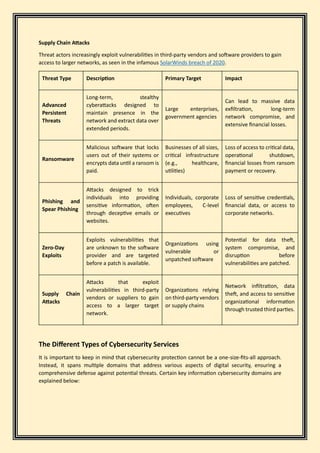
Threat Type Description Primary Target Impact
Advanced
Persistent
Threats
Long-term, stealthy
cyberattacks designed to
maintain presence in the
network and extract data over
extended periods.
Large enterprises,
government agencies
Can lead to massive data
exfiltration, long-term
network compromise, and
extensive financial losses.
Ransomware
Malicious software that locks
users out of their systems or
encrypts data until a ransom is
paid.
Businesses of all sizes,
critical infrastructure
(e.g., healthcare,
utilities)
Loss of access to critical data,
operational shutdown,
financial losses from ransom
payment or recovery.
Phishing and
Spear Phishing
Attacks designed to trick
individuals into providing
sensitive information, often
through deceptive emails or
websites.
Individuals, corporate
employees, C-level
executives
Loss of sensitive credentials,
financial data, or access to
corporate networks.
Zero-Day
Exploits
Exploits vulnerabilities that
are unknown to the software
provider and are targeted
before a patch is available.
Organizations using
vulnerable or
unpatched software
Potential for data theft,
system compromise, and
disruption before
vulnerabilities are patched.
Supply Chain
Attacks
Attacks that exploit
vulnerabilities in third-party
vendors or suppliers to gain
access to a larger target
network.
Organizations relying
on third-party vendors
or supply chains
Network infiltration, data
theft, and access to sensitive
organizational information
through trusted third parties.
The Different Types of Cybersecurity Services
It is important to keep in mind that cybersecurity protection cannot be a one-size-fits-all approach.
Instead, it spans multiple domains that address various aspects of digital security, ensuring a
comprehensive defense against potential threats. Certain key information cybersecurity domains are
explained below:
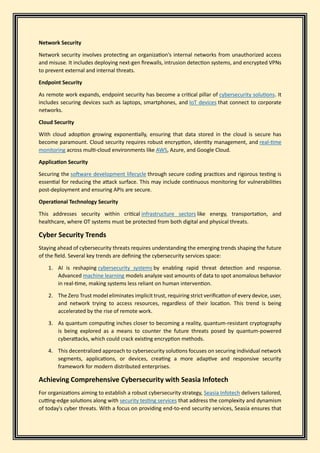
Network Security
Network security involves protecting an organization's internal networks from unauthorized access
and misuse. It includes deploying next-gen firewalls, intrusion detection systems, and encrypted VPNs
to prevent external and internal threats.
Endpoint Security
As remote work expands, endpoint security has become a critical pillar of cybersecurity solutions. It
includes securing devices such as laptops, smartphones, and IoT devices that connect to corporate
networks.
Cloud Security
With cloud adoption growing exponentially, ensuring that data stored in the cloud is secure has
become paramount. Cloud security requires robust encryption, identity management, and real-time
monitoring across multi-cloud environments like AWS, Azure, and Google Cloud.
Application Security
Securing the software development lifecycle through secure coding practices and rigorous testing is
essential for reducing the attack surface. This may include continuous monitoring for vulnerabilities
post-deployment and ensuring APIs are secure.
Operational Technology Security
This addresses security within critical infrastructure sectors like energy, transportation, and
healthcare, where OT systems must be protected from both digital and physical threats.
Cyber Security Trends
Staying ahead of cybersecurity threats requires understanding the emerging trends shaping the future
of the field. Several key trends are defining the cybersecurity services space:
1. AI is reshaping cybersecurity systems by enabling rapid threat detection and response.
Advanced machine learning models analyze vast amounts of data to spot anomalous behavior
in real-time, making systems less reliant on human intervention.
2. The Zero Trust model eliminates implicit trust, requiring strict verification of every device, user,
and network trying to access resources, regardless of their location. This trend is being
accelerated by the rise of remote work.
3. As quantum computing inches closer to becoming a reality, quantum-resistant cryptography
is being explored as a means to counter the future threats posed by quantum-powered
cyberattacks, which could crack existing encryption methods.
4. This decentralized approach to cybersecurity solutions focuses on securing individual network
segments, applications, or devices, creating a more adaptive and responsive security
framework for modern distributed enterprises.
Achieving Comprehensive Cybersecurity with Seasia Infotech
For organizations aiming to establish a robust cybersecurity strategy, Seasia Infotech delivers tailored,
cutting-edge solutions along with security testing services that address the complexity and dynamism
of today's cyber threats. With a focus on providing end-to-end security services, Seasia ensures that
businesses are protected across all digital environments—whether it's their network, cloud
infrastructure, or mobile devices.
Seasia Infotech’s cybersecurity solutions emphasize a proactive, defense-in-depth approach to
prevent, detect, and respond to emerging threats. Our comprehensive solutions include:
Threat Intelligence and Incident Response: Leveraging real-time threat intelligence, we help
businesses anticipate and respond swiftly to threats. Our incident response services are designed to
mitigate the impact of breaches, minimize downtime, and ensure business continuity.
Next-Generation Firewalls: Seasia deploys advanced firewalls that go beyond traditional defense
mechanisms, offering features like deep packet inspection, application awareness, and integrated
intrusion prevention systems to protect against sophisticated attacks.
Cloud and Endpoint Security: As businesses migrate to the cloud and embrace remote work, Seasia
provides industry-leading cloud security services and endpoint protection to safeguard critical assets
in diverse and distributed environments.
Managed Security Services: For businesses lacking in-house expertise, Seasia offers managed security
services that provide round-the-clock monitoring, advanced threat detection, and rapid remediation
of incidents.
Cybersecurity for Small Businesses
But what does cybersecurity do for small businesses?
Small and medium-sized businesses are often seen as "soft targets" for cybercriminals. However,
adopting a robust cybersecurity framework is just as crucial for SMBs as it is for large enterprises.
According to Verizon’s 2024 Data Breach Investigations Report, 52% of cyberattacks target SMBs, yet
only 18% feel prepared to defend themselves.
Here are a few strategies that might come in handy if you own a small business:
1. Deploying antivirus and antimalware tools on all devices.
2. Educating staff on phishing attacks and safe internet practices is critical, as human error is
responsible for nearly 95% of all breaches.
3. Ensuring critical data is regularly backed up to encrypted cloud storage helps mitigate the
damage from ransomware attacks.
Other best practices include:
1. Zero Trust Architecture: Implement Zero Trust policies that assume all devices and users must
be continuously verified before accessing network resources.
2. Regular Software Patching: Keeping systems updated is crucial to prevent vulnerabilities from
being exploited. Automated patch management systems can streamline this process.
3. Data Encryption: Ensure sensitive data is encrypted both at rest and in transit to mitigate the
risk of exposure during a breach.
4. Penetration Testing: Conduct regular penetration tests to identify and address vulnerabilities
before malicious actors exploit them.
5. Incident Response Plan: Every organization should have a detailed incident response plan that
outlines the steps to take in the event of a breach, from containment to recovery.
Do you have a cybersecurity strategy ready for your future?
Building a resilient cybersecurity technology framework involves a multi-layered approach. Contact
Seasia Infotech today to explore how we can help secure your digital assets through our cybersecurity
services.
Frequently Asked Questions
What are the 5 stages of the cybersecurity lifecycle?
The 5 stages of the cybersecurity lifecycle include identification, protection, detection, response, and
recovery.
What is the role of cybersecurity in software development?
Cybersecurity in software development ensures that applications are built with security in mind,
protecting them from vulnerabilities and attacks. It involves secure coding practices, threat modeling,
penetration testing, and regular updates to safeguard against emerging threats.
What does cybersecurity do?
Cybersecurity protects computer systems, networks, and data from unauthorized access, attacks, and
damage. Additionally, it safeguards sensitive information, ensures business continuity, prevents data
breaches, and helps maintain regulatory compliance.
How to build a cybersecurity strategy for your business?
The cybersecurity experts at Seasia Infotech can help build a dynamic and customized cybersecurity
strategy for business that protects you from all kinds of potential breaches.
Source Link: https://shorturl.at/wxY4p

Cybersecurity Challenges - Identifying Key Threats and Trends.pdf

  • 1.
    Cybersecurity Challenges: IdentifyingKey Threats and Trends We have moved into an era where digital transformation is at the core of almost every global business strategy, and that explains why cybersecurity services have become a boardroom-level concern. In addition to the increasing sophistication of cyberattacks, the growing dependence on digital assets has compelled businesses to be on their toes. For today’s enterprises, a cybersecurity strategy cannot be an afterthought. They must not only defend against the existing threats, but also stay prepared for the cyber risks of tomorrow. Don’t worry, this comprehensive blog has got all the information and insights you need to secure your sensitive data, infrastructure, and reputational assets. Whether you're a startup or a multinational corporation, this guide has got you covered. What is Cybersecurity All About? At a foundational level, cybersecurity protection involves a series of coordinated strategies and technologies designed to protect the integrity, confidentiality, and availability of information. However, modern cybersecurity solutions go beyond basic defensive tactics—it demands proactive measures to predict, identify, and neutralize threats before they infiltrate an organization. Cybersecurity efforts these days are deeply rooted in leveraging cutting-edge technology such as AI and ML to identify anomalies, predict potential attack vectors, and orchestrate rapid responses. From protecting critical infrastructure to securing cloud environments, the cybersecurity discipline has expanded to cover every facet of an organization's IT ecosystem.
  • 2.
    Why is CybersecurityImportant? As this cyber threat scene evolves further, the importance of cybersecurity has become even more pronounced. In fact, according to IBM’s 2024 Cost of a Data Breach Report, a single data breach costs an average of $4.88 million globally. And you might be amazed to know that this hit is almost always not just financial, cyber incidents can damage customer trust, disrupt operations, and invite regulatory penalties. Let’s look at some of the reasons why cybersecurity protection has become so mission-critical. Data Protection In industries like healthcare and finance, personal data is the backbone of operations. Protecting this data from theft, manipulation, or destruction is every business’ top priority. Regulatory Compliance Laws such as the GDPR, HIPAA, and CCPA impose stringent data protection requirements. Non- compliance not only leads to hefty fines but also operational shutdowns. Operational Continuity Cyberattacks like Distributed Denial of Service or ransomware can bring operations to a standstill, costing companies millions in revenue and remediation. Brand Reputation Data breaches erode customer confidence and tarnish the brand, sometimes irreparably. Types of Cybersecurity Threats Over the years, cybersecurity threats have evolved into a complex mix of attack vectors that utilize the latest technology and sophisticated techniques to breach even the strongest of defenses. Some of the most prominent types of cybersecurity threats business face are: Advanced Persistent Threats Unlike conventional attacks, APTs are slow and stealthy, and are designed to infiltrate a system and extract data over long periods. Attackers often maintain a presence in the network for months before detection. Ransomware Ransomware attacks have surged dramatically, with global damages predicted to exceed $42 billion annually by 2024. Cybercriminals encrypt sensitive data and demand large sums to restore access, often targeting critical infrastructure such as healthcare systems. Phishing and Spear Phishing Sophisticated phishing attacks deceive employees into revealing credentials or downloading malware. Spear phishing is a targeted practice, and that makes it highly dangerous to C-suite executives. Zero-day Exploits These attacks leverage undisclosed vulnerabilities in software, creating windows for cybercriminals to compromise systems before a patch is available.
  • 3.
    Supply Chain Attacks Threatactors increasingly exploit vulnerabilities in third-party vendors and software providers to gain access to larger networks, as seen in the infamous SolarWinds breach of 2020. Threat Type Description Primary Target Impact Advanced Persistent Threats Long-term, stealthy cyberattacks designed to maintain presence in the network and extract data over extended periods. Large enterprises, government agencies Can lead to massive data exfiltration, long-term network compromise, and extensive financial losses. Ransomware Malicious software that locks users out of their systems or encrypts data until a ransom is paid. Businesses of all sizes, critical infrastructure (e.g., healthcare, utilities) Loss of access to critical data, operational shutdown, financial losses from ransom payment or recovery. Phishing and Spear Phishing Attacks designed to trick individuals into providing sensitive information, often through deceptive emails or websites. Individuals, corporate employees, C-level executives Loss of sensitive credentials, financial data, or access to corporate networks. Zero-Day Exploits Exploits vulnerabilities that are unknown to the software provider and are targeted before a patch is available. Organizations using vulnerable or unpatched software Potential for data theft, system compromise, and disruption before vulnerabilities are patched. Supply Chain Attacks Attacks that exploit vulnerabilities in third-party vendors or suppliers to gain access to a larger target network. Organizations relying on third-party vendors or supply chains Network infiltration, data theft, and access to sensitive organizational information through trusted third parties. The Different Types of Cybersecurity Services It is important to keep in mind that cybersecurity protection cannot be a one-size-fits-all approach. Instead, it spans multiple domains that address various aspects of digital security, ensuring a comprehensive defense against potential threats. Certain key information cybersecurity domains are explained below:
  • 4.
    Network Security Network securityinvolves protecting an organization's internal networks from unauthorized access and misuse. It includes deploying next-gen firewalls, intrusion detection systems, and encrypted VPNs to prevent external and internal threats. Endpoint Security As remote work expands, endpoint security has become a critical pillar of cybersecurity solutions. It includes securing devices such as laptops, smartphones, and IoT devices that connect to corporate networks. Cloud Security With cloud adoption growing exponentially, ensuring that data stored in the cloud is secure has become paramount. Cloud security requires robust encryption, identity management, and real-time monitoring across multi-cloud environments like AWS, Azure, and Google Cloud. Application Security Securing the software development lifecycle through secure coding practices and rigorous testing is essential for reducing the attack surface. This may include continuous monitoring for vulnerabilities post-deployment and ensuring APIs are secure. Operational Technology Security This addresses security within critical infrastructure sectors like energy, transportation, and healthcare, where OT systems must be protected from both digital and physical threats. Cyber Security Trends Staying ahead of cybersecurity threats requires understanding the emerging trends shaping the future of the field. Several key trends are defining the cybersecurity services space: 1. AI is reshaping cybersecurity systems by enabling rapid threat detection and response. Advanced machine learning models analyze vast amounts of data to spot anomalous behavior in real-time, making systems less reliant on human intervention. 2. The Zero Trust model eliminates implicit trust, requiring strict verification of every device, user, and network trying to access resources, regardless of their location. This trend is being accelerated by the rise of remote work. 3. As quantum computing inches closer to becoming a reality, quantum-resistant cryptography is being explored as a means to counter the future threats posed by quantum-powered cyberattacks, which could crack existing encryption methods. 4. This decentralized approach to cybersecurity solutions focuses on securing individual network segments, applications, or devices, creating a more adaptive and responsive security framework for modern distributed enterprises. Achieving Comprehensive Cybersecurity with Seasia Infotech For organizations aiming to establish a robust cybersecurity strategy, Seasia Infotech delivers tailored, cutting-edge solutions along with security testing services that address the complexity and dynamism of today's cyber threats. With a focus on providing end-to-end security services, Seasia ensures that
  • 5.
    businesses are protectedacross all digital environments—whether it's their network, cloud infrastructure, or mobile devices. Seasia Infotech’s cybersecurity solutions emphasize a proactive, defense-in-depth approach to prevent, detect, and respond to emerging threats. Our comprehensive solutions include: Threat Intelligence and Incident Response: Leveraging real-time threat intelligence, we help businesses anticipate and respond swiftly to threats. Our incident response services are designed to mitigate the impact of breaches, minimize downtime, and ensure business continuity. Next-Generation Firewalls: Seasia deploys advanced firewalls that go beyond traditional defense mechanisms, offering features like deep packet inspection, application awareness, and integrated intrusion prevention systems to protect against sophisticated attacks. Cloud and Endpoint Security: As businesses migrate to the cloud and embrace remote work, Seasia provides industry-leading cloud security services and endpoint protection to safeguard critical assets in diverse and distributed environments. Managed Security Services: For businesses lacking in-house expertise, Seasia offers managed security services that provide round-the-clock monitoring, advanced threat detection, and rapid remediation of incidents. Cybersecurity for Small Businesses But what does cybersecurity do for small businesses? Small and medium-sized businesses are often seen as "soft targets" for cybercriminals. However, adopting a robust cybersecurity framework is just as crucial for SMBs as it is for large enterprises. According to Verizon’s 2024 Data Breach Investigations Report, 52% of cyberattacks target SMBs, yet only 18% feel prepared to defend themselves. Here are a few strategies that might come in handy if you own a small business:
  • 6.
    1. Deploying antivirusand antimalware tools on all devices. 2. Educating staff on phishing attacks and safe internet practices is critical, as human error is responsible for nearly 95% of all breaches. 3. Ensuring critical data is regularly backed up to encrypted cloud storage helps mitigate the damage from ransomware attacks. Other best practices include: 1. Zero Trust Architecture: Implement Zero Trust policies that assume all devices and users must be continuously verified before accessing network resources. 2. Regular Software Patching: Keeping systems updated is crucial to prevent vulnerabilities from being exploited. Automated patch management systems can streamline this process. 3. Data Encryption: Ensure sensitive data is encrypted both at rest and in transit to mitigate the risk of exposure during a breach. 4. Penetration Testing: Conduct regular penetration tests to identify and address vulnerabilities before malicious actors exploit them. 5. Incident Response Plan: Every organization should have a detailed incident response plan that outlines the steps to take in the event of a breach, from containment to recovery. Do you have a cybersecurity strategy ready for your future? Building a resilient cybersecurity technology framework involves a multi-layered approach. Contact Seasia Infotech today to explore how we can help secure your digital assets through our cybersecurity services. Frequently Asked Questions What are the 5 stages of the cybersecurity lifecycle? The 5 stages of the cybersecurity lifecycle include identification, protection, detection, response, and recovery. What is the role of cybersecurity in software development? Cybersecurity in software development ensures that applications are built with security in mind, protecting them from vulnerabilities and attacks. It involves secure coding practices, threat modeling, penetration testing, and regular updates to safeguard against emerging threats. What does cybersecurity do? Cybersecurity protects computer systems, networks, and data from unauthorized access, attacks, and damage. Additionally, it safeguards sensitive information, ensures business continuity, prevents data breaches, and helps maintain regulatory compliance. How to build a cybersecurity strategy for your business? The cybersecurity experts at Seasia Infotech can help build a dynamic and customized cybersecurity strategy for business that protects you from all kinds of potential breaches. Source Link: https://shorturl.at/wxY4p