Prepared by
Lima Patel
Asst. Professor, Parul institute of Pharmacy
Parul university
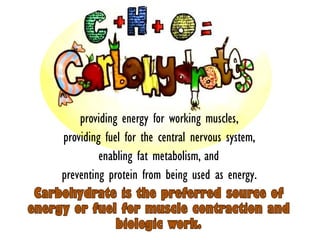
providing energy for working muscles,
providing fuel for the central nervous system,
enabling fat metabolism, and
preventing protein from being used as energy.
.
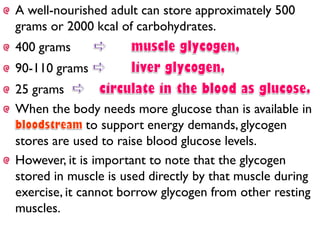
A well-nourished adult can store approximately 500
grams or 2000 kcal of carbohydrates.
400 grams
90-110 grams
25 grams
When the body needs more glucose than is available in
to support energy demands, glycogen
stores are used to raise blood glucose levels.
However, it is important to note that the glycogen
stored in muscle is used directly by that muscle during
exercise, it cannot borrow glycogen from other resting
muscles.
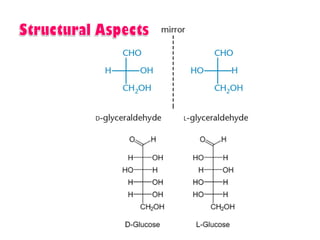
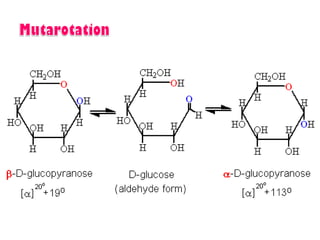
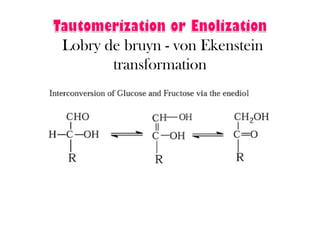
Lobry de bruyn - von Ekenstein
transformation
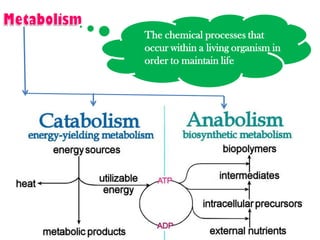
The chemical processes that
occur within a living organism in
order to maintain life
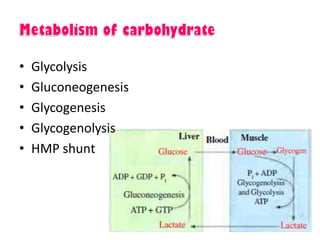
• Glycolysis
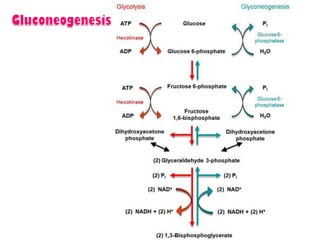
• Gluconeogenesis
• Glycogenesis
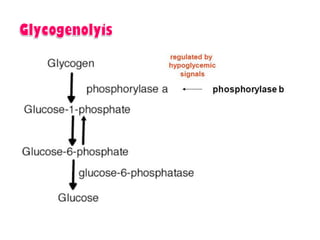
• Glycogenolysis
• HMP shunt
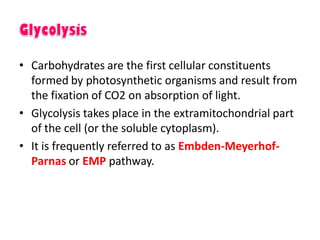
• Carbohydrates are the first cellular constituents
formed by photosynthetic organisms and result from
the fixation of CO2 on absorption of light.
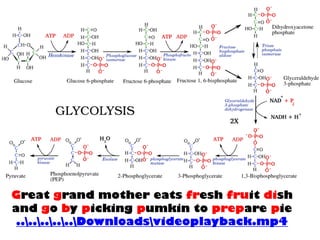
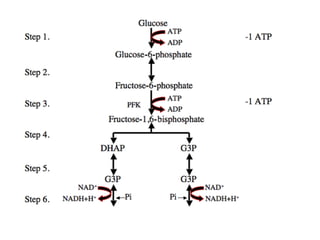
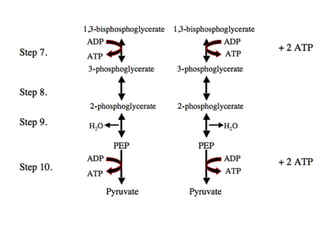
• Glycolysis takes place in the extramitochondrial part
of the cell (or the soluble cytoplasm).
• It is frequently referred to as Embden-Meyerhof-
Parnas or EMP pathway.
Great grand mother eats fresh fruit dish
and go by picking pumkin to prepare pie
..........Downloadsvideoplayback.mp4
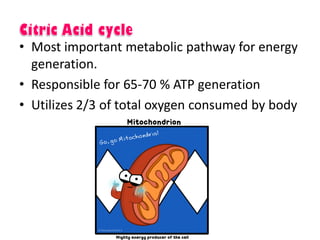
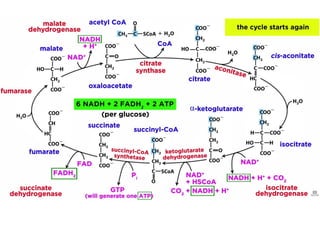
• Most important metabolic pathway for energy
generation.
• Responsible for 65-70 % ATP generation
• Utilizes 2/3 of total oxygen consumed by body
• Alternative pathway to Glycolysis and TCA
cycle.
• Concerned with synthesis of NADPH and
pentoses.
• Multifunctional pathway
• This pathway is very active in tissues which are
responsible for fatty acid synthesis.
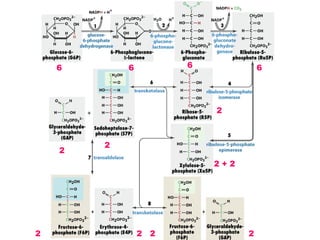
6 6 6 6
2
2 + 2
2
2
2 2 2 2
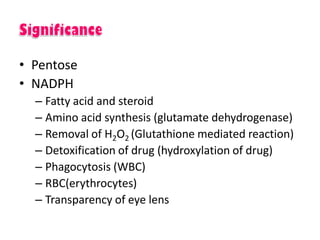
• Pentose
• NADPH
– Fatty acid and steroid
– Amino acid synthesis (glutamate dehydrogenase)
– Removal of H2O2 (Glutathione mediated reaction)
– Detoxification of drug (hydroxylation of drug)
– Phagocytosis (WBC)
– RBC(erythrocytes)
– Transparency of eye lens
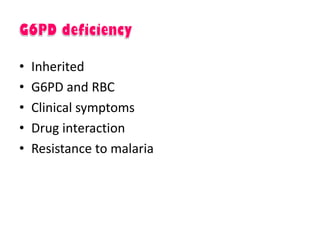
• Inherited
• G6PD and RBC
• Clinical symptoms
• Drug interaction
• Resistance to malaria
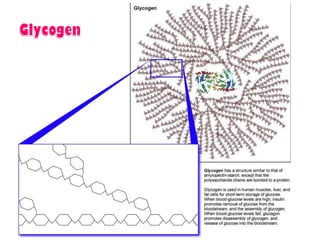
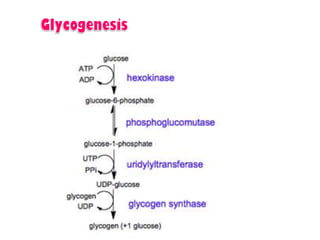
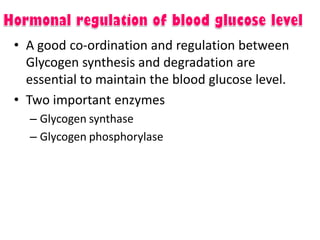
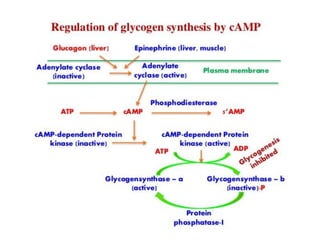
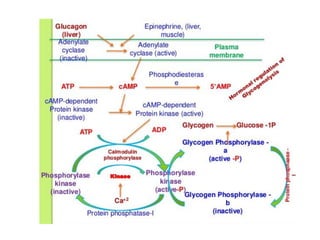
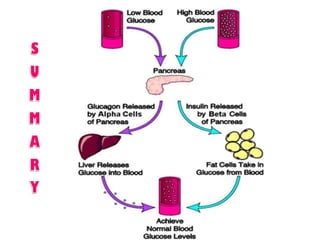
• A good co-ordination and regulation between
Glycogen synthesis and degradation are
essential to maintain the blood glucose level.
• Two important enzymes
– Glycogen synthase
– Glycogen phosphorylase
• Working
• Uncouplers
• Inhibitors
thank you for being here

Introduction to biomolecules (carbohydrates)

  • 1.
    Prepared by Lima Patel Asst.Professor, Parul institute of Pharmacy Parul university
  • 6.
    providing energy forworking muscles, providing fuel for the central nervous system, enabling fat metabolism, and preventing protein from being used as energy.
  • 8.
  • 9.
    A well-nourished adultcan store approximately 500 grams or 2000 kcal of carbohydrates. 400 grams 90-110 grams 25 grams When the body needs more glucose than is available in to support energy demands, glycogen stores are used to raise blood glucose levels. However, it is important to note that the glycogen stored in muscle is used directly by that muscle during exercise, it cannot borrow glycogen from other resting muscles.
  • 21.
    Lobry de bruyn- von Ekenstein transformation
  • 25.
    The chemical processesthat occur within a living organism in order to maintain life
  • 27.
    • Glycolysis • Gluconeogenesis •Glycogenesis • Glycogenolysis • HMP shunt
  • 28.
    • Carbohydrates arethe first cellular constituents formed by photosynthetic organisms and result from the fixation of CO2 on absorption of light. • Glycolysis takes place in the extramitochondrial part of the cell (or the soluble cytoplasm). • It is frequently referred to as Embden-Meyerhof- Parnas or EMP pathway.
  • 29.
    Great grand mothereats fresh fruit dish and go by picking pumkin to prepare pie ..........Downloadsvideoplayback.mp4
  • 33.
    • Most importantmetabolic pathway for energy generation. • Responsible for 65-70 % ATP generation • Utilizes 2/3 of total oxygen consumed by body
  • 35.
    • Alternative pathwayto Glycolysis and TCA cycle. • Concerned with synthesis of NADPH and pentoses. • Multifunctional pathway • This pathway is very active in tissues which are responsible for fatty acid synthesis.
  • 36.
    6 6 66 2 2 + 2 2 2 2 2 2 2
  • 37.
    • Pentose • NADPH –Fatty acid and steroid – Amino acid synthesis (glutamate dehydrogenase) – Removal of H2O2 (Glutathione mediated reaction) – Detoxification of drug (hydroxylation of drug) – Phagocytosis (WBC) – RBC(erythrocytes) – Transparency of eye lens
  • 38.
    • Inherited • G6PDand RBC • Clinical symptoms • Drug interaction • Resistance to malaria
  • 42.
    • A goodco-ordination and regulation between Glycogen synthesis and degradation are essential to maintain the blood glucose level. • Two important enzymes – Glycogen synthase – Glycogen phosphorylase
  • 48.
  • 50.
    thank you forbeing here