By: Vishal Kumar (CEH | CHFI | CISE | MCP)
1. What is Hacking.
2. What is ETHICAL HACKING.
3. Types of HACKER.
4. Difference between ETHICAL HACKER
and CRACKER.
5. What is Security Testing and
Penetration Testing.
6. Phases of Hacking.
7. Importance and requirements of
ETHICAL HACKER.
 Hacking is the art of modifying the features of a
system or Application, in order to accomplish a goal.
 hacking is any technical effort to manipulate the
normal behavior of System or any Software and
Network connection.
 What is the GOALS…???
 A authorized practice of HACKING in order to
evaluating the target systems for finding the
weaknesses and vulnerabilities and reporting back to
the owner or the concern person.
 Performing HACKING with the permission of the
owner or any superior.
 Neither damage the target systems nor steal
information.
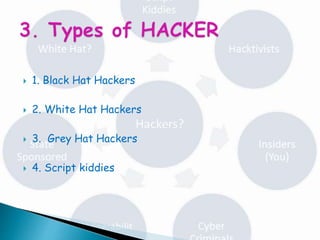
 1. Black Hat Hackers
 2. White Hat Hackers
 3. Grey Hat Hackers
 4. Script kiddies
 Black Hat hackers are specially known for the doing
illegal or unauthorized work. They hack for their
personal means like Money, Revenge, Fame etc. They
hack into to Bank Websites , credit card websites
and stole Money from accounts in bank websites.
 Basically they use their knowledge for illegal
purposes.
 Consider as a computer criminals
 White hat hackers also called Ethical Hackers . They
use their skills for good purposes.
 They work for organizations for stop the illegal
activities through black hat hackers.
 Grey Hat hackers have both qualities like black hat
hackers and white hat hackers .
 They use their knowledge for bad purposes and good
purposes too.
 Script kiddies hacks into computer or websites using
the tools available on the internet.
 They don’t have knowledge of programming.
 They don’t know about the good and bad.
 Ethical Hacker
 Employed by companies to perform penetration tests
 Hack for good.
 Crackers
 Access computer system or network without authorization
 Break into systems to steal or destroy data
 Security Testing:
◦ Checking the security mechanism finding the security
flaw’s. In other words it is call Vulnerability
Assessment.
 Penetration Testing:
◦ Penetration testing actually refers as the exploiting
the weaknesses or the vulnerability in order to gain
access into the network or the systems.
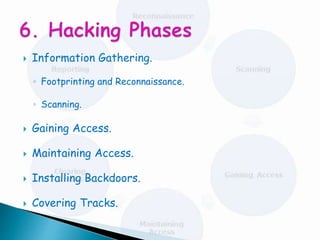
 Information Gathering.
◦ Footprinting and Reconnaissance.
◦ Scanning.
 Gaining Access.
 Maintaining Access.
 Installing Backdoors.
 Covering Tracks.
 Information gathering is collecting the
information about the target. It is the most
important and time consuming phase of hacking.
 The more information you collect, the more
easy you can hack the target.
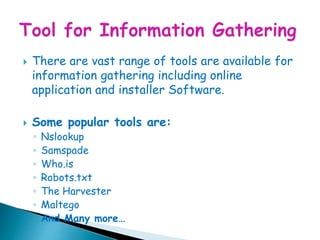
 There are vast range of tools are available for
information gathering including online
application and installer Software.
 Some popular tools are:
◦ Nslookup
◦ Samspade
◦ Who.is
◦ Robots.txt
◦ The Harvester
◦ Maltego
◦ And Many more…
 Footprinting also called Reconnaissance is the
second step of Hacking. This is the technique
used to pursue that target and keep watching
the target.
 This the method of finding the loopholes or any
mistake done by the target which can be used
for the exploitation.
 Tools are used:
◦ Online tools are available.
 After footprinting and
reconnaissance, scanning is the third phase of
information gathering that hackers use to size
up a network. Scanning is where they dive
deeper into the system to look for valuable
data and services in a specific IP address
range.
 Types of Scanning.
◦ Active Scanning
◦ Passive Scanning
 Active scanning is actually intercepting or
interacting with the target.
 In active scanning the attacker send the specially
crafted request packets to the target system and
then observe the response.
 It is the method of directly attacking on the
target.
 The accuracy of result of active scanning is more
reliable.
 There are many tools available for the active
scanning, some are:
◦ Nmap (ZenMap)
◦ Netcat
◦ Super Scan
 Passive scanning is the indirect method of
scanning. It is less sensitive and uninterrupted
way of gathering information.
 In passive scanning we just keep sitting in the
background and watching the behavior, network
traffic flow etc.
 The accuracy of the result is not much more
reliable
 Passive scanning can be done by the software
tools and also available online tools.
 Some tools are:
◦ Wireshark
◦ Pingsweep
◦ Traceroute
◦ www.Ping.eu
◦ etc
 Gaining Access also called “Hacking into the
system” is the third steps of hacking and also
the main part of hacking.
 It is the process exploiting the loopholes and
vulnerabilities in order to breaking the system.
 Once and attacker Gaines access into the
target system, he can choose to use both the
system and the resources as a launched pad to
scan and exploit other system.
 Hackers are extraordinary clever. They hack
into a system and adopt it for long time
access of the resources.
 To accomplish their goal they install the
backdoors (different types of computer
viruses) for easiest assess in the future.
 Covering tracks is the final stage of hacking
process – its goal is to erase evidence and
digital signs which can be used for tracking the
attacker.
 The digital sign includes the log files of
network and system, IP address, MAC address,
geo location, browser details etc.
 Ethical hacking is an emerging tools used by
most of the organizations for testing network
security. The security risks and vulnerabilities
in a network can be recognized with the help
of ethical hacking.
 Information is the important source for any
organizations while executing business
operations and it should be confidential and
secure.
 For more videos on Hacking Please
Subscribe this channel.
 For any query and suggestion please
contact us on:
theprohackers2017@gmail.com

Introduction ethical hacking

  • 1.
    By: Vishal Kumar(CEH | CHFI | CISE | MCP)
  • 2.
    1. What isHacking. 2. What is ETHICAL HACKING. 3. Types of HACKER. 4. Difference between ETHICAL HACKER and CRACKER. 5. What is Security Testing and Penetration Testing. 6. Phases of Hacking. 7. Importance and requirements of ETHICAL HACKER.
  • 3.
     Hacking isthe art of modifying the features of a system or Application, in order to accomplish a goal.  hacking is any technical effort to manipulate the normal behavior of System or any Software and Network connection.  What is the GOALS…???
  • 4.
     A authorizedpractice of HACKING in order to evaluating the target systems for finding the weaknesses and vulnerabilities and reporting back to the owner or the concern person.  Performing HACKING with the permission of the owner or any superior.  Neither damage the target systems nor steal information.
  • 5.
     1. BlackHat Hackers  2. White Hat Hackers  3. Grey Hat Hackers  4. Script kiddies
  • 6.
     Black Hathackers are specially known for the doing illegal or unauthorized work. They hack for their personal means like Money, Revenge, Fame etc. They hack into to Bank Websites , credit card websites and stole Money from accounts in bank websites.  Basically they use their knowledge for illegal purposes.  Consider as a computer criminals
  • 7.
     White hathackers also called Ethical Hackers . They use their skills for good purposes.  They work for organizations for stop the illegal activities through black hat hackers.
  • 8.
     Grey Hathackers have both qualities like black hat hackers and white hat hackers .  They use their knowledge for bad purposes and good purposes too.
  • 9.
     Script kiddieshacks into computer or websites using the tools available on the internet.  They don’t have knowledge of programming.  They don’t know about the good and bad.
  • 10.
     Ethical Hacker Employed by companies to perform penetration tests  Hack for good.  Crackers  Access computer system or network without authorization  Break into systems to steal or destroy data
  • 11.
     Security Testing: ◦Checking the security mechanism finding the security flaw’s. In other words it is call Vulnerability Assessment.  Penetration Testing: ◦ Penetration testing actually refers as the exploiting the weaknesses or the vulnerability in order to gain access into the network or the systems.
  • 12.
     Information Gathering. ◦Footprinting and Reconnaissance. ◦ Scanning.  Gaining Access.  Maintaining Access.  Installing Backdoors.  Covering Tracks.
  • 13.
     Information gatheringis collecting the information about the target. It is the most important and time consuming phase of hacking.  The more information you collect, the more easy you can hack the target.
  • 14.
     There arevast range of tools are available for information gathering including online application and installer Software.  Some popular tools are: ◦ Nslookup ◦ Samspade ◦ Who.is ◦ Robots.txt ◦ The Harvester ◦ Maltego ◦ And Many more…
  • 15.
     Footprinting alsocalled Reconnaissance is the second step of Hacking. This is the technique used to pursue that target and keep watching the target.  This the method of finding the loopholes or any mistake done by the target which can be used for the exploitation.  Tools are used: ◦ Online tools are available.
  • 16.
     After footprintingand reconnaissance, scanning is the third phase of information gathering that hackers use to size up a network. Scanning is where they dive deeper into the system to look for valuable data and services in a specific IP address range.  Types of Scanning. ◦ Active Scanning ◦ Passive Scanning
  • 17.
     Active scanningis actually intercepting or interacting with the target.  In active scanning the attacker send the specially crafted request packets to the target system and then observe the response.  It is the method of directly attacking on the target.  The accuracy of result of active scanning is more reliable.
  • 18.
     There aremany tools available for the active scanning, some are: ◦ Nmap (ZenMap) ◦ Netcat ◦ Super Scan
  • 19.
     Passive scanningis the indirect method of scanning. It is less sensitive and uninterrupted way of gathering information.  In passive scanning we just keep sitting in the background and watching the behavior, network traffic flow etc.  The accuracy of the result is not much more reliable
  • 20.
     Passive scanningcan be done by the software tools and also available online tools.  Some tools are: ◦ Wireshark ◦ Pingsweep ◦ Traceroute ◦ www.Ping.eu ◦ etc
  • 21.
     Gaining Accessalso called “Hacking into the system” is the third steps of hacking and also the main part of hacking.  It is the process exploiting the loopholes and vulnerabilities in order to breaking the system.
  • 22.
     Once andattacker Gaines access into the target system, he can choose to use both the system and the resources as a launched pad to scan and exploit other system.
  • 23.
     Hackers areextraordinary clever. They hack into a system and adopt it for long time access of the resources.  To accomplish their goal they install the backdoors (different types of computer viruses) for easiest assess in the future.
  • 24.
     Covering tracksis the final stage of hacking process – its goal is to erase evidence and digital signs which can be used for tracking the attacker.  The digital sign includes the log files of network and system, IP address, MAC address, geo location, browser details etc.
  • 25.
     Ethical hackingis an emerging tools used by most of the organizations for testing network security. The security risks and vulnerabilities in a network can be recognized with the help of ethical hacking.  Information is the important source for any organizations while executing business operations and it should be confidential and secure.
  • 26.
     For morevideos on Hacking Please Subscribe this channel.  For any query and suggestion please contact us on: theprohackers2017@gmail.com