ETHICAL HACKING
                      A LICENCE TO HACK


         B. TECH- III YR
L. D. COLLEGE OF ENGINEERING
INTRODUCTION
 Ethical hacking- also known as penetration
  testing or intrusion testing or red teaming has
  become a major concern for businesses and
  governments.

 Companies are worried about the possibility of
  being “hacked” and potential customers are
  worried about maintaining control of personal
  information.

 Necessity of computer security professionals to
  break into the systems of the organization.
INTRODUCTION
 Ethical hackers employ the same tools and
  techniques as the intruders.

 They neither damage the target systems nor
  steal information.

 The tool is not an automated hacker program
  rather it is an audit that both identifies the
  vulnerabilities of a system and provide advice
  on how to eliminate them.
Who are ethical hackers
The skills ethical hackers should posses

 They must be completely trustworthy.

 Should have very strong programming and
  computer networking skills and have been
  in networking field for several years.
Who are ethical hackers
 Should have more patience.

 Continuous updating of the knowledge on
  computer and network security is required.

 They should know the techniques of the
  criminals, how their activities might be
  detected and how to stop them.
Types Of Hacker
Black Hat Hacker
 A black hat hackers or crackers
  are individuals with extraordinary
  computing skills, resorting to
  malicious or destructive activities.
  That is black hat hackers use their
  knowledge and skill for their own
  personal gains probably by hurting
  others.
Cont…..
White Hat Hacker
 White hat hackers are those
  individuals professing hacker skills
  and using them for defensive
  purposes. This means that the white
  hat hackers use their knowledge and
  skill for the good of others and for the
  common good.
Cont…..
Grey Hat Hacker
 These are individuals who work both
  offensively and defensively at various
  times. We cannot predict their
  behaviour. Sometimes they use their
  skills for the common good while in
  some other times he uses them for
  their personal gains.
Need for the ethical hacking
Your overall goals as an ethical hacker
  should be as follows:
 Hack your systems in a
  nondestructive fashion.
 Enumerate vulnerabilities and, if
  necessary, prove to upper
  management that vulnerabilities
  exist.
Cont…..
 Apply results to remove
  vulnerabilities and better secure your
  systems.
Some Attacks
 Nontechnical attacks

 Network-infrastructure attacks

 Operating-system attacks

 Application attacks
AREAS TO BE TESTED
 Application servers

 Firewalls and security devices

 Network security

 Wireless security
Anatomy of an attack
  Gathering Data – attacker gathers
   information; can include social
   engineering.
  Scanning – searches for open ports
   (port scan) probes target for
   vulnerabilities.
  Gaining access – attacker exploits
   vulnerabilities to get inside system;
   used for spoofing IP.
Cont.....
   Maintaining access – creates backdoor
    through use of Trojans; once attacker
    gains access makes sure he/she can
    get back in.
   Covering tracks – deletes files, hides files,
    and erases log files. So that attacker
    cannot be detected or penalized.
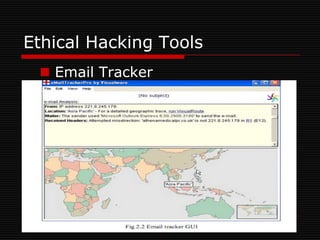
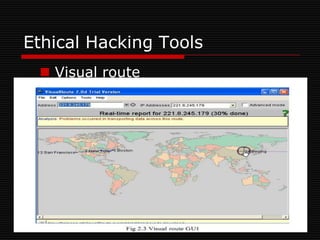
Ethical Hacking Tools
  Ethical hackers utilize and have
   developed variety of tools to
   intrude into different kinds of
   systems and to evaluate the
   security levels. The nature of
   these tools differ widely. Here we
   describe some of the widely used
   tools in ethical hacking.
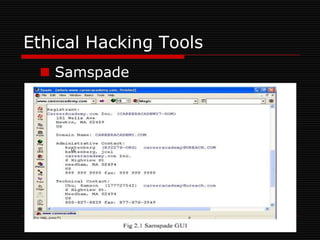
Ethical Hacking Tools
  Samspade
Ethical Hacking Tools
  Email Tracker
Ethical Hacking Tools
  Visual route
Some other important tools
 War Dialing

 Pingers

 Super Scan

 Nmap etc…
Information Security Goals
   Improve IS awareness.
   Assess risk.
   Mitigate risk immediately.
   Assist in the decision making process.
   Conduct drills on emergency response
    procedures.
Conclusions
 Never underestimate the attacker or
  overestimate our existing posture.
 A company may be target not just for its
  information but potentially for its various
  transactions.
 To protect against an
  attack, understanding where the systems
  are vulnerable is necessary.
 Ethical hacking helps companies first
  comprehend their risk and then, manage
  them.
Conclusions
 Always security professionals are one
  step behind the hackers and crackers.
 Plan for the unplanned attacks.
 The role of ethical hacking in security
  is to provide customers with
  awareness of how they could be
  attacked and why they are targeted.
“Security though a pain”, is necessary.
FUTURE OF ETHICAL HACKING
 At present, security on the Internet is
  very poor and ethical hacking can be
  one of the most effective ways to fix
  serious security problems like cyber
  crime.
 The information entrusted to the
  companies is required to be protected
  against all kinds of attacks by
  crackers, which makes their future
  promising.
References
1.www.javvin.com
2.www.computerworld.com
3.www.research.ibm.com/journals
4.www.howstuffworks.com
5.www.google.com
6.www.seminartopics.com
Queries?

Ethical hacking a licence to hack

  • 1.
    ETHICAL HACKING A LICENCE TO HACK B. TECH- III YR L. D. COLLEGE OF ENGINEERING
  • 2.
    INTRODUCTION  Ethical hacking-also known as penetration testing or intrusion testing or red teaming has become a major concern for businesses and governments.  Companies are worried about the possibility of being “hacked” and potential customers are worried about maintaining control of personal information.  Necessity of computer security professionals to break into the systems of the organization.
  • 3.
    INTRODUCTION  Ethical hackersemploy the same tools and techniques as the intruders.  They neither damage the target systems nor steal information.  The tool is not an automated hacker program rather it is an audit that both identifies the vulnerabilities of a system and provide advice on how to eliminate them.
  • 4.
    Who are ethicalhackers The skills ethical hackers should posses  They must be completely trustworthy.  Should have very strong programming and computer networking skills and have been in networking field for several years.
  • 5.
    Who are ethicalhackers  Should have more patience.  Continuous updating of the knowledge on computer and network security is required.  They should know the techniques of the criminals, how their activities might be detected and how to stop them.
  • 6.
    Types Of Hacker BlackHat Hacker  A black hat hackers or crackers are individuals with extraordinary computing skills, resorting to malicious or destructive activities. That is black hat hackers use their knowledge and skill for their own personal gains probably by hurting others.
  • 7.
    Cont….. White Hat Hacker White hat hackers are those individuals professing hacker skills and using them for defensive purposes. This means that the white hat hackers use their knowledge and skill for the good of others and for the common good.
  • 8.
    Cont….. Grey Hat Hacker These are individuals who work both offensively and defensively at various times. We cannot predict their behaviour. Sometimes they use their skills for the common good while in some other times he uses them for their personal gains.
  • 9.
    Need for theethical hacking Your overall goals as an ethical hacker should be as follows:  Hack your systems in a nondestructive fashion.  Enumerate vulnerabilities and, if necessary, prove to upper management that vulnerabilities exist.
  • 10.
    Cont…..  Apply resultsto remove vulnerabilities and better secure your systems.
  • 11.
    Some Attacks  Nontechnicalattacks  Network-infrastructure attacks  Operating-system attacks  Application attacks
  • 12.
    AREAS TO BETESTED  Application servers  Firewalls and security devices  Network security  Wireless security
  • 13.
    Anatomy of anattack  Gathering Data – attacker gathers information; can include social engineering.  Scanning – searches for open ports (port scan) probes target for vulnerabilities.  Gaining access – attacker exploits vulnerabilities to get inside system; used for spoofing IP.
  • 14.
    Cont..... Maintaining access – creates backdoor through use of Trojans; once attacker gains access makes sure he/she can get back in.  Covering tracks – deletes files, hides files, and erases log files. So that attacker cannot be detected or penalized.
  • 15.
    Ethical Hacking Tools  Ethical hackers utilize and have developed variety of tools to intrude into different kinds of systems and to evaluate the security levels. The nature of these tools differ widely. Here we describe some of the widely used tools in ethical hacking.
  • 16.
  • 17.
    Ethical Hacking Tools  Email Tracker
  • 18.
    Ethical Hacking Tools  Visual route
  • 19.
    Some other importanttools  War Dialing  Pingers  Super Scan  Nmap etc…
  • 20.
    Information Security Goals  Improve IS awareness.  Assess risk.  Mitigate risk immediately.  Assist in the decision making process.  Conduct drills on emergency response procedures.
  • 21.
    Conclusions  Never underestimatethe attacker or overestimate our existing posture.  A company may be target not just for its information but potentially for its various transactions.  To protect against an attack, understanding where the systems are vulnerable is necessary.  Ethical hacking helps companies first comprehend their risk and then, manage them.
  • 22.
    Conclusions  Always securityprofessionals are one step behind the hackers and crackers.  Plan for the unplanned attacks.  The role of ethical hacking in security is to provide customers with awareness of how they could be attacked and why they are targeted. “Security though a pain”, is necessary.
  • 23.
    FUTURE OF ETHICALHACKING  At present, security on the Internet is very poor and ethical hacking can be one of the most effective ways to fix serious security problems like cyber crime.  The information entrusted to the companies is required to be protected against all kinds of attacks by crackers, which makes their future promising.
  • 24.
  • 26.