HOSPITAL DIETS
Ishita
Bsc nursing 1 year
Roll no 2023012
SOFT DIET
Introduction
◦ The soft diet made up of simple, easy digestible And
contains no harsh Fiber .
◦ Patient with dental Problems are given Mechanically
soft diet .
◦ It often Modified further For certain Pathologic
Condition As bland and Low residue diets I
◦ In this diet ,three meals With intermediate Feeding
should be given
Definition
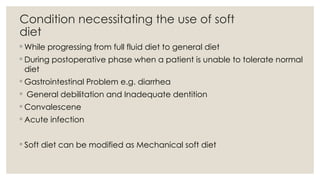
It give to provide light and easily digestible food with minimum residue. It contains food
which requires little chewing and contains no fiber or no seasoning
,
Condition necessitating the use of soft
diet
◦ While progressing from full fluid diet to general diet
◦ During postoperative phase when a patient is unable to tolerate normal
diet
◦ Gastrointestinal Problem e.g. diarrhea
◦ General debilitation and Inadequate dentition
◦ Convalescene
◦ Acute infection
◦ Soft diet can be modified as Mechanical soft diet
Mechanical soft diet
◦ Many people require a soft diet simply because they have no teeth and such
a diet is known as mechanical or a dental soft diet. It is not desirable to restrict
the patient to the food selection of the customary soft diet and the following
modifications to the normal diet may be made:
◦ Vegetables may be chopped or diced before cooking.
◦ Hard raw fruits and vegetables are to be avoided; tough skins and seeds to be
removed.
◦ Nuts and dried fruits may be used in chopped or powdered forms.
◦ Meat to be finely minced or ground.
NORMAL DIET
◦ A normal diet is defined as one which consists. Of any and all
foods eaten by a person in health. It is planned keeping the basic
food groups in mind so that optimum amounts of all nutrients are
provided. As there is no restriction of any kind of food, this diet is
well balanced and nutritionally adequate
◦ Since the patient is hospitalized and/or is at bed rest, a reduction
of 10% in energy intake should be made and too many fatty
foods and fried foods be avoided as they are difficult to digest.
The proteins are slightly increased (+10%) to counteract a
negative nitrogen balance. All other nutrients are supplied in
normal amounts.
Definition
Uses
◦ It is used for ambulatory and bed patients whose conditions do
not necessitate a special diet as one of the routine diets.
◦ Many special diets progress ultimately to a regular diet. The
regular hospital diet is simple in character and preparation.
◦ Easy of digestion and calculated to afford maximum nourishment
with minimum effort to the body. The diet is well balanced,
adequate in nutritional value and attractively served to stimulate
a possible poor appetite.
Diabetic diet
In diabetes mellitus the metabolism of carbohydrate, fat and protein are affected.
Diabetes is a lifelong it disease which can be treated but not cured. The dietary
treatment depends upon the severity of the condition
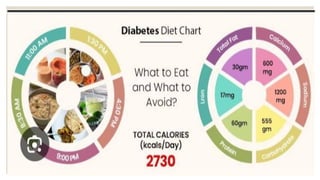
The purpose of diabetic diet is to keep the patient in good health to keep the blood
sugar level within normal level and to keep urine free from sugar.
The diet should be balanced but there should be restriction of carbohydrates, e.g. rice,
biscuits, sugar, jams, sweets, honey, carrots, and sweet potatoes. The patient should
have egg, milk raw salads all types of green leafy vegetables.
◦ The total calories required 20 to 25 percent should be from protein 40 percent from
carbohydrates and 40 percent from fat.
Liberal Bland diet
◦ This diet is indicated for any medical condition requiring treatment for the
reduction of gastric secretion, such as gastric or duodenal ulcers, gastritis,
esophagitis, or hiatal hernia
◦ The diet consists of any variety of regular foods and beverages, which are
prepared or consumed without black pepper, chili powder, or chili pepper.
Chocolate, coffee, tea, caffeine-containing products, and decaffeinated
coffee are not included in the diet. The diet should be as liberal as possible
and individualized to meet the needs of the patient. Foods, which cause the
patient discomfort, should be avoided. Small, frequent feedings may be
prescribed to lower the acidity of the gastric content and for the physical
comfort of the patient
Low fat diet
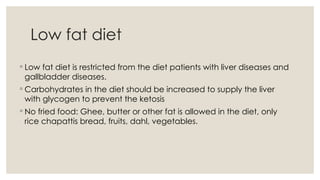
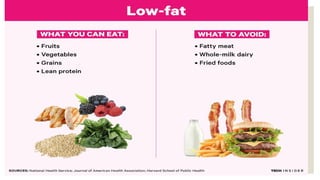
◦ Low fat diet is restricted from the diet patients with liver diseases and
gallbladder diseases.
◦ Carbohydrates in the diet should be increased to supply the liver
with glycogen to prevent the ketosis
◦ No fried food: Ghee, butter or other fat is allowed in the diet, only
rice chapattis bread, fruits, dahl, vegetables.
Sodium restricted diet
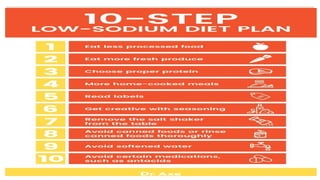
◦ The purpose of the sodium-restricted diet is to promote loss of body fluids for patients
who are unable to excrete the element normally because of a pathological condition.
The diet is indicated for the prevention, control, and elimination of edema in
congestive heart failure; cirrhosis of the liver with ascites; renal disease complicated by
either edema or hypertension; when administration of adrenocorticotrophic hormone
(ACTH) or steroids are prescribed, and for certain endocrine disorders, such as
Cushing’s disease and hypothyroidism.
◦ The sodium-restricted diets provide a specific sodium level or a range of sodium. The
diet order must indicate the specific sodium level or range desired either in milligrams
(mg) or mill equivalent (mEq). Terms, such as “salt free” and “low sodium” are not
sufficient
◦ The diets are below the RDA in iron for males ages 11 to 22 and for females ages 11 to
50. Thiamine is inadequate for males at all levels. Calcium and niacin are also low for
certain diets and ages.
Conclusion
◦ Healthy eating habits are essential for maintaining good health and preventing chronic
diseases. Developing healthy eating habits requires making small changes to your diet
and lifestyle over time.
◦ Diet culture can have a significant impact on mental health by contributing to
increased anxiety, depression, and stress.