ABRF Workshop


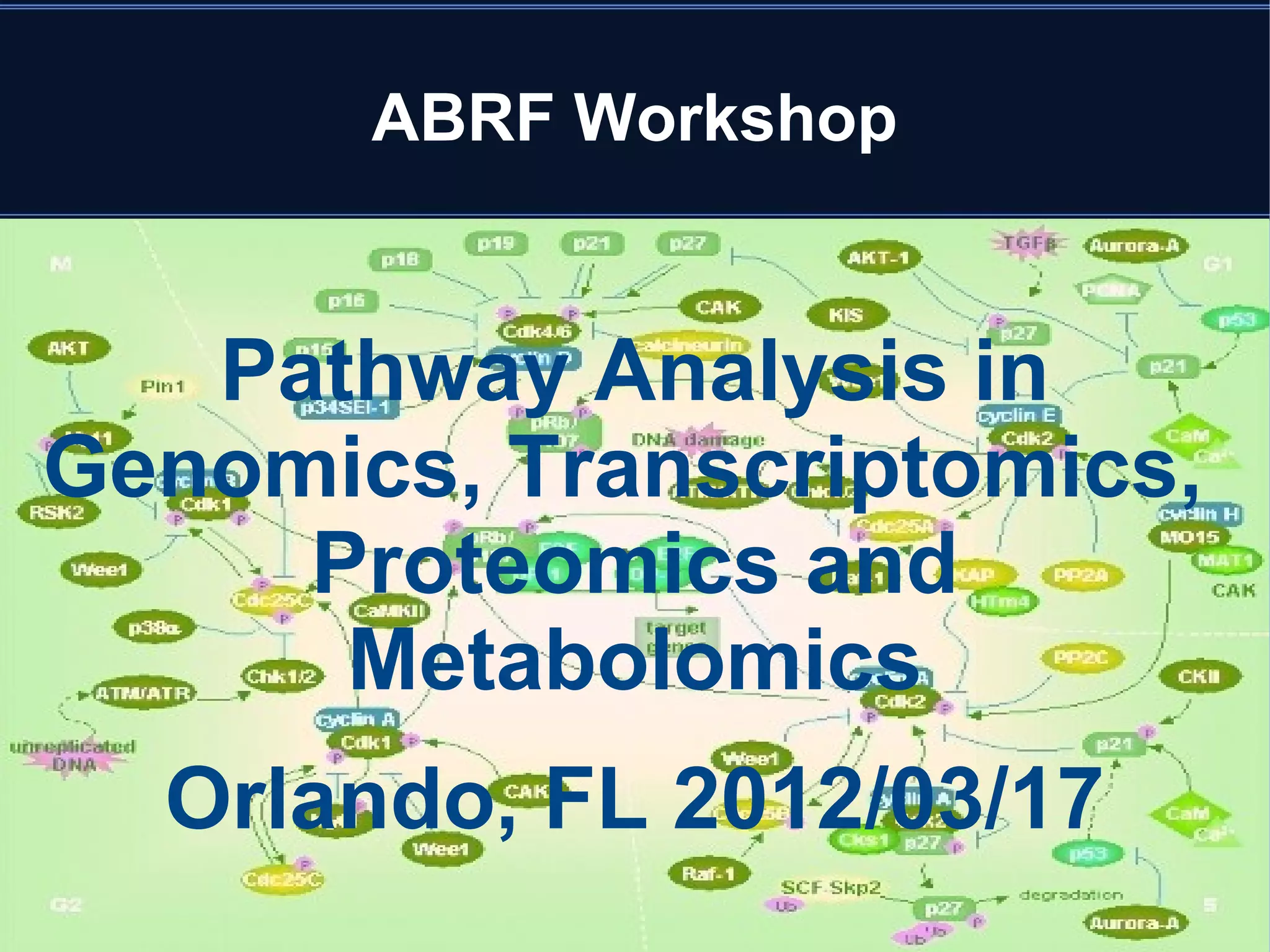
   Pathway Analysis in
Genomics, Transcriptomics,
     Proteomics and
      Metabolomics
  Orlando, FL 2012/03/17
Why PA now?

Driven by the need to understand mechanisms
in Biology


Fed by a torrent of “omics” data


Integrated in Systems Biology approaches


Towards P4 Medicine, environmental, pharma
What is PA


A set of techniques that provide insight into the
structure and functioning of biological systems,
allowing for inference on their behavior.


The methods start from large lists of genes and
their annotation, use quantitative levels of
expression and produce reduced lists and/or
models.
Training issues

Three day long training courses in Oeiras, PT
For about 20 people
Connected to other themes:
     Gene Regulatory Networks (2009)
     Chemoinformatics (2010)
     Network Biology (2011)
Results: need more time, more statistics bkgnd
Well conducted PA will assume

Verification of the assumptions
    Statistics proficiency (trained users)


High quality of the annotations
    We need more and better knowledge bases


Abundance of omics data
   More (open) data from tech services, targeted research
Basics

●   From a list of genes from HT experiments in
    two different conditions, we want to be able to
    reliably extract reduced lists of genes that
    justify the functional change.

●   We also want to interpret the above findings in
    the context of biological mechanisms being
    present/absent.
Knowledge bases

Provide annotated gene sets


KEGG
REACTOME
METACYC
GO
Types of PA tools

ORA (Over-Representation Analysis) ex: FatiGo
FCS (Functional Class Scoring) ex: segPathway
PT (Pathway Topology) ex : GenExplain

Reference
Ten Years of Pathway Analysis: Current Approaches and Outstanding Challenges
Purvesh Khatri, Marina Sirota, Atul J. Butte
PLOS Computational Biology, Feb 2012, vol. 8, Issue 2, e1002375
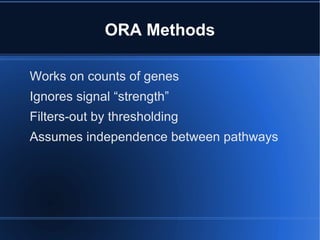
ORA Methods

Works on counts of genes
Ignores signal “strength”
Filters-out by thresholding
Assumes independence between pathways
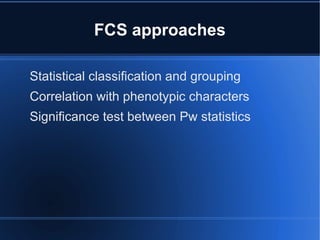
FCS approaches

Statistical classification and grouping
Correlation with phenotypic characters
Significance test between Pw statistics
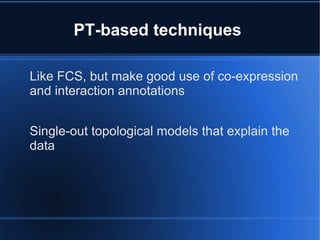
PT-based techniques

Like FCS, but make good use of co-expression
and interaction annotations


Single-out topological models that explain the
data
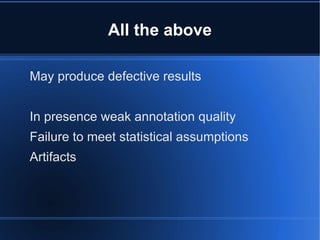
All the above

May produce defective results


In presence weak annotation quality
Failure to meet statistical assumptions
Artifacts
However...

We need to be ready for upcoming data
deluges and their consequences
Medical information coming from new corners
- adverse effects database (Stanford)
- patients data collections
New developments

    We need
●   a significant investment in software
    development

●   data interoperability and standards for cross-
    platform exchange

●   better validation strategies
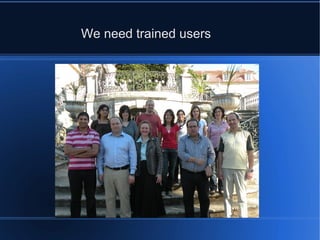
We need trained users

Introduction

  • 1.
    ABRF Workshop Pathway Analysis in Genomics, Transcriptomics, Proteomics and Metabolomics Orlando, FL 2012/03/17
  • 2.
    Why PA now? Drivenby the need to understand mechanisms in Biology Fed by a torrent of “omics” data Integrated in Systems Biology approaches Towards P4 Medicine, environmental, pharma
  • 3.
    What is PA Aset of techniques that provide insight into the structure and functioning of biological systems, allowing for inference on their behavior. The methods start from large lists of genes and their annotation, use quantitative levels of expression and produce reduced lists and/or models.
  • 4.
    Training issues Three daylong training courses in Oeiras, PT For about 20 people Connected to other themes: Gene Regulatory Networks (2009) Chemoinformatics (2010) Network Biology (2011) Results: need more time, more statistics bkgnd
  • 5.
    Well conducted PAwill assume Verification of the assumptions Statistics proficiency (trained users) High quality of the annotations We need more and better knowledge bases Abundance of omics data More (open) data from tech services, targeted research
  • 6.
    Basics ● From a list of genes from HT experiments in two different conditions, we want to be able to reliably extract reduced lists of genes that justify the functional change. ● We also want to interpret the above findings in the context of biological mechanisms being present/absent.
  • 7.
    Knowledge bases Provide annotatedgene sets KEGG REACTOME METACYC GO
  • 8.
    Types of PAtools ORA (Over-Representation Analysis) ex: FatiGo FCS (Functional Class Scoring) ex: segPathway PT (Pathway Topology) ex : GenExplain Reference Ten Years of Pathway Analysis: Current Approaches and Outstanding Challenges Purvesh Khatri, Marina Sirota, Atul J. Butte PLOS Computational Biology, Feb 2012, vol. 8, Issue 2, e1002375
  • 9.
    ORA Methods Works oncounts of genes Ignores signal “strength” Filters-out by thresholding Assumes independence between pathways
  • 10.
    FCS approaches Statistical classificationand grouping Correlation with phenotypic characters Significance test between Pw statistics
  • 11.
    PT-based techniques Like FCS,but make good use of co-expression and interaction annotations Single-out topological models that explain the data
  • 12.
    All the above Mayproduce defective results In presence weak annotation quality Failure to meet statistical assumptions Artifacts
  • 13.
    However... We need tobe ready for upcoming data deluges and their consequences Medical information coming from new corners - adverse effects database (Stanford) - patients data collections
  • 14.
    New developments We need ● a significant investment in software development ● data interoperability and standards for cross- platform exchange ● better validation strategies
  • 15.