Intro to Web 2.0 Dr. Richard Voltz Associate Director Illinois Association of School Administrators
Video produced by Consortium for School Networking (CoSN)
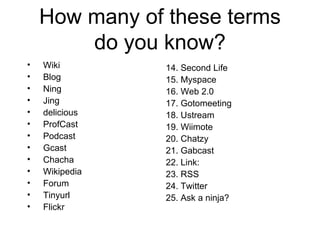
How many of these terms do you know? Wiki Blog Ning Jing delicious ProfCast Podcast Gcast Chacha Wikipedia Forum Tinyurl Flickr 14. Second Life 15. Myspace 16. Web 2.0 17. Gotomeeting 18. Ustream 19. Wiimote 20. Chatzy 21. Gabcast 22. Link: 23. RSS 24. Twitter 25. Ask a ninja?
 
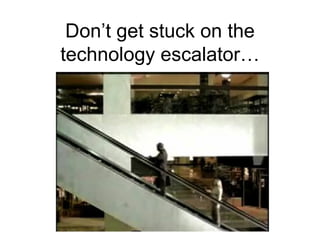
Don’t get stuck on the technology escalator…
How do you use technology?
How do young people use technology?
Y 2 K
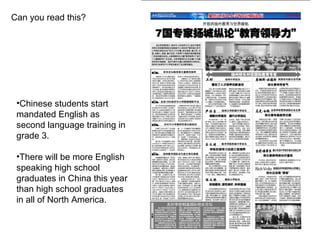
Can you read this? Chinese students start mandated English as second language training in grade 3. There will be more English speaking high school graduates in China this year than high school graduates in all of North America.
Learning from each other…
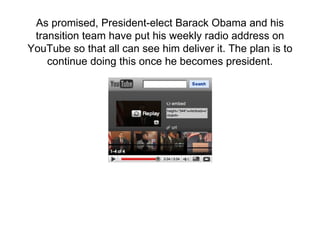
As promised, President-elect Barack Obama and his transition team have put his weekly radio address on YouTube so that all can see him deliver it. The plan is to continue doing this once he becomes president.
Web 2.0 Thank You
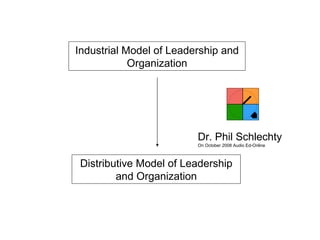
Industrial Model of Leadership and Organization Distributive Model of Leadership and Organization Dr. Phil Schlechty On October 2008 Audio Ed-Online
Instead of IT (Instructional Technology) Call it LT (Learning Technology)
Who makes the decision in your school district about access to Internet and technology? Who should be making that decision?
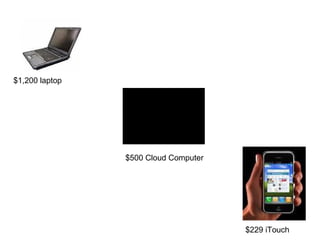
$1,200 laptop $500 Cloud Computer $229 iTouch
 
How many of you believe your children or grandchildren know more about technology than you do? Why is this?
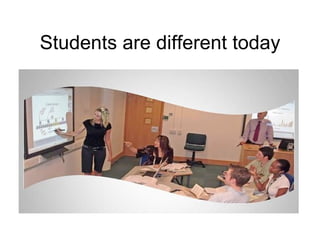
Students are different today
Net Generation Generation Y 97% own a computer 97% have downloaded music 94% own a cell phone 76% use instant messaging 75% of college students have a Facebook profile 60% own iPods 34% use websites as their primary source of news 28% author a blog and 44% read blogs Source: Wikipedia 2008
Students are more engaged outside of school than in school Students are content developers through their own social networking sites Students use email, IM, Twitter and other Web 2.0 tools that are all banned in schools
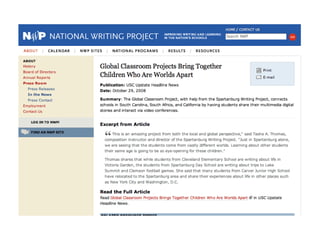
Authentic Learning When students do work in Web 2.0 it is never done. In a school once a teacher grades the paper the student is finished. In a Web 2.0 world, the student can post his/her paper on the net and people who are interested in similar topics may blog with the student.
 
 
21st Century Ideas Cell phones are the technology of the future Movies have great impact on learning Use Google to set up your own search engine MySpace users would outnumber all countries in the world but two Social networking encourages divergent thinking, school is all about convergence Use videos of good teachers teaching Students no longer live in a paper and pencil world
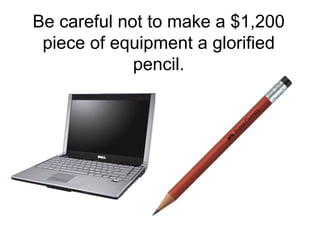
Be careful not to make a $1,200 piece of equipment a glorified pencil.
 
 
Wikinomics Principles Open doors to the world Co-innovates with everyone Share resources that used to be guarded Harness power of mass-collaboration
Today Flickr beats Webshots Wikipedia beats Encyclopedia Britannica Blogger beats CNN Epinions beats Consumer Reports Google Maps beats Map Quest MySpace beats friendster Craiglist beats monistor Why?
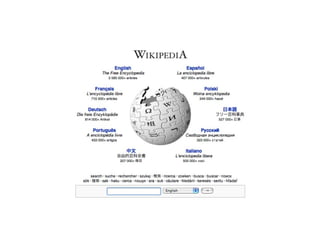
Peering When masses of people and firms collaborate openly to drive innovation and growth in their industries (MySpace, YouTube, linux, Wikipedia) Blogosphere Self-organized network of personal commentary sites that are updated every day Wiki Software that allows the users to edit the content of web pages - Wikipedia is bigger than Encyclopedia Britannica Web 2.0 is about the communities, participation and peering.
Gold Corp Story
What is Web 2.0? Instead of always downloading information off the web, you interact with information on the web. Superintendents join the IASA Ning to learn from each other. Principals can set up their own blogs to communicate with their staff and the community. Information flows both ways.

Intro To Web 2.0

  • 1.
    Intro to Web2.0 Dr. Richard Voltz Associate Director Illinois Association of School Administrators
  • 2.
    Video produced byConsortium for School Networking (CoSN)
  • 3.
    How many ofthese terms do you know? Wiki Blog Ning Jing delicious ProfCast Podcast Gcast Chacha Wikipedia Forum Tinyurl Flickr 14. Second Life 15. Myspace 16. Web 2.0 17. Gotomeeting 18. Ustream 19. Wiimote 20. Chatzy 21. Gabcast 22. Link: 23. RSS 24. Twitter 25. Ask a ninja?
  • 4.
  • 5.
    Don’t get stuckon the technology escalator…
  • 6.
    How do youuse technology?
  • 7.
    How do youngpeople use technology?
  • 8.
  • 9.
    Can you readthis? Chinese students start mandated English as second language training in grade 3. There will be more English speaking high school graduates in China this year than high school graduates in all of North America.
  • 10.
  • 11.
    As promised, President-electBarack Obama and his transition team have put his weekly radio address on YouTube so that all can see him deliver it. The plan is to continue doing this once he becomes president.
  • 12.
  • 13.
    Industrial Model ofLeadership and Organization Distributive Model of Leadership and Organization Dr. Phil Schlechty On October 2008 Audio Ed-Online
  • 14.
    Instead of IT(Instructional Technology) Call it LT (Learning Technology)
  • 15.
    Who makes thedecision in your school district about access to Internet and technology? Who should be making that decision?
  • 16.
    $1,200 laptop $500Cloud Computer $229 iTouch
  • 17.
  • 18.
    How many ofyou believe your children or grandchildren know more about technology than you do? Why is this?
  • 19.
  • 20.
    Net Generation GenerationY 97% own a computer 97% have downloaded music 94% own a cell phone 76% use instant messaging 75% of college students have a Facebook profile 60% own iPods 34% use websites as their primary source of news 28% author a blog and 44% read blogs Source: Wikipedia 2008
  • 21.
    Students are moreengaged outside of school than in school Students are content developers through their own social networking sites Students use email, IM, Twitter and other Web 2.0 tools that are all banned in schools
  • 22.
    Authentic Learning Whenstudents do work in Web 2.0 it is never done. In a school once a teacher grades the paper the student is finished. In a Web 2.0 world, the student can post his/her paper on the net and people who are interested in similar topics may blog with the student.
  • 23.
  • 24.
  • 25.
    21st Century IdeasCell phones are the technology of the future Movies have great impact on learning Use Google to set up your own search engine MySpace users would outnumber all countries in the world but two Social networking encourages divergent thinking, school is all about convergence Use videos of good teachers teaching Students no longer live in a paper and pencil world
  • 26.
    Be careful notto make a $1,200 piece of equipment a glorified pencil.
  • 27.
  • 28.
  • 29.
    Wikinomics Principles Opendoors to the world Co-innovates with everyone Share resources that used to be guarded Harness power of mass-collaboration
  • 30.
    Today Flickr beatsWebshots Wikipedia beats Encyclopedia Britannica Blogger beats CNN Epinions beats Consumer Reports Google Maps beats Map Quest MySpace beats friendster Craiglist beats monistor Why?
  • 31.
    Peering When massesof people and firms collaborate openly to drive innovation and growth in their industries (MySpace, YouTube, linux, Wikipedia) Blogosphere Self-organized network of personal commentary sites that are updated every day Wiki Software that allows the users to edit the content of web pages - Wikipedia is bigger than Encyclopedia Britannica Web 2.0 is about the communities, participation and peering.
  • 32.
  • 33.
    What is Web2.0? Instead of always downloading information off the web, you interact with information on the web. Superintendents join the IASA Ning to learn from each other. Principals can set up their own blogs to communicate with their staff and the community. Information flows both ways.