Downloaded 15 times

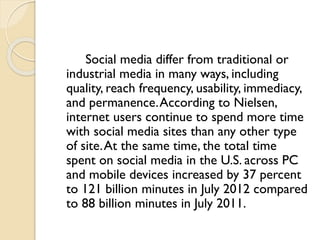
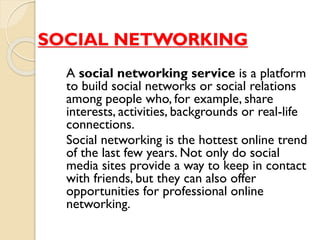

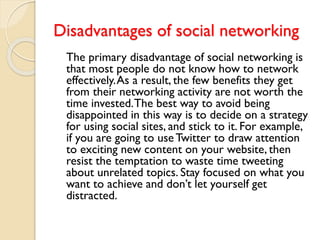
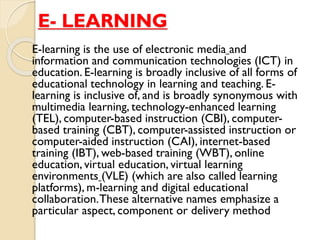



Social media can be used in education in several ways. It allows for asynchronous and synchronous communication between students and teachers through familiar platforms like Facebook and Twitter. Facebook allows for open dialogue, sharing of multimedia content, and a way for shy students to participate. Twitter promotes social connections and extending discussions beyond the classroom. YouTube is commonly used to share educational videos that help students visualize concepts and recall information. While social media can improve collaboration and knowledge sharing, it can also be distracting and pressure students to prioritize online conformity over academic risks. The document discusses various social media platforms and both the advantages and disadvantages of using social media in education.


