Download to read offline
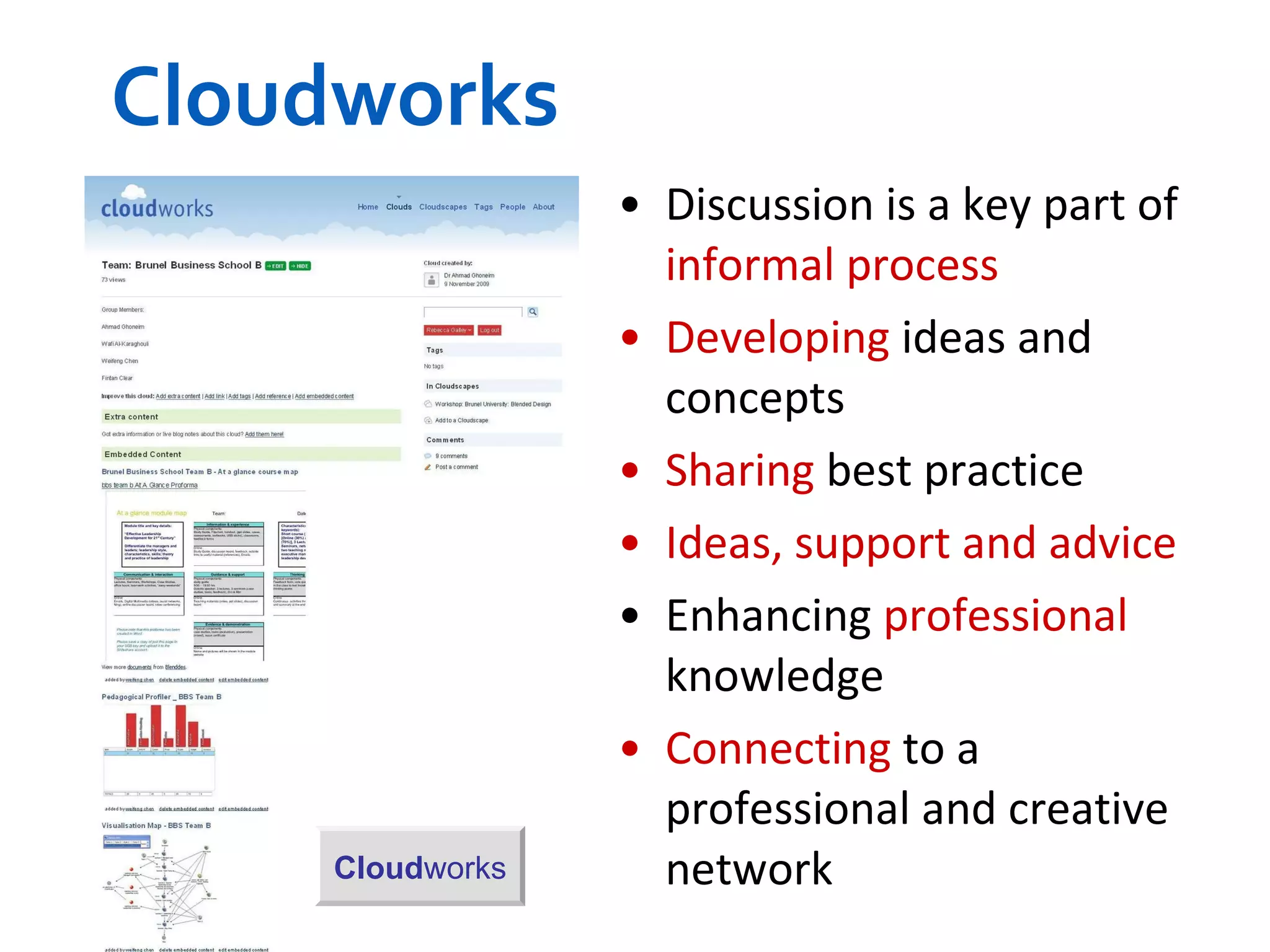
![On Cloudworks... “ The appeal of Cloudworks is that the focus shifts away from sharing course resources (repositories) to representing teaching designs, practices, and resources in a way that is context rich and reusable by others. Moreover, members' contributions are open and available for others to build on in a number of interesting ways”. Cloudworks user blog post “ As the Multiliteracies moderator I am looking with interest on the changing shapes of clouds and wondering which will gain traction and carry us forward into the future. In [institution] we were thinking our Big Innovation this year would be Wave (last year it was Ning). But Wave is a bit complicated with the invitation hassle (at the moment). This one is quite simple. Unlike either of the other two, you don't have to be a member of the group to converse. You simply have to have a Cloudworks ID and you can say what you like anywhere.” Comment posted on Cloudworks](https://image.slidesharecdn.com/introouldiheasignologo-110228070132-phpapp02/75/Intro-ouldi-hea_sig_no_logo-9-2048.jpg)
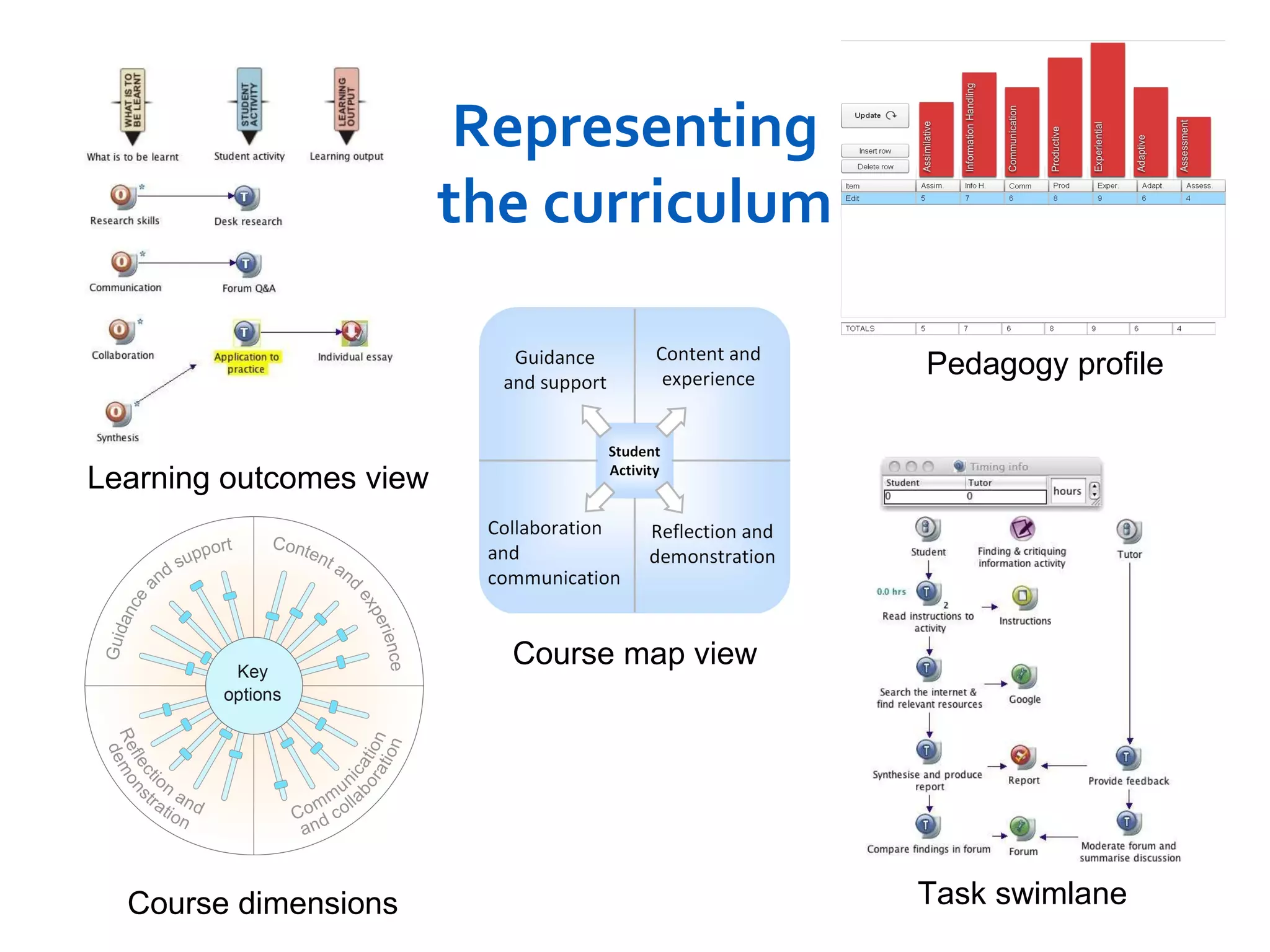
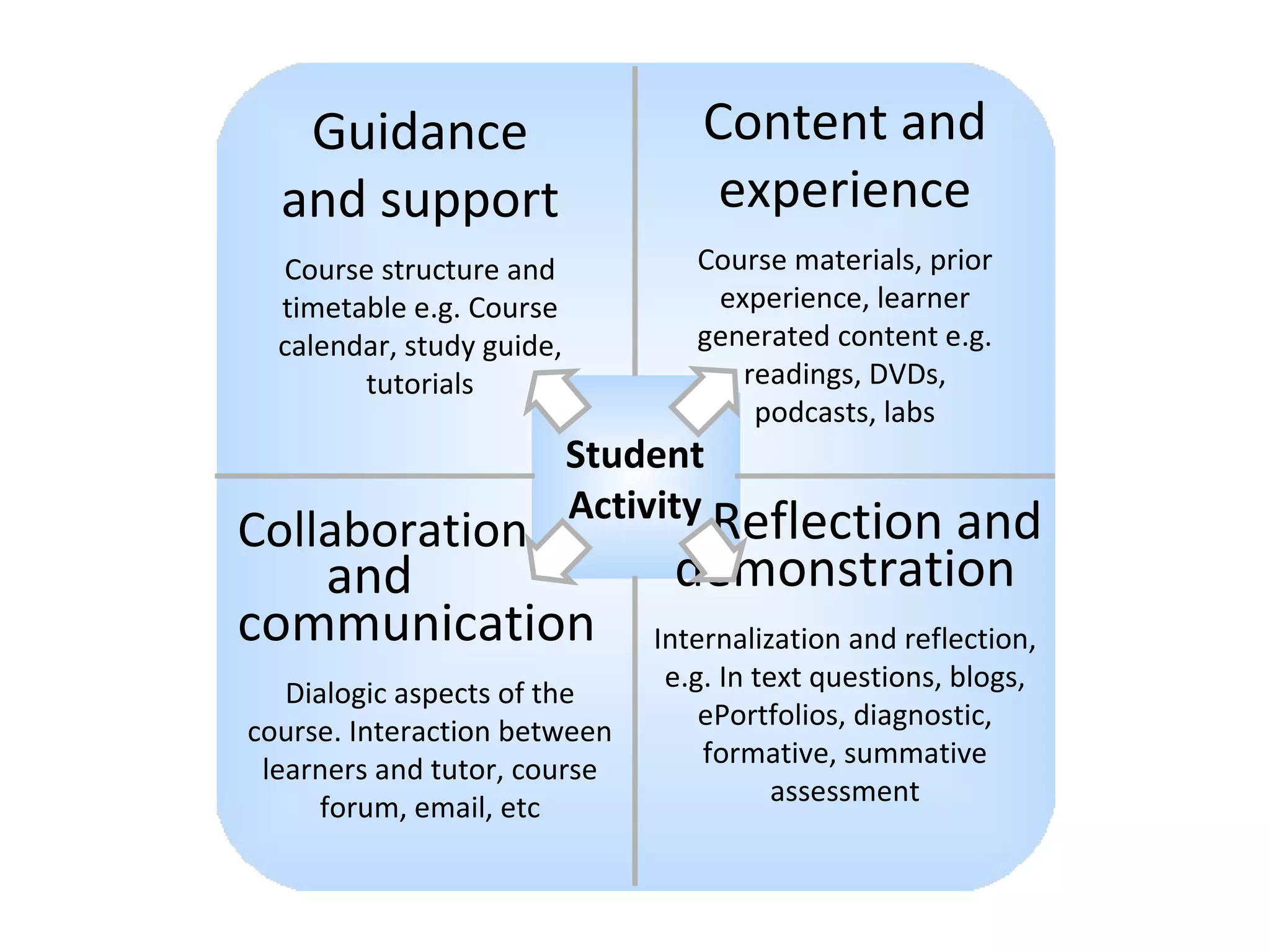
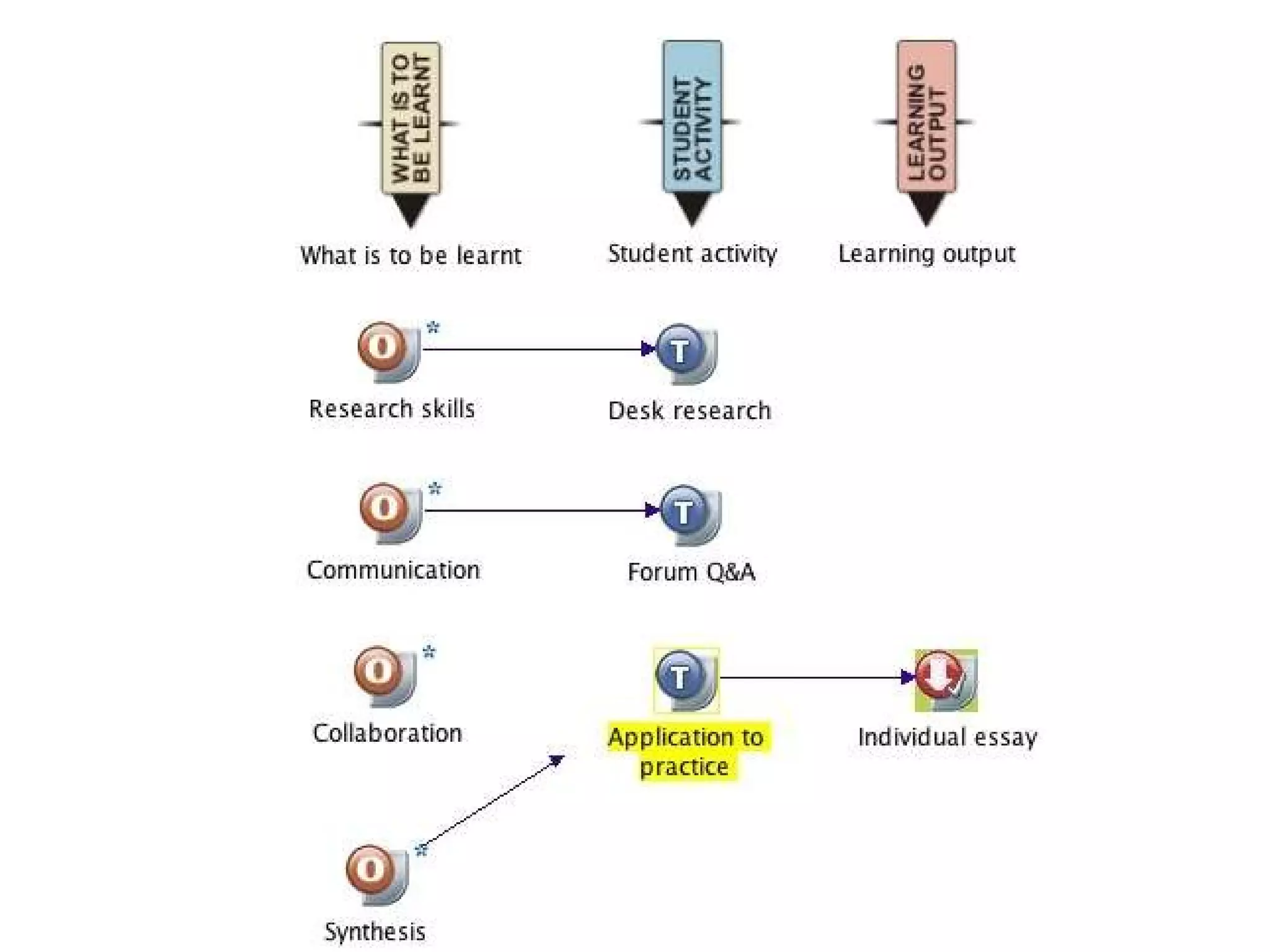
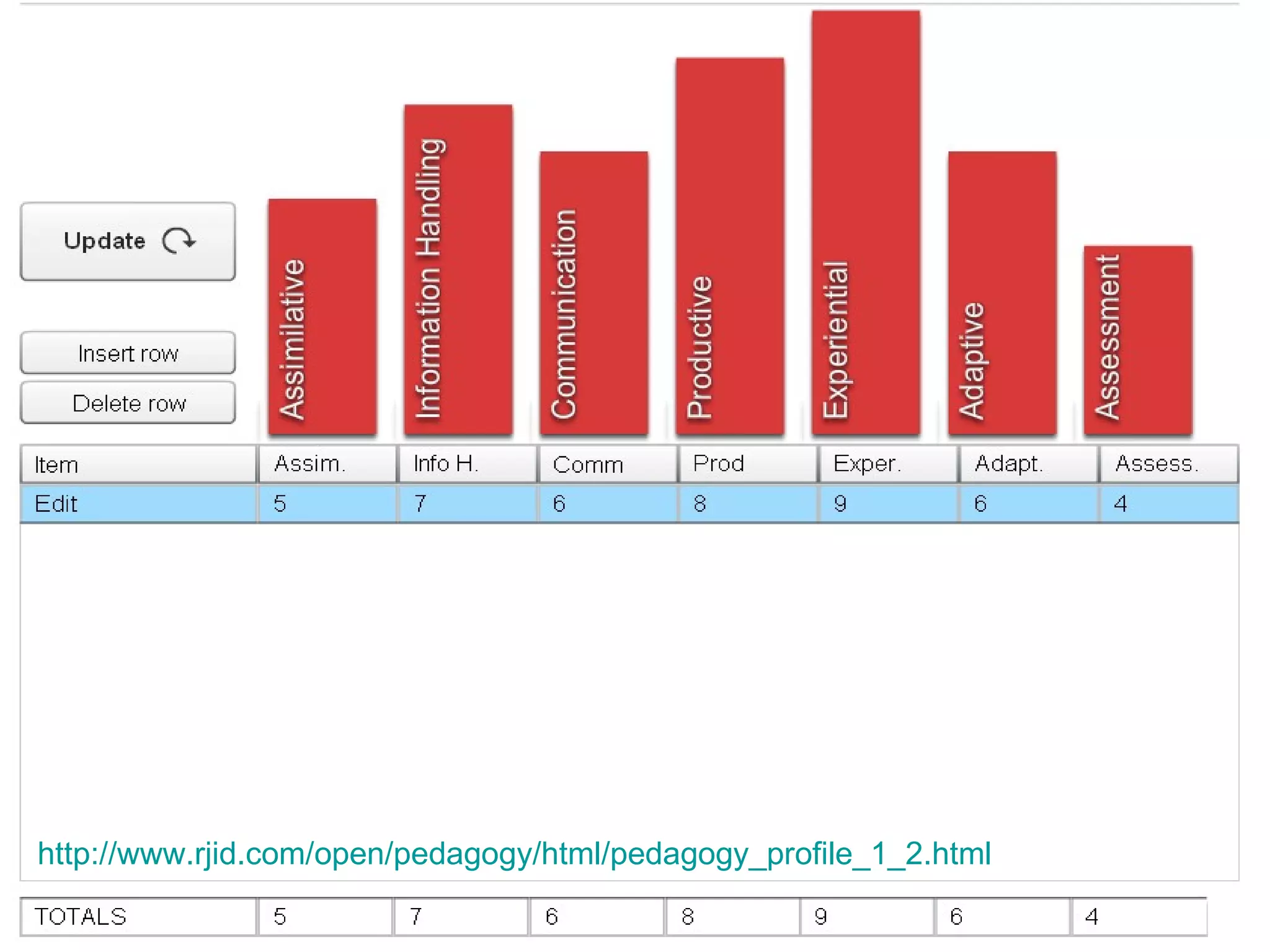
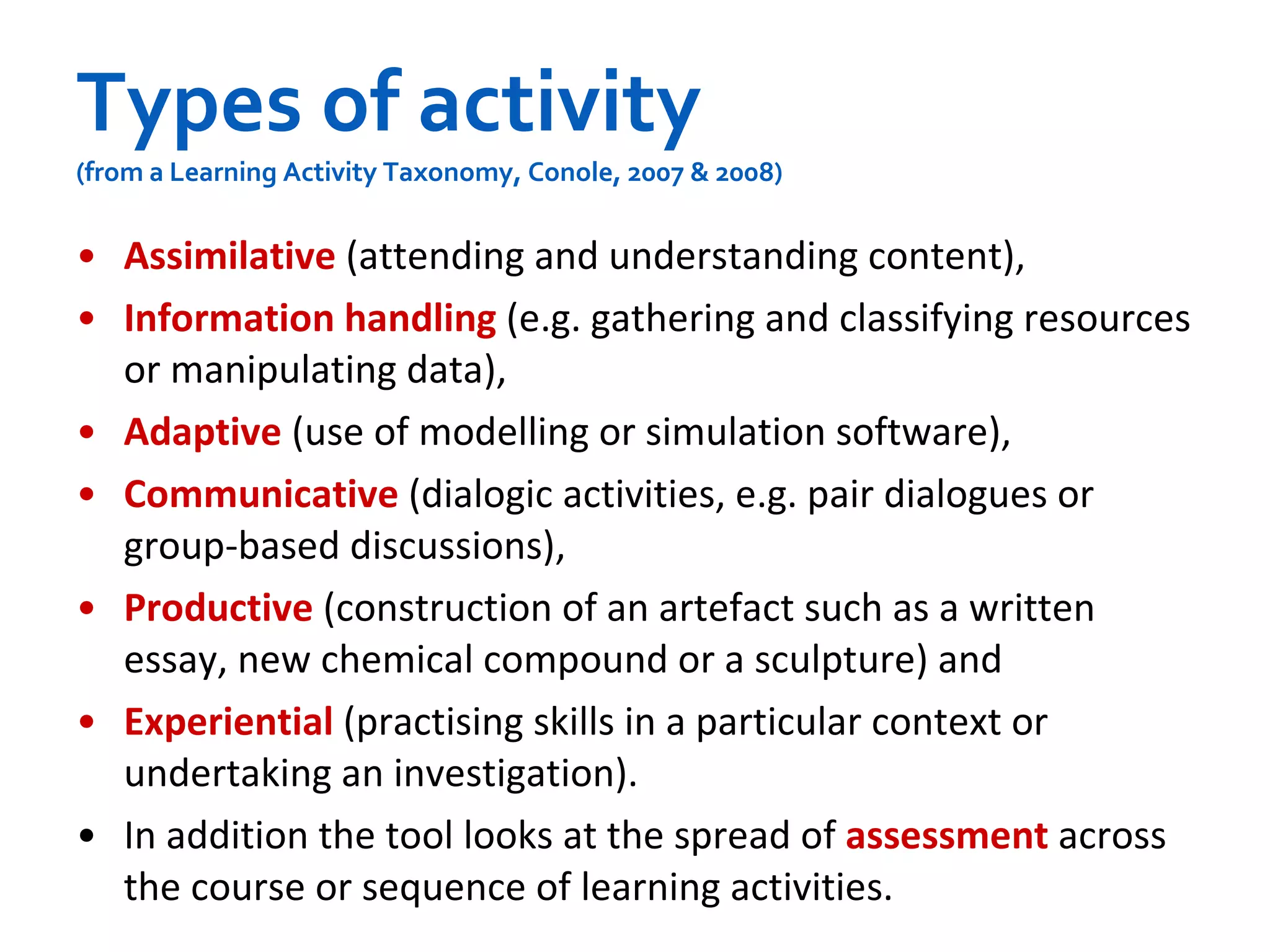
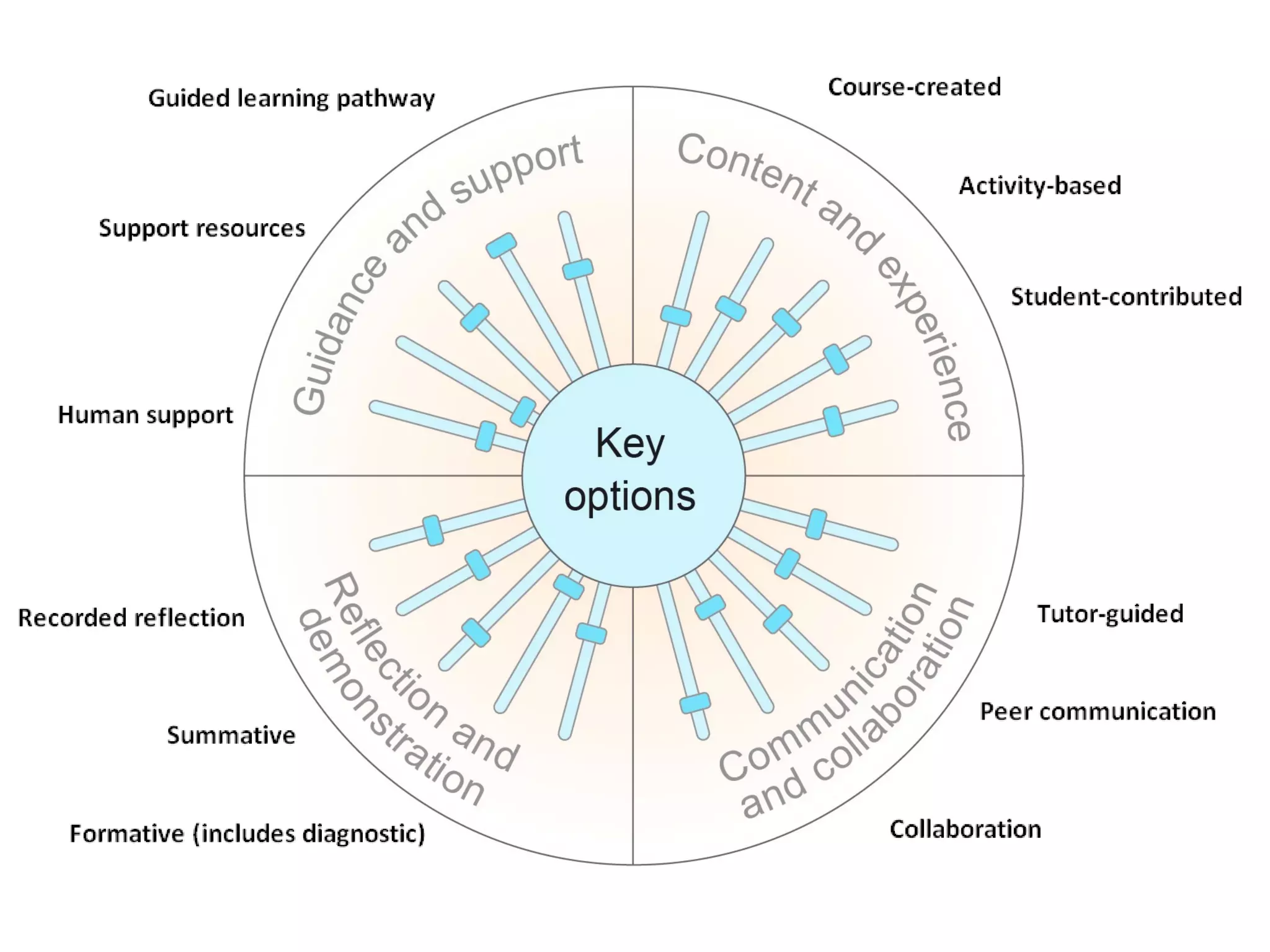
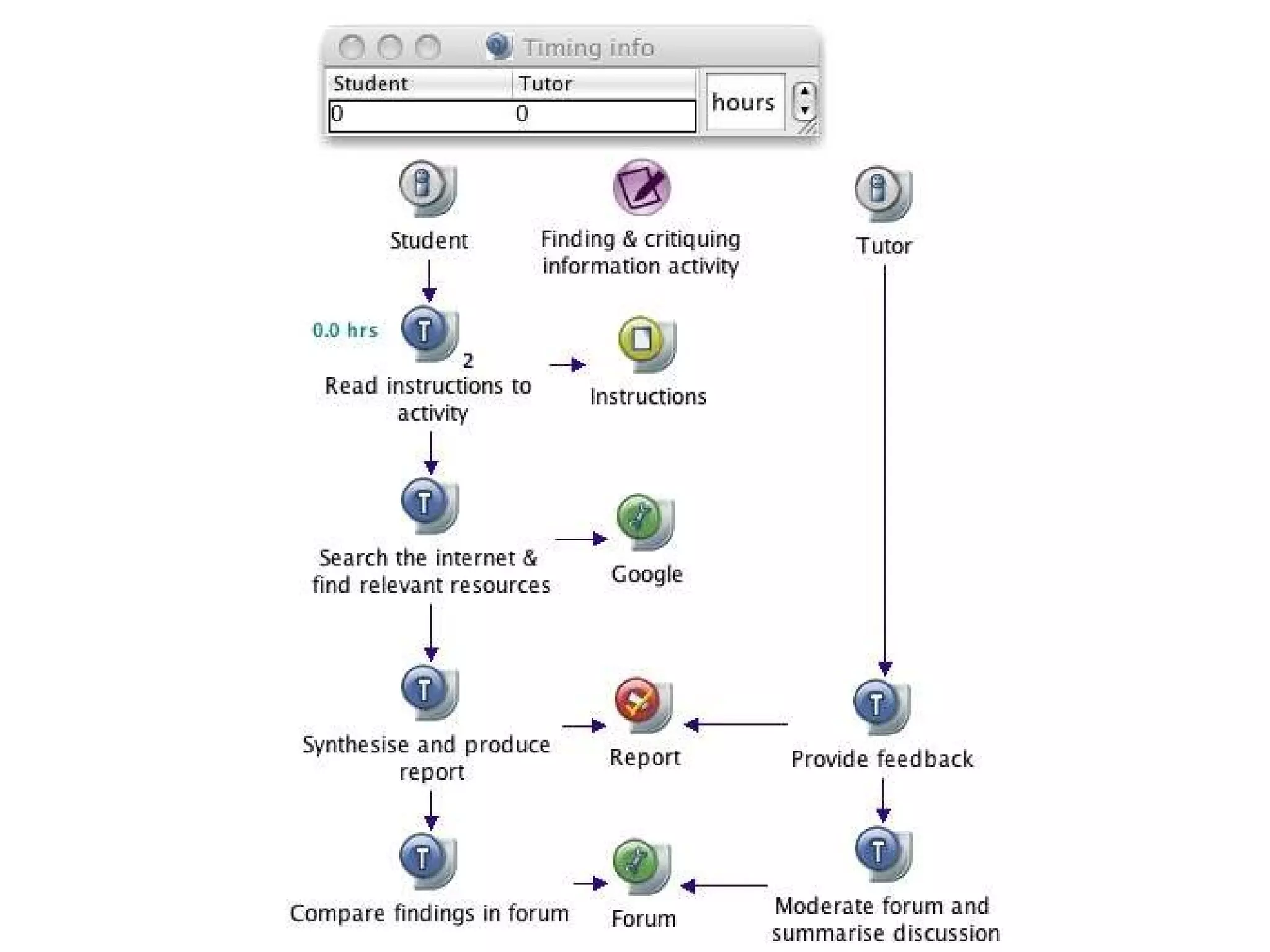
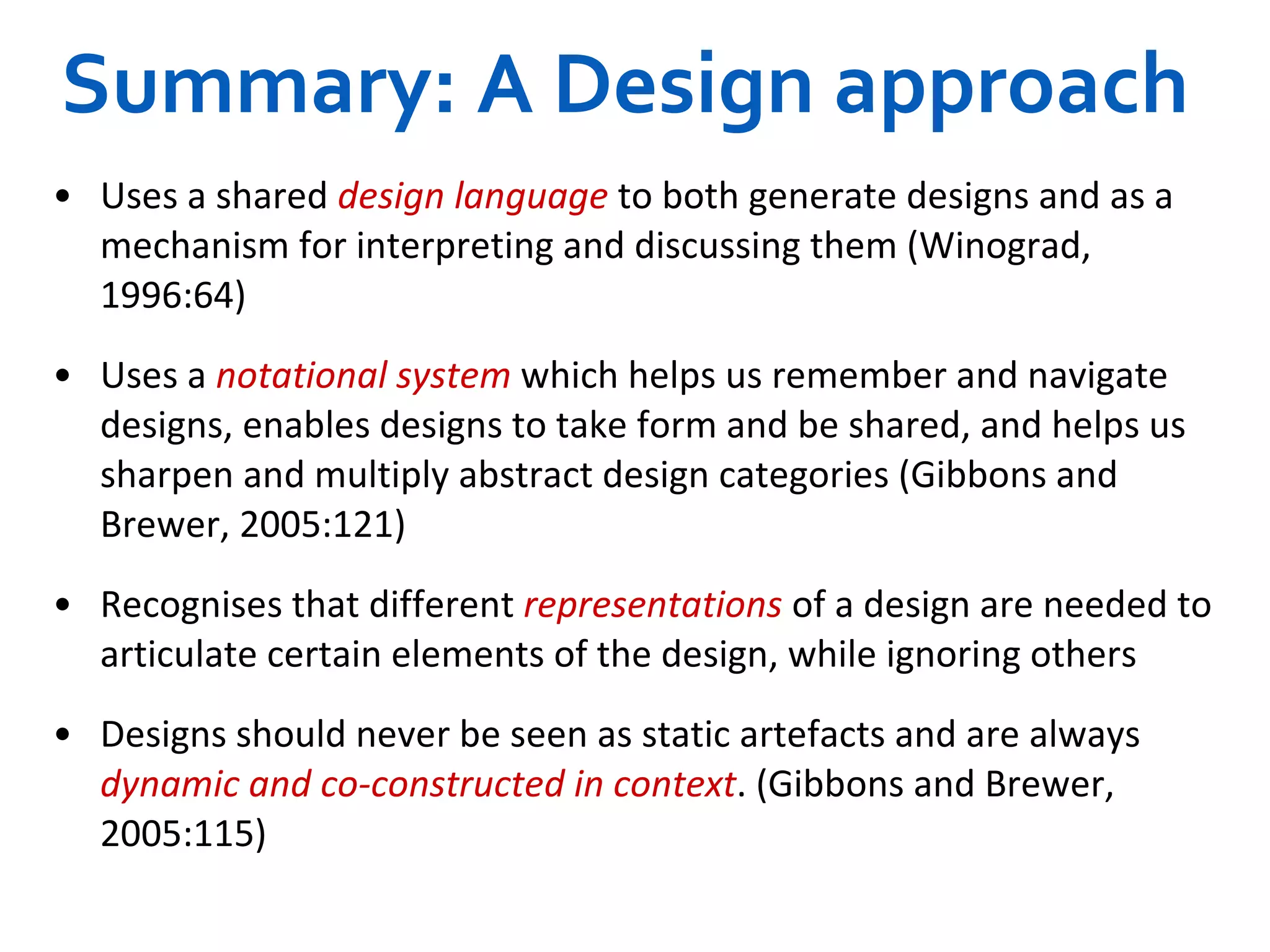
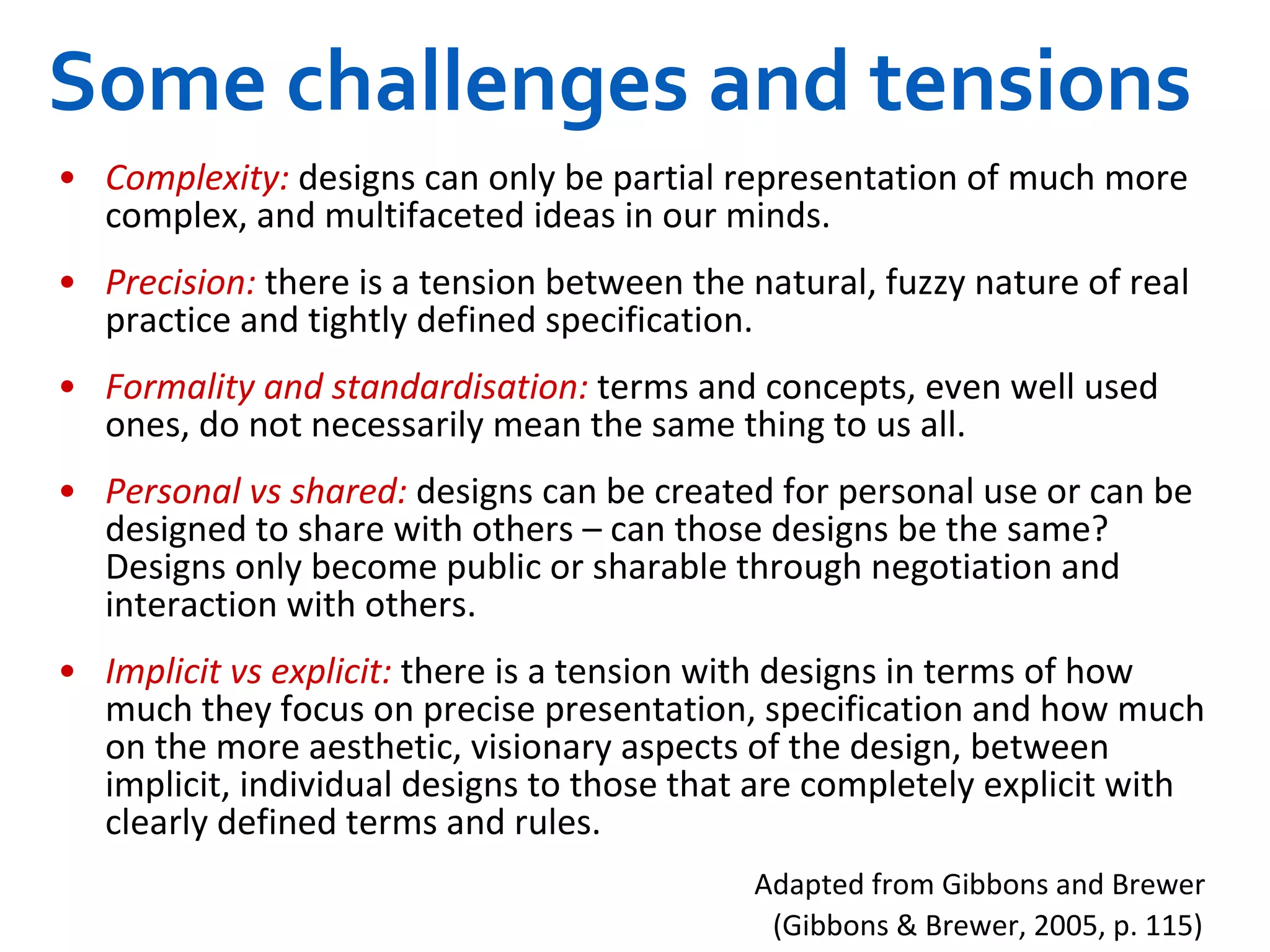
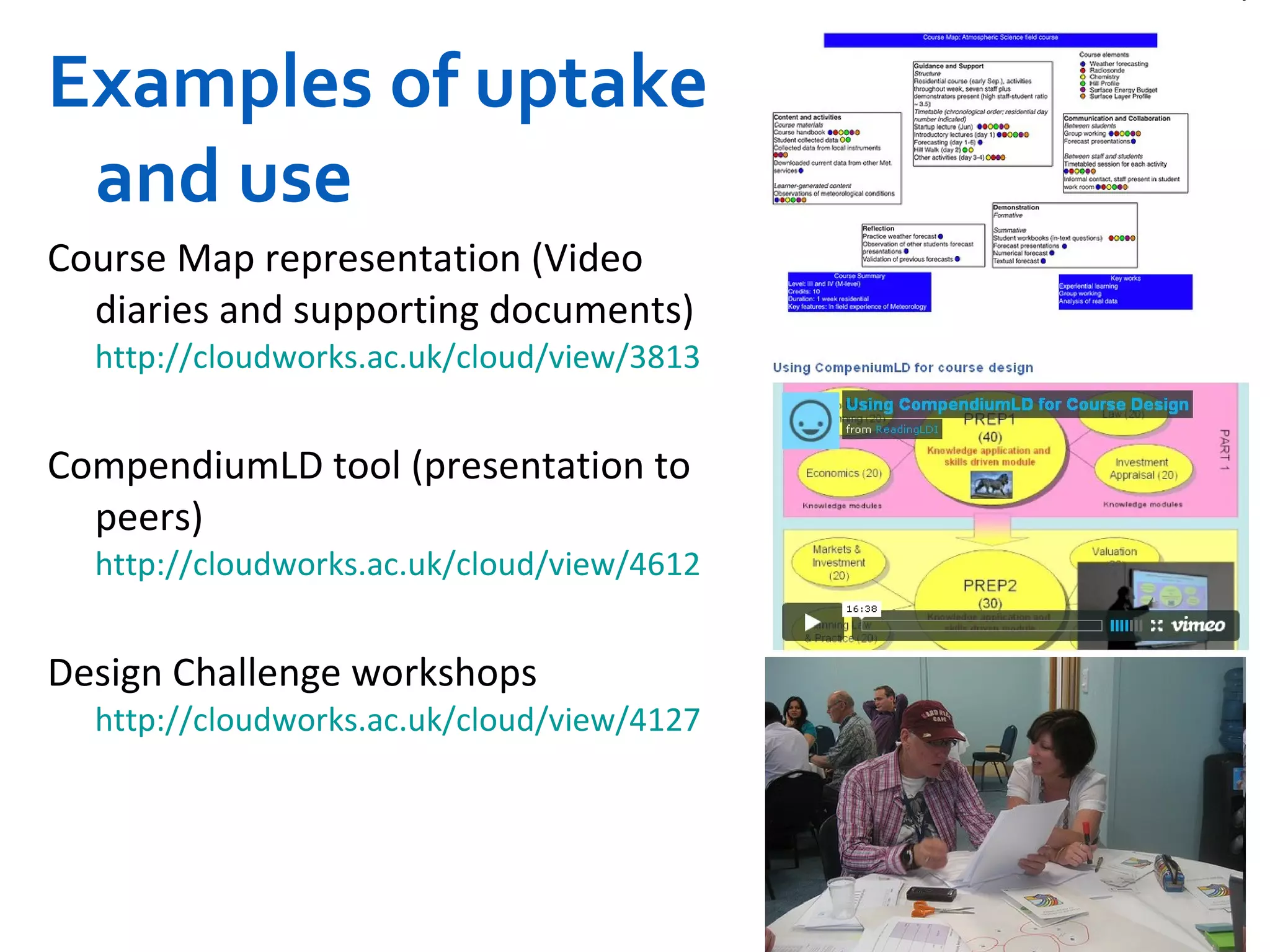

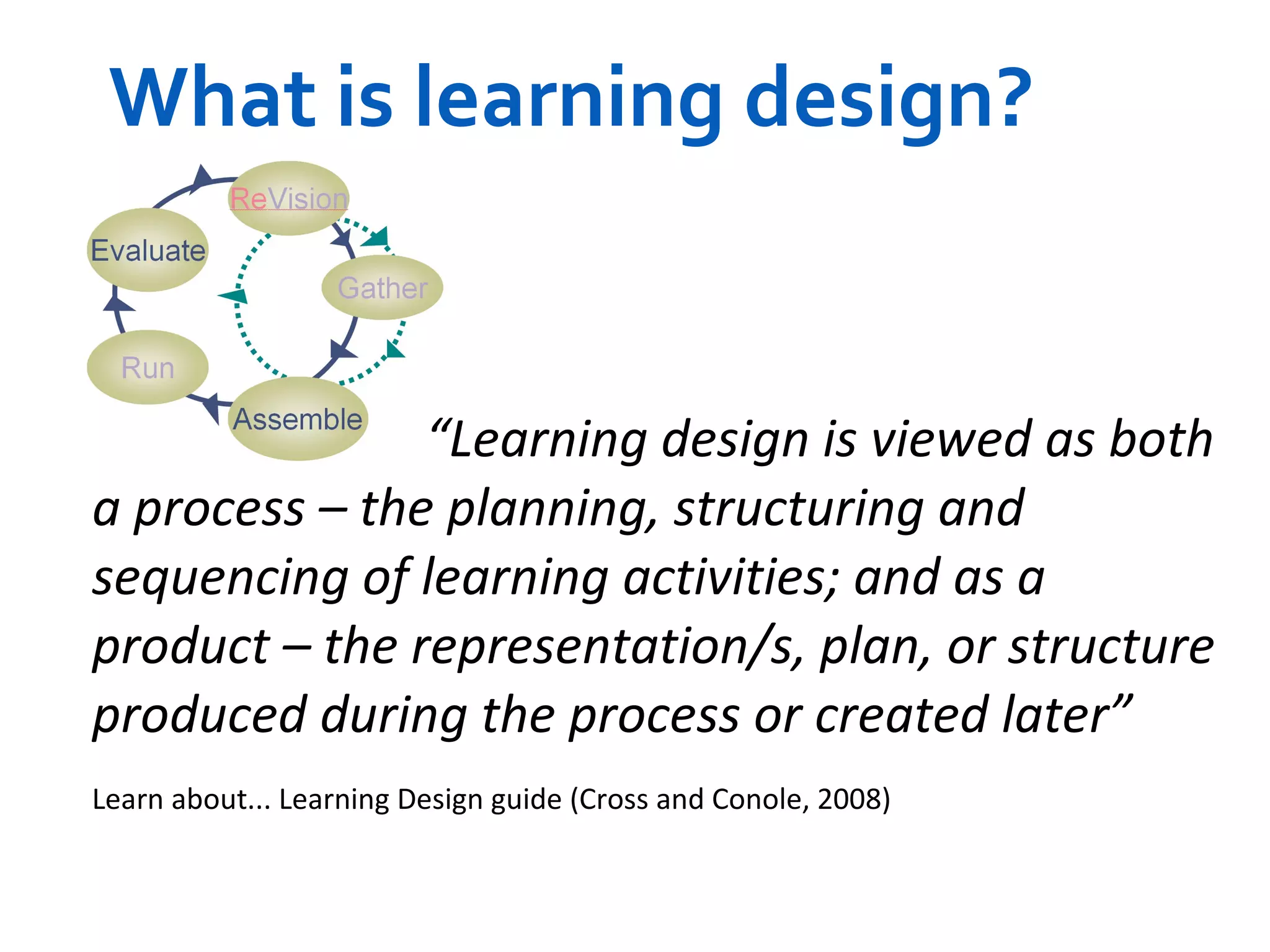
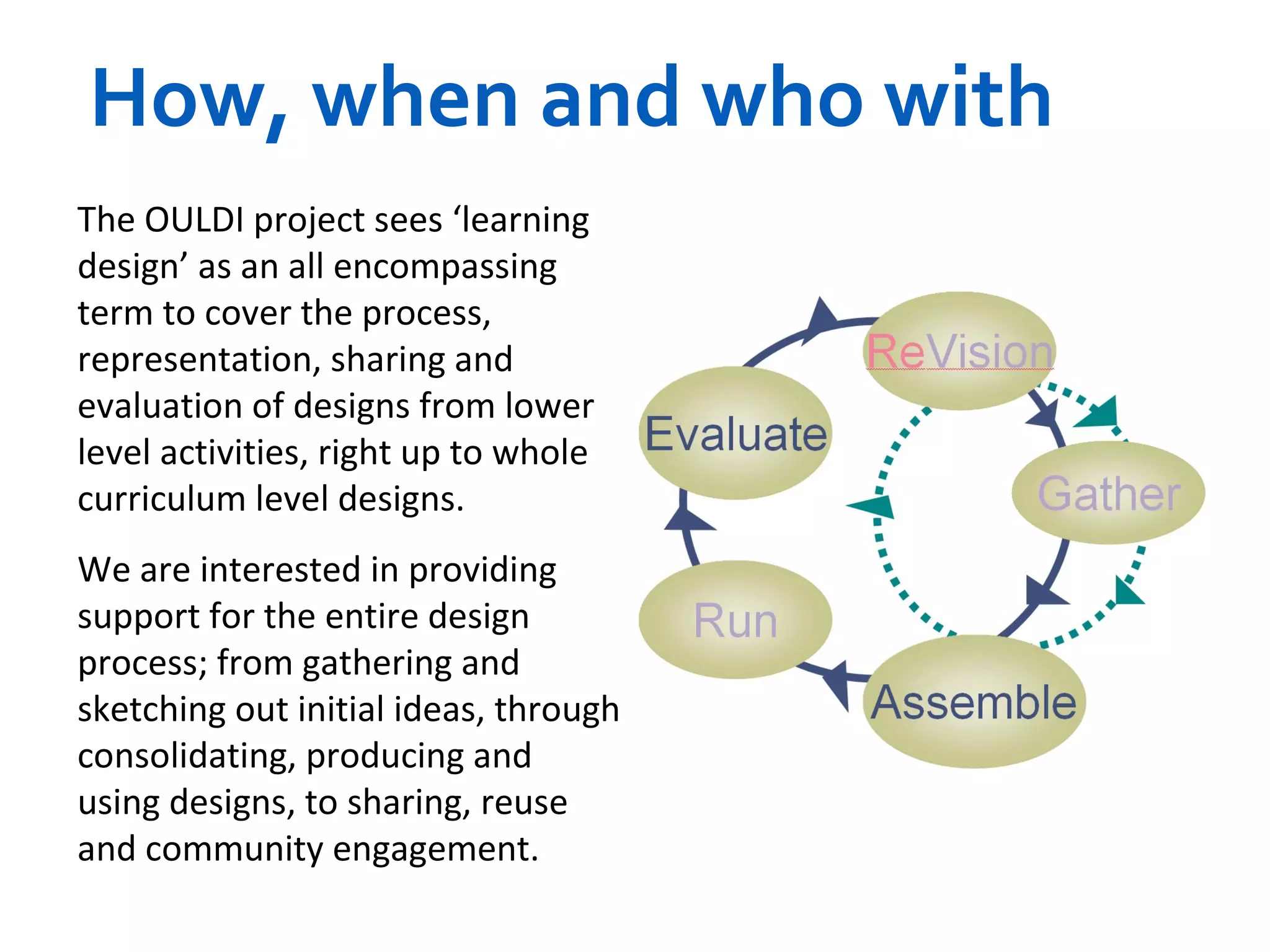
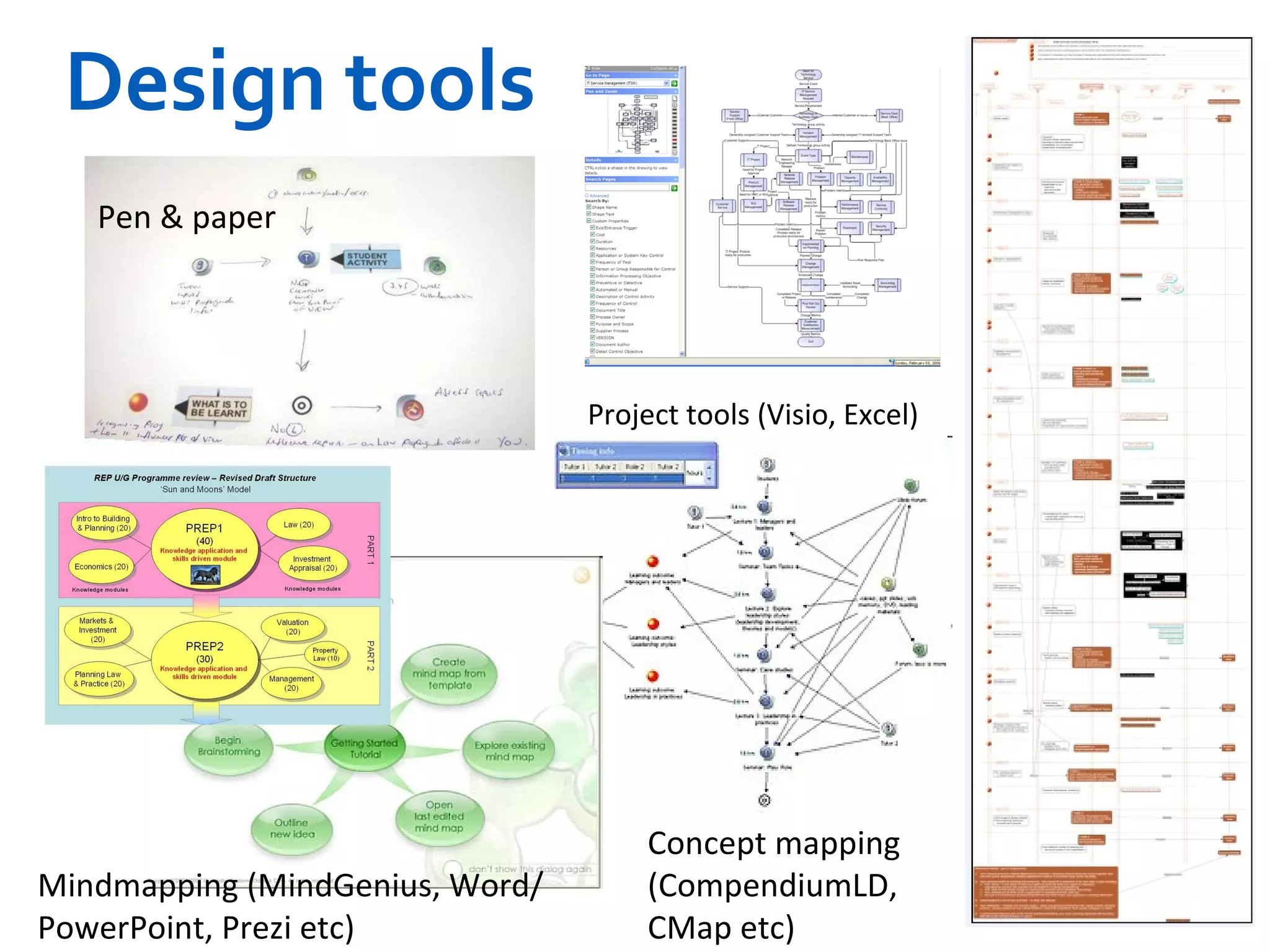
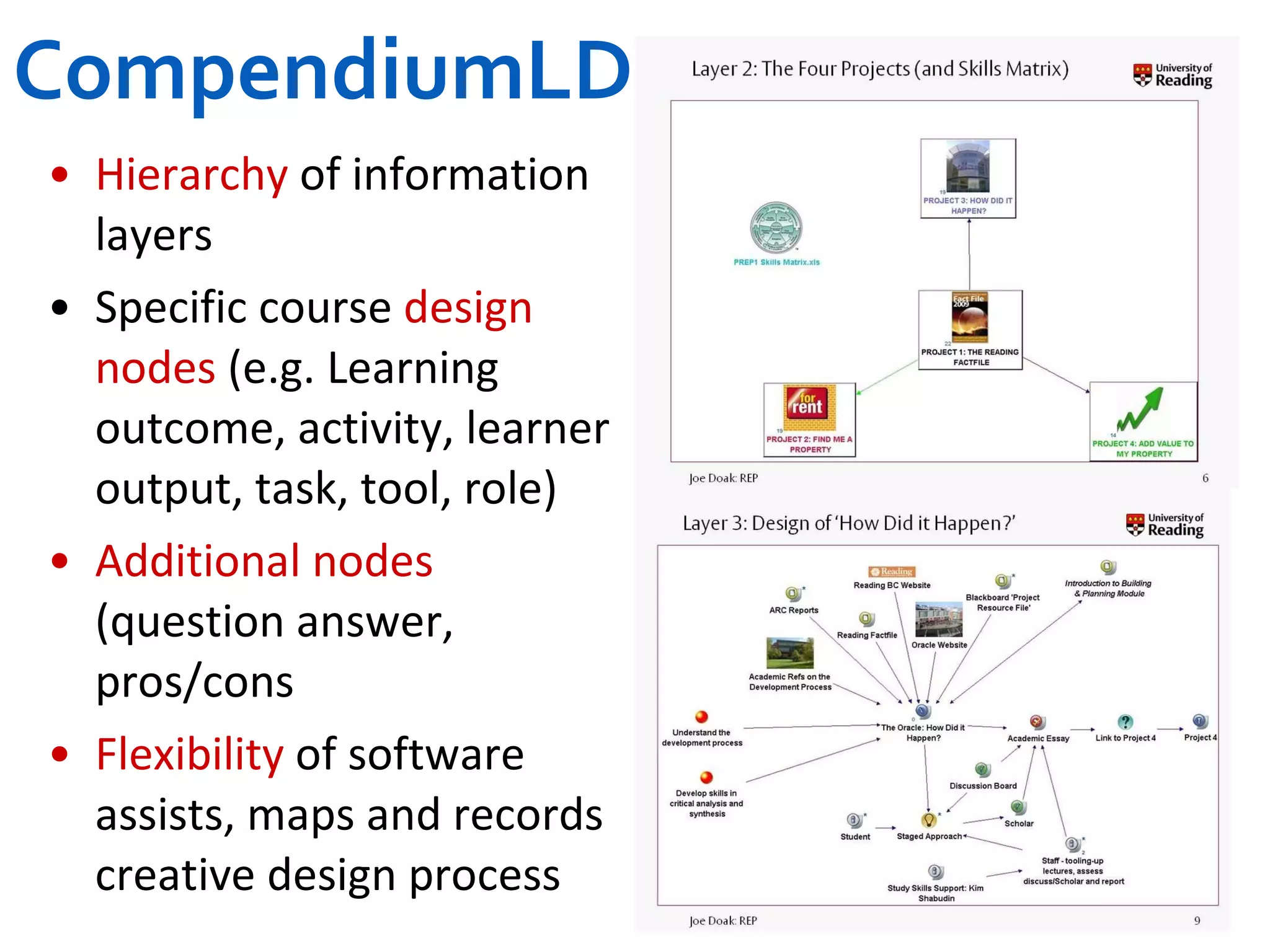
The document discusses using a learning design approach to shift from implicit, belief-based teaching practices to more explicit, evidence-based design informed by validated tools and methods. It describes learning design as both a process of planning learning activities and a product - the representation or structure produced. Key aspects include design as a conscious, creative, communicative, and social process. Challenges of this approach include balancing precision with the natural fuzziness of practice, and balancing personal designs with those meant for sharing.


