Socio-technical
innovation in agri-
food systems
A research agenda
The co-production and practical application of new ideas
by researchers and social actors, coordinated through
institutions in safe places where these ideas can be
tested and refined (‘niches’), which when widely adopted
(often in response to some sort of new problem), have
the capacity to disrupt stable societal structures and
norms (the ‘socio-technical regime’), so that society can
transition to a new way of doing things (e.g. from fossil
fuel to renewable energy systems).
What is socio-technical innovation?
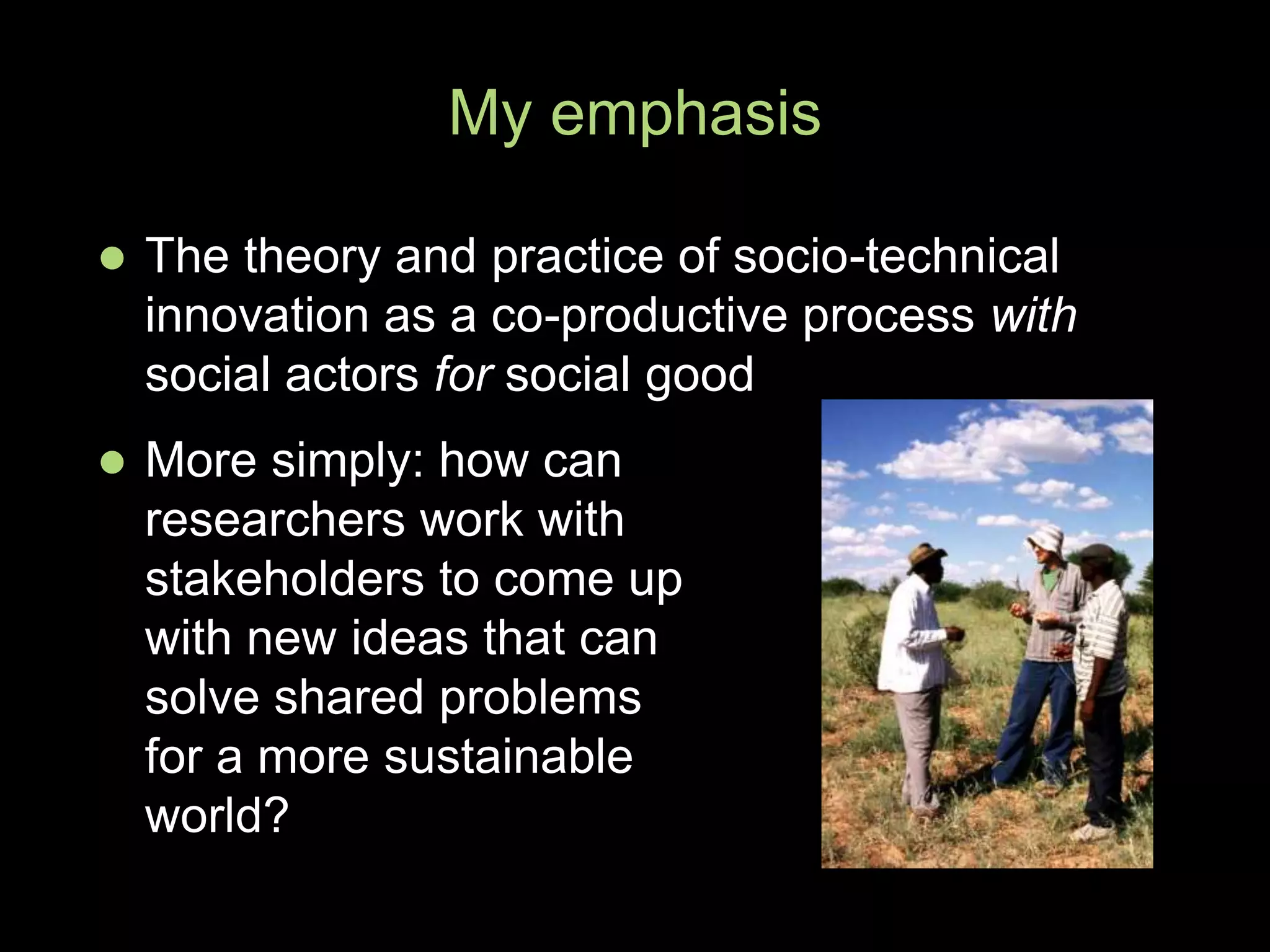
 The theory and practice of socio-technical
innovation as a co-productive process with
social actors for social good
My emphasis
 More simply: how can
researchers work with
stakeholders to come up
with new ideas that can
solve shared problems
for a more sustainable
world?
Do we need new and better ideas?
Or do we need new and better ways
of coming up with ideas?
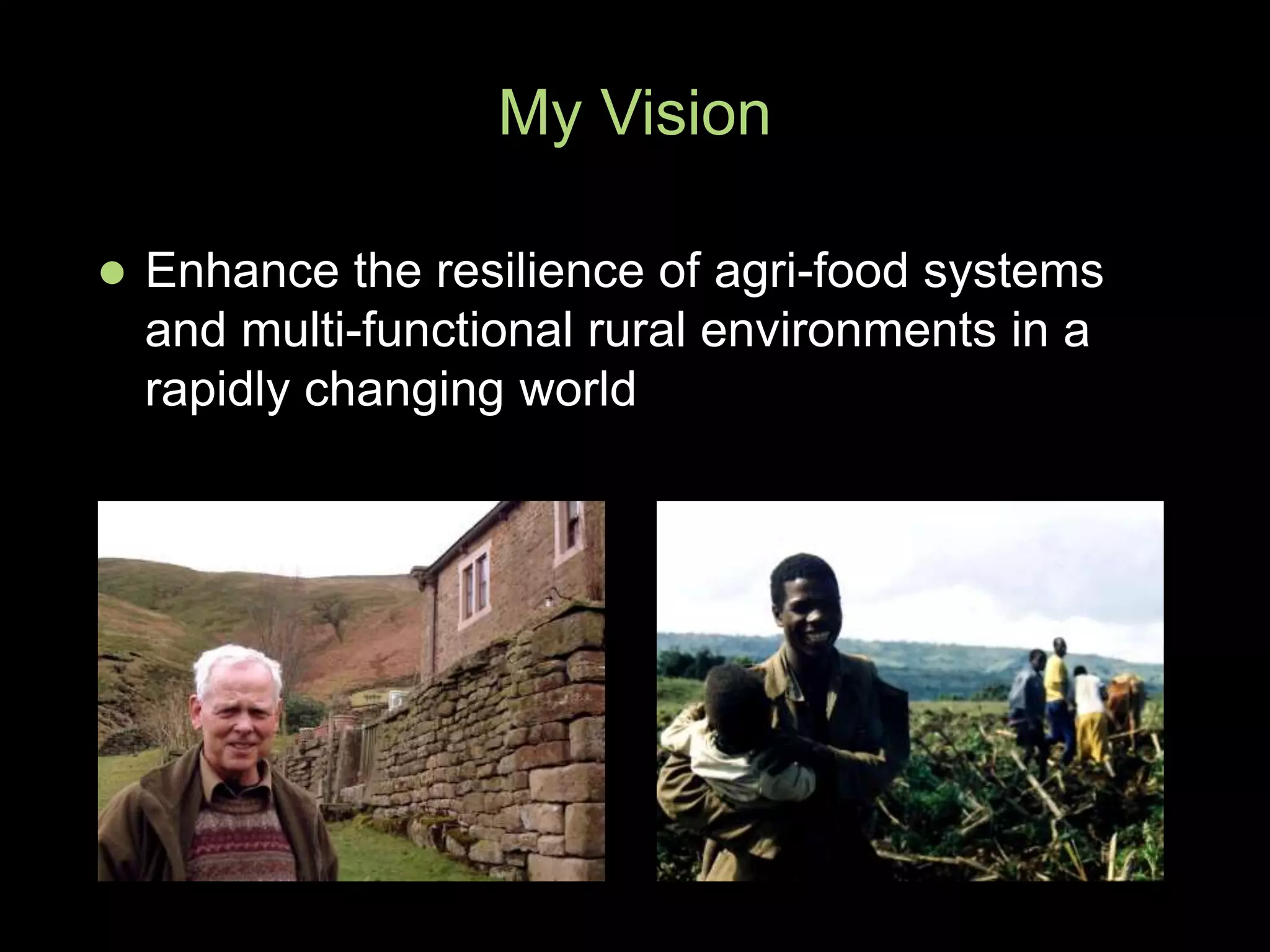
 Enhance the resilience of agri-food systems
and multi-functional rural environments in a
rapidly changing world
My Vision
My Vision
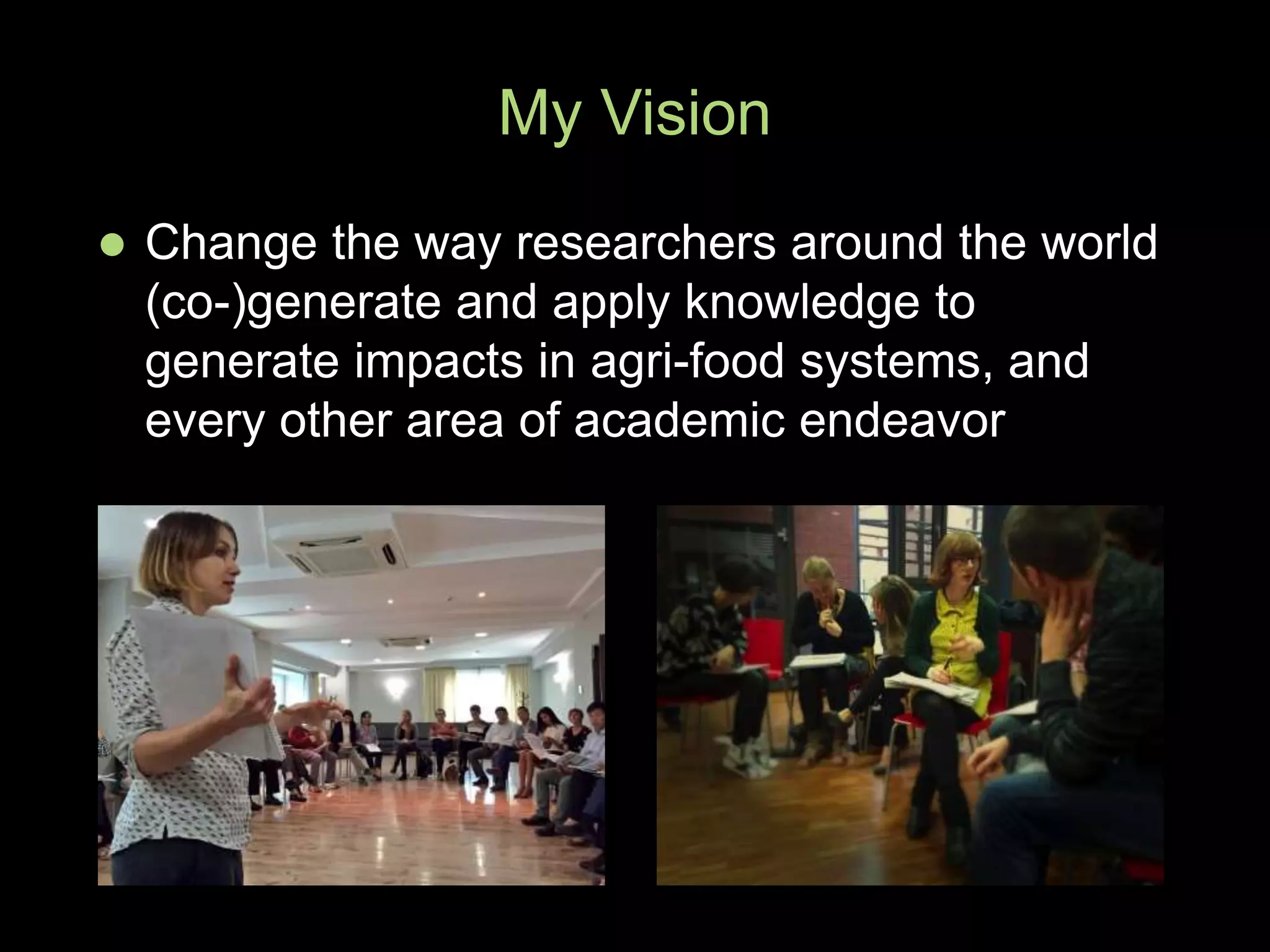
 Change the way researchers around the world
(co-)generate and apply knowledge to
generate impacts in agri-food systems, and
every other area of academic endeavor
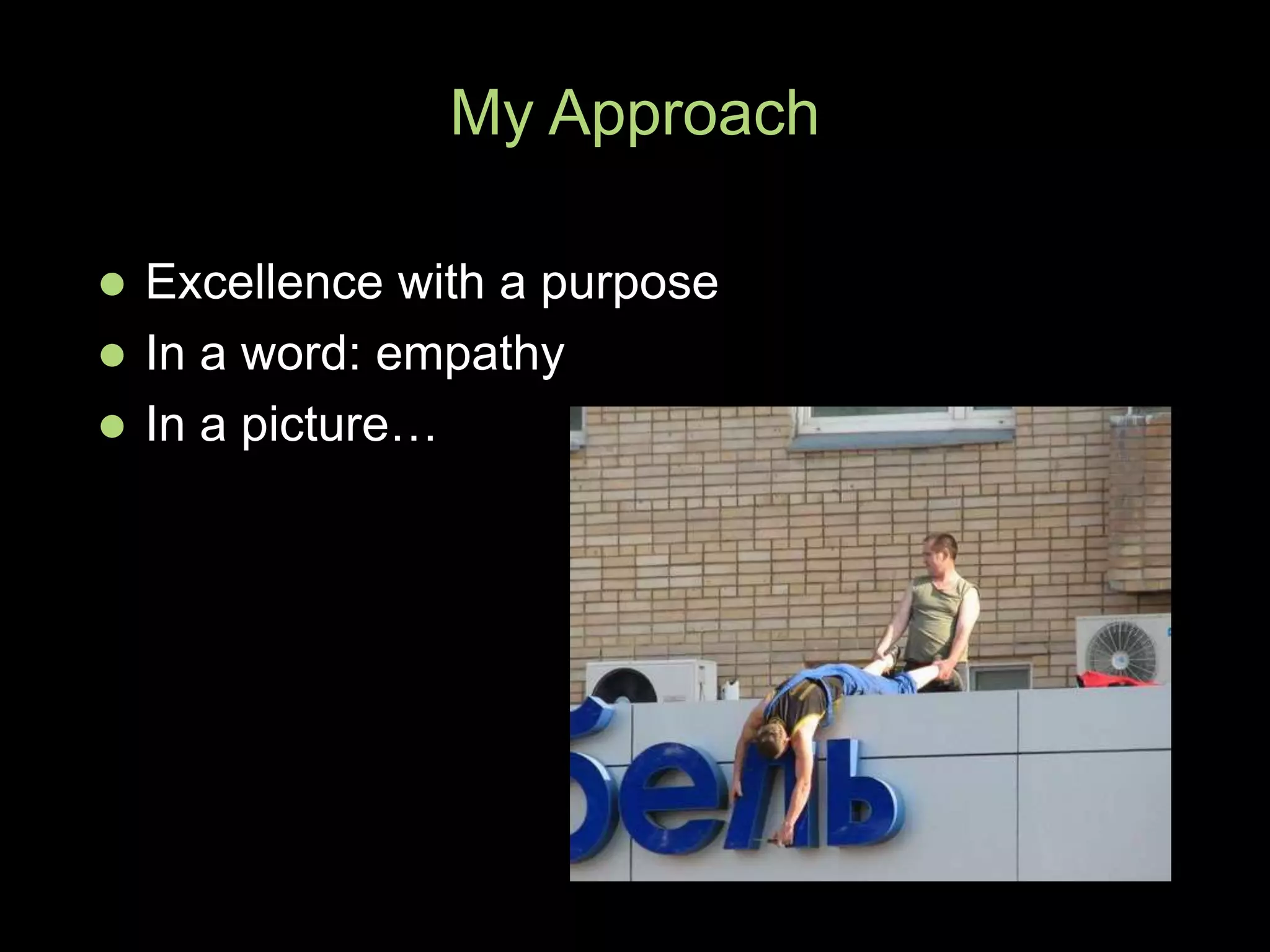
 Excellence with a purpose
 In a word: empathy
 In a picture…
My Approach
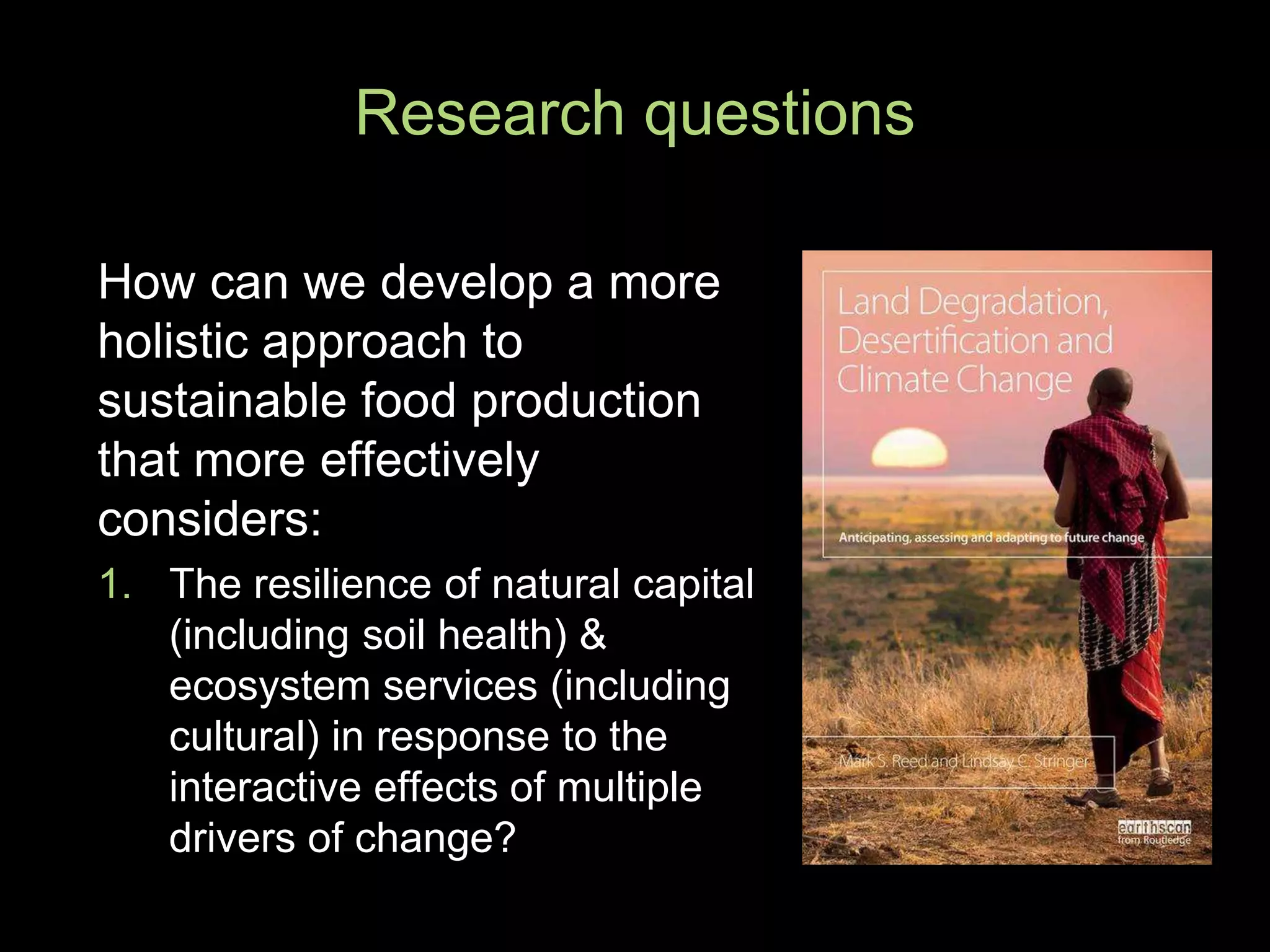
How can we develop a more
holistic approach to
sustainable food production
that more effectively
considers:
1. The resilience of natural capital
(including soil health) &
ecosystem services (including
cultural) in response to the
interactive effects of multiple
drivers of change?
Research questions
file:///.file/id=657136
7.5599785
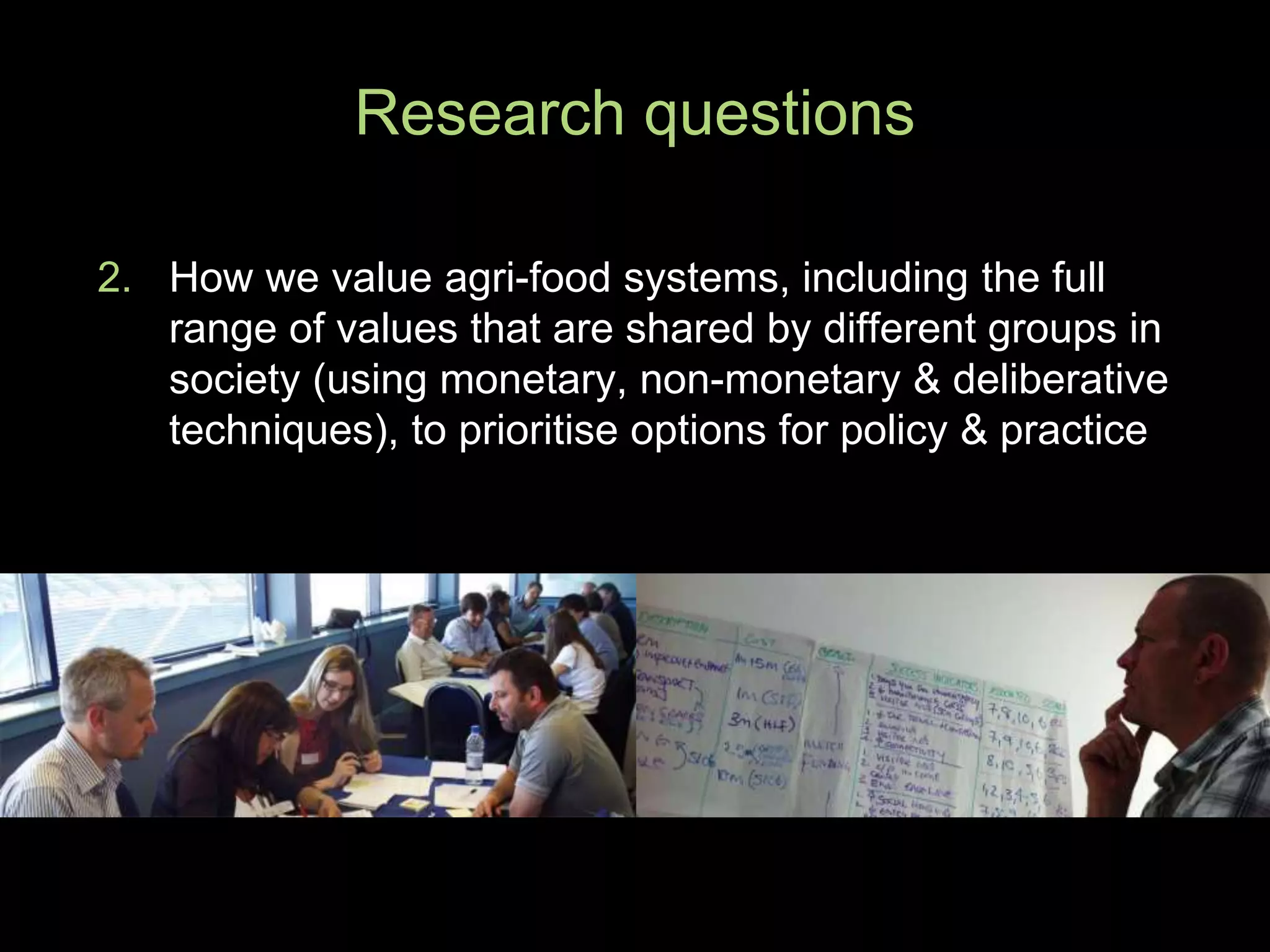
2. How we value agri-food systems, including the full
range of values that are shared by different groups in
society (using monetary, non-monetary & deliberative
techniques), to prioritise options for policy & practice
Research questions
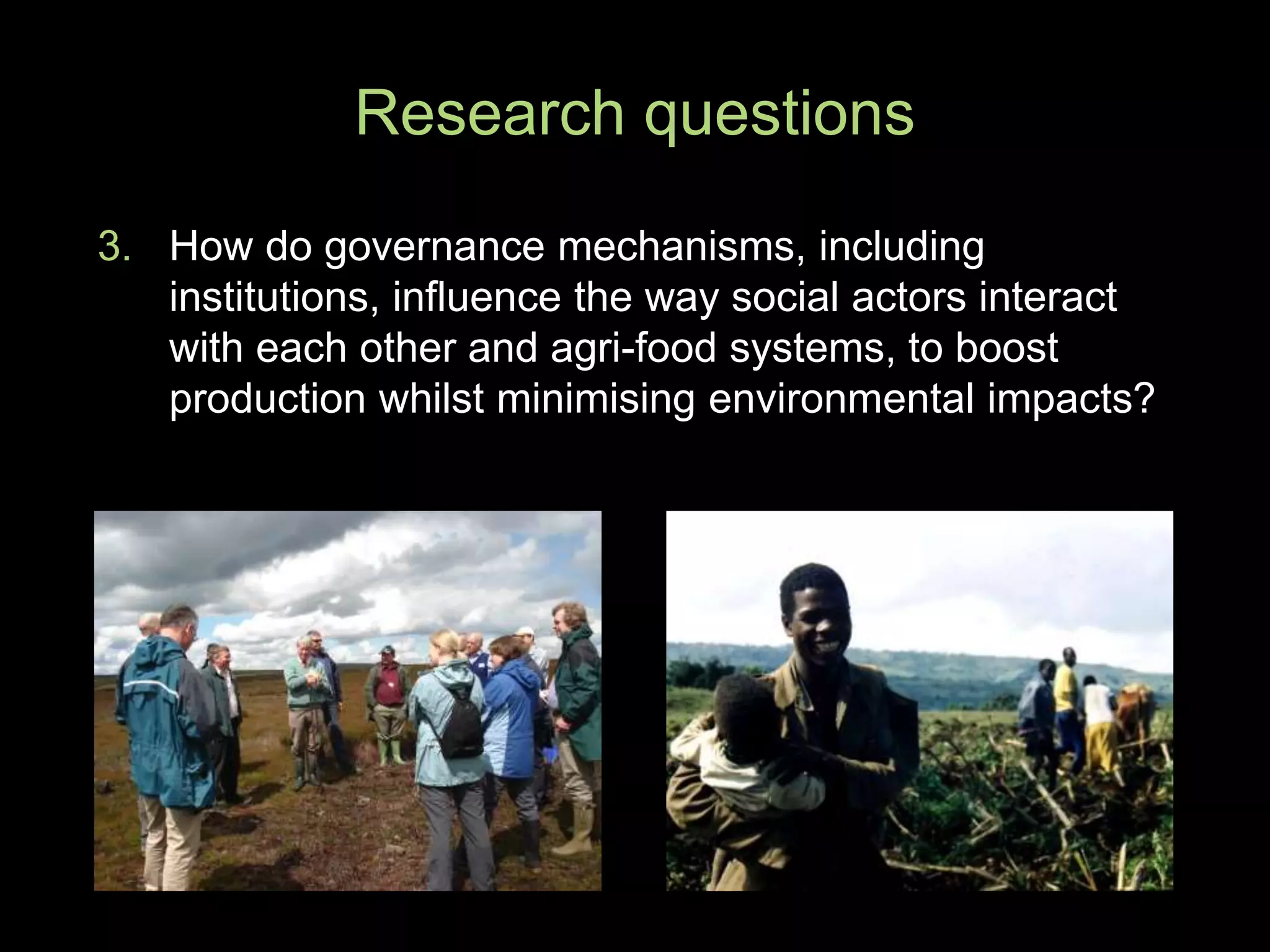
3. How do governance mechanisms, including
institutions, influence the way social actors interact
with each other and agri-food systems, to boost
production whilst minimising environmental impacts?
Research questions
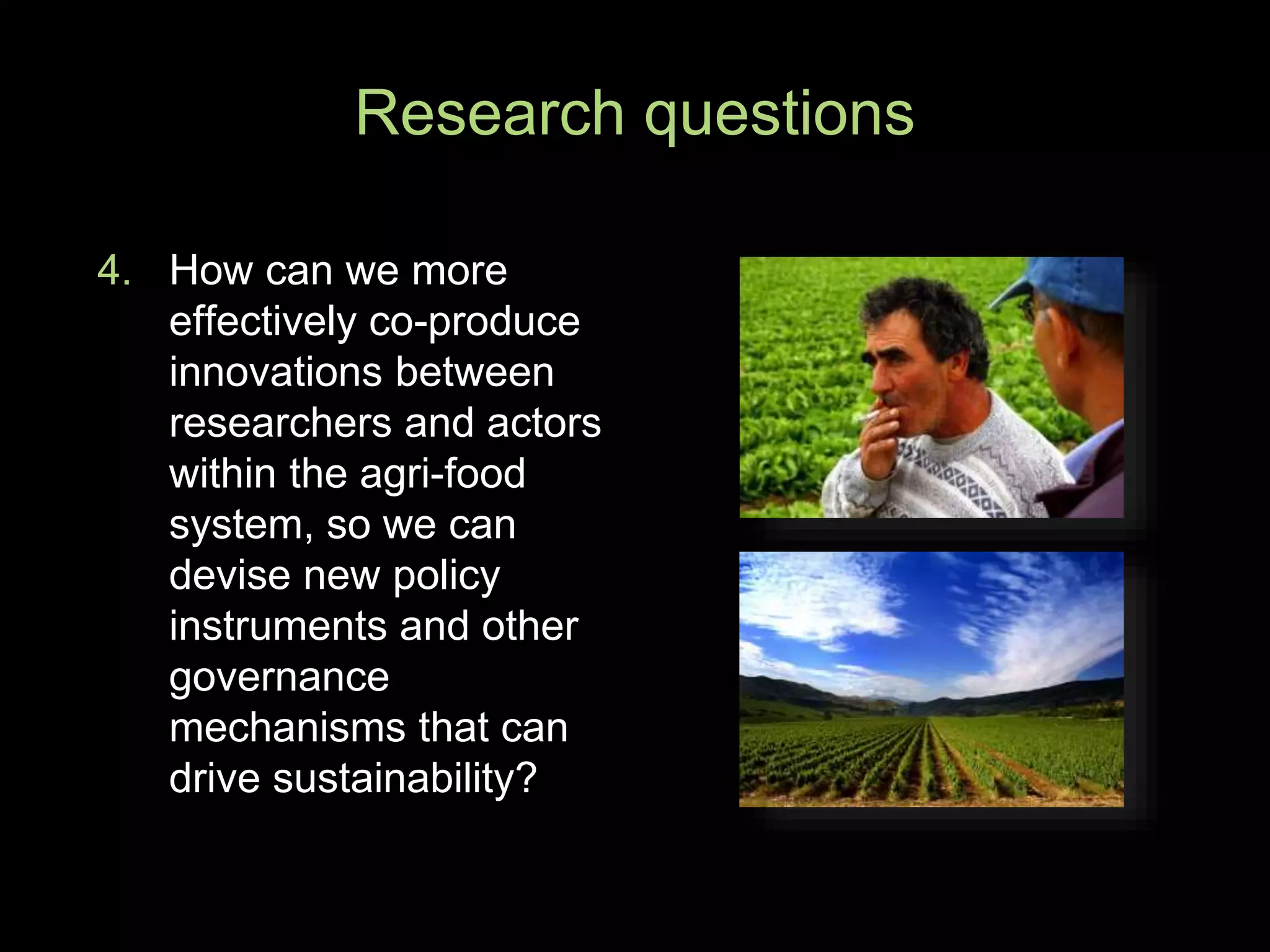
4. How can we more
effectively co-produce
innovations between
researchers and actors
within the agri-food
system, so we can
devise new policy
instruments and other
governance
mechanisms that can
drive sustainability?
Research questions
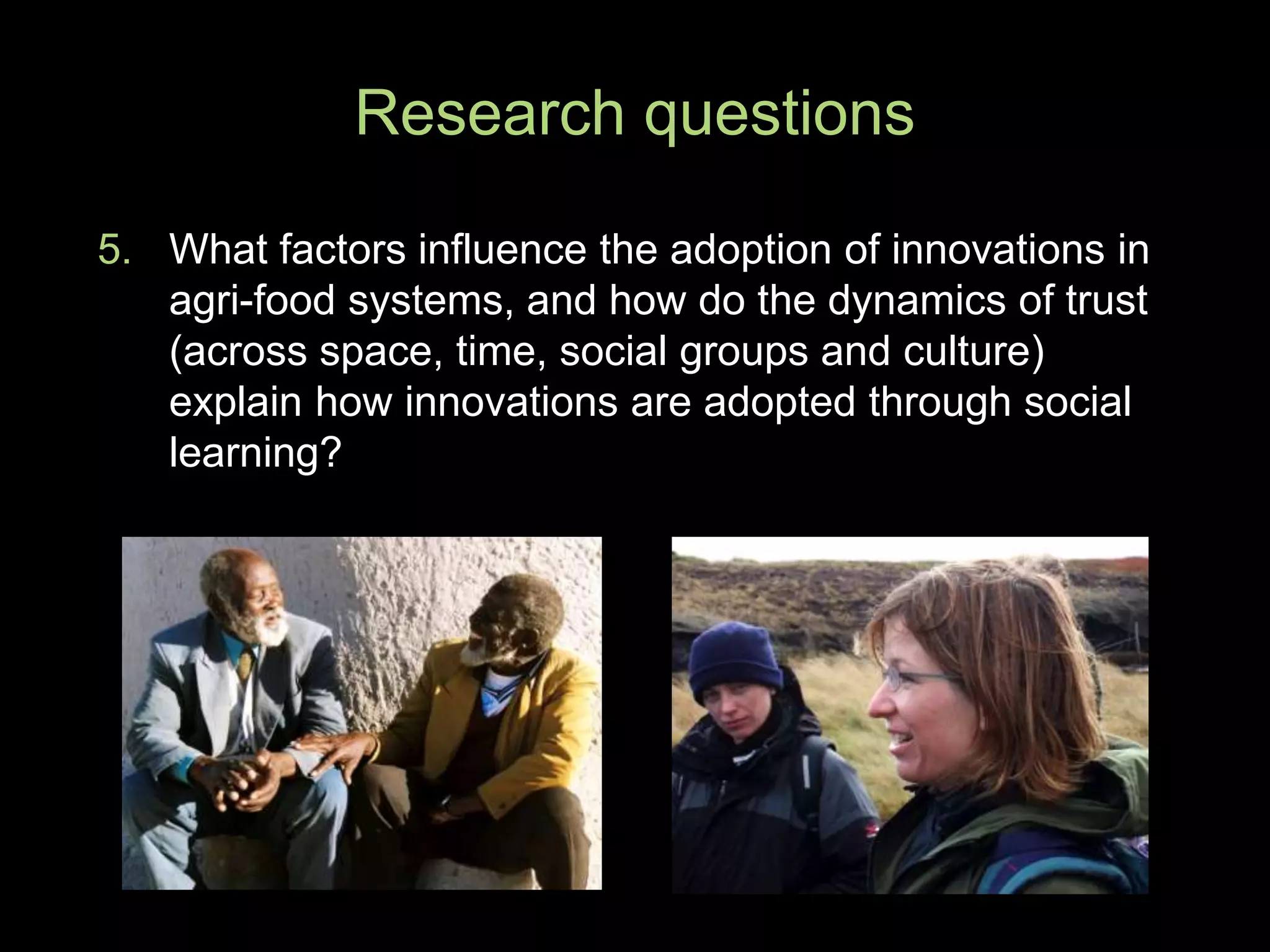
5. What factors influence the adoption of innovations in
agri-food systems, and how do the dynamics of trust
(across space, time, social groups and culture)
explain how innovations are adopted through social
learning?
Research questions
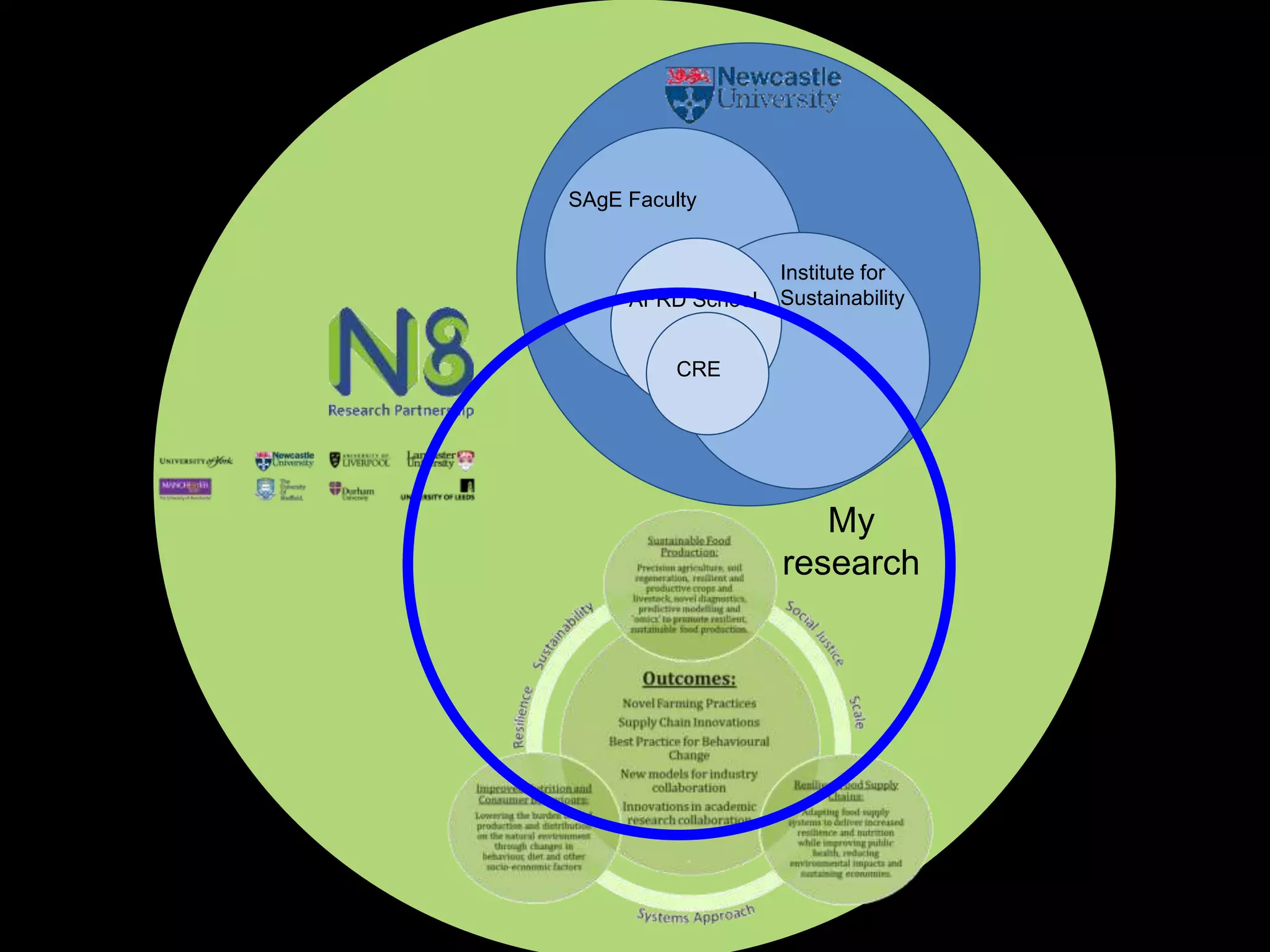
Institute for
Sustainability
SAgE Faculty
AFRD School
CRE
My
research
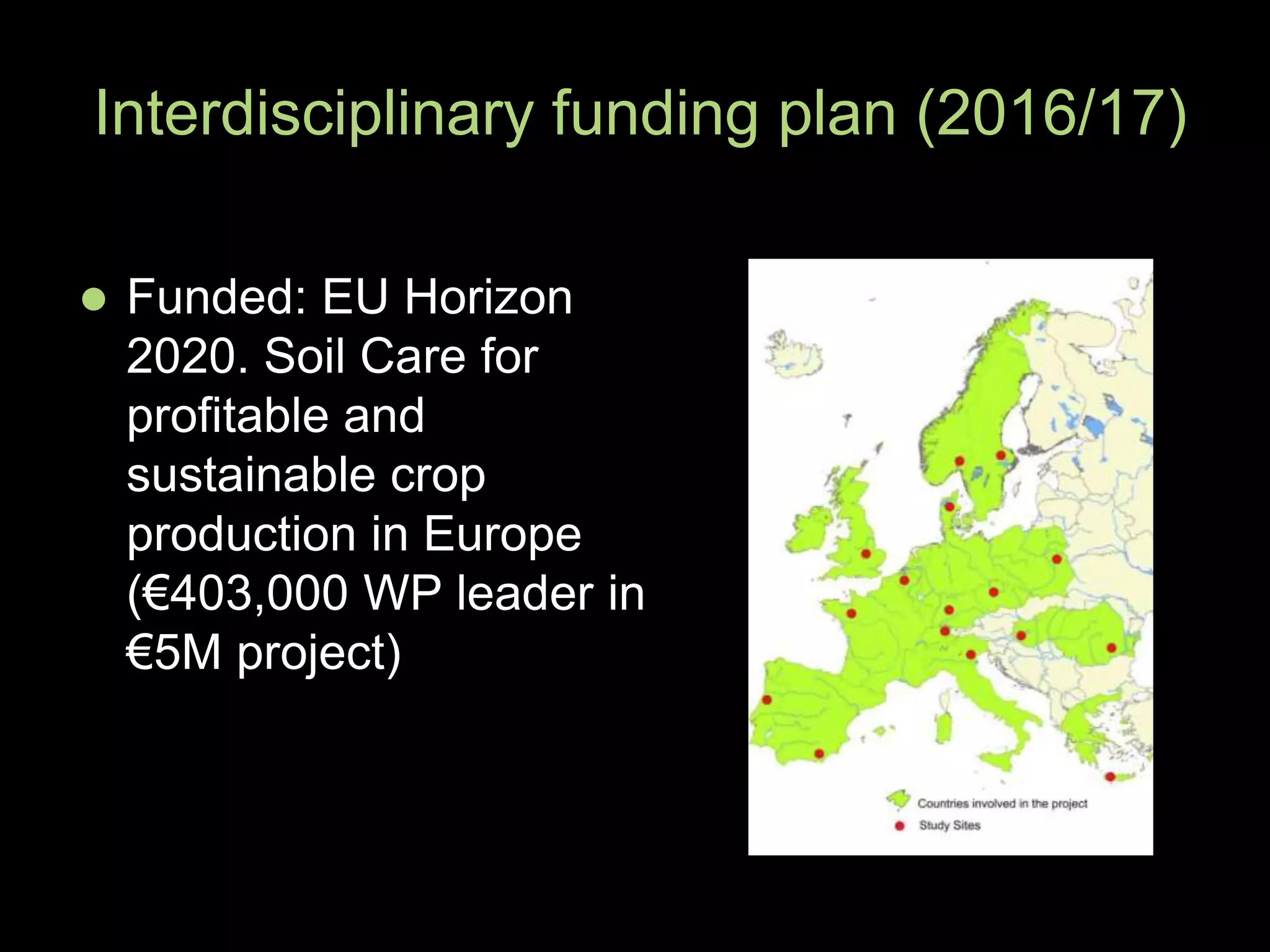
 Funded: EU Horizon
2020. Soil Care for
profitable and
sustainable crop
production in Europe
(€403,000 WP leader in
€5M project)
Interdisciplinary funding plan (2016/17)
 Under review: ESRC.
Pathways to policy
impact: learning from
submissions to the UK
Research Excellence
Framework (PI with
Universities of Dundee
and St Andrews,
£770,000)
Interdisciplinary funding plan (2016/17)
 Planned with Leeds: Horizon 2020. Understand
barriers and opportunities for the adoption of
schemes that spatially target private and public
funding for the delivery of ecosystem services
at landscape scales (€5M)
Interdisciplinary funding plan (2016/17)
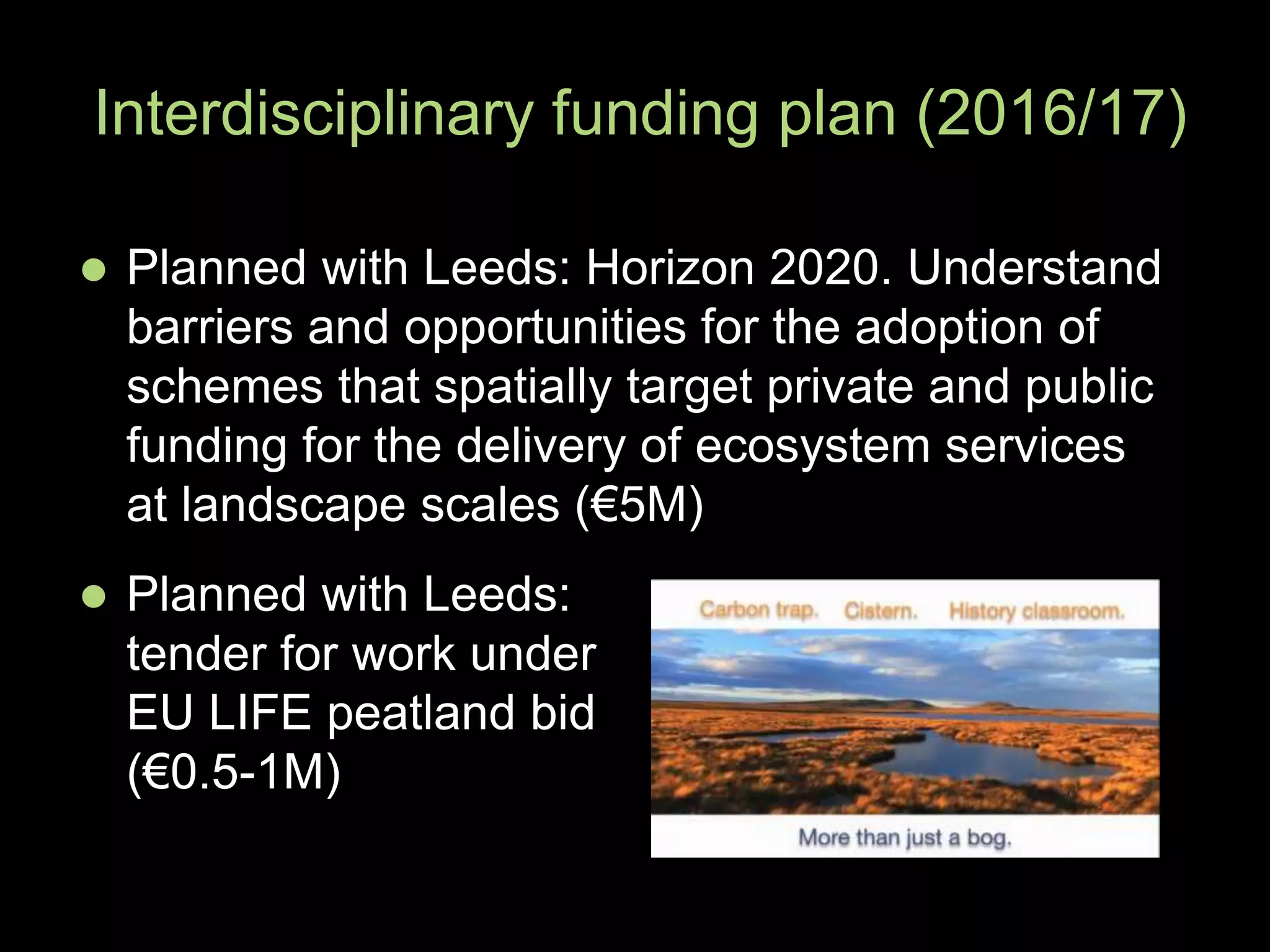
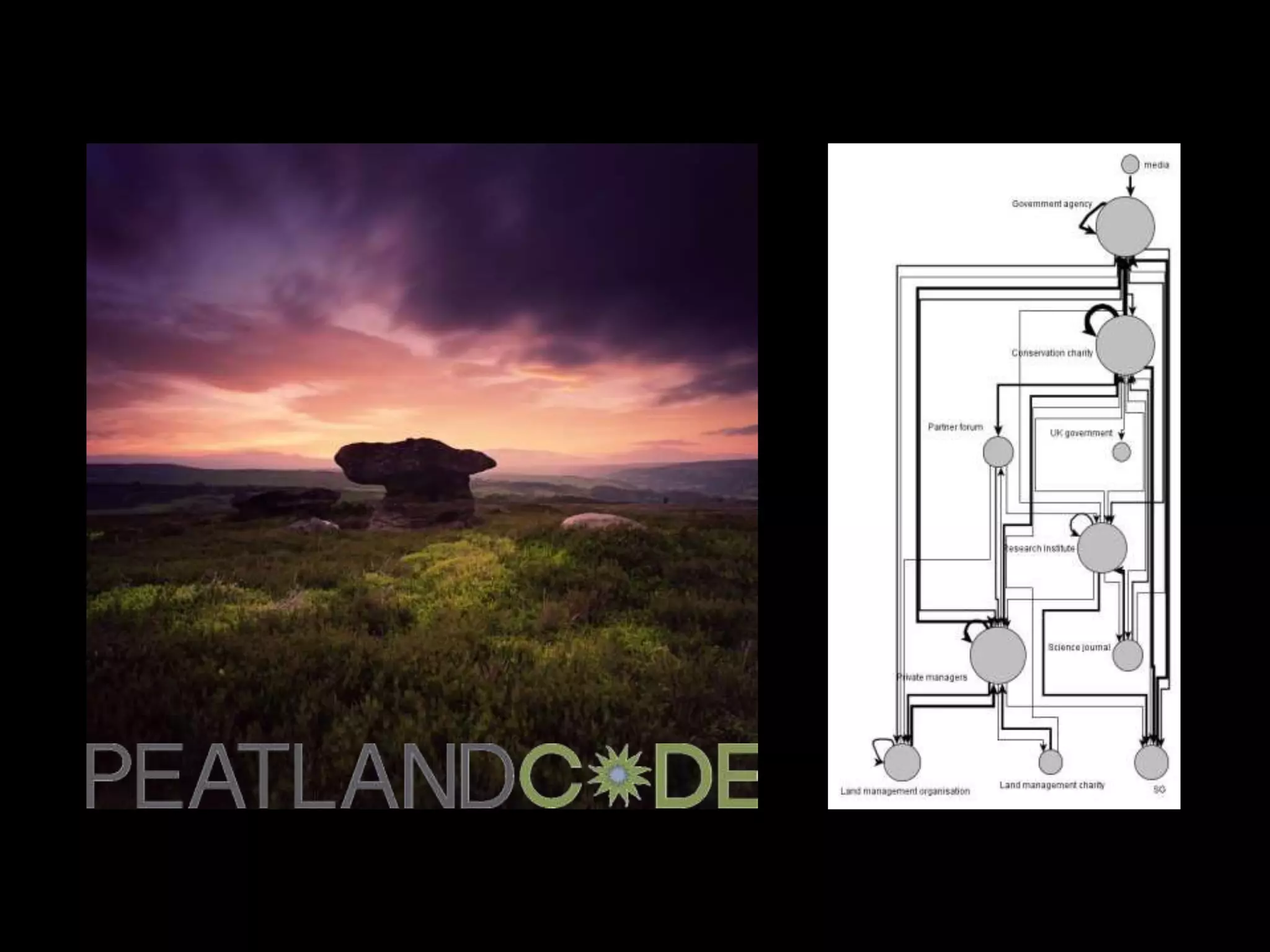
 Planned with Leeds:
tender for work under
EU LIFE peatland bid
(€0.5-1M)
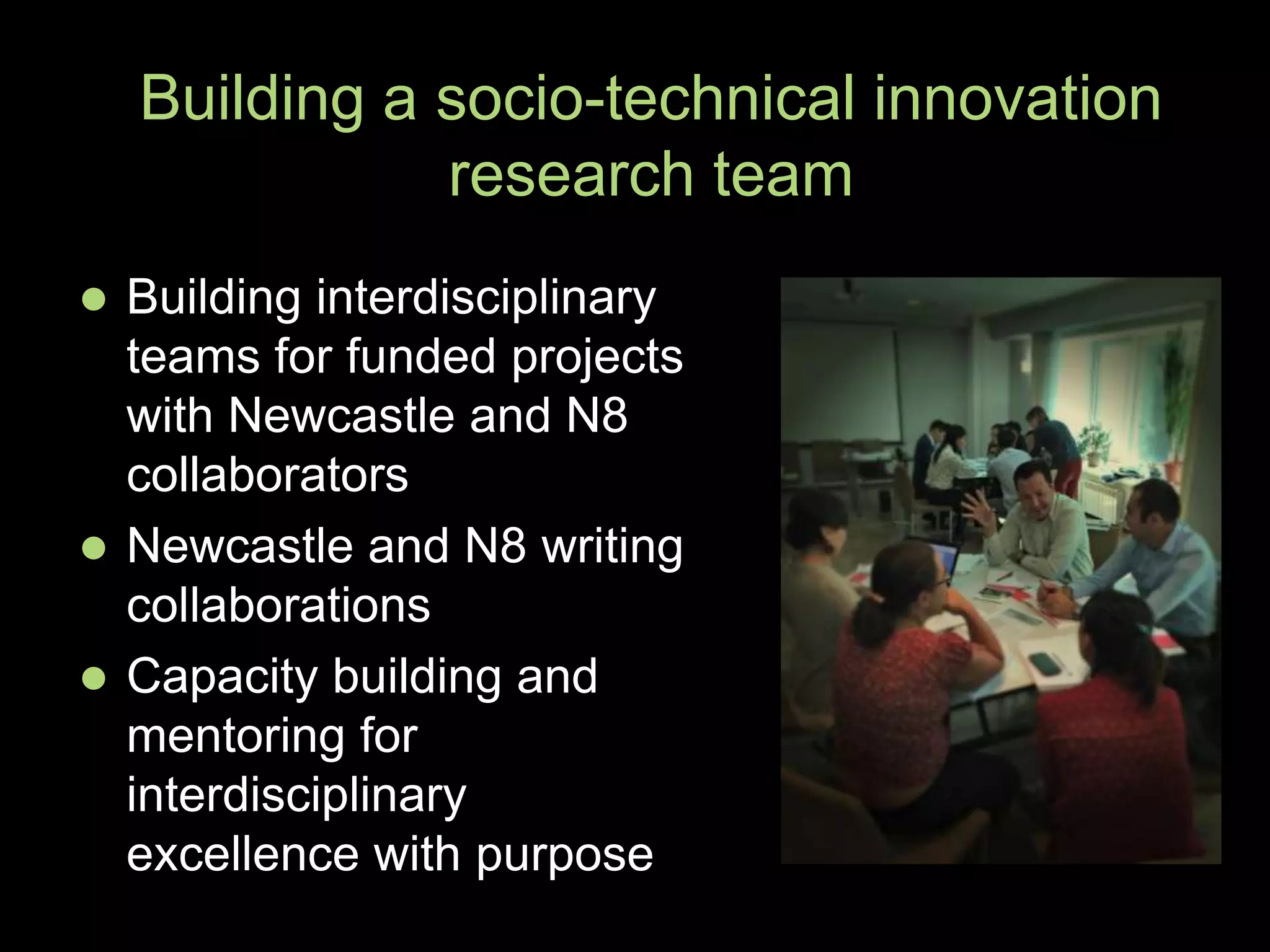
 Building interdisciplinary
teams for funded projects
with Newcastle and N8
collaborators
 Newcastle and N8 writing
collaborations
 Capacity building and
mentoring for
interdisciplinary
excellence with purpose
Building a socio-technical innovation
research team
 Socio-technical
innovation narrative
including 4* papers and
impact case studies as
part of an even higher
performing UOA16
submission
Building a socio-technical innovation
research team
Conclusion
fieldworkfail.com

Interview presentation for Newcastle University

  • 1.
  • 2.
    The co-production andpractical application of new ideas by researchers and social actors, coordinated through institutions in safe places where these ideas can be tested and refined (‘niches’), which when widely adopted (often in response to some sort of new problem), have the capacity to disrupt stable societal structures and norms (the ‘socio-technical regime’), so that society can transition to a new way of doing things (e.g. from fossil fuel to renewable energy systems). What is socio-technical innovation?
  • 3.
     The theoryand practice of socio-technical innovation as a co-productive process with social actors for social good My emphasis  More simply: how can researchers work with stakeholders to come up with new ideas that can solve shared problems for a more sustainable world?
  • 4.
    Do we neednew and better ideas? Or do we need new and better ways of coming up with ideas?
  • 5.
     Enhance theresilience of agri-food systems and multi-functional rural environments in a rapidly changing world My Vision
  • 6.
    My Vision  Changethe way researchers around the world (co-)generate and apply knowledge to generate impacts in agri-food systems, and every other area of academic endeavor
  • 7.
     Excellence witha purpose  In a word: empathy  In a picture… My Approach
  • 8.
    How can wedevelop a more holistic approach to sustainable food production that more effectively considers: 1. The resilience of natural capital (including soil health) & ecosystem services (including cultural) in response to the interactive effects of multiple drivers of change? Research questions file:///.file/id=657136 7.5599785
  • 9.
    2. How wevalue agri-food systems, including the full range of values that are shared by different groups in society (using monetary, non-monetary & deliberative techniques), to prioritise options for policy & practice Research questions
  • 10.
    3. How dogovernance mechanisms, including institutions, influence the way social actors interact with each other and agri-food systems, to boost production whilst minimising environmental impacts? Research questions
  • 11.
    4. How canwe more effectively co-produce innovations between researchers and actors within the agri-food system, so we can devise new policy instruments and other governance mechanisms that can drive sustainability? Research questions
  • 12.
    5. What factorsinfluence the adoption of innovations in agri-food systems, and how do the dynamics of trust (across space, time, social groups and culture) explain how innovations are adopted through social learning? Research questions
  • 13.
  • 14.
     Funded: EUHorizon 2020. Soil Care for profitable and sustainable crop production in Europe (€403,000 WP leader in €5M project) Interdisciplinary funding plan (2016/17)
  • 15.
     Under review:ESRC. Pathways to policy impact: learning from submissions to the UK Research Excellence Framework (PI with Universities of Dundee and St Andrews, £770,000) Interdisciplinary funding plan (2016/17)
  • 16.
     Planned withLeeds: Horizon 2020. Understand barriers and opportunities for the adoption of schemes that spatially target private and public funding for the delivery of ecosystem services at landscape scales (€5M) Interdisciplinary funding plan (2016/17)  Planned with Leeds: tender for work under EU LIFE peatland bid (€0.5-1M)
  • 17.
     Building interdisciplinary teamsfor funded projects with Newcastle and N8 collaborators  Newcastle and N8 writing collaborations  Capacity building and mentoring for interdisciplinary excellence with purpose Building a socio-technical innovation research team
  • 18.
     Socio-technical innovation narrative including4* papers and impact case studies as part of an even higher performing UOA16 submission Building a socio-technical innovation research team
  • 19.
  • 21.

Editor's Notes

  • #2 The reason I’m here today is that I love doing research that helps people. I’m not going to ask for a show of hands, but I’m wondering what’s brought all of you here today? I reckon there’s probably a good proportion of you
  • #20 The reason I’m here today is that I love doing research that helps people. I’m not going to ask for a show of hands, but I’m wondering what’s brought all of you here today? I reckon there’s probably a good proportion of you
  • #22 The reason I’m here today is that I love doing research that helps people. I’m not going to ask for a show of hands, but I’m wondering what’s brought all of you here today? I reckon there’s probably a good proportion of you