
Innovation systems
Making science work
for farmers… and beyond
Toon Defoer
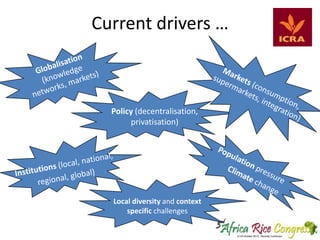
Current drivers …

Policy (decentralisation,
privatisation)

Local diversity and context
specific challenges
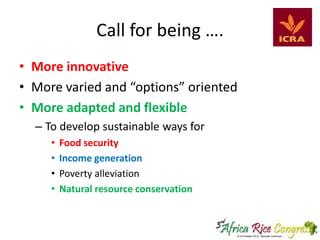
Call for being ….
• More innovative
• More varied and “options” oriented
• More adapted and flexible
– To develop sustainable ways for
•
•
•
•

Food security
Income generation
Poverty alleviation
Natural resource conservation
From single components to
options for integration
• Station (controlled) results often
« disappointing » under farmer’s conditions
• Cumulative effect of improvements e.g.
water-fertility-weeds (in lowland rice
systems)
• Low precision systems require:
– Diversity of alternative ‘options’ for integration
– Farmers’ early involvement for local adaptation of
possible improvements
From Aid to Trade
• Growing international (donor) interest in
agricultural R & D
• BUT:
– Market-driven (inclusive) development
– Benefits for both « the poor » and private sectors
– North and South and South-South trade

« Aid though trade »
From Production to
Agribusiness
• Market first: demand driven and pull
• Entrepreneurial spirit
• Linking farmers to other value chain actors,
like processors and sellers, retailers, …
• Vertical integration of farmers into markets
• Public-Private partnerships
• Value chain efficiency and agri-food systems
From Results to Impact
• Emphasis on development outcomes in stead
of research outputs
• Act locally and market-led specific
– But within national/regional/international
context/issues
– So to upscale
– And to make significant impact.
From Research to Innovation
• Technology: only 1 dimension of current issues
• Organisational and management dimensions are
often the “root-cause”
• Innovation = more than a “Product” but a
“Process” of bringing:
– New products
– New ways of working
– New organisational models
Into economic use
Building competences
• To link research and education with development
• For collective Innovation and Learning in agrifood systems
• Beyond « individual » competences
– Collective « team » action and learning
– Change at organisational level
– Building partnerships linking Research, Advisory
services, Higher education, Farmer organisations,
and the Private sector
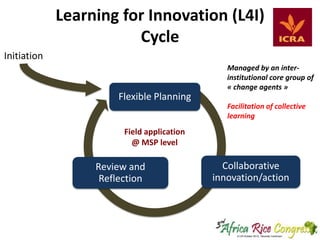
Learning for Innovation (L4I)
Cycle
Initiation
Managed by an interinstitutional core group of
« change agents »

Flexible Planning
Facilitation of collective
learning

Field application
@ MSP level

Review and
Reflection

Collaborative
innovation/action
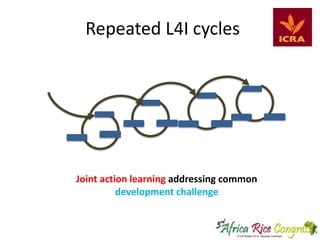
Repeated L4I cycles

Joint action learning addressing common
development challenge
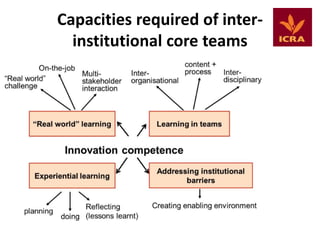
Capacities required of interinstitutional core teams
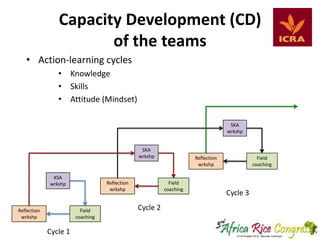
Capacity Development (CD)
of the teams
• Action-learning cycles
• Knowledge
• Skills
• Attitude (Mindset)
SKA
wrkshp
SKA
wrkshp

KSA
wrkshp

Reflection
wrkshp

Reflection
wrkshp

Field
coaching

Cycle 1

Reflection
wrkshp
Field
coaching

Cycle 2

Field
coaching

Cycle 3
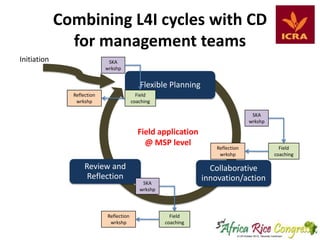
Combining L4I cycles with CD
for management teams
Initiation

SKA
wrkshp

Flexible Planning
Reflection
wrkshp

Field
coaching

SKA
wrkshp

Field application
@ MSP level
Review and
Reflection

Reflection
wrkshp

Reflection
wrkshp

Collaborative
innovation/action

SKA
wrkshp

Field
coaching

Field
coaching
Thank you

Th5_Innovation systems: Making science work for farmers… and beyond

  • 1.
    Innovation systems Making sciencework for farmers… and beyond Toon Defoer
  • 2.
    Current drivers … Policy(decentralisation, privatisation) Local diversity and context specific challenges
  • 3.
    Call for being…. • More innovative • More varied and “options” oriented • More adapted and flexible – To develop sustainable ways for • • • • Food security Income generation Poverty alleviation Natural resource conservation
  • 4.
    From single componentsto options for integration • Station (controlled) results often « disappointing » under farmer’s conditions • Cumulative effect of improvements e.g. water-fertility-weeds (in lowland rice systems) • Low precision systems require: – Diversity of alternative ‘options’ for integration – Farmers’ early involvement for local adaptation of possible improvements
  • 5.
    From Aid toTrade • Growing international (donor) interest in agricultural R & D • BUT: – Market-driven (inclusive) development – Benefits for both « the poor » and private sectors – North and South and South-South trade « Aid though trade »
  • 6.
    From Production to Agribusiness •Market first: demand driven and pull • Entrepreneurial spirit • Linking farmers to other value chain actors, like processors and sellers, retailers, … • Vertical integration of farmers into markets • Public-Private partnerships • Value chain efficiency and agri-food systems
  • 7.
    From Results toImpact • Emphasis on development outcomes in stead of research outputs • Act locally and market-led specific – But within national/regional/international context/issues – So to upscale – And to make significant impact.
  • 8.
    From Research toInnovation • Technology: only 1 dimension of current issues • Organisational and management dimensions are often the “root-cause” • Innovation = more than a “Product” but a “Process” of bringing: – New products – New ways of working – New organisational models Into economic use
  • 9.
    Building competences • Tolink research and education with development • For collective Innovation and Learning in agrifood systems • Beyond « individual » competences – Collective « team » action and learning – Change at organisational level – Building partnerships linking Research, Advisory services, Higher education, Farmer organisations, and the Private sector
  • 10.
    Learning for Innovation(L4I) Cycle Initiation Managed by an interinstitutional core group of « change agents » Flexible Planning Facilitation of collective learning Field application @ MSP level Review and Reflection Collaborative innovation/action
  • 11.
    Repeated L4I cycles Jointaction learning addressing common development challenge
  • 12.
    Capacities required ofinterinstitutional core teams
  • 13.
    Capacity Development (CD) ofthe teams • Action-learning cycles • Knowledge • Skills • Attitude (Mindset) SKA wrkshp SKA wrkshp KSA wrkshp Reflection wrkshp Reflection wrkshp Field coaching Cycle 1 Reflection wrkshp Field coaching Cycle 2 Field coaching Cycle 3
  • 14.
    Combining L4I cycleswith CD for management teams Initiation SKA wrkshp Flexible Planning Reflection wrkshp Field coaching SKA wrkshp Field application @ MSP level Review and Reflection Reflection wrkshp Reflection wrkshp Collaborative innovation/action SKA wrkshp Field coaching Field coaching
  • 15.