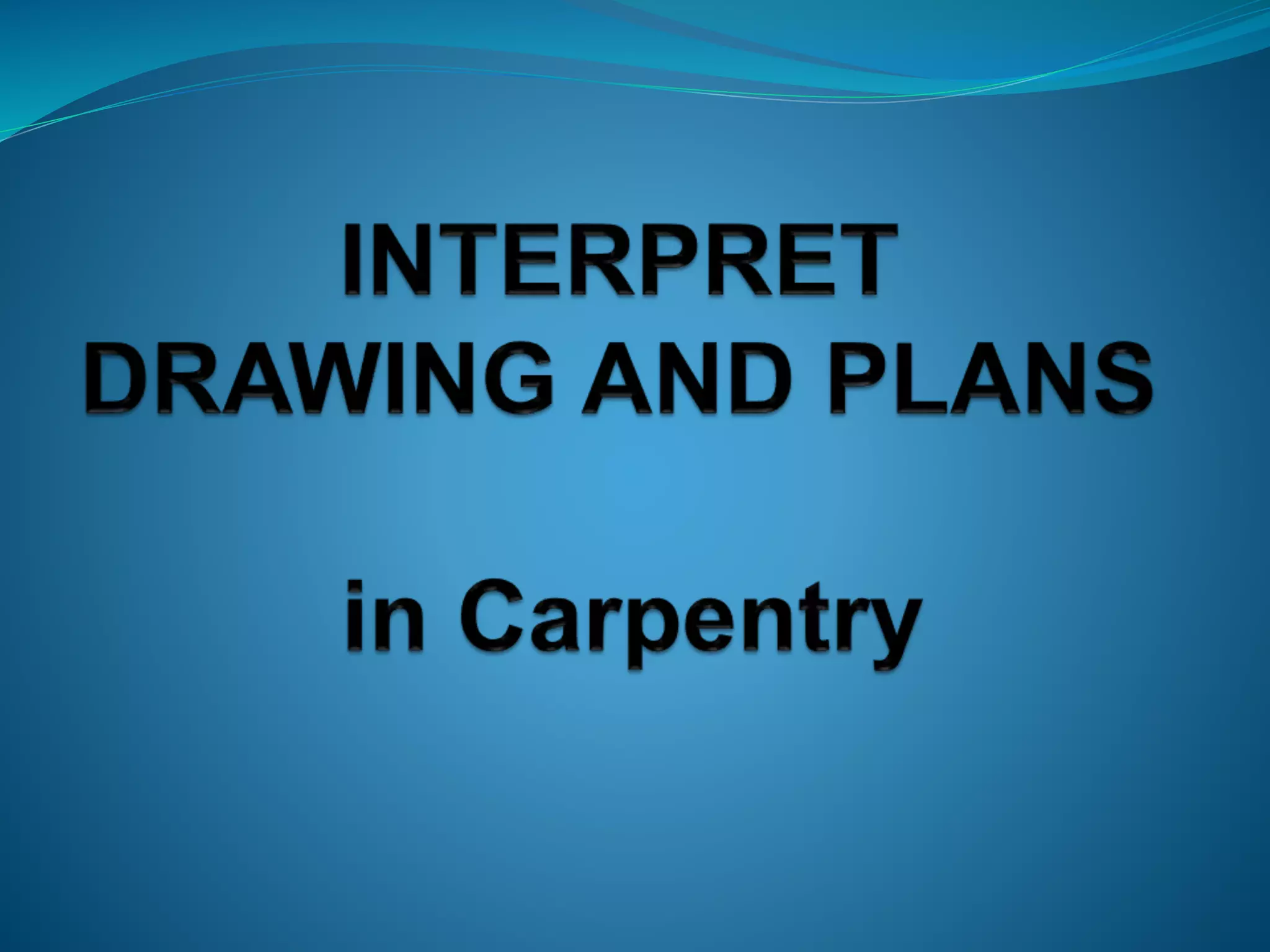
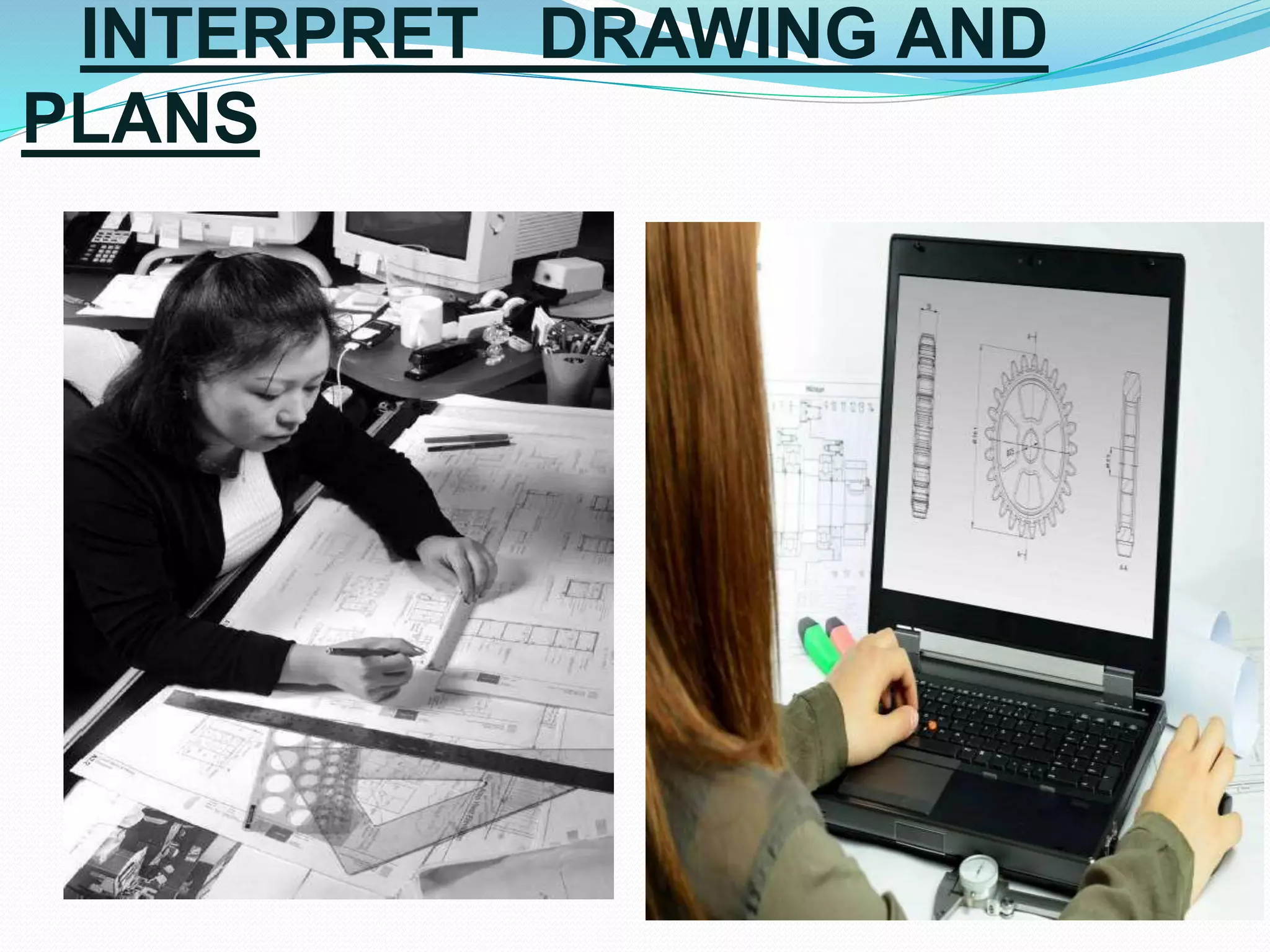
INTERPRET DRAWING AND
PLANS
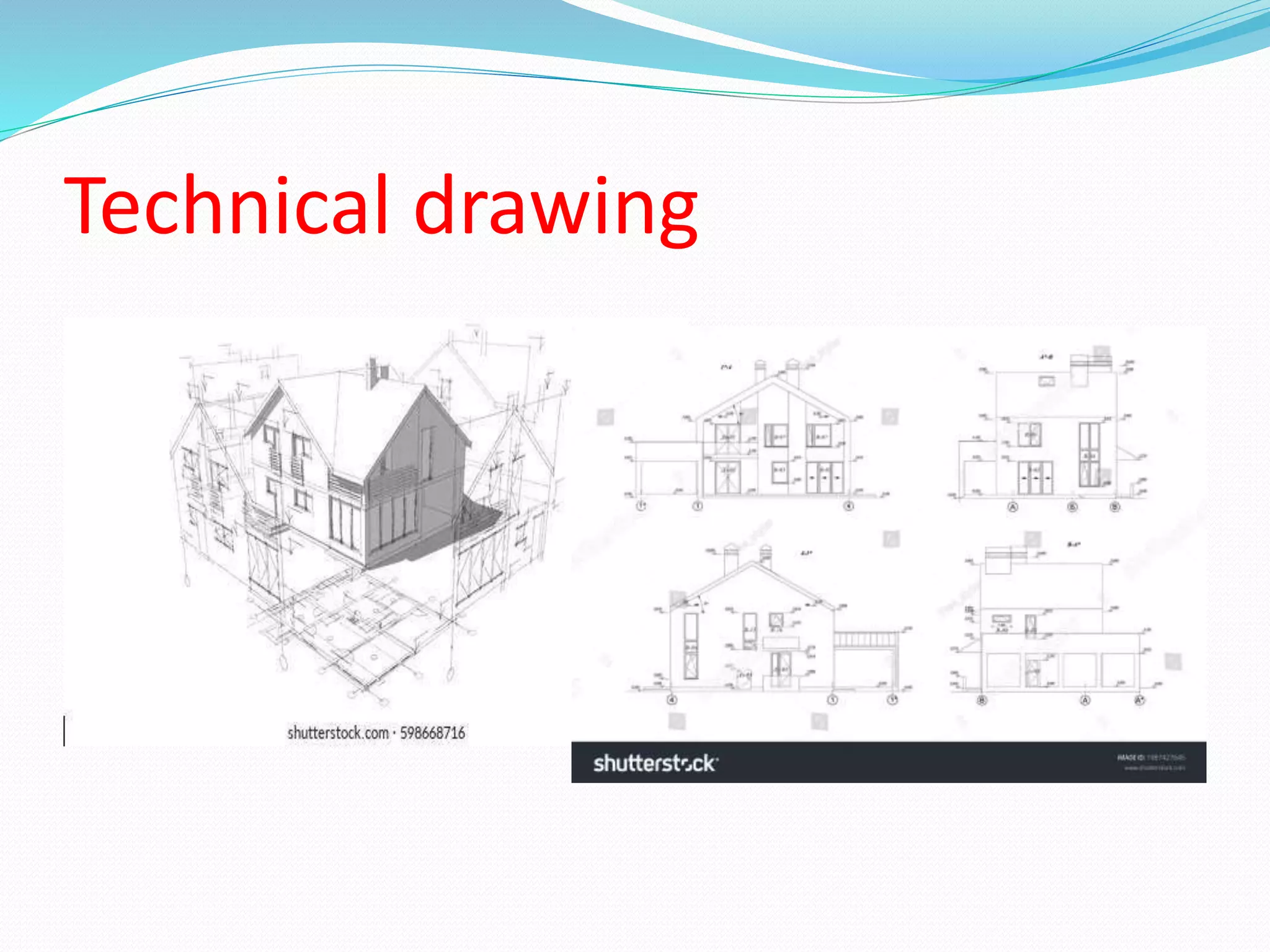
Technical drawing
Technical drawing
What is TECHNICAL
DRAWING?
Technical drawing is essential for
communicating ideas in industry
and engineering.
Why is it
ESSENTIAL?
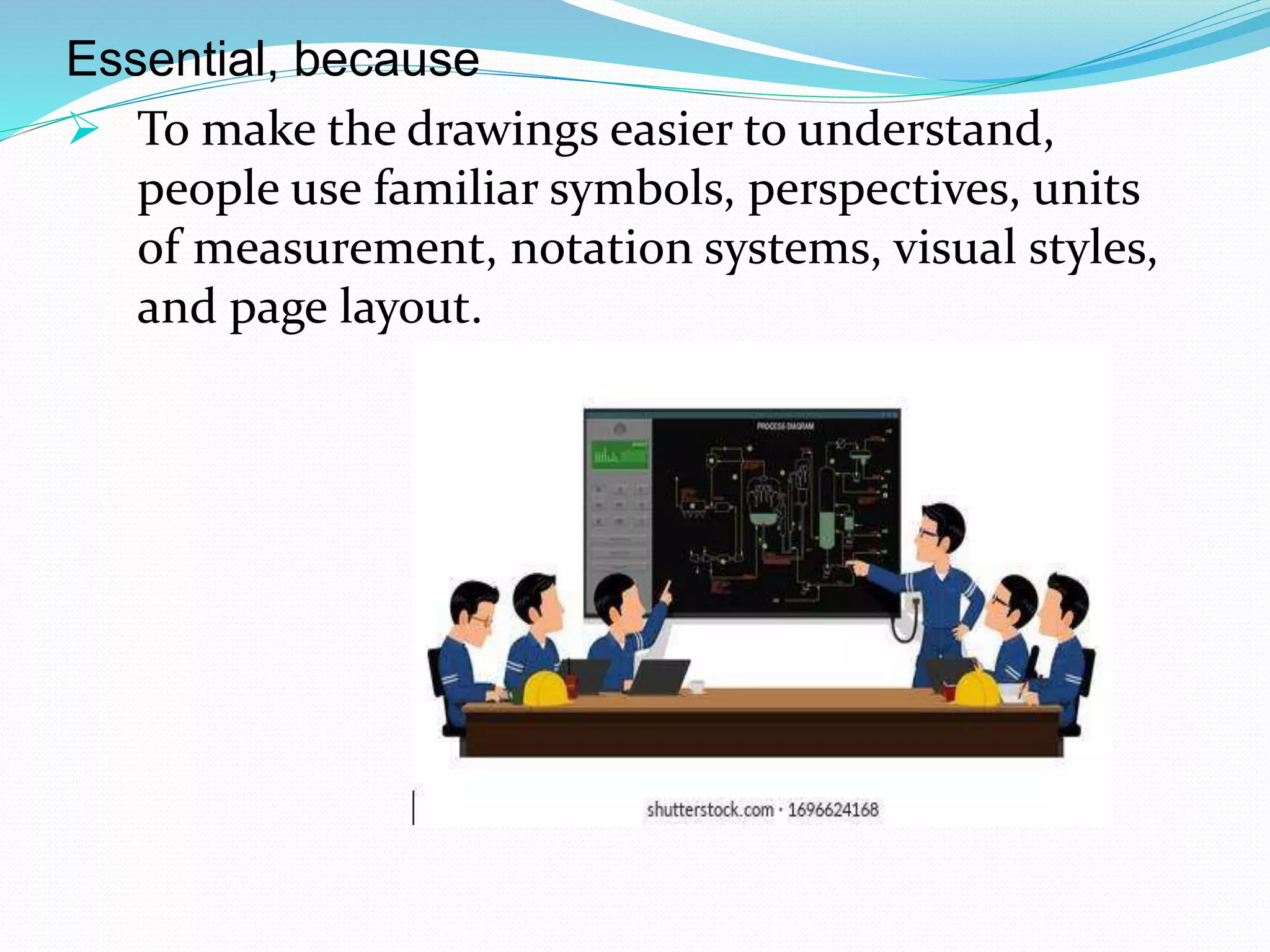
Essential, because
 To make the drawings easier to understand,
people use familiar symbols, perspectives, units
of measurement, notation systems, visual styles,
and page layout.
 Together, such conventions constitute a visual language and help
to ensure that the drawing is unambiguous and relatively easy to
understand.
 Many of the symbols and principles of technical drawing are
codified in an international standard called ISO 128.
 ISO 128 - is an international standard issued by International
Organization for Standard [ISO 128].
• General principles of presentation in technical drawings.
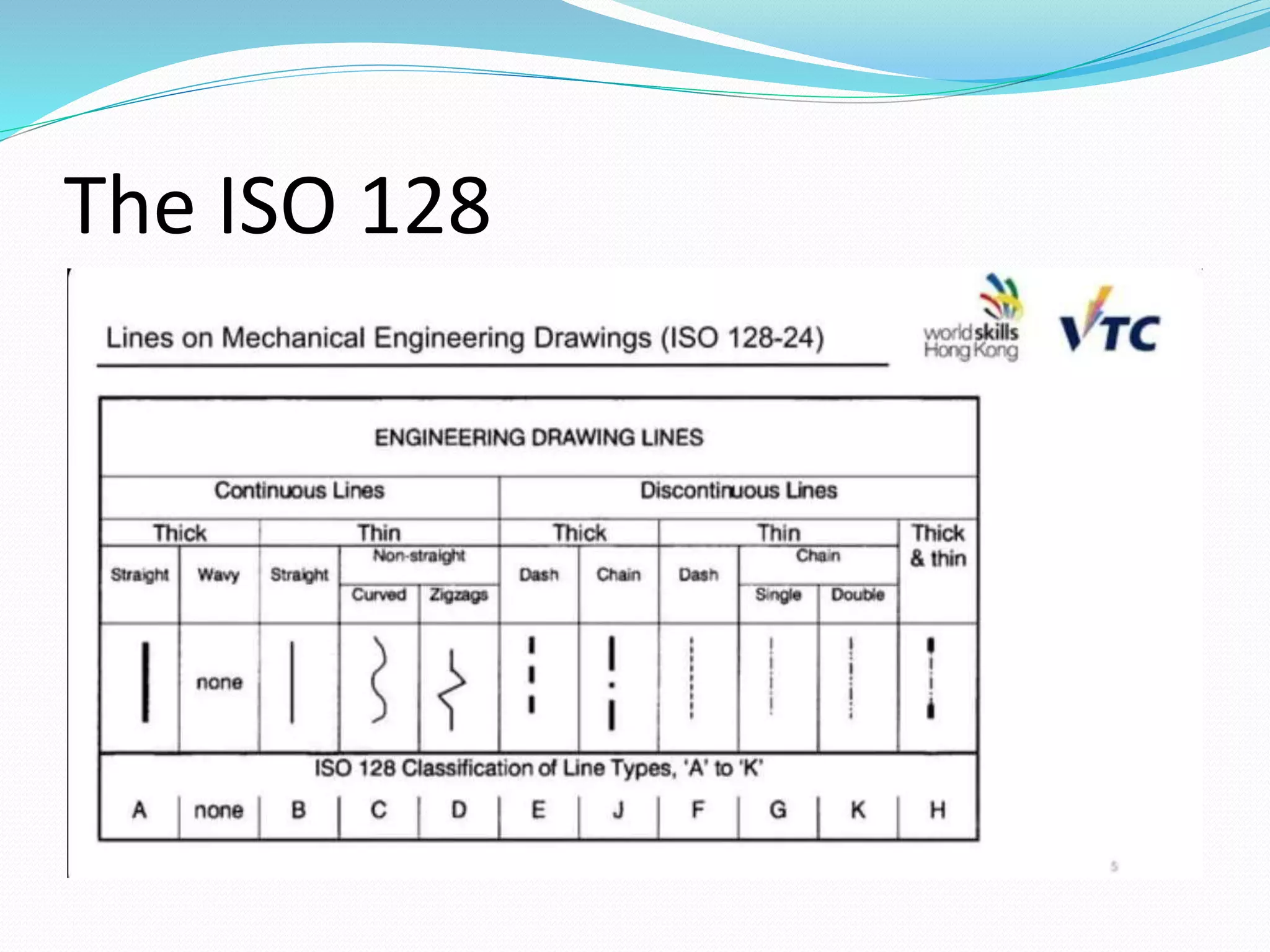
• It describes basic conventions for ; lines, views, cuts and section,
and different types of engineering drawings like;
• Mechanical engineering
• Architecture
• Civil engineering
• and shipbuilding
- It’s applicable to both manual computer-based-drawing
The ISO 128
 The need for precise communication in the preparation of
a functional document distinguishes technical drawing
from the expressive drawing of the visual arts.
 Artistic drawings are subjectively interpreted; their
meanings are multiply determined.
 Technical drawings are understood to have one intended
meaning.
 A drafter, draftsperson, or draftsman is a person who makes
a drawing (technical or expressive).
 A professional drafter who makes technical drawings is
sometimes called a drafting technician.
Definition of Terms
 Axis- line about which a body turns or rotates .
 Design - drawing showing the plan, elevations, sections, and other features.
 Detail drawing - separate drawing showing a small part of a machine or
structure.
 Dimension - definite measure shown on a drawing in detail.
 Isometric Drawing - drawing which resembles a respective drawing.
 Orthographic Projection - arrangement in a drawing of the three principal
views of an object.
Definition of Terms
Perspective Drawing - the representation of an object on a plan surface,
pertaining to materials, styles and finish presented as to have the same
appearances as when seen from a particular viewpoint.
Projections - the cutting out of any part or any member of a structure.
Reduced - made smaller than the actual size as in the size of object.
Scaled Drawing - drawing plan made according to a scale, smaller than the
actual work.
Sketch - freehand drawing of an object.
Specification - written instruction to the worker containing all the
information.
Alphabet of Lines
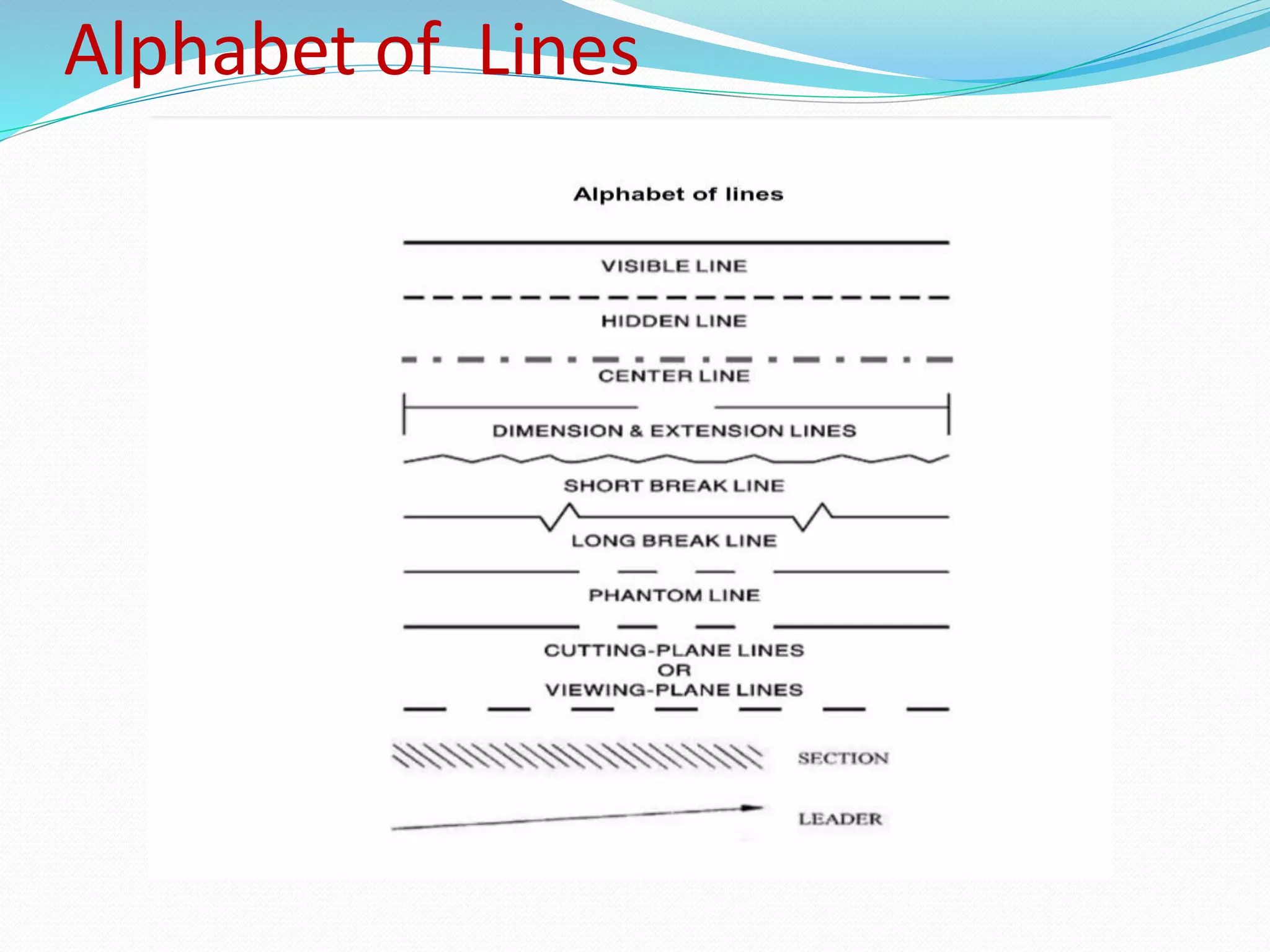
- In sketching orthographic drawing, certain
conventional lines are used for a definite purpose .
These lines are commonly called Alphabet of Lines.
Alphabet of Lines
1. Visible line
2. Hidden Line
3. Section Line
4. Center Line
5. Dimension line
6. Extension line
7. Leader line
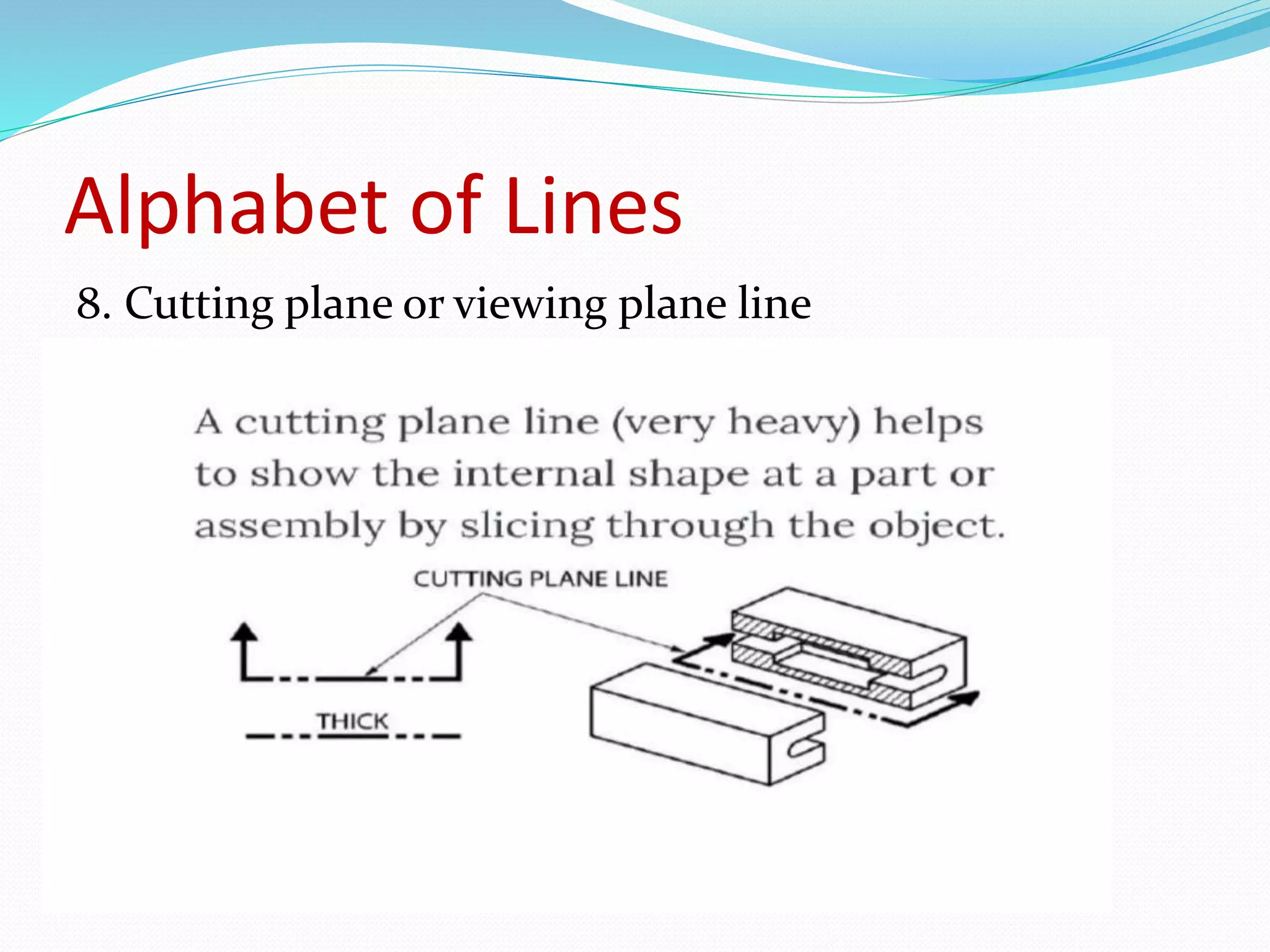
8. Cutting Plane or viewing plane lines
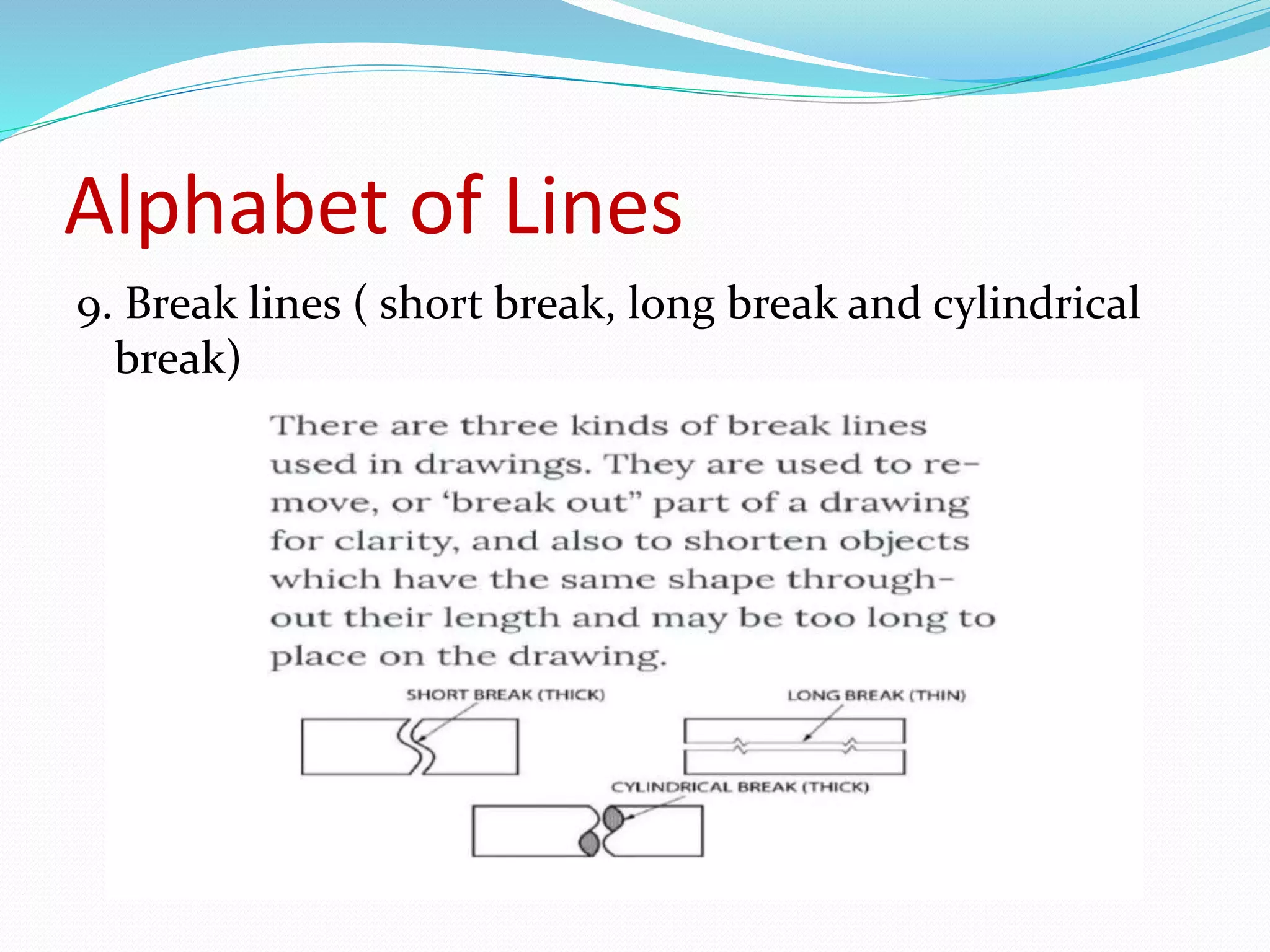
9. Break lines (short break, long break and
cylindrical break)
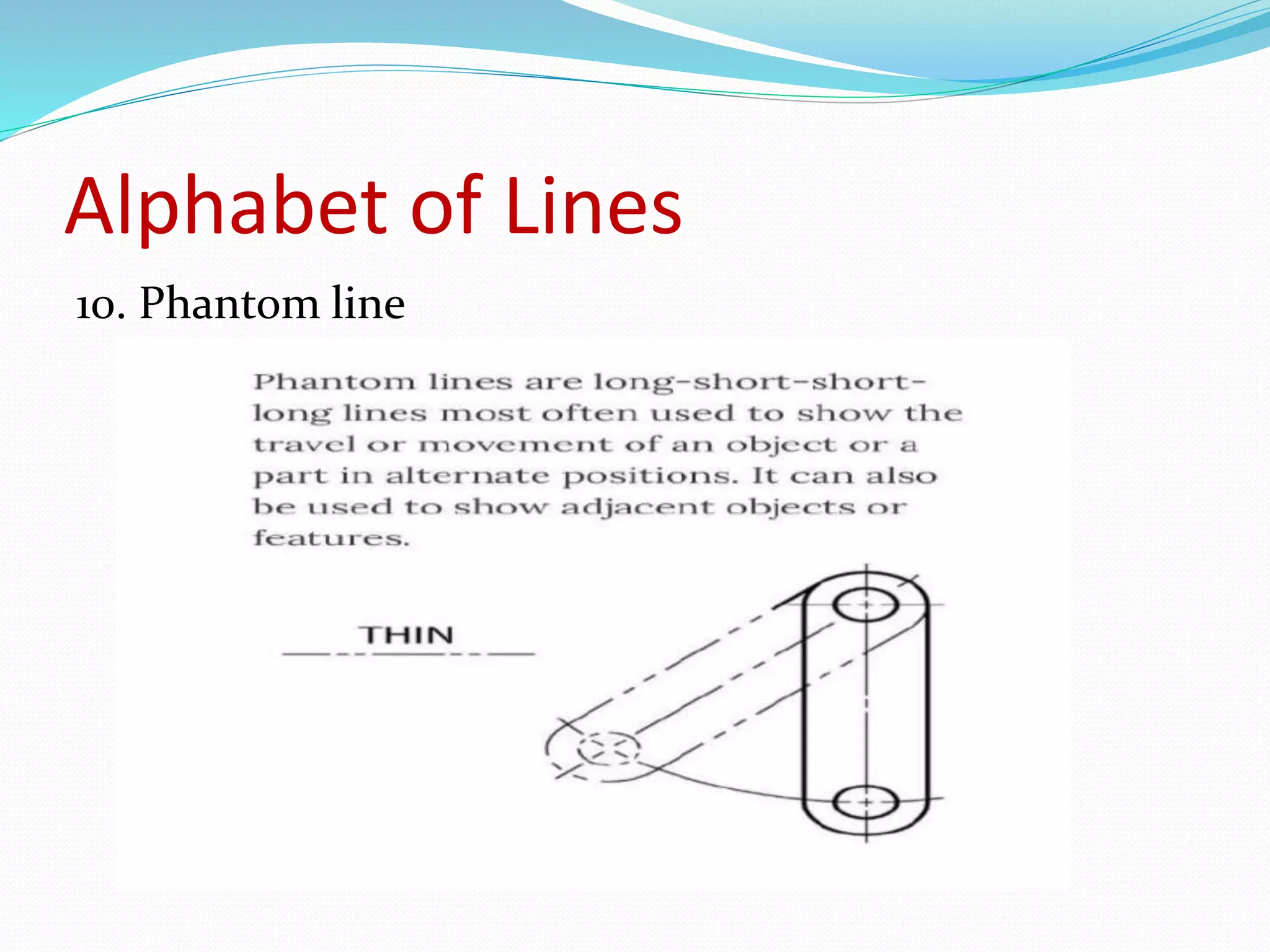
10. Phantom line
Alphabet of Lines
Alphabet of Lines
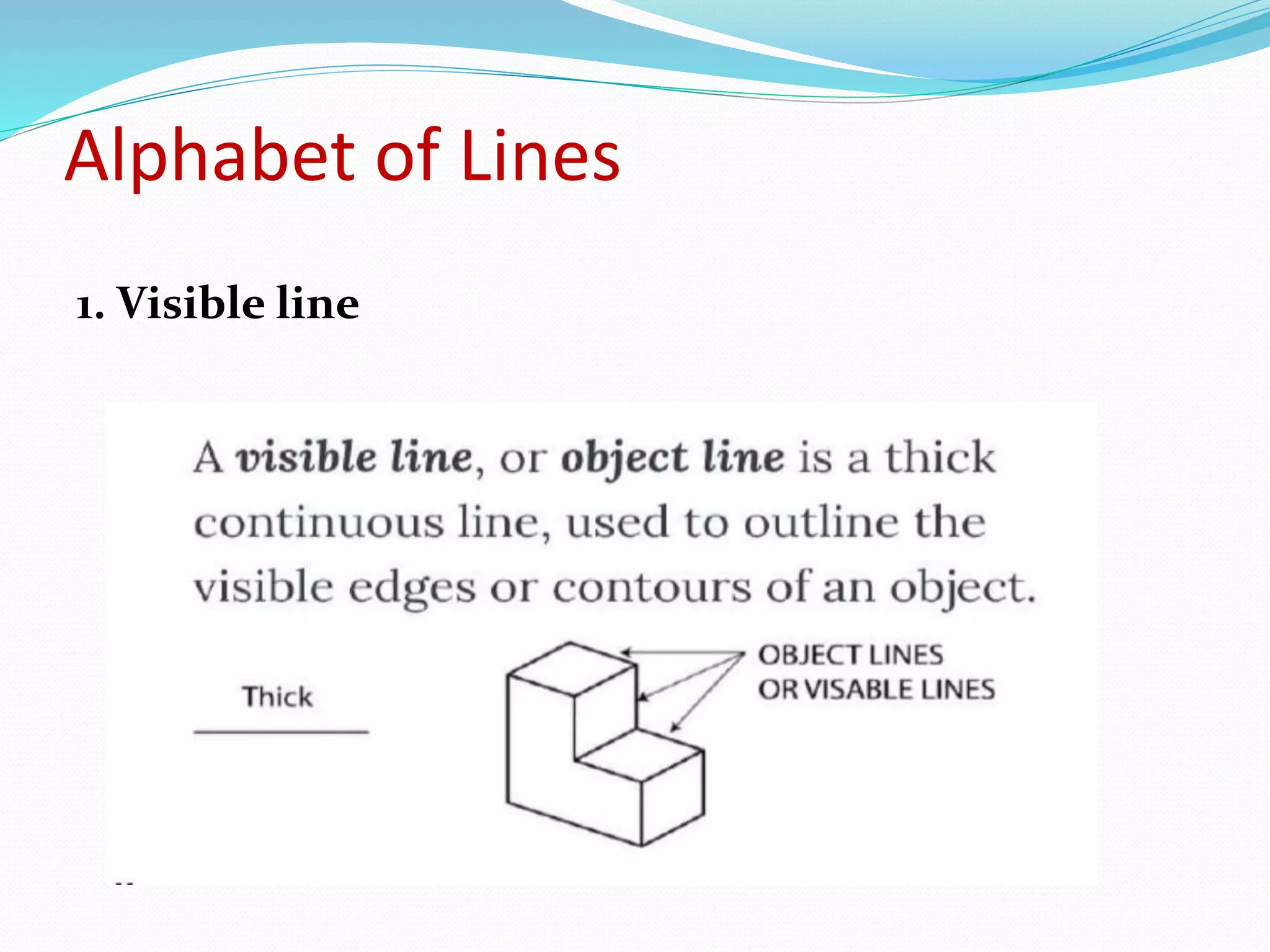
1. Visible line
Alphabet of Lines
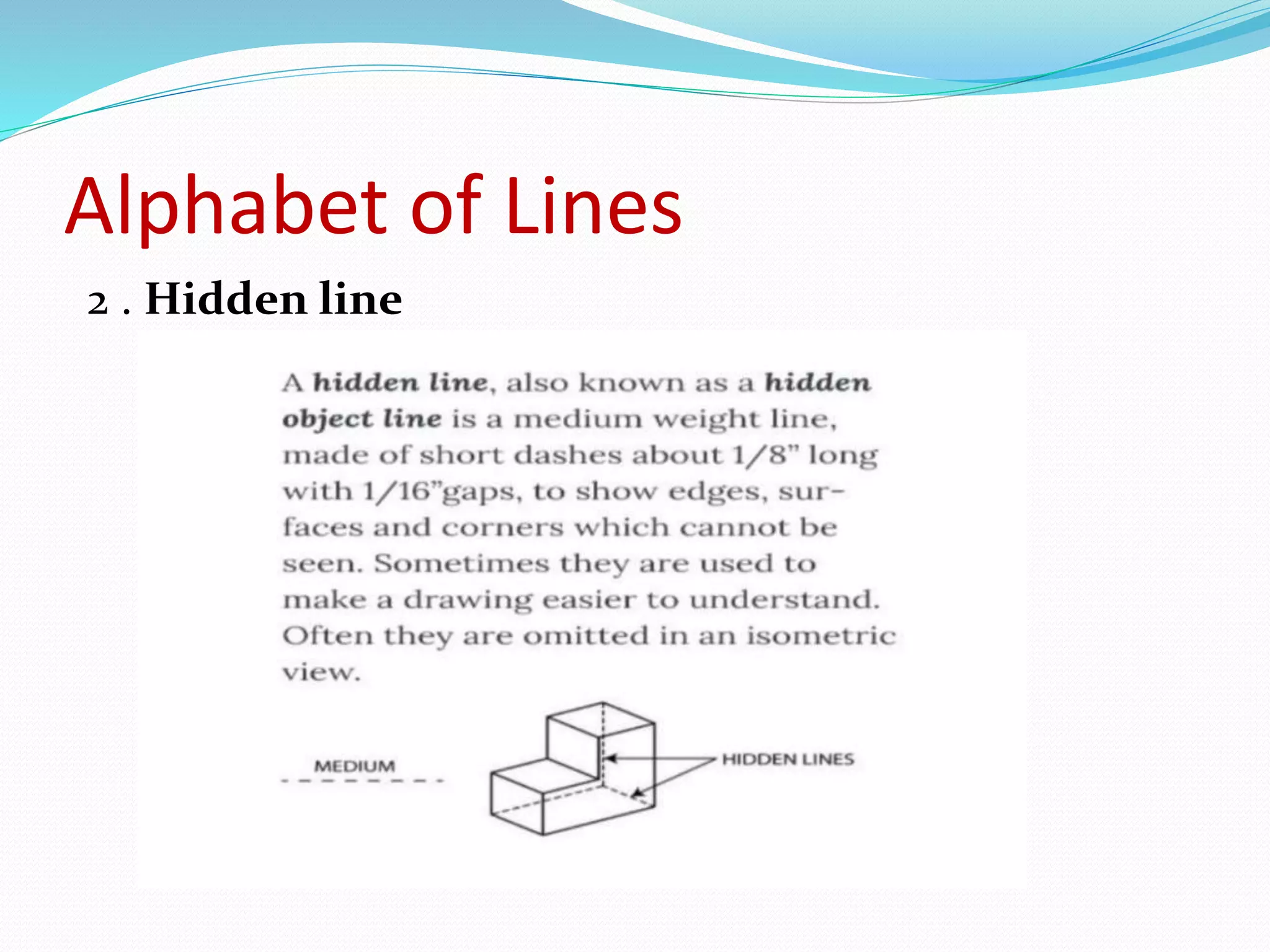
2 . Hidden line
Alphabet of Lines
3. Section line
Alphabet of Lines
4. Center line
Alphabet of Lines
5. Dimension line
Alphabet of Lines
6. Extension line
Alphabet of Lines
7. Leader line
Alphabet of Lines
8. Cutting plane or viewing plane line
Alphabet of Lines
9. Break lines ( short break, long break and cylindrical
break)
Alphabet of Lines
10. Phantom line
Thank you!!!

INTERPRET DRAWING AND PLANS Carpentry.pptx

  • 2.
  • 3.
  • 4.
  • 5.
  • 6.
    Technical drawing isessential for communicating ideas in industry and engineering.
  • 7.
  • 8.
    Essential, because  Tomake the drawings easier to understand, people use familiar symbols, perspectives, units of measurement, notation systems, visual styles, and page layout.
  • 9.
     Together, suchconventions constitute a visual language and help to ensure that the drawing is unambiguous and relatively easy to understand.  Many of the symbols and principles of technical drawing are codified in an international standard called ISO 128.  ISO 128 - is an international standard issued by International Organization for Standard [ISO 128]. • General principles of presentation in technical drawings. • It describes basic conventions for ; lines, views, cuts and section, and different types of engineering drawings like; • Mechanical engineering • Architecture • Civil engineering • and shipbuilding - It’s applicable to both manual computer-based-drawing
  • 10.
  • 11.
     The needfor precise communication in the preparation of a functional document distinguishes technical drawing from the expressive drawing of the visual arts.  Artistic drawings are subjectively interpreted; their meanings are multiply determined.  Technical drawings are understood to have one intended meaning.  A drafter, draftsperson, or draftsman is a person who makes a drawing (technical or expressive).  A professional drafter who makes technical drawings is sometimes called a drafting technician.
  • 12.
    Definition of Terms Axis- line about which a body turns or rotates .  Design - drawing showing the plan, elevations, sections, and other features.  Detail drawing - separate drawing showing a small part of a machine or structure.  Dimension - definite measure shown on a drawing in detail.  Isometric Drawing - drawing which resembles a respective drawing.  Orthographic Projection - arrangement in a drawing of the three principal views of an object.
  • 13.
    Definition of Terms PerspectiveDrawing - the representation of an object on a plan surface, pertaining to materials, styles and finish presented as to have the same appearances as when seen from a particular viewpoint. Projections - the cutting out of any part or any member of a structure. Reduced - made smaller than the actual size as in the size of object. Scaled Drawing - drawing plan made according to a scale, smaller than the actual work. Sketch - freehand drawing of an object. Specification - written instruction to the worker containing all the information.
  • 14.
    Alphabet of Lines -In sketching orthographic drawing, certain conventional lines are used for a definite purpose . These lines are commonly called Alphabet of Lines.
  • 15.
    Alphabet of Lines 1.Visible line 2. Hidden Line 3. Section Line 4. Center Line 5. Dimension line 6. Extension line 7. Leader line 8. Cutting Plane or viewing plane lines 9. Break lines (short break, long break and cylindrical break) 10. Phantom line
  • 16.
  • 17.
  • 18.
    Alphabet of Lines 2. Hidden line
  • 19.
  • 20.
  • 21.
    Alphabet of Lines 5.Dimension line
  • 22.
    Alphabet of Lines 6.Extension line
  • 23.
  • 24.
    Alphabet of Lines 8.Cutting plane or viewing plane line
  • 25.
    Alphabet of Lines 9.Break lines ( short break, long break and cylindrical break)
  • 26.
  • 27.