PUSH vs. PULL Interactive B2B Marketing Brian Joosse Director, Interactive Initiatives ARENDS Chicago
Go Cubs!
Rules  Please check your email, surf the web, post to your blog, etc. If the hurricane hits, follow all safe evacuation procedures Please see if you can kill the frog If necessary, feel free to nap
PUSH and PULL  Definitions (for Interactive) slightly different from traditional marketing terminology in the Interactive space
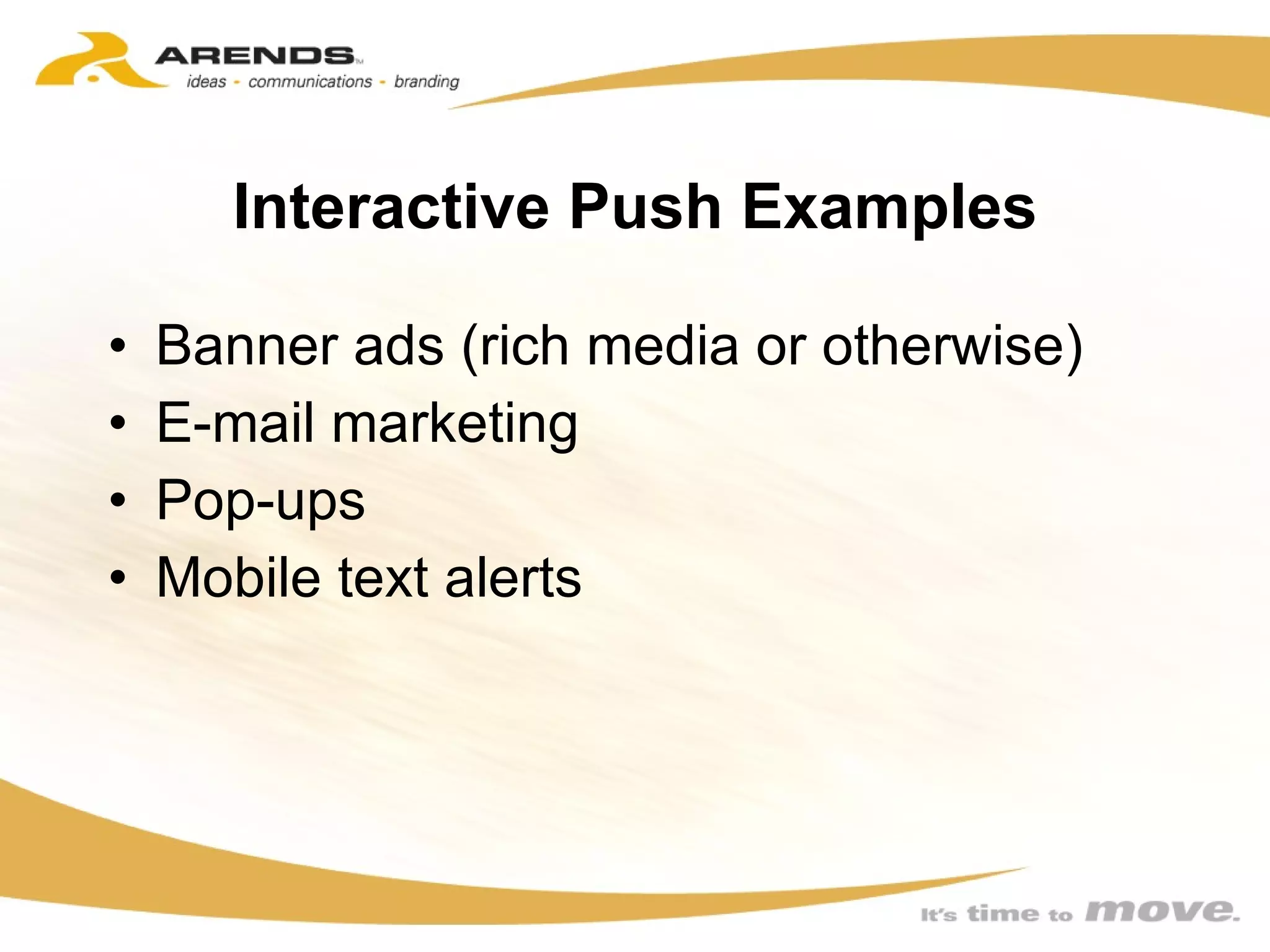
Interactive Push Tactics that get attention Intrude upon the customer
Interactive Push Examples Banner ads (rich media or otherwise) E-mail marketing Pop-ups Mobile text alerts
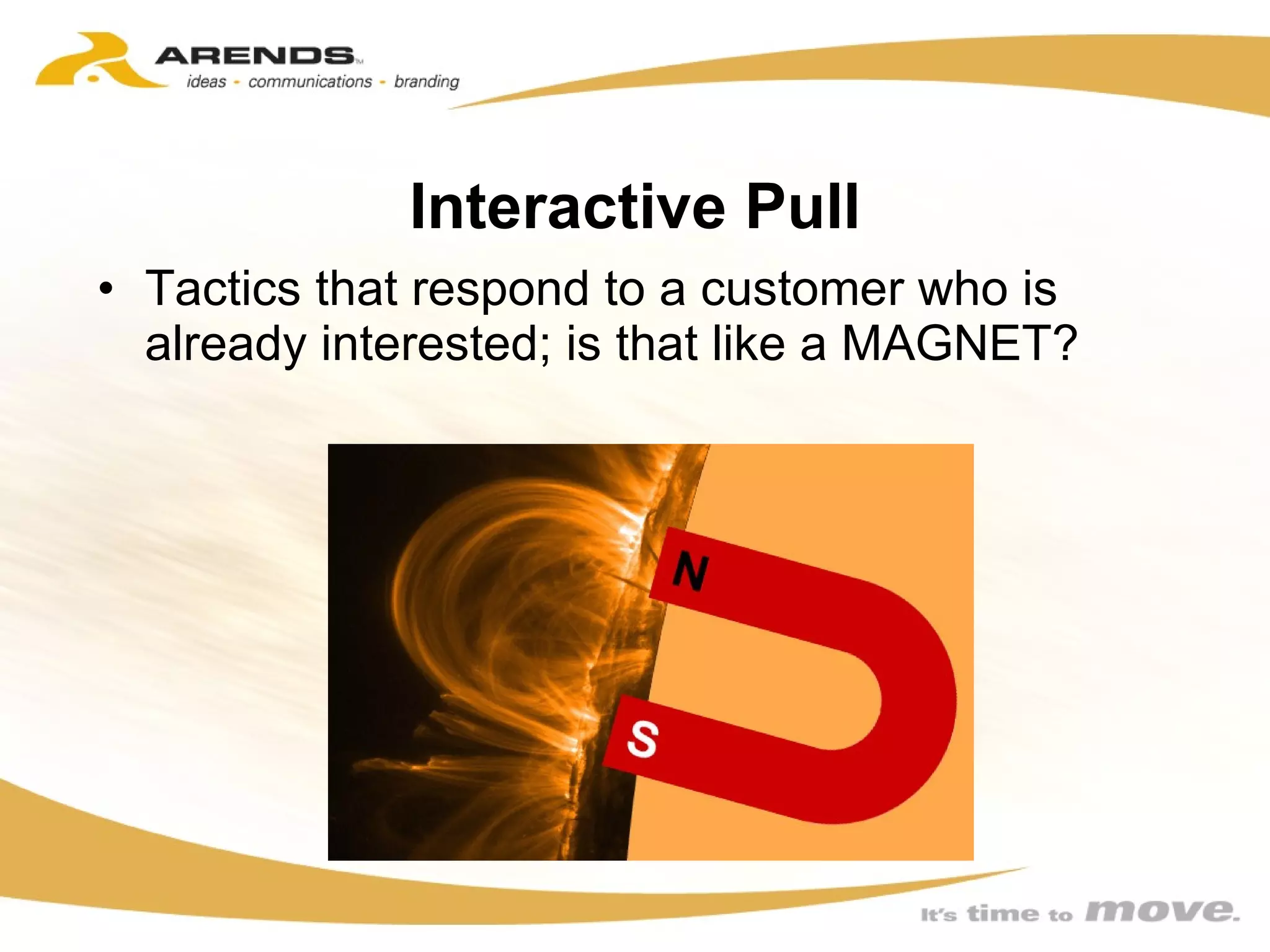
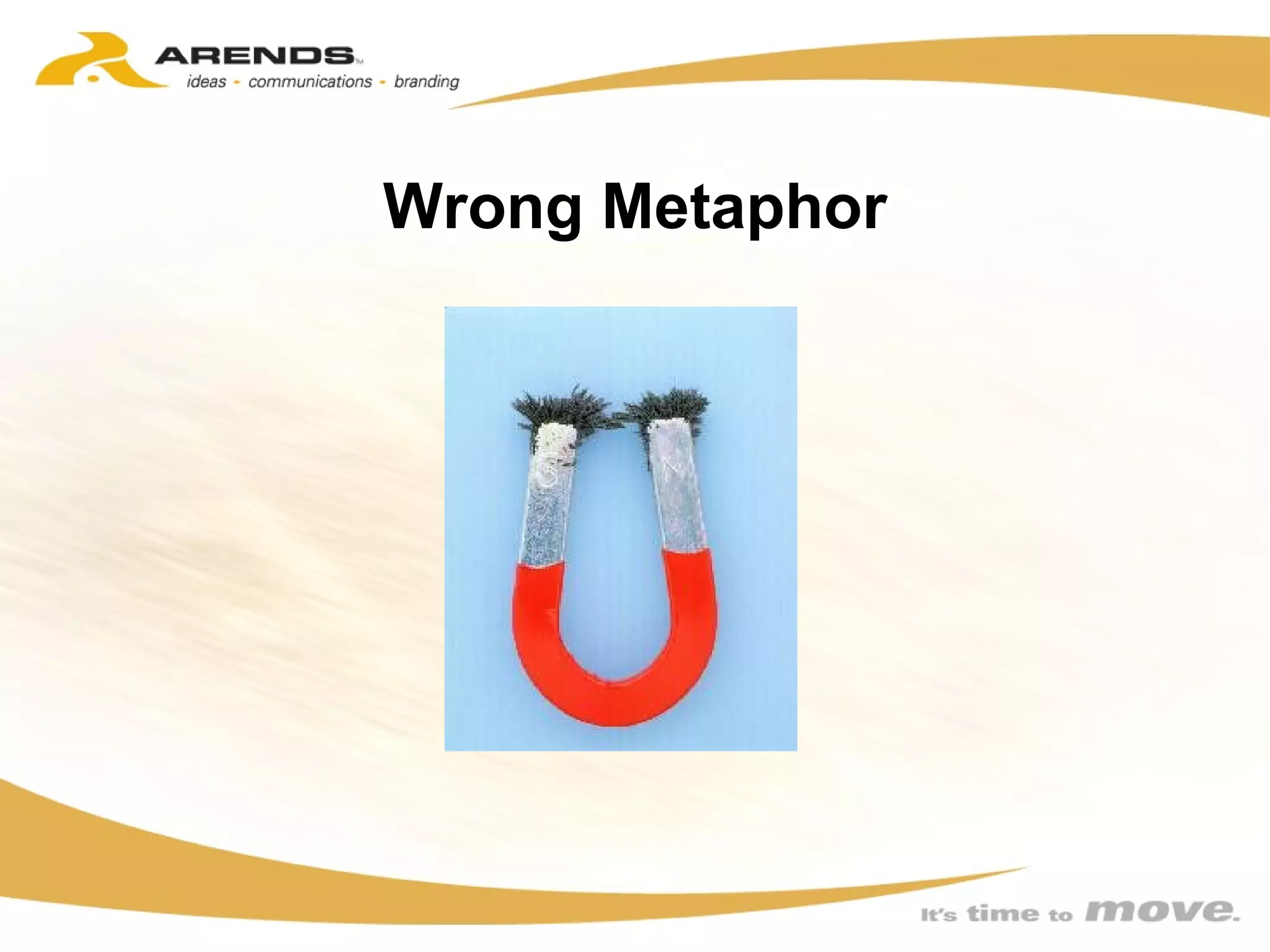
Interactive Pull Tactics that respond to a customer who is already interested; is that like a MAGNET?
Facts of Web Life Nobody is going to come to your site (or at least have a meaningful interaction with it) unless THEY WANT TO Corollary: you can’t force anybody to STAY on your site User has ALL the control
Wrong Metaphor
Also Wrong Metaphor
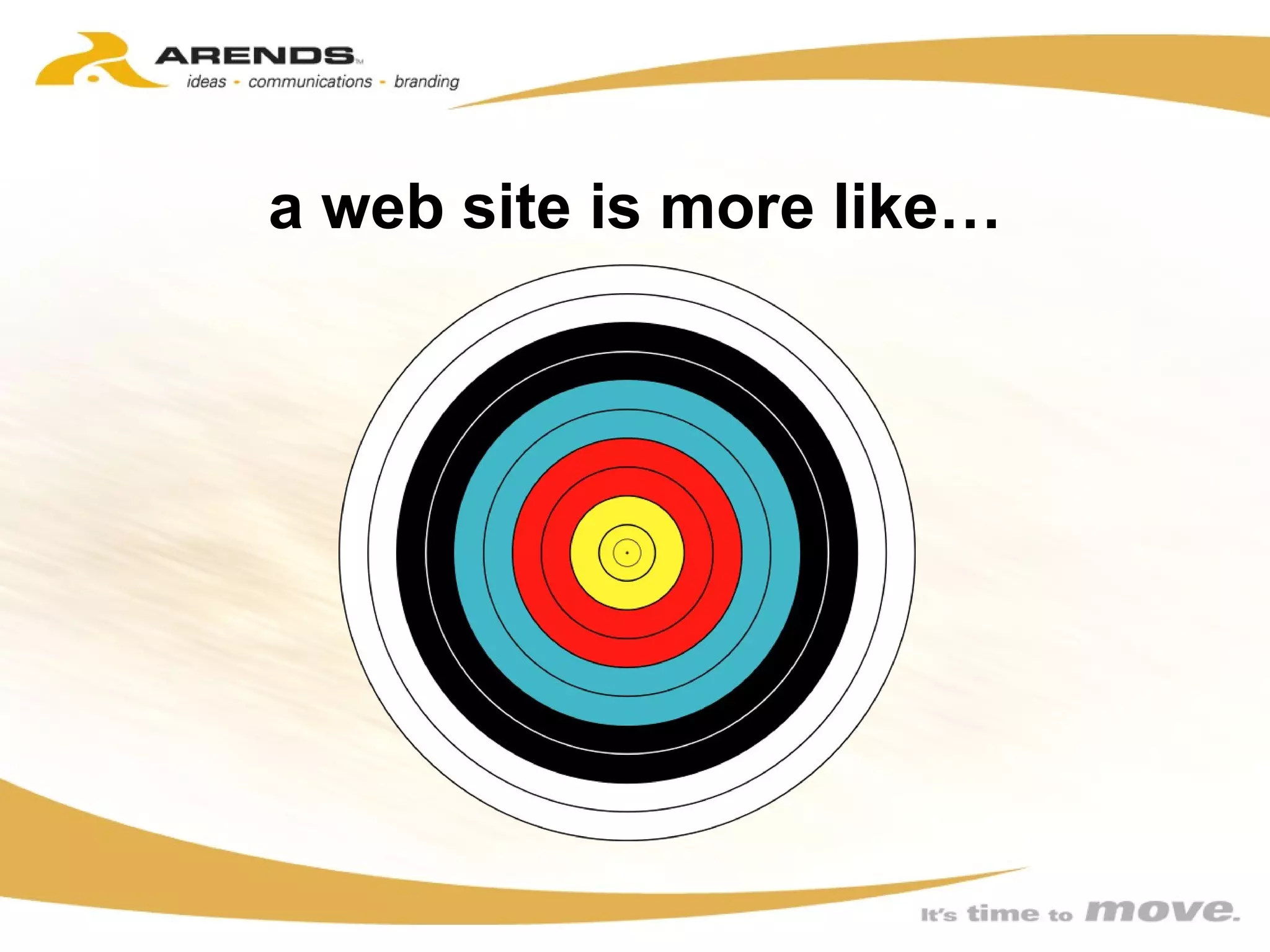
a web site is more like…
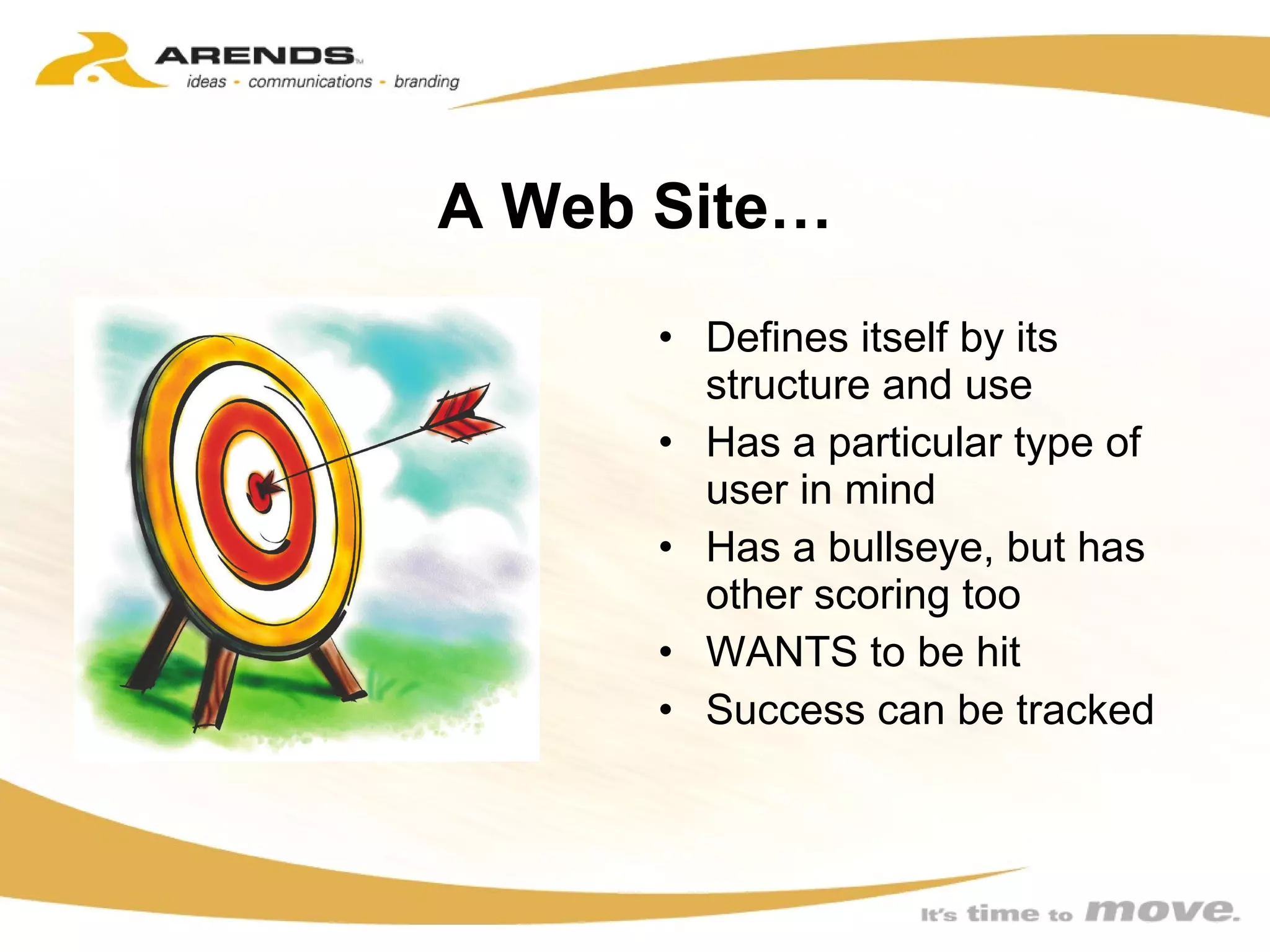
A Web Site… Defines itself by its structure and use Has a particular type of user in mind Has a bullseye, but has other scoring too WANTS to be hit Success can be tracked
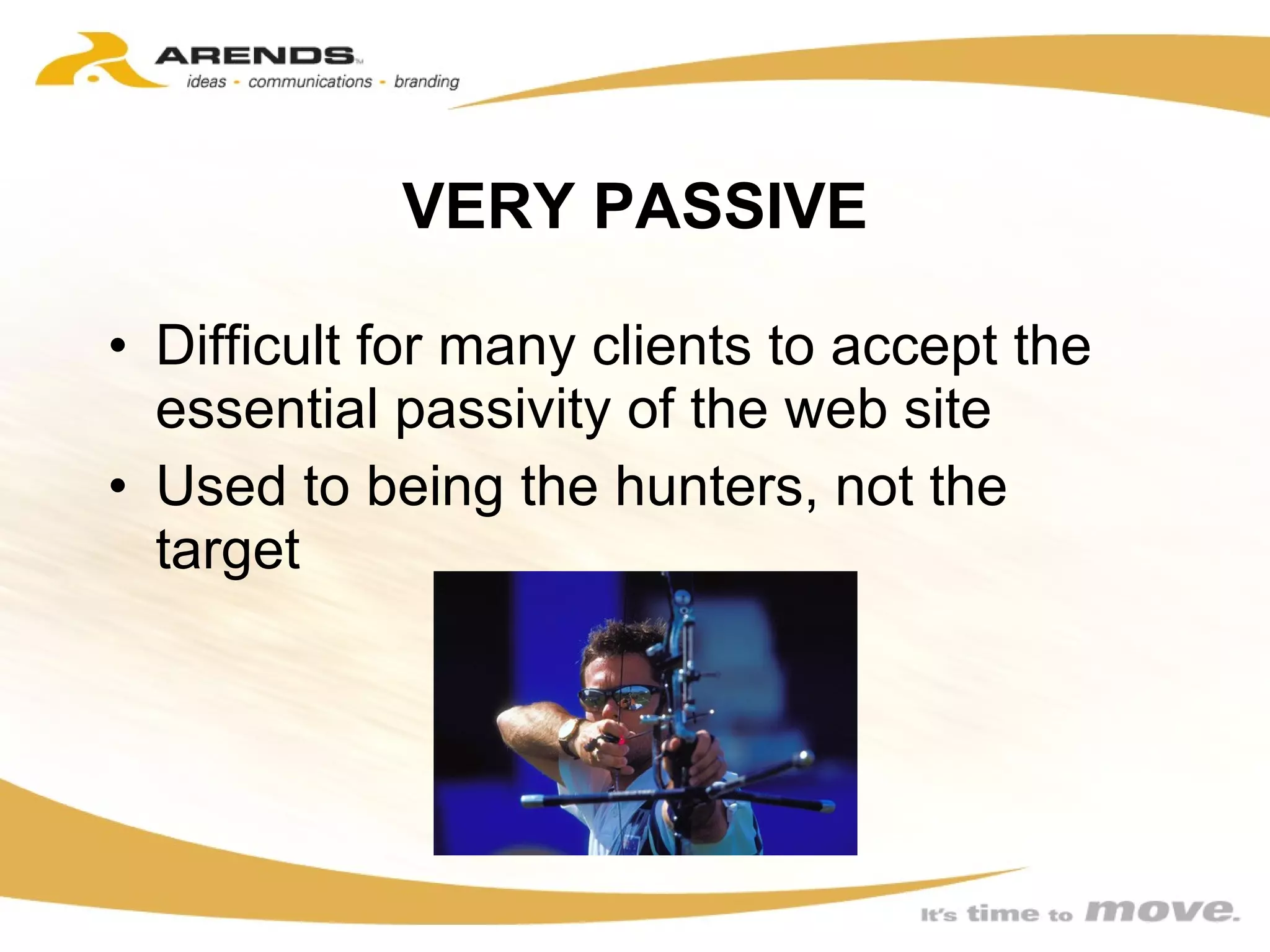
VERY PASSIVE Difficult for many clients to accept the essential passivity of the web site Used to being the hunters, not the target
PUSH Vocabulary Examples Target  the audience Grab  user’s attention Capture  viewers doesn’t really work for the web
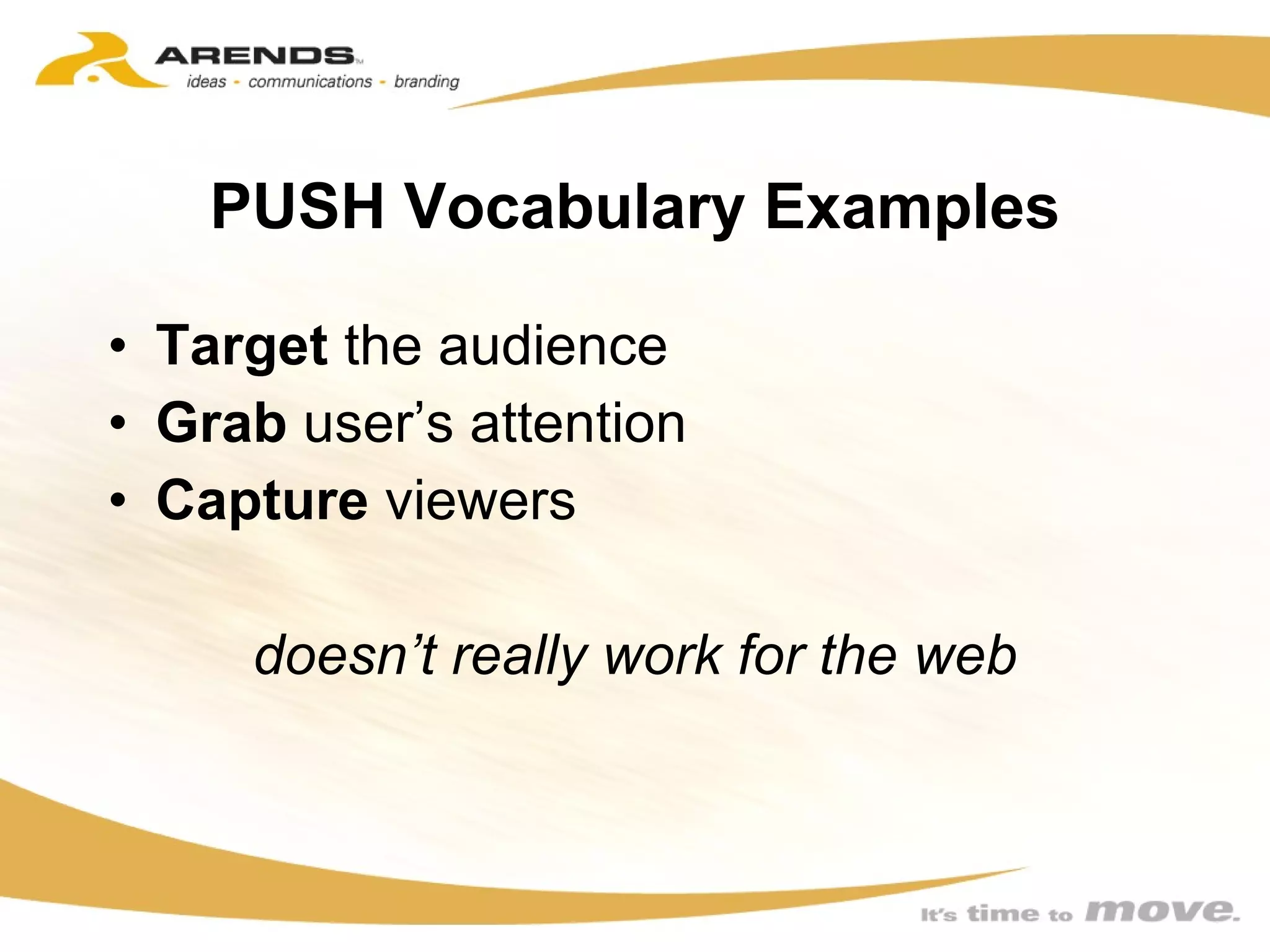
Can’t Do This
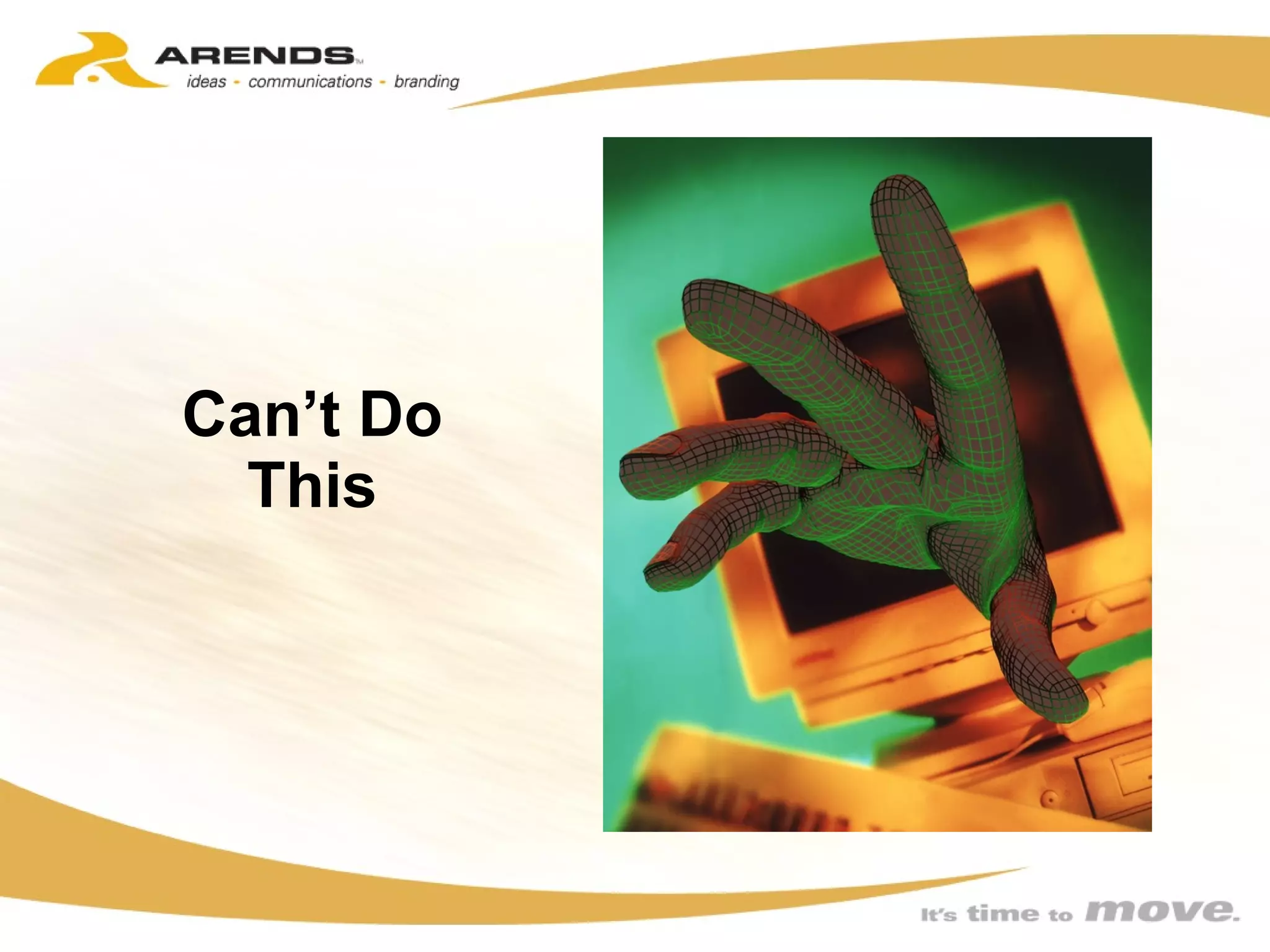
This is more likely to work serve it to  the right users  and they will eat it
Interactive Pull Web sites, applications, functionality Online media Video clips: YouTube Podcasts: iTunes MP3’s: Napster Social networking: MySpace, Facebook Community: blogs, forums, BBS
MORE Interactive Pull CD-ROM DVD Dancing baby Online games
Classic B2B is PUSH-y All about the channels Outside sales force/reps  Trade shows Ads in trade magazines Catalogs, brochures, direct mail
Interactive B2B: PULL Evolving paradigm Web-based Responding to customers that are  already interested whether they know it or not
A Different Way of Thinking Can’t  hunt down  potential customers Instead,  be ready when those customers decide to come to your site Help them score a bullseye!
PULL is Very User-Centric Define your customers Speak to them Address their pain points Solve their problems Answer their questions
Usability Guru “ Clear content, simple navigation, and answers to customer questions have the biggest impact on business value. Advanced technology matters much less.” -- Jakob Nielsen, on business sites
 
 
PULL  Benefits from facilitating technology that directs users to your site Search Engines Directories Portals Referral mechanisms
PULL  Won’t generate high raw numbers  Will produce qualified leads  Will generate higher success rates
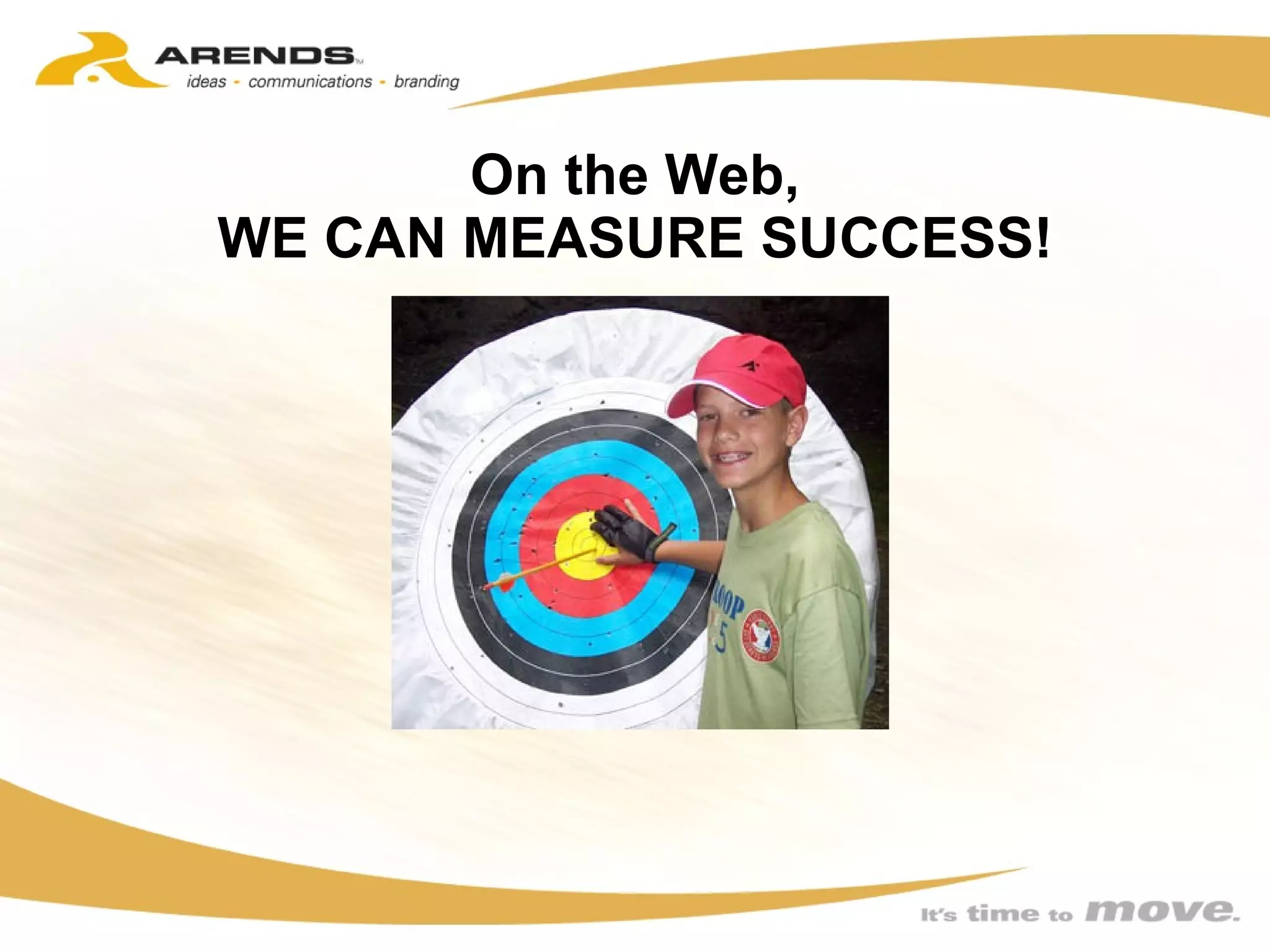
On the Web, WE CAN MEASURE SUCCESS!
Typical Success Metrics Leads generated Site traffic Online sales Whatever helps achieve business goals
PULL Tactics Can Still  Actively Help B2B Sales here’s an example
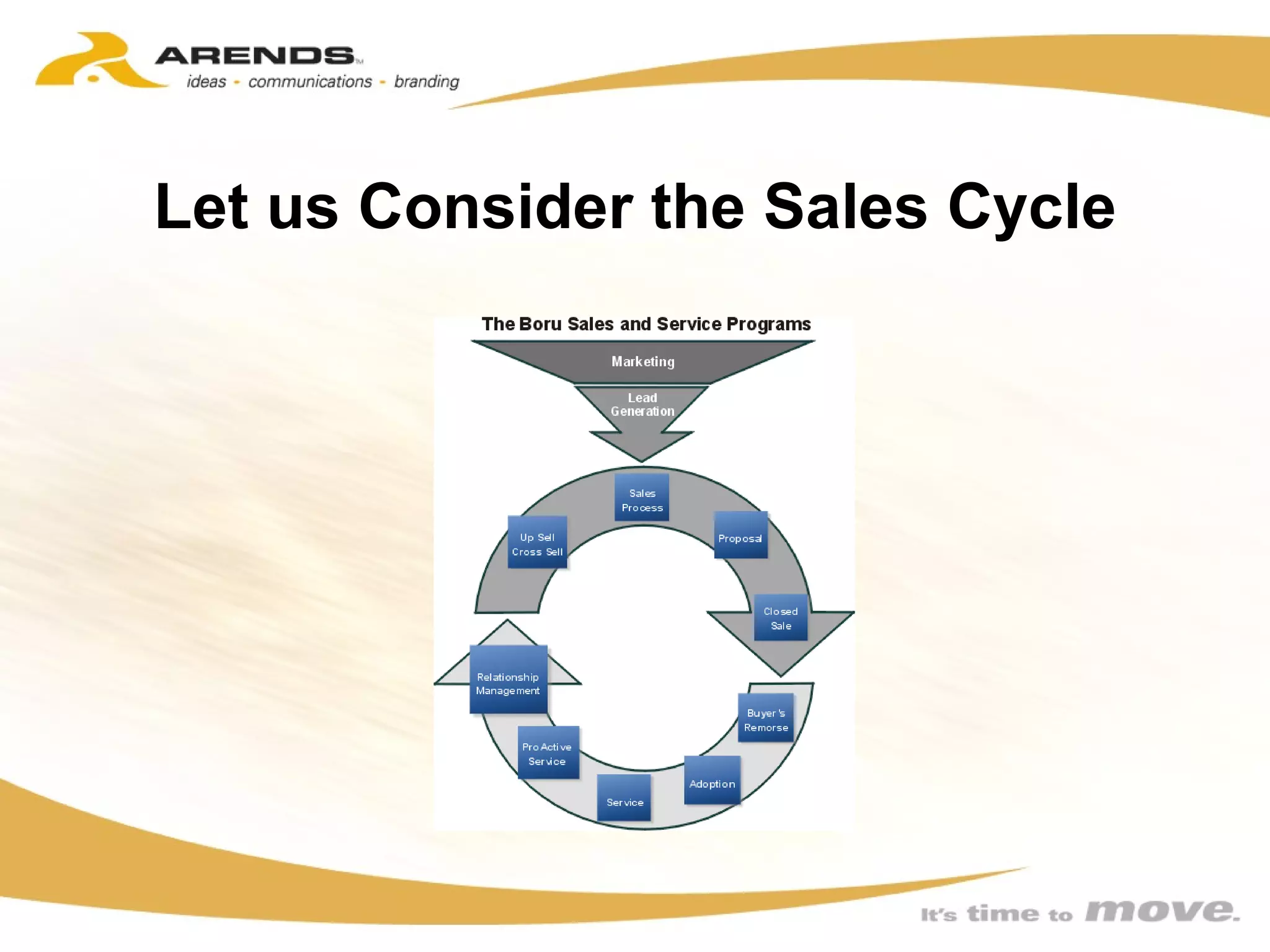
Let us Consider the Sales Cycle
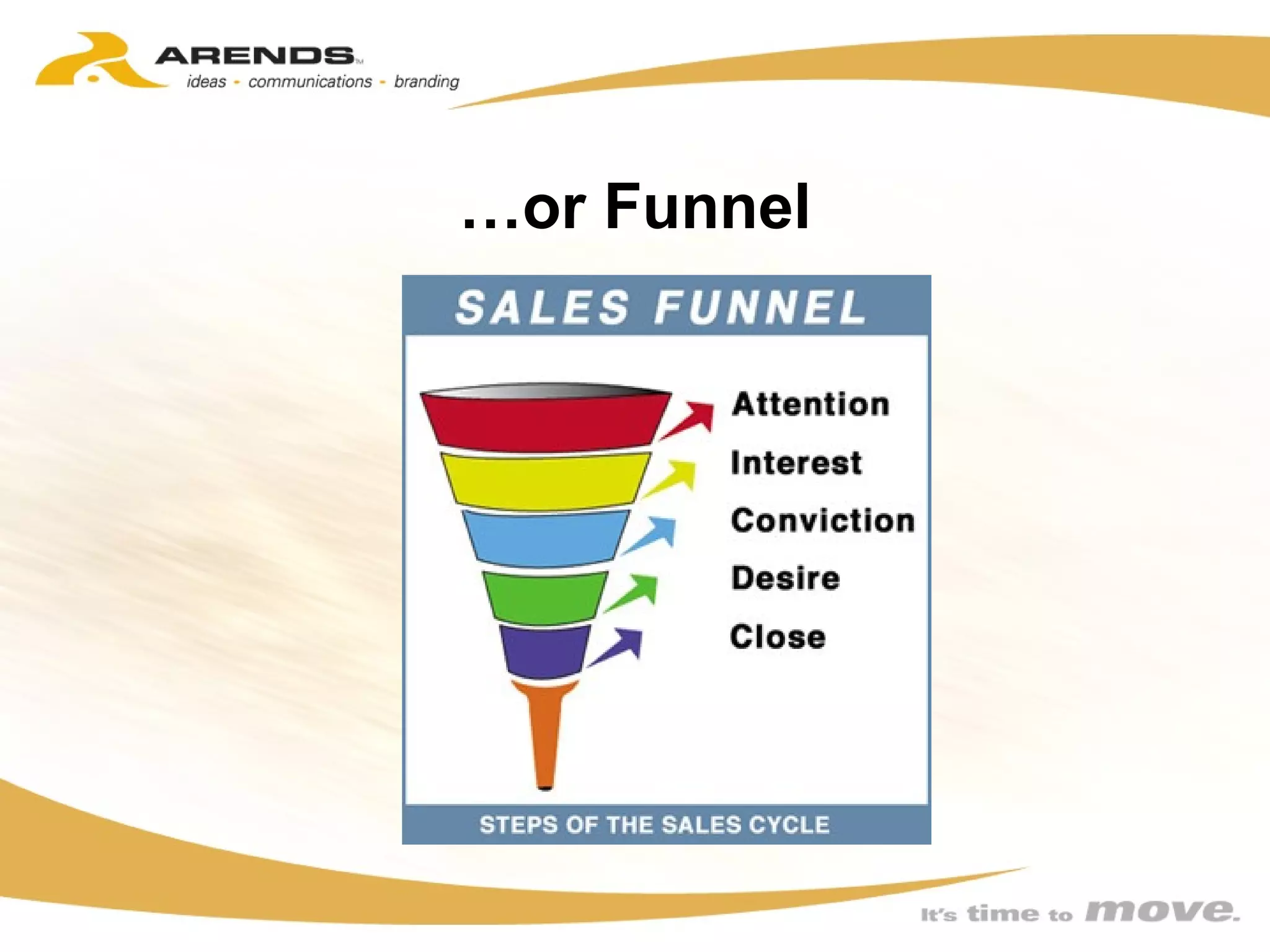
…or Funnel
BUY Cycle
How Does Your Client’s  Sales Force Sell? Engage differently with prospective customers depending on their stage in the buying cycle Brand new prospect is not given the same kind of information or attention as a decision-maker who is working up his final cut list
Same Thing on Web Site Web can support this process with content specifically targeted at these customer groups and their stage-specific concerns For example, don’t talk specifications when they don’t understand their problem Best when customer target audience can be segmented as finely as possible  For example, not only by industry but by role within the company, geography, sub-specialty, etc.
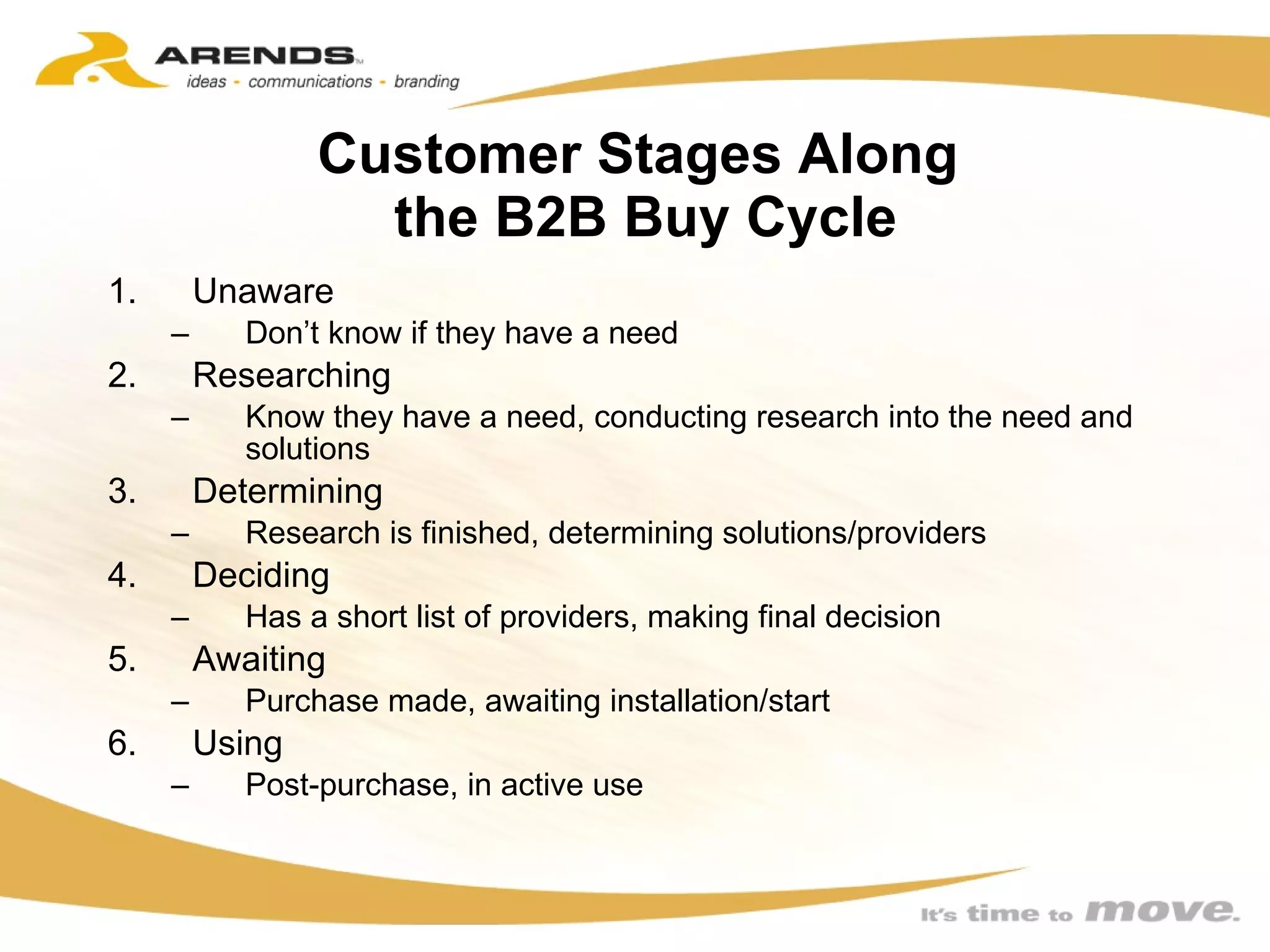
Customer Stages Along  the B2B Buy Cycle Unaware Don’t know if they have a need Researching Know they have a need, conducting research into the need and solutions Determining Research is finished, determining solutions/providers Deciding Has a short list of providers, making final decision  Awaiting Purchase made, awaiting installation/start Using Post-purchase, in active use
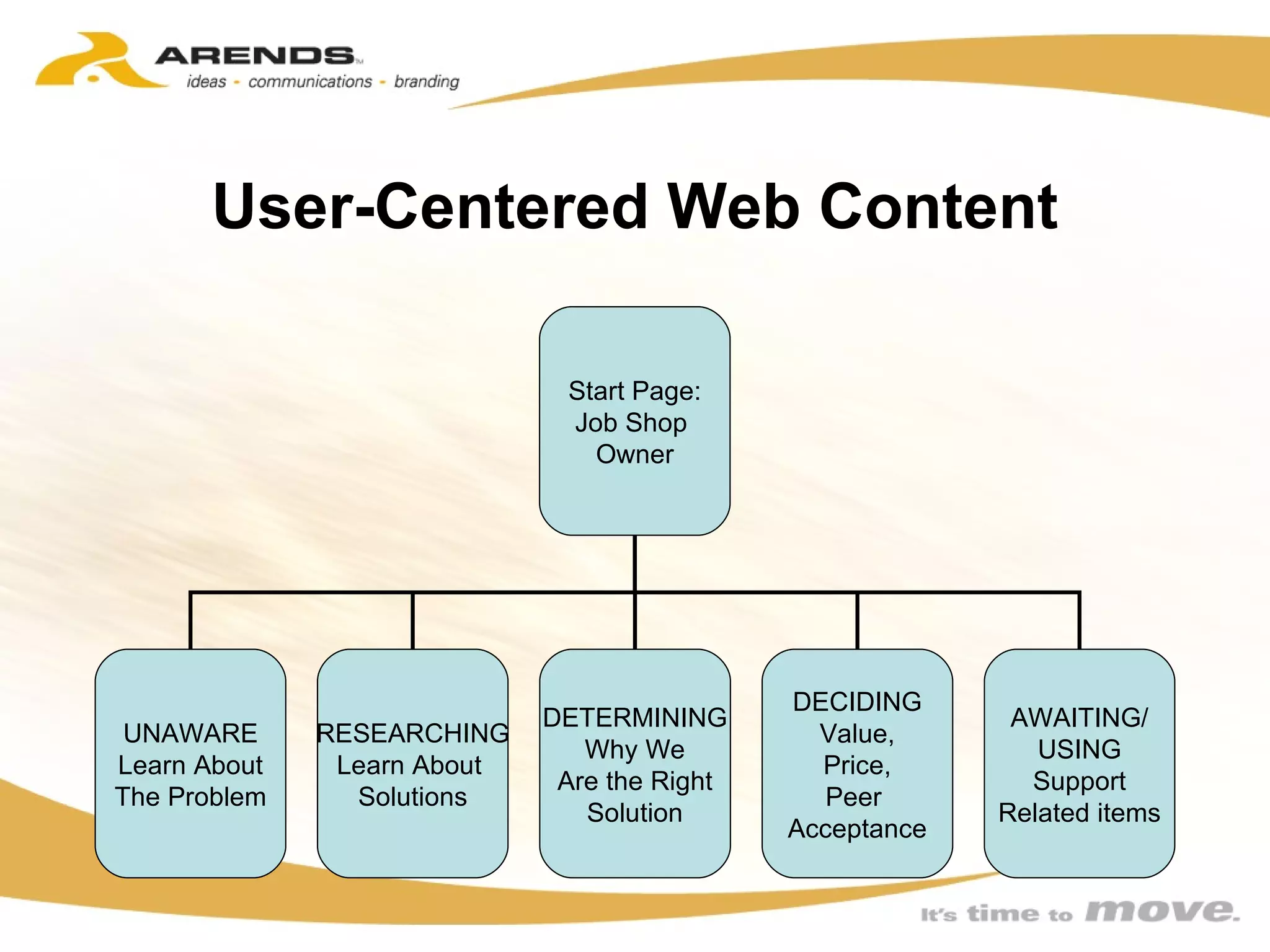
User-Centered Web Content Start Page geared toward a single defined user, i.e. Machine Shop Owner Secondary pages with content oriented toward that user in the different stages of the buying cycle, e.g. Researching or Deciding Content answers likely questions or addresses known problems that the user may be considering
User-Centered Web Content Start Page: Job Shop  Owner UNAWARE Learn About The Problem RESEARCHING Learn About  Solutions DETERMINING Why We Are the Right Solution DECIDING Value, Price, Peer  Acceptance AWAITING/ USING Support Related items
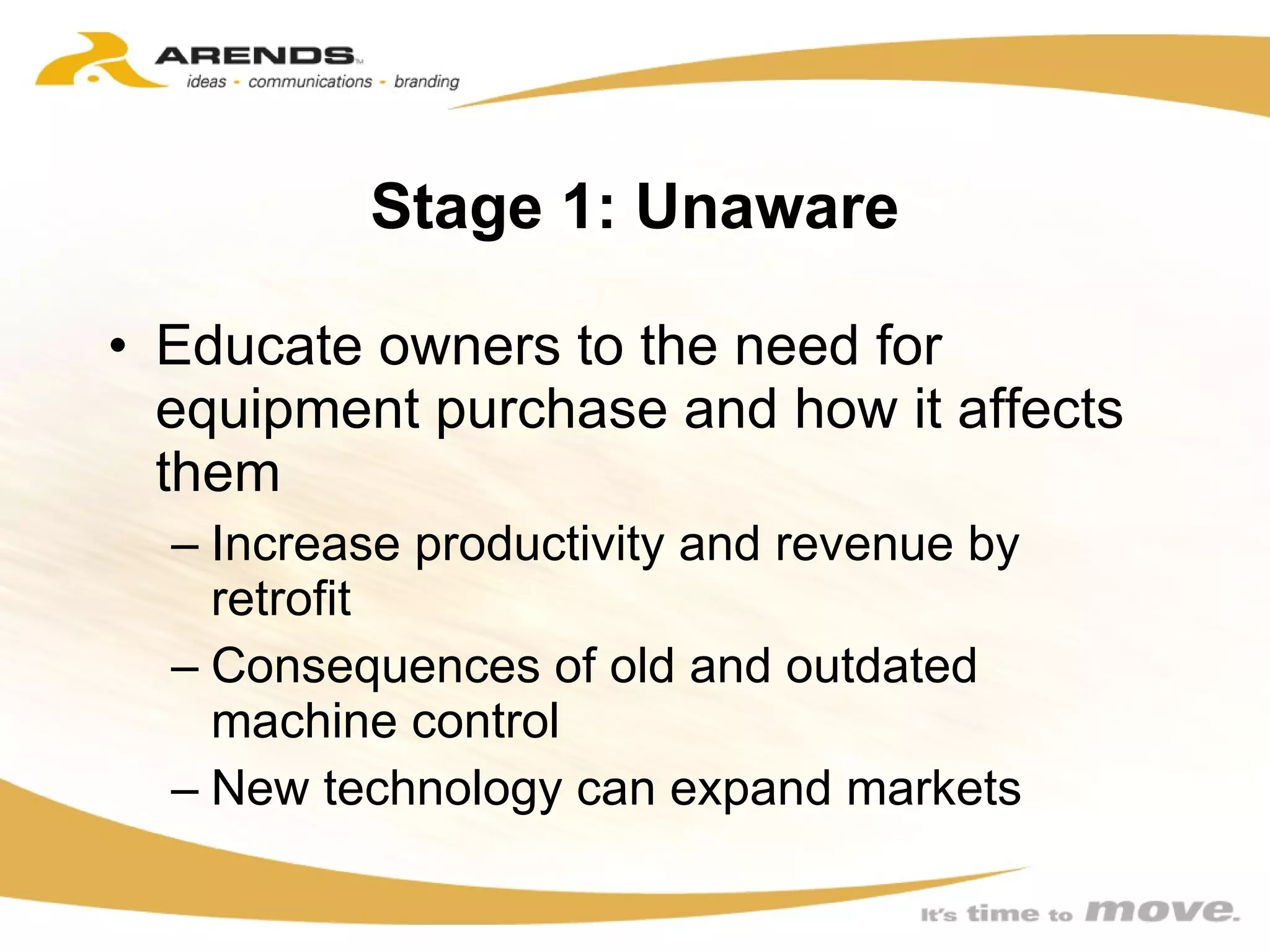
Stage 1: Unaware Educate owners to the need for equipment purchase and how it affects them  Increase productivity and revenue by retrofit Consequences of old and outdated machine control New technology can expand markets
Stage 2: Researching Content focused on the client solution Comparison chart of leading providers Value-additions associated with Siemens PDFs of brochures, sell sheets, and white papers (easy to print out and share with influencers)
Stage 3: Determining Help owners make the decision to consider client Dealer locations or contact process Sales, coupons, incentives How to determine pricing
Stage 4: Deciding Why client is the right solution  Testimonials, awards, etc. After-purchase care: training, customer support, maintenance, parts, etc. ROI calculations
Stage 5/6: Awaiting, Using After purchase (did they make the right decision?) Support (instructions, manuals, FAQ) Up-sell to advanced models, or accessories, or related products Feedback mechanism Extranet or user community
IMPORTANT: Need Call to Action NEW PROSPECT: Capture contact info PROSPECT: Keep relationship going -- sign up for newsletter or other rich content ACTIVE LEAD: Request a call  CLOSING: Request a quote
Tracking Our Success –  Possible Metrics Traffic to and from the different pages Success metric (i.e. completed call to action items) Search engine rankings and traffic for key phrases
How Do They Find Us? Search engine marketing Organic (or “free” listings) Pay-Per-Click campaign Structure Key Phrase plan around the user definition and differentiated stages of the buy cycle
How Do They Find Us? Banner ads Direct mail Email marketing …PUSH tactics can be worthwhile!
In conclusion Think about your users Be ready when they come Follow the way of the willow
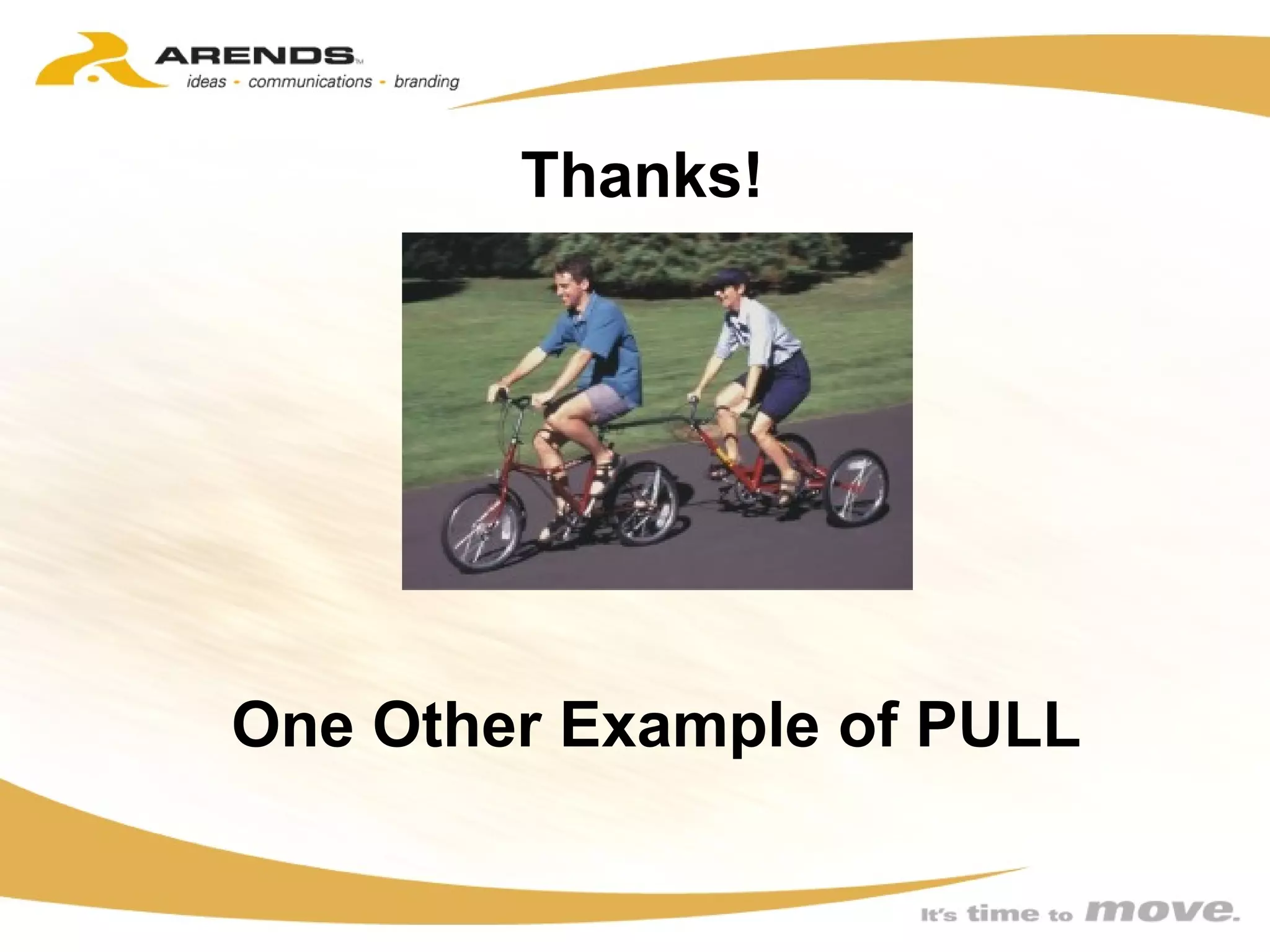
One Other Example of PULL Thanks!
Radio Advertising  Prince Golden Egg Noodles From Stan Freberg

Interactive Marketing Push and Pull

  • 1.
    PUSH vs. PULLInteractive B2B Marketing Brian Joosse Director, Interactive Initiatives ARENDS Chicago
  • 2.
  • 3.
    Rules Pleasecheck your email, surf the web, post to your blog, etc. If the hurricane hits, follow all safe evacuation procedures Please see if you can kill the frog If necessary, feel free to nap
  • 4.
    PUSH and PULL Definitions (for Interactive) slightly different from traditional marketing terminology in the Interactive space
  • 5.
    Interactive Push Tacticsthat get attention Intrude upon the customer
  • 6.
    Interactive Push ExamplesBanner ads (rich media or otherwise) E-mail marketing Pop-ups Mobile text alerts
  • 7.
    Interactive Pull Tacticsthat respond to a customer who is already interested; is that like a MAGNET?
  • 8.
    Facts of WebLife Nobody is going to come to your site (or at least have a meaningful interaction with it) unless THEY WANT TO Corollary: you can’t force anybody to STAY on your site User has ALL the control
  • 9.
  • 10.
  • 11.
    a web siteis more like…
  • 12.
    A Web Site…Defines itself by its structure and use Has a particular type of user in mind Has a bullseye, but has other scoring too WANTS to be hit Success can be tracked
  • 13.
    VERY PASSIVE Difficultfor many clients to accept the essential passivity of the web site Used to being the hunters, not the target
  • 14.
    PUSH Vocabulary ExamplesTarget the audience Grab user’s attention Capture viewers doesn’t really work for the web
  • 15.
  • 16.
    This is morelikely to work serve it to the right users and they will eat it
  • 17.
    Interactive Pull Websites, applications, functionality Online media Video clips: YouTube Podcasts: iTunes MP3’s: Napster Social networking: MySpace, Facebook Community: blogs, forums, BBS
  • 18.
    MORE Interactive PullCD-ROM DVD Dancing baby Online games
  • 19.
    Classic B2B isPUSH-y All about the channels Outside sales force/reps Trade shows Ads in trade magazines Catalogs, brochures, direct mail
  • 20.
    Interactive B2B: PULLEvolving paradigm Web-based Responding to customers that are already interested whether they know it or not
  • 21.
    A Different Wayof Thinking Can’t hunt down potential customers Instead, be ready when those customers decide to come to your site Help them score a bullseye!
  • 22.
    PULL is VeryUser-Centric Define your customers Speak to them Address their pain points Solve their problems Answer their questions
  • 23.
    Usability Guru “Clear content, simple navigation, and answers to customer questions have the biggest impact on business value. Advanced technology matters much less.” -- Jakob Nielsen, on business sites
  • 24.
  • 25.
  • 26.
    PULL Benefitsfrom facilitating technology that directs users to your site Search Engines Directories Portals Referral mechanisms
  • 27.
    PULL Won’tgenerate high raw numbers Will produce qualified leads Will generate higher success rates
  • 28.
    On the Web,WE CAN MEASURE SUCCESS!
  • 29.
    Typical Success MetricsLeads generated Site traffic Online sales Whatever helps achieve business goals
  • 30.
    PULL Tactics CanStill Actively Help B2B Sales here’s an example
  • 31.
    Let us Considerthe Sales Cycle
  • 32.
  • 33.
  • 34.
    How Does YourClient’s Sales Force Sell? Engage differently with prospective customers depending on their stage in the buying cycle Brand new prospect is not given the same kind of information or attention as a decision-maker who is working up his final cut list
  • 35.
    Same Thing onWeb Site Web can support this process with content specifically targeted at these customer groups and their stage-specific concerns For example, don’t talk specifications when they don’t understand their problem Best when customer target audience can be segmented as finely as possible For example, not only by industry but by role within the company, geography, sub-specialty, etc.
  • 36.
    Customer Stages Along the B2B Buy Cycle Unaware Don’t know if they have a need Researching Know they have a need, conducting research into the need and solutions Determining Research is finished, determining solutions/providers Deciding Has a short list of providers, making final decision Awaiting Purchase made, awaiting installation/start Using Post-purchase, in active use
  • 37.
    User-Centered Web ContentStart Page geared toward a single defined user, i.e. Machine Shop Owner Secondary pages with content oriented toward that user in the different stages of the buying cycle, e.g. Researching or Deciding Content answers likely questions or addresses known problems that the user may be considering
  • 38.
    User-Centered Web ContentStart Page: Job Shop Owner UNAWARE Learn About The Problem RESEARCHING Learn About Solutions DETERMINING Why We Are the Right Solution DECIDING Value, Price, Peer Acceptance AWAITING/ USING Support Related items
  • 39.
    Stage 1: UnawareEducate owners to the need for equipment purchase and how it affects them Increase productivity and revenue by retrofit Consequences of old and outdated machine control New technology can expand markets
  • 40.
    Stage 2: ResearchingContent focused on the client solution Comparison chart of leading providers Value-additions associated with Siemens PDFs of brochures, sell sheets, and white papers (easy to print out and share with influencers)
  • 41.
    Stage 3: DeterminingHelp owners make the decision to consider client Dealer locations or contact process Sales, coupons, incentives How to determine pricing
  • 42.
    Stage 4: DecidingWhy client is the right solution Testimonials, awards, etc. After-purchase care: training, customer support, maintenance, parts, etc. ROI calculations
  • 43.
    Stage 5/6: Awaiting,Using After purchase (did they make the right decision?) Support (instructions, manuals, FAQ) Up-sell to advanced models, or accessories, or related products Feedback mechanism Extranet or user community
  • 44.
    IMPORTANT: Need Callto Action NEW PROSPECT: Capture contact info PROSPECT: Keep relationship going -- sign up for newsletter or other rich content ACTIVE LEAD: Request a call CLOSING: Request a quote
  • 45.
    Tracking Our Success– Possible Metrics Traffic to and from the different pages Success metric (i.e. completed call to action items) Search engine rankings and traffic for key phrases
  • 46.
    How Do TheyFind Us? Search engine marketing Organic (or “free” listings) Pay-Per-Click campaign Structure Key Phrase plan around the user definition and differentiated stages of the buy cycle
  • 47.
    How Do TheyFind Us? Banner ads Direct mail Email marketing …PUSH tactics can be worthwhile!
  • 48.
    In conclusion Thinkabout your users Be ready when they come Follow the way of the willow
  • 49.
    One Other Exampleof PULL Thanks!
  • 50.
    Radio Advertising Prince Golden Egg Noodles From Stan Freberg

Editor's Notes

  • #2 Introduce myself, mention Arends is based in Chicago area
  • #3 How did this slide get here? Apologies to people from Milwaukee and St Louis, props to Tim from Arizona
  • #4 Since this is the last presentation of the conference, and it’s right after lunch, I have a few rules
  • #8 Let’s talk about some internet facts of life
  • #11 We use the phrase “sticky” and call it the web but that’s not really right either
  • #12 A target
  • #13 A target might be for pistols, or bows and arrows, or darts; don’t have to score a bullseye to get points but the bullseye is best. The web site is very passive…
  • #14 Clients don’t like to think of themselves as targets; like to think of themselves as the hunters. Consider the kind of vocabulary used with push tactics.
  • #17 Can only put it in front of the people who come to your table, and you can’t make them eat it
  • #19 Orbitz golfing game is my latest addiction
  • #20 Yadda yadda yadda; same old thing
  • #21 To use Jeff Chesbro’s term from yesterday, “paradigm”; bravo to us all for not using it repeatedly
  • #24 Those of us who are usability proponents treat Nielsen’s book “Designing Web Usability” like the Bible or the Quran
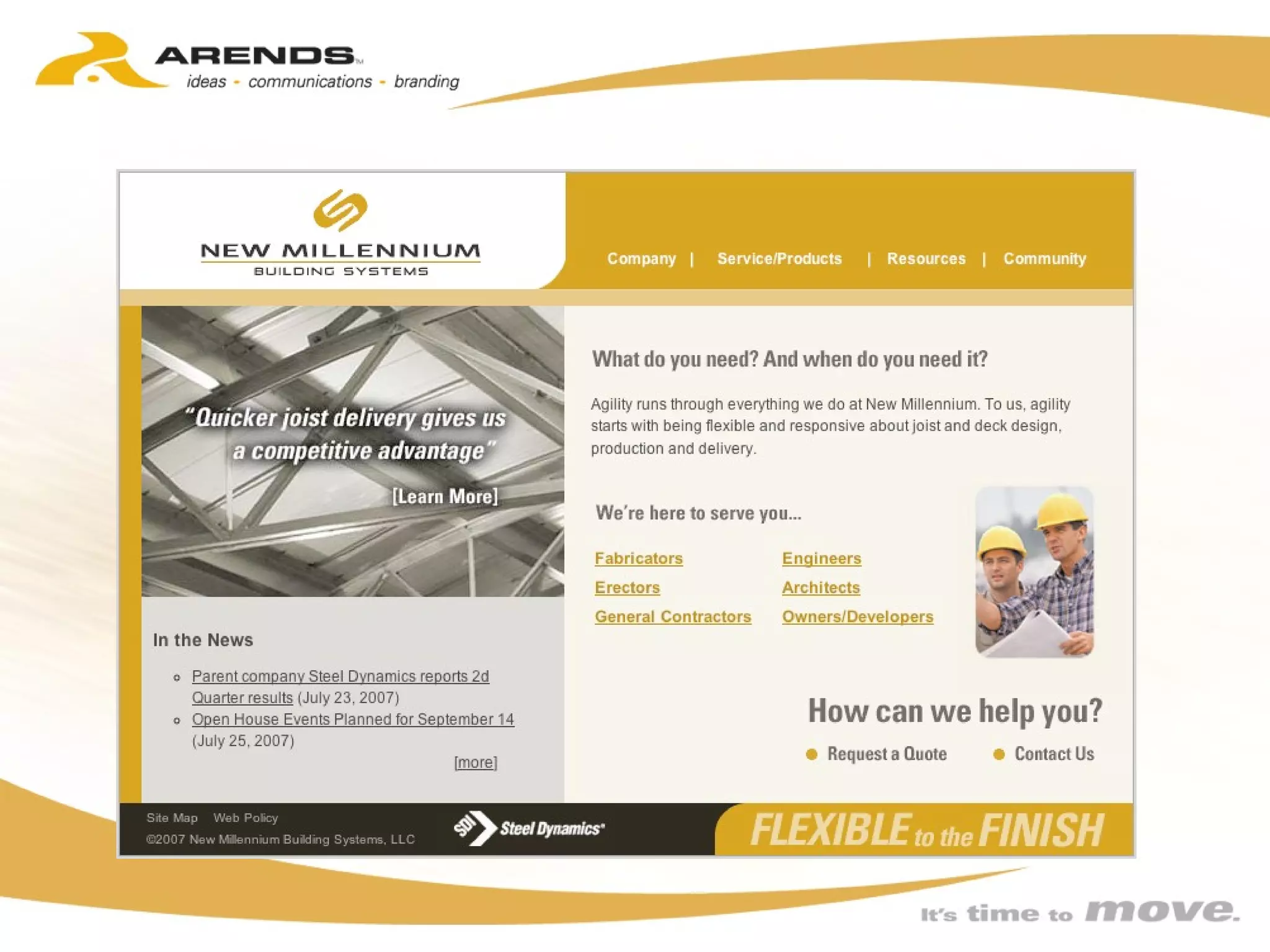
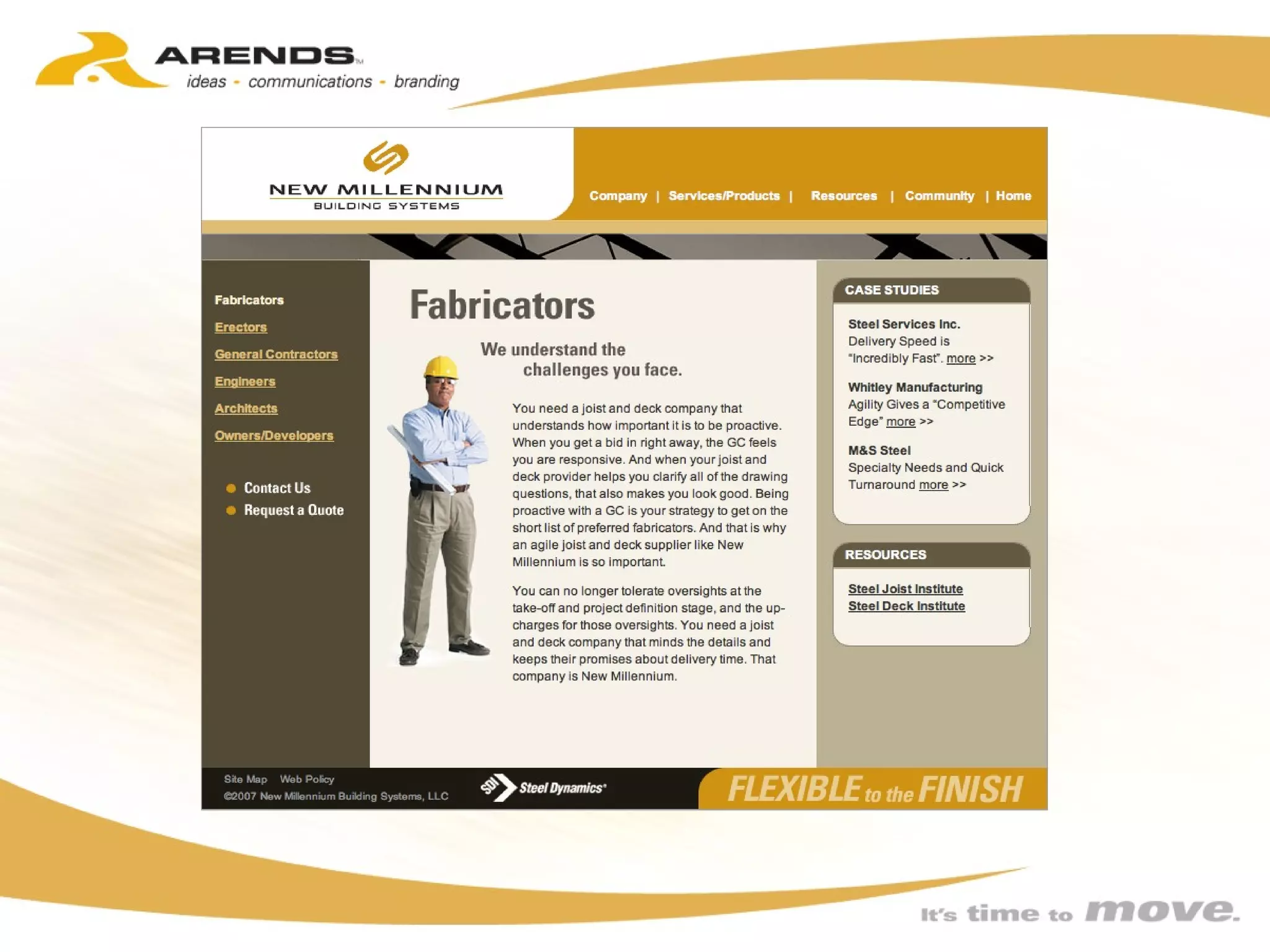
  • #25 Simplistic example of ours, content pathways geared towards target audiences Some of you have familiarity with steel joists and decking—used in large scale construction for roof structure
  • #27 Other aspects of pull
  • #28 Some qualifications about pull and why it is not necessarily better than push, but different in many positive ways
  • #33 Or as we like to call it at Arends…
  • #36 As fine as you can parse the target, and serve up segmented data, the best it will be
  • #37 For example…