Interaction and Communication TPS Core Competency Training
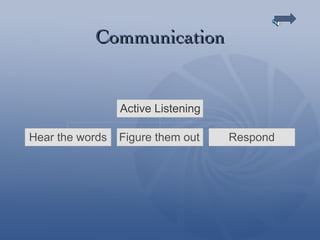
Interaction and Communication: Key Words & Concepts Verbal and nonverbal communication Communication and behavior Active listening Speech and language disorders Communication systems
Interaction and Communication Remember …. People are first, disabilities second Label jars….Not people
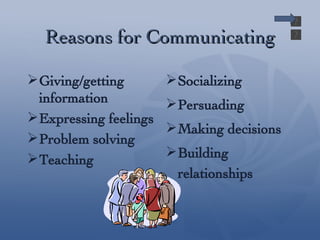
Reasons for Communicating Giving/getting information Expressing feelings Problem solving Teaching Socializing Persuading Making decisions Building relationships
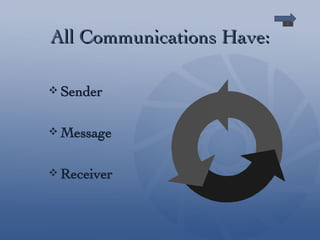
All Communications Have: Sender Message Receiver
Nonverbal Communication “ Listen” to…. Facial expression Gestures Volume of voice Space between people
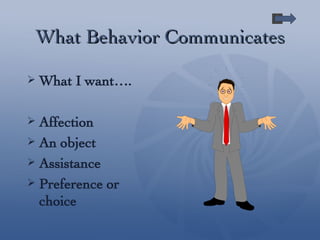
What Behavior Communicates What I want…. Affection An object Assistance Preference or choice
What Behavior Communicates What I don’t want… Rejecting an object Rejecting services or assistance
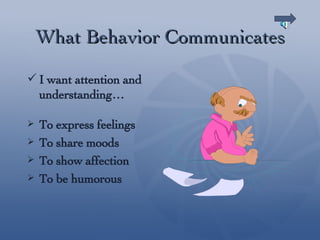
What Behavior Communicates I want attention and understanding… To express feelings To share moods To show affection To be humorous
Communication
Options and Opportunity Aware or your own stress, emotions, health Aware of consumer’s stress, emotions, health Know how stress, health, emotions alter feelings and behavior Know the consumers preferred activities for calming, reducing stress Offer options and assure opportunity
Barriers to Communication Limited or no speech Hearing loss Poor muscle control Damage to part of the brain that controls speech Difficult behaviors
Types of Speech Disorders Abnormal pitch Abnormal quality Excessive loudness Incorrect articulation
Language Disorders Ability to understand language (receptive) is limited Ability to talk (expressive) is limited Ability to talk (expressive) is limited compared to age
Communication Tips Use words for feelings (hurt, tired, etc.) Identify objects in daily routines Identify objects when assisting Point to pictures/objects, say words clearly Point out objects while walking, at store, etc. Ask person to watch as you pronounce word
Communication Tips Speak in short sentences when giving directions Pronounce entire word Encourage progress Make simple movements when teaching Listen carefully to what person says or tries to say
Communication Systems Speech Reading and writing Sign language Gesturing Pictures Communication boards, books, and cards
Key Elements in Teaching Identifying skills to teach Establishing a relationship with the learner Using a task analysis Different types of teaching prompts Recording progress, CAP documentation
Establishing a Good Relationship Get to know what the person likes and dislikes  Do things the person likes to do Help to avoid things he/she dislikes Get to know each other’s communication style
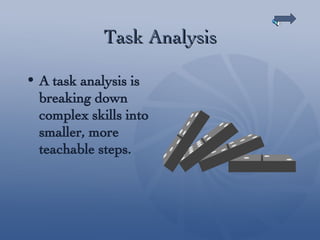
Task Analysis A task analysis is breaking down complex skills into smaller, more teachable steps.
Task Analysis Drinking from a cup: Grasp handle. Lift cup to mouth. Drink. Set the cup on the table.
Types of Prompts Verbal  - a  spoken  question or instruction that helps the learner do a step of the new skill. Gestural  - pointing, tapping, or other  body motion  that helps learner know what’s next. Modeling  - staff  shows  the learner how to do part or all of a skill. Physical  - guidance involving  touch  to help a learner do the skill, ranging from brief touch to complete guidance.
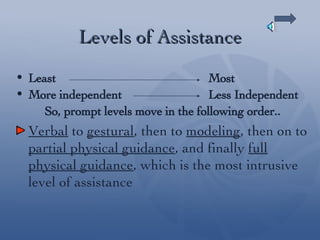
Levels of Assistance Least Most More independent Less Independent So, prompt levels move in the following order.. Verbal  to  gestural , then to  modeling , then on to  partial physical guidance , and finally  full physical guidance , which is the most intrusive level of assistance
Common Prompting Mistakes Providing the same prompt more often than necessary on a given step. Moving to a more helpful (intrusive) prompt too quickly. Providing less help with second prompt than with first prompt. Full physical guidance the first time.
Reinforcement Most behavior is shaped by the power of reinforcement, or, what is rewarded is repeated. Reinforcement is any item, event, or activity that follows a behavior and makes the behavior more likely to occur again.
Advantages of Praise Praise is a normal consequence. People almost never become tired of praise. Praise is readily available and is free. Praise can be provided briefly without stopping an ongoing activity.
Correcting Errors Stop when the error occurs. Return to the previous training step. Ask the person to repeat the step and provide more help, if necessary, to ensure success.
Common Teaching Mistakes Person learning completes the step incorrectly, but the worker provides positive reinforcement. The worker allows an individual to make an error, and does not stop to correct it. Learner makes an error, but the worker does not provide additional help on the second try.
Good Times to Teach A person tries practicing a newly learned skill spontaneously. An individual asks for help to complete a task. You realize that you are completing a task for an individual that he/she could learn.
Writing Down the Work Communicating progress through documentation is critical to the success of teaching. Support teams must communicate with written documentation to coordinate efforts. Documentation informs billing and payroll processes.
Please move on to  Services and Documentation End Show

Interaction & Communication

  • 1.
    Interaction and CommunicationTPS Core Competency Training
  • 2.
    Interaction and Communication:Key Words & Concepts Verbal and nonverbal communication Communication and behavior Active listening Speech and language disorders Communication systems
  • 3.
    Interaction and CommunicationRemember …. People are first, disabilities second Label jars….Not people
  • 4.
    Reasons for CommunicatingGiving/getting information Expressing feelings Problem solving Teaching Socializing Persuading Making decisions Building relationships
  • 5.
    All Communications Have:Sender Message Receiver
  • 6.
    Nonverbal Communication “Listen” to…. Facial expression Gestures Volume of voice Space between people
  • 7.
    What Behavior CommunicatesWhat I want…. Affection An object Assistance Preference or choice
  • 8.
    What Behavior CommunicatesWhat I don’t want… Rejecting an object Rejecting services or assistance
  • 9.
    What Behavior CommunicatesI want attention and understanding… To express feelings To share moods To show affection To be humorous
  • 10.
  • 11.
    Options and OpportunityAware or your own stress, emotions, health Aware of consumer’s stress, emotions, health Know how stress, health, emotions alter feelings and behavior Know the consumers preferred activities for calming, reducing stress Offer options and assure opportunity
  • 12.
    Barriers to CommunicationLimited or no speech Hearing loss Poor muscle control Damage to part of the brain that controls speech Difficult behaviors
  • 13.
    Types of SpeechDisorders Abnormal pitch Abnormal quality Excessive loudness Incorrect articulation
  • 14.
    Language Disorders Abilityto understand language (receptive) is limited Ability to talk (expressive) is limited Ability to talk (expressive) is limited compared to age
  • 15.
    Communication Tips Usewords for feelings (hurt, tired, etc.) Identify objects in daily routines Identify objects when assisting Point to pictures/objects, say words clearly Point out objects while walking, at store, etc. Ask person to watch as you pronounce word
  • 16.
    Communication Tips Speakin short sentences when giving directions Pronounce entire word Encourage progress Make simple movements when teaching Listen carefully to what person says or tries to say
  • 17.
    Communication Systems SpeechReading and writing Sign language Gesturing Pictures Communication boards, books, and cards
  • 18.
    Key Elements inTeaching Identifying skills to teach Establishing a relationship with the learner Using a task analysis Different types of teaching prompts Recording progress, CAP documentation
  • 19.
    Establishing a GoodRelationship Get to know what the person likes and dislikes Do things the person likes to do Help to avoid things he/she dislikes Get to know each other’s communication style
  • 20.
    Task Analysis Atask analysis is breaking down complex skills into smaller, more teachable steps.
  • 21.
    Task Analysis Drinkingfrom a cup: Grasp handle. Lift cup to mouth. Drink. Set the cup on the table.
  • 22.
    Types of PromptsVerbal - a spoken question or instruction that helps the learner do a step of the new skill. Gestural - pointing, tapping, or other body motion that helps learner know what’s next. Modeling - staff shows the learner how to do part or all of a skill. Physical - guidance involving touch to help a learner do the skill, ranging from brief touch to complete guidance.
  • 23.
    Levels of AssistanceLeast Most More independent Less Independent So, prompt levels move in the following order.. Verbal to gestural , then to modeling , then on to partial physical guidance , and finally full physical guidance , which is the most intrusive level of assistance
  • 24.
    Common Prompting MistakesProviding the same prompt more often than necessary on a given step. Moving to a more helpful (intrusive) prompt too quickly. Providing less help with second prompt than with first prompt. Full physical guidance the first time.
  • 25.
    Reinforcement Most behavioris shaped by the power of reinforcement, or, what is rewarded is repeated. Reinforcement is any item, event, or activity that follows a behavior and makes the behavior more likely to occur again.
  • 26.
    Advantages of PraisePraise is a normal consequence. People almost never become tired of praise. Praise is readily available and is free. Praise can be provided briefly without stopping an ongoing activity.
  • 27.
    Correcting Errors Stopwhen the error occurs. Return to the previous training step. Ask the person to repeat the step and provide more help, if necessary, to ensure success.
  • 28.
    Common Teaching MistakesPerson learning completes the step incorrectly, but the worker provides positive reinforcement. The worker allows an individual to make an error, and does not stop to correct it. Learner makes an error, but the worker does not provide additional help on the second try.
  • 29.
    Good Times toTeach A person tries practicing a newly learned skill spontaneously. An individual asks for help to complete a task. You realize that you are completing a task for an individual that he/she could learn.
  • 30.
    Writing Down theWork Communicating progress through documentation is critical to the success of teaching. Support teams must communicate with written documentation to coordinate efforts. Documentation informs billing and payroll processes.
  • 31.
    Please move onto Services and Documentation End Show