WELCOME TO 
MY PRESENTATION 
ON 
Interspecific Hybridization, a Matter of Pioneering? 
Insights from Atlantic Salmon and Brown Trout. 
JOSE L. HORREO,FERNANDO AYLLON 
́ 
AL MAMUN 
10-05-2386
Presentation Layout 
• Hybridization 
• Inter specific hybridization 
• Introgressive hybridyzation 
• Colonization 
• Background 
• Case study 
• Sampling 
• Analysis 
• Result & discussion
What is hybridization? 
any offspring resulting from the breeding of two genetically distinct individuals. 
In other word crossing of two individual. 
What is interspecific hybridization? 
Hybrids between different species within the same genus (such as between 
labeo rohita & labio calbasu) are sometimes known as interspecific hybrids or 
crosses. 
Introgressive hybridyzation 
Introgression, also known as introgressive hybridization, in genetics (particularly 
plant genetics) is the movement of a gene (gene flow) from one species into the 
gene pool of another by the repeated backcrossing of an interspecific 
hybrid with one of its parent species. Purposeful introgression is a long-term 
process; it may take many hybrid generations before the backcrossing occurs. 
Colonization 
occurs whenever any one or more species populate an area. The term, 
which is derived from the Latin colere, "to inhabit, cultivate, frequent 
practice, tend, guard, respect",
Background 
• Introgressive hybridization can be interpreted as an 
invasion of the genome by foreign genes. 
• Increased interspecific hybridization is one of the 
consequences of species translocations, invasions 
because secondary contacts between formerly isolated 
species contribute to break reproductive barriers and 
lead to introgressive hybridization.
Background 
• When a fraction of a nonnative species enters in a new area 
and encounters a native species, a contact wave front is 
originated where the new species (the colonizer) is generally 
much scarcer than the native one. Newly arrived 
• females (colonizers) may relax mate choice for avoiding 
gamete losses in absence of high-quality or just suitable 
breeders; they would mate with the most abundant males, 
conspecific or not. 
• whereas females of the native species would reject mating 
with (scarce) alien males. 
• the scarcer species providing generally the female in 
interspecific crosses.
Background 
• Aquatic organisms provide examples of interactions between 
native and colonizer species due to escapes or deliberate 
releases of farmed fish and shellfish. 
• Atlantic salmon (Salmo salar) and brown trout (Salmo trutta) 
are sympatric species that exhibit introgressive hybridization 
in the wild in all their distribution areas. 
• Interspecific hybridization seems increased by different 
factors, such as escapes or releases of domestic individuals and 
alternative mating behavior like male sneaking.
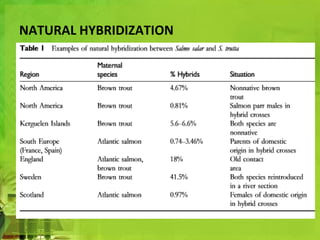
NATURAL HYBRIDIZATION
Case study 
Atlantic Salmon as a Colonizer 
• In North Spain (South Europe; lat 43°N), streams support 
brown trout and Atlantic salmon sympatric populations. 
• Rivers are short and subject to variable conditions of water 
level and flow (e.g., Moran et al. 2005) depending on 
snowfall,rainfall, and temperature. 
• When an upstream area is made accessible, adult salmon may 
colonize it from downstream searching for new spawning 
areas and enter in secondary contact with resident brown trout
Case study 
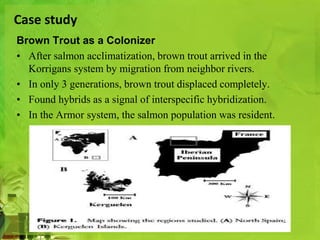
Brown Trout as a Colonizer 
• After salmon acclimatization, brown trout arrived in the 
Korrigans system by migration from neighbor rivers. 
• In only 3 generations, brown trout displaced completely. 
• Found hybrids as a signal of interspecific hybridization. 
• In the Armor system, the salmon population was resident.
Sampling 
• When a new species colonizes a river, hybridization occurs in 
the lower portions of the river systems, and the occurrence and 
degree of hybridization decrease with upstream distance from 
the source of the colonizing species. 
• Those areas were systematically electrofished: the first 200 
mjust upstream the obstacle and sections 100–200 m long 
every500 m for several kilometers upstream (whenever 
possible). 
• Sampling was carried out in summer/autumn (August– October 
in Spain and December–January in Kerguelen). 
• Juvenile salmonids were caught by 2 or 3 electrofishing passes 
in the selected stream sections to obtain adipose fin biopsies, 
which were preserved in ethanol until DNA analysis
Genetic analysis 
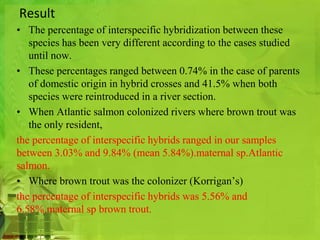
• For determining the species of each sample, the 5S ribosomal 
RNA nuclear marker was polymerase chain reaction amplified 
with the primers ,which yield amplification fragments of 
255 bp for Atlantic salmon and 
276 bp for brown trout, 
• For determining the maternal species of hybrids, the 
mitochondrial cytochrome b gene was amplified
Result 
• The percentage of interspecific hybridization between these 
species has been very different according to the cases studied 
until now. 
• These percentages ranged between 0.74% in the case of parents 
of domestic origin in hybrid crosses and 41.5% when both 
species were reintroduced in a river section. 
• When Atlantic salmon colonized rivers where brown trout was 
the only resident, 
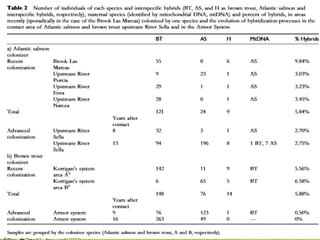
the percentage of interspecific hybrids ranged in our samples 
between 3.03% and 9.84% (mean 5.84%).maternal sp.Atlantic 
salmon. 
• Where brown trout was the colonizer (Korrigan’s) 
the percentage of interspecific hybrids was 5.56% and 
6.58%.maternal sp brown trout.
Discussion: 
• the maternal species of the hybrids, which appeared in first 
contact areas, was always the colonizer species. 
• colonizer salmonid females exhibited relaxed mate choice and 
hybridized since the beginning of the secondary contact, likely 
because flexible behavior is advantageous in such 
circumstances. 
• When the colonizers have expanded after few generations of 
colonization, hybridization patterns seem to change, decreasing 
or disappearing or giving chance to crosses in the opposite 
direction. 
• when Atlantic salmon became more abundant than , relaxed 
mate choice is happened 
• Brown trout possess highly aggressive and dominant during 
courtship and relaxed female mate choice would be no longer 
necessary.
• Interspecific gene flow (introgression) can affect specie 
integrity but introgression between these Salmo species occurs 
via allotriploids with very low offspring survival and is likely 
minimal. 
• Therefore it seems unlikely that extinction will be caused by 
introgressive hybridization, which is especially important in the 
context of conservation and persistence of these species where 
they come into artificial (human mediated) secondary contact
THANKS TO ALL

Inter specific hybridization

  • 1.
    WELCOME TO MYPRESENTATION ON Interspecific Hybridization, a Matter of Pioneering? Insights from Atlantic Salmon and Brown Trout. JOSE L. HORREO,FERNANDO AYLLON ́ AL MAMUN 10-05-2386
  • 2.
    Presentation Layout •Hybridization • Inter specific hybridization • Introgressive hybridyzation • Colonization • Background • Case study • Sampling • Analysis • Result & discussion
  • 3.
    What is hybridization? any offspring resulting from the breeding of two genetically distinct individuals. In other word crossing of two individual. What is interspecific hybridization? Hybrids between different species within the same genus (such as between labeo rohita & labio calbasu) are sometimes known as interspecific hybrids or crosses. Introgressive hybridyzation Introgression, also known as introgressive hybridization, in genetics (particularly plant genetics) is the movement of a gene (gene flow) from one species into the gene pool of another by the repeated backcrossing of an interspecific hybrid with one of its parent species. Purposeful introgression is a long-term process; it may take many hybrid generations before the backcrossing occurs. Colonization occurs whenever any one or more species populate an area. The term, which is derived from the Latin colere, "to inhabit, cultivate, frequent practice, tend, guard, respect",
  • 4.
    Background • Introgressivehybridization can be interpreted as an invasion of the genome by foreign genes. • Increased interspecific hybridization is one of the consequences of species translocations, invasions because secondary contacts between formerly isolated species contribute to break reproductive barriers and lead to introgressive hybridization.
  • 5.
    Background • Whena fraction of a nonnative species enters in a new area and encounters a native species, a contact wave front is originated where the new species (the colonizer) is generally much scarcer than the native one. Newly arrived • females (colonizers) may relax mate choice for avoiding gamete losses in absence of high-quality or just suitable breeders; they would mate with the most abundant males, conspecific or not. • whereas females of the native species would reject mating with (scarce) alien males. • the scarcer species providing generally the female in interspecific crosses.
  • 6.
    Background • Aquaticorganisms provide examples of interactions between native and colonizer species due to escapes or deliberate releases of farmed fish and shellfish. • Atlantic salmon (Salmo salar) and brown trout (Salmo trutta) are sympatric species that exhibit introgressive hybridization in the wild in all their distribution areas. • Interspecific hybridization seems increased by different factors, such as escapes or releases of domestic individuals and alternative mating behavior like male sneaking.
  • 7.
  • 8.
    Case study AtlanticSalmon as a Colonizer • In North Spain (South Europe; lat 43°N), streams support brown trout and Atlantic salmon sympatric populations. • Rivers are short and subject to variable conditions of water level and flow (e.g., Moran et al. 2005) depending on snowfall,rainfall, and temperature. • When an upstream area is made accessible, adult salmon may colonize it from downstream searching for new spawning areas and enter in secondary contact with resident brown trout
  • 9.
    Case study BrownTrout as a Colonizer • After salmon acclimatization, brown trout arrived in the Korrigans system by migration from neighbor rivers. • In only 3 generations, brown trout displaced completely. • Found hybrids as a signal of interspecific hybridization. • In the Armor system, the salmon population was resident.
  • 10.
    Sampling • Whena new species colonizes a river, hybridization occurs in the lower portions of the river systems, and the occurrence and degree of hybridization decrease with upstream distance from the source of the colonizing species. • Those areas were systematically electrofished: the first 200 mjust upstream the obstacle and sections 100–200 m long every500 m for several kilometers upstream (whenever possible). • Sampling was carried out in summer/autumn (August– October in Spain and December–January in Kerguelen). • Juvenile salmonids were caught by 2 or 3 electrofishing passes in the selected stream sections to obtain adipose fin biopsies, which were preserved in ethanol until DNA analysis
  • 11.
    Genetic analysis •For determining the species of each sample, the 5S ribosomal RNA nuclear marker was polymerase chain reaction amplified with the primers ,which yield amplification fragments of 255 bp for Atlantic salmon and 276 bp for brown trout, • For determining the maternal species of hybrids, the mitochondrial cytochrome b gene was amplified
  • 12.
    Result • Thepercentage of interspecific hybridization between these species has been very different according to the cases studied until now. • These percentages ranged between 0.74% in the case of parents of domestic origin in hybrid crosses and 41.5% when both species were reintroduced in a river section. • When Atlantic salmon colonized rivers where brown trout was the only resident, the percentage of interspecific hybrids ranged in our samples between 3.03% and 9.84% (mean 5.84%).maternal sp.Atlantic salmon. • Where brown trout was the colonizer (Korrigan’s) the percentage of interspecific hybrids was 5.56% and 6.58%.maternal sp brown trout.
  • 14.
    Discussion: • thematernal species of the hybrids, which appeared in first contact areas, was always the colonizer species. • colonizer salmonid females exhibited relaxed mate choice and hybridized since the beginning of the secondary contact, likely because flexible behavior is advantageous in such circumstances. • When the colonizers have expanded after few generations of colonization, hybridization patterns seem to change, decreasing or disappearing or giving chance to crosses in the opposite direction. • when Atlantic salmon became more abundant than , relaxed mate choice is happened • Brown trout possess highly aggressive and dominant during courtship and relaxed female mate choice would be no longer necessary.
  • 15.
    • Interspecific geneflow (introgression) can affect specie integrity but introgression between these Salmo species occurs via allotriploids with very low offspring survival and is likely minimal. • Therefore it seems unlikely that extinction will be caused by introgressive hybridization, which is especially important in the context of conservation and persistence of these species where they come into artificial (human mediated) secondary contact
  • 16.