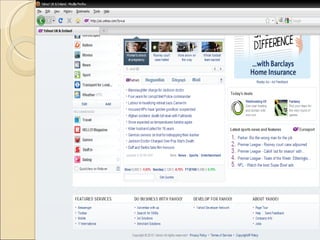
Intellectual Property on the Web Nga Nguyen
What is intellectual property? According to WIPO, intellectual property refers to “products of the mind: inventions, literary, artistic works, any symbols, names, images, and designs used in commerce”.  Divided into two categories: Industrial property (patents, trademarks, industrial designs, and geographic indications of source ) Copyright
Copyright Works protected by copyright:  original literary, dramatic, musical and artistic works  sound recordings, films, broadcasts and cable programmes  typographical arrangements of published editions
 
Copyright More difficult to control on the Internet The Internet allows people to upload and download, copy and share, on a massive scale i.e. free download (software, music…) Easier to copy (anonymous)
Patent A right granted to anyone who invents or discovers any new and useful  Gives the owner the right to prevent others from making, using, importing or selling the invention without permission.  A  monopoly  right
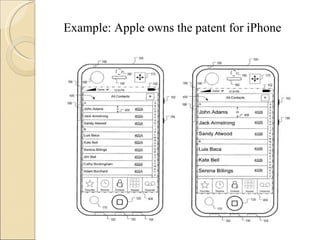
Example: Apple owns the patent for iPhone
Patent A patent only protects an innovator from others producing the  same   product, but it does not protect him from others producing  better   products under new patents.
Domain Name A domain name functions as a trade mark (only when it satisfies the requirements of Trade Mark Act 1994) Some companies have purchased domain names related to competitor's names "harrods.com", "harrods.co.uk“, "harr0ds.com" or “harrods1.com” Cybersquatting -  using a domain name with bad faith intent to profit from the goodwill of a trademark belonging to someone else Attempt to sell it to the brand owner or wait the brand owner’s offer for a transfer
The importance of protecting intellectual property Competitive advantages Form an essential part of marketing or branding Create value for business Sales, profits (also from licensing)  For example, IBM generated $1.5billion a year in royalties.  Innovation Offer customers something new and different
However Public interest is harmed by ever expansive monopolies in the form of copyright extensions, software patents and business method patents.  The Right to Education threatened by the Copyright Pharmaceutical patents prevent generic alternatives to enter the market until the patents expire, and thus maintains high prices for medication.
 

Intellectual property

  • 1.
    Intellectual Property onthe Web Nga Nguyen
  • 2.
    What is intellectualproperty? According to WIPO, intellectual property refers to “products of the mind: inventions, literary, artistic works, any symbols, names, images, and designs used in commerce”. Divided into two categories: Industrial property (patents, trademarks, industrial designs, and geographic indications of source ) Copyright
  • 3.
    Copyright Works protectedby copyright: original literary, dramatic, musical and artistic works sound recordings, films, broadcasts and cable programmes typographical arrangements of published editions
  • 4.
  • 5.
    Copyright More difficultto control on the Internet The Internet allows people to upload and download, copy and share, on a massive scale i.e. free download (software, music…) Easier to copy (anonymous)
  • 6.
    Patent A rightgranted to anyone who invents or discovers any new and useful Gives the owner the right to prevent others from making, using, importing or selling the invention without permission. A monopoly right
  • 7.
    Example: Apple ownsthe patent for iPhone
  • 8.
    Patent A patentonly protects an innovator from others producing the same product, but it does not protect him from others producing better products under new patents.
  • 9.
    Domain Name Adomain name functions as a trade mark (only when it satisfies the requirements of Trade Mark Act 1994) Some companies have purchased domain names related to competitor's names "harrods.com", "harrods.co.uk“, "harr0ds.com" or “harrods1.com” Cybersquatting - using a domain name with bad faith intent to profit from the goodwill of a trademark belonging to someone else Attempt to sell it to the brand owner or wait the brand owner’s offer for a transfer
  • 10.
    The importance ofprotecting intellectual property Competitive advantages Form an essential part of marketing or branding Create value for business Sales, profits (also from licensing) For example, IBM generated $1.5billion a year in royalties. Innovation Offer customers something new and different
  • 11.
    However Public interestis harmed by ever expansive monopolies in the form of copyright extensions, software patents and business method patents. The Right to Education threatened by the Copyright Pharmaceutical patents prevent generic alternatives to enter the market until the patents expire, and thus maintains high prices for medication.
  • 12.

Editor's Notes

  • #4 Copyright protects "original works of authorship" that are fixed in a tangible form of expression. Copyrightable works include the following categories
  • #9 an invention for a tool may have a uniquely shaped handle