WelcomeAbout the LawAffected OrganizationsPresentersPrivacy PartnersComplianceAccountingLegalInsuranceTechnology
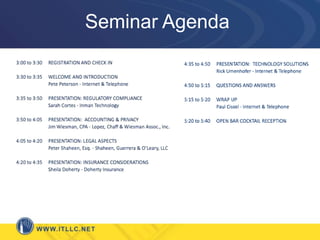
Seminar Agenda
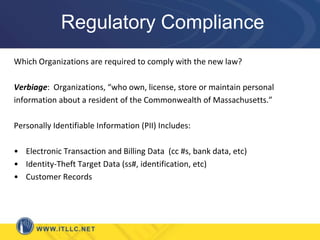
Regulatory ComplianceWhich Organizations are required to comply with the new law?Verbiage:  Organizations, “who own, license, store or maintain personalinformation about a resident of the Commonwealth of Massachusetts.”Personally Identifiable Information (PII) Includes:Electronic Transaction and Billing Data  (cc #s, bank data, etc)Identity-Theft Target Data (ss#, identification, etc)Customer Records
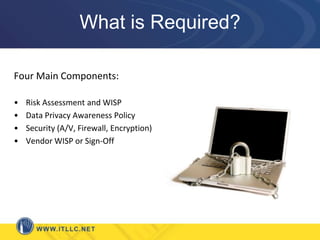
What is Required?Four Main Components:Risk Assessment and WISPData Privacy Awareness PolicySecurity (A/V, Firewall, Encryption)Vendor WISP or Sign-Off
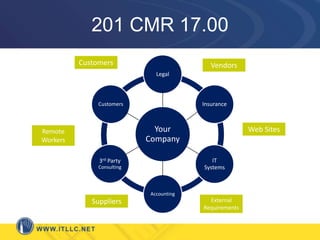
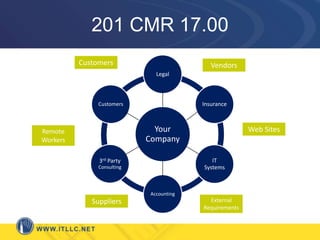
201 CMR 17.00CustomersVendorsWeb SitesRemote WorkersSuppliersExternal Requirements
Inman TechnologyAbout Inman Technology Sarah CortesEducation
Clients
ProjectsServices Provided
HistoryRecent Breach History:TJ Maxx
Heartland
CVS
Every day there are new breaches
Verizon report, April 2009: three-fold increase in breaches in 2008
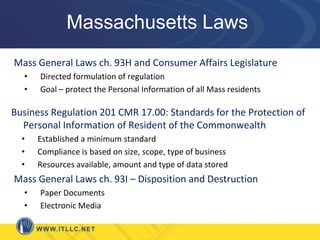
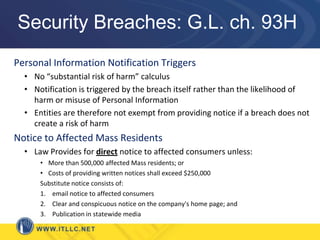
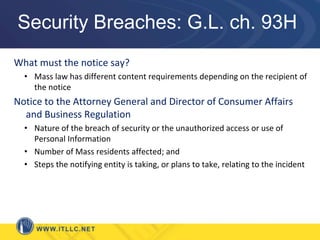
Industry sources: average cost per stolen record at ~ $202Massachusetts LawsMass General Laws ch. 93H and Consumer Affairs Legislature Directed formulation of regulation

Goal – protect the Personal Information of all Mass residentsBusiness Regulation 201 CMR 17.00: Standards for the Protection of Personal Information of Resident of the CommonwealthEstablished a minimum standard
Compliance is based on size, scope, type of business
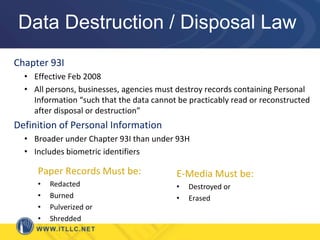
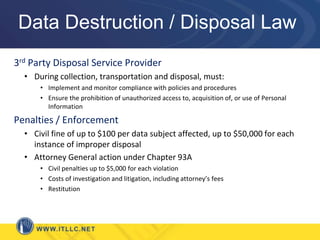
Resources available, amount and type of data storedMass General Laws ch. 93I – Disposition and DestructionPaper Documents
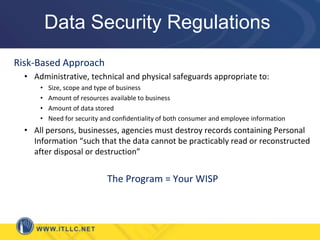
Electronic MediaData Security RegulationsRisk-Based ApproachAdministrative, technical and physical safeguards appropriate to:
Size, scope and type of business
Amount of resources available to business
Amount of data stored
Need for security and confidentiality of both consumer and employee information
All persons, businesses, agencies must destroy records containing Personal Information “such that the data cannot be practicably read or reconstructed after disposal or destruction”The Program = Your WISP
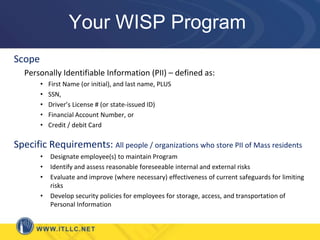
Your WISP ProgramScopePersonally Identifiable Information (PII) – defined as:First Name (or initial), and last name, PLUS
SSN,
Driver’s License # (or state-issued ID)
Financial Account Number, or
Credit / debit CardSpecific Requirements: All people / organizations who store PII of Mass residentsDesignate employee(s) to maintain Program
Identify and assess reasonable foreseeable internal and external risks
Evaluate and improve (where necessary) effectiveness of current safeguards for limiting risks
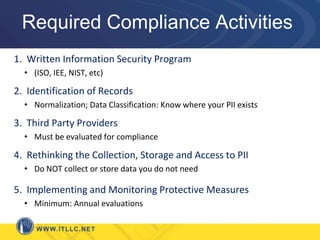
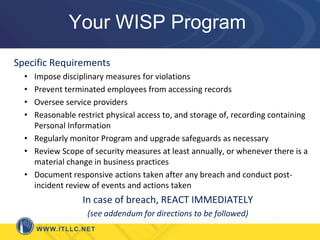
Develop security policies for employees for storage, access, and transportation of Personal Information Required Compliance Activities1.  Written Information Security Program(ISO, IEE, NIST, etc)2.  Identification of RecordsNormalization; Data Classification: Know where your PII exists3.  Third Party ProvidersMust be evaluated for compliance4.  Rethinking the Collection, Storage and Access to PIIDo NOT collect or store data you do not need5.  Implementing and Monitoring Protective MeasuresMinimum: Annual evaluationsYour WISP ProgramSpecific RequirementsImpose disciplinary measures for violations
Prevent terminated employees from accessing records
Oversee service providers
Reasonable restrict physical access to, and storage of, recording containing Personal Information
Regularly monitor Program and upgrade safeguards as necessary
Review Scope of security measures at least annually, or whenever there is a material change in business practices
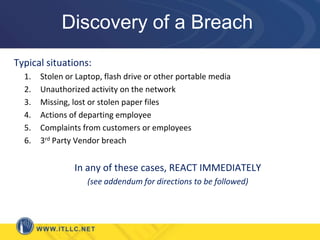
Document responsive actions taken after any breach and conduct post-incident review of events and actions takenIn case of breach, REACT IMMEDIATELY (see addendum for directions to be followed)
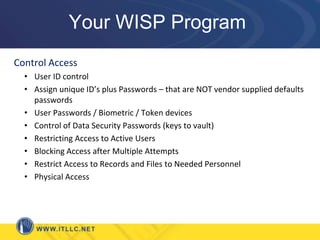
Your WISP ProgramControl AccessUser ID control
Assign unique ID’s plus Passwords – that are NOT vendor supplied defaults passwords
User Passwords / Biometric / Token devices
Control of Data Security Passwords (keys to vault)
Restricting Access to Active Users
Blocking Access after Multiple Attempts
Restrict Access to Records and Files to Needed Personnel
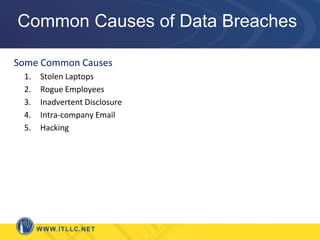
Physical AccessCommon Causes of Data BreachesSome Common CausesStolen LaptopsRogue EmployeesInadvertent DisclosureIntra-company EmailHacking
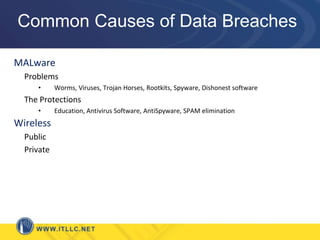
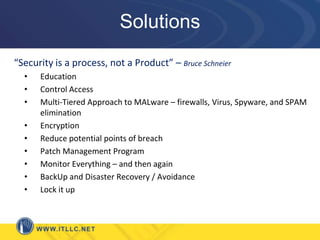
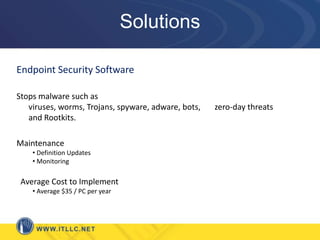
Common Causes of Data BreachesMALwareProblemsWorms, Viruses, Trojan Horses, Rootkits, Spyware, Dishonest softwareThe ProtectionsEducation, Antivirus Software, AntiSpyware, SPAM eliminationWirelessPublicPrivate
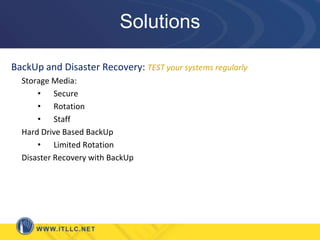
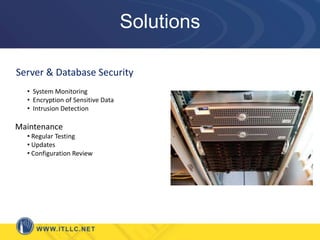
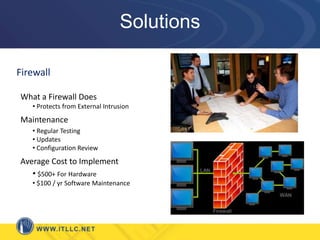
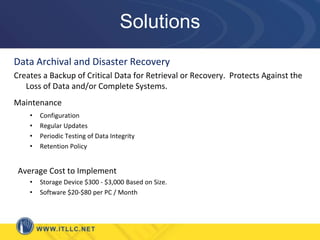
SolutionsBackUp and Disaster Recovery:TEST your systems regularlyStorage Media: Secure
Rotation
StaffHard Drive Based BackUpLimited RotationDisaster Recovery with BackUp

Mass 201 CMR 17 Data Privacy Law