INSPECTION AND
QUALITY CONTROL IN
CONSTRUCTION
Content
Introduction.
Need for inspection and quality control.
Principles of Inspection.
Quality control
Stages of Inspection and Quality Control
Summary
Introduction
Inspection is needed for maintaining quality in a construction project.
Different aspects of quality are to be considered .
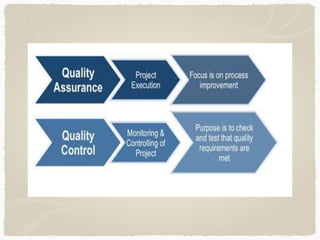
Inspection should not confused with quality control. Inspection is a
way or method of maintaining the quality of the construction.
Controlling the quality is what termed as quality control.
Benefits of Quality Control and
Inspection
There are some benefits of maintaining quality in the construction. These may be expressed
as below :
• Increase in efficiency because of quality consciousness
• Reduction of scrap due to less number of items being rejected
• Easy identification of construction faults
• Decrease in cost in the long run due to benefits of quality control
• Creating quality consciousness in workers
Norms and guidelines are made for the quality specifications to be followed. For civil
engineering construction, a variety of codes have been drafted by Bureau of Indian
Standards, New Delhi.
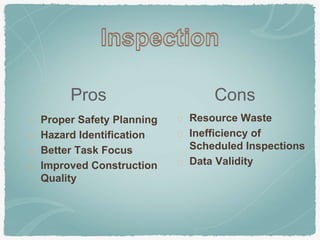
Pros
Resource Waste
Inefficiency of
Scheduled Inspections
Data Validity
Cons
Proper Safety Planning
Hazard Identification
Better Task Focus
Improved Construction
Quality
Need for Inspection and Quality Control
The satisfaction of the owner of the project is directly linked to the
quality of the work done. So, Quality control becomes an important
aspect in construction.
To achieve a good quality, inspection becomes very much essential.
Every operation is connected with the quality of the product.
It is important that quality requirements be satisfied and production
schedules are met.
Principles Of Inspection
Inspection is an act of checking a material or product at various stages of
manufacture or construction. Inspection is always done with some reference
parameters. If object is found faulty then it is corrected or replaced.
There are different types in this too, For example structure may be discarded, If the
grade of concrete is used is less or the structure is wrongly designed.
Inspection always gives us needed input to corrections in the future. Every object
should be inspected before using.
Inspection is always carried out using precise equipment and instruments.
Inspection should be carried out by people who knows norms and specifications.
We also have “NON DESTRUCTIVE TEST” for carrying out the inspecting the
quality of construction without deforming a structural element.
Quality control
Quality is a relative term and is used with reference to
the end use of the product. In the context of the
construction field, this end product is what we
construct. Sometimes quality is defined as the fitness
of any constructed facility or structure for use at the
most economical level.
NEED FOR QUALITY CONTROL
For concern for public health and safety
Maintenance costs and operating efficiency
of a project are directly proportional to
construction quality.
Appearance and Aesthetics of the project
Consideration in Quality
ControlThere are certain considerations which should be kept in mind when we consider quality
control in civil engineering construction.
Quality of construction is dependent, to a great extent, on
• The quality of materials which are used in construction
• The expertise of workers
• The technology adopted in construction
• Number, type and quality of inspections
• Quality consciousness of people
• Funds available for construction and quality control
• Time available for quality control procedures
• Existence of norms and guidelines for assessing quality of construction of a particular type
• Experience and expertise of inspectors
• Quality of design
• Nature of the construction project
Materials and Quality
Control
Quality of construction materials should be good. Guidelines should be
followed in the assessment of quality of these materials. Some common
materials which are used for construction are given below :
 Cement
 Fine and coarse aggregates
 Chemical admixtures
 Timber
 Steel
 Soil of a site
 Bricks and stones
 Specifications for quality are available in Indian standards formulated by
Bureau of Indian Standards, New Delhi. Different types of construction
works are dealt with in different ways and different tests to assess their
different quality characteristics are available. In different types of
construction works or jobs different stages may be recognized.
 Salient points are given in the following slides regarding different stages
and quality control aspects required to be considered in some general
construction operations.
Stages of Inspection and
Quality Control
Stages
 Measurement of dimensions in different directions in terms of height,
width and length
 Excavation of soil
 Determination of soil properties
 Compacting soil
Quality Control Considerations
 Accurate measurements with precise instruments
 Use of good equipment
 Use of standard procedures for testing of soil
 Use of equipment for compaction
Earth Work
Stages
 Measurement of dimensions in different directions in terms of height,
width and length
 Construction of masonry
 Curing of masonry work
Quality Control Considerations
 Use of good quality materials
 Use of right construction procedures and correct bonds
 Employment of people with experience and expertise
 Adequate curing of masonry
Masonry
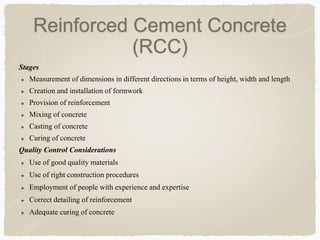
Stages
 Measurement of dimensions in different directions in terms of height, width and length
 Creation and installation of formwork
 Provision of reinforcement
 Mixing of concrete
 Casting of concrete
 Curing of concrete
Quality Control Considerations
 Use of good quality materials
 Use of right construction procedures
 Employment of people with experience and expertise
 Correct detailing of reinforcement
 Adequate curing of concrete
Reinforced Cement Concrete
(RCC)
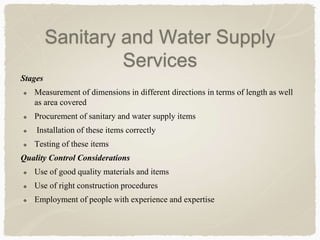
Stages
 Measurement of dimensions in different directions in terms of length as well
as area covered
 Procurement of sanitary and water supply items
 Installation of these items correctly
 Testing of these items
Quality Control Considerations
 Use of good quality materials and items
 Use of right construction procedures
 Employment of people with experience and expertise
Sanitary and Water Supply
Services
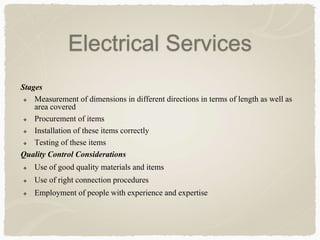
Stages
 Measurement of dimensions in different directions in terms of length as well as
area covered
 Procurement of items
 Installation of these items correctly
 Testing of these items
Quality Control Considerations
 Use of good quality materials and items
 Use of right connection procedures
 Employment of people with experience and expertise
Electrical Services
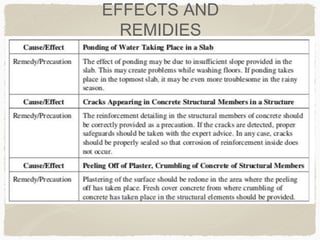
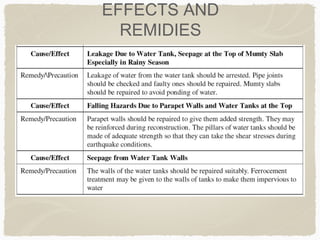
EFFECTS AND
REMIDIES
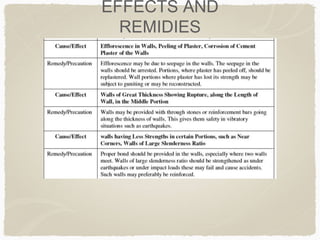
EFFECTS AND
REMIDIES
EFFECTS AND
REMIDIES
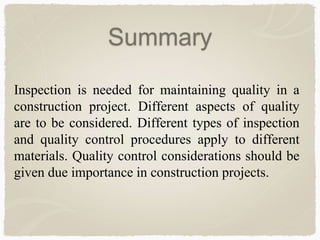
Summary
Inspection is needed for maintaining quality in a
construction project. Different aspects of quality
are to be considered. Different types of inspection
and quality control procedures apply to different
materials. Quality control considerations should be
given due importance in construction projects.
–W. Edwards Deming
“QUALITY is everyone’s responsibility .”
THANK YOU

Insepction and quality control

  • 1.
  • 2.
    Content Introduction. Need for inspectionand quality control. Principles of Inspection. Quality control Stages of Inspection and Quality Control Summary
  • 3.
    Introduction Inspection is neededfor maintaining quality in a construction project. Different aspects of quality are to be considered . Inspection should not confused with quality control. Inspection is a way or method of maintaining the quality of the construction. Controlling the quality is what termed as quality control.
  • 4.
    Benefits of QualityControl and Inspection There are some benefits of maintaining quality in the construction. These may be expressed as below : • Increase in efficiency because of quality consciousness • Reduction of scrap due to less number of items being rejected • Easy identification of construction faults • Decrease in cost in the long run due to benefits of quality control • Creating quality consciousness in workers Norms and guidelines are made for the quality specifications to be followed. For civil engineering construction, a variety of codes have been drafted by Bureau of Indian Standards, New Delhi.
  • 5.
    Pros Resource Waste Inefficiency of ScheduledInspections Data Validity Cons Proper Safety Planning Hazard Identification Better Task Focus Improved Construction Quality
  • 6.
    Need for Inspectionand Quality Control The satisfaction of the owner of the project is directly linked to the quality of the work done. So, Quality control becomes an important aspect in construction. To achieve a good quality, inspection becomes very much essential. Every operation is connected with the quality of the product. It is important that quality requirements be satisfied and production schedules are met.
  • 7.
    Principles Of Inspection Inspectionis an act of checking a material or product at various stages of manufacture or construction. Inspection is always done with some reference parameters. If object is found faulty then it is corrected or replaced. There are different types in this too, For example structure may be discarded, If the grade of concrete is used is less or the structure is wrongly designed. Inspection always gives us needed input to corrections in the future. Every object should be inspected before using. Inspection is always carried out using precise equipment and instruments. Inspection should be carried out by people who knows norms and specifications. We also have “NON DESTRUCTIVE TEST” for carrying out the inspecting the quality of construction without deforming a structural element.
  • 8.
    Quality control Quality isa relative term and is used with reference to the end use of the product. In the context of the construction field, this end product is what we construct. Sometimes quality is defined as the fitness of any constructed facility or structure for use at the most economical level.
  • 10.
    NEED FOR QUALITYCONTROL For concern for public health and safety Maintenance costs and operating efficiency of a project are directly proportional to construction quality. Appearance and Aesthetics of the project
  • 11.
    Consideration in Quality ControlThereare certain considerations which should be kept in mind when we consider quality control in civil engineering construction. Quality of construction is dependent, to a great extent, on • The quality of materials which are used in construction • The expertise of workers • The technology adopted in construction • Number, type and quality of inspections • Quality consciousness of people • Funds available for construction and quality control • Time available for quality control procedures • Existence of norms and guidelines for assessing quality of construction of a particular type • Experience and expertise of inspectors • Quality of design • Nature of the construction project
  • 12.
    Materials and Quality Control Qualityof construction materials should be good. Guidelines should be followed in the assessment of quality of these materials. Some common materials which are used for construction are given below :  Cement  Fine and coarse aggregates  Chemical admixtures  Timber  Steel  Soil of a site  Bricks and stones
  • 13.
     Specifications forquality are available in Indian standards formulated by Bureau of Indian Standards, New Delhi. Different types of construction works are dealt with in different ways and different tests to assess their different quality characteristics are available. In different types of construction works or jobs different stages may be recognized.  Salient points are given in the following slides regarding different stages and quality control aspects required to be considered in some general construction operations. Stages of Inspection and Quality Control
  • 14.
    Stages  Measurement ofdimensions in different directions in terms of height, width and length  Excavation of soil  Determination of soil properties  Compacting soil Quality Control Considerations  Accurate measurements with precise instruments  Use of good equipment  Use of standard procedures for testing of soil  Use of equipment for compaction Earth Work
  • 15.
    Stages  Measurement ofdimensions in different directions in terms of height, width and length  Construction of masonry  Curing of masonry work Quality Control Considerations  Use of good quality materials  Use of right construction procedures and correct bonds  Employment of people with experience and expertise  Adequate curing of masonry Masonry
  • 16.
    Stages  Measurement ofdimensions in different directions in terms of height, width and length  Creation and installation of formwork  Provision of reinforcement  Mixing of concrete  Casting of concrete  Curing of concrete Quality Control Considerations  Use of good quality materials  Use of right construction procedures  Employment of people with experience and expertise  Correct detailing of reinforcement  Adequate curing of concrete Reinforced Cement Concrete (RCC)
  • 17.
    Stages  Measurement ofdimensions in different directions in terms of length as well as area covered  Procurement of sanitary and water supply items  Installation of these items correctly  Testing of these items Quality Control Considerations  Use of good quality materials and items  Use of right construction procedures  Employment of people with experience and expertise Sanitary and Water Supply Services
  • 18.
    Stages  Measurement ofdimensions in different directions in terms of length as well as area covered  Procurement of items  Installation of these items correctly  Testing of these items Quality Control Considerations  Use of good quality materials and items  Use of right connection procedures  Employment of people with experience and expertise Electrical Services
  • 19.
  • 20.
  • 21.
  • 22.
    Summary Inspection is neededfor maintaining quality in a construction project. Different aspects of quality are to be considered. Different types of inspection and quality control procedures apply to different materials. Quality control considerations should be given due importance in construction projects.
  • 23.
    –W. Edwards Deming “QUALITYis everyone’s responsibility .” THANK YOU