Unit 3&4 Physical
              Education

Assessing Physical Activity
Assessment of Intensity
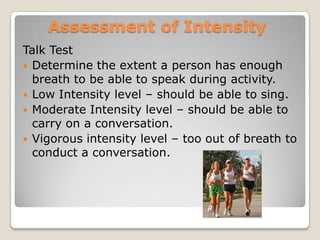
Talk Test
 Determine the extent a person has enough
  breath to be able to speak during activity.
 Low Intensity level – should be able to sing.
 Moderate Intensity level – should be able to
  carry on a conversation.
 Vigorous intensity level – too out of breath to
  conduct a conversation.
Assessment of Intensity
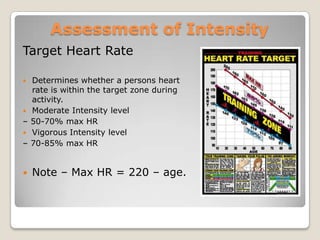
Target Heart Rate

 Determines whether a persons heart
  rate is within the target zone during
  activity.
 Moderate Intensity level
– 50-70% max HR
 Vigorous Intensity level
– 70-85% max HR


   Note – Max HR = 220 – age.
Assessment of Intensity
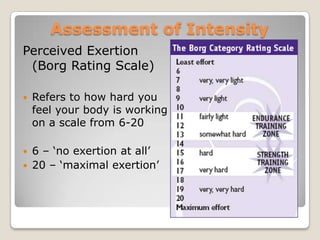
Perceived Exertion
 (Borg Rating Scale)

   Refers to how hard you
    feel your body is working
    on a scale from 6-20

   6 – ‘no exertion at all’
   20 – ‘maximal exertion’
Assessment of Intensity
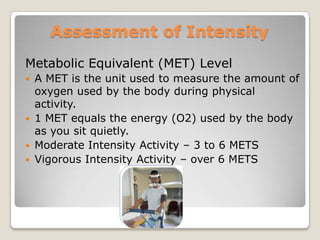
Metabolic Equivalent (MET) Level
 A MET is the unit used to measure the amount of
  oxygen used by the body during physical
  activity.
 1 MET equals the energy (O2) used by the body
  as you sit quietly.
 Moderate Intensity Activity – 3 to 6 METS
 Vigorous Intensity Activity – over 6 METS
Examples of Intensity Related
         Activities!
   Light Activity

   Moderate Activity

   Vigorous Activity
Methods for Assessing
       Physical Activity
Subjective Methods
 Depend on our perceptions of physical
  activity
 Predominately used for measurement in
  populations

Objective Methods
 Rely on solid data or observations
 Predominately used for measurement in
  individuals
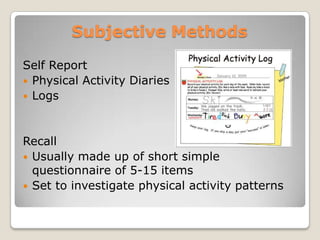
Subjective Methods

Self Report
 Physical Activity Diaries
 Logs


Recall
 Usually made up of short simple
  questionnaire of 5-15 items
 Set to investigate physical activity patterns
Objective Methods

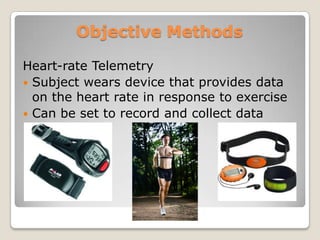
Heart-rate Telemetry
 Subject wears device that provides data
  on the heart rate in response to exercise
 Can be set to record and collect data
Objective Methods

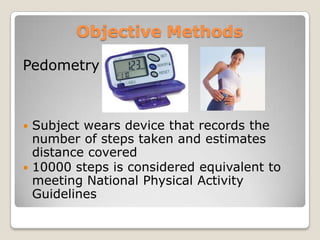
Pedometry


 Subject wears device that records the
  number of steps taken and estimates
  distance covered
 10000 steps is considered equivalent to
  meeting National Physical Activity
  Guidelines
Objective Methods
Accelerometry
 Subject wears device to assess the
  acceleration of the body in certain directions
 Provides data on the frequency, duration and
  intensity of activity

Doubly Labelled Water
 Technique used to accurately estimate total
  energy expenditure.
 Based on the movement of 2 different types
  of water found in the body
Objective Methods
Direct Observation
 Data collected that measures activity in
  regards to type, time, place and social
  setting
 Very useful for children
 Can be used in conjunction with other
  methods

   There are 3 main observation systems
    used:
Direct Observation
BEACHES        (Behaviours of Eating Activity for Children’s Health
    Evaluation System)
   Designed to monitor children eating and activity
    both at home and at school
SOFIT (System for observing Fitness Instruction Time)
 Used during PE classes, measures activity, lesson
  context and teacher behaviour.
SOPLAY (System for Observing Play and Leisure Activity in Youth)
 Used to assess the physical activity of groups in
  certain settings.
 Assesses the number of people in a designated
  activity area and their activity level at specific
  times

Assessing physical activity

  • 1.
    Unit 3&4 Physical Education Assessing Physical Activity
  • 2.
    Assessment of Intensity TalkTest  Determine the extent a person has enough breath to be able to speak during activity.  Low Intensity level – should be able to sing.  Moderate Intensity level – should be able to carry on a conversation.  Vigorous intensity level – too out of breath to conduct a conversation.
  • 3.
    Assessment of Intensity TargetHeart Rate  Determines whether a persons heart rate is within the target zone during activity.  Moderate Intensity level – 50-70% max HR  Vigorous Intensity level – 70-85% max HR  Note – Max HR = 220 – age.
  • 4.
    Assessment of Intensity PerceivedExertion (Borg Rating Scale)  Refers to how hard you feel your body is working on a scale from 6-20  6 – ‘no exertion at all’  20 – ‘maximal exertion’
  • 5.
    Assessment of Intensity MetabolicEquivalent (MET) Level  A MET is the unit used to measure the amount of oxygen used by the body during physical activity.  1 MET equals the energy (O2) used by the body as you sit quietly.  Moderate Intensity Activity – 3 to 6 METS  Vigorous Intensity Activity – over 6 METS
  • 6.
    Examples of IntensityRelated Activities!  Light Activity  Moderate Activity  Vigorous Activity
  • 7.
    Methods for Assessing Physical Activity Subjective Methods  Depend on our perceptions of physical activity  Predominately used for measurement in populations Objective Methods  Rely on solid data or observations  Predominately used for measurement in individuals
  • 8.
    Subjective Methods Self Report Physical Activity Diaries  Logs Recall  Usually made up of short simple questionnaire of 5-15 items  Set to investigate physical activity patterns
  • 9.
    Objective Methods Heart-rate Telemetry Subject wears device that provides data on the heart rate in response to exercise  Can be set to record and collect data
  • 10.
    Objective Methods Pedometry  Subjectwears device that records the number of steps taken and estimates distance covered  10000 steps is considered equivalent to meeting National Physical Activity Guidelines
  • 11.
    Objective Methods Accelerometry  Subjectwears device to assess the acceleration of the body in certain directions  Provides data on the frequency, duration and intensity of activity Doubly Labelled Water  Technique used to accurately estimate total energy expenditure.  Based on the movement of 2 different types of water found in the body
  • 12.
    Objective Methods Direct Observation Data collected that measures activity in regards to type, time, place and social setting  Very useful for children  Can be used in conjunction with other methods  There are 3 main observation systems used:
  • 13.
    Direct Observation BEACHES (Behaviours of Eating Activity for Children’s Health Evaluation System)  Designed to monitor children eating and activity both at home and at school SOFIT (System for observing Fitness Instruction Time)  Used during PE classes, measures activity, lesson context and teacher behaviour. SOPLAY (System for Observing Play and Leisure Activity in Youth)  Used to assess the physical activity of groups in certain settings.  Assesses the number of people in a designated activity area and their activity level at specific times