INSECTS
REPRODUCTIVE SYSTEM
DEPARTMENT OF ZOOLOGY
INSTRUCTOR: AQSA ZAKARIA
Learning outcomes:
qIntroduction to Reproductive System
qOrgans of Reproductive System
qFemale Reproductive System
qMale Reproductive System
Introduction
ØIt is the system that helps the organisms to reproduce and make young one to
exist on Planet
ØSimilar to Mammals mostly male & female sexes are separate or present on
different bodies in the insects (diceous, unisexual)
ØSexual dimorphism is commonly present in Insects, e.g bees, mosquitoes
ØGynandromorphs are the abnormal insects that develops secondary sexual
characters of both male and female . e.g mutant drosophila
ØHermaphrodite are the insects in which male and female gonads are present
in only one organism . e.g cottony cushion scale
ØReproductive system has three components
ØOrgans, Secretory glands, Pathways/tracts
Reproductive Organs
Insects have specialized reproductive organs that facilitate the process of reproduction.
• Male Organs:
• Testes: Located in the abdomen,
these produce sperm cells.
• Accessory Glands: These glands
produce seminal fluid, which
provides nutrients and protection
to the sperm.
• Vas Deferens: Tube-like structures
that transport sperm from the
t e s t e s t o t h e e x t e r n a l
reproductive organs.
• Female Organs
• Ovaries: Found in the abdomen, ovaries produce eggs
(ova).
• Oviducts: These tubes transport the eggs from the
ovaries to the external environment or to storage
organs.
• Spermatheca: A storage organ where females can store
sperm after mating. This allows females to fertilize eggs
at a later time.
• Accessory Glands: produce substances that coat the
eggs or form protective capsules around them.
• Ovipositor: A specialized organ that some female
insects use to deposit eggs into suitable locations, such
as soil or plant tissues.
Female Reproductive System
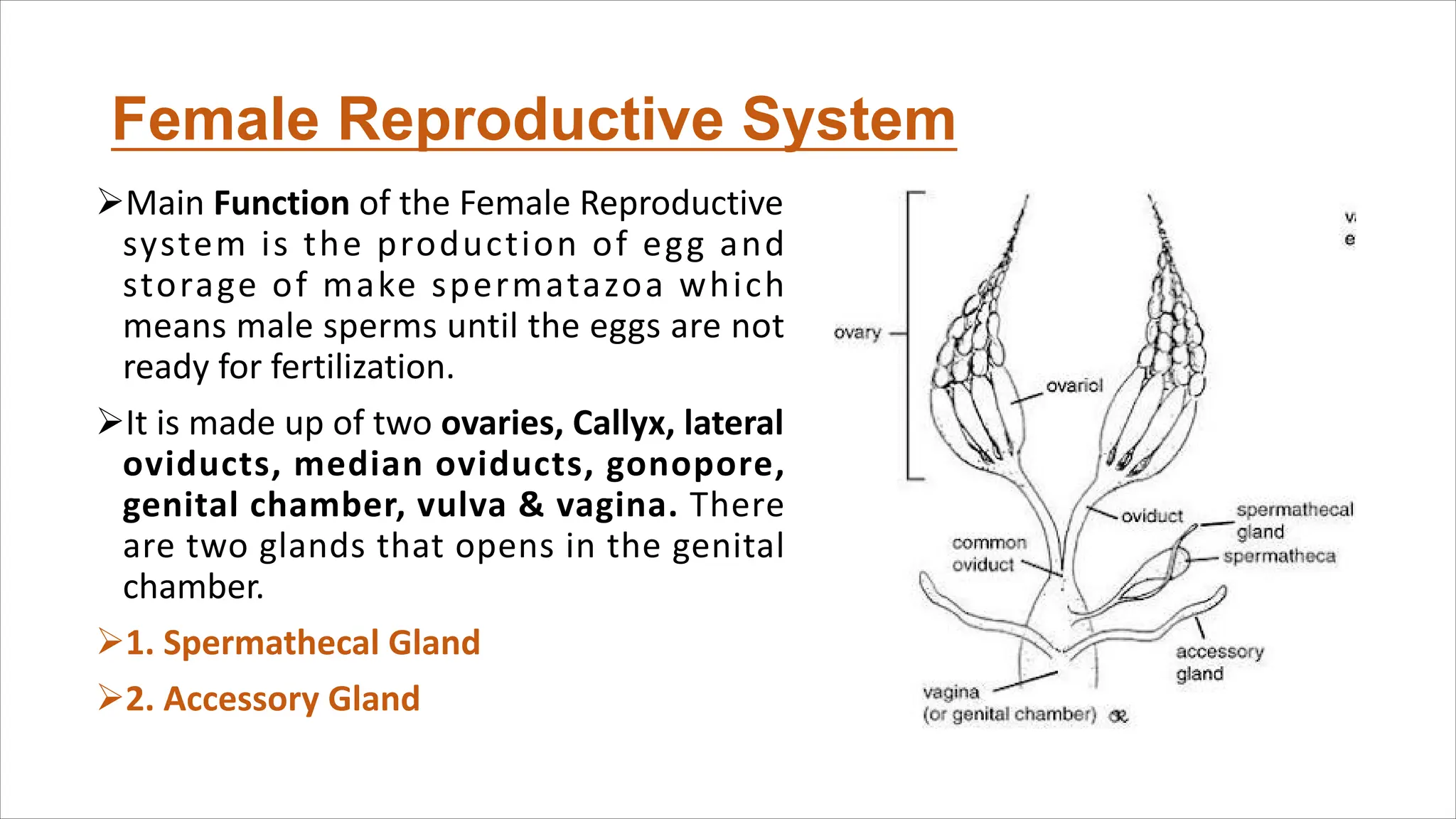
ØMain Function of the Female Reproductive
system is the production of egg and
storage of make spermatazoa which
means male sperms until the eggs are not
ready for fertilization.
ØIt is made up of two ovaries, Callyx, lateral
oviducts, median oviducts, gonopore,
genital chamber, vulva & vagina. There
are two glands that opens in the genital
chamber.
Ø1. Spermathecal Gland
Ø2. Accessory Gland
Ovary
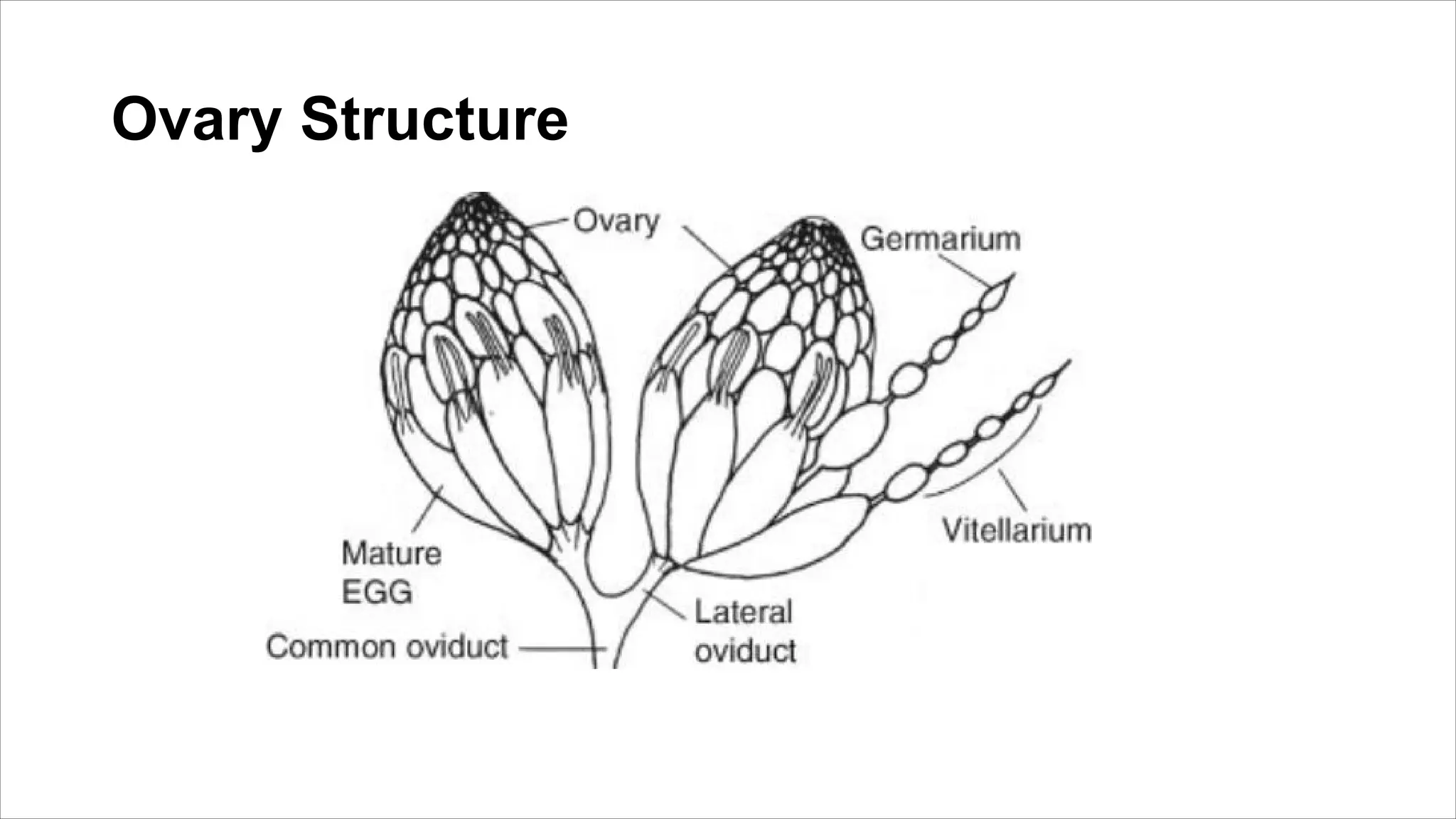
ØThey are present in two in numbers. Each ovary has cluster of immature eggs or
ovarian tubes or ovarioles.
ØEach ovariole have teminal filament, germarium, vitellarium, and a pedicel.
ØAnd Ovariole is a series fo developing oocytes which are surrounded by follicle
cells. Youngest oocyte is near to the apical germarium and the mature is towards
pedicel.
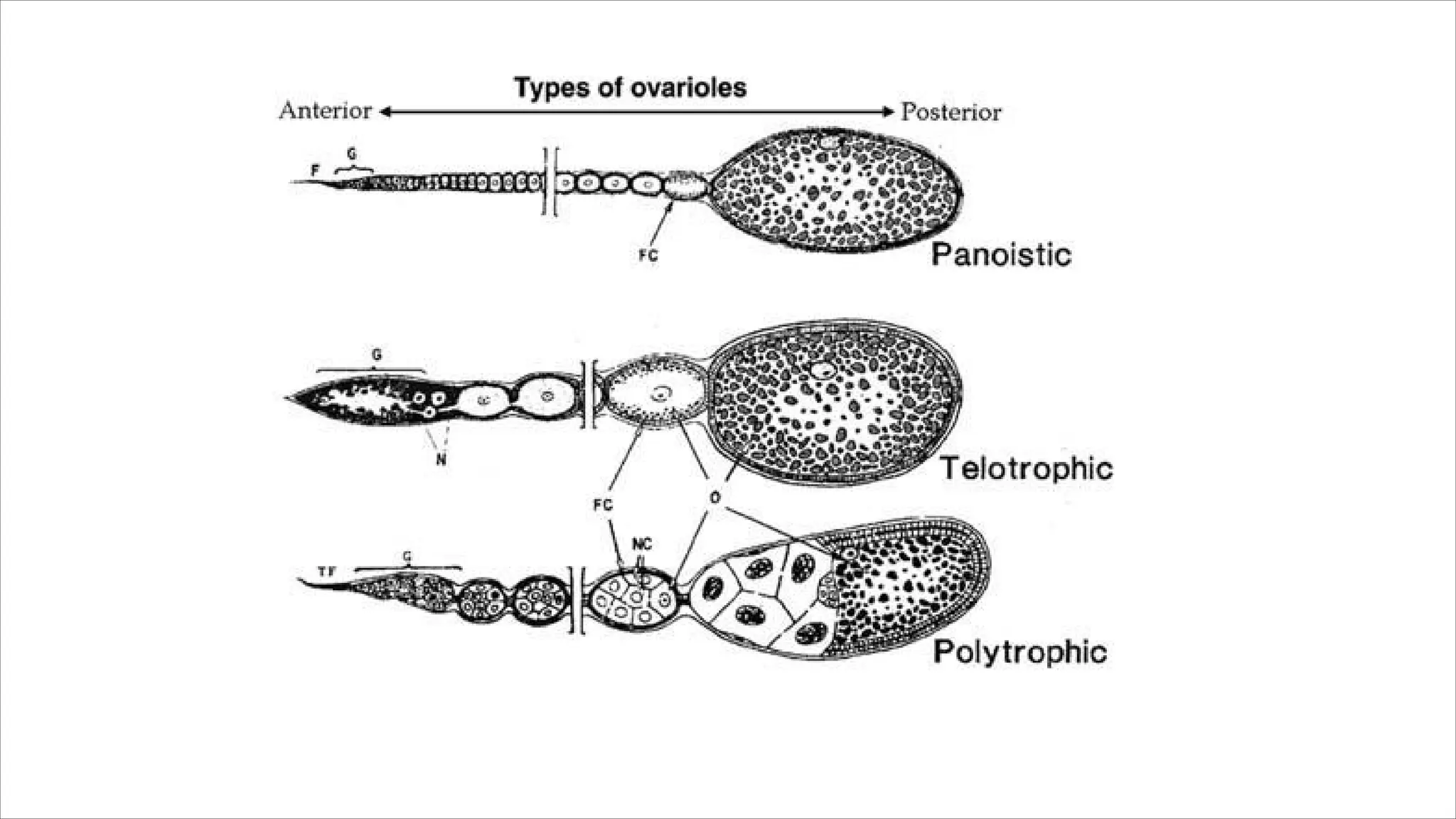
ØOvarioles are of three types on the basis of how egg cell is getting its
nourishment. paniostic, Telotrophic, & Polytrophic ovarioles.
ØAccessory Gland:
Collterial or cement Gland , it is called cement gland because its secretion
surrounded and protect the egg and helps the egg to cement with the substrate.
ØSpermathecal Gland
provide nourishment to sperms
Ovary Structure
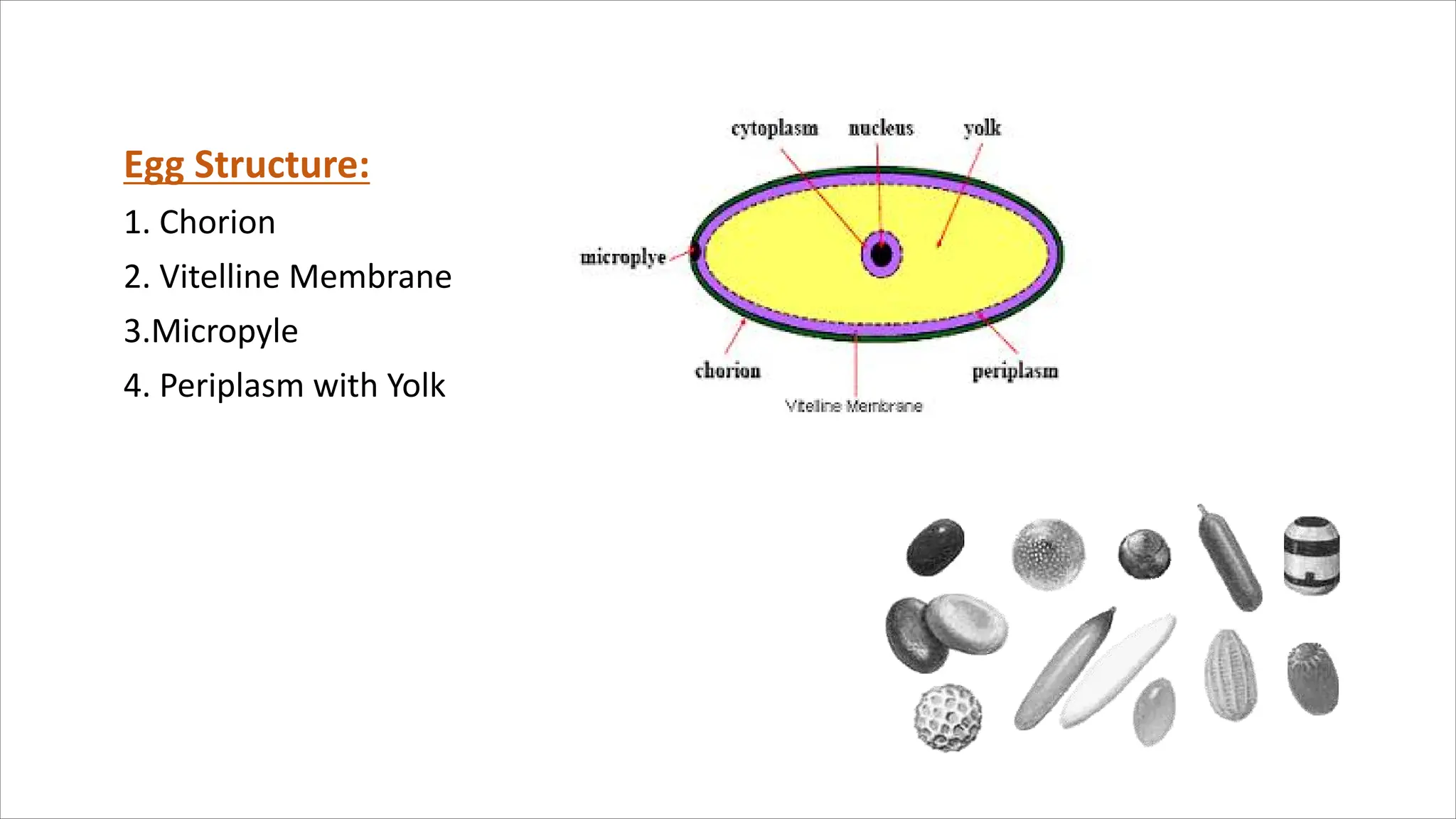
Egg Structure:
1. Chorion
2. Vitelline Membrane
3.Micropyle
4. Periplasm with Yolk
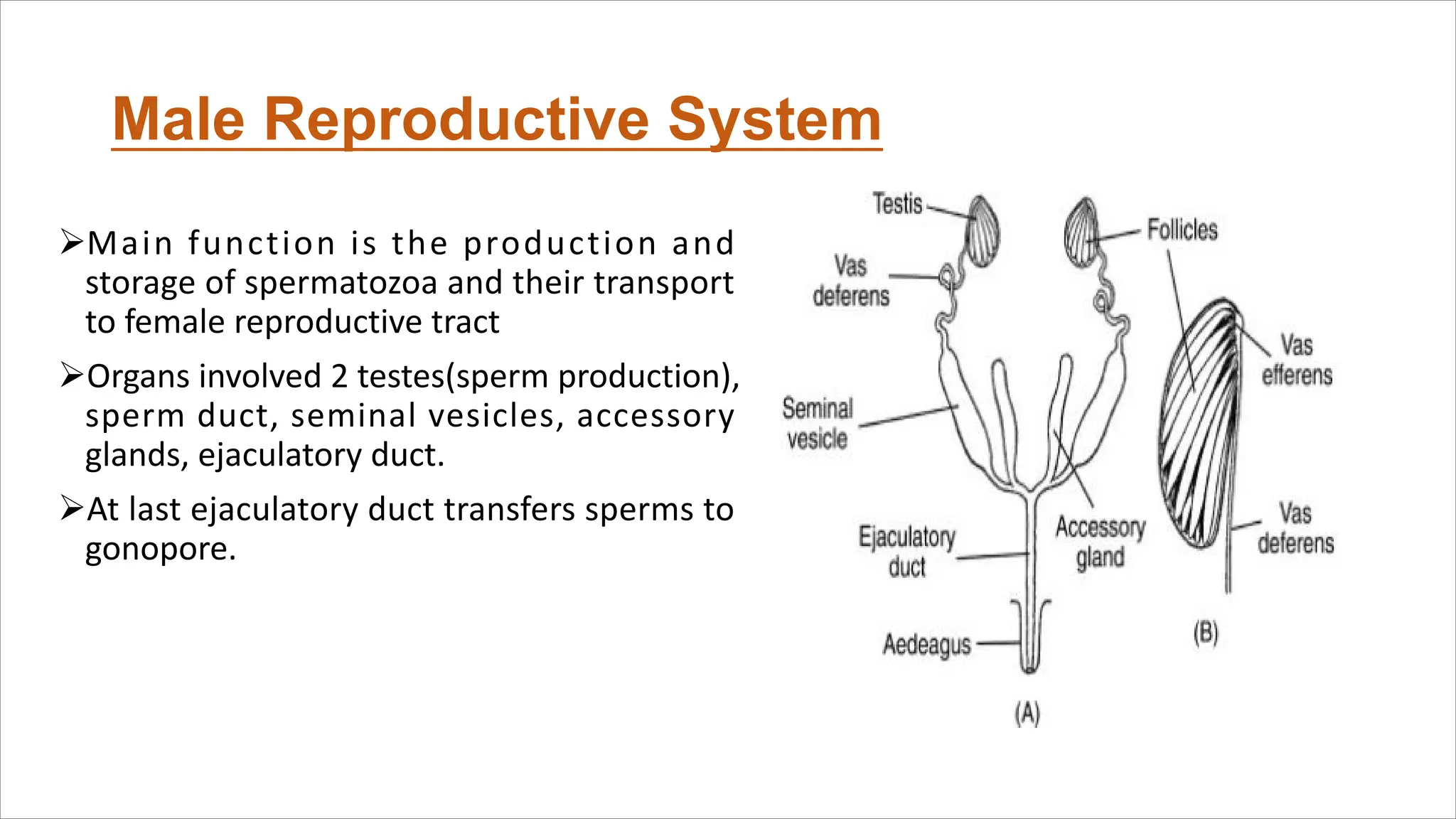
Male Reproductive System
ØMain function is the production and
storage of spermatozoa and their transport
to female reproductive tract
ØOrgans involved 2 testes(sperm production),
sperm duct, seminal vesicles, accessory
glands, ejaculatory duct.
ØAt last ejaculatory duct transfers sperms to
gonopore.
Spermatogenesis
ØIt is the process of formation of
spermatozoa or the sperms from the
germinal cells.
ØGerminal cells are present in sperm
tubes of the testes.
ØSpermatogonia are the germinal cells
that produces spermatozoa.
ØThe germinal cells of the sperm tubes get nutrition & goes
under mitosis division and forms primary spermatocytes
which are diploid.
ØAfter attaining a perfect growth primary spermatocyte goes
for meiosis I division in which two haploid secondary
spermatocyte are formed.
ØSecondary spermatocytes again go for meiosis II division and
form spermatids which are immature sperm cells and finally
with the help of spermiogensis process spermatozoa are
formed.
ØSecondary spermatocyte, spermatids and spermatozoa are
haploid.
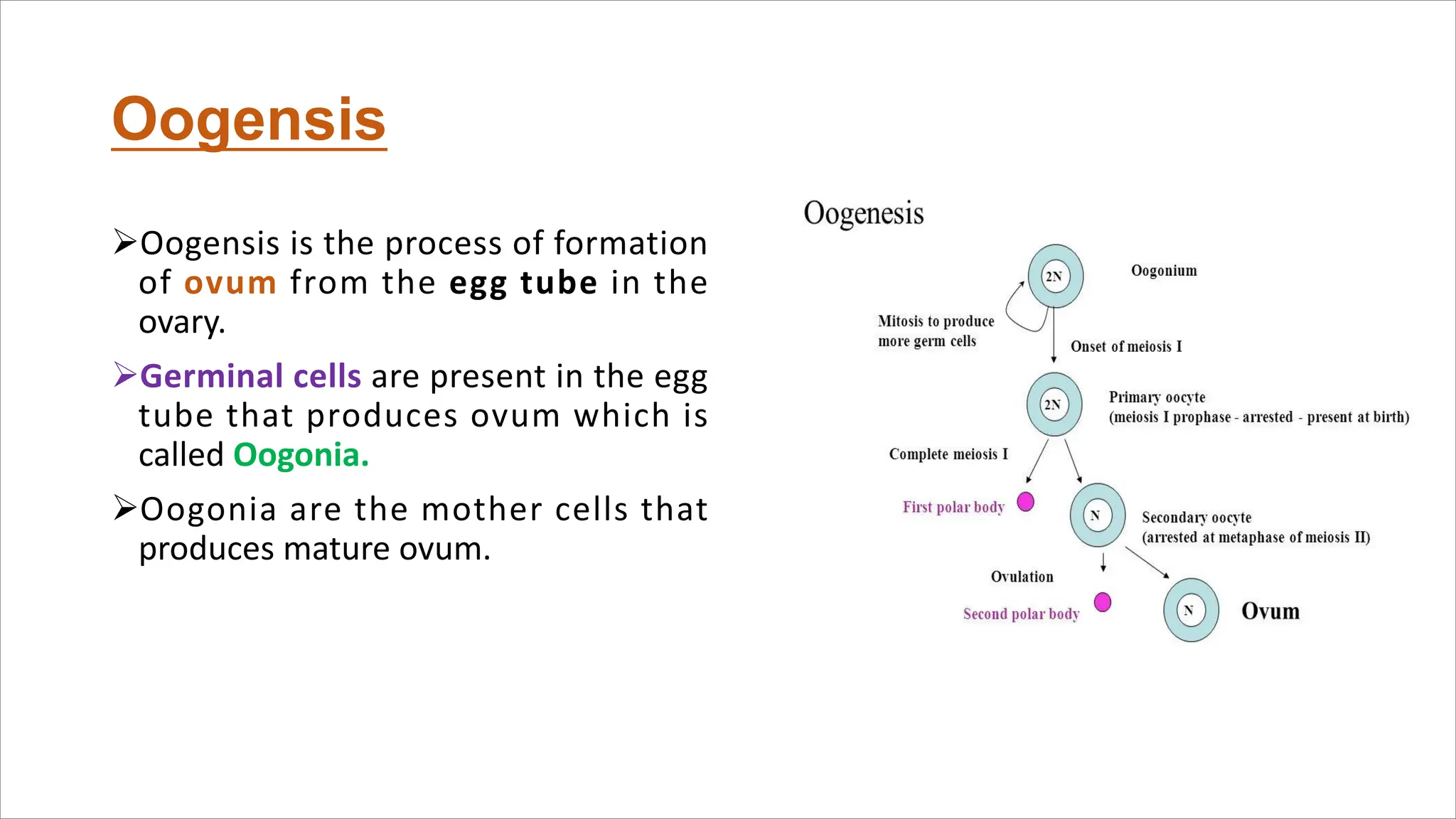
Oogensis
ØOogensis is the process of formation
of ovum from the egg tube in the
ovary.
ØGerminal cells are present in the egg
tube that produces ovum which is
called Oogonia.
ØOogonia are the mother cells that
produces mature ovum.
ØMillion of immature oogonia are present in the ovary.
These cells get nutrition and go for mitosis division and
forms primary oocyte which is diploid. After attaining a
great size again this oocyte goes for Meiosis I division and
forms 2 secondary oocyte cells which are haploid.
ØOut of these two cells one is called polar body(no
cytoplasm) so it get degenerate. Another secondary
oocyte completes Meiosis II and forms 2 oocyte which
are functionally immature. After sometime these oocyte
go for functional maturity and forms ovum.
Sperm Transfer
• It has three types:
1. Intragenital_ through vagina
2. Haemocoelous_ sperm is transfer into body cavity
3. External_ spermatophores are ejected out in open place by male
Fertilization
Fusion of sperm nucleus & egg
Insects Reproductive System & Organs of Copulation

Insects Reproductive System & Organs of Copulation

  • 1.
    INSECTS REPRODUCTIVE SYSTEM DEPARTMENT OFZOOLOGY INSTRUCTOR: AQSA ZAKARIA
  • 2.
    Learning outcomes: qIntroduction toReproductive System qOrgans of Reproductive System qFemale Reproductive System qMale Reproductive System
  • 3.
    Introduction ØIt is thesystem that helps the organisms to reproduce and make young one to exist on Planet ØSimilar to Mammals mostly male & female sexes are separate or present on different bodies in the insects (diceous, unisexual) ØSexual dimorphism is commonly present in Insects, e.g bees, mosquitoes ØGynandromorphs are the abnormal insects that develops secondary sexual characters of both male and female . e.g mutant drosophila ØHermaphrodite are the insects in which male and female gonads are present in only one organism . e.g cottony cushion scale ØReproductive system has three components ØOrgans, Secretory glands, Pathways/tracts
  • 4.
    Reproductive Organs Insects havespecialized reproductive organs that facilitate the process of reproduction. • Male Organs: • Testes: Located in the abdomen, these produce sperm cells. • Accessory Glands: These glands produce seminal fluid, which provides nutrients and protection to the sperm. • Vas Deferens: Tube-like structures that transport sperm from the t e s t e s t o t h e e x t e r n a l reproductive organs. • Female Organs • Ovaries: Found in the abdomen, ovaries produce eggs (ova). • Oviducts: These tubes transport the eggs from the ovaries to the external environment or to storage organs. • Spermatheca: A storage organ where females can store sperm after mating. This allows females to fertilize eggs at a later time. • Accessory Glands: produce substances that coat the eggs or form protective capsules around them. • Ovipositor: A specialized organ that some female insects use to deposit eggs into suitable locations, such as soil or plant tissues.
  • 5.
    Female Reproductive System ØMainFunction of the Female Reproductive system is the production of egg and storage of make spermatazoa which means male sperms until the eggs are not ready for fertilization. ØIt is made up of two ovaries, Callyx, lateral oviducts, median oviducts, gonopore, genital chamber, vulva & vagina. There are two glands that opens in the genital chamber. Ø1. Spermathecal Gland Ø2. Accessory Gland
  • 6.
    Ovary ØThey are presentin two in numbers. Each ovary has cluster of immature eggs or ovarian tubes or ovarioles. ØEach ovariole have teminal filament, germarium, vitellarium, and a pedicel. ØAnd Ovariole is a series fo developing oocytes which are surrounded by follicle cells. Youngest oocyte is near to the apical germarium and the mature is towards pedicel. ØOvarioles are of three types on the basis of how egg cell is getting its nourishment. paniostic, Telotrophic, & Polytrophic ovarioles. ØAccessory Gland: Collterial or cement Gland , it is called cement gland because its secretion surrounded and protect the egg and helps the egg to cement with the substrate. ØSpermathecal Gland provide nourishment to sperms
  • 7.
  • 9.
    Egg Structure: 1. Chorion 2.Vitelline Membrane 3.Micropyle 4. Periplasm with Yolk
  • 10.
    Male Reproductive System ØMainfunction is the production and storage of spermatozoa and their transport to female reproductive tract ØOrgans involved 2 testes(sperm production), sperm duct, seminal vesicles, accessory glands, ejaculatory duct. ØAt last ejaculatory duct transfers sperms to gonopore.
  • 11.
    Spermatogenesis ØIt is theprocess of formation of spermatozoa or the sperms from the germinal cells. ØGerminal cells are present in sperm tubes of the testes. ØSpermatogonia are the germinal cells that produces spermatozoa.
  • 12.
    ØThe germinal cellsof the sperm tubes get nutrition & goes under mitosis division and forms primary spermatocytes which are diploid. ØAfter attaining a perfect growth primary spermatocyte goes for meiosis I division in which two haploid secondary spermatocyte are formed. ØSecondary spermatocytes again go for meiosis II division and form spermatids which are immature sperm cells and finally with the help of spermiogensis process spermatozoa are formed. ØSecondary spermatocyte, spermatids and spermatozoa are haploid.
  • 13.
    Oogensis ØOogensis is theprocess of formation of ovum from the egg tube in the ovary. ØGerminal cells are present in the egg tube that produces ovum which is called Oogonia. ØOogonia are the mother cells that produces mature ovum.
  • 14.
    ØMillion of immatureoogonia are present in the ovary. These cells get nutrition and go for mitosis division and forms primary oocyte which is diploid. After attaining a great size again this oocyte goes for Meiosis I division and forms 2 secondary oocyte cells which are haploid. ØOut of these two cells one is called polar body(no cytoplasm) so it get degenerate. Another secondary oocyte completes Meiosis II and forms 2 oocyte which are functionally immature. After sometime these oocyte go for functional maturity and forms ovum.
  • 15.
    Sperm Transfer • Ithas three types: 1. Intragenital_ through vagina 2. Haemocoelous_ sperm is transfer into body cavity 3. External_ spermatophores are ejected out in open place by male Fertilization Fusion of sperm nucleus & egg