





Innovate to Evolve

- SHIVAM DHAWAN
FACEBOOK | LINKED IN | TWITTER| BLOG | CONTACT
Innovation

Innovation is to make a positive change
Innovation

Innovation is to make a positive change
to make something
.
Innovation

Innovation is to make a positive change
to make something or someone
.
Innovation

Innovation is to make a positive change
to make something or someone better
Innovation Roadblocks


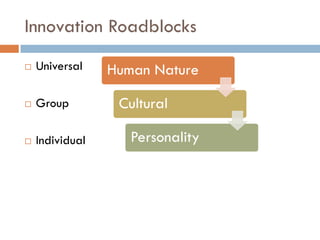
Universal



Group



Individual
Innovation Roadblocks


Universal



Group



Individual

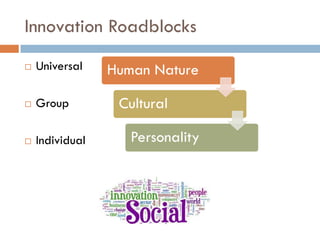
Human Nature
Cultural

Personality
Innovation Roadblocks


Universal



Group



Individual

Human Nature
Cultural

Personality
Roadblocks
Roadblocks

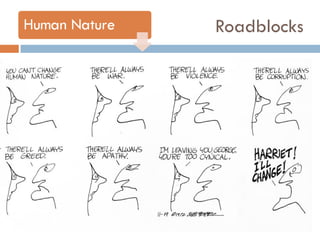
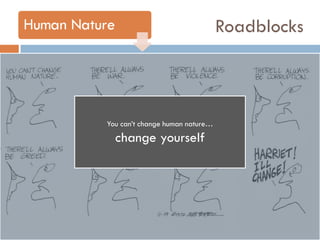
You can‟t change human nature…

change yourself
Roadblocks

Internet has removed the bounds and brought us
closer. We have to adapt to cross cultural
interactions in global, virtual business world
Roadblocks

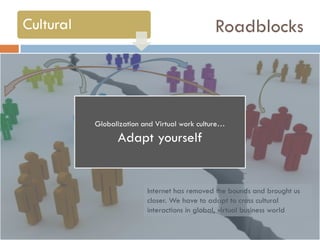
Globalization and Virtual work culture…

Adapt yourself

Internet has removed the bounds and brought us
closer. We have to adapt to cross cultural
interactions in global, virtual business world
Roadblocks
Roadblocks

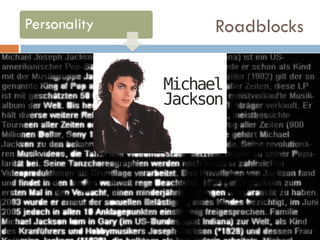
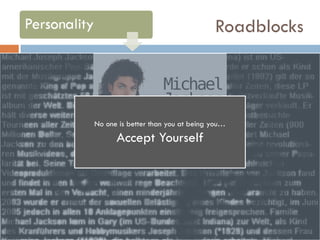
No one is better than you at being you…

Accept Yourself
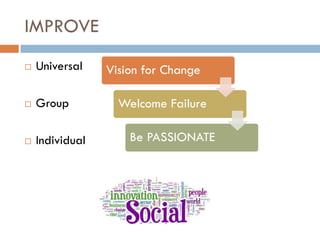
IMPROVE


Universal



Group



Individual

Vision for Change

Welcome Failure
Be PASSIONATE
IMPROVE


Universal



Group



Vision for Change

Welcome Failure

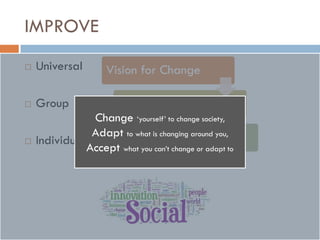
Change „yourself‟ to change society,
Adapt to what is changing around you,
Be PASSIONATE
Individual
Accept what you can‟t change or adapt to
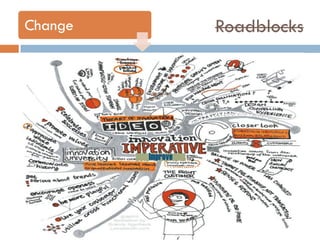
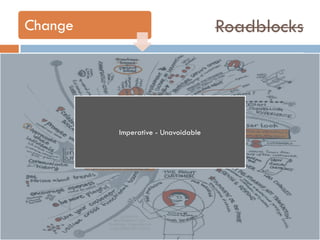
Change

Roadblocks
Roadblocks

Change

Imperative - Unavoidable
Failure

Roadblocks
Roadblocks

Failure

Avoidable – but still…
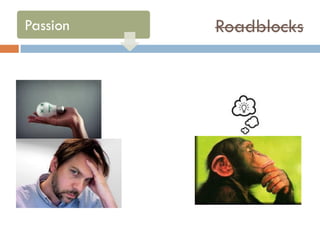
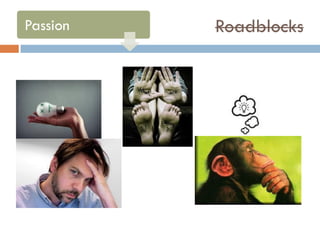
Passion

Roadblocks
Passion

Roadblocks
Roadblocks

Passion

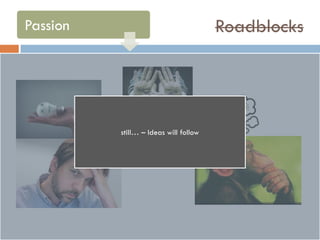
still… – Ideas will follow
Revival
Change


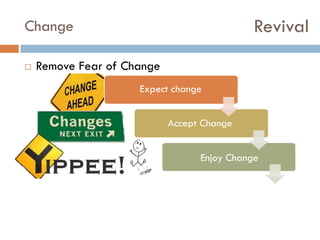
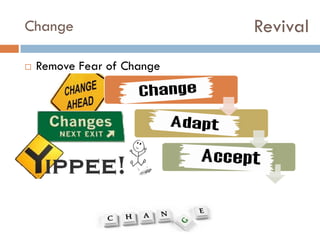
Remove Fear of Change

Revival
Revival

Change


Remove Fear of Change
Expect change
Revival

Change


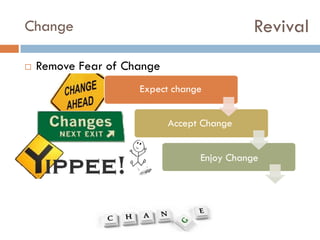
Remove Fear of Change
Expect change
Accept Change
Revival

Change


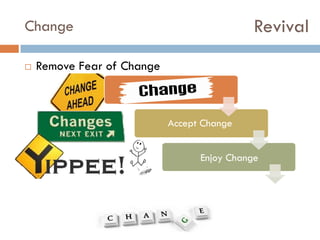
Remove Fear of Change
Expect change
Accept Change
Enjoy Change
Revival

Change


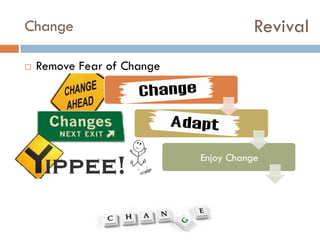
Remove Fear of Change
Expect change
Accept Change
Enjoy Change
Revival

Change


Remove Fear of Change
Expect change
Accept Change
Enjoy Change
Revival

Change


Remove Fear of Change
Expect change
Accept Change
Enjoy Change
Revival

Change


Remove Fear of Change
Expect change
Accept Change
Enjoy Change
Revival

Change


Remove Fear of Change
Expect change
Accept Change
Enjoy Change
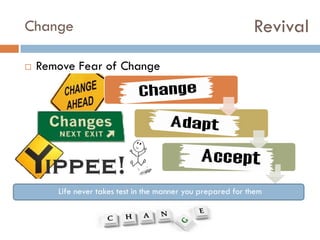
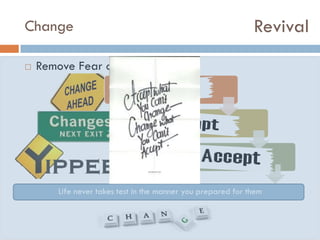
Life never takes test in the manner you prepared for them
Revival

Change


Remove Fear of Change
Expect change
Accept Change
Enjoy Change
Life never takes test in the manner you prepared for them
Failure


Remove Fear of Failure

Revival
Revival

Failure


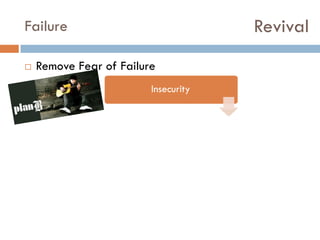
Remove Fear of Failure
Insecurity
Revival

Failure


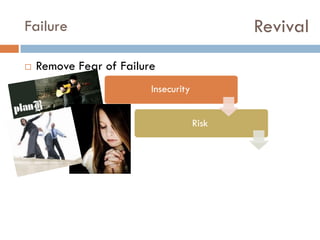
Remove Fear of Failure
Insecurity
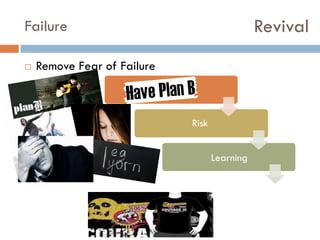
Risk
Revival

Failure


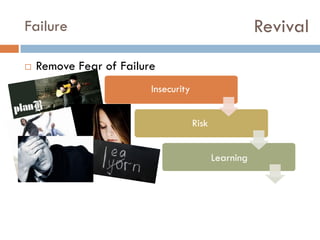
Remove Fear of Failure
Insecurity
Risk
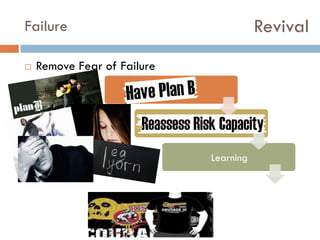
Learning
Revival

Failure


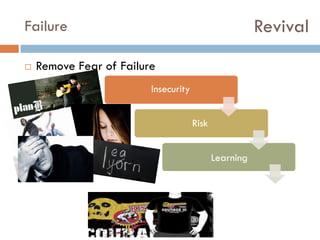
Remove Fear of Failure
Insecurity
Risk
Learning
Revival

Failure


Remove Fear of Failure
Insecurity
Risk
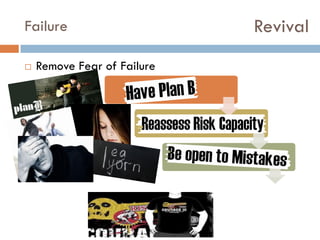
Learning
Revival

Failure


Remove Fear of Failure
Insecurity
Risk
Learning
Revival

Failure


Remove Fear of Failure
Insecurity
Risk
Learning
Revival

Failure


Remove Fear of Failure
Insecurity
Risk
Learning
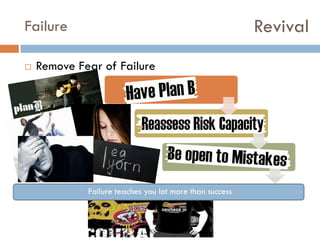
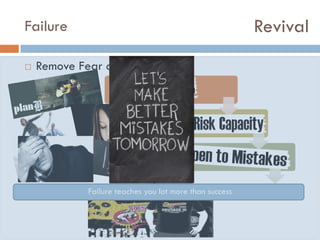
Failure teaches you lot more than success
Revival

Failure


Remove Fear of Failure
Insecurity
Risk
Learning
Failure teaches you lot more than success
Revival

Inadequacy


Work to Improve and Perform
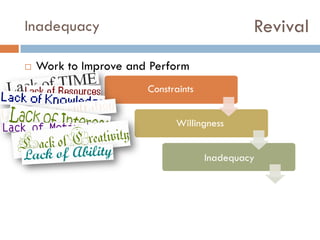
Constraints
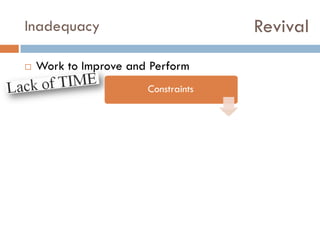
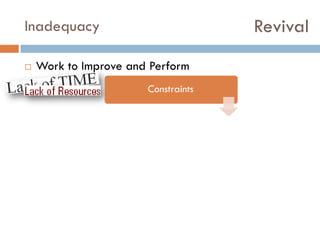
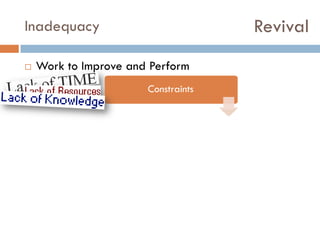
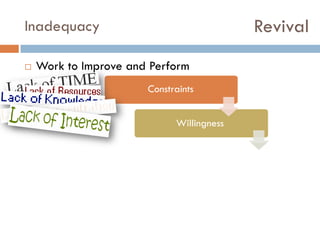
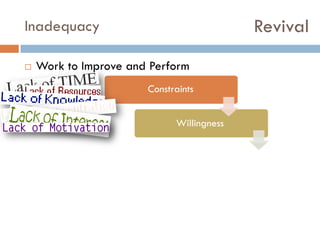
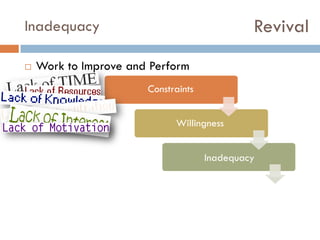
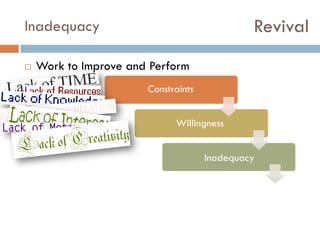
Lack of Time, Resources
Revival

Inadequacy


Work to Improve and Perform
Constraints
Lack of Time, Resources
Revival

Inadequacy


Work to Improve and Perform
Constraints
Lack of Time, Resources
Revival

Inadequacy


Work to Improve and Perform
Constraints
Lack of Time, Resources
Revival

Inadequacy


Work to Improve and Perform
Constraints
Revival

Inadequacy


Work to Improve and Perform
Constraints
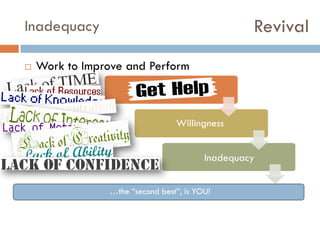
Willingness
Revival

Inadequacy


Work to Improve and Perform
Constraints
Willingness
Revival

Inadequacy


Work to Improve and Perform
Constraints
Willingness
Revival

Inadequacy


Work to Improve and Perform
Constraints
Willingness
Revival

Inadequacy


Work to Improve and Perform
Constraints
Willingness
Inadequacy
Revival

Inadequacy


Work to Improve and Perform
Constraints
Willingness
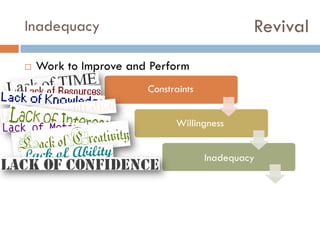
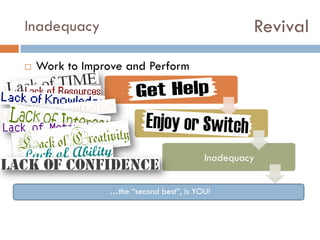
Inadequacy
Revival

Inadequacy


Work to Improve and Perform
Constraints
Willingness
Inadequacy
Revival

Inadequacy


Work to Improve and Perform
Constraints
Willingness
Inadequacy
Revival

Inadequacy


Work to Improve and Perform
Constraints
Willingness
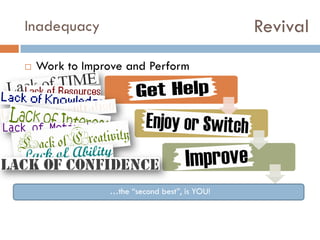
Inadequacy

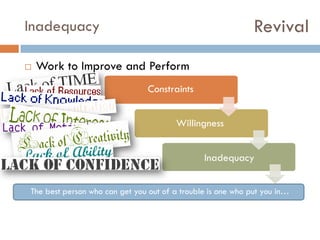
The best person who can get you out of a trouble is one who put you in…
Revival

Inadequacy


Work to Improve and Perform
Constraints
Willingness
Inadequacy
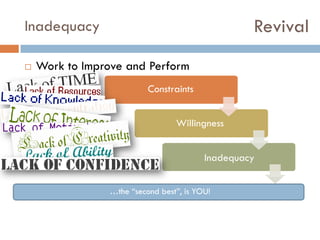
…the “second best”, is YOU!
Revival

Inadequacy


Work to Improve and Perform
Constraints
Willingness
Inadequacy
…the “second best”, is YOU!
Revival

Inadequacy


Work to Improve and Perform
Constraints
Willingness
Inadequacy
…the “second best”, is YOU!
Revival

Inadequacy


Work to Improve and Perform
Constraints
Willingness
Inadequacy
…the “second best”, is YOU!
Revival

Inadequacy


Work to Improve and Perform
Constraints
Willingness
Inadequacy
…the “second best”, is YOU!
INNOVATION

Techniques
INNOVATION


Techniques

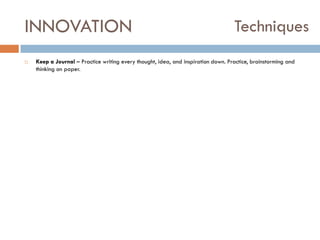
Keep a Journal – Practice writing every thought, idea, and inspiration down. Practice, brainstorming and
thinking on paper.
INNOVATION




Techniques

Keep a Journal – Practice writing every thought, idea, and inspiration down. Practice, brainstorming and
thinking on paper.
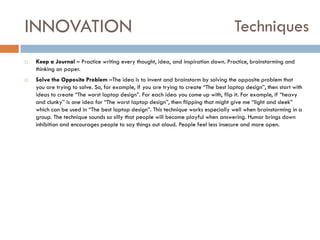
Solve the Opposite Problem –The idea is to invent and brainstorm by solving the opposite problem that
you are trying to solve. So, for example, if you are trying to create “The best laptop design”, then start with
ideas to create “The worst laptop design”. For each idea you come up with, flip it. For example, if “heavy
and clunky” is one idea for “The worst laptop design”, then flipping that might give me “light and sleek”
which can be used in “The best laptop design”. This technique works especially well when brainstorming in a
group. The technique sounds so silly that people will become playful when answering. Humor brings down
inhibition and encourages people to say things out aloud. People feel less insecure and more open.
INNOVATION






Techniques

Keep a Journal – Practice writing every thought, idea, and inspiration down. Practice, brainstorming and
thinking on paper.
Solve the Opposite Problem –The idea is to invent and brainstorm by solving the opposite problem that
you are trying to solve. So, for example, if you are trying to create “The best laptop design”, then start with
ideas to create “The worst laptop design”. For each idea you come up with, flip it. For example, if “heavy
and clunky” is one idea for “The worst laptop design”, then flipping that might give me “light and sleek”
which can be used in “The best laptop design”. This technique works especially well when brainstorming in a
group. The technique sounds so silly that people will become playful when answering. Humor brings down
inhibition and encourages people to say things out aloud. People feel less insecure and more open.
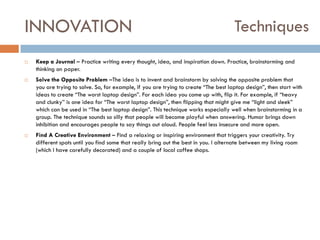
Find A Creative Environment – Find a relaxing or inspiring environment that triggers your creativity. Try
different spots until you find some that really bring out the best in you. I alternate between my living room
(which I have carefully decorated) and a couple of local coffee shops.
INNOVATION








Techniques

Keep a Journal – Practice writing every thought, idea, and inspiration down. Practice, brainstorming and
thinking on paper.
Solve the Opposite Problem –The idea is to invent and brainstorm by solving the opposite problem that
you are trying to solve. So, for example, if you are trying to create “The best laptop design”, then start with
ideas to create “The worst laptop design”. For each idea you come up with, flip it. For example, if “heavy
and clunky” is one idea for “The worst laptop design”, then flipping that might give me “light and sleek”
which can be used in “The best laptop design”. This technique works especially well when brainstorming in a
group. The technique sounds so silly that people will become playful when answering. Humor brings down
inhibition and encourages people to say things out aloud. People feel less insecure and more open.
Find A Creative Environment – Find a relaxing or inspiring environment that triggers your creativity. Try
different spots until you find some that really bring out the best in you. I alternate between my living room
(which I have carefully decorated) and a couple of local coffee shops.
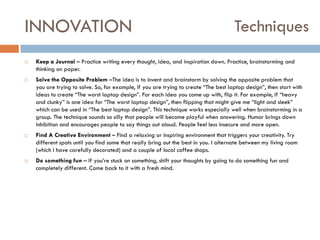
Do something fun – If you‟re stuck on something, shift your thoughts by going to do something fun and
completely different. Come back to it with a fresh mind.
INNOVATION










Techniques

Keep a Journal – Practice writing every thought, idea, and inspiration down. Practice, brainstorming and
thinking on paper.
Solve the Opposite Problem –The idea is to invent and brainstorm by solving the opposite problem that
you are trying to solve. So, for example, if you are trying to create “The best laptop design”, then start with
ideas to create “The worst laptop design”. For each idea you come up with, flip it. For example, if “heavy
and clunky” is one idea for “The worst laptop design”, then flipping that might give me “light and sleek”
which can be used in “The best laptop design”. This technique works especially well when brainstorming in a
group. The technique sounds so silly that people will become playful when answering. Humor brings down
inhibition and encourages people to say things out aloud. People feel less insecure and more open.
Find A Creative Environment – Find a relaxing or inspiring environment that triggers your creativity. Try
different spots until you find some that really bring out the best in you. I alternate between my living room
(which I have carefully decorated) and a couple of local coffee shops.
Do something fun – If you‟re stuck on something, shift your thoughts by going to do something fun and
completely different. Come back to it with a fresh mind.
Partnering - Find creative partnerships with another. New ideas can surface as a result of two forces that
would not have been arrived by a single person. Brainstorm together.
INNOVATION












Techniques

Keep a Journal – Practice writing every thought, idea, and inspiration down. Practice, brainstorming and
thinking on paper.
Solve the Opposite Problem –The idea is to invent and brainstorm by solving the opposite problem that
you are trying to solve. So, for example, if you are trying to create “The best laptop design”, then start with
ideas to create “The worst laptop design”. For each idea you come up with, flip it. For example, if “heavy
and clunky” is one idea for “The worst laptop design”, then flipping that might give me “light and sleek”
which can be used in “The best laptop design”. This technique works especially well when brainstorming in a
group. The technique sounds so silly that people will become playful when answering. Humor brings down
inhibition and encourages people to say things out aloud. People feel less insecure and more open.
Find A Creative Environment – Find a relaxing or inspiring environment that triggers your creativity. Try
different spots until you find some that really bring out the best in you. I alternate between my living room
(which I have carefully decorated) and a couple of local coffee shops.
Do something fun – If you‟re stuck on something, shift your thoughts by going to do something fun and
completely different. Come back to it with a fresh mind.
Partnering - Find creative partnerships with another. New ideas can surface as a result of two forces that
would not have been arrived by a single person. Brainstorm together.
‘Commit to Failure’ - “Commit yourself to taking enough risks that you will fail some of the time. If you‟re
not failing, we‟re not doing something sufficiently difficult or creative.” - Scott Berkun
INNOVATION














Techniques

Keep a Journal – Practice writing every thought, idea, and inspiration down. Practice, brainstorming and
thinking on paper.
Solve the Opposite Problem –The idea is to invent and brainstorm by solving the opposite problem that
you are trying to solve. So, for example, if you are trying to create “The best laptop design”, then start with
ideas to create “The worst laptop design”. For each idea you come up with, flip it. For example, if “heavy
and clunky” is one idea for “The worst laptop design”, then flipping that might give me “light and sleek”
which can be used in “The best laptop design”. This technique works especially well when brainstorming in a
group. The technique sounds so silly that people will become playful when answering. Humor brings down
inhibition and encourages people to say things out aloud. People feel less insecure and more open.
Find A Creative Environment – Find a relaxing or inspiring environment that triggers your creativity. Try
different spots until you find some that really bring out the best in you. I alternate between my living room
(which I have carefully decorated) and a couple of local coffee shops.
Do something fun – If you‟re stuck on something, shift your thoughts by going to do something fun and
completely different. Come back to it with a fresh mind.
Partnering - Find creative partnerships with another. New ideas can surface as a result of two forces that
would not have been arrived by a single person. Brainstorm together.
‘Commit to Failure’ - “Commit yourself to taking enough risks that you will fail some of the time. If you‟re
not failing, we‟re not doing something sufficiently difficult or creative.” - Scott Berkun
Talk to Someone About It - I have found that when I try to articulate a particular problem to someone, that
I‟ll somehow articulate my solution, as well. When explaining my situation, I‟m not expecting them to solve
my problem, but rather act as a „bouncing board‟ for ideas.
INNOVATION



Techniques

**Plan for Roadblocks -Commit to efforts to overcome potential setbacks. It‟s
worthwhile to identify and have a plan for non-creative items that may inhibit
creative thinking. Scott talked about the most common roadblocks people face: Loss
of motivation, ran out of money, unable to convince key person.
Credits
Shivam Dhawan


Business Intelligence . Analytics Consultant



Member Cognizant DNA team



“Innovator Award” for contributions to projects



Member “Innovations Group” to foster innovation in teams



Innovation Champion with projects to implement strategic innovation



And much more…
Credits
Shivam Dhawan


Business Intelligence . Analytics Consultant



Member Cognizant DNA team



“Innovator Award” for contributions to projects



Member “Innovations Group” to foster innovation in teams



Innovation Champion with projects to implement strategic innovation



And much more…

Speaker
Credits
Shivam Dhawan


Business Intelligence . Analytics Consultant



Member Cognizant DNA team



“Innovator Award” for contributions to projects



Member “Innovations Group” to foster innovation in teams



Innovation Champion with projects to implement strategic innovation



And much more…

Speaker . Trainer
Credits
Shivam Dhawan


Business Intelligence . Analytics Consultant



Member Cognizant DNA team



“Innovator Award” for contributions to projects



Member “Innovations Group” to foster innovation in teams



Innovation Champion with projects to implement strategic innovation



And much more…

Speaker . Trainer . Innovator
Credits
Shivam Dhawan


Business Intelligence . Analytics Consultant



Member Cognizant DNA team



“Innovator Award” for contributions to projects



Member “Innovations Group” to foster innovation in teams



Innovation Champion with projects to implement strategic innovation



And much more…

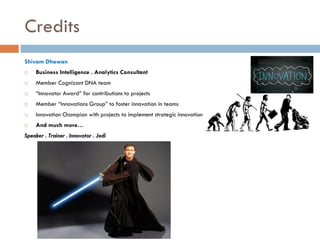
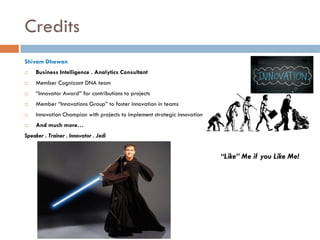
Speaker . Trainer . Innovator . Jedi
Credits
Shivam Dhawan


Business Intelligence . Analytics Consultant



Member Cognizant DNA team



“Innovator Award” for contributions to projects



Member “Innovations Group” to foster innovation in teams



Innovation Champion with projects to implement strategic innovation



And much more…

Speaker . Trainer . Innovator . Jedi
Credits
Shivam Dhawan


Business Intelligence . Analytics Consultant



Member Cognizant DNA team



“Innovator Award” for contributions to projects



Member “Innovations Group” to foster innovation in teams



Innovation Champion with projects to implement strategic innovation



And much more…

Speaker . Trainer . Innovator . Jedi

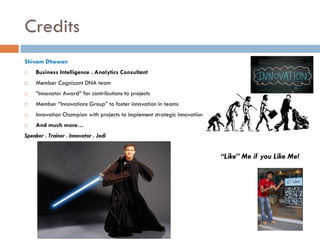
“Like” Me if you Like Me!
Credits
Shivam Dhawan


Business Intelligence . Analytics Consultant



Member Cognizant DNA team



“Innovator Award” for contributions to projects



Member “Innovations Group” to foster innovation in teams



Innovation Champion with projects to implement strategic innovation



And much more…

Speaker . Trainer . Innovator . Jedi

“Like” Me if you Like Me!
Credits
Shivam Dhawan


Business Intelligence . Analytics Consultant



Member Cognizant DNA team



“Innovator Award” for contributions to projects



Member “Innovations Group” to foster innovation in teams



Innovation Champion with projects to implement strategic innovation



And much more…

Speaker . Trainer . Innovator . Jedi

“Like” Me if you Like Me!
“Follow” if you love!

FaceBook |
Linked In |
Twitter|
Blog |
Contact |

Innovation

  • 1.
    Innovate to Evolve -SHIVAM DHAWAN FACEBOOK | LINKED IN | TWITTER| BLOG | CONTACT
  • 2.
    Innovation Innovation is tomake a positive change
  • 3.
    Innovation Innovation is tomake a positive change to make something .
  • 4.
    Innovation Innovation is tomake a positive change to make something or someone .
  • 5.
    Innovation Innovation is tomake a positive change to make something or someone better
  • 6.
  • 7.
  • 8.
  • 9.
  • 10.
  • 11.
    Roadblocks You can‟t changehuman nature… change yourself
  • 12.
    Roadblocks Internet has removedthe bounds and brought us closer. We have to adapt to cross cultural interactions in global, virtual business world
  • 13.
    Roadblocks Globalization and Virtualwork culture… Adapt yourself Internet has removed the bounds and brought us closer. We have to adapt to cross cultural interactions in global, virtual business world
  • 14.
  • 15.
    Roadblocks No one isbetter than you at being you… Accept Yourself
  • 16.
  • 17.
    IMPROVE  Universal  Group  Vision for Change WelcomeFailure Change „yourself‟ to change society, Adapt to what is changing around you, Be PASSIONATE Individual Accept what you can‟t change or adapt to
  • 18.
  • 19.
  • 20.
  • 21.
  • 22.
  • 23.
  • 24.
  • 25.
  • 26.
  • 27.
  • 28.
    Revival Change  Remove Fear ofChange Expect change Accept Change
  • 29.
    Revival Change  Remove Fear ofChange Expect change Accept Change Enjoy Change
  • 30.
    Revival Change  Remove Fear ofChange Expect change Accept Change Enjoy Change
  • 31.
    Revival Change  Remove Fear ofChange Expect change Accept Change Enjoy Change
  • 32.
    Revival Change  Remove Fear ofChange Expect change Accept Change Enjoy Change
  • 33.
    Revival Change  Remove Fear ofChange Expect change Accept Change Enjoy Change
  • 34.
    Revival Change  Remove Fear ofChange Expect change Accept Change Enjoy Change Life never takes test in the manner you prepared for them
  • 35.
    Revival Change  Remove Fear ofChange Expect change Accept Change Enjoy Change Life never takes test in the manner you prepared for them
  • 36.
  • 37.
  • 38.
    Revival Failure  Remove Fear ofFailure Insecurity Risk
  • 39.
    Revival Failure  Remove Fear ofFailure Insecurity Risk Learning
  • 40.
    Revival Failure  Remove Fear ofFailure Insecurity Risk Learning
  • 41.
    Revival Failure  Remove Fear ofFailure Insecurity Risk Learning
  • 42.
    Revival Failure  Remove Fear ofFailure Insecurity Risk Learning
  • 43.
    Revival Failure  Remove Fear ofFailure Insecurity Risk Learning
  • 44.
    Revival Failure  Remove Fear ofFailure Insecurity Risk Learning Failure teaches you lot more than success
  • 45.
    Revival Failure  Remove Fear ofFailure Insecurity Risk Learning Failure teaches you lot more than success
  • 46.
    Revival Inadequacy  Work to Improveand Perform Constraints Lack of Time, Resources
  • 47.
    Revival Inadequacy  Work to Improveand Perform Constraints Lack of Time, Resources
  • 48.
    Revival Inadequacy  Work to Improveand Perform Constraints Lack of Time, Resources
  • 49.
    Revival Inadequacy  Work to Improveand Perform Constraints Lack of Time, Resources
  • 50.
  • 51.
    Revival Inadequacy  Work to Improveand Perform Constraints Willingness
  • 52.
    Revival Inadequacy  Work to Improveand Perform Constraints Willingness
  • 53.
    Revival Inadequacy  Work to Improveand Perform Constraints Willingness
  • 54.
    Revival Inadequacy  Work to Improveand Perform Constraints Willingness
  • 55.
    Revival Inadequacy  Work to Improveand Perform Constraints Willingness Inadequacy
  • 56.
    Revival Inadequacy  Work to Improveand Perform Constraints Willingness Inadequacy
  • 57.
    Revival Inadequacy  Work to Improveand Perform Constraints Willingness Inadequacy
  • 58.
    Revival Inadequacy  Work to Improveand Perform Constraints Willingness Inadequacy
  • 59.
    Revival Inadequacy  Work to Improveand Perform Constraints Willingness Inadequacy The best person who can get you out of a trouble is one who put you in…
  • 60.
    Revival Inadequacy  Work to Improveand Perform Constraints Willingness Inadequacy …the “second best”, is YOU!
  • 61.
    Revival Inadequacy  Work to Improveand Perform Constraints Willingness Inadequacy …the “second best”, is YOU!
  • 62.
    Revival Inadequacy  Work to Improveand Perform Constraints Willingness Inadequacy …the “second best”, is YOU!
  • 63.
    Revival Inadequacy  Work to Improveand Perform Constraints Willingness Inadequacy …the “second best”, is YOU!
  • 64.
    Revival Inadequacy  Work to Improveand Perform Constraints Willingness Inadequacy …the “second best”, is YOU!
  • 65.
  • 66.
    INNOVATION  Techniques Keep a Journal– Practice writing every thought, idea, and inspiration down. Practice, brainstorming and thinking on paper.
  • 67.
    INNOVATION   Techniques Keep a Journal– Practice writing every thought, idea, and inspiration down. Practice, brainstorming and thinking on paper. Solve the Opposite Problem –The idea is to invent and brainstorm by solving the opposite problem that you are trying to solve. So, for example, if you are trying to create “The best laptop design”, then start with ideas to create “The worst laptop design”. For each idea you come up with, flip it. For example, if “heavy and clunky” is one idea for “The worst laptop design”, then flipping that might give me “light and sleek” which can be used in “The best laptop design”. This technique works especially well when brainstorming in a group. The technique sounds so silly that people will become playful when answering. Humor brings down inhibition and encourages people to say things out aloud. People feel less insecure and more open.
  • 68.
    INNOVATION    Techniques Keep a Journal– Practice writing every thought, idea, and inspiration down. Practice, brainstorming and thinking on paper. Solve the Opposite Problem –The idea is to invent and brainstorm by solving the opposite problem that you are trying to solve. So, for example, if you are trying to create “The best laptop design”, then start with ideas to create “The worst laptop design”. For each idea you come up with, flip it. For example, if “heavy and clunky” is one idea for “The worst laptop design”, then flipping that might give me “light and sleek” which can be used in “The best laptop design”. This technique works especially well when brainstorming in a group. The technique sounds so silly that people will become playful when answering. Humor brings down inhibition and encourages people to say things out aloud. People feel less insecure and more open. Find A Creative Environment – Find a relaxing or inspiring environment that triggers your creativity. Try different spots until you find some that really bring out the best in you. I alternate between my living room (which I have carefully decorated) and a couple of local coffee shops.
  • 69.
    INNOVATION     Techniques Keep a Journal– Practice writing every thought, idea, and inspiration down. Practice, brainstorming and thinking on paper. Solve the Opposite Problem –The idea is to invent and brainstorm by solving the opposite problem that you are trying to solve. So, for example, if you are trying to create “The best laptop design”, then start with ideas to create “The worst laptop design”. For each idea you come up with, flip it. For example, if “heavy and clunky” is one idea for “The worst laptop design”, then flipping that might give me “light and sleek” which can be used in “The best laptop design”. This technique works especially well when brainstorming in a group. The technique sounds so silly that people will become playful when answering. Humor brings down inhibition and encourages people to say things out aloud. People feel less insecure and more open. Find A Creative Environment – Find a relaxing or inspiring environment that triggers your creativity. Try different spots until you find some that really bring out the best in you. I alternate between my living room (which I have carefully decorated) and a couple of local coffee shops. Do something fun – If you‟re stuck on something, shift your thoughts by going to do something fun and completely different. Come back to it with a fresh mind.
  • 70.
    INNOVATION      Techniques Keep a Journal– Practice writing every thought, idea, and inspiration down. Practice, brainstorming and thinking on paper. Solve the Opposite Problem –The idea is to invent and brainstorm by solving the opposite problem that you are trying to solve. So, for example, if you are trying to create “The best laptop design”, then start with ideas to create “The worst laptop design”. For each idea you come up with, flip it. For example, if “heavy and clunky” is one idea for “The worst laptop design”, then flipping that might give me “light and sleek” which can be used in “The best laptop design”. This technique works especially well when brainstorming in a group. The technique sounds so silly that people will become playful when answering. Humor brings down inhibition and encourages people to say things out aloud. People feel less insecure and more open. Find A Creative Environment – Find a relaxing or inspiring environment that triggers your creativity. Try different spots until you find some that really bring out the best in you. I alternate between my living room (which I have carefully decorated) and a couple of local coffee shops. Do something fun – If you‟re stuck on something, shift your thoughts by going to do something fun and completely different. Come back to it with a fresh mind. Partnering - Find creative partnerships with another. New ideas can surface as a result of two forces that would not have been arrived by a single person. Brainstorm together.
  • 71.
    INNOVATION       Techniques Keep a Journal– Practice writing every thought, idea, and inspiration down. Practice, brainstorming and thinking on paper. Solve the Opposite Problem –The idea is to invent and brainstorm by solving the opposite problem that you are trying to solve. So, for example, if you are trying to create “The best laptop design”, then start with ideas to create “The worst laptop design”. For each idea you come up with, flip it. For example, if “heavy and clunky” is one idea for “The worst laptop design”, then flipping that might give me “light and sleek” which can be used in “The best laptop design”. This technique works especially well when brainstorming in a group. The technique sounds so silly that people will become playful when answering. Humor brings down inhibition and encourages people to say things out aloud. People feel less insecure and more open. Find A Creative Environment – Find a relaxing or inspiring environment that triggers your creativity. Try different spots until you find some that really bring out the best in you. I alternate between my living room (which I have carefully decorated) and a couple of local coffee shops. Do something fun – If you‟re stuck on something, shift your thoughts by going to do something fun and completely different. Come back to it with a fresh mind. Partnering - Find creative partnerships with another. New ideas can surface as a result of two forces that would not have been arrived by a single person. Brainstorm together. ‘Commit to Failure’ - “Commit yourself to taking enough risks that you will fail some of the time. If you‟re not failing, we‟re not doing something sufficiently difficult or creative.” - Scott Berkun
  • 72.
    INNOVATION        Techniques Keep a Journal– Practice writing every thought, idea, and inspiration down. Practice, brainstorming and thinking on paper. Solve the Opposite Problem –The idea is to invent and brainstorm by solving the opposite problem that you are trying to solve. So, for example, if you are trying to create “The best laptop design”, then start with ideas to create “The worst laptop design”. For each idea you come up with, flip it. For example, if “heavy and clunky” is one idea for “The worst laptop design”, then flipping that might give me “light and sleek” which can be used in “The best laptop design”. This technique works especially well when brainstorming in a group. The technique sounds so silly that people will become playful when answering. Humor brings down inhibition and encourages people to say things out aloud. People feel less insecure and more open. Find A Creative Environment – Find a relaxing or inspiring environment that triggers your creativity. Try different spots until you find some that really bring out the best in you. I alternate between my living room (which I have carefully decorated) and a couple of local coffee shops. Do something fun – If you‟re stuck on something, shift your thoughts by going to do something fun and completely different. Come back to it with a fresh mind. Partnering - Find creative partnerships with another. New ideas can surface as a result of two forces that would not have been arrived by a single person. Brainstorm together. ‘Commit to Failure’ - “Commit yourself to taking enough risks that you will fail some of the time. If you‟re not failing, we‟re not doing something sufficiently difficult or creative.” - Scott Berkun Talk to Someone About It - I have found that when I try to articulate a particular problem to someone, that I‟ll somehow articulate my solution, as well. When explaining my situation, I‟m not expecting them to solve my problem, but rather act as a „bouncing board‟ for ideas.
  • 73.
    INNOVATION  Techniques **Plan for Roadblocks-Commit to efforts to overcome potential setbacks. It‟s worthwhile to identify and have a plan for non-creative items that may inhibit creative thinking. Scott talked about the most common roadblocks people face: Loss of motivation, ran out of money, unable to convince key person.
  • 74.
    Credits Shivam Dhawan  Business Intelligence. Analytics Consultant  Member Cognizant DNA team  “Innovator Award” for contributions to projects  Member “Innovations Group” to foster innovation in teams  Innovation Champion with projects to implement strategic innovation  And much more…
  • 75.
    Credits Shivam Dhawan  Business Intelligence. Analytics Consultant  Member Cognizant DNA team  “Innovator Award” for contributions to projects  Member “Innovations Group” to foster innovation in teams  Innovation Champion with projects to implement strategic innovation  And much more… Speaker
  • 76.
    Credits Shivam Dhawan  Business Intelligence. Analytics Consultant  Member Cognizant DNA team  “Innovator Award” for contributions to projects  Member “Innovations Group” to foster innovation in teams  Innovation Champion with projects to implement strategic innovation  And much more… Speaker . Trainer
  • 77.
    Credits Shivam Dhawan  Business Intelligence. Analytics Consultant  Member Cognizant DNA team  “Innovator Award” for contributions to projects  Member “Innovations Group” to foster innovation in teams  Innovation Champion with projects to implement strategic innovation  And much more… Speaker . Trainer . Innovator
  • 78.
    Credits Shivam Dhawan  Business Intelligence. Analytics Consultant  Member Cognizant DNA team  “Innovator Award” for contributions to projects  Member “Innovations Group” to foster innovation in teams  Innovation Champion with projects to implement strategic innovation  And much more… Speaker . Trainer . Innovator . Jedi
  • 79.
    Credits Shivam Dhawan  Business Intelligence. Analytics Consultant  Member Cognizant DNA team  “Innovator Award” for contributions to projects  Member “Innovations Group” to foster innovation in teams  Innovation Champion with projects to implement strategic innovation  And much more… Speaker . Trainer . Innovator . Jedi
  • 80.
    Credits Shivam Dhawan  Business Intelligence. Analytics Consultant  Member Cognizant DNA team  “Innovator Award” for contributions to projects  Member “Innovations Group” to foster innovation in teams  Innovation Champion with projects to implement strategic innovation  And much more… Speaker . Trainer . Innovator . Jedi “Like” Me if you Like Me!
  • 81.
    Credits Shivam Dhawan  Business Intelligence. Analytics Consultant  Member Cognizant DNA team  “Innovator Award” for contributions to projects  Member “Innovations Group” to foster innovation in teams  Innovation Champion with projects to implement strategic innovation  And much more… Speaker . Trainer . Innovator . Jedi “Like” Me if you Like Me!
  • 82.
    Credits Shivam Dhawan  Business Intelligence. Analytics Consultant  Member Cognizant DNA team  “Innovator Award” for contributions to projects  Member “Innovations Group” to foster innovation in teams  Innovation Champion with projects to implement strategic innovation  And much more… Speaker . Trainer . Innovator . Jedi “Like” Me if you Like Me! “Follow” if you love! FaceBook | Linked In | Twitter| Blog | Contact |