Using Informative
Writing
Techniques
ENGLISH 10
CAROLE JANNE A. ENDOY
Review
What are the
three basic
types of speech?
HUNTING
TIME
ACTIVITY
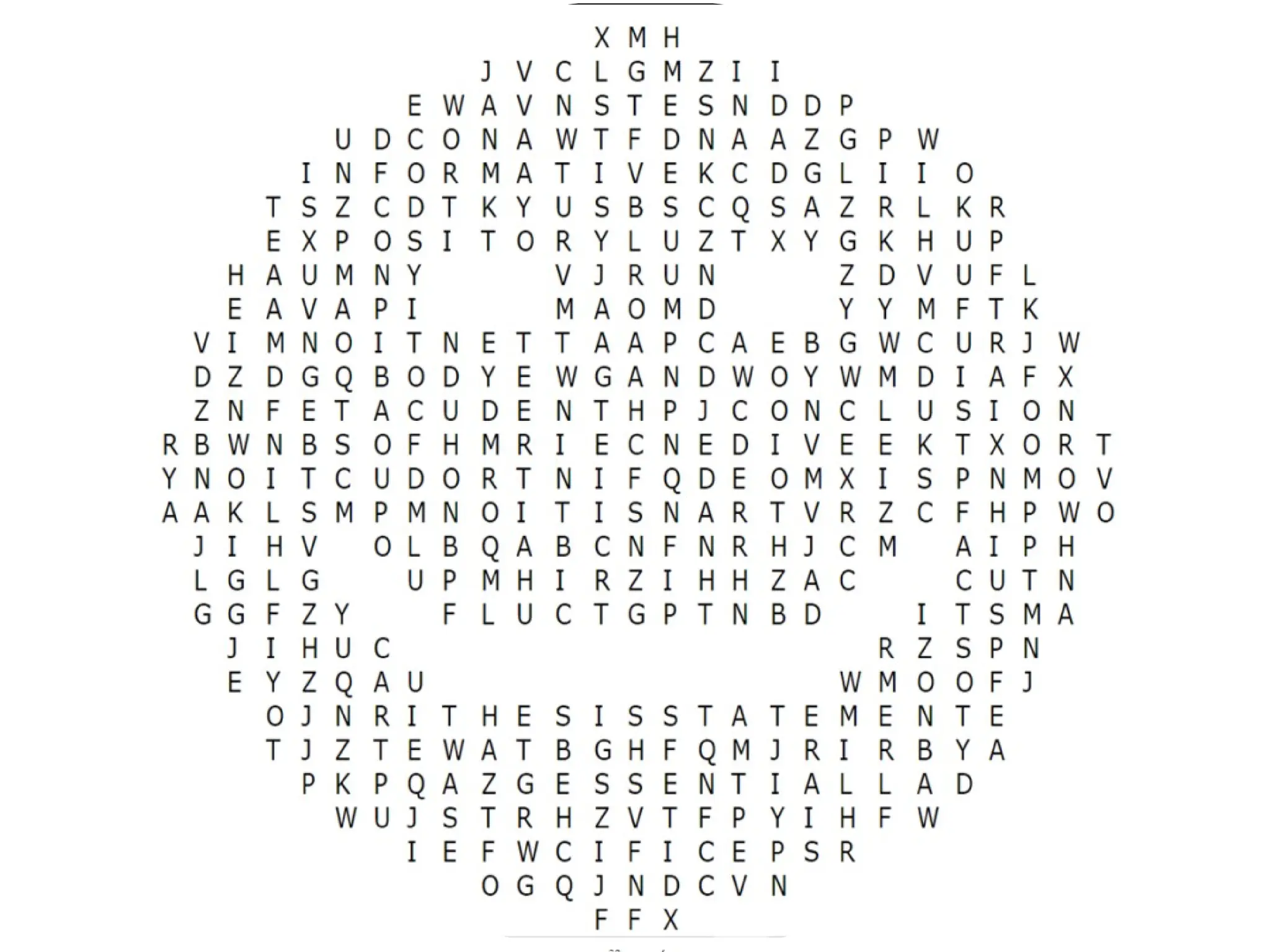
Directions: Read the
words in the WORD
BOX. Circle/highlight
each word you can
find in the puzzle
below. The words
maybe hidden in any
direction.
Writing is the most
complex of the four
macro skills in
communication.
What is Writing
Technique?
Writing technique is the
style an author uses to
convey his/her message
in a manner that is
effective and meaningful
to the audience.
 Informative writing
explains a specific topic.
The information
included in informative
texts is grounded on
facts.
Informative or
informational texts may
follow a number
of structures like
description, sequence,
cause and effect, problem-
solution, and
comparison and contrast.
An informative text
educates readers about a
topic or subject. It is meant
to inform others using
credible sources as
evidence – facts, statistics,
and other research data
Informative texts usually
answer the five Ws: who,
where, when, what,
and why. Sometimes, they
also describe “how” to do
or accomplish something.
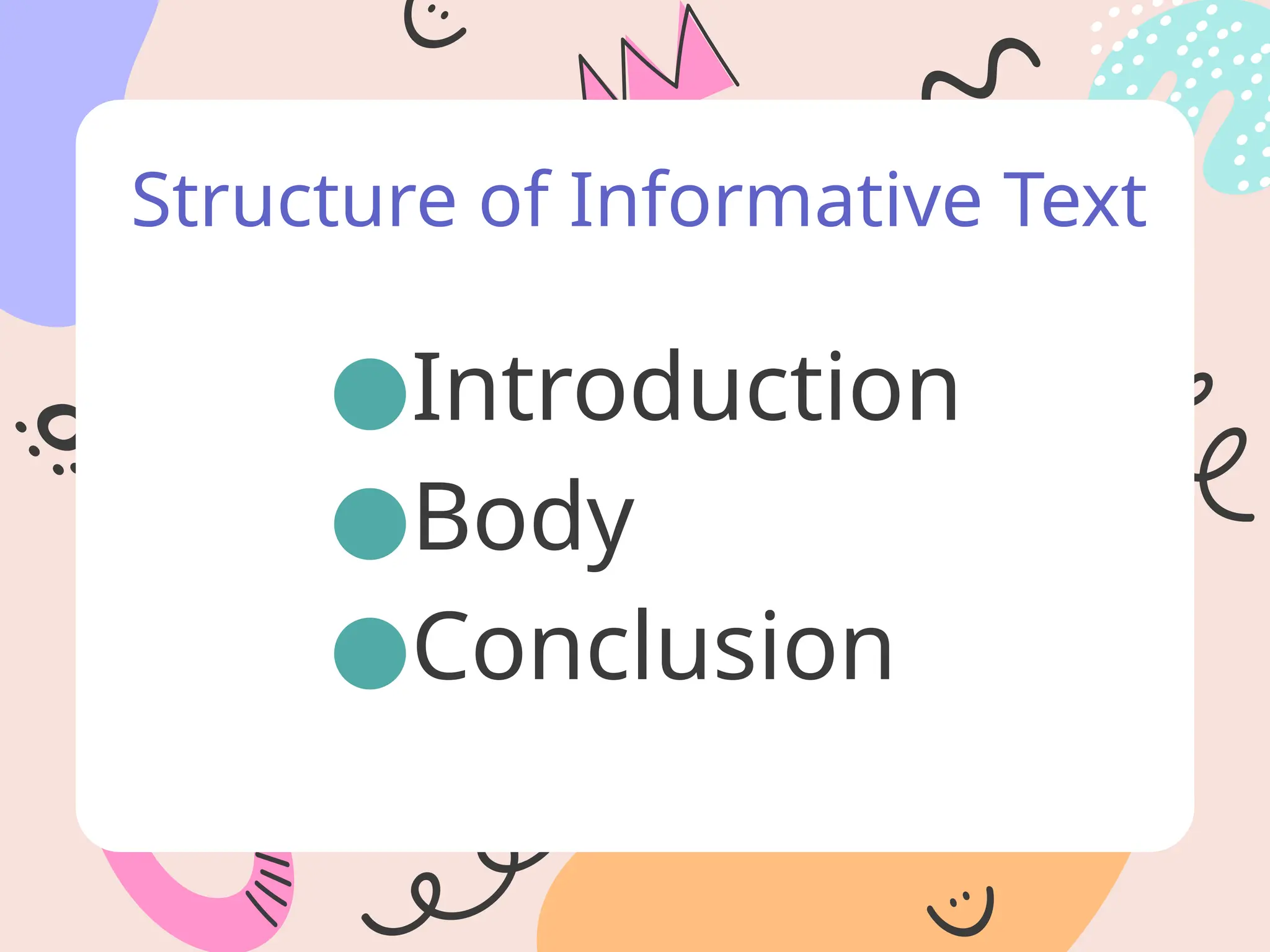
●Introduction
●Body
●Conclusion
Structure of Informative Text
Introduction
 Grabbing the attention of
readers is part of the
beginning
 It is where the thesis
statement is found
Thesis Statement
 the road map of an
informative text because
the whole essay is built
around it & summarizes
the entire essay.
Body
 The body or the middle
part is where the thesis
statement is fully
explained.
Body
 Evidence such as facts,
statistics, statements
from experts, and other
supporting details are
found in this section
Body
•This section requires citing
sources of information.
 evidence presented will
be the basis if the
information is reliable,
accurate, and unbiased.
Conclusion
 reiterates the thesis
statement and
summarizes the main
points of the informative
text
Features and
Techniques of
Informative Writing
Features and
Techniques of Informative
Writing
 tone
 clarity
 transition
words
TONE
 attitude of the
author toward
the topic
 formal, objective,
and neutral
CLARITY
 always be specific
 provide clear answers
to the five Ws and one
H
 clear, formal, unbiased
TRANSITION WORDS
 for organized and
smooth flow of ideas
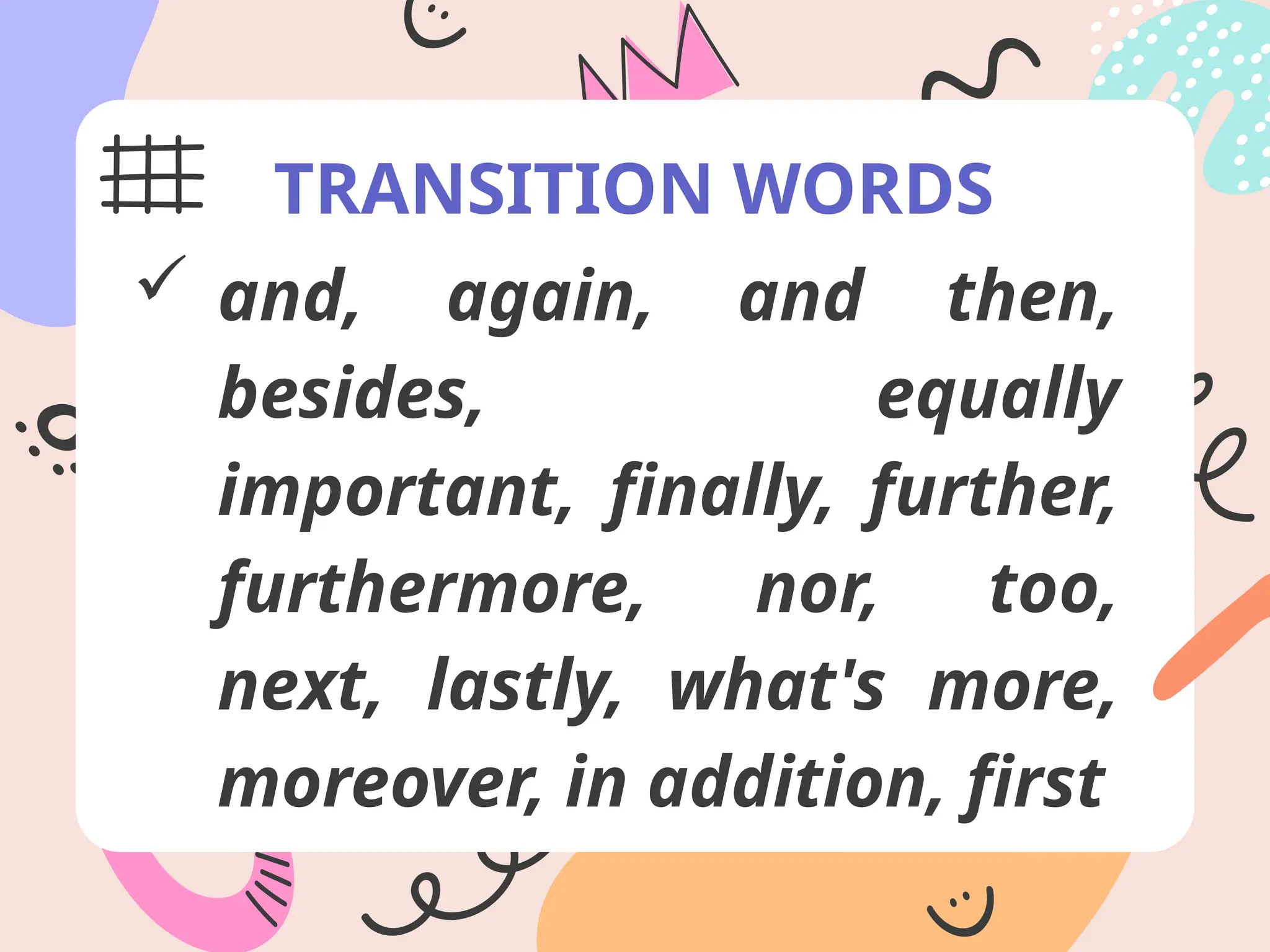
TRANSITION WORDS
 and, again, and then,
besides, equally
important, finally, further,
furthermore, nor, too,
next, lastly, what's more,
moreover, in addition, first
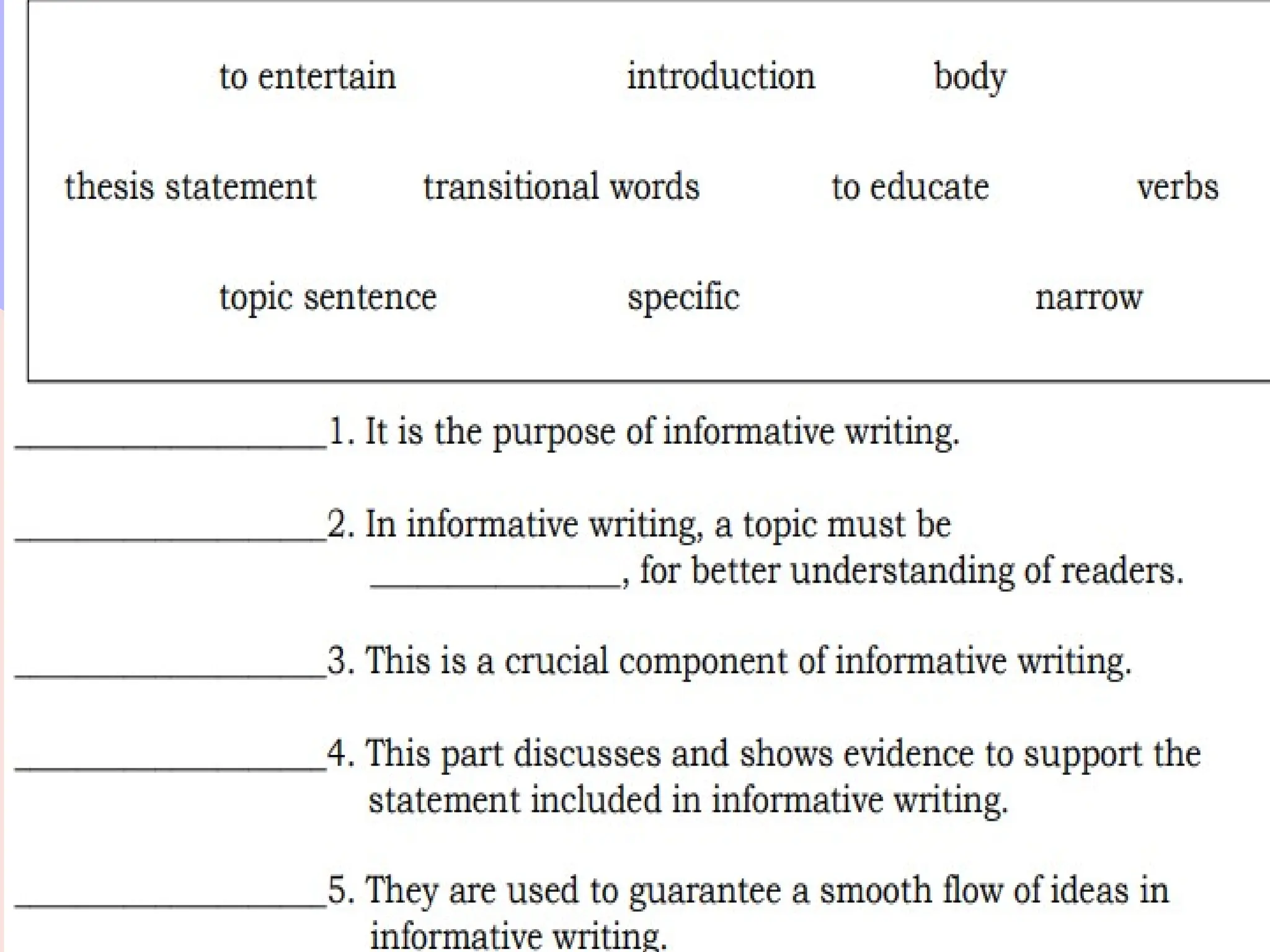
Directions: Identify what is
being asked in the following
statements. Choose the correct
answer in the scroll. Write your
answer on your notebook.
ACTIVITY 4: NAME ME!
Directions: Identify what is being
asked in the following statements.
Choose the correct answer in the
scroll. Write your answer on your
notebook.
ACTIVITY 4: NAME ME!
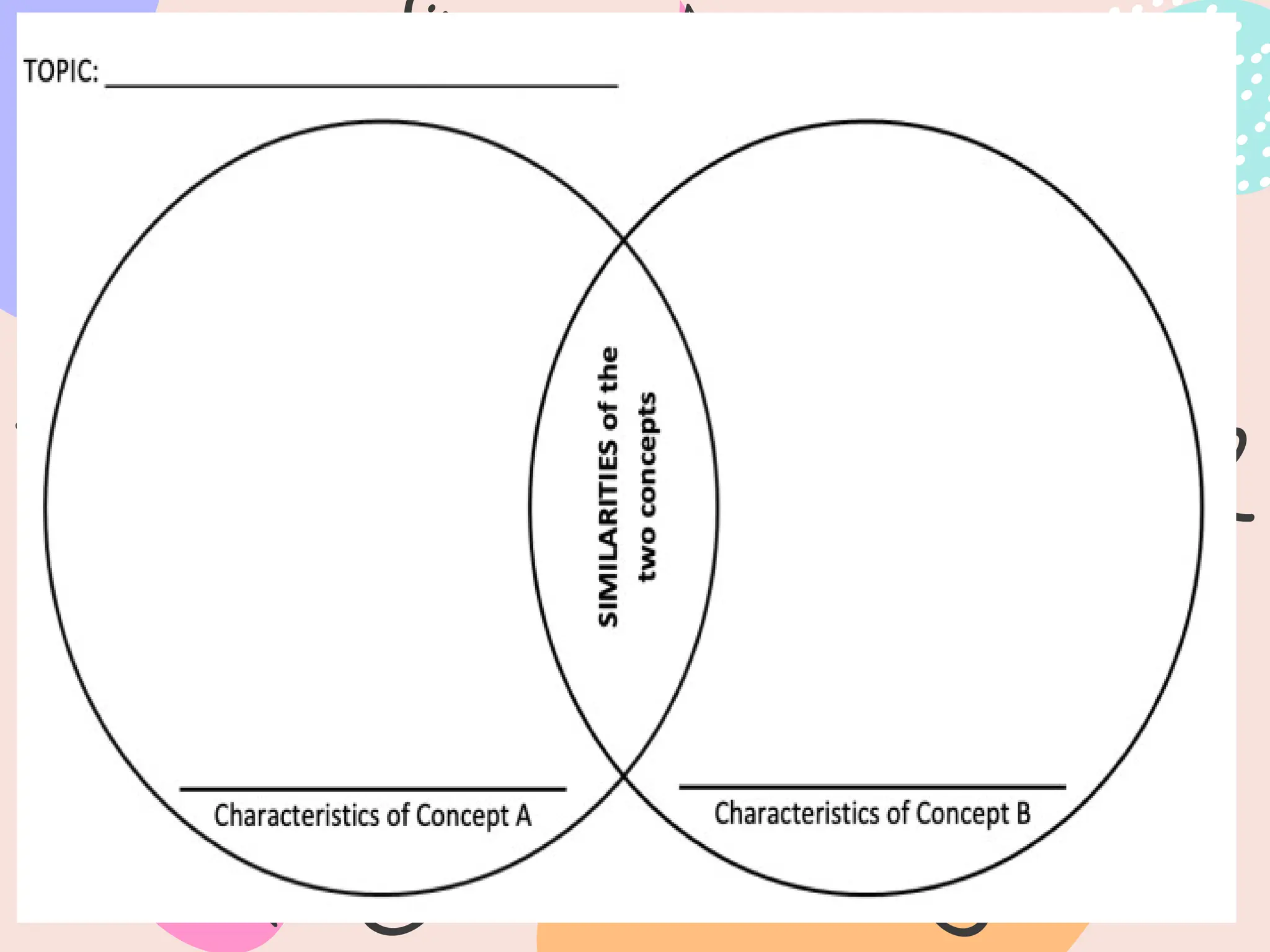
Directions: Apply the techniques in
writing informative texts by writing a
comparison and contrast essay on one of
the following topics. Use the Venn
Diagram to help you list the similarities
and differences of the two concepts you
are comparing and contrasting.
ACTIVITY 6:
COMPARE AND CONTRAST
Directions: Directions: Write a “How to
Guide” on any of the possible subjects listed
below. A“How to Guide” is a step-by-step
process that an individual will follow to
complete a task.
a. How to cook...
b. How to bake...
c. How to assemble...
ACTIVITY:
GUIDE ME
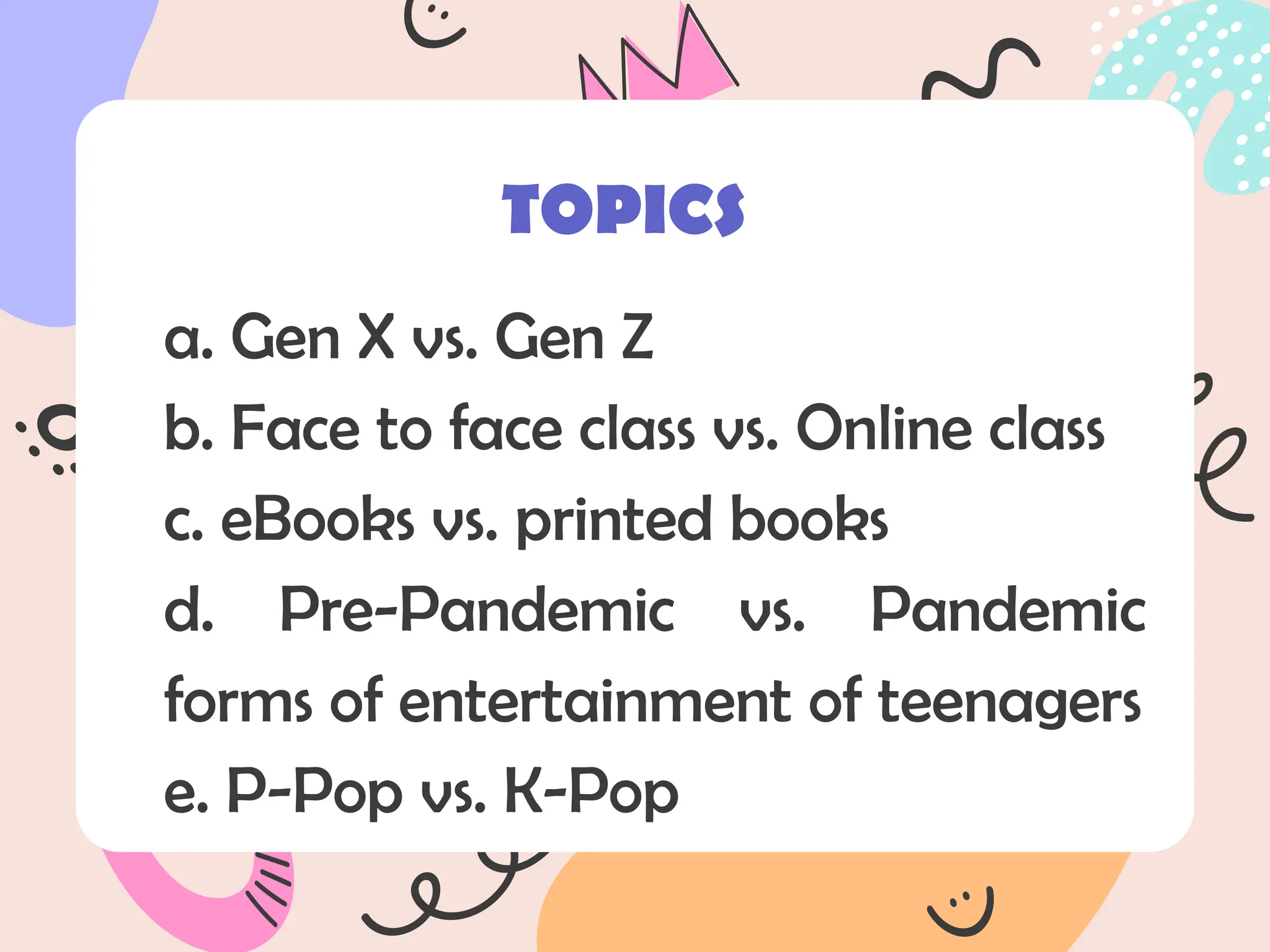
a. Gen X vs. Gen Z
b. Face to face class vs. Online class
c. eBooks vs. printed books
d. Pre-Pandemic vs. Pandemic
forms of entertainment of teenagers
e. P-Pop vs. K-Pop
TOPICS
informative writing techniques.pptx GR 10

informative writing techniques.pptx GR 10

Editor's Notes

  • #5 Writing is the most complex of the four macro skills in communication. It takes years and a lot of practice to master this skill. However, since writing is part of life, you need to hone your writing skills to prepare you for academic and professional demands.
  • #13 Grabbing the attention of readers is part of the beginning - formally known as introduction. It is where the thesis statement is found.
  • #14 The thesis statement is considered the most essential part of informative writing. According to Kristina Barroso in her article “Informative Writing Techniques”, the thesis statement is known as the road map of an informative text because the whole essay is built around it. The thesis sentence is a sentence that summarizes the entire essay. Aside from stating the thesis statement, writers introduce the main idea, provide definition for difficult words/concepts, and give a short description on what will be discussed.
  • #21 aside from the structure, other features and techniques of informative writing need to be considered. First is tone or attitude of the author toward the topic. The attitude of the author toward the topic should always be formal, objective, and neutral. As mentioned above, informative writing is fact-based - biased information is unacceptable. The writer’s opinion and beliefs do not have a place in informative writing.
  • #22 Second, always be specific. Provide clear answers to the five Ws and one H of the topic you are writing about. Employ language that is clear, formal, and unbiased
  • #23 Second, always be specific. Provide clear answers to the five Ws and one H of the topic you are writing about. Employ language that is clear, formal, and unbiased
  • #24 Second, always be specific. Provide clear answers to the five Ws and one H of the topic you are writing about. Employ language that is clear, formal, and unbiased