Informational Interview
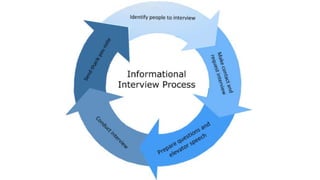
How to make an impression, build a network and get an offer
Identify people to interview
1. Networking
• Who do you know?
• Reach out and ask them: Would you be willing to give
me an introductions?
• 2. Research
• Online. Newspaper Articles, LinkedIn
Make contact and request an interview
1. Request a Meeting
• Who do you know? Reach out and ask them: Would you be willing to give me an
introduction?
• Research, companies in this area, identify a contact.
• How do you reach out?
• Send an email
• Call
Email Networking Message Template
RealCareer™ Employability Skills 5
Subject Salutation
Bod
y
Closing
Contact
Info
Soft Skill: Networking
Phone Call Script
“Hi, my name is ———————- and I’m a student at the Biddeford Regional
Center of Technology. I got your name from —————-.
You’re in a line of work that I’m interested in, and I was hoping that you
could help me gain insights into the profession.
I’m sure that my questions could be answered in a 20-30-minute
informational interview.”
Requesting contact via phone
People who grant informational interviews are generally
willing to share 20-30 minutes of their time to explain their
expertise in their field.
Please remember to be flexible in your scheduling, as these
volunteer interviewees may have prior commitments.
If your prospective interviewee seems too busy to talk to you,
ask a convenient time when you could call back to discuss
scheduling an appointment.
Arranging the interview
• Ask when a convenient time would be to talk or meet in person.
• Sometimes the person will want to talk over the phone, but often he
or she will invite you to his or her workplace. When you can, choose
that the interview be at their workplace because you’ll learn more
and make a stronger connection with the person.
• Have your questions ready in case they can only talk by phone.
• Most of the time, your interviewee will be more than willing to take
20-30 minutes to answer your questions.
Prepare Questions
1. Do Your Research
Visit their website, what does the company do?
Look at their LinkedIn Profile or Google them
Think about what you’d like to know about their
• job,
• how they got there, what their day-to-day is like
• What they wish they knew when they were your age
• Advice they would have
• Someone else they recommend you talk to
Prepare Elevator Pitch
2. Rehearse why you’re interested and create your elevator pitch:
An elevator pitch is basically a 15- to 30-second soundbite that explains to people who you are,
what you do and what kind of position you’re seeking.
The idea is that you can deliver your pitch to someone in the amount of time it will take an
elevator to get you both where you're going.
See: How to Prepare Your Elevator Pitch on my Website.
Conduct Interview(s)
Make sure you know:
• What are the responsibilities?
• What kind of education or training is required?
• What is the pay range?
• What is the work environment?
• What are the Pros / Cons of this job?
Send a Thank You Letter
Standard Parts of a Thank You Letter
Heading
Date
Recipient Information
Salutation
Body Paragraph
Closing Signature

Informational interview

  • 1.
    Informational Interview How tomake an impression, build a network and get an offer
  • 3.
    Identify people tointerview 1. Networking • Who do you know? • Reach out and ask them: Would you be willing to give me an introductions? • 2. Research • Online. Newspaper Articles, LinkedIn
  • 4.
    Make contact andrequest an interview 1. Request a Meeting • Who do you know? Reach out and ask them: Would you be willing to give me an introduction? • Research, companies in this area, identify a contact. • How do you reach out? • Send an email • Call
  • 5.
    Email Networking MessageTemplate RealCareer™ Employability Skills 5 Subject Salutation Bod y Closing Contact Info Soft Skill: Networking
  • 6.
    Phone Call Script “Hi,my name is ———————- and I’m a student at the Biddeford Regional Center of Technology. I got your name from —————-. You’re in a line of work that I’m interested in, and I was hoping that you could help me gain insights into the profession. I’m sure that my questions could be answered in a 20-30-minute informational interview.”
  • 7.
    Requesting contact viaphone People who grant informational interviews are generally willing to share 20-30 minutes of their time to explain their expertise in their field. Please remember to be flexible in your scheduling, as these volunteer interviewees may have prior commitments. If your prospective interviewee seems too busy to talk to you, ask a convenient time when you could call back to discuss scheduling an appointment.
  • 8.
    Arranging the interview •Ask when a convenient time would be to talk or meet in person. • Sometimes the person will want to talk over the phone, but often he or she will invite you to his or her workplace. When you can, choose that the interview be at their workplace because you’ll learn more and make a stronger connection with the person. • Have your questions ready in case they can only talk by phone. • Most of the time, your interviewee will be more than willing to take 20-30 minutes to answer your questions.
  • 9.
    Prepare Questions 1. DoYour Research Visit their website, what does the company do? Look at their LinkedIn Profile or Google them Think about what you’d like to know about their • job, • how they got there, what their day-to-day is like • What they wish they knew when they were your age • Advice they would have • Someone else they recommend you talk to
  • 10.
    Prepare Elevator Pitch 2.Rehearse why you’re interested and create your elevator pitch: An elevator pitch is basically a 15- to 30-second soundbite that explains to people who you are, what you do and what kind of position you’re seeking. The idea is that you can deliver your pitch to someone in the amount of time it will take an elevator to get you both where you're going. See: How to Prepare Your Elevator Pitch on my Website.
  • 11.
    Conduct Interview(s) Make sureyou know: • What are the responsibilities? • What kind of education or training is required? • What is the pay range? • What is the work environment? • What are the Pros / Cons of this job?
  • 12.
    Send a ThankYou Letter Standard Parts of a Thank You Letter Heading Date Recipient Information Salutation Body Paragraph Closing Signature