Information
Systems
WHAT IS DATA?
• Facts, statistics used for reference or analysis.
• Numbers, characters, symbols, images etc., which can
be processed by a computer.
• Data must be interpreted, by a human or machine, to
derive meaning
• So data is meaningless
DATA EXAMPLES
Yes, Yes, No, Yes, No, Yes, No, Yes
42, 63, 96, 74, 56, 86
111192, 111234
None of the above data sets have any meaning until they
are given a CONTEXT and PROCESSED into a useable
form
DATA CAN TAKE MANY FORMS
ALPHANUMERIC DATA (COMBINATION OF NUMBERS AND LETTERS)
TEXT DATA (SENTENCES & PARAGRAPHS USED IN WRITTEN COMMUNICATION)
IMAGE DATA (GRAPHICS, SHAPES, FIGURES ETC)
AUDIO (HUMAN VOICE & OTHER SOUNDS)
WHAT IS INFORMATION?
Data that has been processed within a
context to give it meaning.
"Information is data that has been processed”
"Information is interpreted data"
Information is meaningful
Data need to be turned into meaningful information
and presented in its most useful format
 For example: What does the number
29061996 mean?
 Is it:
 A birthday? (29th June 1996)
 A bank account number?
 A club membership number?
 A telephone number?
 Without processing or more information this
data is meaningless.
EXAMPLE 1
• The colour red is data as it has no meaning.
• What information we attach to the red colour is information
• For example:
• On a traffic light it means STOP.
• In a football match a red card means that the player has been suspended.
• In certain places the red colour may mean a danger zone.
EXAMPLE 2
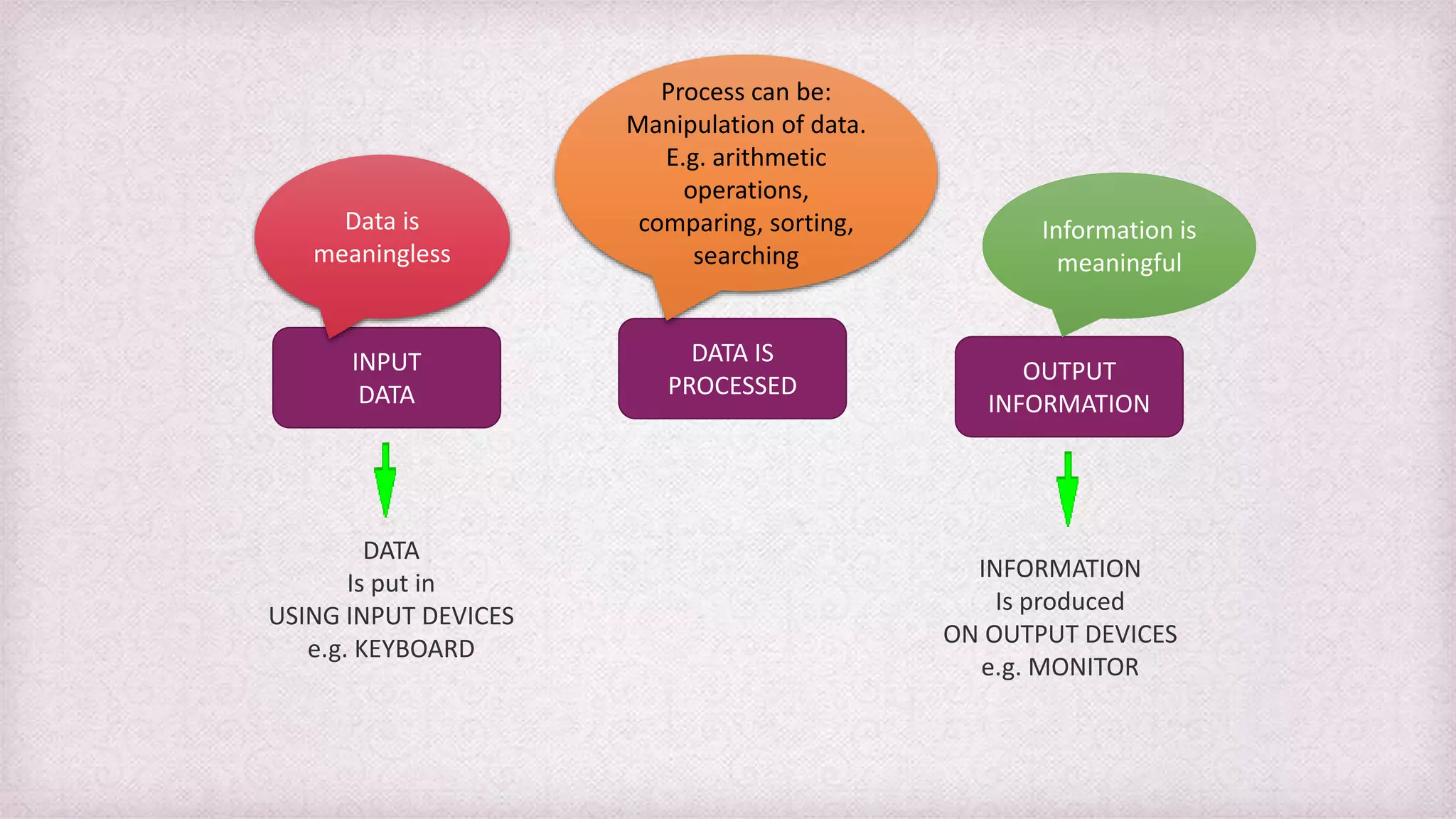
INPUT
DATA
DATA IS
PROCESSED
OUTPUT
INFORMATION
DATA
Is put in
USING INPUT DEVICES
e.g. KEYBOARD
INFORMATION
Is produced
ON OUTPUT DEVICES
e.g. MONITOR
Data is
meaningless
Information is
meaningful
Process can be:
Manipulation of data.
E.g. arithmetic
operations,
comparing, sorting,
searching
• A system is a set of components that works together to achieve a common goal.
• A system accepts input, processes it, and produces an output.
System
SystemInput Output
• Closed system
• Open SystemTwo types of system
• It is a set of inter-related components that
• Collects Data
• Manipulate Data
• Disseminate data and information
• Provide feedback to meet an objective
Information System
Input Process Output
Feedback
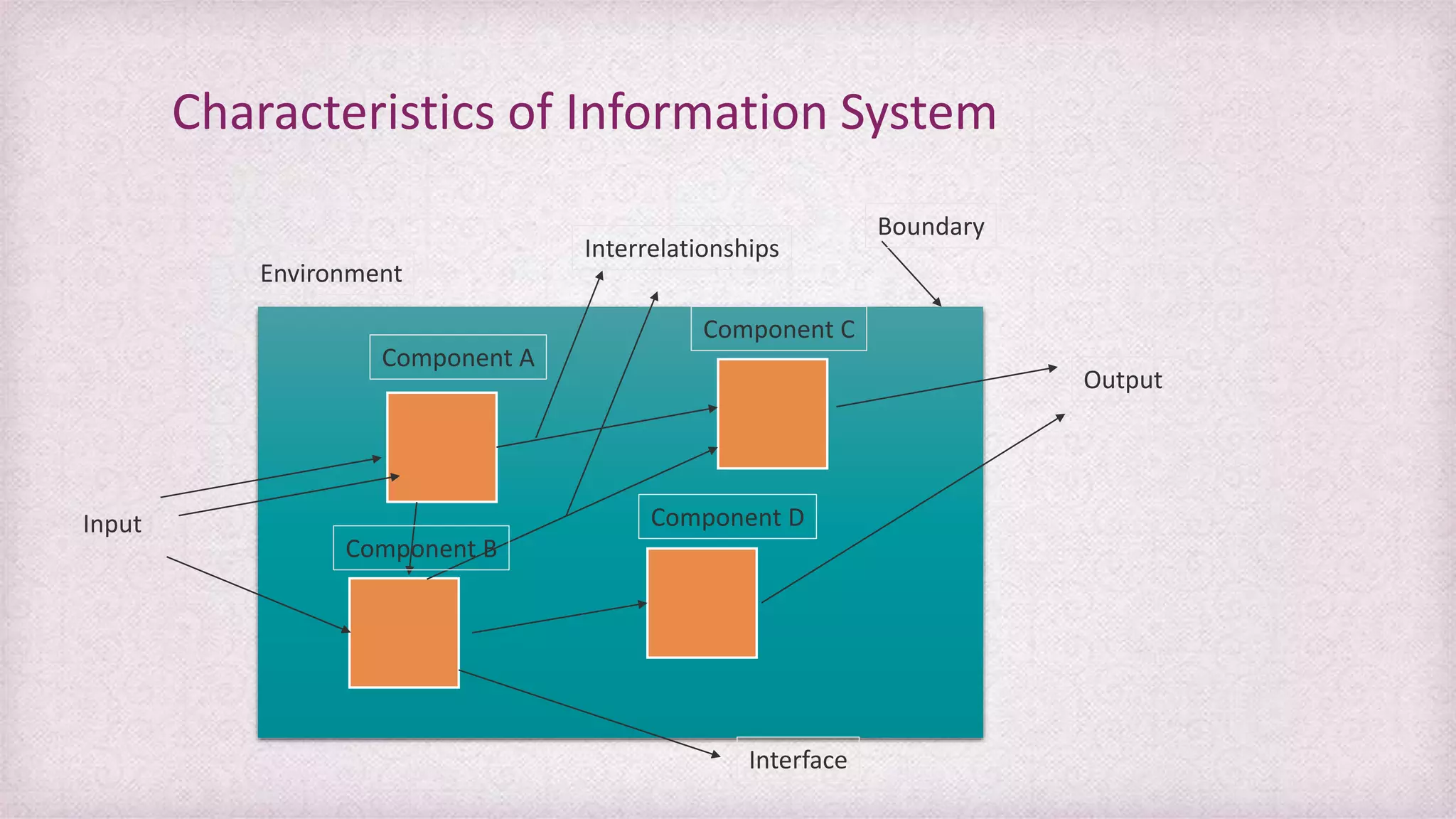
Characteristics of Information System
Component A
Component B
Component D
Component C
Interrelationships
Boundary
Input
Output
Environment
Interface
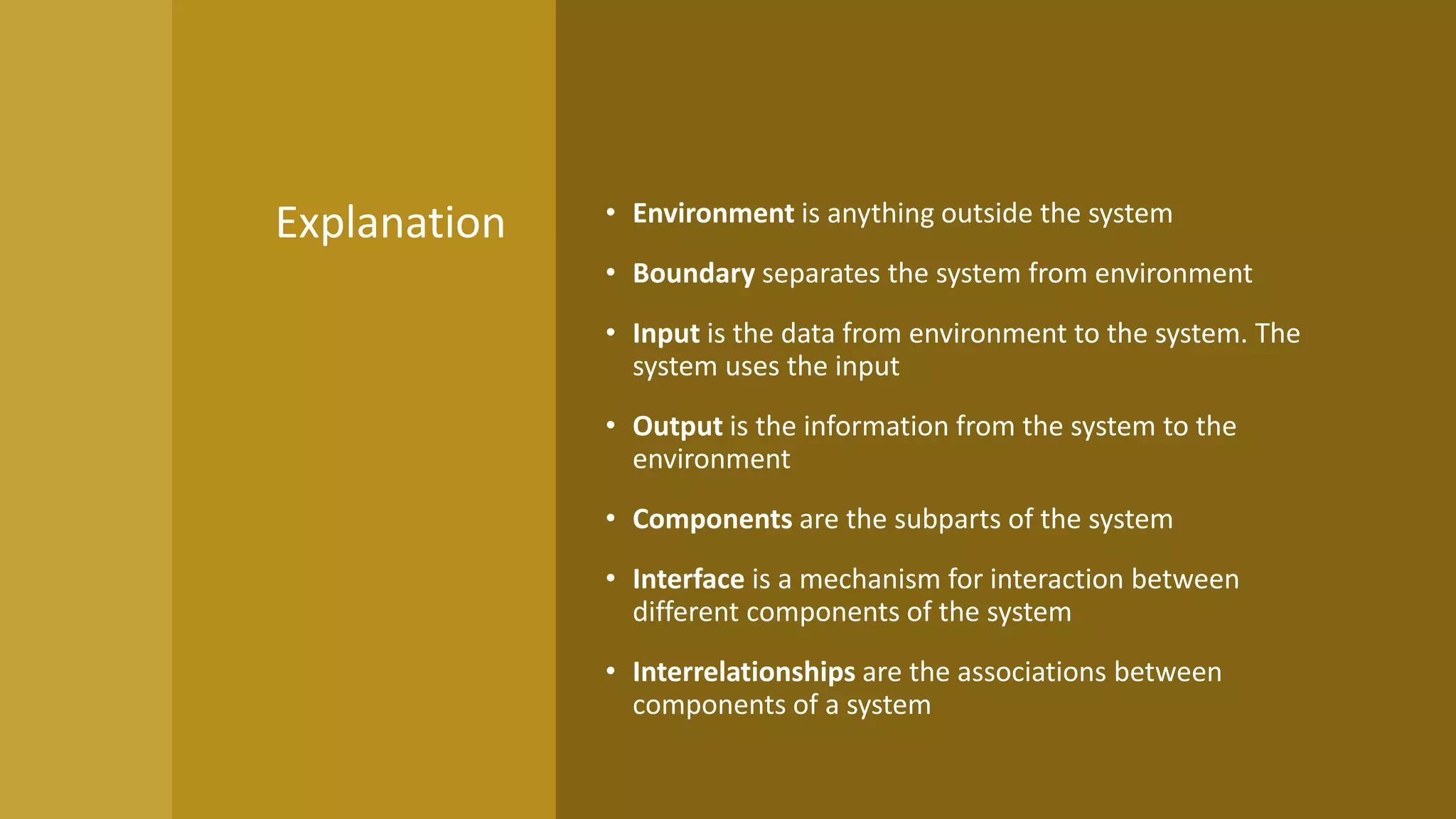
• Environment is anything outside the system
• Boundary separates the system from environment
• Input is the data from environment to the system. The
system uses the input
• Output is the information from the system to the
environment
• Components are the subparts of the system
• Interface is a mechanism for interaction between
different components of the system
• Interrelationships are the associations between
components of a system
Explanation
Computer-Based Information System
(CBIS)
CBIS
Telecommu
nications
procedures
people
Database
software
Hardware
• Hardware:
• Computer devices like keyboard, monitor, processor, and printer, used for performing the input,
processing, and output activities.
• Software:
• Computer programs that govern the operation of the computer
• Database:
• An organized collection of data,consisting of two or more related data files.
Components of CBIS
• People:
• Those who work with the CBIS. People are the most important element in CBIS
• Procedures:
• Strategies, policies, methods, and rules for using the CBIS
• Telecommunications:
• telecommunication, and network is used for connecting the computers and computer devices in
a building, city, country, or across the world to enable electronic communications.
Condt…
Categories of Information Systems
EIS
Middle Level
Operations
MIS
DSS
TPS
OAS
High level
Operations
Low level Operations
Sales Marketing Accounting HR
• OSS process data generated by business operations, and is
required for the low-level operations. The catogeries of OSS
are:
• Transaction Processing System(TPS)
• Office Automation System(OAS)
Operations Support Systems
• Provides information and support needed for decision making
by the managers at middle level and top level of the
organization. Major categories of management support
systems are:
• Management Information System(MIS)
• Decision Support Systems(DSS)
• Executive Information System(ESS)
Management Support System
• Expert Systems
• Enterprise Resource Planning
• E-Commerce System
Specialized Information System
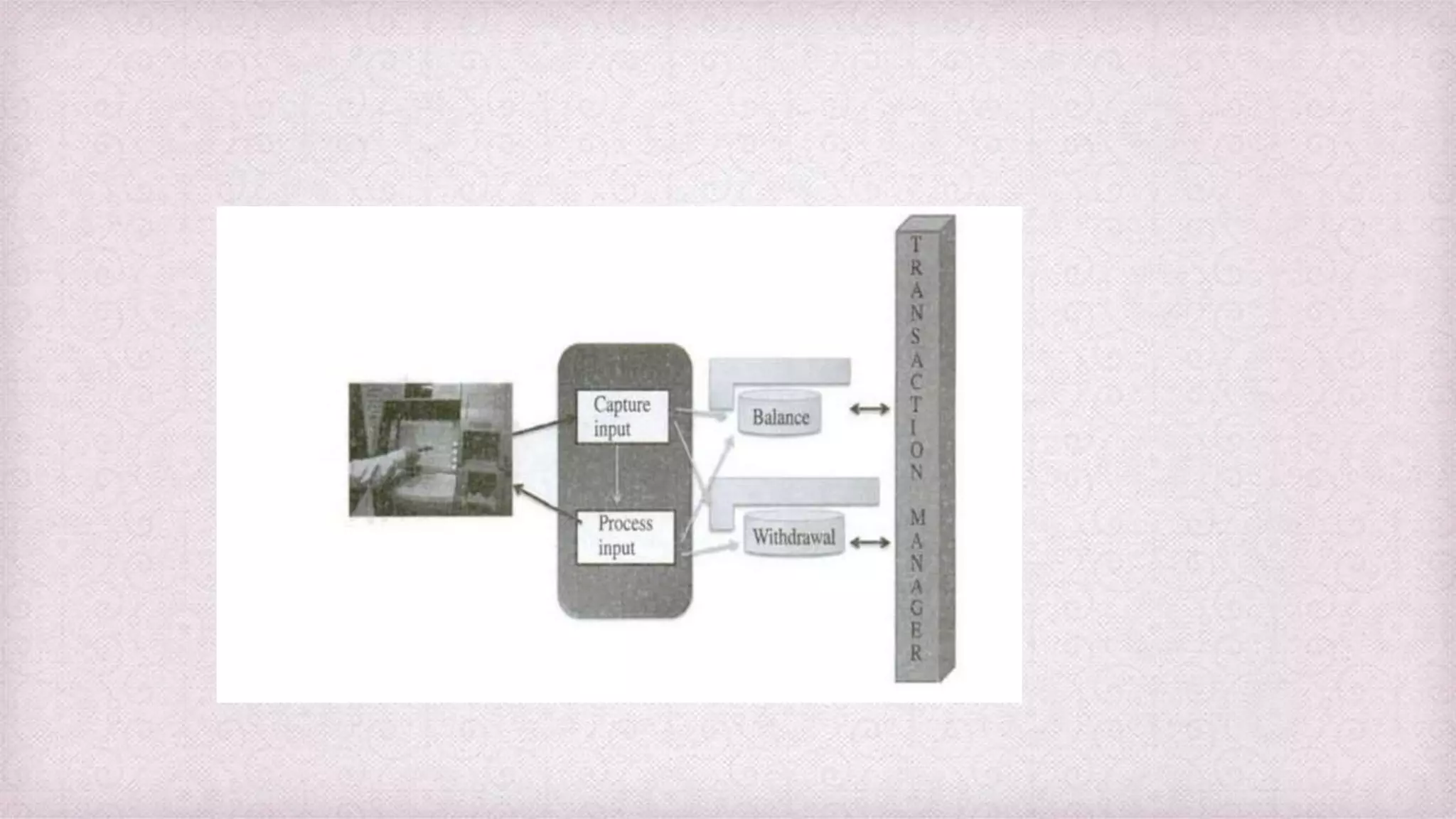
• Transaction is a basic level of activity that s performed during
the business operations.
• It is the business-related exchange of payments to employees,
sales to customers, and payments to suppliers.
• Examples of transactions are- withdrawal of money from bank,
booking ticket for an airline, selling of goods to the customer
etc.
Transaction Processing System
• OAS supports automation of the tasks in an office. It supports
general office work for handling and managing documents.
• It facilitates communication, both within the office, and,
between the office and its environment.
• Spreadsheets, presentation packages like PowerPoint, personal
data base systems, and, note-taking systems like appointment
book, notepad and calendar, are parts of an OAS.
• It uses communication systems like Internet for transmitting the
messages, documents, images, video or voice etc.
Office Automation System
• MIS is the collection of people, procedures, software, databases and devices that
provides information to managers and decision makers.
• MIS provides information to the managers to help them informed decisions.
• MIS supports managers in the decision making process and enhances their productivity
and performance.
• For example, MIS may generate information related to the sales of a a product in a
month.
Management Information System
Example for
MIS
• MIS generates different kinds of reports like summary report, exception report, and
detailed report. Summaries are for the high-level management and give statistical
information to the managers
• Exception reports provide information about activities that are different from the
functioning.
• Detailed reports generally provide operational level reports.
• DSS is the collection of people, procedures, software, databases and devices that
supports problem specific decision making
• DSS facilitates decision making by applying mathematical or logical models and
interactions to solve problems.
• DSS are user-friendly and highly interactive.
• DSS focuses on decision making effectiveness.
Decision Support System
• DSS use data from the TPS and MIS, and, also any new data from external sources.
• DSS provide powerful models and tools for simulation, optimization etc., to the
managers so that they can evaluate from several alternatives before making a decision.
• For a particular problem, the managers can use DSS to get outcome of several different
scenarios, and then compare them to arrive at the right decision.
DSS
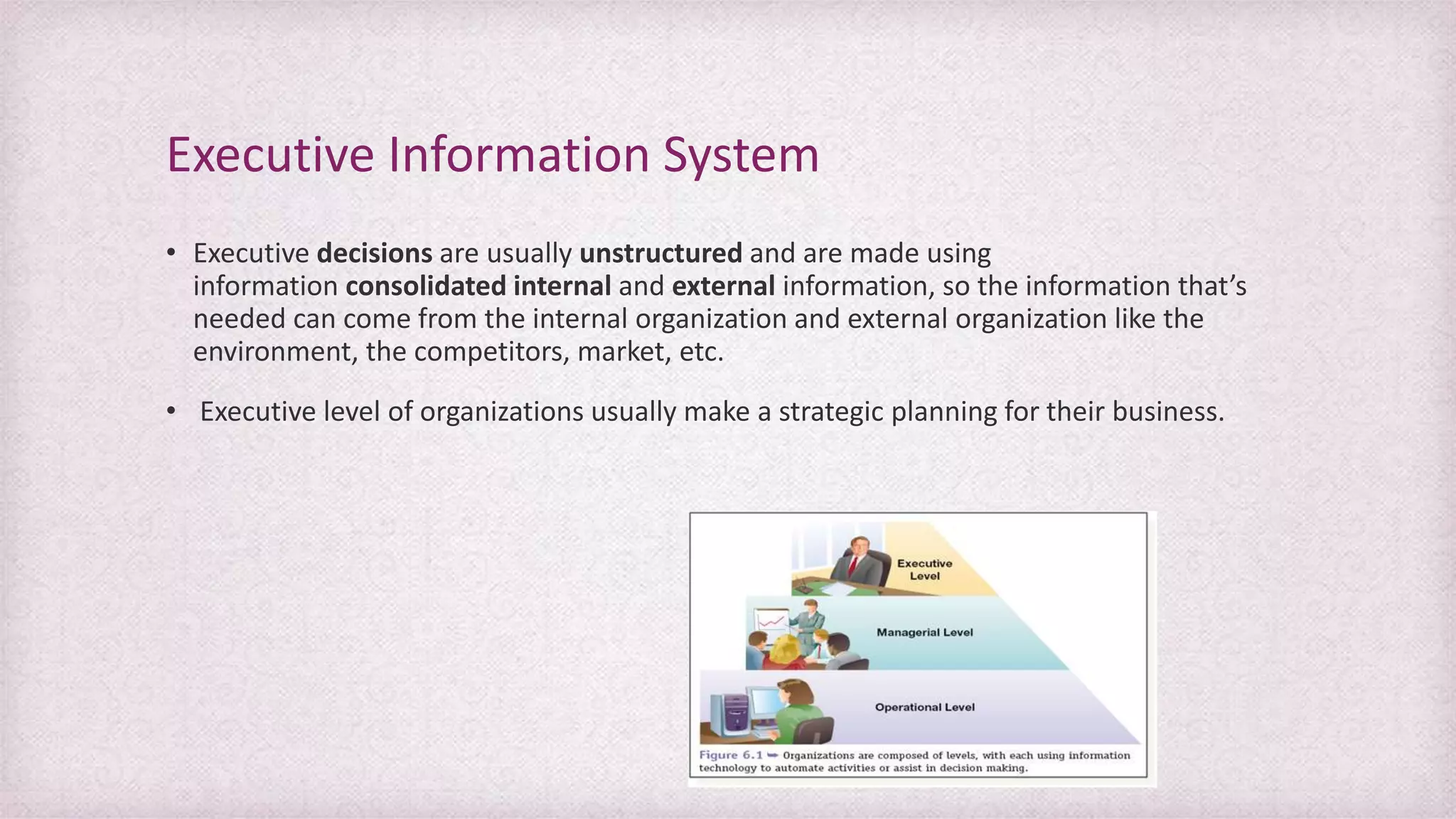
• Executive decisions are usually unstructured and are made using
information consolidated internal and external information, so the information that’s
needed can come from the internal organization and external organization like the
environment, the competitors, market, etc.
• Executive level of organizations usually make a strategic planning for their business.
Executive Information System
• Besides, executive also response to strategic issues related with their business.
• Who : Executive-Level Managers
• What : Aggregate Summaries of Past Organizational Data and Projections of
the Future
• Why : Improve Organizational Strategy and Planning
Expert System
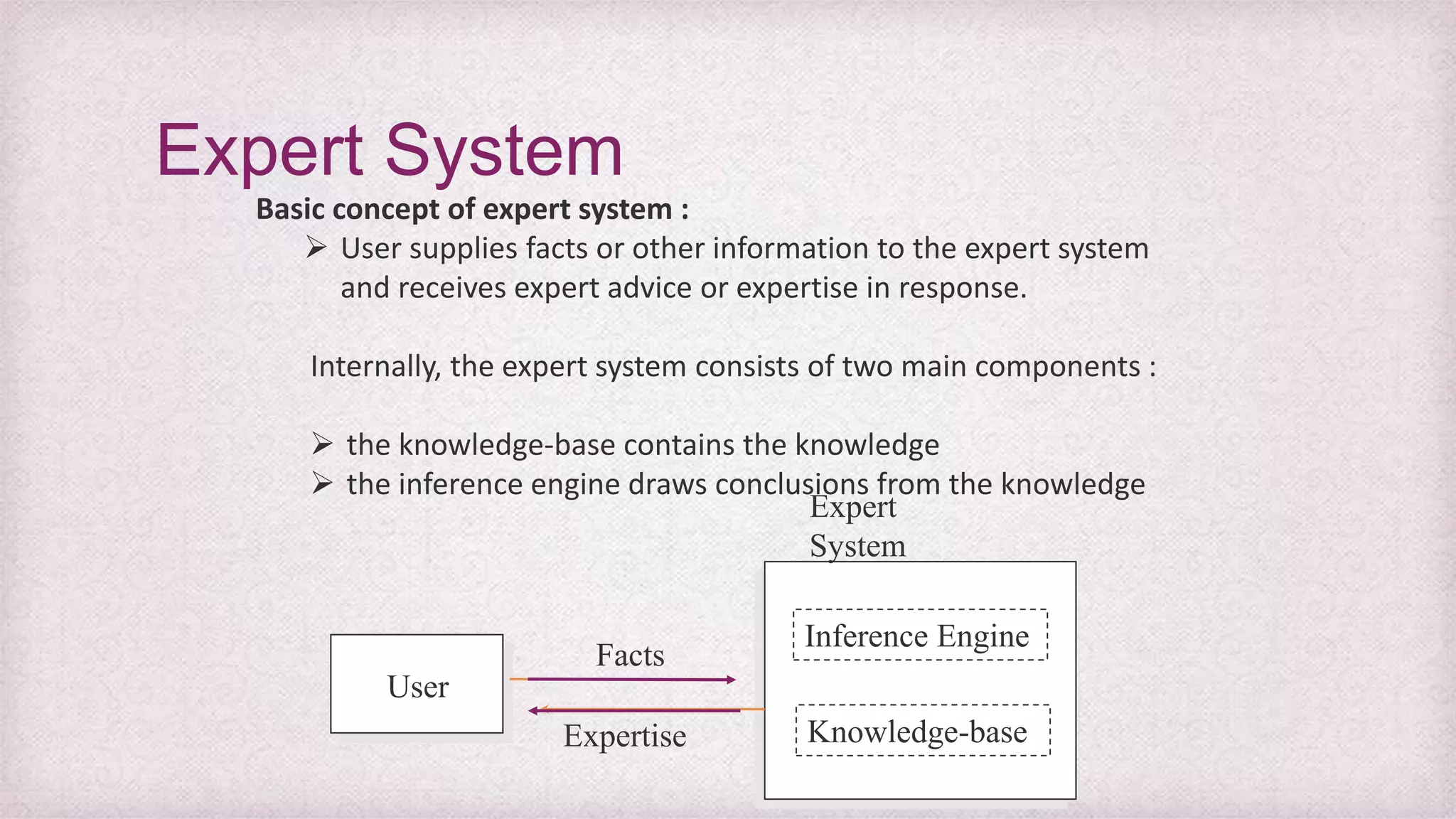
Basic concept of expert system :
 User supplies facts or other information to the expert system
and receives expert advice or expertise in response.
Internally, the expert system consists of two main components :
 the knowledge-base contains the knowledge
 the inference engine draws conclusions from the knowledge
Knowledge-base
Inference Engine
User
Expertise
Expert
System
Facts
• ERP is an Enterprise Application
• ERP software is considered to be a type
of enterprise application, that is software
designed to be used by larger businesses and
often requires dedicated teams to customize
and analyze the data and to handle upgrades
and deployment.
• They are used to improve the efficiency and
productivity levels, and improves customer
service
• SAP is an example of ERP system, SAP stands
for Systems, Applications and Products.
ERP
• E-commerce (electronic commerce or EC) is the
buying and selling of goods and services, or the
transmitting of funds or data, over an electronic
network, primarily the Internet.
• These business transactions occur either
business-to-business, business-to-consumer,
consumer-to-consumer or consumer-to-business.
E-Commerce (Electronic Commerce Or EC)
Definition

Information systems

  • 1.
  • 2.
    WHAT IS DATA? •Facts, statistics used for reference or analysis. • Numbers, characters, symbols, images etc., which can be processed by a computer. • Data must be interpreted, by a human or machine, to derive meaning • So data is meaningless
  • 3.
    DATA EXAMPLES Yes, Yes,No, Yes, No, Yes, No, Yes 42, 63, 96, 74, 56, 86 111192, 111234 None of the above data sets have any meaning until they are given a CONTEXT and PROCESSED into a useable form
  • 4.
    DATA CAN TAKEMANY FORMS ALPHANUMERIC DATA (COMBINATION OF NUMBERS AND LETTERS) TEXT DATA (SENTENCES & PARAGRAPHS USED IN WRITTEN COMMUNICATION) IMAGE DATA (GRAPHICS, SHAPES, FIGURES ETC) AUDIO (HUMAN VOICE & OTHER SOUNDS)
  • 5.
    WHAT IS INFORMATION? Datathat has been processed within a context to give it meaning. "Information is data that has been processed” "Information is interpreted data" Information is meaningful
  • 6.
    Data need tobe turned into meaningful information and presented in its most useful format  For example: What does the number 29061996 mean?  Is it:  A birthday? (29th June 1996)  A bank account number?  A club membership number?  A telephone number?  Without processing or more information this data is meaningless.
  • 7.
  • 8.
    • The colourred is data as it has no meaning. • What information we attach to the red colour is information • For example: • On a traffic light it means STOP. • In a football match a red card means that the player has been suspended. • In certain places the red colour may mean a danger zone. EXAMPLE 2
  • 9.
    INPUT DATA DATA IS PROCESSED OUTPUT INFORMATION DATA Is putin USING INPUT DEVICES e.g. KEYBOARD INFORMATION Is produced ON OUTPUT DEVICES e.g. MONITOR Data is meaningless Information is meaningful Process can be: Manipulation of data. E.g. arithmetic operations, comparing, sorting, searching
  • 10.
    • A systemis a set of components that works together to achieve a common goal. • A system accepts input, processes it, and produces an output. System SystemInput Output
  • 11.
    • Closed system •Open SystemTwo types of system
  • 12.
    • It isa set of inter-related components that • Collects Data • Manipulate Data • Disseminate data and information • Provide feedback to meet an objective Information System Input Process Output Feedback
  • 13.
    Characteristics of InformationSystem Component A Component B Component D Component C Interrelationships Boundary Input Output Environment Interface
  • 14.
    • Environment isanything outside the system • Boundary separates the system from environment • Input is the data from environment to the system. The system uses the input • Output is the information from the system to the environment • Components are the subparts of the system • Interface is a mechanism for interaction between different components of the system • Interrelationships are the associations between components of a system Explanation
  • 15.
  • 16.
    • Hardware: • Computerdevices like keyboard, monitor, processor, and printer, used for performing the input, processing, and output activities. • Software: • Computer programs that govern the operation of the computer • Database: • An organized collection of data,consisting of two or more related data files. Components of CBIS
  • 17.
    • People: • Thosewho work with the CBIS. People are the most important element in CBIS • Procedures: • Strategies, policies, methods, and rules for using the CBIS • Telecommunications: • telecommunication, and network is used for connecting the computers and computer devices in a building, city, country, or across the world to enable electronic communications. Condt…
  • 18.
    Categories of InformationSystems EIS Middle Level Operations MIS DSS TPS OAS High level Operations Low level Operations Sales Marketing Accounting HR
  • 19.
    • OSS processdata generated by business operations, and is required for the low-level operations. The catogeries of OSS are: • Transaction Processing System(TPS) • Office Automation System(OAS) Operations Support Systems
  • 20.
    • Provides informationand support needed for decision making by the managers at middle level and top level of the organization. Major categories of management support systems are: • Management Information System(MIS) • Decision Support Systems(DSS) • Executive Information System(ESS) Management Support System
  • 21.
    • Expert Systems •Enterprise Resource Planning • E-Commerce System Specialized Information System
  • 22.
    • Transaction isa basic level of activity that s performed during the business operations. • It is the business-related exchange of payments to employees, sales to customers, and payments to suppliers. • Examples of transactions are- withdrawal of money from bank, booking ticket for an airline, selling of goods to the customer etc. Transaction Processing System
  • 24.
    • OAS supportsautomation of the tasks in an office. It supports general office work for handling and managing documents. • It facilitates communication, both within the office, and, between the office and its environment. • Spreadsheets, presentation packages like PowerPoint, personal data base systems, and, note-taking systems like appointment book, notepad and calendar, are parts of an OAS. • It uses communication systems like Internet for transmitting the messages, documents, images, video or voice etc. Office Automation System
  • 25.
    • MIS isthe collection of people, procedures, software, databases and devices that provides information to managers and decision makers. • MIS provides information to the managers to help them informed decisions. • MIS supports managers in the decision making process and enhances their productivity and performance. • For example, MIS may generate information related to the sales of a a product in a month. Management Information System
  • 26.
  • 27.
    • MIS generatesdifferent kinds of reports like summary report, exception report, and detailed report. Summaries are for the high-level management and give statistical information to the managers • Exception reports provide information about activities that are different from the functioning. • Detailed reports generally provide operational level reports.
  • 28.
    • DSS isthe collection of people, procedures, software, databases and devices that supports problem specific decision making • DSS facilitates decision making by applying mathematical or logical models and interactions to solve problems. • DSS are user-friendly and highly interactive. • DSS focuses on decision making effectiveness. Decision Support System
  • 29.
    • DSS usedata from the TPS and MIS, and, also any new data from external sources. • DSS provide powerful models and tools for simulation, optimization etc., to the managers so that they can evaluate from several alternatives before making a decision. • For a particular problem, the managers can use DSS to get outcome of several different scenarios, and then compare them to arrive at the right decision.
  • 30.
  • 31.
    • Executive decisionsare usually unstructured and are made using information consolidated internal and external information, so the information that’s needed can come from the internal organization and external organization like the environment, the competitors, market, etc. • Executive level of organizations usually make a strategic planning for their business. Executive Information System
  • 32.
    • Besides, executivealso response to strategic issues related with their business. • Who : Executive-Level Managers • What : Aggregate Summaries of Past Organizational Data and Projections of the Future • Why : Improve Organizational Strategy and Planning
  • 33.
    Expert System Basic conceptof expert system :  User supplies facts or other information to the expert system and receives expert advice or expertise in response. Internally, the expert system consists of two main components :  the knowledge-base contains the knowledge  the inference engine draws conclusions from the knowledge Knowledge-base Inference Engine User Expertise Expert System Facts
  • 34.
    • ERP isan Enterprise Application • ERP software is considered to be a type of enterprise application, that is software designed to be used by larger businesses and often requires dedicated teams to customize and analyze the data and to handle upgrades and deployment. • They are used to improve the efficiency and productivity levels, and improves customer service • SAP is an example of ERP system, SAP stands for Systems, Applications and Products. ERP
  • 35.
    • E-commerce (electroniccommerce or EC) is the buying and selling of goods and services, or the transmitting of funds or data, over an electronic network, primarily the Internet. • These business transactions occur either business-to-business, business-to-consumer, consumer-to-consumer or consumer-to-business. E-Commerce (Electronic Commerce Or EC) Definition