Masab Farooq (10)
Fahad Sattar (06)
Zaid Ali (29)
Bilal Ahmed (05)
(1) On The Basis Of Causes
(2) Anticipated V/S unanticipated
inflation
(3)On The Basis Of rate Of Inflation
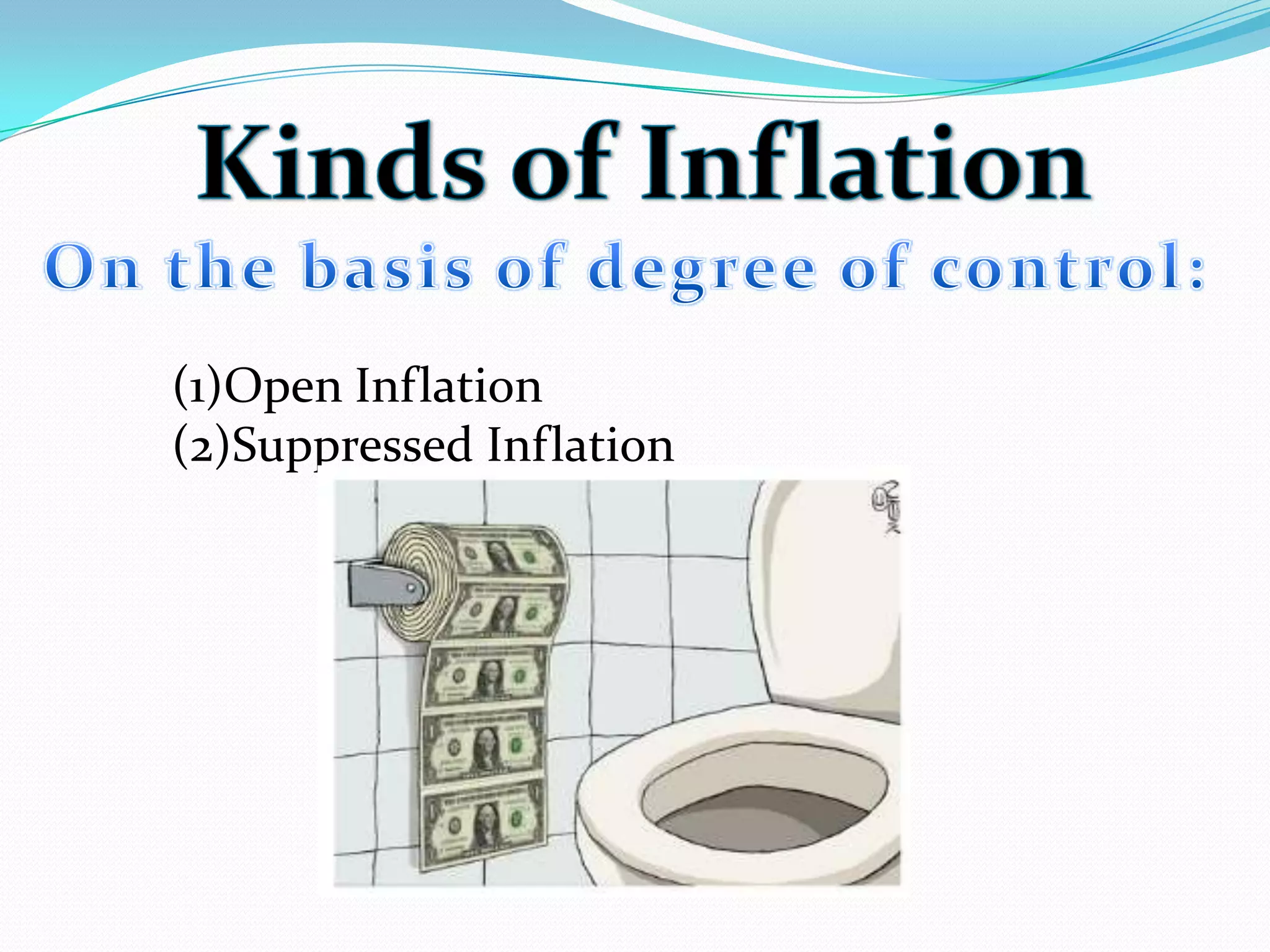
(4)On The Basis Of degree Of control
(5) On The Basis Of Employment
1)Demand Pull Inflation
2)Cost Push Inflation
3)Profit Induced Inflation
4)Budgetary Inflation
5)Monetary Inflation
6)Multi Casual Inflation
1) Inflation Caused by increasing in aggregate demand.
1) Increase in money supply.
2) Increase in the demand for goods by
the govt.
3) Increase the income of various factor
of production.
Increase in cost of production.
Entrepreneurs due to their monopoly
position raise the profit margin on
goods.
Country covers the budget deficits through bank borrowings and
creating now money.
Purchasing power of community increases without a increase in
production of goods.
Inflation is caused by too rapid increase in money supply
Rate of inflation which majority of the individuals believe will occur.
Rate of inflation which comes as a surprise to majority of individuals.
2)Anticipated V/s Unanticipated
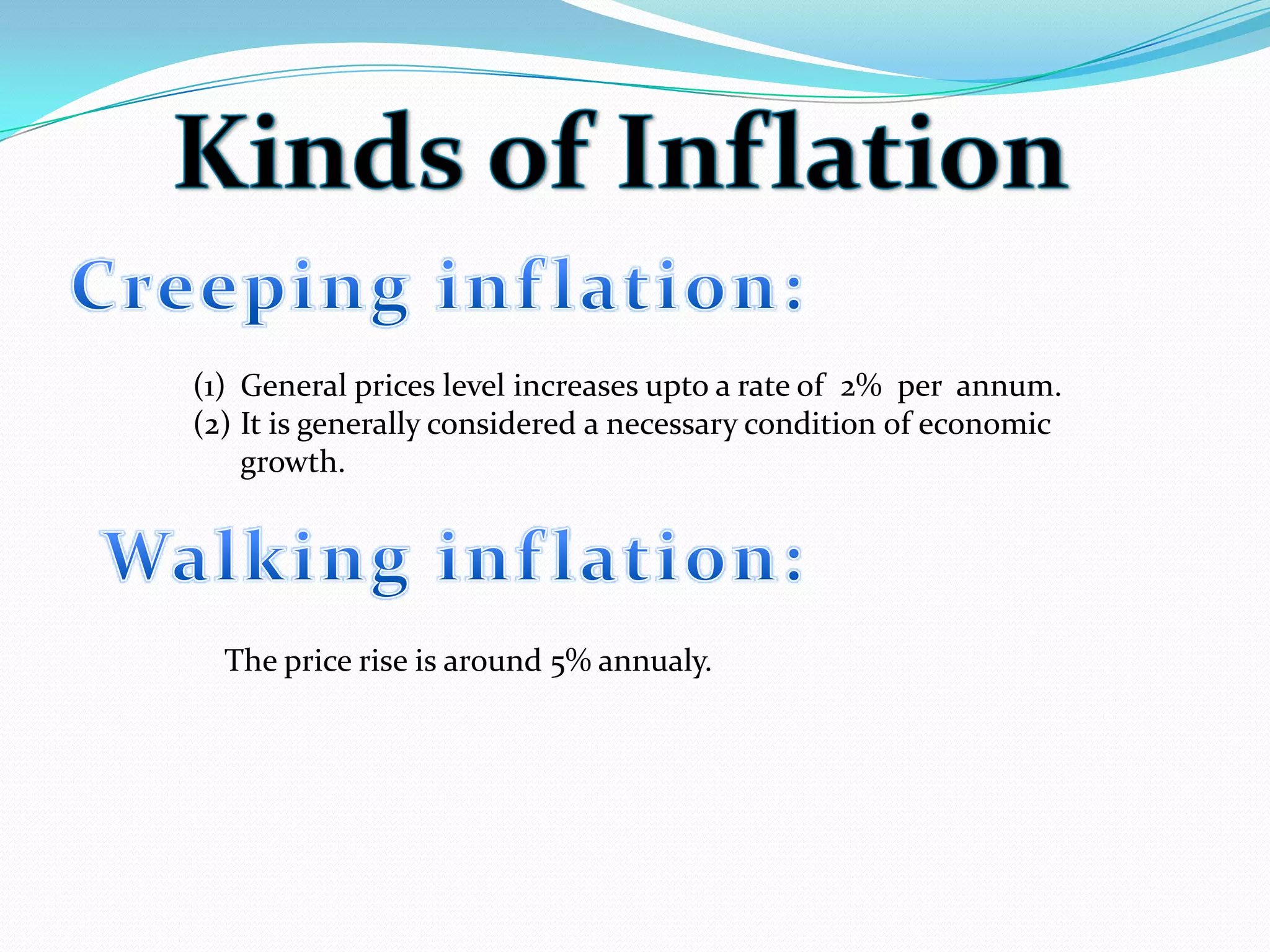
(1)Creeping inflation
(2)Walking inflation
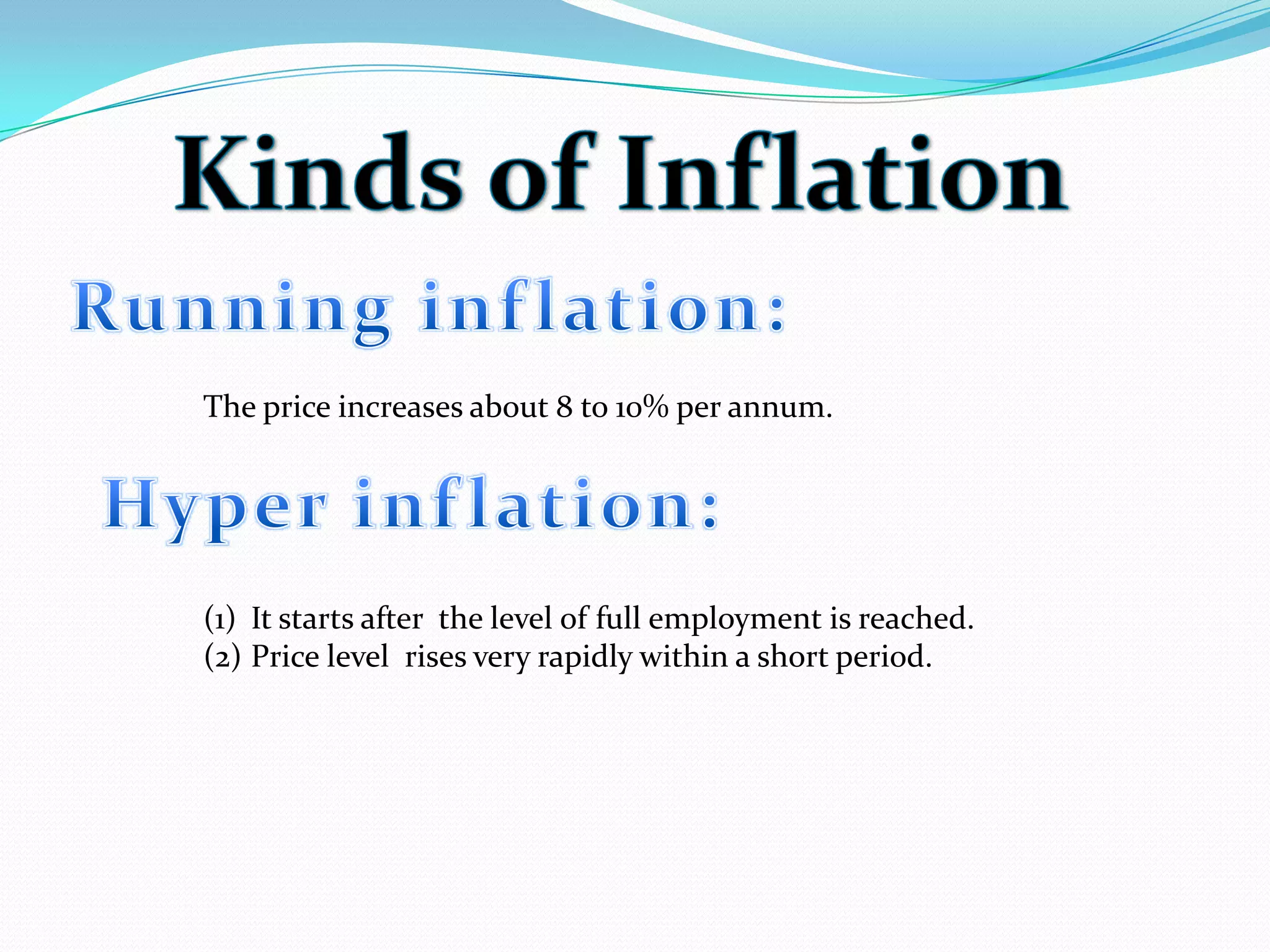
(3)Running inflation
(4)Hyper inflation
(1) General prices level increases upto a rate of 2% per annum.
(2) It is generally considered a necessary condition of economic
growth.
The price rise is around 5% annualy.
The price increases about 8 to 10% per annum.
(1) It starts after the level of full employment is reached.
(2) Price level rises very rapidly within a short period.
(1)Open Inflation
(2)Suppressed Inflation
Inflationary process in which prices are permitted to rise
without being suppressed by government price control or
similar measures.
(1) Govt. makes efforts to check and control the rise in price
level through price control and rationing.
(2) Suppressed inflation results many evils such as black
marketing, hoarding, corruption and profiteering.
(1)Partial inflation
(2)Full inflation
(1) General Price level raises partly due to an increase In cost
of Production
(2) And partly due to rise in supply of money before the full
employment stage is reached.
(1) Economy reaches the level of full employment.
(2) Increase in money supply will result in the rise in price
level without any increase in output and employment.
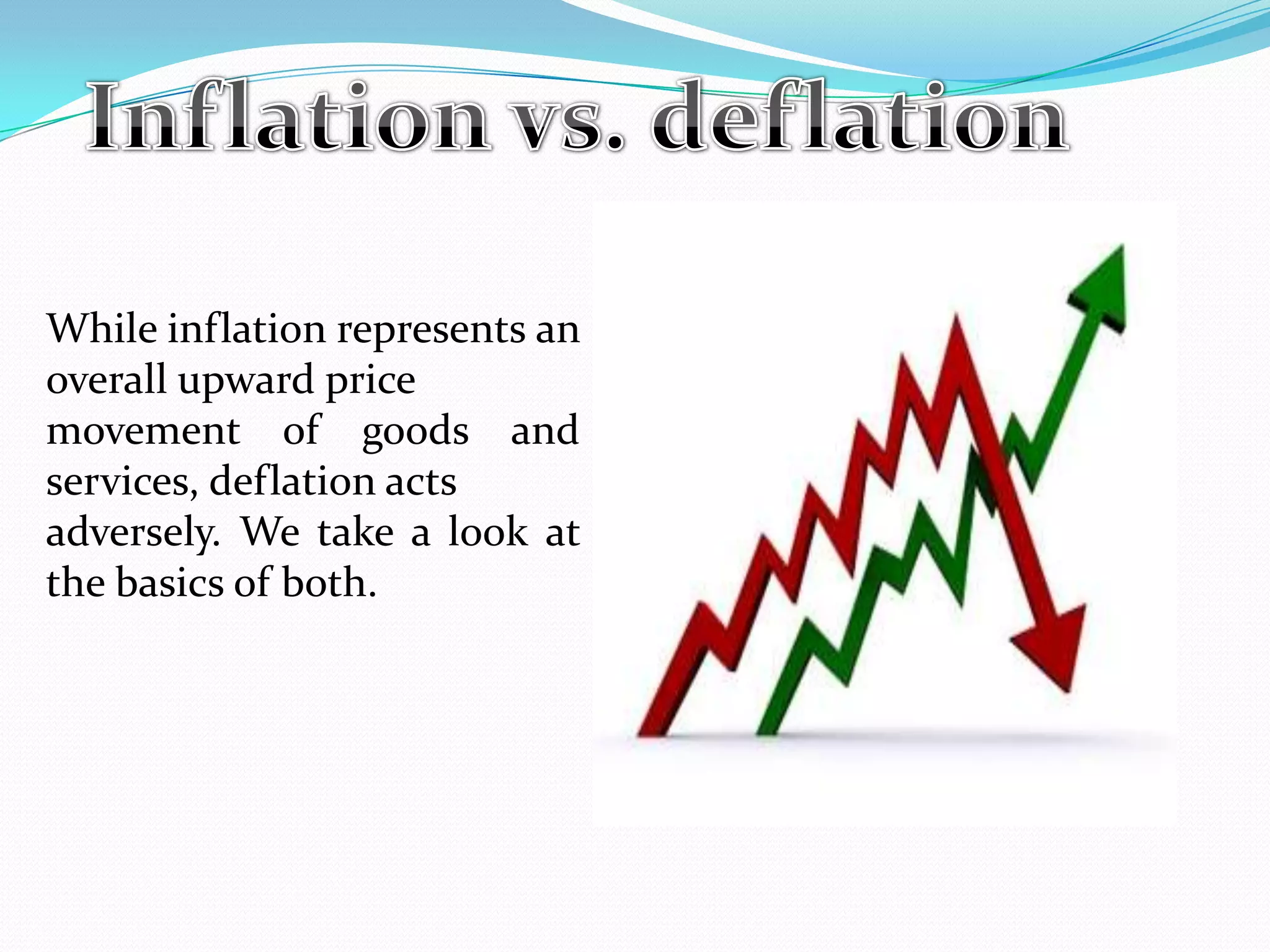
While inflation represents an
overall upward price
movement of goods and
services, deflation acts
adversely. We take a look at
the basics of both.
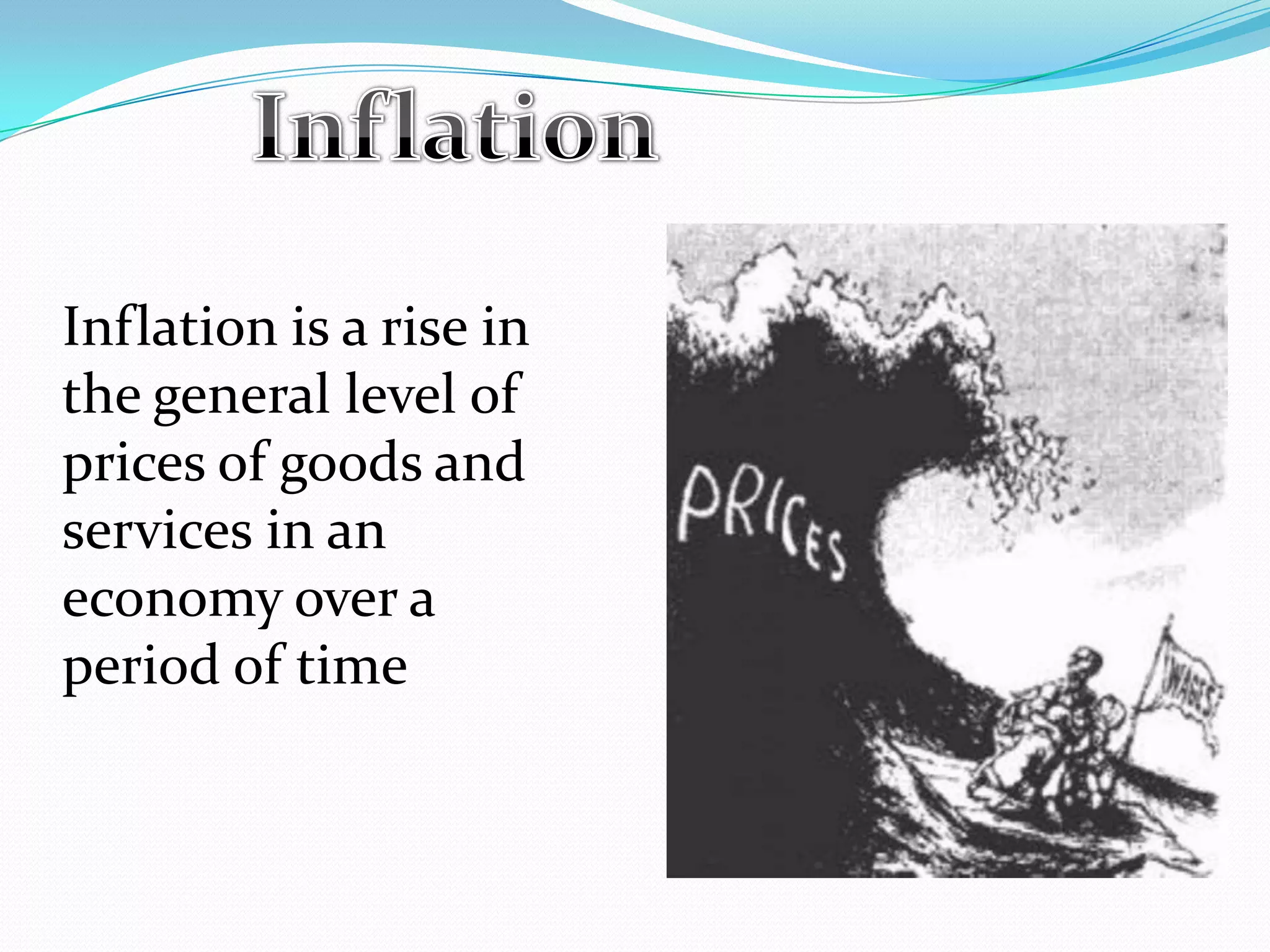
Inflation is a rise in
the general level of
prices of goods and
services in an
economy over a
period of time
- An increase in the general level of prices.
- decrease in the purchasing power of the
currency.
- High or unpredictable inflation rates are
regarded as harmful to an overall economy.
- make it difficult for companies to budget or plan
long-term.
- affect the balance of trade.
- negative impacts to trade from an increased
instability in currency exchange prices caused
by unpredictable inflation.
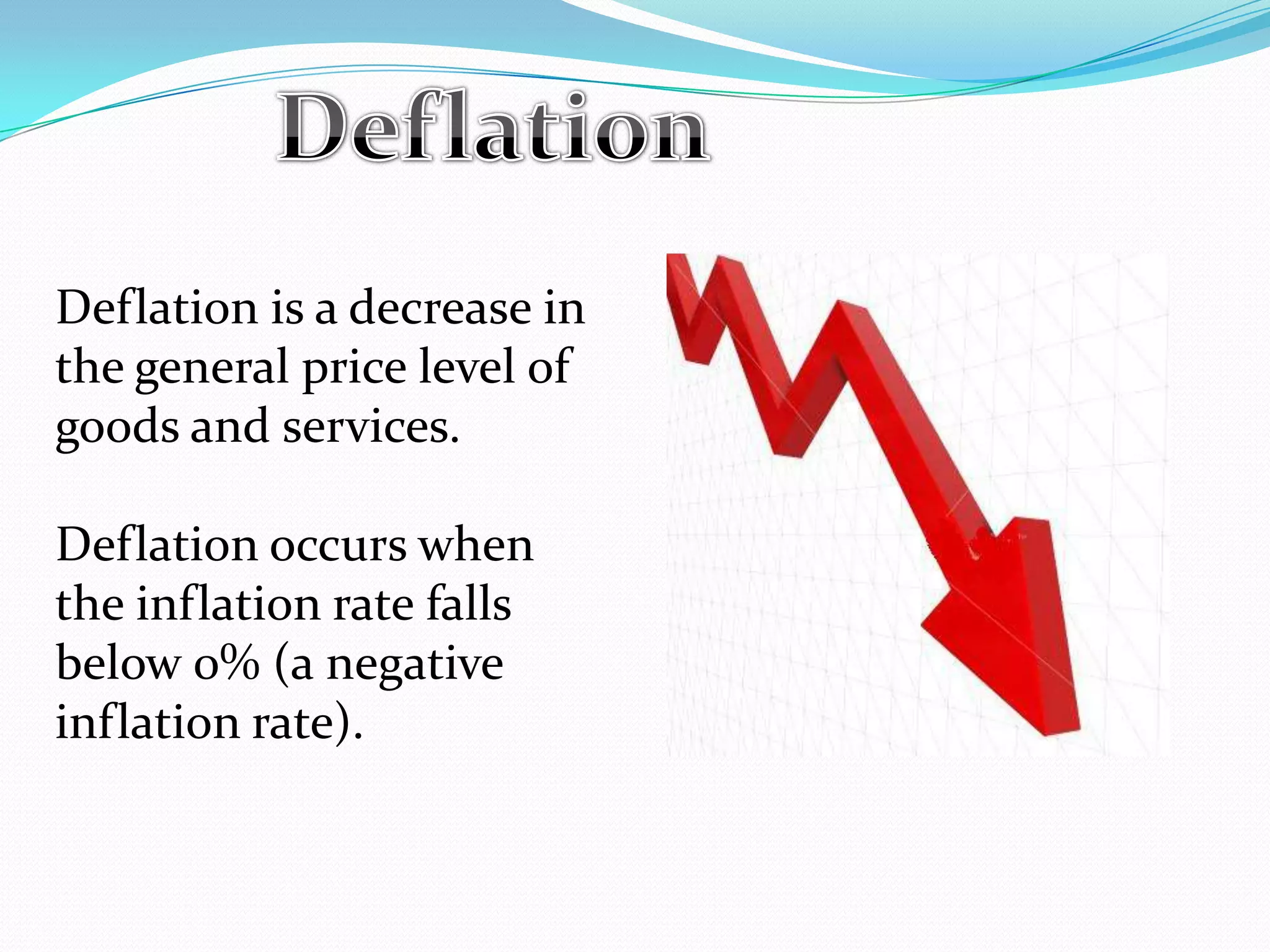
Deflation is a decrease in
the general price level of
goods and services.
Deflation occurs when
the inflation rate falls
below 0% (a negative
inflation rate).
Deflation is a problem in a modern economy because
it may aggravate recessions and lead to a deflationary
spiral.
The effects of deflation are:
1 Decreasing nominal prices for goods
and services.
2 Increasing buying power of cash
money and all assets denominated in
cash terms.
3 May decrease investment and
lending if cash holdings are seen as
preferable.
4 Benefits recipients of fixed incomes.
Inflation, types of inflation

Inflation, types of inflation

  • 2.
    Masab Farooq (10) FahadSattar (06) Zaid Ali (29) Bilal Ahmed (05)
  • 4.
    (1) On TheBasis Of Causes (2) Anticipated V/S unanticipated inflation (3)On The Basis Of rate Of Inflation (4)On The Basis Of degree Of control (5) On The Basis Of Employment
  • 5.
    1)Demand Pull Inflation 2)CostPush Inflation 3)Profit Induced Inflation 4)Budgetary Inflation 5)Monetary Inflation 6)Multi Casual Inflation
  • 6.
    1) Inflation Causedby increasing in aggregate demand. 1) Increase in money supply. 2) Increase in the demand for goods by the govt. 3) Increase the income of various factor of production.
  • 7.
    Increase in costof production. Entrepreneurs due to their monopoly position raise the profit margin on goods.
  • 8.
    Country covers thebudget deficits through bank borrowings and creating now money. Purchasing power of community increases without a increase in production of goods. Inflation is caused by too rapid increase in money supply
  • 9.
    Rate of inflationwhich majority of the individuals believe will occur. Rate of inflation which comes as a surprise to majority of individuals. 2)Anticipated V/s Unanticipated
  • 10.
  • 11.
    (1) General priceslevel increases upto a rate of 2% per annum. (2) It is generally considered a necessary condition of economic growth. The price rise is around 5% annualy.
  • 12.
    The price increasesabout 8 to 10% per annum. (1) It starts after the level of full employment is reached. (2) Price level rises very rapidly within a short period.
  • 13.
  • 14.
    Inflationary process inwhich prices are permitted to rise without being suppressed by government price control or similar measures. (1) Govt. makes efforts to check and control the rise in price level through price control and rationing. (2) Suppressed inflation results many evils such as black marketing, hoarding, corruption and profiteering.
  • 15.
  • 16.
    (1) General Pricelevel raises partly due to an increase In cost of Production (2) And partly due to rise in supply of money before the full employment stage is reached. (1) Economy reaches the level of full employment. (2) Increase in money supply will result in the rise in price level without any increase in output and employment.
  • 17.
    While inflation representsan overall upward price movement of goods and services, deflation acts adversely. We take a look at the basics of both.
  • 18.
    Inflation is arise in the general level of prices of goods and services in an economy over a period of time
  • 19.
    - An increasein the general level of prices. - decrease in the purchasing power of the currency. - High or unpredictable inflation rates are regarded as harmful to an overall economy. - make it difficult for companies to budget or plan long-term. - affect the balance of trade. - negative impacts to trade from an increased instability in currency exchange prices caused by unpredictable inflation.
  • 20.
    Deflation is adecrease in the general price level of goods and services. Deflation occurs when the inflation rate falls below 0% (a negative inflation rate).
  • 21.
    Deflation is aproblem in a modern economy because it may aggravate recessions and lead to a deflationary spiral. The effects of deflation are: 1 Decreasing nominal prices for goods and services. 2 Increasing buying power of cash money and all assets denominated in cash terms. 3 May decrease investment and lending if cash holdings are seen as preferable. 4 Benefits recipients of fixed incomes.