Inflammation andThe
Immune Response
Nursing Intervention and Pharmacology
Chapter 19 and 20
VanessaWright, RN, MSN
Inflammation
•Itis=inflammation
•Injury causes inflammation
•The steps are always the same regardless of the
cause
Acute Inflammation
• Rapid Onset
• Short Duration (Days)
• Causative agents: Physical and Chemical damages, Pathogen
invasion,Tissue necrosis, and Immune response
• S/S: 5 cardinal signs, high grade fever
Chronic Inflammation
• Delayed Onset
• Weeks-months duration
• Cardinal signs not typically present
• Causative agents: Persistent infection, Presence of foreign
bodies, Autoimmunity
• S/S: Low grade, fever, loss of wt, type B symptoms
Steps of Inflammation
• Damaged “Skin”
• Injured cell walls release stress signals
• Histamines produced and go to site of injury to change blood cell behavior
• Blood flow increases (redness and heat)
• Capillaries dilate and leak out blood components
• Chemokine leads phagocytes to point of injury
• Phagocytes engulf pathogens
• Wound site begins to heal and histamine signals fade, returning to normal
size
Functions of Immune System
• Provides protection against invasion by microorganisms from
outside the body.
• Protects the body from internal threats and maintains the
internal environment by removing dead or damaged cells.
Signs and Symptoms of Infection
• IncreasedTemp
• IncreasedWBC’s
• WBC differential count can determine the patients risk for infection,
presence of infection or allergic response, and whether its bacterial or viral
• Other s/s are generalized or specific to location or origin of infectious agent
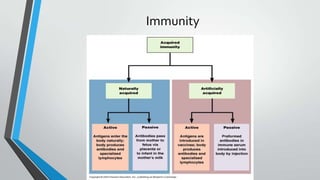
Immunity
Infections
• Infections can be viral or bacterial
• Antibiotics do not treat viral infections
• Remember to always do a culture and sensitivity before administering
antibiotics to prevent resistance and ensure proper tx.
• Increase fluids to 2500-3000mls a day
• Assess for specific side effects and consideration of antibiotic administered
Nosocomial Infections
• Nosocomial or hospital acquired infection
• Who is at greater risk?
• Immune function declines with : increased age, chronic diseases,
malnutrition, Pg 442-443
• Prevention?
• Hand hygiene, PPE, mindful room assignments, teaching, adequate
staffing, proper screenings, ect.
Superinfections
• a second infection superimposed on an earlier one especially by a different
microbial agent of exogenous or endogenous origin that is resistant to the
treatment used against the first infection.
• Infections that disturb normal flora
• Example: C-diff is overgrowth of endogenous Clostridium difficile which
occurs following treatment with a broad-spectrum antibiotic.
Superbugs
• bacteria that have developed immunity to a wide number of antibiotics
• “The introduction of sulfa drugs, in the nineteen-thirties, and penicillin, in
the nineteen-forties, suddenly made many bacterial infections curable. As a
result, doctors prescribed the drugs widely—often for sore throats, sinus
congestion, and coughs that were due not to bacteria but to viruses. In
response, bacteria quickly developed resistance to the most common
antibiotics.” (Groopman, 2008)
• MRSA most well known and very common (found on skin, perineum, and
colonized in nose)
• VRE- resistant to vancomycin
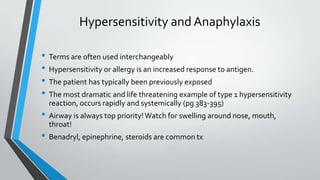
Hypersensitivity and Anaphylaxis
• Terms are often used interchangeably
• Hypersensitivity or allergy is an increased response to antigen.
• The patient has typically been previously exposed
• The most dramatic and life threatening example of type 1 hypersensitivity
reaction, occurs rapidly and systemically (pg 383-395)
• Airway is always top priority! Watch for swelling around nose, mouth,
throat!
• Benadryl, epinephrine, steroids are common tx
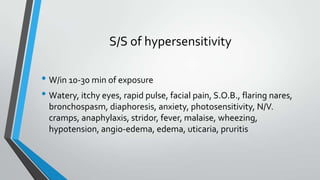
S/S of hypersensitivity
• W/in 10-30 min of exposure
• Watery, itchy eyes, rapid pulse, facial pain, S.O.B., flaring nares,
bronchospasm, diaphoresis, anxiety, photosensitivity, N/V.
cramps, anaphylaxis, stridor, fever, malaise, wheezing,
hypotension, angio-edema, edema, uticaria, pruritis
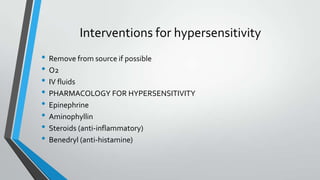
Interventions for hypersensitivity
• Remove from source if possible
• O2
• IV fluids
• PHARMACOLOGY FOR HYPERSENSITIVITY
• Epinephrine
• Aminophyllin
• Steroids (anti-inflammatory)
• Benedryl (anti-histamine)

Inflammation and the immune response final

  • 1.
    Inflammation andThe Immune Response NursingIntervention and Pharmacology Chapter 19 and 20 VanessaWright, RN, MSN
  • 2.
    Inflammation •Itis=inflammation •Injury causes inflammation •Thesteps are always the same regardless of the cause
  • 3.
    Acute Inflammation • RapidOnset • Short Duration (Days) • Causative agents: Physical and Chemical damages, Pathogen invasion,Tissue necrosis, and Immune response • S/S: 5 cardinal signs, high grade fever
  • 4.
    Chronic Inflammation • DelayedOnset • Weeks-months duration • Cardinal signs not typically present • Causative agents: Persistent infection, Presence of foreign bodies, Autoimmunity • S/S: Low grade, fever, loss of wt, type B symptoms
  • 5.
    Steps of Inflammation •Damaged “Skin” • Injured cell walls release stress signals • Histamines produced and go to site of injury to change blood cell behavior • Blood flow increases (redness and heat) • Capillaries dilate and leak out blood components • Chemokine leads phagocytes to point of injury • Phagocytes engulf pathogens • Wound site begins to heal and histamine signals fade, returning to normal size
  • 6.
    Functions of ImmuneSystem • Provides protection against invasion by microorganisms from outside the body. • Protects the body from internal threats and maintains the internal environment by removing dead or damaged cells.
  • 7.
    Signs and Symptomsof Infection • IncreasedTemp • IncreasedWBC’s • WBC differential count can determine the patients risk for infection, presence of infection or allergic response, and whether its bacterial or viral • Other s/s are generalized or specific to location or origin of infectious agent
  • 8.
  • 9.
    Infections • Infections canbe viral or bacterial • Antibiotics do not treat viral infections • Remember to always do a culture and sensitivity before administering antibiotics to prevent resistance and ensure proper tx. • Increase fluids to 2500-3000mls a day • Assess for specific side effects and consideration of antibiotic administered
  • 10.
    Nosocomial Infections • Nosocomialor hospital acquired infection • Who is at greater risk? • Immune function declines with : increased age, chronic diseases, malnutrition, Pg 442-443 • Prevention? • Hand hygiene, PPE, mindful room assignments, teaching, adequate staffing, proper screenings, ect.
  • 11.
    Superinfections • a secondinfection superimposed on an earlier one especially by a different microbial agent of exogenous or endogenous origin that is resistant to the treatment used against the first infection. • Infections that disturb normal flora • Example: C-diff is overgrowth of endogenous Clostridium difficile which occurs following treatment with a broad-spectrum antibiotic.
  • 12.
    Superbugs • bacteria thathave developed immunity to a wide number of antibiotics • “The introduction of sulfa drugs, in the nineteen-thirties, and penicillin, in the nineteen-forties, suddenly made many bacterial infections curable. As a result, doctors prescribed the drugs widely—often for sore throats, sinus congestion, and coughs that were due not to bacteria but to viruses. In response, bacteria quickly developed resistance to the most common antibiotics.” (Groopman, 2008) • MRSA most well known and very common (found on skin, perineum, and colonized in nose) • VRE- resistant to vancomycin
  • 13.
    Hypersensitivity and Anaphylaxis •Terms are often used interchangeably • Hypersensitivity or allergy is an increased response to antigen. • The patient has typically been previously exposed • The most dramatic and life threatening example of type 1 hypersensitivity reaction, occurs rapidly and systemically (pg 383-395) • Airway is always top priority! Watch for swelling around nose, mouth, throat! • Benadryl, epinephrine, steroids are common tx
  • 14.
    S/S of hypersensitivity •W/in 10-30 min of exposure • Watery, itchy eyes, rapid pulse, facial pain, S.O.B., flaring nares, bronchospasm, diaphoresis, anxiety, photosensitivity, N/V. cramps, anaphylaxis, stridor, fever, malaise, wheezing, hypotension, angio-edema, edema, uticaria, pruritis
  • 15.
    Interventions for hypersensitivity •Remove from source if possible • O2 • IV fluids • PHARMACOLOGY FOR HYPERSENSITIVITY • Epinephrine • Aminophyllin • Steroids (anti-inflammatory) • Benedryl (anti-histamine)