INFECTIOUS LARYNGOTRACHEITIS
Dr. Anand Mohan
Assistant Professor
Introduction
 ILT is an acute, highly contagious, herpesvirus infection of
chickens and pheasants
 Characterized by severe dyspnea, coughing, and rales.
 It has been reported from most areas in which poultry are
intensively reared.
Etiology & transmission
 Gallid alpha herpesvirus type 1 (GaHV-1), commonly
known as infectious laryngotracheitis virus (ILTV).
 Infection also may be spread mechanically.
 Several epidemics have been traced to the transport of
infected birds or contaminated equipment and litter.
Clinical signs
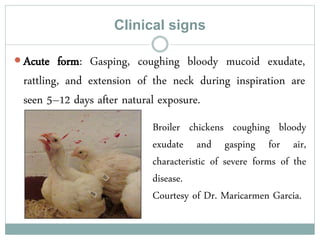
 Acute form: Gasping, coughing bloody mucoid exudate,
rattling, and extension of the neck during inspiration are
seen 5–12 days after natural exposure.
Broiler chickens coughing bloody
exudate and gasping for air,
characteristic of severe forms of the
disease.
Courtesy of Dr. Maricarmen Garcia.
Cont.
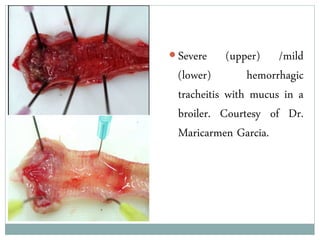
 Blood, mucus, yellow caseous exudates, or a hollow caseous
cast in the trachea.
 In severe form of the disease is characterized by a
desquamative, necrotizing tracheitis and conjunctivitis.
 Severe (upper) /mild
(lower) hemorrhagic
tracheitis with mucus in a
broiler. Courtesy of Dr.
Maricarmen Garcia.
Cont.
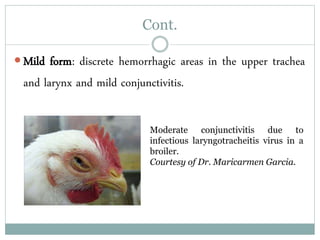
 Mild form: discrete hemorrhagic areas in the upper trachea
and larynx and mild conjunctivitis.
Moderate conjunctivitis due to
infectious laryngotracheitis virus in a
broiler.
Courtesy of Dr. Maricarmen Garcia.
Cont…
 Signs usually subside after ~2 weeks, although some birds
may show signs for longer periods.
 Strains of low virulence produce little or no mortality, with
mild respiratory signs.
 Affected birds are anorectic and inactive.
 Mortality varies but may reach 50% in adults and is usually
due to occlusion of the trachea by hemorrhage or exudate.
Cont.
 After recovery, birds remain carriers for life and become
a source of infection for susceptible birds.
 The latent virus can be reactivated under stressful
conditions.
 Reduced productivity in laying flocks.
Diagnosis
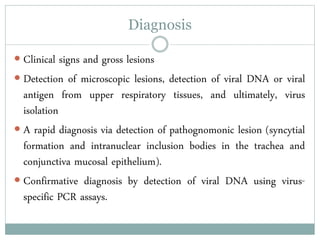
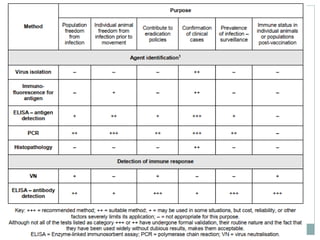
 Clinical signs and gross lesions
 Detection of microscopic lesions, detection of viral DNA or viral
antigen from upper respiratory tissues, and ultimately, virus
isolation
 A rapid diagnosis via detection of pathognomonic lesion (syncytial
formation and intranuclear inclusion bodies in the trachea and
conjunctiva mucosal epithelium).
 Confirmative diagnosis by detection of viral DNA using virus-
specific PCR assays.
Control
 By implementation of biosecurity measures and vaccination.
 Vaccination is done with live attenuated vaccines and viral vector
recombinant vaccines.
 Route: eye drop or through mass vaccination by water or spray.
 Viral vector recombinant vaccines in fowlpox and herpesvirus of
turkeys have been designed to express ILTV immunogenic
proteins and are administered to individual birds by in ovo,
subcutaneous, or wing-web vaccination.
Infectious Laryngotracheitis.pptx

Infectious Laryngotracheitis.pptx

  • 1.
    INFECTIOUS LARYNGOTRACHEITIS Dr. AnandMohan Assistant Professor
  • 2.
    Introduction  ILT isan acute, highly contagious, herpesvirus infection of chickens and pheasants  Characterized by severe dyspnea, coughing, and rales.  It has been reported from most areas in which poultry are intensively reared.
  • 3.
    Etiology & transmission Gallid alpha herpesvirus type 1 (GaHV-1), commonly known as infectious laryngotracheitis virus (ILTV).  Infection also may be spread mechanically.  Several epidemics have been traced to the transport of infected birds or contaminated equipment and litter.
  • 4.
    Clinical signs  Acuteform: Gasping, coughing bloody mucoid exudate, rattling, and extension of the neck during inspiration are seen 5–12 days after natural exposure. Broiler chickens coughing bloody exudate and gasping for air, characteristic of severe forms of the disease. Courtesy of Dr. Maricarmen Garcia.
  • 5.
    Cont.  Blood, mucus,yellow caseous exudates, or a hollow caseous cast in the trachea.  In severe form of the disease is characterized by a desquamative, necrotizing tracheitis and conjunctivitis.
  • 6.
     Severe (upper)/mild (lower) hemorrhagic tracheitis with mucus in a broiler. Courtesy of Dr. Maricarmen Garcia.
  • 7.
    Cont.  Mild form:discrete hemorrhagic areas in the upper trachea and larynx and mild conjunctivitis. Moderate conjunctivitis due to infectious laryngotracheitis virus in a broiler. Courtesy of Dr. Maricarmen Garcia.
  • 8.
    Cont…  Signs usuallysubside after ~2 weeks, although some birds may show signs for longer periods.  Strains of low virulence produce little or no mortality, with mild respiratory signs.  Affected birds are anorectic and inactive.  Mortality varies but may reach 50% in adults and is usually due to occlusion of the trachea by hemorrhage or exudate.
  • 9.
    Cont.  After recovery,birds remain carriers for life and become a source of infection for susceptible birds.  The latent virus can be reactivated under stressful conditions.  Reduced productivity in laying flocks.
  • 10.
    Diagnosis  Clinical signsand gross lesions  Detection of microscopic lesions, detection of viral DNA or viral antigen from upper respiratory tissues, and ultimately, virus isolation  A rapid diagnosis via detection of pathognomonic lesion (syncytial formation and intranuclear inclusion bodies in the trachea and conjunctiva mucosal epithelium).  Confirmative diagnosis by detection of viral DNA using virus- specific PCR assays.
  • 12.
    Control  By implementationof biosecurity measures and vaccination.  Vaccination is done with live attenuated vaccines and viral vector recombinant vaccines.  Route: eye drop or through mass vaccination by water or spray.  Viral vector recombinant vaccines in fowlpox and herpesvirus of turkeys have been designed to express ILTV immunogenic proteins and are administered to individual birds by in ovo, subcutaneous, or wing-web vaccination.